Community habitat restoration on Burnley’s rivers
Urban rivers across Europe are subject to multiple stresses linked to the surrounding built environment, particularly pollution, fragmentation, barriers and habitat modification. However, increased focus on the many benefits of urban nature, coupled with the imperatives in the EU Water Framework Directive to improve such ‘heavily modified water bodies’ to ‘good ecological potential’ mean that urban river restoration projects are proliferating.
The rivers Brun and Calder meet in the town of Burnley, in North-West England, and are part of the wider Ribble catchment. Flowing through an urban landscape which has supported industrial activity for centuries, the Brun and Calder have both been heavily modified and impacted by humans. Long stretches of the rivers are enclosed by stone and concrete channels, and in some places the river beds are made up of the same cobblestones found paving old streets through the town.
A new video (which you can watch above) produced by The Ribble Rivers Trust documents the community-engaged habitat restoration of Burnley’s rivers undertaken through the Urban River Enhancement Scheme (URES).
The Ribble Rivers Trust is an environmental charity established in 1998 to protect and restore the rivers, streams and watercourses within the Ribble catchment and to raise public awareness of the value of local rivers and streams. The Trust was awarded over £600,000 by the Heritage Lottery Fund in 2013 to deliver the URES, which intends to improve the habitat quality and biodiversity of Burnley’s rivers, whilst engaging local communities through education and conservation programmes.
The video shows URES habitat improvement on Burnley’s rivers, removing litter and debris, uprooting invasive species such as Himalayan balsam, constructing fish passes on large weirs, and restructuring river beds to create semi-natural riffles and pools in place of the existing sewer-like channels. It shows the various ways in which local communities are consulted and engaged in this process, through school visits, environmental artworks and conservation action days.
Below is a podcast interview with MARS scientist Prof Steve Ormerod from Cardiff University, carried out on the banks of the River Brun. Steve – a Burnley native – gives us an insight into the ways in which urban nature, culture and heritage are entwined along the banks of Burnley’s rivers, and how such recent restoration projects have significantly improved their habitat quality and biodiversity.
Since the podcast was recorded, salmon parr have been found upstream of the town, an extremely encouraging sign that migratory salmon can now successfully navigate Burnley’s rivers to reach a wide area of upstream spawning grounds.
You can find out more about the Urban River Enhancement Scheme in Burnley here.
Caddisfly larvae tend remarkable underwater ‘gardens’

Caddisfly (Tinodes waeneri) larva. Image: Guam Insects | Creative Commons
Caddisflies are found in freshwaters across Europe, with their larvae well-known for their remarkable ability to build cases from organic materials such as vegetation, sand and silt (which can take on beautiful creative forms). In Britain alone, there are around 200 different caddisfly species, making them one of the most diverse groups of pond animals.
New research by a team of ecologists from the UK, Germany and Malaysia has shown how caddisflies are not only resourceful ‘house builders’, but also productive ‘gardeners’ of their habitats. Writing in Freshwater Biology, the researchers, led by Nicola Ings, describe how caddisflies actively encourage food growth in their local environment, through ‘weeding’ and ‘fertilisation’.
The organic cases that caddisfly larvae build are known as galleries, held together with silk and fixed to a stream or lake bed. The team of researchers used samples of galleries built by a common caddisfly species, Tinodes waeneri, from five lakes in the Lake District. Their aim was to study whether gallery biofilms contained algae communities distinct from the biofilm on the surrounding lake bed (known as the epilithon), and if so, whether these algae ‘gardens’ were found across a range of lakes with different ecological productivity.
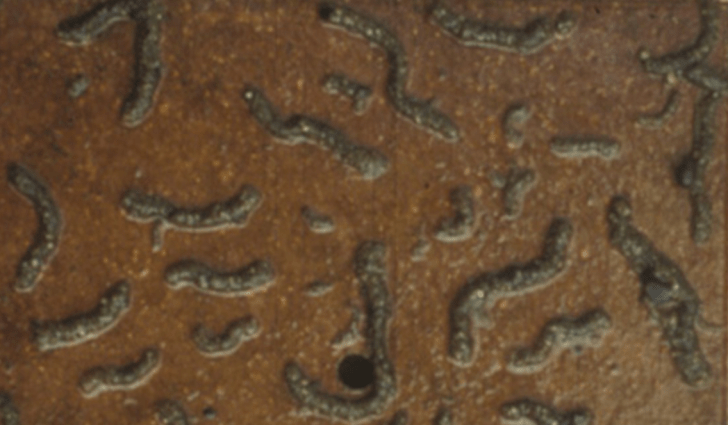
Caddisfly galleries. Image: SSC Harrison
The researchers found that across all five studied lakes, caddisfly larva galleries had a greater content of diatom pigments, including fucoxanthin, as well as a distinct assemblage of diatoms. This abundance of diatoms – a rich food source for caddisfly larvae – on the galleries is the result of active ‘gardening’ by the larvae of their micro-habitat.
Caddisfly larvae live in their galleries (which can reach several centimetres in length), and graze algae around the gallery mouth. This ‘weeding’ helps prevent the gallery from becoming overgrown with filamentous green algae which can inhibit the growth of diatom-rich biofilm. The rear end of the gallery casing (where the biofilm fertilised by nutrient-rich excretions often grows) is gradually ingested by the larva, and the structure slowly extended forward with fresh silk and particles at the front.
This active modification of the caddisfly larva’s immediate environment has a number of benefits for the organism. The new silken material added to the front of the gallery casings creates new surfaces on which biofilm (on which they graze) can grow. At the same time, the older parts of the galleries are typically covered in biofilm rich in diatoms are harvested. In effect, the caddisfly larvae galleries undergo a slow migration across a lake or stream bed, creating new micro-habitats for algae growth at their head, which will be eventually harvested at the rear.
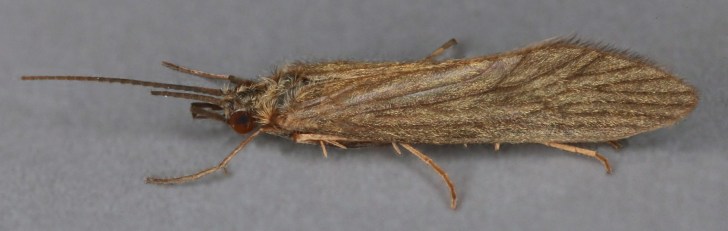
Adult caddisfly (Tinodes waeneri). Image: Janet Graham | Flickr Creative Commons
‘Gardening’ gives a key advantage to caddisfly larvae by widening the range of potential habitat conditions in which they can survive. The researchers speculate that nutrients will be more tightly retained in lake beds dominated by such sedentary, gardening insect larvae, compared with those dominated by more mobile collector grazers. As a result, the nutrients retained by ‘gardened’ larvae galleries may then be exported to the land when the adult caddisflies emerge.
The study gives a fascinating insight into the ability of microorganisms to actively modify their immediate environment to improve their life chances. It would be fair to say that caddisfly larvae may well be the smallest (and most resourceful) of all the water gardeners.
Antagonistic interactions between biological invasion and climate warming stressors in freshwaters
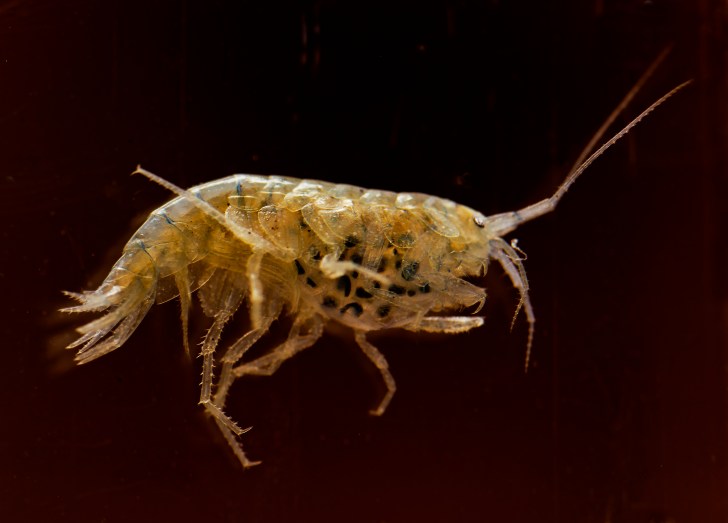
Gammarus pulex, a tiny crustacean native to the UK. Image: AJ Cann | Flickr Creative Commons
Freshwater ecosystems around the world are increasingly threatened by multiple stressors: the combined impacts of pollution, water abstraction, invasions, fragmentation, climate warming and so on. However, at present, scientific knowledge on the interactions and impacts of different stressor combinations across ecosystems remains incomplete.
A new study conducted at the University of Leeds, UK, gives new insights into how simultaneous biological invasions and climate warming may affect freshwater ecosystem functioning. The team, led by Daniel Kenna, used laboratory experiments to study how changes in water temperature affected the rate at which two tiny freshwater crustaceans (one native to the UK, and the other an invasive) processed leaf-litter debris, which is an important source of nutrients commonly found on the bed of rivers and lakes.
Biological invasions are a common stressor in freshwater ecosystems across the world, as non-native species are either introduced by humans, or find their way into ecosystems made newly habitable by environmental change. Invasive species may out-compete native species for food and habitat, or carry harmful diseases (e.g. the signal crayfish in Europe). As a result, an influx of invasive species into a freshwater ecosystem may significantly alter its biodiversity, health and functioning.
Writing in Oecologia, the University of Leeds team describe their experiment involving two micro-crustaceans: Gammarus pulex, an amphipod native to the UK; and the so-called ‘killer shrimp’, Dikerogammarus villosus, a fast growing and comparatively large amphipod which is native to Eastern Europe, but increasingly invasive across the western continent.
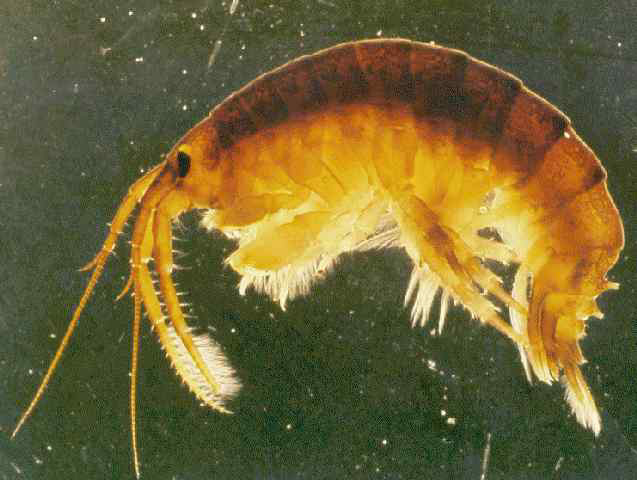
The invasive Dikerogammarus villosus, or ‘killer shrimp’. Image: NOAA Great Lakes | Flickr Creative Commons
When matched for size, the team found that the UK native Gammarus was more efficient than the ‘killer shrimp’ at leaf-litter processing. The invasive amphipod preferred warmer water temperatures, suggesting that invasions which displace the native Gammarus under climate warming, may lead to a reduction in leaf-litter processing, and so a decline in ecosystem functioning.
However, the ‘killer shrimp’ is a larger animal (around 30mm to Gammarus’s ~20mm), and large individuals can process leaf litter at a faster rate than smaller ones of comparable size to the native species. In addition, ‘killer shrimp’ processing rates increased at a faster rate in response to increasing water temperatures than those of Gammarus individuals of a similar size.
This means that any decreases in ecosystem functioning caused by the displacement of Gammarus populations by ‘killer shrimp’ invasions may be offset by increases in leaf-litter processing in the invasive species where water temperatures are increased.
As such, the study gives a novel insight into an antagonistic relationship between multiple stressors: where some of the potentially harmful effects of the invasive species (i.e. reduced ecosystem functioning) are largely mitigated by the effects of climate warming.
How groundwater influences Europe’s surface waters
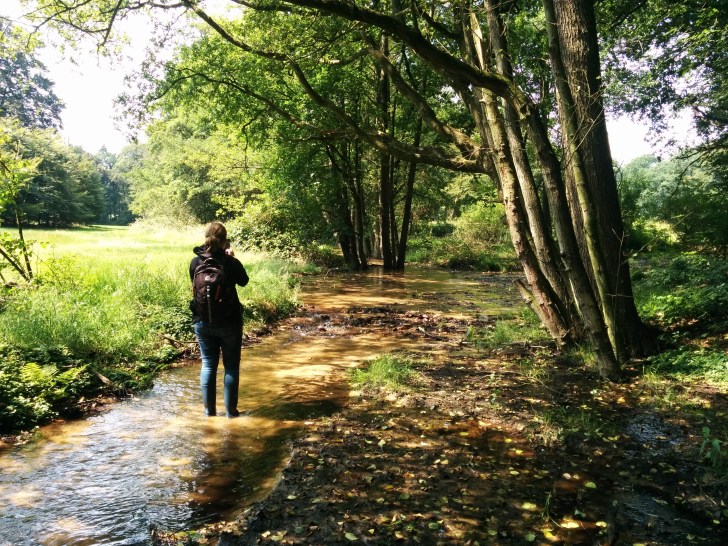
Searching for groundwater on the Springendalse Beek, Netherlands. Image: Vince Kaandorp
This week we have a guest post by Vince Kaandorp of Deltares, a water research institute based in the Netherlands. Vince writes on the often-overlooked importance of groundwater in shaping and supporting life in rivers and lakes.
+++
A large portion of the water on Earth is hidden from sight, stored below our feet as groundwater. About 30% of the freshwater globally is believed to be stored as groundwater: 25 times the amount of fresh surface water. This groundwater has an influence on the aquatic ecology in our surface waters. While a proportion of discharge in streams originates from overland flow or direct precipitation, another big part comes from groundwater: either through local springs, diffuse seepage (seepage over bigger areas), or drainage pipes in agricultural regions. Groundwater influences not only small streams, but also rivers and even lakes.
All streams are not created equal: some have a higher contribution of groundwater than others as a result of differences in geology and topography. Because precipitation needs time to travel through the soil, groundwater is a delayed form of discharge compared to overland flow and direct precipitation. As such groundwater is a relatively stable source of water throughout the year and can prevent streams from ceasing flow during dry periods.
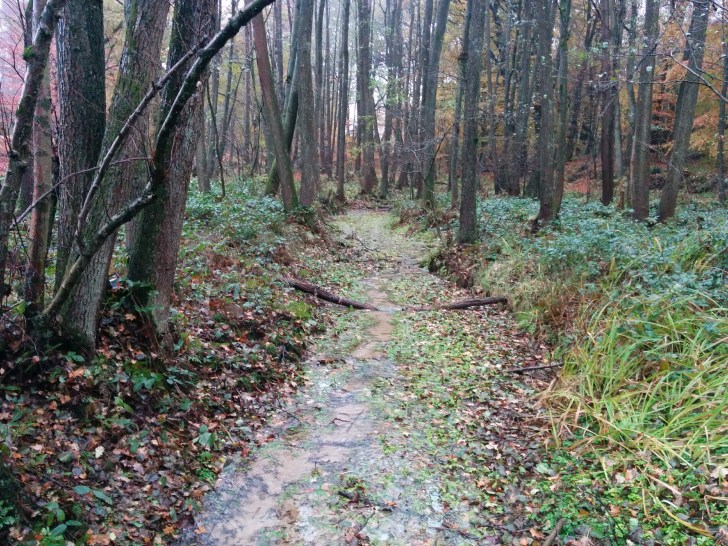
Stream water is often heavily ‘topped up’ by groundwater inputs during dry weather. Image: Vince Kaandorp
This groundwater characteristic forms the basis of the Baseflow Index (BFI) which gives an indication of the size of the groundwater contribution and can be calculated from stream discharge measurements. This metric is often used in studies to get an idea of the importance of groundwater for streams. For instance, in the Regge and Dinkel catchment in the Netherlands, the tributaries of the Dinkel river have very different BFI values as some have more groundwater input than others. The streams with less groundwater are known to fall dry during summer, while the ones with more groundwater flow even in the driest periods of the year.
Golden saxifrage growing along the banks of a stream is a good indicator of groundwater inputs. Image: Vince Kaandorp
The influence of groundwater can be seen in the field, that is, if you know what you’re looking for. Springs are a clear direct indicator of groundwater but vegetation can also give a good idea about groundwater. Some species, such as the Golden saxifrage plant often grow on stream banks at locations with significant groundwater inputs.
Have you ever seen orange depositions or slime on a stream bank? Or an oily sheen floating on the water? You might have located a seepage zone too! Groundwater is often anoxic and contains dissolved iron. As a result, as soon as this water comes to the surface certain bacteria start oxidizing the iron, which results in these orange and oily phenomena.
Apart from providing a stable supply of water to streams, groundwater also influences water chemistry and temperature. Groundwater has a different chemical composition to surface water, can contain iron, and is often unpolluted. In addition, the temperature of groundwater is generally around the yearly average temperature (about 12°C in the Netherlands), and is thus a cold-water input during summer and a warm-water input during winter. In this way, groundwater can provide stable temperature habitats for aquatic ecology in streams, and help prevent the water from freezing during cold winters!
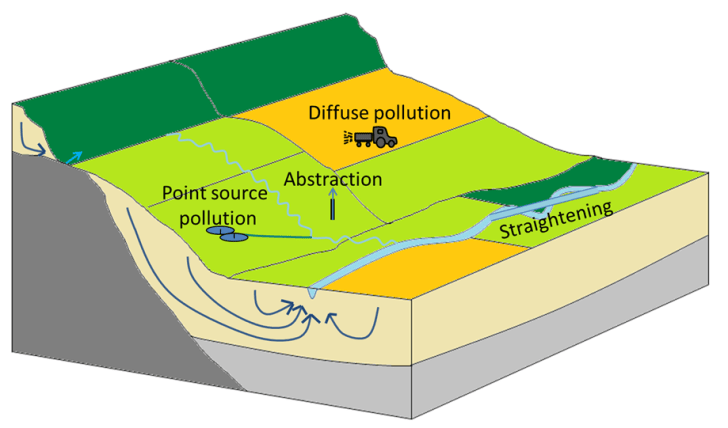
Groundwater and surface waters are jointly affected by multiple stressors. Image: Vince Kaandorp
Due to its stable discharge, stable temperature and often unpolluted chemistry, groundwater can mitigate the harmful effect of stressors. For example, a stream with a large groundwater input is likely to be less prone to the effects of climate change. On the other hand, groundwater also functions as a connecting flow path between the catchment and stream, and can thus connect agricultural fields with a stream. This means that chemicals used by farmers, such as nitrate from manure or herbicides and pesticides, flow through the ground and eventually appear in the stream.
There can be a large time lag in this process, because the travel time of the groundwater can be 10s or even 100s of years. This also means that the effect of management practices such as the removal of agricultural fields upstream can take multiple decades to manifest in the stream itself!
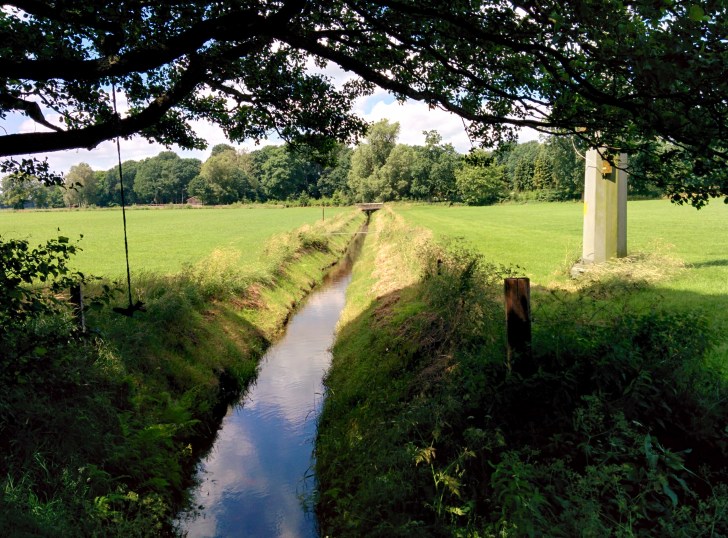
The River Elsbeek flowing through agricultural areas where it has been channelised. Image: Vince Kaandorp
In practice there are diverse linkages between groundwater and streams, because a complicated system of groundwater-surface water interactions exists in which groundwater input and output is variable both in time and space.
Because of its importance for many streams and its link with management practises, further research on the groundwater contribution to streams is done by Deltares within the MARS Regge and Dinkel Case Study. This study will help us gain better understanding how groundwater transports and influences stressors, how groundwater is linked with aquatic ecology and how groundwater can be conserved and protected through European management practices.
For The Love of Rivers
We thought we’d start the new year with an inspiring video. Dr Kurt Fausch, a stream ecologist and professor at Colorado State University, has recently published a book, For the Love of Rivers, which draws readers into an international collaboration among freshwater ecologists to discover the hidden connections between rivers and their surrounding forests.
In the video above, Fausch provides a poetic and persuasive case for why rivers are so important, for humans and non-humans alike. He says, “Like trees and music and good health, streams and rivers are a gift to us as humans… In the end, I believe we will need to understand how and why we love rivers, if we hope to conserve them.”
Dr Fausch’s career in freshwater ecology has generated many novel and influential contributions to our understanding of habitat use by freshwater fishes, individual fish movement, and the landscape ecology of riverine fishes. His 2002 BioScience paper ‘Landscapes to Riverscapes’ (pdf) outlined a new approach for management and conservation of stream fishes, describing the scale at which ecological studies and restoration activities can be most effectively accomplished. Fausch recently received the Award of Excellence from the American Fisheries Society (AFS) at its 2016 Annual Meeting in Kansas City, Missouri.
The For the Love of Rivers book follows Fausch’s previous art-science communication project, RiverWebs, a feature-length film by Freshwaters Illustrated about the life and work of Dr. ShigeruNakano to explore how streams and forests depend on each other. After Nakano’s tragic death, Fausch and colleagues collaborated to follow the path along Japanese watersheds forged by Nakano and discover deeper truths about the critical roles that streams play in the wider landscape.
Find out more about the For the Love of Rivers project and the RiverWebs film here.
Top 16 Freshwater Blog Posts of 2016

A Finnish river in winter. Image Ville Lukka | Flickr Creative Commons
As the end of the year approaches, we’re looking back over 2016 to collect 16 of our most popular posts on aquatic lives.
It’s been a fascinating year to write about freshwater science, policy and conservation. New scientific research is shedding light on the complex nature of freshwater ecosystem responses to multiple pressures, whilst policy and management initiatives attempt to deal with the implications of an increasingly interconnected and stressed world on freshwater biodiversity and functioning.
It’s been the most successful year yet for the Freshwater Blog, with record numbers of visitors. Thanks, as ever, for reading. You can keep up to date with our posts, and add your voice to the debate through our Twitter, Facebook and LinkedIn pages. Happy 2017!
+++
1. Balancing hydropower and biodiversity in the Amazon, Congo and Mekong basins (January)

Inga Dam on the Congo River. Image: International Rivers | Flickr | Creative Commons
A boom in construction of major hydroelectric dam projects on the Amazon, Congo and Mekong rivers increasingly threatens a range of rare and unique freshwater biodiversity according to a new study published in Science.
Existing dams on the three basins are generally small and located in upland tributaries, but over 450 additional major dams are planned, with some already under construction. Most of these dams are planned to be built in areas of fast water flow – such as waterfalls and rapids – which are often hotspots of high biodiversity (read more).
+++
2. Water pollution makes river biodiversity more vulnerable to climate warming (March)

River Torridge in Devon, a sample site for mayflies in the study. Image: alexwhite | Flickr
Polluted rivers with low oxygen levels are more susceptible to the harmful effects of climate change, according to a new study co-authored by MARS scientist Professor Steve Ormerod.
Researchers from Cardiff University and Radboud University in the Netherlands led by Wilco Verberk used laboratory studies and over 42,000 samples from UK rivers to show that two common mayfly species are less able to tolerate rising water temperatures in polluted rivers with low oxygen levels. The breakdown of organic pollutants such as sewage and farm run-off uses oxygen, meaning that polluted waterways often suffer severe drops in dissolved oxygen levels.
The study, published in Global Change Biology (open access), adds to the growing evidence on the influence of multiple stressors in shaping how freshwater ecosystems are likely to respond to climate change. Specifically, it suggests that reductions in water pollution may help increase the resilience of freshwater biodiversity to the effects of future climate change (read more).
+++
3. Kathleen Carpenter: the mother of freshwater ecology (March)

In this guest post for International Women’s Day, Dr. Catherine Duigan draws from her research on Dr. Kathleen Carpenter (1891-1970), the ‘mother’ of freshwater ecology, to suggest insights and wisdom that Carpenter might offer to new generations of freshwater scientists.
I am an ecologist born in the late 1800s, and I wrote the first British freshwater ecology textbook, Life in Inland Waters (1928). Julian Huxley, the textbook series editor, recognised that the ‘Cinderella charms’ of freshwater biology were at the time being ‘eclipsed by those of her elder and more ample sister, Marine Biology’. My textbook was developed to support undergraduate education in the field and redress the balance.
What advice would I give to a new generation of freshwater scientists? (read more).
+++

Daniel Hering welcoming attendees at the MARS mid-term meeting in Fulda. Image: MARS
In March, the MARS project held its mid-term meeting in Fulda, Germany. The meeting brought together project scientists, water managers and policy makers to discuss ongoing research into freshwater multiple stressors.
(listen to four short podcasts from the meeting here)
+++
5. Multiple Pressures in River Basin Management (April)
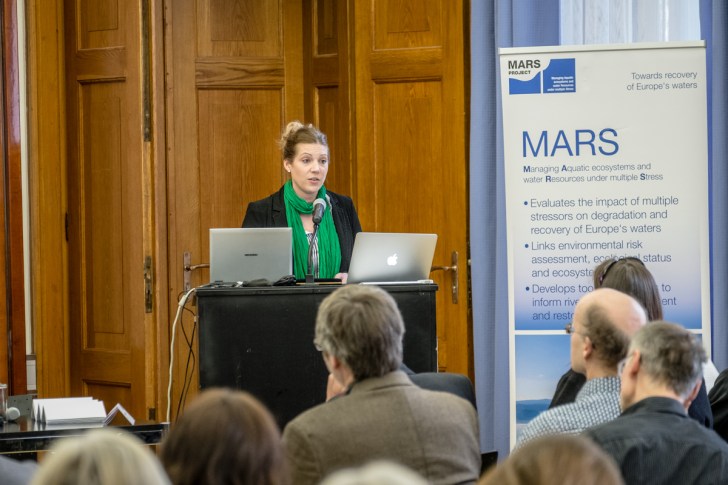
Workshop organiser Rafaela Schinegger. Image: Jörg Strackbein
In April, a group of around 60 river basin managers, Water Framework Directive officials, European Environment Agency representatives, external experts and MARS aquatic scientists met in Vienna to discuss the key challenges for freshwater management and policy across Europe.
Central to the two days of discussions was the challenge of multiple pressures: the often unpredictable interactions between individual pressures on freshwaters, such as pollution, floods, droughts and river bank alterations. Despite growing awareness of the importance of multiple pressures, their joint impacts on aquatic ecosystems are not well understood, and as a result they are poorly reflected in existing River Basin Management Plans – the framework through which the Water Framework Directive is implemented in Europe.
There was rich science-management dialogue at the meeting, titled ‘Multiple Pressures in River Basin Management‘, which took place at the Austrian Federal Ministry of Agriculture, Forestry, Environment and Water Management – a MARS partner. The MARS project is just past its halfway point, and the meeting gave the opportunity for water managers and policy makers to help shape the project’s research and outputs to ensure they are relevant and useful in practice (read more).
+++
6. Identifying early risks for environmental policies (May)
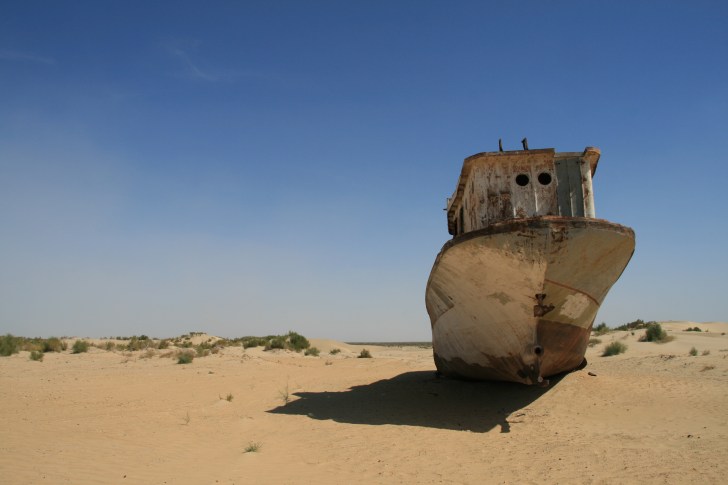
A rusting ship on the dry Aral Sea. Image: kvitlauk | Creative Commons
We live in a world that never stays still. People and places are ever more globally interconnected, dynamic and developing. Technological innovations feed into new cycles of use, waste and pollution. Ecosystems flux over time and space through invasions and introductions, novel assemblages and emergent patterns.
Circling all of this, scientific consensus predicts an increasingly variable and warming climate in the century to come. An age that could well be ratified later this year as a new geological epoch, fundamentally shaped by human activity and known as the Anthropocene.
How can environmental policy makers deal with such complexity and dynamism in a world they seek to positively influence? How can environmental policies anticipate the changes of uncertain future worlds? And what research programs, early warning systems and governance structures are needed to make such ‘anticipatory policy making’ a reality?
A new Science for Environmental Policy ‘Future Brief’ addresses these questions by examining a range of tools and approaches that can be used to identify emerging environmental risks. The approaches examined include strategic foresight tools, scanning of the internet for information, citizen science and state-of-the-art monitoring technologies (read more).
+++
7. Can rewilding reinvigorate European nature policy? (May)

Reflecting on restoration (Image: Per Harald Olsen)
Rewilding is a concept that has increasingly captured the attention of environmentalists and the public across the world. Broadly put, rewilding projects attempt to restore natural ecological processes in degraded ecosystems, and often to reintroduce flora and fauna that has become locally extinct.
A new policy brief produced by Rewilding Europe and Paul Jepson from Oxford University School of Geography and the Environment argues that rewilding approaches can reinvigorate European environmental policy, and extend and improve existing restoration approaches. In ‘Making Space for Rewilding: Creating an enabling policy environment‘, the authors frame rewilding as a ‘logical next step’ for the development of EU policy, and suggest how policy spaces for rewilding might be encouraged in the future.
Paul Jepson explains, “We need new concepts and innovation in policy for nature conservation to regain ground. Rewilding presents an opportunity to shift gear from protection to restoration, upgrading ecosystems, improving network connectivity and creating new value for people” (read more)
+++
8. Uncharted waters? Steering a course between Leave or Remain for the UK’s rivers and lakes (June)

Reflecting on water in the EU. Image: Symbolique 2006
On 23rd June, British voters will decide on the future of the United Kingdom’s membership of the European Union. The EU is an economic and political partnership of 28 countries (or member states) which was formed after the Second World War. The UK joined the then-European Community in 1973. The EU provides a ‘single market’ for people, goods and capital to move easily between member states, and sets rules and standards across a wide range of areas including industry, commerce and environmental management. By far the biggest EU expenditure is on agriculture, so the environment is, de facto, at the heart of the Union.
We report on the potential environmental impacts of a Leave vote (which was the eventual result), specifically for freshwater ecosystems (read more).
+++
9. When is river restoration rewilding? (June)

Rewilding the River Waal at Millingerwaard. Image: Twan Teunisses/ARK Nature
In May, we published an article on rewilding and environmental policy, asking the question: what might rewilding ‘do’ for degraded freshwater ecosystems that widespread and established restoration projects aren’t doing already?
Paul Jepson from Oxford University School of Geography and the Environment, author of the new rewilding policy brief with Rewilding Europe, responds to this question, describing a positive rewilding approach for freshwater management (read more).
+++
10. Can we geo-engineer polluted freshwaters back to health? (July)

Green algal bloom forming a thick surface layer in Lake Dora, Florida. Image: Nara Souza | Florida Fish and Wildlife Commision | Creative Commons
‘You broke it, you own it.’ That was political ecologist Paul Robbins’ take on the results of a new experimental trial (open-access) at the University of Alberta, Canada where adding iron to eutrophic lakes was found to help manage outbreaks of harmful algal blooms. For Robbins (and others, such as the Ecomodernist movement), the damage humans have caused to the natural world means there is a pressing need for radical and often-interventionist management to reverse decades of ecological harm.
The University of Alberta experiments suggest that one way to positively ‘own‘ damaged freshwater ecosystems is through geo-engineering, the deliberate large-scale intervention in the Earth’s natural systems to counteract environmental damage (most often climate change).
Freshwaters comprise some of the most highly altered and modified ecosystems in the world: new concrete geologies and diluted chemical flows. In this context, a new special issue of the journal Water Research brings together 60 scientists from across the world to present findings on the effectiveness of geo-engineering approaches in managing the harmful effects of phosphorous pollution in freshwaters (read more).
+++
11. Freshwater Protected Areas in a Rapidly Changing World (August)
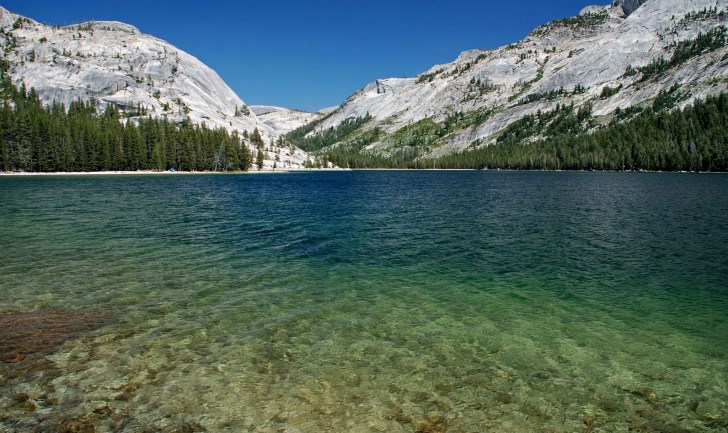
Tenaya Lake in Yosemite National Park, USA. Image: nrg_crisis | Flickr Creative Commons
Protected areas are one of the key conservation tools used by environmental managers and policy makers across the world to help protect biodiversity and ecosystems. Protected areas (for example Sites of Special Scientific Interest in the UK) set aside blocks of land and water in which human activities – such as fishing, farming, hunting and building – are limited as a means of promoting the survival of often rare and valuable species and ecosystems.
Freshwater protected areas face a growing set of challenges, not least to protect biodiversity and ecosystems that are open to change and move, under increasing global human demands for water. Addressing these challenges, a recent special issue of Aquatic Conservation: Marine and Freshwater Ecosystems compiles a set of articles examining the aims and effectiveness of freshwater protected areas globally (read more).
+++
12. Why a river in New Zealand is being granted ‘legal personhood’ (September)

The Whanganui River in New Zealand. Image: Evan Goldenberg | Flickr Creative Commons
It’s a common lament to hear from freshwater conservationists: if only our rivers and lakes had better legal protection in response to the many pressures they face. In New Zealand, a new piece of environmental legislation is intended to do just that, by taking the unprecedented step of granting a river the legal rights of a citizen.
The Whanganui River legislation, called the Te Awa Tupua bill, is currently moving through parliament. If passed (which appears very likely), the bill would grant the river ‘legal personhood’, that is the right for the Whanganui tribe to speak for the river in the country’s courts, and to file lawsuits on its behalf when environmental protections are not upheld. This approach could be seen as a type of co-management, through which the rights of the river, and its health and diversity, are upheld through shared decision-making involving local Maori tribes (read more).
+++
13. Connecting the shifting currents of aquatic science and policy (September)
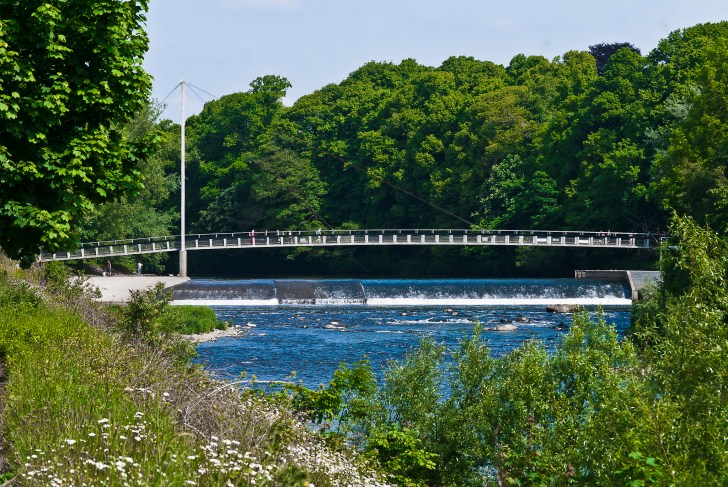
Bridging science and policy: the River Taff in Cardiff, Wales, which has been restored in recent decades. Image: Andrew Rees | Flickr Creative Commons
Dialogues between environmental scientists and policy makers form key cogs in modern conservation and restoration practices. Scientific research can inform and support ‘evidence-based’ policy making, whilst policy makers will often prioritise and fund socially and environmentally pertinent research topics.
The multiple ways in which aquatic ecosystems support and shape human lives makes productive science-policy dialogues about their management and protection particularly important. There is a pressing need for science-policy dialogues to help form adaptive policy and management responses to such new ‘natures’, to try to build in ecosystem resilience to emerging treats to climate change and to conserve highly-pressurised biodiversity.
In this context, a new opinion piece by Steve Ormerod from Cardiff University and G. Carleton Ray from the University of Virginia argues that aquatic scientists can play a pivotal role in identifying gaps, failings and emerging trends for policy and regulatory practices. Writing in Aquatic Conservation Marine and Freshwater Ecosystems, the authors identify the concept of resilience as an organising principle for science-policy responses to emerging human pressures. Promoting environmental resilience provides a means of bringing new ecological concepts, the importance of an ‘ecosystem approach’, and the value of ecosystem services and natural capital further into policy making (read more).
+++
14. Freshwater species populations fall by 81% between 1970 and 2012 (October)

Freshwater biodiversity is decreasing across the world. Image: Mike Goehler | Flickr Creative Commons
Freshwater species populations dropped by 81% globally between 1970 and 2012, according to a new World Wildlife Fund report released today. According to the Living Planet Report 2016, this freshwater species decline is more than double that observed in land (38%) and marine (36%) populations, and population declines are predicted to continue in years to come.
Habitat loss is the major cause of declining freshwater species populations, as lakes, rivers and wetlands across the world continue to be abstracted, fragmented, polluted and damaged. As ongoing research into multiple stressors tells us, freshwater habitat loss can be caused by numerous pressures caused by human activities throughout entire catchments and river basins. Over-exploitation is another key cause of species loss, as fish and bird populations are harvested for food, and reptiles and amphibians collected for the pet trade (read more).
+++
15. Multiple stressors in Science of the Total Environment (November)

MARS scientists studying multiple stressors in Lake Beyeshir, Turkey. Image: METU Limnology Laboratory
The MARS Project has been undertaking scientific research into the effects of multiple stressors on aquatic environments for nearly three years now, and project scientists are beginning to widely publish their findings.
Six new papers involving MARS research have recently been published online in the journal Science of the Total Environment, some of which are currently available for free through open-access publishing (read more).
+++
16. Conservation and restoration of riparian zones under multiple pressures (November)

Riparian zone around Burns Run, Clinton County, Penn, USA. Image: Nicholas A. Tonelli | Flickr Creative Commons
Conservation efforts to maintain and restore riparian zones along many global rivers are often inadequate, according to a new study. Writing in the journal Biological Conservation, Eduardo González and colleagues draw on a body of emerging research on riparian zones to identify a range of ecological, socio-economic and policy pressures for their fragmented distributions.
Riparian zones are the ecosystems found along the banks of rivers and streams: narrow transitional zones between land and water, often with diverse ecosystems that play important roles in the ecological functioning of the wider landscape. Riparian zones – often dominated by tree and plant species which thrive in damp conditions – can help buffer diffuse pollution, mitigate flood risks, store carbon, reduce bank erosion, provide shaded and cool stream water, prevent livestock from trampling fish spawning grounds, and offer valuable biodiversity habitat (read more).
+++
A very happy new year from all of us at the Freshwater Blog! Thanks for reading, and all the best for 2017.
Climate warming and nutrient pollution may interact to alter future shallow lake ecosystems
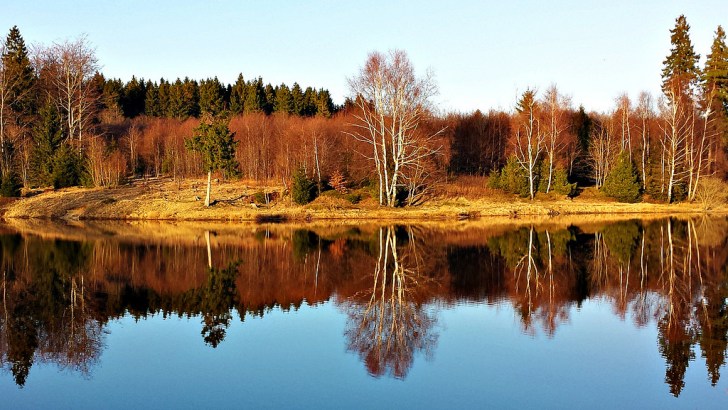
A shallow lake ecosystem, Langer Teich, in Germany. Image: Mathias Liebing | Flickr Creative Commons
Combined future effects of climate warming and nutrient enrichment may lead to increased variability in bacterioplankton communities in shallow lakes, according to a new study in ISME, the journal of the International Society for Microbial Ecology.
Bacterioplankton are bacterial plankton which drift in the water column (‘plankton’ is derived from the Greek word πλανκτος or planktos, meaning ‘wanderer’ or ‘drifter’). Bacterioplankton play a number of important roles in aquatic ecosystems, particularly the decomposition of organic matter and nitrogen fixation.
Bacterioplankton are the largely-invisible ‘engine room’ of aquatic systems, supporting numerous cycling and recycling processes which help support and maintain a wider ecosystem. As such, understanding how bacterioplankton communities are likely to respond to future climate change and other human pressures is a key research topic for aquatic scientists and managers.
A research team led by Lijuan Ren, from the Chinese Academy of Sciences, and including MARS team member Erik Jeppesen from Aarhus University in Denmark used a series of mesocosms – artificial micro-lake environments in which conditions can be closely controlled – to run experiments simulating possible future climate changes and nutrient enrichment scenarios.
The 24 outdoor mesocosm experiments – located in Central Jutland, Denmark – were run over eight and a half years, as part of the world’s longest running lake mesocosm experiment studying the impacts of climate change. Each mesocosm has inflows and outflows of water from the local environment, with a water ‘residence time’ of around two and a half months: mimicking natural lake systems.
The scientists found that neither climate warming (simulated under the IPCC A2 scenario) nor nutrient enrichment had significant effects on bacterioplankton diversity in the individual mesocosms.
However, where higher levels of climate warming (50% above the IPCC A2 scenario) were simulated together with nutrient enrichment, bacterioplankton beta diversity (that is, the diversity between different habitats) was increased. What this tells us is that combined climate warming and nutrient pollution of lake systems may cause increased variability in bacterioplankton communities between ecosystems in the future.
The composition of bacterioplankton communities also changed under combined high-warming-high-nutrient conditions. The abundance of some species such as Actinobacteria decreased, whilst the percentages of Cyanobacteria, and some rare and unclassified phyla increased.
The results indicate that significant future climate warming coupled with high levels of nutrient pollution are likely to significantly alter the diversity and composition of bacterioplankton communities in shallow lakes.
The implications of this finding for the health and diversity of shallow lake ecosystems is as yet uncertain. However, given the key role of bacterioplankton in cycling nutrients in aquatic systems, their responses to climate warming and nutrient enrichment observed in this study are likely to be significant in influencing wider shallow lake ecology.
More broadly, the study provides more evidence of the potential impacts of combined multiple stressors in freshwaters. As aquatic systems become increasingly pressurised, we are learning that the intricate ecological networks that support them are being increasingly threatened.
Assessing and managing chemical pollution: towards the 2019 review of the European Water Framework Directive
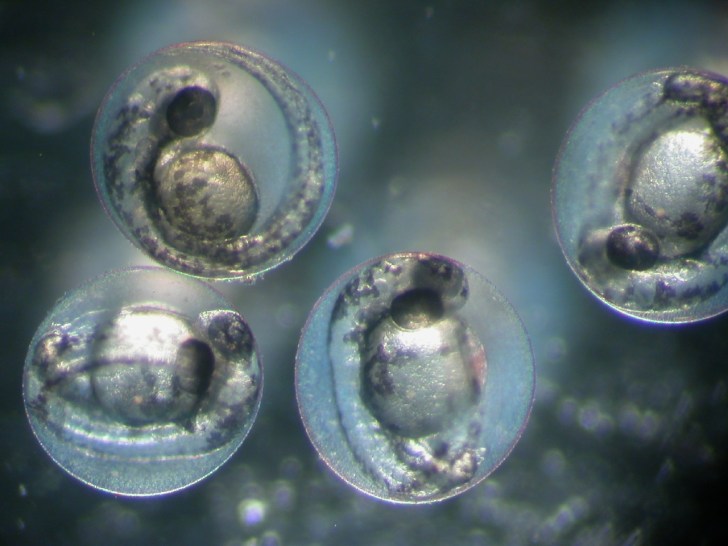
Zebrafish embryos detecting toxicants. Image: André Künzelmann
Guest post by Werner Brack of the EU FP7 SOLUTIONS project.
Our knowledge on water quality in European rivers and lakes has strongly improved over the last decade. This has a lot to do with extensive monitoring activities under the European Water Framework Directive (WFD), which was implemented in 2000 in the European Union, and serves as an example for good water management practices beyond Europe.
Targeted conservation and restoration measures projected in River Basin Management Plans are designed to help to achieve a good chemical and ecological status in surface waters all over Europe. But despite substantial efforts in monitoring and assessment, this goal has been achieved only in a minority of river basins. In 2019, a major review of the WFD will take place, with the intention of achieving all such water management goals.
In this context, 35 experts from 29 institutions (led by the author) recently presented 10 detailed and concrete recommendations for an advancement of WFD and a more efficient monitoring and management of chemical contamination in European rivers. Working under the umbrella of the FP7 project SOLUTIONS and the European monitoring network on emerging pollutants, NORMAN, the experts recommend:
(1) improving monitoring and strengthening comprehensive prioritisation;
(2) fostering consistent assessment; and
(3) supporting solutions-oriented management.
Monitoring of chemical contamination in aquatic ecosystems so far has been done exclusively by applying chemical target analysis of a limited set of compounds listed as Europe-wide Priority or River Basin Specific Pollutants. This approach focuses on well-known legacy pollutants, and ignores the thousands of emerging pollutants in daily use. It is also rather costly and rarely provides appropriate management options. Thus, a more comprehensive monitoring and prioritisation is recommended.
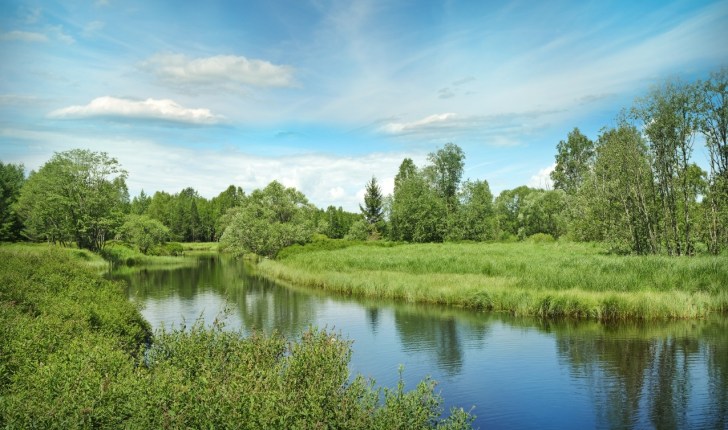
Buffer strip to mitigate chemical pollution along the River Vltava in the Czech Republic. Image: UFZ
Next generation monitoring under a revised WFD should involve effect-based monitoring tools and trigger values. Effect-based tools are biotests using organisms such as algae or fish embryos, but also isolated cells engineered to detect chemicals and mixtures thereof that exhibit a specific effect. These test organisms will help us, on the one hand, to identify river stretches, which are not under toxic pressure and allow for a reduction of chemical analytical monitoring efforts. On the other hand, they indicate water resources that face a toxic risk. For them, a strategy to identify causes for effect-based trigger values to be exceeded is required and suggested by the authors.
It is also pointed out that incoherent and insufficient monitoring often leads to ignorance of relevant chemicals and peak concentrations. This may result in unrecognised risks. Thus, to foster consistent assessment the authors suggest modelling as a tool to fill gaps in monitoring data. It may also create incentives to extend the monitoring basis of chemical contamination if a compound that has not been measured is not assumed to have a concentration of zero (and thus no risk) but a concentration based on realistic modeling until the modeled value is replaced by an appropriately measured one.
There is often a mismatch between assessment outcomes and their usefulness for water management. Thus, solutions-oriented approaches should explore risk reduction scenarios already before and along with risk assessment. Today, the key question of monitoring and assessment is whether the water quality status is good or not good following the one-out-all-out principle. The authors support a more graded system rewarding improvements even if not all goals are achieved.
In a solutions-oriented approach the question on the quality status should be accompanied from the very beginning by the question on sustainable abatement options and their potential to mitigate multiple stressors, best in one measure. As an example, the installation of extended buffer strips along river banks offer protection from pesticide pollution and the input of excess nutrients.
You can read the full list of recommendations in the new paper here.
New genetic bioassessment project for European freshwaters
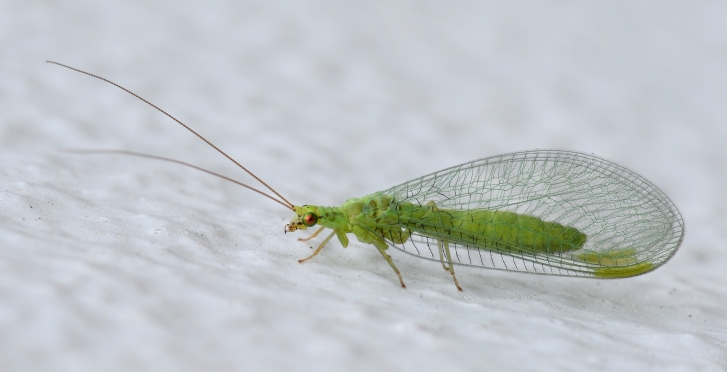
Macroinvertebrates such as this green lacewing are commonly used in curremt bioassessments. Image: Wikicommons
European freshwaters are subject to multiple pressures which place increasing stress on the health and status of the aquatic ecosystems they support. In order to effectively design and monitor conservation and restoration strategies, bioassessments of aquatic ecosystems are required.
Bioassessments provide snapshots of the health and diversity of ecosystems, often focusing on sampling species which are particularly sensitive to pressures such as pollution. At present, bioassessments typically rely on morpho-taxonomy, where species are identified based on the morphology (or form and structure) of manually collected and sorted specimens. This approach is often time-consuming, limited in temporal and spatial resolution, and dependent on the taxonomic expertise of the analysts. As a result, bioassessments are currently of limited use in informing large-scale ecosystem management.
A new collaborative European research project aims to use cutting-edge genetic technology to improve the accuracy and scope of aquatic bioassessments. The DNAqua-Net project, funded under the European framework COST, is set to bring together a large international research community from across disciplines to develop best practice strategies for using novel genetic tools in the bioassessment and monitoring of aquatic ecosystems, both in Europe and beyond.
The project will develop genetic bioassessment techniques such as DNA barcoding, which allows for species to be identified from their DNA signature in tissue samples. DNA barcoding uses short standardised gene fragments of organisms allowing an unequivocal assignment to species level based on sequence data. Standardised DNA-barcode libraries, generated by the international Barcode of Life project (iBOL), and its associated and validated databases, such as BOLD and R-Syst provide reference data, which make it possible to analyse multiple environmental samples within a few days.
DNAqua-Net will bring together researchers and institutions that were previously working independently to provide a collaborative focus for developing and applying novel genetic techniques for bioassessment. In particular, the team hope to utilise the potential of eDNA techniques, through which DNA does not have to be necessarily extracted from tissue, but can also be collected from sediments, biofilms, or the water itself.
eDNA techniques can provide information on more than a number of specifically targeted species: instead on the entire biodiversity of an aquatic environment. In addition to being less invasive than traditional sampling techniques, the combined eDNA approach could potentially detect invasive species and as such act as an early warning system for management.
The project team’s proposal is published in open-access Research Ideas and Outcomes journal. Reflecting on the potential of their forthcoming research, they state “Novel DNA-based approaches currently emerge, possibly acting as a “game-changer” in environmental diagnostics and bioassessments by providing high-resolution pictures of biodiversity from micro to macro scales.”
Lake ecosystems under ice

Frozen Lochan Urr in the Scottish Highlands. Image: John McSporran | Flickr Creative Commons
Around half of the world’s lakes (slightly more than 50 million) are periodically frozen and (partially or fully) covered in ice. However, ongoing climatic changes are causing reductions in ice coverage in lakes across the world. Despite this, there is comparatively little information on the ecology of under-ice conditions in lakes, and how changes to winter conditions are likely to affect their health and functioning all year round.
Recent research suggests that the timing and extent of winter ice cover can have ‘cascading‘ effects on spring and summer lake ecology, for example on algal growth. As such, winter ice cover may act as more than simply a seasonal ‘pause’ in lake productivity, and instead play a significant role in shaping lake ecosystems all year round.
A large team of freshwater scientists from 42 research institutes across the northern hemisphere have recently collaborated to address the shortfall in knowledge of under-ice lake ecology. Writing in the journal Ecology Letters (open access), the team, led by Stephanie E Hampton at Washington State University, USA, carried out the first global synthesis of data on under-ice lake ecosystems, drawing on research from 101 lakes in Antarctica, Canada, Greenland, Europe and the USA.
The research team used the new global dataset to explore two key questions. First, they wanted to know about the ecological changes that happen in lakes between winter and summer. Second, they wanted to understand how winter and summer seasons were connected, and through which ecological variables these connections were made.
One major finding discussed in the paper is that whilst primary producers (algae) and consumers (zooplankton) are typically less abundant under ice than in summer, they maintain significant populations in many lakes through winter. This suggests that zooplankton actively feed and reproduce under ice. Light availability is likely to be an important limiting factor to winter algae and plankton populations, depending on variations in ice thickness and opacity and snow cover.
Another of the research team’s key findings is that dissolved nitrogen was consistently higher in winter ice conditions than in summer. This may be the result of winter nutrient mineralisation providing continued inputs of nitrogen into lakes through cold seasons.

Ice forms on the frozen Lake Michigan, USA. Image: Kamil Dziedzina
The research team found evidence for strong winter-summer linkages in some lakes, particularly those which had long historical datasets, such as the Laurentian Great Lakes, Wisonsin lakes, northern European lakes and Canadian lakes. Here, whilst the influence of winter conditions on the following summer differed among variables, winter and summer conditions were often negatively related.
This relationship means that high winter values (e.g. for zooplankton density or chlorophyll levels) resulted in low values in the following summer. In the case of chlorophyll, it is suggested that high winter levels may limit available nutrients for the following summer. For zooplankton, it may be the case that high abundances reduce the availability of readily ingestible phytoplankton at the beginning of the next season. However, given that previous studies have suggested that overwintering populations can boost summer populations and vice versa, there is clearly the need for further research on the seasonal dynamics of lake ecosystems.
“We are losing ice without a deep understanding of what ecological processes are at stake” is how the authors begin their conclusion. Whilst this synthesis has offered new insights into under-ice lake ecology, and how it may influence ecosystems year-round, there remains the need for significant further research. Studying long-term ecological data from sediment records may be one means of broadening our understanding of these dynamics.
The study suggests that lake conditions are not simply result of prevailing seasonal weather conditions but can also depend upon external and internal forces operating on the ecosystem in previous seasons. Predicting the ecological effects of shorter winters and longer summers, then, calls for an increased focus on winter lake ecosystem monitoring. As the authors wryly state, “In the future, we predict that there will be no more ‘off-seasons’ for freshwater ecologists.”
+++










 The Freshwater Blog