What evidence do we need to protect freshwater life?
European Member States filed their draft national restoration plans with the European Commission earlier this month, setting out how each country intends to meet its ambitious restoration targets by 2030.
The Commission and the European Environment Agency will now assess the drafts and publish their observations, and the final plans are due within a year. The Nature Restoration Law the plans support is an unprecedented coordinated restoration effort across the EU, and rests on an implicit premise: that we know which conservation and restoration actions work, and how well.
A new perspective published last month in Marine and Freshwater Research asks how well that assumption holds. Philip Boon of UHI Inverness is first author of the study, writing with eight colleagues from the Freshwater Conservation Committee of the IUCN Species Survival Commission. They zoom out from individual projects to look at the evidence available globally to support freshwater conservation decisions. Restoration sits at one end of a spectrum of approaches, which Boon has described elsewhere as running from preservation and protection of near-natural rivers, through damage limitation and mitigation, to restoration where circumstances allow. The new paper examines evidence supporting the whole of that range.
“We wanted to take a step back and ask an important question: what evidence do we actually have for freshwater conservation, and how useful is it for deciding what to do next?” Boon says. “We looked across existing evidence syntheses to identify where knowledge is strong, where it is still missing, and how conservation practice could generate more transferable insights.”
The search for freshwater evidence
The team searched two major open-access sources of evidence syntheses: Conservation Evidence, run from Cambridge, and repositories maintained by the Collaboration for Environmental Evidence. Together these archives contain synthesised evidence from thousands of studies on whether conservation actions do what they set out to do.
Conservation Evidence held 8,867 studies, 3,891 actions and 27 synopses in November 2025. The researchers searched for actions specific to freshwater systems and, within Conservation Evidence, restricted their analysis to actions supported by at least four studies. This left 157 freshwater-specific actions. The authors describe this as a rough overview by a single reviewer rather than a systematic review.
The study identified gaps between evidence and practice. A keyword search on “freshwater” returned 541 results supported by three studies or fewer, not all of them freshwater-specific, and 309 potential actions with no supporting studies at all. In short, there were numerous conservation actions listed as options for freshwater managers which had no supporting studies in the database.
There are disparities inside the 157 freshwater-specific actions too. Conservation Evidence holds actions for invertebrates and fish, but these have not yet been drawn together into synopses, which are planned or under way. The CEE repositories contain some evidence for those groups. For a discipline that so often relies on fish and invertebrates to tell us whether freshwater ecosystems are recovering, this gap matters.
The geography of the global conservation evidence is uneven. Of the 157 freshwater actions, 130 were supported by at least one study from North America and 106 from Europe. Australia and New Zealand accounted for 48. The research team notes that the expert panel for amphibian conservation had 28 members from 13 countries, 15 of them from the UK or the USA. Most of the available evidence comes from temperate regions, and the authors highlight how biodiverse regions in Asia, Africa and Latin America are the least studied.
Francesca Ridley of Newcastle University, who handled data curation and analysis in the study, sets out what that means in practice.
“Most documented studies come from Europe and North America, while tropical and subtropical regions remain underrepresented, which is a problem given they support a huge share of global freshwater biodiversity,” she says. “Many projects lack good baseline data, monitoring often ends before ecological recovery can really be detected, studies may be conducted at scales that do not match the processes we are trying to understand, and unsuccessful interventions are much less likely to be reported. These gaps make it difficult to know not just whether something worked, but why it worked, where it might work again, and where it probably would not.”
The effectiveness ratings of different actions tell their own story. Of the freshwater-specific actions in Conservation Evidence, 86 were rated likely to be beneficial, 33 involved trade-offs between benefits and harms, and 23 were rated beneficial. Eight had unknown effectiveness because of limited evidence, and the remaining seven were rated either unlikely to be beneficial, or likely to be ineffective or harmful.
For an action to be classed as beneficial, the Conservation Evidence assessment requires scores above 60% for effectiveness and above 60% for certainty, with harm below 20%. The largest category was “likely to be beneficial”, where the evidence suggests an action probably works but does not reach the threshold for “beneficial”. Examples of actions assessed as beneficial include planting trees or shrubs for brackish or saline wetlands, creating ponds for amphibians, and restoring or creating wetlands: in other words, discrete, physical and repeatable measures.
Unreported conservation failures
The paper is open about an underlying bias shaping their findings: evidence of conservation failure is rarely formally published.
The authors searched for freshwater conservation, protection and restoration articles from 2000 onwards, using title terms including “fail”, “hinder” and “lessons learned”. The searches returned 351 and 413 articles. They note the obvious caveat themselves: a failure might be discussed inside a paper without being its subject, and so escape a title search. Even allowing for that nuance, the number is small for 25 years of work, and the reluctance to report failure raises the risk of repeating it somewhere else.
A key barrier is institutional. Disclosing an unsuccessful outcome can carry risks to scientists’ reputation and ongoing funding. A 2011 study of German river restoration went further. Success, it found, is often a matter of perspective, and in some cases self-evaluation by water managers may attribute success to a scheme on flimsy evidence, in an effort to show progress towards Water Framework Directive targets. One of that study’s authors, Sonja Jähnig of the Leibniz Institute of Freshwater Ecology and Inland Fisheries, is among the authors of the new paper.
“Freshwater biodiversity is under pressure, so we need to get better at learning from every conservation action,” Jähnig says. “That means not only documenting success, but also being open about failure, monitoring long enough to capture ecological responses, and making results accessible so that others can build on them rather than starting from scratch.”
Time and traditional ecological knowledge
The timescale of monitoring is an important practical constraint. Ecological recovery can take decades. Project funding often runs on one to three years, and political and policy cycles on four to five. A review of French river restoration found monitoring built on too few sites and too little sampling before the work began, producing conclusions that were inaccurately positive. An analysis of Spanish dam removal found no systematic fish monitoring after demolition.
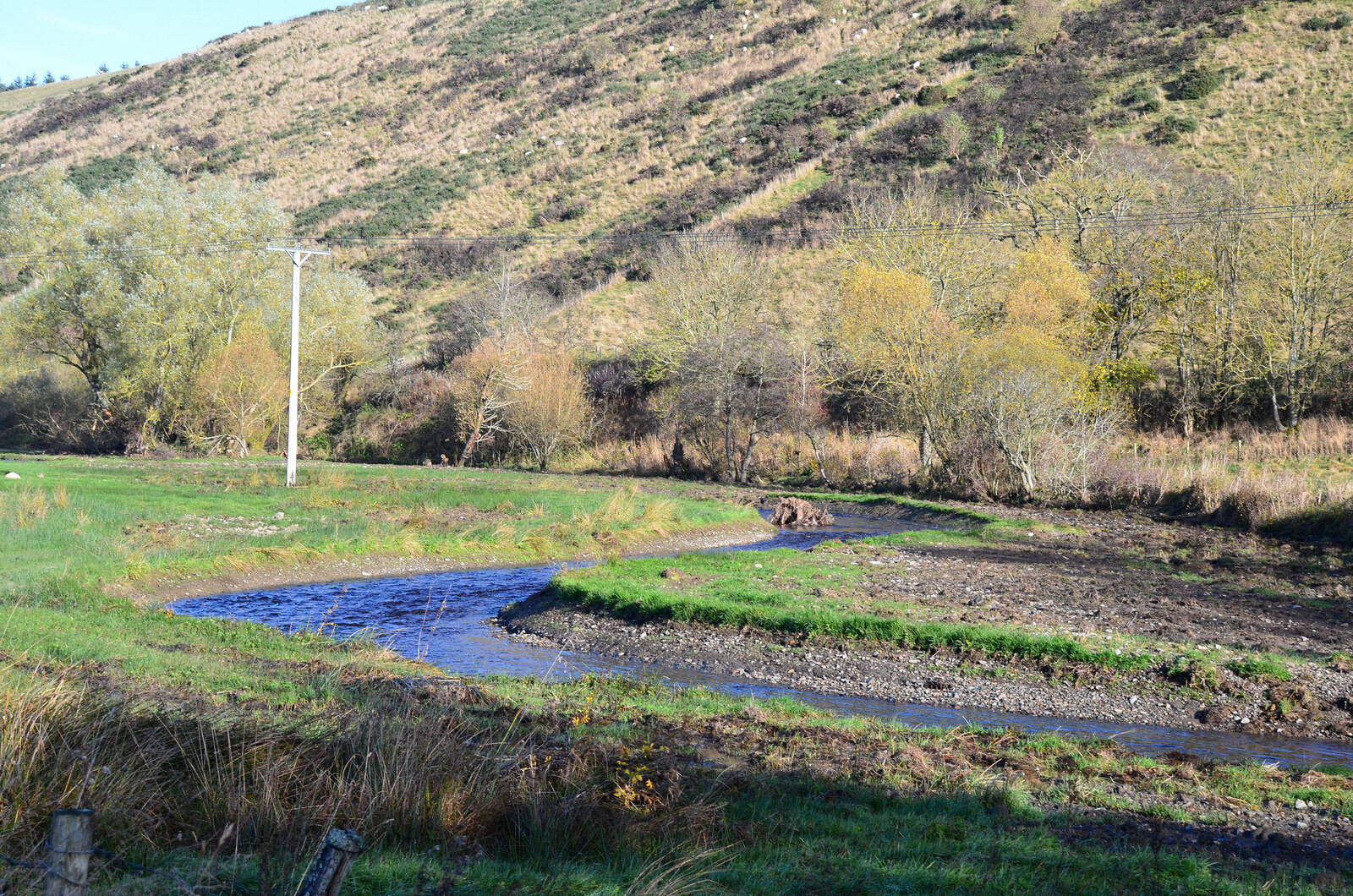
In contrast, the paper discusses Eddleston Water in the Tweed catchment in southern Scotland. A 3.5-km straightened stretch of the river was re-meandered and reconnected to its floodplain. Monitoring covers hydrology, river morphology and ecology and has been carried out for more than ten years. Peak water levels downstream during heavy rain have dropped, and the diversity and numbers of aquatic invertebrates have recovered. The authors cite the case as what evidence of success can look like, a story more than a decade in the making.
The team identify another gap in conservation evidence, that of traditional and local ecological knowledge. Such knowledge can track change across spans that few funded projects will ever cover, and it is starting to enter formal assessment. The IUCN Red List reassessments for Lake Tanganyika, completed in 2025, drew on knowledge from the countries around the lake. In the Amazon, fishers who identify pirarucu from subtle visual and acoustic cues fed their counts into assessments of abundance, allowing new catch quotas to be set and the species to recover in managed areas. The authors are even-handed about the limits of such knowledge sets, citing the shifting baseline syndrome first described by Daniel Pauly, which can distort how individuals notice population trends across their own lifetime.
Identifying what ‘good’ evidence looks like
A subtle argument runs through the paper about the language of assessment. The EU Habitats Directive uses qualitative categories including excellent, good, reduced and unknown when reporting the conservation status of species. For habitats, one of the criteria is the degree of conservation of their structure and functions, with guidance that uses categories including complete, limited, very limited and unknown.
The authors argue that guidance on the type of evidence needed for these judgements raises more questions than answers. Their own question is clear: “Who decides what ‘excellent’ or ‘good’ means in the context of conservation, and how?”
The consequences of this question are evident in national reporting. In Poland, only 25.7% of the 72,673 km² of freshwater habitat covered by Special Areas of Conservation was classified as favourable for 2013 to 2018. A further 68.7% was classified as unfavourable-inadequate or unfavourable-bad. A separate systematic review found that fewer than 2% of the 2,586 publications it returned gave quantitative evidence on whether freshwater protected areas work.
Data and timing
The authors’ recommendations centre on improving data collection and sharing. They highlight the need to improve geographical equity in data, to define the terms used in evaluations and explain how they were derived, to make sure unsuccessful conservation interventions are reported alongside successful ones, and that data are collected before actions are implemented. They make the argument for evidence-based policy rather than policy-based evidence, and for evidence treated as a learning process rather than a static output.
That request arrives at a complicated moment. In December 2025 the Commission announced a review and targeted revision of the Water Framework Directive under the RESourceEU Action Plan, intended to address regulatory bottlenecks and simplify the legislation in relation to circularity and access to critical raw materials, with environmental and human-health protections maintained. A call for evidence ran in the spring. The 2019 fitness check had found that the Directive had clear added value, with implementation remaining a major challenge.
As the restoration movement grows, both in Europe and globally, the case for baseline monitoring gets stronger. To show that a project is improving ecological conditions, you need data from before it started. And restoration is about to get expensive. A Swiss cost-benefit analysis for restoring 400 km of river put the figure near €1.3 million per kilometre. Money on that scale will be committed against the evidence base this paper describes, and decisions made without it risk wasted funding, missed opportunities and lost species.
The Nature Restoration Law plans filed last week will be revised and finalised over the coming year. Building an evidence base fit to judge them will take longer. It calls for monitoring that outlasts a funding cycle, studies from the regions holding most of the world’s freshwater species, and published accounts of the projects that did not work. This may be slow and unglamorous work, at times, but as the new study suggests, it is what safeguarding the future of our freshwater ecosystems depends on.
///
Boon PJ, Ridley FA, Adhya T, Baigún C, Böhm M, Harrison I, Jähnig SC, Quintana Y, Simaika JP (2026) Evidence charts the future of freshwater biodiversity conservation. Marine and Freshwater Research 77, MF26113. Open access under CC BY-NC-ND.
This article was supported by IGB Berlin.










Comments are closed.