
The newly discovered cave loach from the Danube-Aach system. Image: Jasminca Behrmann-Godel
A diver has made an unusual discovery in an inaccessible underground cave system in Southern Germany: a population of Europe’s first documented cave fish. The pale coloured loach of the genus Barbatula is thought to have diverged from surface fish around 16,000 to 20,000 years ago, following the retreat of ice age glaciers.
“The cave fish was found surprisingly far in the north in Southern Germany,” said project leader Jasminca Behrmann-Godel of the University of Konstanz in Germany, lead author on a newly-published study in Current Biology. “This is spectacular as it was believed before that the Pleistocene glaciations had prevented fish from colonizing subterranean habitats so far north.”
The loach is Europe’s first reported cave fish, discovered in 2015 by diver Joachim Kreiselmaier in the hard-to-reach Danube-Aach karst cave system, which drains into the River Rhine. “It was only when the glaciers retreated that the system first became a suitable habitat for fish. They must have moved there at some point following the end of the Würm glacial period, no more than 20,000 years ago and seemingly from the Danube.” said Arne Nolte from the University of Oldenburg/Max-Planck Institute for Evolutionary Biology in Plön, Germany.
In evolutionary terms, the loaches’ adaptation to pitch-black underground cave life has been extremely rapid, occurring over the course of a few thousand years. “Their eyes are much smaller than in other fish, almost as if they were curved inwards and their colouring has almost disappeared. The fish have elongated barbels on their heads, and their nostrils are larger than those of their cousins who live closer to the surface,” explains Jörg Freyhof from the Leibniz Institute for Freshwater Ecology and Inland Fisheries (IGB) Berlin.
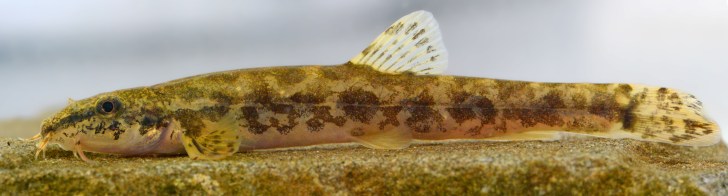
A loach species from the Danube system, which may be a ‘cousin’ to the newly discovered cave loach. Image: Jasminca Behrmann-Godel
The cave system where loach populations were found was sealed for hundreds of thousands of years until the end of the last ice age, when glaciers retreated northwards to leave a new opening, known as the Aach Spring. It is through this spring that a loach population is likely to have entered the underground cave system from surface waters, becoming isolated and taking on new evolutionary paths.
The caves are notoriously difficult for divers to access, requiring dry spells which make the underground water system calm and clear enough for exploration. “No more than 30 divers have ever reached the place where the fish have been found,” diver Joachim Kreiselmaier said. “Due to the usually bad visibility, strong current, cold temperature, a labyrinth at the entrance most divers do not come back again for diving.”
Over 2015 and 2016, Kreiselmaier brought back five live loach specimens for Behrmann-Godel to analyse. Based on morphological and genetic comparisons to surface fish caught upstream and downstream of the cave, the researchers report that the cave loaches are indeed an isolated population and the first known European cave fish.
North America and China are known hotspots for cave dwelling fish, but the discovery of the underground loach populations in Southern Germany suggests that cave fish distributions may be wider than previously thought. For project leader Jasminca Behrmann-Godel, the loaches’ rapid evolutionary adaptation suggests that similar populations may be found in Europe in the future, “Cavefish could exist virtually everywhere in principle, and there’s no good reason to expect long evolution times for them to adapt to cave environments.”
The discovery indicates that some underground cave ecosystems may be more complex and nutrient-rich than previously thought, allowing them to support such permanent fish populations. It is also a reminder that the conservation of underground aquatic ecosystems – for example through reducing diffuse pollution and water abstraction – is of crucial importance, not only for species we already know about, but potentially those that are yet to be discovered.
Research will continue into the loaches’ genetic, genomic and behavioural characteristics, which may provide unique insights into the traits of a species in the ‘early’ stages of evolution. For Jörg Freyhof, the discovery is a reminder that “the wonders of nature can turn up anywhere, even in your own backyard.”
Behrmann-Godel J et al (2017), The first European cave fish, Current Biology, 27(7), R237-R238
Mitigating the ecological effects of water storage pressures

Water outflows from Fewston Reservoir, UK. Image: James Whitesmith | Flickr Creative Commons
Human alterations to the physical characteristics of water bodies – their shape, course, bed and banks – are common across Europe. Such ‘hydromorphological’ alterations may be the result of flood protection needs, navigation, urban development, abstraction demands or water storage.
Hydromorphological alterations due to water storage – for example, hydroelectricity generation, agricultural irrigation and public water supplies – are particularly widespread, and many of the affected water bodies have been designated as ‘heavily modified‘ by the Water Framework Directive (WFD). As a result, effective management and mitigation strategies are clearly needed to improve the ecological health and status of affected water bodies.
Since 2013, the ECOSTAT project – an European Commission Working Group for the implementation of the WFD – has been researching the effectiveness of mitigation measures for the effects of water storage on water bodies in 23 European countries. ECOSTAT recently published a report on this research, based on engagements with stakeholders across Europe. Framed as a ‘knowledge exchange’ tool for water managers, the report highlights how mitigation measures for water storage across Europe are commonly focused on maintaining minimum ‘environmental flows’ along river courses, particularly of water and migratory fish.
Their report centres on the idea of ‘good ecological potential‘ in heavily modified water bodies. EU member states are required to undertake management to guide most of their water bodies towards ‘good ecological status’, which is measured by a range of biological and chemical indicators. However, heavily modified water bodies (for example, a hydropower dam on a river) are instead required to be managed towards ‘good ecological potential’.
In effect, this is a measure of progress towards a lowered baseline of ecological status, which is limited by human modifications. Implicit in the measure of ‘good ecological potential’ is an awareness that highly modified water bodies are unlikely to ever reach the ecological status of their less modified equivalents, and so the task for water managers is to improve their status as far as possible, given the multiple pressures they face.
The recent ECOSTAT report compared the effectiveness of mitigation measures for water storage pressures across Europe in achieving good ecological potential. Mitigation measures – for example, maintenance of water flows and temperature below a dam, or the installation of fish passes – are aimed to improve the ecological potential of heavily modified water bodies. However, there is a need across Europe for managers to share information on ‘what works’ when implementing mitigation measures under multiple pressures.
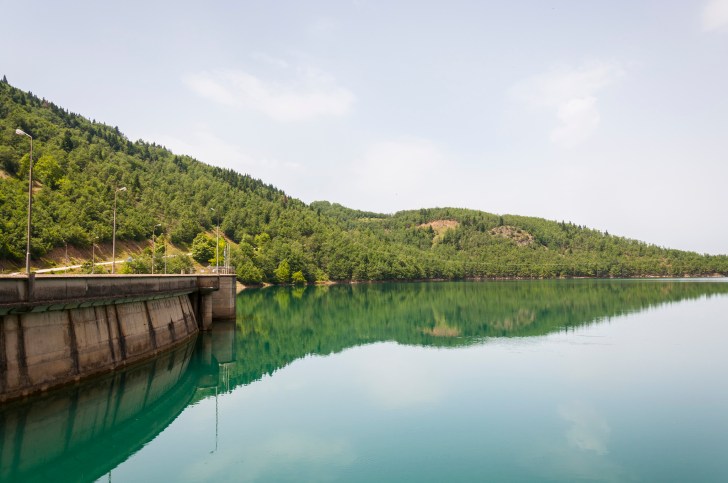
Lake Plastiras (or Tavropos Reservoir) in Greece, an artificial water body created for irrigation and drinking water supplies, and hydropower. Image: Ava Babili | Flickr Creative Commons
Water storage in reservoirs, dams and canals for water supply, power generation, irrigation and recreation can have a number of harmful ecological effects. Flows of water, nutrients and sediments are often altered, and migration routes and breeding grounds for aquatic animals such as salmon are cut off. Habitats are often altered, both upstream and downstream of water storage constructions, potentially altering erosion dynamics and water temperature, depth and oxygen levels. A range of common measures – largely targeted at maintaining or restoring environmental flows – are outlined in the report.
Connectivity of fish migration routes
The free passage of migratory fish is a key requirement of the WFD, and may be used as an indicator for assessing whether water bodies are meeting good ecological potential or status. As a result, ensuring connectivity in migration routes was a key priority for most countries, with in-channel fish passes and bypass channels (which circumvent small obstructions) the most common measures.
Bypass channels are reported as being most effective at helping migratory species navigate small dams and weirs. Both bypass channels and in-channel fish passes require ongoing maintenance, and a wider conservation of habitats involved in other life stages (e.g. spawning) to be successful. In hydropower plants, the installation of ‘fish friendly’ turbines which have fewer blades and slower rotation speeds may increase the downstream migration success rate for some fish species. The most common reason for not implementing such measures is due to high costs and technological requirements.
Flow alterations
Water flows play a key part in shaping the physical and ecological characteristics of a water body, and as such its sustainability and productivity. As with connectivity, the WFD explicitly acknowledges the importance of the flow regime for the status of aquatic ecosystems and includes it as one of the key quality elements supporting biological elements in the classification of ecological status.
Most European counties implement mitigation measures for flow alterations, although these vary depending on geography and human pressures. Where low flows are a problem, measures may include increasing flows from dam outflows, reducing abstraction rates and altering river morphology to maximise habitat availability under low flows. Where rapidly changing flows (for example, from ‘hydropeaks’) are the issue, dam outflows may be regulated or rerouted, and river morphology may be altered to provide refuge habitats for variable flows, in order to minimise the effects on downstream ecosystems. As with connectivity, technical challenges and high installation costs were commonly cited as reasons not to implement such measures.
Sediment alterations
Closely tied to hydrological flows, sediment transport plays a fundamental role in determining and maintaining river channel morphology and ecosystem habitats. Water storage reservoirs can fundamentally alter sediment dynamics: causing upstream deposition where flows are low, and downstream erosion and transport where flows are higher, and/or more variable.
A focus on mitigating sediment alteration is less of a priority in European countries than for connectivity and water flows. Where practiced, the two most effective techniques are reported to be mobilising flows and restoring lateral erosion processes. Where the first measure is dependent on managing water flows, the second is practiced largely where river banks have been reinforced with rock or concrete. Lateral erosion measures aim to remove such fortifications to allow natural erosion processes to return along the river’s banks, thus increasing sediment supply to areas where there is presently little, due to such modifications.

Solbergfoss Hydroelectric Power Station on the River Glomma in Norway. Image: Astrid Westvang | Flickr Creative Commons
Impounded rivers
Dams and weirs create stretches of ‘impounded’ flows on rivers, where upstream flows are often reduced, water depth increased, and sediment deposition increased. Impounded flows may extend out over former flood plains. Some rivers may alternate between impounded and free-flowing stretches, creating a fragmented course, often with low connectivity between habitats. Impounded areas may be at increased risk of stagnation and eutrophication linked to water pollution.
Measures to mitigate the impacts of impoundments are not yet widespread in Europe, according to the ECOSTAT report. Where practiced, the measures with highest ecological impact are the restoration of tributary and floodplain features in impounded stretches, in order to encourage a more ‘natural’ flow regime; the reduction of water storage levels above a dam or weir; and the construction of free-flowing channels which bypass the impoundments, in order to create appropriate aquatic habitats. Following inputs from water managers across Europe, improvements to impounded channel habitats and reconnecting tributaries and floodplain features are the most realistic measures for implementation.
Lake level alterations
Large dams with reservoirs may be built for multiple water uses including hydropower, water supply (e.g. drinking water), flood protection and water regulation. Depending on the different requirements of these uses, the water level in reservoirs can vary over time and use. For example, for flood protection water levels are relatively high during wet periods and lower during dry periods. For hydropower use, rapidly changing energy production (hydropeaking), can cause high water level fluctuations, particularly in smaller reservoirs. Such fluctuations can cause widespread ecological stress, particularly to the communities of plants, fish (often juveniles) and insects which live in shallow lake margins, and may find their habitat periodically flooded or dried out.
Most of the European countries reporting to the ECOSTAT study implement measures to mitigate the effects of lake level fluctuations. These include better management of abstraction rates and timing, and ensuring lakes are properly connected to tributaries, to allow mobile species to migrate to suitable habitats when lake levels fluctuate. Both measures are ranked as having high ecological and practical effectiveness by the contributing water managers. However, reductions to abstraction may be difficult to achieve given the high economic value (e.g. hydropower, agriculture) of the abstracted water.
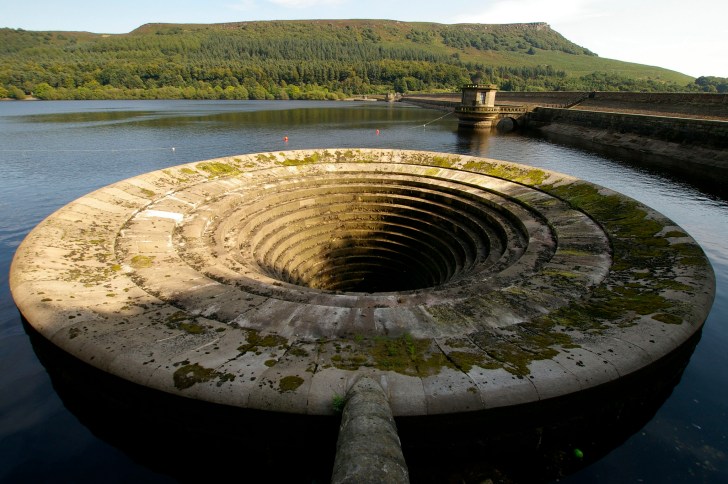
An overflow ‘plughole’ on Ladybower Reservoir, UK. Image: Sue Langford | Flickr Creative Commons
Physical and chemical alterations
Large dams and weirs can alter water temperature, nutrient concentrations and patterns of winter ice formation, both upstream and downstream, through the alterations to hydrological regimes outlined above. These impacts can reduce habitat quality and spawning success for many aquatic species, particularly fish.
Of these impacts, mitigation measures for water temperature alterations are most common, and were reported by around half of the ECOSTAT stakeholders. Flexible and multiple intakes of water, which allow for the controlled intake of water from different depths (and thus, temperature) from a reservoir to a downstream river, are the key implemented measure. However, at present, there is too little practical experience to give a clear indication of the ecological effectiveness of such measures.
Conclusions
The report helpfully brings together information on the use and effectiveness of mitigation measures for water storage pressures across Europe. However, there were variations in the scale at which measures were applied on rivers and lakes (e.g. 100m to 10km on rivers), which limited direct comparisons between sites. Similarly, there were variations in how ‘good ecological potential’ was calculated in different countries, reflecting its highly site- and pressure- specific nature as a metric. As a result, the report advocates more harmonisation in calculation techniques.
More broadly, the maintenance of regular and interconnected water flows is a key theme in all the pressures explored above. Free-flowing rivers allow species to migrate, regulate temperatures, foster natural sediment dynamics, and create diverse habitats. The challenge, as highlighted by this report, is to attempt to simulate and restore such conditions, even when faced with the multiple pressures (and challenges) present in heavily modified water bodies.
Common ground for multiple stressor research
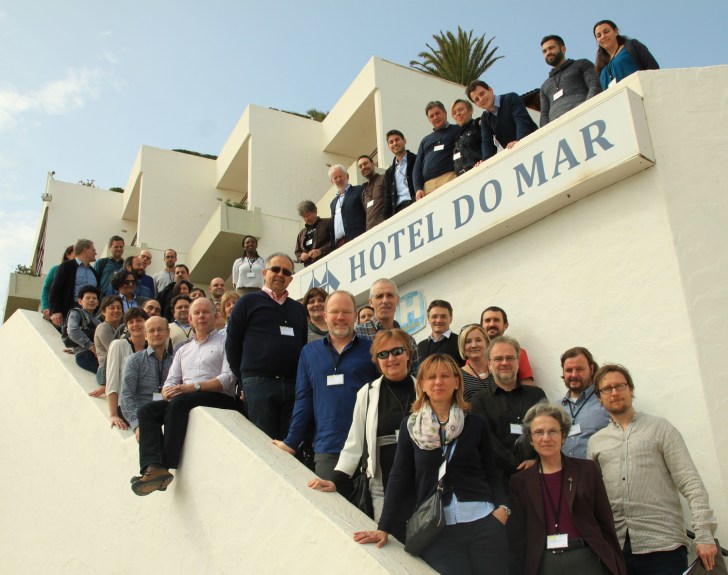
Researchers from MARS, GLOBAQUA and SOLUTIONS meet in Portugal. Image: Vanessa Bremerich / Markus Venohr
Last week, researchers from three EU aquatic science projects – MARS, GLOBAQUA and SOLUTIONS – met in Sesimbra, Portugal to present their findings, and to discuss opportunities for collaboration. The three projects share a common interest in the effects of multiple stressors on aquatic ecosystems, and their representatives met at a workshop to develop the potential for shared outputs such as policy briefs and water management guidance.
The workshop was structured in seven parts where researchers from the different projects presented their findings together. In the first, Teresa Ferreira (MARS), Ralf Ludwig (GLOBAQUA) and Tobias Schulze (SOLUTIONS) presented findings of analyses on the impacts of multiple stressors on river basins across Europe. Their work was based on the establishment of links from pressures/states to indicators of ecosystem services, which can help better identify the impact of multiple stressors on aquatic ecosystems. The findings of the MARS basin studies will be published in the coming months.
In the second session, Laurence Carvalho (MARS), Vicenç Acuña (GLOBAQUA) and Paul van den Brink (SOLUTIONS) reviewed the ecological effects of multiple stressors across ecosystem types (rivers, lakes and transitional waters), and across spatial scales (laboratory, mesocosm and flume experiments; individual water bodies and river basins and Europe-wide). Their collaborations sought to outline common stressor combinations (and their effects), which could be presented in a joint water policy and management briefing in the future.
In the third session, Markus Venohr (MARS), Philippe Ker-Rault and Ralf Ludwig (GLOBAQUA) discussed the potentials and pitfalls of downscaling climate and socioeconomic scenarios of the future at the river basin scale. In MARS, the scenarios are based on a set of ‘storylines‘, which are variously refined to specific river basins through stakeholder engagement. Whilst each scenario is a broad-scale approximation, their use in modelling provides a range of possible future trajectories to inform management and policy decisions. The session will lead to a joint publication and a white paper on downscaling scenario forecasts to the river basin scale, which is most useful for management.

Delegates at the Portugal meeting. Image: Vanessa Bremerich / Markus Venohr
The fourth session involved a discussion of how to link chemical and ecological status, led by Antoni Ginebreda (GLOBAQUA) and Andreas Focks (SOLUTIONS). The ‘good status’ of European water bodies according to Water Framework Directive requirements depends on them fulfilling both good ‘ecological’ and ‘chemical’ status. However, the complex interactions between different pressures – chemical and nutrient pollution, hydrological and hydromorphological alterations, land use changes – makes untangling their joint impacts on ecosystem status challenging. This session synthesised knowledge from across projects to scope the potential of strategies including: multi-pollution characterisation and effects; ecotoxicological risk assessment; modes of action of pollutants; compound prioritisation and identification of River Basin Specific Pollutants, the use of sensitive traits as indicators of ecological quality, and the links between biological and chemical monitoring data.
In the fifth session, Lidija Globevnik and Yiannis Panagopoulos (MARS), Alberto Pistocchi (GLOBAQUA) and Jos van Gils (SOLUTIONS), discussed approaches taken in the three projects to model the interactions of multiple pressures driving the status of European water bodies. In this session, particular focus was placed on hydrological pressures and chemicals interacting with other stressors, as well as the regional variability of interactions.
The sixth session focused on the science-policy dialogues and impacts prompted by the three projects. Discussions led by Daniel Hering and Erik Jeppesen (MARS), Ebun Akinsete and Nick Voulvoulis (GLOBAQUA) and David López Herráez (SOLUTIONS) focused on the translation of the projects’ scientific results into recommendations for improving the European regulatory frameworks on freshwater, with particular emphasis on the Water Framework Directive. The discussions developed themes for a number of joint policy briefs, which will be published in the future.
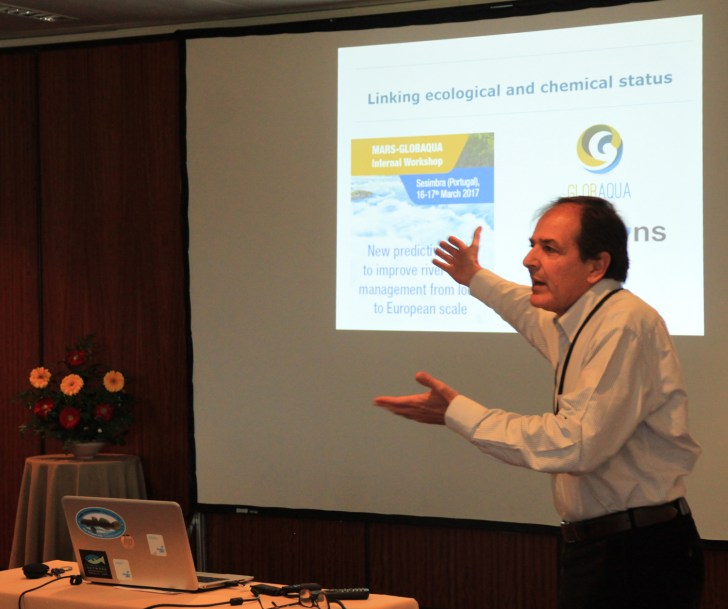
Discussing the links between ecological and chemical status with Professor Antoni Ginebreda (IDAEA-CSIC, Department of Environmental Chemistry). Image: Vanessa Bremerich / Markus Venohr
Wider public, policy and academic communication of results (of which this blog is one channel) was the topic of the final session. Sebastian Birk (MARS), Damià Barceló and Gabriele Sacchettini (GLOBAQUA) led discussions of how the databases, scientific reports and papers, policy-briefs and water management tools produced by the projects might be best presented to different audiences.
The workshop was deemed a real success by all who took part, as it sparked many new discussions and opportunities for collaboration between the three projects.
Three attendee reflections can be read below:
“This was a very useful occasion to find synergies between our projects, and was especially important for our policy and dissemination activities. The workshop has offered several possibilities for the coming months, and some useful tools. MARS is a complementary project finishing reasonably soon, whilst GLOBAQUA will have a couple more years; the idea is to work together and build on the results that MARS is providing.”
Gabriele Sacchettini, GLOBAQUA
“This was a very relevant meeting because two projects – MARS and GLOBAQUA – have been funded by the same EU FP7 fund, so it’s important to come together and streamline messages that are useful for water management.”
Tom Buijse, MARS
“I came here to find synergies between the three projects, and particularly to discuss how this might be communicated in policy briefs. The workshop has been a success – a very nice location and great organisation – and very useful in terms of the timing of the three projects. MARS is finishing soon, and it’s time to catch up with the results, and the themes SOLUTIONS and GLOBAQUA can develop and continue.”
David López Herráez, SOLUTIONS
Lake Restoration and Management in a Changing Climate

Lake Taihu in China, one of the lakes studied in the special issue. Image: DVYang | Flickr Creative Commons
Lakes across the world are increasingly impacted by human activities, which can cause ‘cocktails’ of multiple stressors to affect their ecological health and status. Nutrient pollution and rising water temperatures are causing eutrophic blooms of toxic cyanobacteria in many shallow lakes, whilst abstraction pressures for drinking and irrigation is lowering water levels (or even drying out) on others.
As a result, there is a growing need for effective lake conservation and restoration strategies that help mitigate the effects of an increasingly pressurised world. A new open-access special issue of the journal Water compiled by MARS scientist Erik Jeppesen and colleagues brings together a set of papers on this theme. The research profiled in the special issue is largely focused on the restoration of eutrophic lakes under climate change, and has been undertaken by scientists across the world.
A key theme running the studies is how nutrient loading into lakes interacts with climate change in affecting aquatic ecosystems. Nutrient loading and climate change is a common multiple stressor combination in aquatic environments. Climate change can increase concentrations of nutrients (e.g. through evaporating water bodies), increase water temperatures (which can increase the risk of eutrophication), and cause an increase in extreme events such as flood and drought, which can alter nutrient loading patterns (e.g. through soil erosion). However, multiple stressor interactions are rarely entirely predictable or fully understood, which is why there is significant ongoing research on the topic in aquatic science and management.
The collected studies in the new special issue suggest that it is important to note variations in the dynamics of eutrophic lakes across different climate zones. Many past studies on the restoration of eutrophic lakes have been carried out in northern temperate regions. However, the papers in this special issue broaden the global coverage to include warm lakes, with studies from Denmark, Turkey, USA, Brazil, Russia, The Netherlands, Poland and China.
As a result, whilst reducing nutrient pollution is presented as the key factor for lake restoration under climate change across all studies, it is suggested that different methods to those applied in northern temperate region are needed for warm lakes. For example, the thresholds for achieving ‘clear water’ (i.e. non-eutrophic) conditions through nutrient reductions are likely to be lower in warm lakes than cold; however there still remains significant uncertainty.
You can read the open-access special issue of Water online here.
International Day of Action for Rivers 2017
In a week’s time, people across the globe will get together to celebrate the world’s rivers, and those who struggle to conserve and restore them. The International Day of Action for Rivers, held each year on the 14th March, is organised by the NGO International Rivers, and provides a focus for communities across the world to organise events celebrating their rivers, and highlighting the threats they face.
The International Day of Action for Rivers was originally adopted by the participants of the first International Meeting of People Affected by Dams, March 1997 in Curitiba, Brazil. Now a global event, the day is described by International Rivers as a focus to “raise our voices in unison against destructive water development projects, reclaim the health of our watersheds, and demand the equitable and sustainable management of our rivers.”
This year, there are many events to participate in across the world. In England, there is a volunteer day on the River Don in Sheffield supporting the Lower Don Valley Flood Defence Scheme through removing litter, debris and fly tipping from the river and its banks. In Germany, environmental artists will stage a ‘Flying Fish’ performance on the banks of the Elbe in Hamburg. In Russia, a lecture and masterclass on ‘How to know about river health’ will be held in Vladivostok.
In Iran, the Mountaineers Club of Qaemshahr will host a public visit to the Siahroud River for the purpose of identifying and documenting the river’s pollution. The Pakistan Fisherfolk Forum will host a 14-day campaign called the Sindh Peoples Caravan, a massive people’s assembly hosting thousands of people from fishing and peasant communities, civil society members, academia, government officials, media and other stakeholders, focused on the conservation of the Indus Delta. At Labrador in Canada, a ‘Snowmobile Ride for the Grand River’ will be held, bringing together communities and stakeholders around the Churchill (or ‘Grand’) River, which is threatened by the construction of hydropower plants.
As these selected examples show, the International Day of Action for Rivers gives communities around rivers across the world the forum to organise a wide variety of events, and to give their local environments a global focus. Rivers are self-evidently an inspiration and concern for diverse communities across the world, and next week’s events will help highlight their importance and threats.
You can view all the organised events (and propose one of your own) on the International Rivers Website.
Restoration of the Lippe River in Germany doubles fish populations

The restored Lippe River in Germany. Image: Benjamin Kupilas | REFORM
Writing in response to ongoing global biodiversity loss, the biologist EO Wilson optimistically stated in his 1992 book The Diversity of Life that “Here is the means to end the great extinction spasm. The next century will, I believe, be the era of restoration in ecology.” His prediction has broadly come true: in the subsequent 25 years, ecological restoration has become a central goal for many environmental managers and policy makers across the world seeking to alleviate the impacts of decades, if not centuries, of human activity.
The forms that ecological restoration takes are increasingly informed and challenged by debates in ecology (e.g. non-equilibrium ecologies, state shifts and trophic cascades), social and cultural considerations (e.g. the appropriateness of ‘natural’ historical baselines, perceptual shifts to ‘living with’ environmental change), and ongoing climate changes (e.g. the imperative to ‘future-proof’ restored ecosystems with resilience to future climate shifts).
In freshwater systems, there are – as yet – few long-term studies of the ecological impacts of river restoration on aquatic biodiversity. Emerging research on multiple stressors (such as in the MARS project) demonstrates that the choosing restoration strategies is not a straightforward approach, as the removal of one stressor (e.g. fragmented flows) may cause alterations to the impact of others, either positively or negatively. New river restoration strategies are being implemented globally each year, and long-term studies on the successes and failures of existing restoration projects are thus extremely valuable resources.
In this context, a new study by researchers based in Germany and the USA examined the responses of fish communities to the restoration of the Lippe River in Germany over a 21 year period. The Lippe has been heavily modified by human activity since the early 1800s, with a largely reinforced and straightened channel and bed, highly fragmented flows as a result of numerous weirs, and the widespread destruction of its riparian and floodplain landscapes.
The research team analysed data collected for 4 years before, and 17 years after, restoration at Klostermersch, where two stretches totaling over 3km in length were restored in 1996 and 1997. Restoration involved reconnecting the river’s floodplain with the river, removing bank fixations, widening the river from 18 to 45 metres in width, building a series of small islands, introducing full trees as deadwood, and reintroducing ‘natural’ floodplain drainage systems. In essence, the Lippe River ecosystem was encouraged to become more diverse in structure and dynamic in process.

The Lippe was returned to more diverse and dynamic ecological conditions in the late 1990s. Image: Benjamin Kupilas | REFORM
Writing in a newly published study in Conservation Biology, the research team’s results show that this restoration management has led to a doubling of both fish species richness (i.e. the number of species) and abundance (i.e. the total species population sizes). On restored sections the Lippe, fish abundance exhibited an initial overshoot, where population numbers increased rapidly, then declined at a similar rate, as their numbers exceeded the ecosystem’s carrying capacity.
Both fish abundance and richness broadly stabilised around seven years after restoration at more than double the pre-restoration levels. However, there was (and is) significant variation in both abundance and richness from one year to the next. There are two environmental management insights here: first, that fish communities may take at least seven years to recover post-restoration and; second, that ongoing monitoring strategies are necessary to assess the impact of restoration strategies, as single sampling efforts may be skewed by annual variations.
The research team examined different traits of the fish species in the study, to understand if they played a role in how fish responded to restoration. They found that life history and reproduction related traits were influential. Opportunistic, short-lived fish species whose females reached maturity quickly and had multiple spawning runs each year most strongly increased in abundance, as a result of their ability to rapidly colonise new habitats. Such small-bodied fishes typically live in the dynamic in-stream and floodplain habitats that the Lippe restoration measures addressed.
As a result, the research team argue that focusing on fish species traits may help aid our understanding of how their populations are likely to respond to restoration measures. By relating restoration outcomes to such species traits, there is the potential to draw broader insights for restoration measures in other biogeographic regions, they suggest.
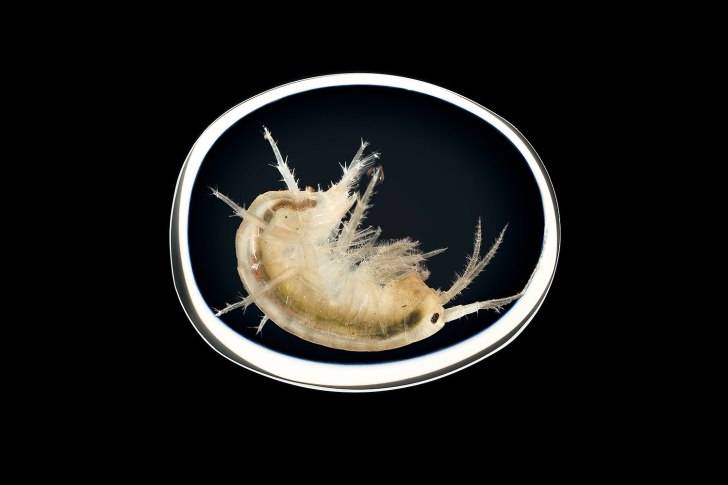
Freshwater shrimp in a drop of water. Image: Liam Marsh
Liam Marsh is an award-winning natural history and wildlife photographer based in the Blackdown hills of south Somerset in England. His photographs of aquatic life – both above and below the waterline – are creative, unusual, and often beautiful. We spoke to Liam to find out about his approaches to revealing freshwater worlds through photography.
+++
Tell us about your work as a wildlife photographer: how did you get started, and what are you working on at the moment?
I have always loved photography, and as a process it encourages you spend more time examining the world around you. I’ve always found wildlife to be the perfect match for that approach. Photography has given met a set of tools with which to examine the many wonderful creatures that live around us. All of my images are a result of countless hours spent watching wildlife and getting to understand them. It’s something that I never grow tired of.
I really see my job as a way of discovering interesting subjects or behaviours, and then trying to capture them in a way that is both attractive and engaging to an audience. Hopefully through my images I can share some of the fascination and curiosity I feel when watching wildlife first hand.
For my latest project, I’m working on a short film about caddis fly larvae and how they go about constructing their protective casings underwater. Film is something relatively new to me but I’m really enjoying the ability to share stories in ways that photography can’t always achieve.
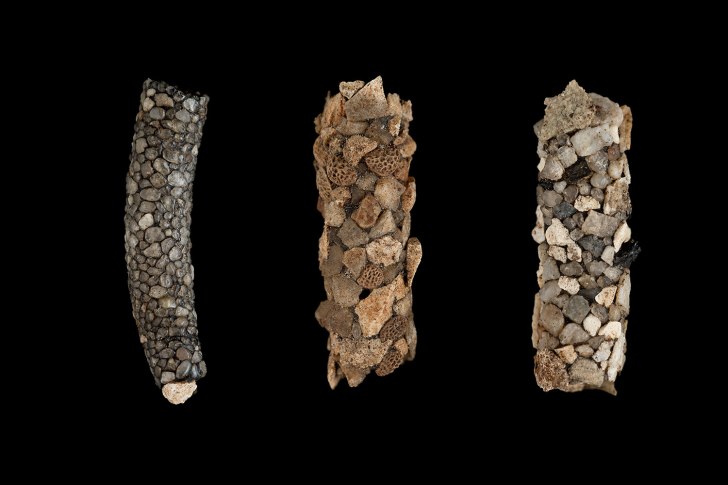
Caddis larvae casings. Image: Liam Marsh
Your photography in and around freshwater is stunning: what draws you to focus on rivers and lakes?
Thank you. I absolutely love spending time on or around water. There is always so much life and activity to be found in our freshwaters. There are challenges when working close to water, certainly, but I find these are far outweighed by the potential for interesting images.
I’m fascinated by the idea of this entire world that goes on almost without our knowledge, just below the water’s surface. It’s a thrill being able to show somebody a creature that lives so close and yet they may never have seen before.
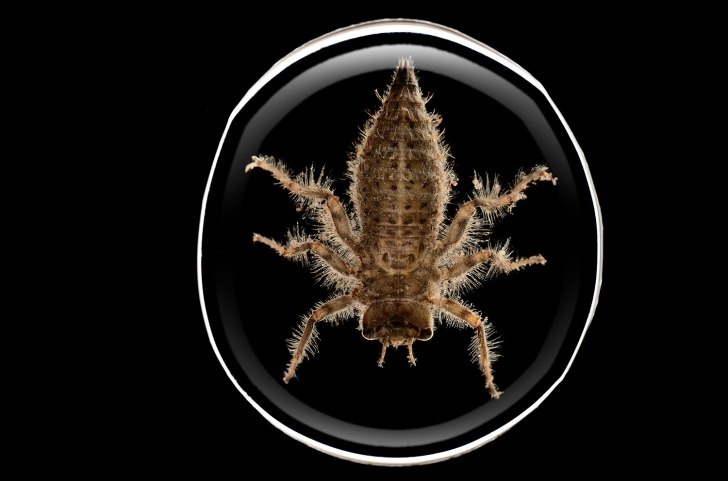
Dragonfly larva in a drop of water. Image: Liam Marsh
What are some of your favourite aquatic species and habitats to photograph? Are you ever surprised by what you can see through a highly magnified lens?
I am always amazed by what I see through my lens. It doesn’t even have to be a very high magnification; even seeing the close up details of a familiar subject can be captivating. It’s that sense of wonder that keeps me motivated and inspired to create new images.
A favourite species of mine has to be dippers. They are such an interesting bird to watch, whether it’s the way they move or interact with each other: they are always active. In particular I love their connection to the water, they are so well adapted to their environment and yet behave unlike any other bird.
I can’t say that I have a particular favourite when it comes to habitat, but certainly I love looking at my local area. I’m fortunate enough to have travelled abroad several times taking photographs but nothing really compares to home. There is something special about uncovering the secrets of wildlife that live in your local area.
It’s easy to be dismissive of our local fauna and flora, there is always some larger, more flashy species abroad. But I think that some of the challenge involved in finding and learning about our local wildlife means that the encounters we have feel extra special.

Mayfly larva. Image: Liam Marsh
There’s two wonderful galleries of aquatic photographs on your website: Life in a Drop of Water, and Underwater Photography on the Tiverton Canal. Could you tell us a little about these projects, their processes, and what they’ve produced?
Both of these projects involved looking at the fresh water environments local to where I live in south Somerset. Using both still and moving image, the intention to was to try to show the sheer variety and complexity of life in these underwater habitats.
My most recent project ‘Life in a Drop of Water’ looks at the freshwater invertebrates that live in our streams and rivers. These species play a vital role in the health of our rivers and yet are so easily overlooked.

Mayfly larvae after moult, in a drop of water. Image: Liam Marsh
I collected samples from several local streams and brought the specimens back to my small studio. These are tiny subjects, measured in mm rather than cm, so it can be a slow fiddly process to photograph them. Being so small I was able to suspend them in droplets of water (hence the title), as they are unable to break the surface tension. From there I was able to set the lighting and composition for each photograph.
Ultimately the aim was to show how complex and beautiful the creatures are that exist in some of our smallest fresh water habitats. These streams are full of animals that each have their own captivating stories to tell.
So far I have had a very positive reaction from the local people who I’ve shown the photographs to. There is a genuine fascination that people have for these animals and as a photographer that’s encouraging.

A brown trout in the River Test, a chalkstream in southern England. Image: Liam Marsh
Can underwater photography influence how we think about environmental conservation and management, do you think?
Yes I hope so. I feel enormously privileged to spend the time that I do watching and learning about these animals and habitats. I understand that is not time afforded to everyone.
It can be difficult to encourage people to take an interest in conservation, especially when much of what needs to be saved is difficult to see or understand. Hopefully by seeing the richness and beauty of the life that surrounds us, people will be able to value and preserve it.
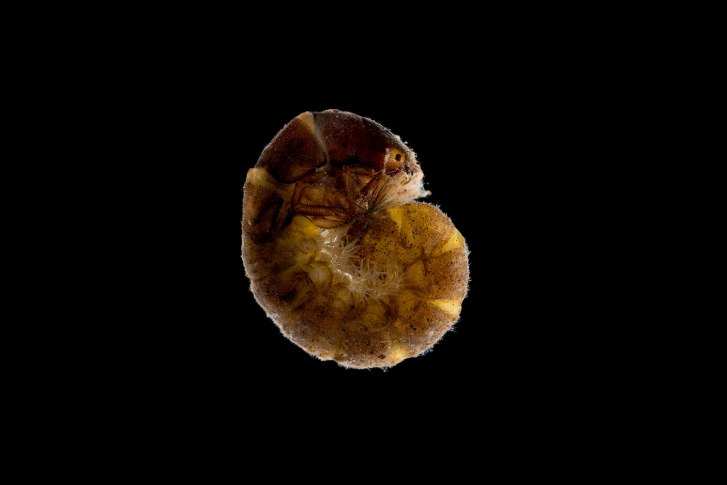
Caddis larva. Image: Liam Marsh
And finally, tell us about a ‘dream’ freshwater habitat you’d like to shoot in the future.
It might seem odd but I would really like to do more work on the rivers that run through our towns and cities. It would be great to try to dispel this idea that wildlife is reserved for the countryside. I think sharing the life that inhabits our rivers is a great way to do this.
In my experience, people are interested in wildlife but don’t always realise how accessible it is. If I could, in some small way, help people to see the importance of our rivers and how they themselves can help to preserve them, that would be fantastic.

Little Auk colony on the Cape York Peninsula, Greenland. Image: P Lyngs
The North Water Polynya is a large area of open sea in Baffin Bay between Greenland and Canada. The area is the largest polynya – an area of sea that remains ice free year-round, though surrounded by sea ice – in the world, and is one of the most biologically productive marine habitats in the Arctic Ocean.
Ecosystems on the Greenland coastline of the North Water Polynya are transformed – both positively and negatively – by nutrients brought back to land from the open sea by a tiny ‘ecosystem engineer’ bird, the little auk, according to a new study.
An estimated 30 million pairs of little auk travel to the North Water Polynya to breed each summer. At sea, they feed on nutrient-rich crustaceans called copepods. When they reach their breeding colonies on Greenland, the nutrients are largely excreted onto the land as guano.

The North Water Polynya. The study took place between Savissivik and Siorapaluk on the Greenland coast. Image: Wikipedia / NASA commons.
The impacts on the ‘fertilised’ Greenlandic landscape are significant. Areas of land outside bird colonies are largely barren with little vegetation, as is common in environments at 76º North. However, areas within bird colonies have lush vegetation and large numbers of grazing animals such as muskox and geese.
“Our study found that the little auk acts as an ecosystem engineer across a large area of North-West Greenland. The colonies stretch over a 400 km range and up to 10 km inland so a very large area is affected. This creates highly productive oases in an otherwise rather barren landscape” says researcher Thomas Davidson from Aarhus University, a co-author of the new study, published in Proceedings of the Royal Society B, which also involved MARS aquatic scientist Erik Jeppesen.
The research team undertook analyses of stable isotopes of carbon and nitrogen in the coastal Greenland environment to track the flow of the marine-derived nutrients from sea to land. The research involved limnology, aquatic ecology, isotope biochemistry and bird tracking methods, and is part of the interdisciplinary NOW-project with anthropologists, archaeologists and local Inuit hunters.

Musk ox and their young grazing on the lush green landscapes created by the little auk colonies. Image: P. Lyngs
Freshwater ecosystems, on the other hand, were negatively affected by the little auk’s ecosystem engineering. The bird’s guano is very high in nitrogen which, in addition to acting as a fertiliser, can cause the acidification of freshwater. One Greenlandic lake close to a colony had a water pH 3.4, which is more acidic than acid rain.
As a result, lakes and rivers affected by little auk colonies can support few invertebrates and no fish. As there are few grazing aquatic organisms able to survive in the acidic conditions, the nutrient-rich lakes are often green and eutrophic. The presence of little auk colonies is therefore a significant stressor on Greenlandic lakes and rivers.
This reduction in freshwater biodiversity caused by little auk colonies is opposite to the efffect of similar transfers of marine nutrients by migrating Pacific salmon. Numerous studies have shown that migrating salmon significantly increase biodiversity and ecosystem productivity in their spawning rivers in North America and Asia, both through their post-spawning decomposition and as prey to predators like bears.
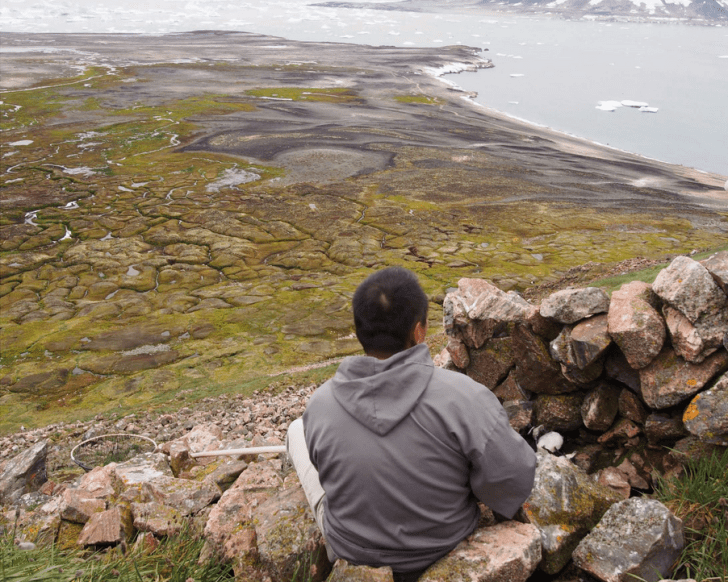
A local hunter from Savvissik waits with his net for a flock of little auk to pass by. Image: K. Johansen
Thomas Davidson summarises the study, “On a broad scale we sampled over 30 locations, both with and without bird colonies along the 400km coastline of the North Water Polynya, from Savissivik in the south to Siorapaluk in the north and demonstrated that both aquatic and terrestrial productivity is much higher in bird colony areas. We found that at least 85% of off all terrestrial and aquatic biomass was fuelled by nutrients brought to land by the little auk.”
Climate change may alter the ecosystem dynamics of coastal Greenland in the future. During the breeding season, little auks depend on nutrient-rich copepod species which live in cold sea waters. It is predicted that little auk populations will decline in response to the ongoing warming of the Arctic. If the little auk population declines, a significant shift in the Greenlandic coastal landscape around the North Water Polynya is likely to result.

Little Auks gathering on the stones before descending into their nests or before setting out to sea to feed and collect food for their young. Image: S. Wetterich
Whilst this may mean less productive terrestrial ecosystems, it could be that lakes and rivers become less acidic, and become more habitable for aquatic life. However, a new stressor – climate change – will likely have significant effects on Greenlandic freshwater ecosystems as the effects of the little auks recede.
The new study sheds new light on interactions between marine, terrestrial and aquatic ecosystems in the Arctic, and reminds us that the impacts of future climate change are likely to be distributed in potentially unpredictable and surprising ways across inter-connected environments.
Largest freshwater Mediterranean lake may dry out in this century due to climate change and abstraction
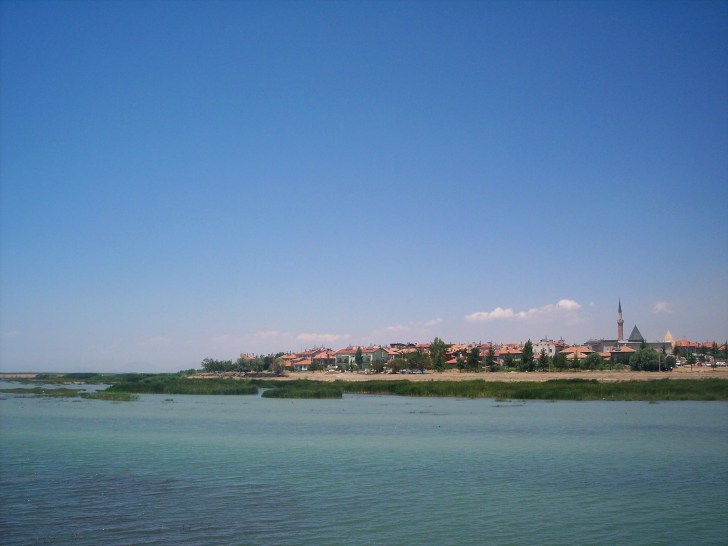
The town of Beyşehir on the banks of Lake Beyşehir, Turkey. Image: Wikipedia Commons
Freshwater systems in the Mediterranean region are on the front line of climate change impacts in Europe. Future climate projections for the region indicate increasing air temperatures and decreasing precipitation rates through the 21st century.
Whilst fluctuations in water level and flow are a natural feature of freshwaters in the region, climate change is predicted to cause dramatic reductions in river flows and lake levels, causing severe water scarcity issues for the humans and non-humans that rely on them.
A new study suggests that if water abstraction rates from the region’s largest lake – Lake Beyşehir in Turkey – are not reduced, the lake will dry out in this century, potentially as early as the 2040s. The research, led by Tuba Bucak as part of the EU MARS and REFRESH projects, simulated the impact of future climate and land use changes on water levels in the lake.
Their models predict that increased temperatures and reduced rainfall coupled with ongoing water abstraction for agricultural irrigation place Lake Beyşehir at severe risk of drying out. If water abstraction rates are not reduced, the lake ecosystem and its rich biodiversity is likely to be significantly impacted (or even lost), and the human communities who rely on the lake for water and sustenance will lose the services and benefits the ecosystem provides.
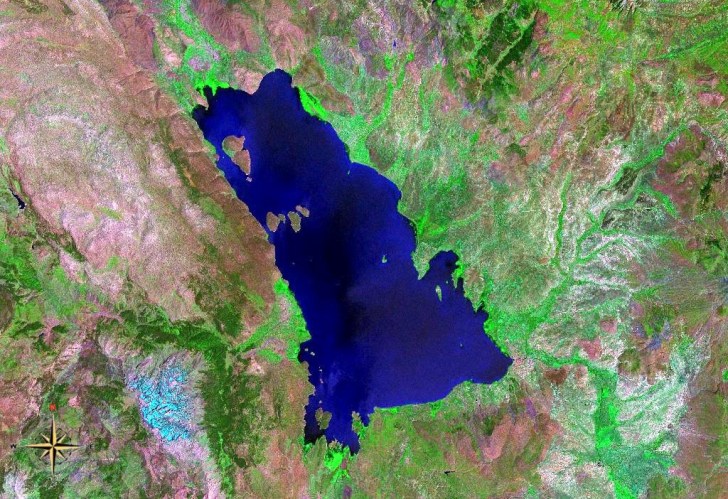
A NASA satellite image of Lake Beyşehir. Image: Wikipedia Commons
All climate change scenarios (which used Representative Concentration Pathways) predicted a significant decreases in total water runoff into the lake (as a result of decreased rainfall), but the timescale of the decrease varied between the models. In comparison, simulated changes in land use had a minor impact on total runoff.
The decrease in water runoff common to each climate change scenario was projected to be more pronounced after the 2070s due to reduced precipitation and enhanced potential evapo-transpiration in the catchment. However, in one climate scenario modeled by the researchers, the lake was predicted to dry out completely by the 2040s.
The researchers write that despite the variance in their modelling results, that “a 9–60% reduction in outflow withdrawal was needed to prevent the lake from drying out by the end of this century.” In a water-scarce region, it would seem a challenging task for environmental managers and politicians to guide such a drastic change in water use.
However, there are precedents for similar large lakes to dry out. One Turkish lake, Lake Akşehir, has completely dried up in recent years, resulting in the extinction of the Central Anatolian Bleak. Two other endemic fish species, the Eber Gudgeon and a local dace (Leuciscus anatolicus) are now critically endangered.
For Tuba Bucak, lead author of the study, water management in the region needs to undergo a significant shift if Lake Beyşehir is to be protected. She says,
“Mediterranean lakes may face a risk of drying out and losing their ecosystem service values in future if essential mitigating measures will not be taken into account. We need to implement adapting measures (eg. reducing water needs by promoting drought resistant crops and efficient irrigation technologies) for maintaining water sources in Mediterranean and ensure sustainable water usage in order to meet the future water demands.”
Seeking freshwater pandas: the ‘flagship umbrella species’ approach

European sturgeon (Acipenser sturio), a potential ‘flagship’ species which is threatened by pollution and habitat fragmentation. Image © A. Hartl
Freshwaters are amongst the most heavily modified global ecosystems, and the rich biodiversity they support is at a disproportionate risk of extinction. Conservation and restoration efforts aimed at protecting and improving freshwater habitats are being carried out across the world, but aquatic plants and animals remain amongst the most threatened components of global biodiversity.
One reason for this shortfall may be the lack of visibility – both literally and metaphorically – for freshwater life. Freshwaters may be murky, fast-flowing, deep, cold, ice-covered or turbulent, and the biodiversity they support can often be camouflaged, elusive and difficult to spot. The rich webs of animal and plant life below the surface of freshwaters are not as immediately perceptible as a wildflower meadow or a woodland, say. And, as the ‘shifting baseline’ concept illustrates, public and political perception of the health and diversity of ecosystems can significantly influence the support (or lack thereof) afforded to conservation and restoration schemes.
The identification of flagship species for aquatic ecosystems – so-called ‘freshwater pandas’ – may help bring threatened freshwater biodiversity ‘to life’ and increase awareness of, and support for, conservation measures, according to a new open-access study published in Conservation Biology. Flagship species were defined in 2000 by conservationists Nigel Leader-Williams and Holly Dublin as “popular charismatic species that serve as symbols and rallying points to stimulate conservation awareness and action.”
According to Dr Gregor Kalinkat from the Leibniz-Institute of Freshwater Ecology and Inland Fisheries (IGB) in Berlin, the lead author of the new study, a suite of over 60 potentially suitable freshwater ‘umbrella flagship species’ may help strengthen and target existing – but often inadequate – conservation efforts.
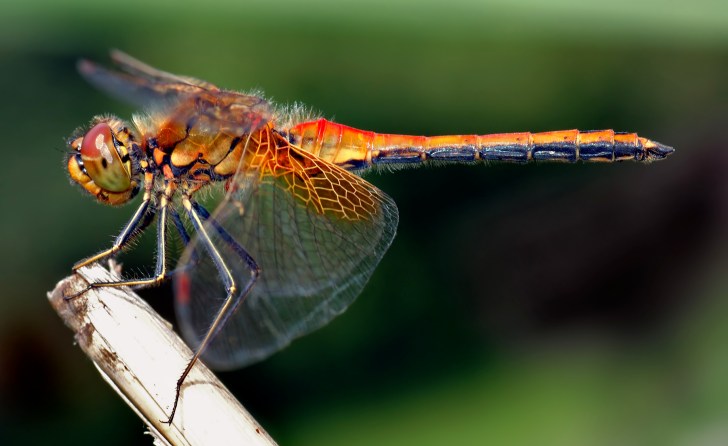
The yellow-winged darter (Sympetrum flaveolum), a highly ‘charismatic’ aquatic insect. Image: © André Karwath (CC BY-SA 2.5)
Flagship and umbrella species
Flagship species are typically ‘charismatic’ species which enthuse, enchant and intrigue public and political audiences with the natural world. Environmental geographer Jamie Lorimer provides a helpful typology of such non-human charisma, which may be ecological (the environmental ‘detectability’ of an organism, e.g. through a call), aesthetic (its sensory impact: e.g. cuddly, fierce, curious) and/or corporeal (its emotive impact; or, how it makes us feel). For Lorimer, these aspects of non-human charisma are combined designating flagship species for conservation. For example the human empathy and care often sparked by a panda’s ‘teddy bear’ looks and precarious life habits (surviving on nutrient-poor bamboo) has long been mobilised by the World Wildlife Fund as a flagship logo to leverage funding and support, both for the conservation of the forests on which it survives, and for threatened ecosystems worldwide.
In other words, the charisma (and in the panda’s case, this might include the simple black and white replicability of its form as a logo in a pre-digital age) of flagship species may be mobilised to help strengthen conservation efforts for other less charismatic or visible species across wider ecosystems, whether locally or globally. In this way, the flagship concept has resonances with the ‘umbrella species’ approach to conservation which aims to protect ecosystems through conservation measures targeted at a small number of ‘keystone’ species which also have ecological benefits to the wider ecosystem. However, the flagship species approach has historically been used to mobilise public awareness of nature, rather than to specifically target ‘umbrella’ ecological interactions.

The arapaima (Arapaima gigas), a ‘flagship’ fish native to the rivers and seasonal pools of Amazonia. Image: © T. Voekler (CC BY-SA 3.0)
Identifying ‘freshwater pandas’
The research team behind the new Conservation Biology study call for the established ‘flagship’ and ‘umbrella’ species concepts to be combined to define a new set of ‘flagship umbrella species’. According to the authors, such species have the potential to both raise public and political awareness of imperiled species and ecosystems, and to provide a focus-point for conservation efforts which will ‘trickle down’ and benefit wider ecological communities.
They identify over 60 potentially suitable freshwater flagship umbrella species, based on their “potential to attract public attention and funding for conservation programs as well as [their] potential to protect co-occurring biodiversity in all types of freshwater habitats.” The species – which were selected on the basis of their ‘flagship’ potential as identified in existing conservation literature – are extremely diverse and distributed across the world.
They include algae, molluscs (such as the freshwater pearl mussel), spiders endemic to peat bogs, crustaceans (such as the fairy shrimp), insects (including dragonflies and damselflies), a wide array of fish species (including sturgeon, stingray, sharks, salmonids, catfish and cod), amphibians (various frogs, toads and newts), reptiles (including turtles, crocodiles and alligators), birds (particularly cranes, pelicans and storks), and mammals (including otters, dolphins, porpoises and beavers) (see the full list here).
Some notable examples include: the baiji, a functionally extinct species of freshwater dolphin formerly found only in the Yangtze River in China; the European sturgeon, a migratory fish impacted by the fragmentation and pollution of large river basins such as the Danube; the Siberian crane a critically endangered bird with migration routes across the wetlands of Central and East Asia; and the freshwater pearl mussel, a mollusc threatened by water pollution and over-harvesting.
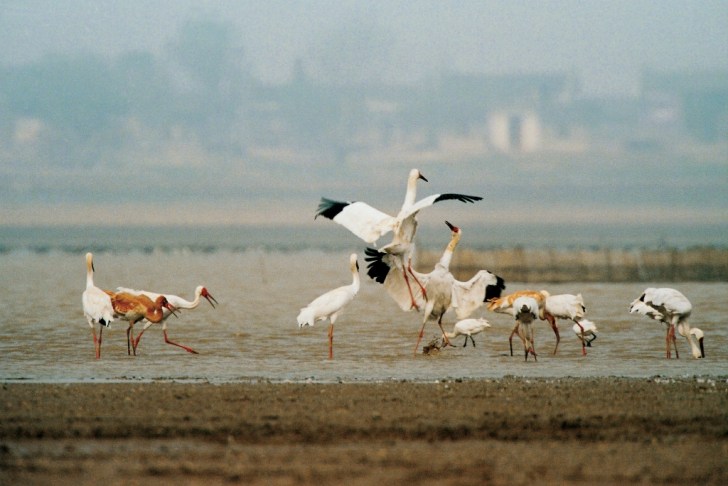
A flock of Siberian crane (Leucogeranus leucogeranus). Image: © Crane Wu
How useful might ‘freshwater pandas’ be, and where?
It could be argued that the idea of promoting freshwater flagship species is not new: after all, the image of the Atlantic salmon is regularly used to promote river restoration efforts across Europe, and the Eurasian beaver is proving an effective (if controversial) flagship species for public debates over the forms and functions of ‘rewilded’ river catchments in the UK. Similarly, a recent study by Nishikant Gupta and colleagues describes the ‘charismatic’ ability of the golden mahseer, a river fish endemic to northern India, in bringing together river users to support conservation of its habitat. In this context, a key question is: can flagship and umbrella species be (more) useful in supporting freshwater conservation efforts, and if so, how?
A 2011 review of the conservation literature around flagship and umbrella species by environmental geographer Maan Barua yielded three important insights: first, that existing flagship and umbrella species are predominantly mammals; second, that everyday language plays a vital role in communicating environmental issues through flagships; and third, that metaphors are important in shaping public understandings and responses to conservation messages. Barua discusses how ‘mobilising metaphors’ is thus a key consideration in selecting flagship species: in other words, how might different ‘charismatic’ natures (e.g. curiosity, fragility, beauty or ugliness) be aligned to a range of environmental issues to be communicated to wider public audiences; what conservation ‘work’ might they do in the world when circulating as metaphors and abstractions?
Whilst the authors of the Conservation Biology study don’t explicitly address the same issues for flagship species selection, similar considerations circle their work. As ever, scale matters: at what scales (local, regional, global) are flagship species likely to find an audience, and what conservation messages will these audiences be receptive to? Through what channels will flagship representations ‘travel’ (e.g. social media, television), and at what scale is any resulting funding or political influence likely to feedback to influence conservation outcomes? These are big questions which require interdisciplinary research and practice if the use of freshwater flagship species is to have positive conservation outcomes.

Freshwater pearl mussels (Margaritifera margaritifera). Image: © Joel Berglund (CC BY-SA 3.0)
The promise of new data to support ‘flagship umbrella species’
In this context, the new Conservation Biology study outlines an approach to strengthen established ‘flagship’ and ‘umbrella’ species approaches by combining them, with the aid of new data gathering techniques. In other words, the authors envision the potential of ‘flagship umbrella species’ which can both leverage public support and awareness for conservation, and provide an ecological ‘umbrella’ for conservation measures which indirectly benefit wider ecological communities.
For example, molecular methods such as environmental DNA are improving swiftly, allowing researchers to determine the existence of fish or amphibian species from simple water samples, which in the past needed to be collected painstakingly by hand or using nets. Such methods offer the potential of developing our understanding of under-researched or ‘overlooked’ (as the authors put it) freshwater biodiversity across the world, and for targeted conservation measures to be developed, implemented and communicated.
The study’s lead author Gregor Kalinkat outlines the potential of new approaches, “To date, a disproportionately large amount of research and scientific data material has been collected on land and for marine species. In order to protect freshwater species, we are in urgent need of more comprehensive data, which can be collected both cost-effectively and extensively using innovative methods.”
The freshwater ‘flagship umbrella species’ approach is – like most conservation initiatives – inherently interdisciplinary: drawing together insights from the social sciences and humanities such as charisma and issue-framing, with cutting-edge scientific methods such as environmental DNA. Whether through ‘flagships’ or ‘umbrellas’, what is clear is that increasingly threatened freshwater ecosystems are in need of new beacons for conservation research, action and hope.










 The Freshwater Blog