Four years, 18 sites, one mission: bringing Europe’s freshwaters back to life
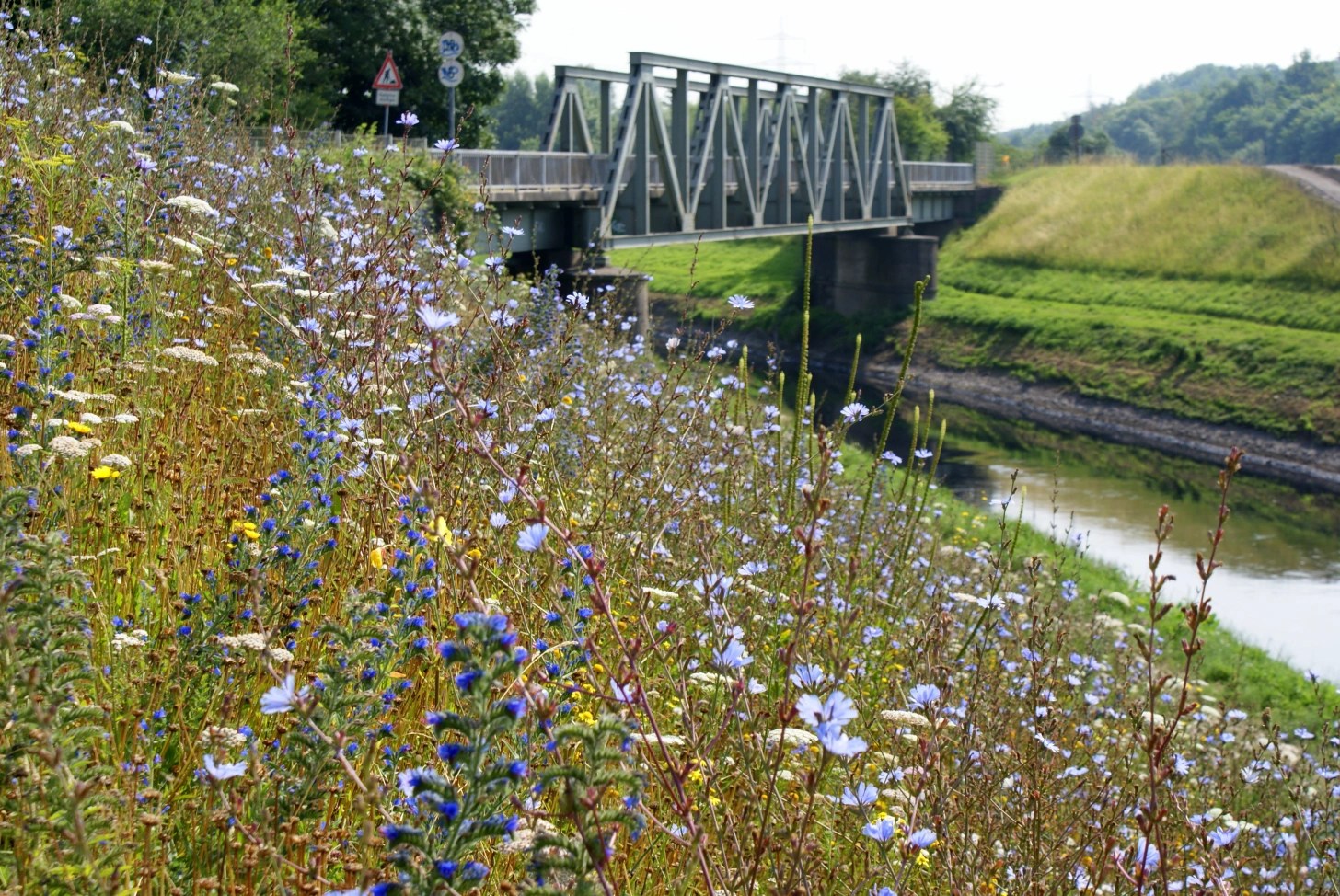
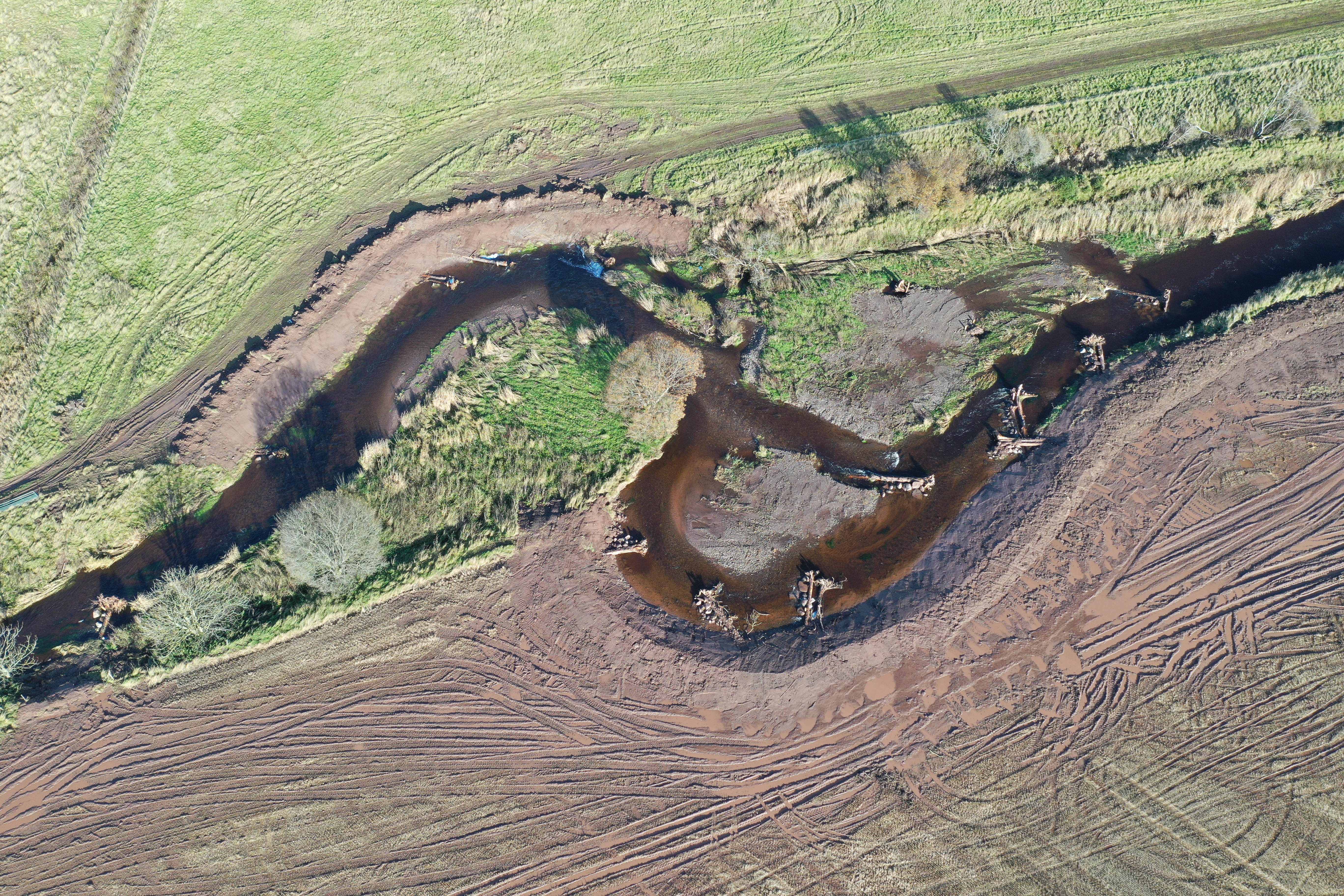
On the banks of the Emscher River in Germany, wildflower meadows now bloom where raw sewage once flowed. Along the floodplains of the Danube in Romania, WWF scientists are coaxing water back into land that has been drained for generations, hoping to buffer the floods that climate change is making ever more severe. In Portugal’s Sorraia valley, restoration workers are navigating the competing pressures of intensive agriculture and a drying climate to give a degraded river system room to breathe. And in Belgium, volunteers led by citizen scientists are placing wooden structures in small urban streams, watching to see whether the invertebrates – the tiny organisms that signal a river’s health – begin to return.
These are not isolated restoration projects. They are part of a continent-wide experiment in what it would take to restore Europe’s freshwater ecosystems, not just in protected reserves and national parks, but everywhere, woven into the fabric of how the continent manages its land, its water, and its economy. That experiment is the MERLIN project, a four-year Horizon 2020-funded research and restoration initiative involving 47 partners from across Europe, which has now reached its conclusion. Its findings matter, and not only for ecologists.
The urgent need to restore freshwater ecosystems
Freshwater biodiversity is declining faster than biodiversity in any other ecosystem on Earth. Europe’s rivers have been straightened, dammed, disconnected from their floodplains, and polluted by agricultural runoff for generations. Most EU water bodies are still failing to meet the basic ecological targets set by the Water Framework Directive, despite two decades of legal obligations to improve them. Peatlands – which store vast quantities of carbon and buffer floods – have been systematically drained across the continent in pursuit of agricultural productivity. Wetlands that once filtered water and hosted extraordinary wildlife have been quietly erased from the map.
This is not purely an environmental tragedy, it is an economic miscalculation. A 2023 WWF report estimated the annual economic value of freshwater ecosystems globally at $58 trillion – roughly 60% of world GDP. The services those ecosystems provide – clean water, flood protection, carbon storage, food, recreation – are largely invisible in national accounts, treated as free goods until they disappear. When they do disappear, the costs fall on water utilities, insurance companies, public health systems, and ultimately citizens. MERLIN’s work has explored this theme directly with economists and ecologists, drawing a clear link between the health of rivers and the resilience of European economies. Clearly, freshwaters matter, both for people and nature, and their importance is particularly acute in a time of growing climate emergency.
What MERLIN set out to do (and did)
MERLIN’s full name – Mainstreaming Ecological Restoration of freshwater-related ecosystems in a Landscape context: INnovation, upscaling and transformation – gives some sense of its ambition. The project was not designed to protect a few flagship sites. It was designed to understand, and then demonstrate, how freshwater restoration could become the norm rather than the exception across European landscapes.
It did this through two parallel paths. The first was direct investment: nearly €10 million committed to hands-on restoration work at 18 flagship case studies, spanning peatlands and wetlands, small catchments and streams, and large transboundary rivers. By the project’s end, those sites had delivered 121 kilometres of restored river stretches and 7,274 hectares of restored floodplains and wetlands. These are not symbolic gestures. They represent measurable improvements in biodiversity, water quality, carbon storage, and flood resilience across Europe, from the Rhine delta in the Netherlands to the Tzipori watershed in Israel.
The second path was intellectual and institutional: building the knowledge, tools, policy frameworks, and financial instruments that would allow others to replicate and scale what those 18 sites had demonstrated. This is where MERLIN’s legacy is likely to prove most durable, and most consequential for European environmental policy.
Growing from core areas: the science of strategic restoration
One of MERLIN’s central research contributions is a Europe-wide analysis of where restoration investment is most likely to succeed. Using continent-scale datasets on freshwater habitat status, ecological pressures, biodiversity, and Natura 2000 protected areas, the project developed screening maps that divide the EU into discrete River Restoration Units. These underpin a spatial framework for identifying where the need for restoration is greatest and where the conditions for success are most favourable.
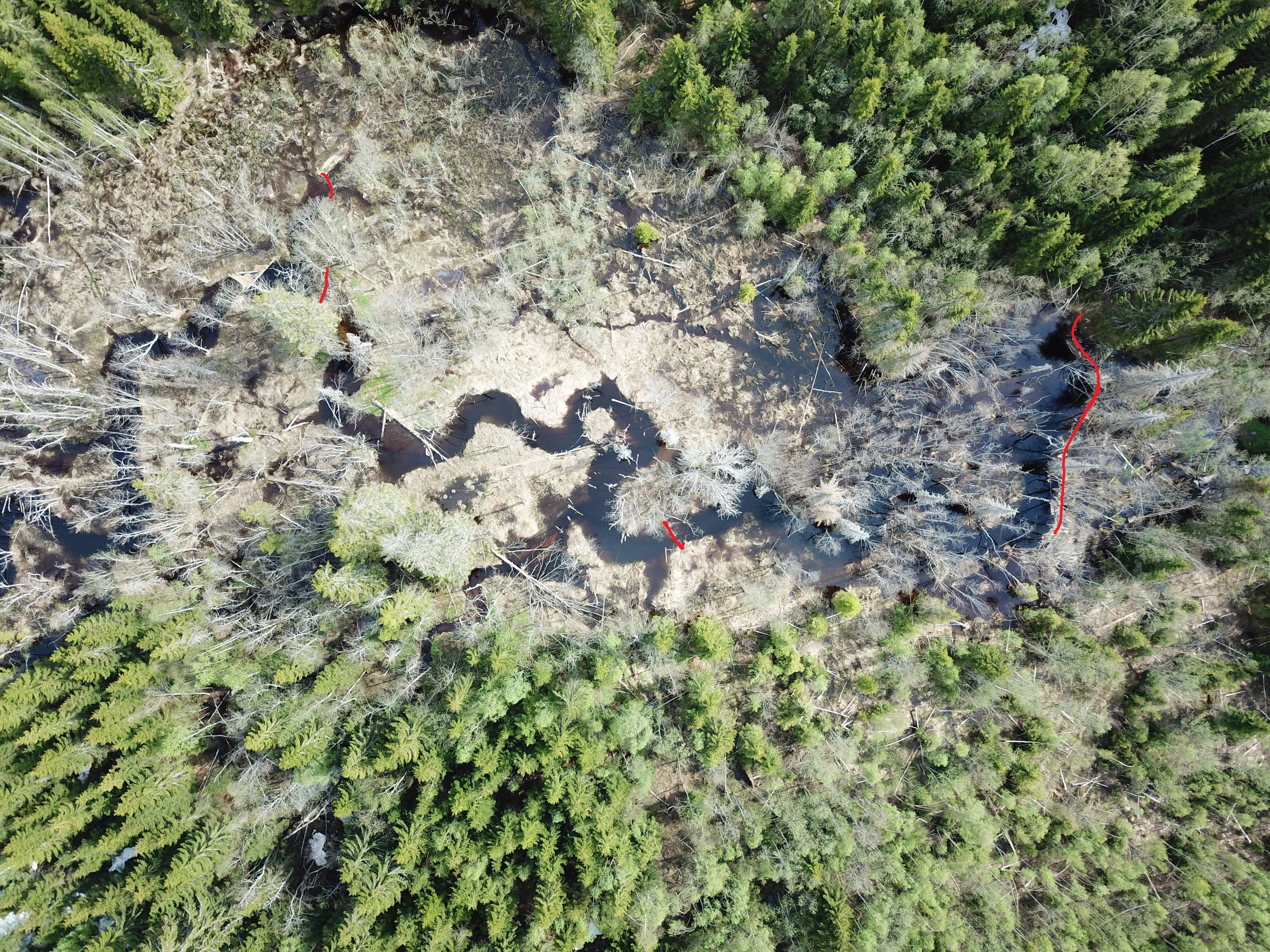
The strategic insight that emerges from this analysis is straightforward but vital: restoration works best when it builds outward from places where nature is already doing well. Existing Natura 2000 sites and other ecologically intact areas act as launch pads – or core areas – from which restoration can expand into surrounding landscapes. Rather than attempting to transform heavily degraded environments from scratch, the evidence points toward connecting these existing patches, rewetting adjacent peatlands, and reconnecting river channels with floodplains that have been cut off by embankments and drainage ditches.
A newer piece of modelling work goes further. MERLIN’s scenario maps, published in early 2026, integrate the Habitats Directive and Water Framework Directive into a Bayesian Network model to predict ecological status across Europe and derive spatially explicit restoration targets. They identify, for example, where improvements in floodplain connectivity or the removal of fish passage barriers are most likely to deliver measurable biodiversity gains. This kind of data-driven prioritisation tool is exactly what policymakers developing National Restoration Plans for the new EU Nature Restoration Regulation need, and MERLIN has made it openly available.
Monitoring what works: a new framework for restoration evidence
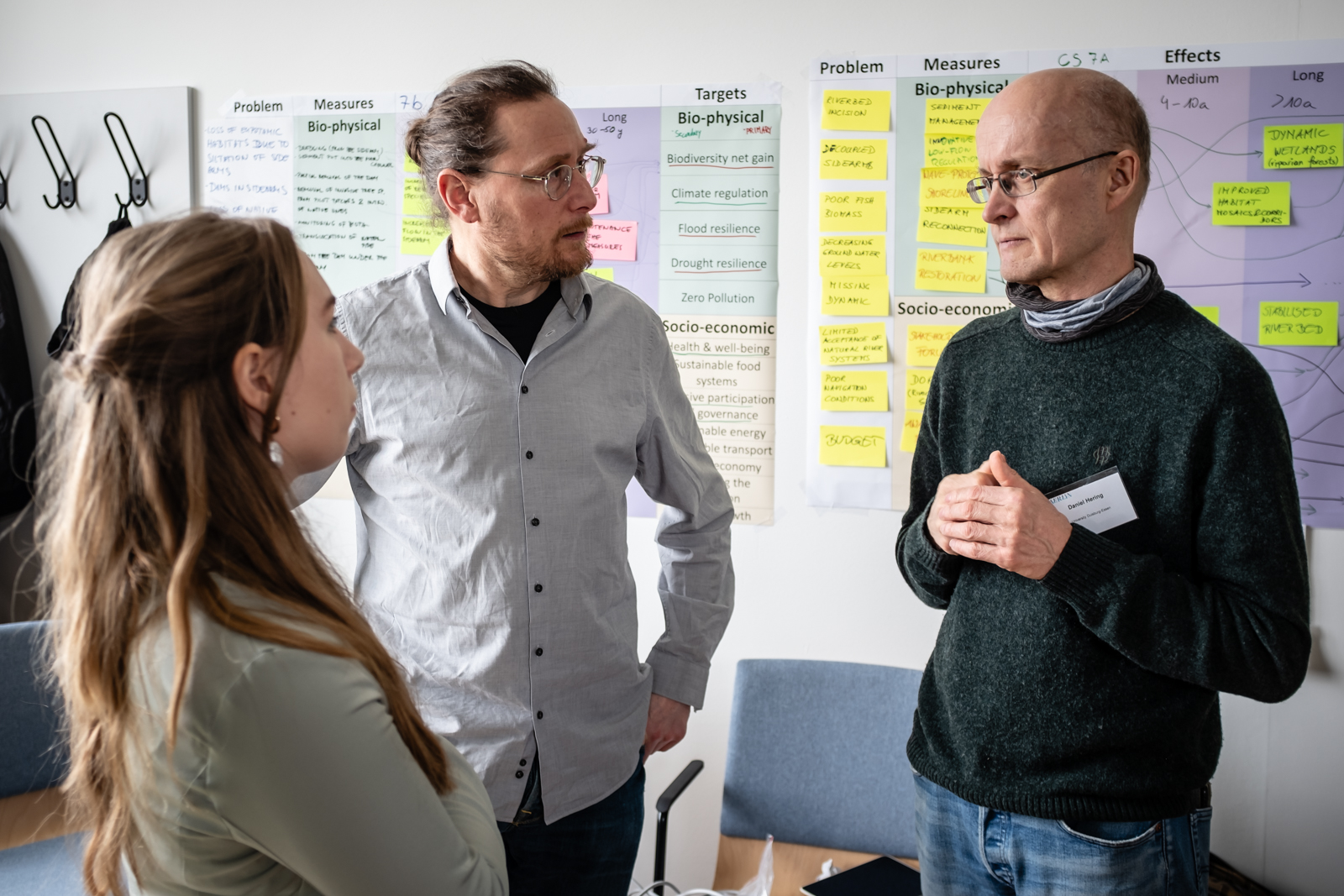
MERLIN kept a close eye on the success of its restoration projects, developing a standardised monitoring framework that assessed outcomes across 13 European Green Deal policy areas for all 18 case studies simultaneously. The results, assessed using a traffic-light scoring system that combined impact direction with data confidence, showed a high-confidence increase in biodiversity net gain and climate regulation. Restored floodplains reduced flood risk, rewetted peatlands stored carbon, and reconnected river stretches improved fish passage and aquatic invertebrate communities.
The monitoring work also identified limitations. Socio-economic outcomes were harder to measure robustly than ecological ones, and trade-offs were sometimes real: temporary pollution increases during earthworks, loss of some agricultural land at restoration sites, and disruption to existing land uses. The project was transparent about these tensions rather than glossing over them: an approach that is likely to strengthen trust in the overall evidence base. MERLIN’s monitoring handbook is now a public resource, designed to be used by restoration practitioners across Europe who want to generate comparable, policy-relevant evidence from their own sites.
An additional strand of citizen science work – training volunteers to monitor small streams using ecological protocols developed through the FLOW project – demonstrated that meaningful ecological data can be generated without professional ecologists on every riverbank. Community members in Ghent tested the approach, assessing stream health before and after simple restoration measures such as installing wood structures and planting native alder trees. The results fed into a peer-reviewed synthesis of 87 citizen science stream monitoring projects globally, providing the field with its most comprehensive overview to date of what works, and what doesn’t, when members of the public are asked to become the eyes and ears of ecosystem recovery.
Translating restoration ambition into European policy
MERLIN’s science lands at a moment of acute political urgency for European environmental policy. The European Green Deal – announced with considerable fanfare in 2019 as Europe’s roadmap to climate neutrality and ecological recovery – has had a turbulent passage. Its biodiversity strategy set ambitious targets for protecting and restoring nature across the continent, but it has faced sustained pressure from agricultural lobbies, a cost-of-living crisis, and the geopolitical shock of the war in Ukraine, which triggered a retreat on some green commitments in the name of food security. The Nature Restoration Regulation, finally adopted in 2024 after heated debates in the European Parliament, established legally binding restoration targets for rivers, floodplains, wetlands, and other habitats.
Member States now face the task of developing the National Restoration Plans which underpin this ambitious law by September 2026. Many countries are starting from a weak baseline of patchy ecological data, limited institutional capacity, and the kind of cross-ministerial coordination – between environment departments and agriculture ministries, between water regulators and spatial planners – that has historically proved elusive. MERLIN’s work arrives at precisely this moment of implementation anxiety, offering not just evidence of what restoration can achieve but valuable tools for getting it done.
One of the most significant policy contributions is a detailed analysis of the synergies and tensions between the Nature Restoration Regulation and the long-standing EU Water Framework Directive. Both laws focus on overlapping freshwater landscapes. Both set ambitious goals. But they have different institutional homes, different monitoring requirements, different timelines, and different relationships with agriculture, hydropower, and navigation sectors. Without deliberate coordination, there is a real risk they will be implemented in silos, duplicating efforts and missing the systemic interventions that only a joined-up approach can deliver. MERLIN’s policy brief on this subject offers a valuable guide to avoiding that failure.
Agriculture sits at the heart of all of this. The Common Agricultural Policy (CAP) distributes around €57 billion annually across European farming, shaping land management at a scale no restoration programme can match. MERLIN’s analysis of CAP design and reform – backed by a dedicated policy brief and an infographic contrasting business-as-usual farmland with restoration-integrated landscapes – makes the case that without CAP reform, freshwater restoration cannot reach the pace and scale that the Green Deal demands. A key question is how European subsidies and incentive structures could be redesigned to reward farmers who manage land in ways that benefit rivers and wetlands, rather than penalising them for it.
Working with economic sectors: from agriculture to insurance
Perhaps MERLIN’s most ambitious undertaking was its attempt to embed freshwater restoration into the mainstream operations of six economic sectors: agriculture, hydropower, insurance, inland navigation, peat extraction, and water supply and sanitation. The rationale was clear. These sectors both depend on, and impact freshwater systems. They hold assets, manage land, and make investment decisions at a scale that dwarfs public restoration budgets. If they could be persuaded – or given the right incentives – to treat river and wetland health as a business priority rather than an external cost, the trajectory of European freshwater ecosystems could fundamentally change.
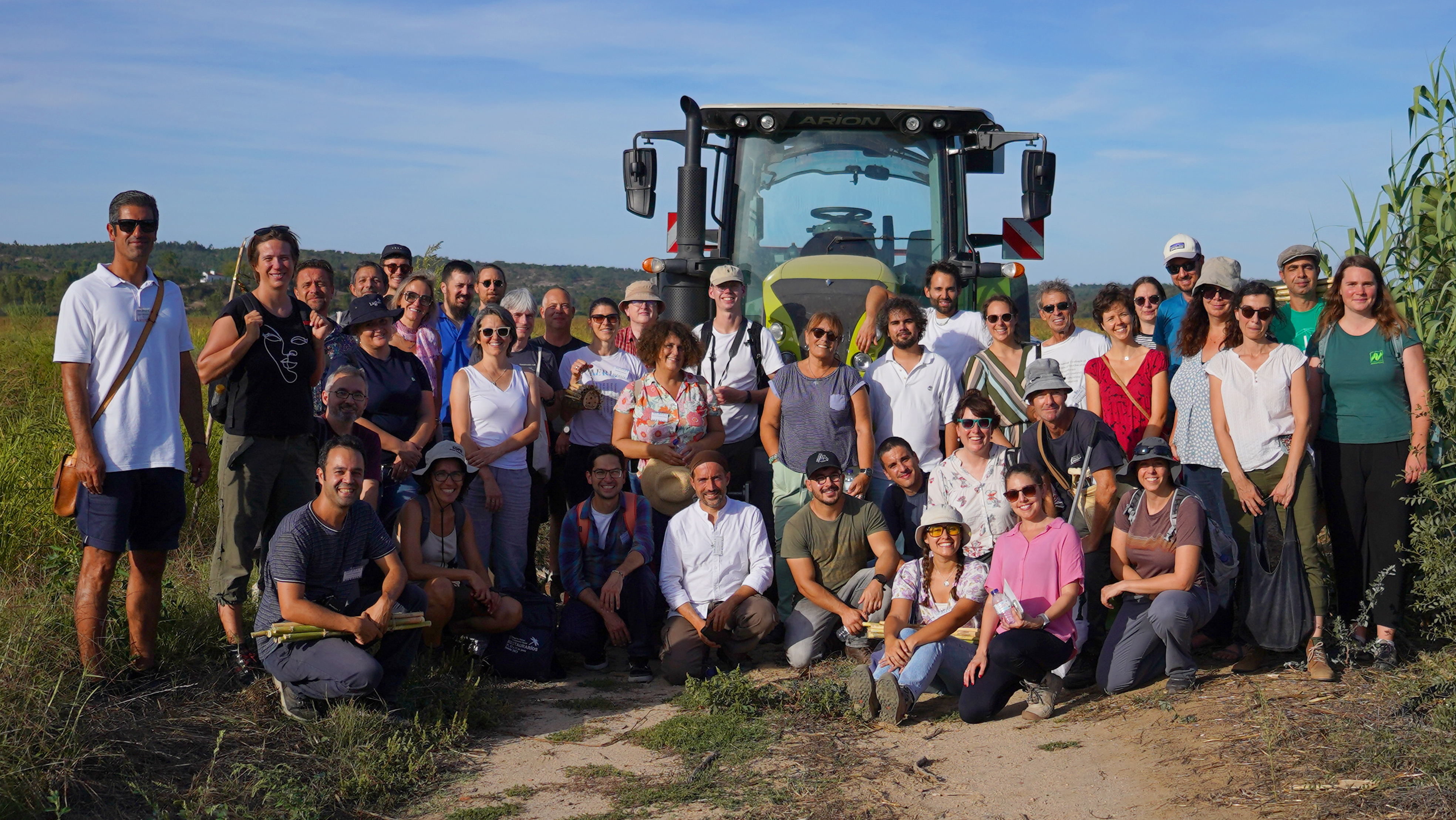
The approach was to build what MERLIN called Communities of Practice: sectoral working groups that brought together businesses, policymakers, financial institutions, and NGOs to develop shared understanding and, ultimately, sector-specific strategies for integrating Nature-based Solutions. Six sectoral strategies were the result, accompanied by a set of infographics designed to make their content accessible to non-specialist audiences in multiple languages – from English and German to Basque and Portuguese, reflecting the genuinely pan-European ambition of the exercise.
The findings were nuanced. Water utilities emerged as perhaps the most immediately receptive sector: the business case for catchment-based natural solutions as an alternative to engineering – reducing treatment costs, managing drought risk, improving source water quality – is already compelling, and growing more so as climate pressures intensify. The insurance sector, too, showed real movement: as flood losses mount across Europe, insurers are beginning to price risk in ways that create financial incentives for floodplain reconnection and wetland restoration. Agriculture remained the most complex and contested terrain, not because farmers are hostile to restoration – as the project’s fieldwork repeatedly demonstrated – but because the current policy architecture does not make it easy or financially rewarding for them to act as land stewards.
The Cross-Sectoral Routemap, published in late 2025, maps 19 different economic actors relevant to freshwater restoration and proposes a pathway to 2050 built on five strategic action areas: legal and regulatory reform, shifting values and attitudes, knowledge and innovation, economic and financial instruments, and the building of collaborative institutions. Published alongside interactive storymaps, this work offers a blueprint for the kind of systemic change the Green Deal was always supposed to catalyse but has struggled to operationalise.
How to pay for mainstreaming freshwater restoration
One of MERLIN’s more uncomfortable findings concerns finance. Restoration in Europe is still overwhelmingly publicly funded, and private investment – despite considerable rhetoric about green finance and nature-positive business – remains marginal. The project’s research, documented in a dedicated deliverable on financing diversity, traced the barriers in detail: restoration teams lack the financial literacy to speak investors’ language; investors struggle to identify a credible return; and the regulatory frameworks that might make nature investable are still immature.
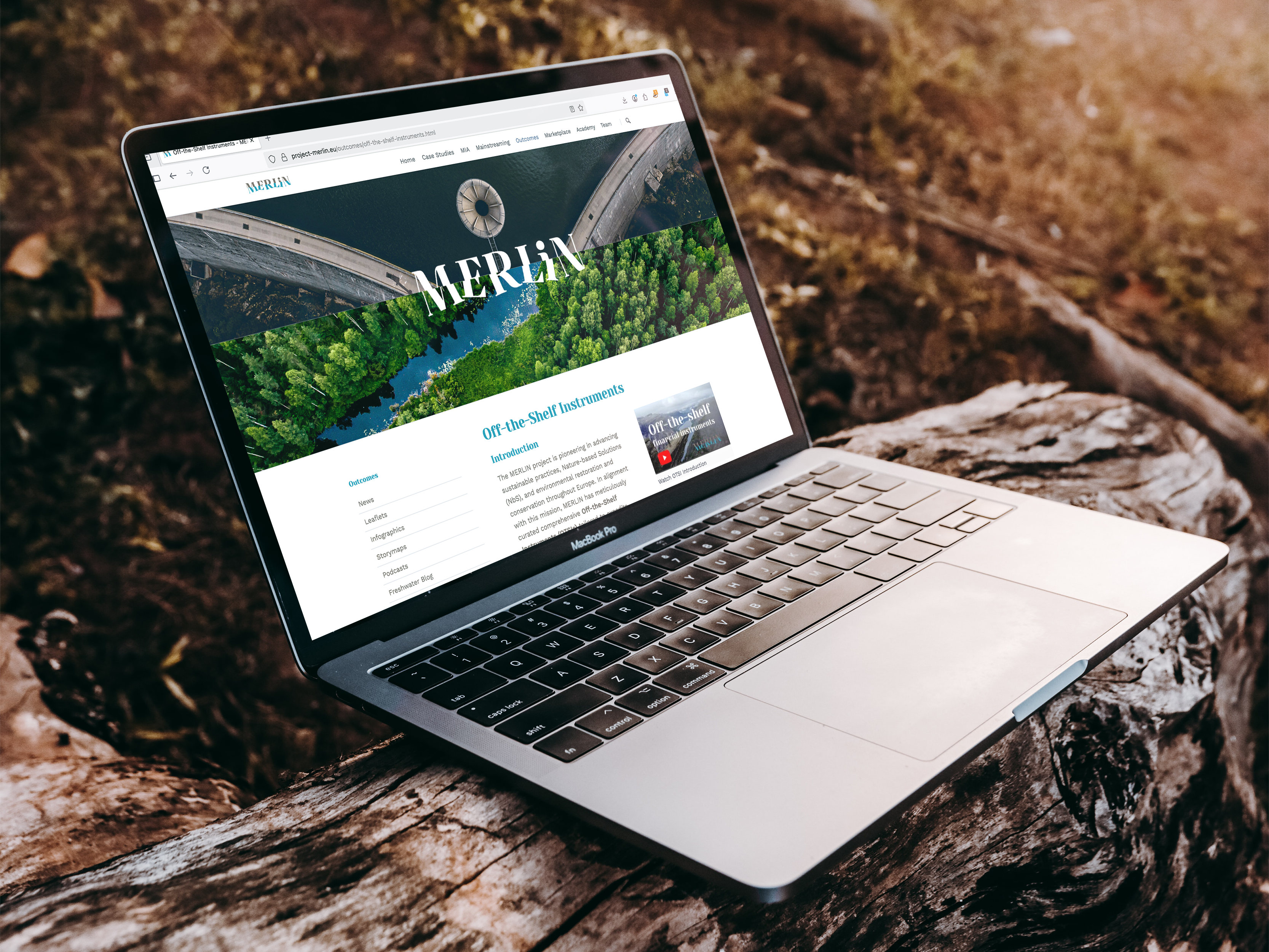
The response was practical. MERLIN developed a portfolio of twelve Off-the-Shelf Instruments – green bonds, biodiversity offsets, corporate sponsorship of natural areas, carbon sequestration credits, donation-based crowdfunding, public-private partnerships, and more – each presented as a plain-English, step-by-step guide for restoration managers with no financial background. An accompanying Investment Briefing Note – due to be published soon – addresses the investor side of the equation: what does it actually take for a restoration project to attract capital? The answer, the briefing argues, comes down to governance, measurability, and transparent reporting – the same rigorous evidence standards that MERLIN’s monitoring framework was designed to generate.
The MERLIN Marketplace, a digital platform connecting restoration practitioners with product and service providers, operationalises this ambition. With 60 registered products and services – from aquatic ecosystem assessment methods to innovative water treatment technologies – and 251 active users, it functions as a shop window for the growing freshwater restoration economy. The annual MERLIN Innovation Awards, held between 2023 to 2025, celebrated the best of this emerging sector, with prizes going to initiatives as varied as River Cleanup, a Belgian non-profit tackling river plastic at community scale, and Wasser 3.0, whose PE-X technology removes microplastics from polluted water for subsequent reuse.
Sharing knowledge: the Academy, podcasts and maps
Research findings have limited impact if they remain only in academic journals. MERLIN invested heavily in making its knowledge accessible, through a range of channels that together constitute one of the most comprehensive freshwater restoration knowledge environments ever assembled.
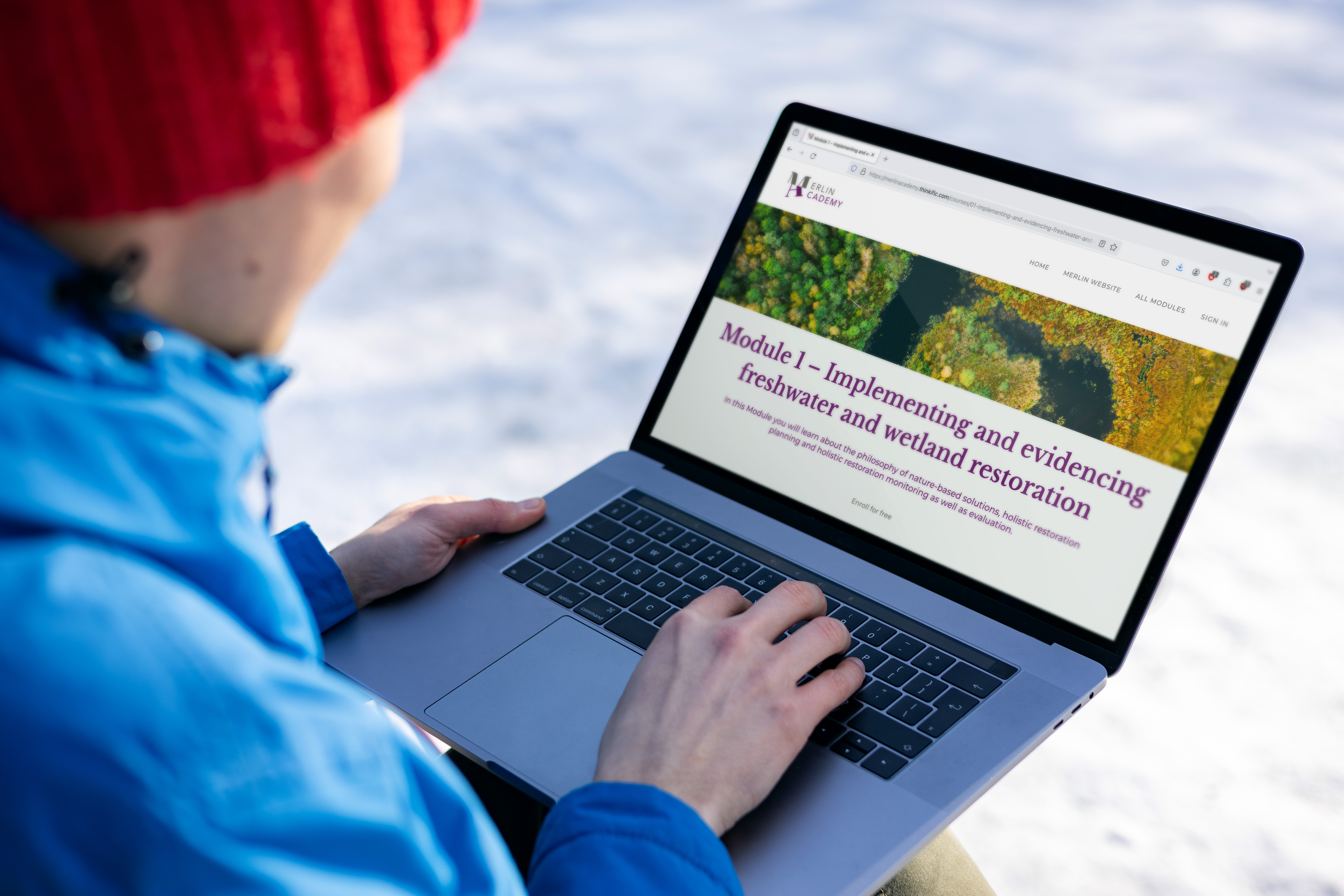
The MERLIN Academy is a free, publicly-accessible online learning platform structured around four certified modules: implementing and evidencing freshwater restoration; stakeholder engagement and governance; the economics and financing of Nature-based Solutions; and scaling up freshwater restoration and Nature-based Solutions in Europe. Each module combines expert-recorded video sessions, reading materials, interactive graphics, and quizzes, and leads to a MERLIN completion certificate.
The accompanying Knowledge Centre hosts over 220 curated resources – scientific publications, practical manuals, datasets, tools, and training courses – covering everything from restoration planning to alternative financing mechanisms. A series of webinars, totalling over 35 hours of expert presentations, is archived and freely accessible, as are 16 podcast episodes that follow restoration practitioners across the continent, from Portuguese streams to the Danube floodplains, offering vivid and accessible accounts of freshwater restoration on the ground.
Interactive storymaps bring a spatial dimension to this knowledge sharing, including one exploring the future of Digital Twin technology in restoration – the use of real-time data models to simulate how ecosystems respond to different interventions, enabling smarter planning and adaptive management. Project leaflets summarising the core ideas of MERLIN have been translated into ten languages, from Finnish to Romanian, indicating a commitment to reaching the communities closest to the rivers that need restoring.
What comes next for Europe’s freshwaters
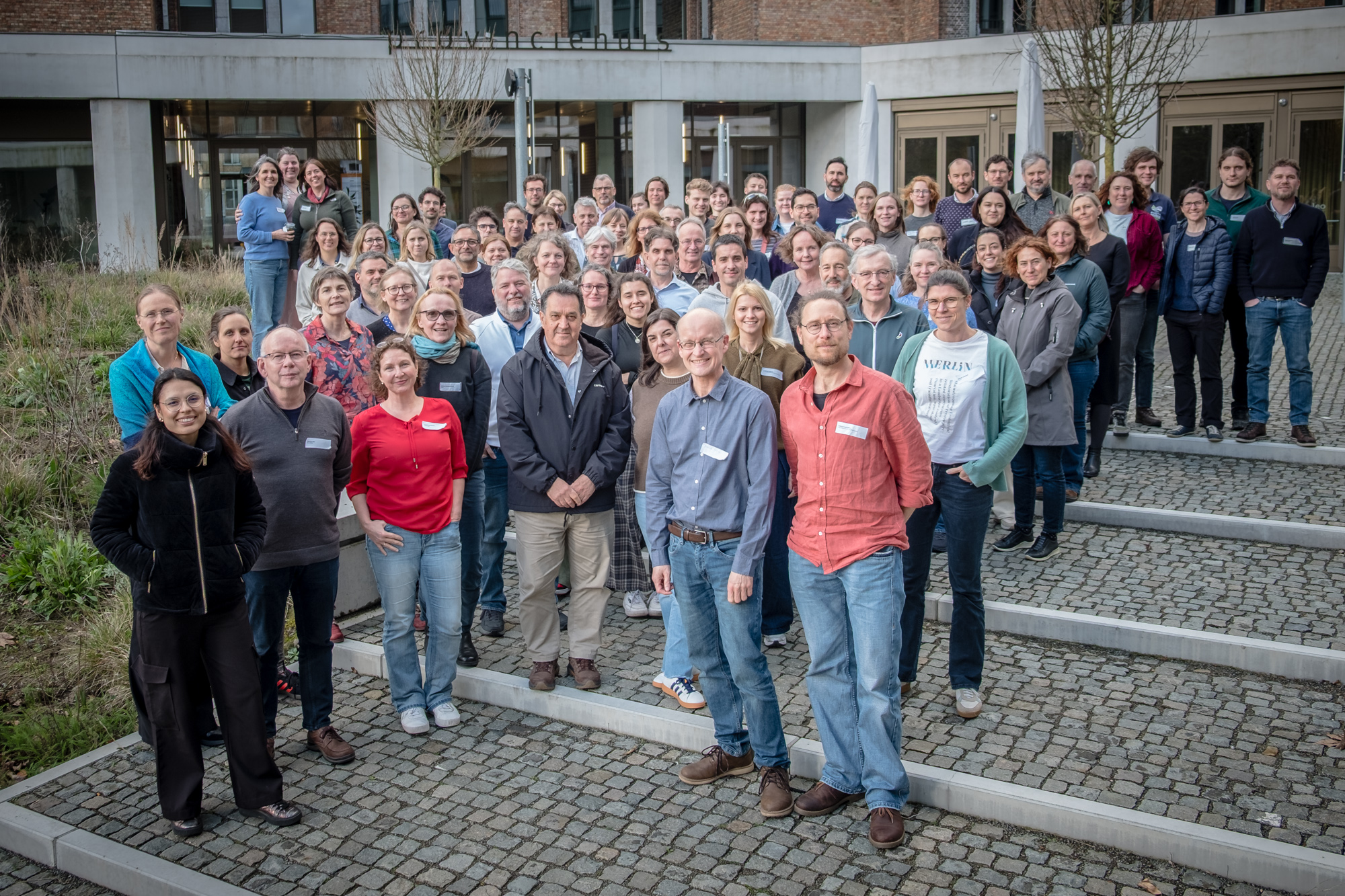
MERLIN has been one of four large Horizon 2020 projects working on ecosystem restoration across Europe – alongside WaterLANDS, REST-COAST, and SUPERB – and the four have collaborated closely, co-authoring policy briefs and journal articles, and presenting jointly to EU institutions. Known together as the Green Deal Restoration Cluster, they have managed and coordinated restoration work at 71 sites across the continent. In March 2026, the cluster held a joint event in Brussels to present findings to EU and national decision-makers at a critical moment in the implementation of the Nature Restoration Regulation, feeding directly into the development of National Restoration Plans.
What MERLIN ultimately demonstrates is that the freshwater restoration challenge, in Europe and beyond, is not primarily technical. The core knowledge exists. The restoration techniques work. The benefits – ecological, social, economic – are real and measurable. The monitoring frameworks needed to track them are now in place. The financial instruments needed to fund them are on the shelf. The policy frameworks, imperfect and contested as they are, are broadly aligned with the right ambitions.
What has been missing, and what this project has spent four years beginning to build, is the connective tissue: shared language between ecologists and economists, trust between land managers and conservation organisations, policy coherence across ministries that have historically operated in silos, and financial structures that allow private money to flow toward public goods. These things are harder to create than a river restoration plan. They take longer to take root than a riverbank wildflower meadow. And they require a kind of persistence – in the face of political setbacks, budget pressures, and the perennial human tendency to treat environmental cost as someone else’s problem – that is not easily sustained.
But the rivers remain. The peatlands still hold carbon that took millennia to accumulate. The floodplains still have the memory, in their soils and sediments, of the water that once moved through them. Europe is entering what may be its most consequential decade for its natural environment. Whether that decade delivers on the promise of the Green Deal will depend less on grand declarations than on the slow, patient work of implementation: the monitoring, the financing, the cross-sectoral negotiation, the citizen science, the policy reform.
MERLIN has shown what that work looks like, and provides tools to make it easier. The question now is whether enough people – in government offices, in farmyards, in insurance boardrooms, on riverbanks across the continent – will pick them up and use them.
///
All MERLIN research, tools, and resources are freely available at project-merlin.eu.
This article is supported by MERLIN.









Comments are closed.