An insider’s view of Convention on Biological Diversity Conference 10, Nagoya, Japan
 This week’s post is written by BioFresh partner Dr Hendrik Segers from the Royal Belgian Institute of Natural Sciences. Dr. Segers co-ordinates the Belgian Biodiversity Platform, which promotes effective collection and accessibility of global biodiversity data. Dr. Segers’ research interests surround the biodiversity and biogeography of freshwater systems, and has published more than 130 scientific papers, including 70+ in ISI journals, on the subject.
Dr Segers was present at the Convention on Biological Diversity Conference of Parties 10 in Nayoga, Japan held in October 2010. Here he offers a unique insider’s insight into the inner workings of the talks.
After the failure of the last UNFCCC Conference of the Parties in Copenhagen in 2009, many observers worried that this marked a general lack of confidence in the effectiveness of intergovernmental processes to deal with environmental issues. Moreover, the stakes for the 10th Conference of the Parties of the Convention on Biological Diversity were unusually high, which was neither an element that inspired much confidence. This 10th Conference of the Parties, or, short, Cop 10, had to consider a relatively large number of widely ranging subjects, going from household issues to a series of in-depth reviews of Programmes of Work, including such contentious ones as Protected Areas, Marine and Coastal biodiversity, and Biodiversity and Climate Change. On top of those regular ones, there were three more issues that could easily have gone awry.
First, an agreement had to be negotiated on a protocol to deal with Access to Genetic Resources and the Fair and Equitable Sharing of Benefits Arising from their Utilization, or the ABS protocol. After about seven years of painstaking negotiations, Parties (countries that have ratified the CBD) were hard pressed to conclude on a protocol that would regulate the access to genetic resources – mostly in the interest of developed countries – and the sharing of the benefits arising from their utilization – a concern for, mostly, developing countries. I can illustrate the complexity of the ABS negotiations by referring to the case of derivatives: to what extent should a molecule be considered a Genetic Resource under the terms of the protocol? Does changing a few atoms in a molecule that otherwise is found in bacteria dwelling the depths of a tropical swamp make it an artificial substance, that can therefore at leisure be commercialized by a pharmaceutical company?
A second heavily debated issue was the strategic plan for the post-2010 period implementation of the Convention. This plan includes some – more or less strictly circumscribed – targets and deadlines for the conservation and sustainable use of biodiversity. Goals on freshwater biodiversity are included in targets 111 and 142. That coming to such an agreement is a difficult process should not surprise anyone.
Last but not least, resources have to be made available to make all this possible. Bearing the global economic crisis in mind, arriving at a Strategy for Resource Mobilization that balances the interests of developed countries with those of the G77 and upcoming economies such as Brazil and China was no sinecure.
With all this in mind, it was clear that the Nagoya COP of CBD was not expected to be a walk in the park. The international press had so much as declared it a lost cause even before the start of the meeting, which of course did not inspire much confidence. Indeed, the mood swung from positive to negative and back during the fourteen long days and nights of the meeting, during plenaries, working group meetings, informal contact group meetings, friends of the Chair meetings, the high-level ministerial segment , and, in parallel to those, regional coordination meetings, e.g., amongst EU members states under the Belgian presidency. This went on until and during the final plenary on Friday evening, where exhausted negotiators were seen to frantically run from one Party to another to convince, plead, or explain complex package deals. Until, finally, around 3 AM on Saturday morning, the Chair could finally adopt a full set of decisions, including the Nagoya protocol on ABS, a Strategic Plan for the post 2010 period, and a Strategy for Resource Mobilization, and adjourn a successful CBD COP 10.
If one reads through all the decisions of this COP, one will certainly find weaknesses, but also positive points. My feeling is that a reasonably acceptable balance was struck between ambition and realism, and between the interests of both developed as well as developing country Parties. In fact, in hindsight, the mere fact that a consensus was reached already exemplifies the sense of responsibility and urgency that will be needed even more to tackle the global environmental crisis that is upon us today. As I write this, the CPP16 of UNFCCC COP in Cancun, Mexico, has just concluded and it is good to see that negotiators there appear to have been inspired by the success of CBD COP 10.
H. Segers
Further reading:
http://www.cbd.int/nagoya/outcomes/ for the unedited outcomes of the meeting;
http://www.iisd.ca/biodiv/cop10/: report on COP10 by IISD reporting services
Notes:
1 Target 11: By 2020, at least 17 per cent of terrestrial and inland water, and 10 per cent of coastal and marine areas, especially areas of particular importance for biodiversity and ecosystem services, are conserved through effectively and equitably managed, ecologically representative and well connected systems of protected areas and other effective area-based conservation measures, and integrated into the wider landscape and seascapes.
2 Target 14: By 2020, ecosystems that provide essential services, including services related to water, and contribute to health, livelihoods and well-being, are restored and safeguarded, taking into account the needs of women, indigenous and local communities, and the poor and vulnerable.
Creative ways of thinking about freshwater conservation

'Swans and River' by Carry Akroyd (from here)
Last week in Norfolk, England, a conference entitled Birds, Nature & Creativity brought together writers, artists, musicians, academics and conservationists to discuss new and creative ways of thinking about bird conservation. Working under (but not limited to) the common cause of birds and their habitats, a key theme of the day was that there is untapped potential to complement traditional forms of conservation with the creative arts in order to reinvigorate public engagement with the natural world.
Contributors ranged from Richard Mabey (author of numerous books on natural history – most recently Weeds); author Mark Cocker; BioFresh partner (and Oxford University senior lecturer) Dr Paul Jepson; and The Independent’s environment editor Michael McCarthy; to environmental artists Carry Akroyd and Katrina Porteous and haiku poet John Barlow. A common theme of many posts on this blog has been the drive to find innovative ways of planning and communicating conservation, and the wide-ranging perspectives and ideas brought together for the conference certainly sparked this debate.
How could we apply these ideas to freshwater ecosystems conservation? We might look to the rich and diverse entanglements between nature and culture evident in many species in The Cabinet of Freshwater Curiosities. Species in the Cabinet are celebrated for their ecological and cultural distinctiveness and significance rather than any pressing extinction threat.
Rivers crop up as a metaphor for sustenance, change, loss and renewal in the earliest folk music, and persist into the modern tradition – from Joni Mitchell, Neil Young, and Bill Callahan to Justin Timberlake. The same could certainly be said for poetry – a modern example being John Barlow’s environmental haikus:
clouded light . . .
ripple crests edge
the egret’s tail
(John Barlow (2008) Wingbeats from here)
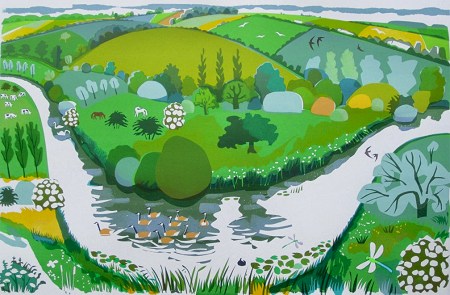
'River Landscape'. Screenprint by Carry Akroyd (from here)
The role of art and music in conservation need not be only celebratory – as shown by Carry Akroyd’s work, there is potential to communicate ideas of habitat destruction and species loss in creative ways. A challenge is to communicate these ideas of anger and loss whilst promoting the value of positive individual engagement with the natural world, and the diversity of ideas and emotions that stem from this.
In Scotland, there is a growing movement (with echoes of bioregionalism) to simultaneously restore nature and culture to degraded landscapes (see for example the Assynt crofting community). Traditional music, stories and poems concerning the environment are key to this process. Perhaps there is potential to apply these ideas to the songs, stories and poetry surrounding rivers and lakes to spark a similar resurgence of interest in freshwater ecosystems?
But can an engagement with the creative arts to translate into positive conservation action? It might be argued that creating environmental art or writing environmental poetry or songs is important, yet rarely inspires direct environmental action. Equally, are these ideas too niche in their appeal, resonance or geographic scope to have any real effect?
The point of this discussion is not that the introduction of creativity into conservation will suddenly solve all the pressing environmental problems. Instead, what is exciting is the potential to reimagine the relationship between landscape, culture and conservation through the creative arts to reinvigorate people who may have lost, or never acquired an engagement with the natural world.
This post has given a relatively shallow (sic) overview of some starting points for how the creative arts may complement freshwater ecosystem conservation. We’d welcome your thoughts, comments and suggestions as to how this idea might be extended. How could we think about using the creative arts to reconnect people with our rivers and lakes?
Cabinet of Freshwater Curiosities

Image: Robert Haas/National Geographic/Caters News Agency
This photo of Carribean flamingos flocking in the shape of a flamingo (!) in the Yucatan, Mexico in yesterday’s Guardian seems an apt way to introduce the relaunched BioFresh Cabinet of Freshwater Curiosities.
The Cabinet of Freshwater Curiosities is a modern adaptation of the Cabinet of Curiosities concept, intended to foster interest into the often neglected world of freshwater ecosystems. The Cabinet collects and collates a selection of the world’s most fascinating, bizarre and unique freshwater plants, animals and phenomena (much like the flamingos above!). It provides an interactive platform for users to engage with some little-known oddities and become further immersed in the curious world of freshwater ecosystems.
The site is highly interactive and linked to various social media platforms to encourage users to submit ratings, comments and suggestions for future “curiosities”.
Feel free to explore the Cabinet here, and let us know your thoughts.
Citizen science and new technology

Project Noah
Increasingly affordable digital camera and smart phone technology is being used to attempt to engage the public with the natural world and biodiversity conservation. Citizen science – where the public are involved as active researchers or collectors of biodiversity data – is being increasingly fostered by initiatives such as Project Noah. Project Noah allows the public to use a smart phone app to document (through photographs, measurements and map readings) the plants and animals they encounter. These “spottings” are mapped along with other user data to give a field guide to the wildlife found in a particular area, and can be ratified by independent experts. Project Noah also sets the user “missions” to spot a particular organism, and the data collected can be used to track processes such as the spread of migrating or invasive species.
This initiative is part of a larger movement to use new technologies to engage the public with the natural world. iSpot provides an online community for users to help identify photographed organisms; and projects like the OPAL Biodiversity Survey, the RSPB Big Garden Bird Watch or the Christmas Bird Count in the USA are increasingly using the internet to allow the public to submit their observations and sightings.
This reflects a shift to the increasing democratisation and openness of scientific knowledge. Historically, scientists and the public have largely existed as separate poles, with the communication of science aiming to fill a perceived “deficit” in public understanding. This “deficit model” assumes that once scientific literacy is improved then the public will understand how and why scientific decisions are made, and so avoid any controversy or debate.
However, this model is being viewed as increasingly flawed. Citizen science projects such as Project Noah fall under an alternative “public engagement” model that aims to empower the public in environmental decision-making by connecting environmental problems to their daily lives, values and beliefs. The science-public relationship becomes a dialogue, fostered through citizen science projects, community forums and novel means of science communication (see for example the BioFresh Cabinet of Freshwater Curiosities) to understand and influence how science is translated into environmental decision-making.
There are concerns that the data collected by citizen science projects is unreliable and inaccurate. Certainly, a browse through the Project Noah site reveals a number of “spottings” of pets, garden plants and fishermen’s trophy catches. However, you could argue that the quality of data is necessarily the key point to citizen science; it is instead the fact that it encourages people who may not otherwise to step outside and take notice of the natural world around them – even in a highly urban area.
As such – and seemingly paradoxically – I wonder if there is the potential for new digital technology to make it easier for the public to reconnect with the natural world? How would such a connection work? Do new technologies necessarily keep us at arms length from the world around us, or do they give new ways to reinvigorate our engagement and enjoyment of it?
As ever, let us know your thoughts, comments and suggestions.
Can big brands help save biodiversity?
As a rule, many people associate the growth of large commercial corporations with environmental degradation. In this presentation to the TED conference earlier in the year, WWF vice-president Jason Clay outlines a radical vision of uniting commercial, multi-national brands to agree on imposing environmental sustainability standards as a prerequisite to the trade of 15 popular and environmentally important commodities such as palm oil, timber and fish. Clay’s argument is that large corporations should be encouraged to strategically co-operate in setting environmental sustainability as a pre-market and pre-competition stipulation in their products.
Ambitiously, Clay asks that the pressing global need to reduce environmental degradation should persuade corporations as fundamentally opposed and competitive as Pepsi and Coca-Cola to co-operate for a common good. He argues that as a relatively small number of corporations are responsible for the majority of the trade of the most important commodities, it is logical to target them, rather than “downstream” retailers or consumers. By uniting a roundtable of 100 key global companies to agree on common pre-market environmental standards for their products, Clay hopes that global markets will shift to foster the protection of a planet that they have outgrown.
Applied appropriately, the vast resources available to large companies could potentially be invested into research which understands how commodities may be sustainably used whilst retaining economic productivity. For example, Mars is investing in sequencing the genome of the cocoa plant to isolate traits of productivity and drought tolerance. Where on any given plantation, 20% of the trees produce 80% of the crop, Mars could be now looking at plants that could produce 320% as much cocoa on 40% of the land. This land sharing approach could then ideally be used to foster biodiversity conservation and rural livelihood enhancement.
Biodiversity conservation is increasingly engaging with economic markets. Traditional methods of “fortress conservation“, where species are protected by designating parks and reserves where nature “is” and humanity “is not” have been shown to often be conceptually and practically flawed in preserving a wide range of biodiversity and human livelihoods. Increasingly, attempting to foster sustainable resource consumption through the markets – whether directly through big corporations as Clay outlines, or through ecosystem services valuations (see for example, The Economics of Ecosystems and Biodiversity) – is seen by many practitioners as a radical, but necessary step to preserving global biodiversity.
What do you think? How feasible is Clay’s vision of large corporations agreeing pre-competition environmental standards? Should the conservation movement even engage with economic markets? As ever, we welcome your comments and ideas.
IUCN Biodiversity Video – Love. Not Loss.
Last week, the International Union for the Conservation of Nature released this video challenging negative “doom and gloom” environmental messages:
The video’s positive, hopeful message of “Love. Not Loss.” chimes with the themes discussed a few weeks ago in our post following the fall-out from the 10:10 climate video.
We at BioFresh are thinking a lot about how environmental messages are best communicated – any thoughts on the video, or the debate in general, are welcomed.
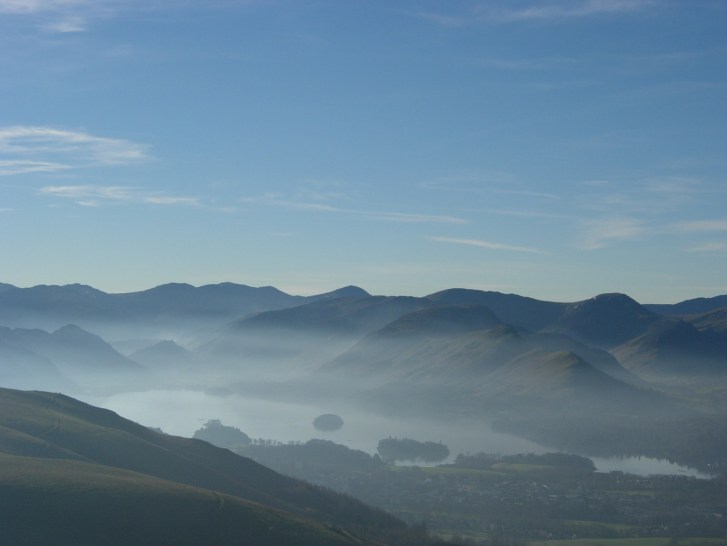
Derwent Water in the English Lake District: the last remaining native habit of the vendace (Coregonus vandesius) which is predated by introduced populations of the non-native ruffe (image: wikicommons)
At first glance, defining a ‘natural’ ecosystem seems relatively straightforward. However, on closer inspection, an understanding of the ecological, climatic and cultural histories of a landscape muddies the waters of identifying a set ‘natural’ ecosystem state. Global ecosystems are in constant flux, influenced by both natural processes and human influence over thousands of years, which makes defining a natural state for their conservation or restoration difficult.
Writing in Freshwater Biology in January, David Strayer discusses the effects of biological invasions of ‘alien’ species into global freshwaters, creating new and ‘novel’ ecosystems. Such invasions are becoming increasingly common, with species spread in ship ballast water (e.g. the round goby), through the aquatic trade (e.g. Canadian pondweed), deliberate introductions, and angler’s bait buckets (e.g. the introduction of ruffe in Scottish lochs).
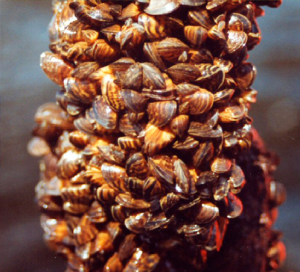
Zebra mussels (image: wikicommons)
There are numerous economic, environmental and cultural services and benefits resulting from the conservation of biodiverse and distinctive freshwater ecosystems – see this short interview with BioFresh partner Dr. William Darwell for more details. Allowing biological invasions to occur unchecked may lead to ecosystems becoming dominated by highly adaptable ‘generalists’ like the zebra mussel or the round goby, potentially at the expense of ecosystem diversity and function (dubbed the “Homogecene”).

Round goby (image: wikicommons)
Given that current ecological thought stresses how ecosystems are in a constant state of flux, it could be argued that we accept biological invasions as natural processes thathave occurred countless times in the past. As Stephen Jay Gould describes, on an evolutionary timescale species are only native to a particular area through a series of chance events, and aren’t necessarily better adapted to their habitat than ‘non-native’ species. However, the issue isn’t that biological invasions are still occurring – it is that their rate and magnitude is being significantly increased by human influence.
Returning then to the idea of what constitutes a ‘natural’ ecosystem, Strayer’s paper raises a number of important points.
The composition of global ecosystems are being increasingly reshuffled and altered. Any attempt to conserve or restore a ‘natural’ ecosystem must be aware of these processes. Strayer’s research suggests that freshwater ecosystems will continue to be flooded with new invasive species in the future, creating new ecosystem assemblages with no historical equivalent to guide their management. His conclusion states “the best solution to the management problems caused by alien species will be to work aggressively to cut the arrival rates of new invaders”.
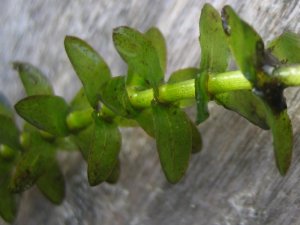
Canadian pondweed (image: wikicommons)
For Richard Hobbs and colleagues, biological invasions make us re-assess a stark distinction between ‘natural’ and ‘non-natural’ ecosystems – moving away from an over reliance on excluding alien species at all costs, instead focussing on appropriately managing emerging ecosystems . This may seem like a defeatist approach, but as Hobbs and colleagues suggest, we are faced with an unprecedented rate of ecosystem change, making exclusion of new invasive species extremely difficult.
Responding to the comments on a draft of their paper, they conclude dryly that:
“one reviewer commented that the examples[of novel ecosystems] are ecological disasters, where biodiversity has been decimated and ecosystem functions are in tatters, and that ‘it is hard to make lemonade out of these lemons’.
Our point is, however, that we are heading towards a situation where there are more lemons than lemonade, and we need to recognize this and determine what to do with the lemons”
—
How far do biological invasions make us re-assess what we term a ‘natural’ ecosystem?
Do you agree with Hobbs and colleagues that we should focus our conservation efforts on appropriate management of new and novel ecosystems rather than relying solely on excluding new invaders?
As ever, we welcome your thoughts.
More information:
- Richard Hobbs and colleagues on the prospect for new and ‘novel’ ecosystems
- Petr Pysek and colleagues discuss the role of different pressures on ecosystem invasions in Europe
- Free access Ecology and Society article: Fryirs and Brierley (2009) “Naturalness and place in river rehabilitation”
- DAISIE: Delivering Alien Invasive Species Inventories for Europe
- IUCN / SSC: Invasive Species Specialist Group
Hungarian red sludge spill – three weeks later

Toxic spill near Ajka, Hungary: a NASA satellite image shows the spill clearly visible from space (Image: http://earthobservatory.nasa.gov/)
This week’s post is written by Dr. Szabolcs Lengyel, Assistant Professor of Ecology at University of Debrecen, Hungary and a member of the BioFresh project. Dr. Lengyel offers a Hungarian perspective on the toxic waste spill from an aluminium factory near Ajka, Hungary on 4th October which killed seven people and severely affected surrounding ecosystems.
Three weeks have passed since the worst environmental catastrophe to affect Hungary and the first sizeable spill of red caustic sludge anywhere in the world. By now, the waves of the spill have faded and toxic concentrations have diluted. Life is starting to make a comeback in the villages and landscapes affected by the spill. However, three weeks after the spill, questions remain over its causes, responsibilities and impacts
Nobody is sure exactly what caused the spill. Careless dam construction, sliding layers of soil, irresponsible use of the reservoir by the company, insufficient environmental inspections or a combination of these have all been cited. Nobody talks about why the solution to get rid of almost one million m3 of red sludge is to simply let it flow down into the catchment of the largest river in Europe.
We must question how appropriate the environmental inspection and disaster prevention activities of the relevant authorities had been before the catastrophe?
It is now uncertain what happens when heavy metals from the spill – bound in complexes at highly alkali pH – go into solution at lower pH. And what will happen when the sludge dries and its heavy metal and arsenic-rich dust is dispersed by the wind?
Few media reports mention freshwater life. The highly alkali (pH = 13.8) red sludge covered more than 1000 hectares of land and killed all life in the Torna-patak and Marcal rivers, seriously damaging all living populations downstream on Rába. pH on river Danube decreased below 9 only after day 4, and fish dwelling on the river-bottom have suffered greatly.
An absurd result is that sturgeon, a Natura 2000 species dwelling on the bottom of Danube, have been found killed by the spill in numbers exceeding even the lowest estimates of their population size. Dead sturgeon were found on river sections where their presence had been previously unknown.
I believe the only positive development of the spill is to draw attention to the importance of such environmental ‘time-bombs’ hidden in the backyard of former communist countries. It is crucial that better environmental inspection standards are implemented by authorities to prevent similar disasters in the future.
Dr. Szabolcs Lengyel
Szabolcs is currently studying the impact of habitat restoration and management on biodiversity of semi-natural landscape mosaics, and the theory and practice of biodiversity monitoring. His publications can be found here
More information:
- BBC photos and news report of the aftermath of the spill
- Yale environment blog on the media representations of the spill
- WWF Hungary report on the impacts of the spill and implications for the future
- International Commission for the Protection of the Danube River latest update
What is the role for zoos and aquaria in conservation?
Modern zoos are an increasingly influential voice in global biodiversity conservation. Earlier this year, the European Association of Zoos and Aquaria (EAZA) released a video outlining their vision for the role of their members in conservation programmes:
There are many arguments for the value of such ex situ conservation. For many people, zoos provide an important source of engagement and education about the natural world. The revenues raised by zoos may be also be reinvested in in situ conservation projects – see for example the Zoological Society of London’s conservation outreach programmes.
The accumulated knowledge and expertise held by many zoos can also be put to use in breeding and reintroduction programmes for species otherwise endangered or extinct in the wild (for example, see the La Palma pupfish – this month’s entry into the Cabinet of Freshwater Curiosities.

European otters at London Zoo. Photo: Cyril Blazy (http://www.fotopedia.com/users/blazouf / Creative Commons)
However, critics argue that zoos only foster a partial and unrealistic public engagement with nature – prioritising only the most charismatic and exotic species. Similarly, there is a concern that the over reliance on zoos as the last habitat for many endangered species may channel attention and funds away from the conservation of their natural habitats.
There are an increasing number of ex situ programs involving zoos and aquaria targeted at the conservation of freshwater species. For example, the IUCN Turtle Survival Alliance created a network of zoos, aquaria and private breeders to maintain viable populations of freshwater turtles, with a view to reintroductions in the wild. Similarly, Amphibian Ark is a collaborative project which uses captive breeding to ‘rescue’ dwindling populations of endangered amphibians.
What role should zoos and aquaria play in the global conservation movement? How far do they lead to a positive and productive public engagement with nature?
As ever, we’re keen to hear your views.
More information:
Getting it together for freshwater ecosystems

Today, thousands of bloggers across hundreds of counties will take part in Blog Action Day, an annual event to raise awareness about a single topic – this year focussed on freshwater. An impressive list of participants – including Google, Greenpeace and the White House blog – will all post on a range of human rights, environmental, animal welfare and sustainability issues surrounding access to clean water.
We believe that BioFresh can lend an important voice to this discussion. By creating a shared network of global freshwater biodiversity data, the project will better our understanding of the status and trends of freshwater ecosystems, and so allow effective conservation strategies to be planned. This week’s post on a recent Nature article emphasised the pressing need for accurate biodiversity datasets in order to map the threats faced by freshwater ecosystems.
The value of this data lies solely in its use. That’s why we are spearheading new and creative ways of engaging new users with BioFresh in order to encourage use of our open access data portals, and to raise awareness of the urgency of biodiversity loss from freshwater systems. Whilst our focus is on biodiversity, the conservation of healthy freshwater ecosystems provides numerous beneficial services to humans – such as water security, clean drinking water and flood control. Today’s Blog Action Day is about raising awareness of these benefits, and highlighting the numerous threats to freshwater ecosystems. We at BioFresh are glad to be involved.
How to get involved:
- Register your blog at Blog Action Day to take part
- Publicise the event through email and social media
- Follow the global debate throughout the day
More information:
- Read more about freshwater biodiversity conservation at: The BioFresh site; The IUCN Freshwater Biodiversity Unit; and WWF Freshwater Conservation
- An excellent explanation of the potential for blogs to engender positive action at charity: water










 The Freshwater Blog