The February 2011 BioFresh meeting in Montserrat provided an excellent opportunity for partners from BioFresh, DIVERSITAS and the Society for Conservation Biology to discuss potential links and synergies between the multidisciplinary and international conference delegates as a means of improving the science, policy and conservation of freshwater ecosystems.
The video below documents a fascinating short discussion between Klement Tockner of BioFresh, Margaret Palmer of DIVERSITAS and Jeanne Nel of the Society for Conservation Biology on the ways such productive links may be forged.
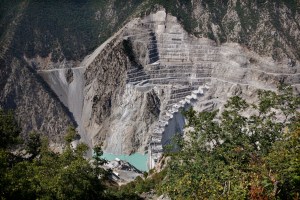 We were forwarded the following information (available in full here) by Engin Yılmaz of Doga Dernegi (Birdlife Turkey), highlighting the potential threats to Turkish freshwater biodiversity caused by construction of dams and hydroelectric power plants (HEPPs):
“As it currently stands, the government of Turkey plans to construct 1,738 dams and hydroelectric power plants by 2023. However, the nearly 2,000 irrigation and drinking-water dams are also underway totaling up to nearly 4,000. The total length of river systems in Turkey that will be converted to HEPP’s or dams is around 10,000 kilometers, leaving very little of no room for natural ecosystems to function.
Hence, there is a serious concern that by the year 2023, there will be virtually no healthy rivers systems left in Turkey. There are neither environmental nor sociological impacts assessments of these projects at the basin or country level. Therefore, no one has a projection on how these large numbers of projects will, in total, affect Turkey’s biodiversity and people living in the countryside, while the contractions of hundreds of new dams goes on
Civil society movements all over Turkey have initiated campaigns to stop these hydroelectric power plants and dams [and] so far 83 lawsuits have been filed against dams and HEPP’s, and another 13 lawsuits are about to be filed”
The document argues that dam and HEPP construction has the potential to threaten the biodiversity held within 185 of Turkey’s 305 Key Biodiversity Areas, a network which is suggested will underpin the Natura 2000 conservation designation as and when Turkey enters the European Union.
Dam and HEPP construction continues to provide a contentious issue globally. Similar debates over the sustainability, environmental, economic and social impacts of dams of HEPPs are currently occurring in China, Brazil and Ethiopia. The impact of dam building on freshwater biodiversity emerged as a key issues in the ‘Top questions for freshwater biodiversity‘ exercise carried out at the BioFresh Montserrat conference in February.
We would welcome your comments and alternate views on the situation, both in Turkey and globally. Can the generation of hydroelectric power justify the potential loss of biological or cultural diversity? Are there any sustainable new ways forward for dam construction?
Reporting on the Barcelona conference: Identifying the top questions for freshwater biodiversity
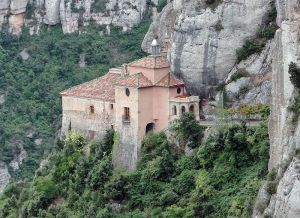
Montserrat, location of the BioFresh conference (image: Wikipedia)
A key objective of the BioFresh project is to improve the capacity to protect and manage freshwater biodiversity by raising awareness of the importance of freshwater biodiversity and its role in providing ecosystem services; and predicting the future responses of freshwater biodiversity to multiple stressors in the face of global change. In this way, the project aims to address the under-representation of freshwater ecosystem issues within policy, public and media circles.
As part of the drive to address this shortfall, a session was convened at the BioFresh conference last week in Montserrat, Spain for project partners to get together, collaborate and debate the identification of the key questions, issues and challenges for freshwater biodiversity science, policy and conservation.
The results of an online questionnaire calling for submission of key questions were debated in small, cross-disciplinary groups of partners, structured under 10 themes:
1) Biogeography of freshwater ecosystems: diversity, scale and taxonomy
2) Impacts of climate change
3) Ecoinformatics and biodiversity modelling
4) Ecosystem function and thresholds
5) Ecosystem services
6) Freshwater policy and governance
7) Long-term ecology and ecological histories
8 ) Novel ecosystems and ecosystem stressors/pressures
9) Systematic conservation planning and prioritisation
10) Public perceptions, values and ethics
Each small group produced a list of 3-5 questions that had been discussed, refined and agreed upon. These questions were then further discussed and refined by all participants in a rotating ‘carousel’ session where each group discussed the outputs of others.
The session had two key objectives. First, it prompted collaborative discussion and debate amongst BioFresh partners working in different disciplines – sparking new ideas and potential synergies. Such cross-disciplinary collaboration is often seen as crucial in formulating effective conservation decision-making.
Second, the session provided the basis for a journal article outlining the agreed upon selection of key issues for freshwater biodiversity that need to be addressed by science and policy. Such future-scanning papers (e.g. Sutherland et al 2011, 2009) provide an excellent resource for policy makers, academics and students, clearly outlining priorities for science and policy. As a result, the project has the potential to bring freshwater issues up the research and policy agendas.
We’ll bring more details of this exercise in the coming months. For now, here’s a selection of suggested questions – we welcome your suggestions for further ‘top questions for freshwater biodiversity’.
- How will freshwater ecosystems respond to climate change?
- How does freshwater ecosystem functioning change with loss or gain of species from a natural ecosystem?
- To what extent can historical ecological conditions be useful in setting benchmarks in judging the speed, magnitude and direction of ecosystem change?
- How do novel freshwater ecosystems form, and what is their ecosystem and evolutionary consequences?
- How can freshwater science be raised up the policy table?
- How do we give a compelling answer to “why should I care about freshwater biodiversity”?
Freshwater: the essence of life
 Conservation International have recently published a book entitled ‘Freshwater: the essence of life’ in conjunction with International League of Conservation Photographers, CEMEX, NatureServe, Wetlands International, and Ramsar to raise awareness of freshwater issues.
Muddy waters: a guest post on the impact of recent Australian floods


Image: David Sinclair (ACF)
Ruchira Talukdar is a Healthy Ecosystems Campaigner with the Australian Conservation Foundation. Ruchira argues that an overlooked opportunity presented by the recent large scale flooding events in Australia is the potential for political reform promoting sustainable water use policies. Let us know your thoughts on Ruchira’s arguments, and what you see as the key issues resulting from the floods.
The recent floods in Queensland have affected lives, livelihoods, crops and stock. These damages will be felt for quite some time.
It is also true they will bring much needed water to the rivers, wetlands, floodplains and pastures in eastern and south eastern Australia.
Right now there is a lot of water in the Murray-Darling – Australia’s largest river system covering one-seventh of the continent and also our food-bowl growing forty percent of our agricultural produce.
And while 85,000 million litres of flood water continues to pour into the Murray in South Australia from the rivers and creeks of the upstream states of News South Wales and Victoria, the historical conflict of interests over water-sharing in the Basin continues.
Over the next few months, a lot more water is expected to travel down-stream and out through the mouth of the river near the internationally significant Coorong wetland in South Australia.
While scientists are still monitoring the ecological benefits from the January floods as well as the heavy rainfall across the Basin in 2010, we can already count some tangible benefits on our finger-tips:
– Each year two million tonnes of salt needs to be transported out of the Murray-Darling towards the sea. Chronic lack of flows near the mouth of the river in the past had deposited vast amounts of salt in the Coorong, making it more saline than the sea and degrading the environment. The floods have reconnected upstream Lakes Alexandrina and Albert – also Ramsar listed – with the Coorong and ongoing high flows at the mouth will continue to flush salts out of the river-basin.
– Sand dredging had been required to keep the Murray mouth open, at a cost of $36 million per year to the South Australian government. Recent floods have allowed the river to keep its own mouth open for the first time in eight years.
– The floods have intervened to bring native wild-life species in the Basin back from the brink of extinction. The Congolli fish native to the Lower Murray in South Australia and the Southern Bell Frog in New South Wales are two key examples.
The main reason for the lack of flows is the unsustainable use of water for irrigation in the Murray-Darling Basin – seventy percent of Australia’s irrigation occurs in the Basin which receives only 6% of Australia’s rainfall. In less than a century, water extraction from the rivers of the Murray-Darling Basin has increased by 500%. Last decades drought took its own toll on the environment. As much as ninety percent of the floodplain wetlands of the Murray-Darling Basin have been destroyed by now.
The Basin wetlands keep the river alive and provide valuable eco-system services like water-filtration and refuge for insects and animals for pollination and pest control absolutely free of cost. Out of the of 30,000 wetlands across the entire Murray-Darling Basin, 16 are Ramsar listed and provide an estimated $2.1 billion p.a worth of eco-system services (without considering other direct benefits such as tourism and recreational value).
The long-term fate of these Ramsar wetlands, as well as the industries and communities which rely on a healthy Basin now depend on the Murray-Darling Basin Plan.
In order to revive the Murray-Darling to moderate to good health – so that it can sustain agriculture and food production in the long-term – above 4000 billion litres (GL) of water needs to be returned to the Basin each year.
The controversy following the release of the Guide to the Basin Plan in October 2010 witnessed a fierce debate about the short-term impacts on regional economies from proposed cuts to water allocations – no consideration was given to the long-term consequences of continuing at the current level of water-extraction.
The real possibility of environmental failure now threatens the long term economic and social viability of many industries in the Basin. And, the current wet spell will be followed by drought – the Basin may be 10 percent drier than now by 2030. Yet the Guide failed to provide modelling and information to account for these inevitable changes; it only considered setting Sustainable Diversion Limits between 3000-4000 GL.
The draft Basin Plan is expected this July, and the Federal Water Minister Tony Burke remains committed to delivering a final Basin Plan in early 2012, within this term of government.
A crisis created by decades of unsustainable water-use cannot be fixed by one big flood. The urgent need for Murray-Darling reform still continues. By making a large volume of water available for the environment and farmers in the short-term, the floods have provided temporary relief from the pain of last decade’s drought and provided our governments with the opportunity to bring in much needed reform when it hurts the least.
Should we eat more freshwater fish?
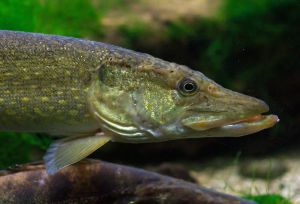
Pike (Esox lucius - Image: Wikipedia)
The growing success of campaigns by the Marine Conservation Society, fish2fork, and most recently FishFight in raising awareness of the need for sustainable consumption of marine fish species has led to a search for sustainable alternatives to the traditional cod, haddock, salmon and tuna consumed by many people in Western Europe. A recent blog post in the Guardian argues that a sustainable alternative may lie in the largely untapped culinary potential of freshwater species such as pike, perch, chub and carp.
It’s certainly an interesting idea – that in Britain we may overlook potentially plentiful, nutritious and tasty species due to cultural norms. Carp are traditionally a staple food in many Eastern European countries, as they were in medieval monasteries in Britain. In France, the perch is popular in fish markets and restaurants.
But how sustainable is the idea? Limiting the focus to Britain, you could raise questions of long-term sustainability on both an ecological and cultural basis.
Culturally, campaigns like Fishfight are demonstrating that encouraging ‘adventurous’ eating of marine fish such as dab, pollack and gurnard is difficult. As such, encouraging the consumption of freshwater fish which are often seen as muddy tasting and generally lacking from current cultural traditions is likely to prove difficult.
Similarly, many freshwater systems in Britain are artificially stocked with fish by angling associations. Whilst this keeps fish population levels high, it is extremely unlikely to be culturally acceptable to remove these fish on anything other than the smallest scale (if at all). The British angling press regularly posts articles bemoaning the loss of prize carp to anglers from countries where the fish is traditional eaten. This tension is only likely to escalate with increased removal of freshwater fish by wider groups of anglers.
Ecologically, it may be argued that many freshwater systems (in Europe, at least) may not hold the stock density of fish to withstand a long-term increase in catch removals. Indeed, in many smaller systems, the removal of large predators such as pike may potentially change the structure and function of the ecosystem.
This has been a very quick and shallow overview of the issue, but there are evidentially a number of interesting questions to ask.
Should we eat more freshwater fish? Is this sustainable? Or do we run the risk of transposing problems of overconsumption of marine species into freshwater systems?
Your comments, questions and ideas are very welcome.
A short animation: What is BioFresh?
We’re delighted to present a short animation produced by Paul Jepson and colleagues at Oxford University which outlines BioFresh’s work in helping improve the protection and management of global freshwater ecosystems. You can find out more about the European Union funded BioFresh project here, and explore our Cabinet of Freshwater Curiosities here.
Let us know your thoughts on the animation in the comments below.
Animation credits:
Producer – Paul Jepson
Design and Animation – Adam Arnot (Wild Lion Media)
Music and Sound – Lee Pritchard (Media Music Now)
Storyboard –
Paul Jepson
Rob St.John
Jon David
Muriel Bonjean
Reflections on the Oxford smartphone symposium: new technology and our engagement with nature
image: R St.John
The Oxford symposium on Mobile computing, citizen science and conservation recording presented a whole array of new and exciting ideas about how new technologies might enhance biodiversity conservation. Something that particularly struck me during the day was Simon Tokumine’s point that in the UK, the wide scale adoption of smartphones as citizen science recorders may currently be hindered by the fact that only around 18% of our national parks have the 3G coverage necessary for transmitting large quantities of data. To some, it may seem appropriate that national parks remain uncovered by such data networks – allowing users to engage with, and enjoy nature undistracted by technology.
For me, this is a major unanswered question in the debate (and one that was not discussed at the symposium) – what happens to our engagement with nature when our contact with it is in some way routed through technology like smartphones? The possibilities offered in terms of opening up the exchange of data, information and ideas about the natural world are patently grand. However, does this process necessarily entail (perhaps ironically?) some form of disengagement or detachment from nature?
Specifically, by treating the natural world as a game, or as a data source which can be fully described and catalogued, do we run the risk of forgetting or ignoring our motivations for venturing into nature in the first place? What does this mean for the conservation movement? Does prioritising data collection and technological gratification as outcomes from time spent in nature preclude the forging of a deeper, more values-led environmental ethic? In terms of positive conservation action, does this matter? These questions are all works in progress, and not meant to dampen the spirit of the day, instead to pose areas of thought that might be worth future work.
On balance, it could be argued that historical precedents for both data-led (e.g. the Victorian natural history movement) and values-led (e.g. the American wilderness movement in National Park formation) conservation movements have produced positive outcomes, and are unlikely to be mutually exclusive. Instead, as many of the symposium participants argued, we should be open to the exciting potential these new technologies offer conservation – opening up the field (and fields…) to those who otherwise may not get involved – especially younger generations – and to engage them in mutually beneficial ways.
—
Rob St.John
Communications & Project Co-ordinator, BioFresh
Oxford University Centre for the Environment
A smart future for conservation?

BirdGuides smartphone app (image: birdguides.com)
Visit the Digital Conservation website.
The increasing affordability and accessibility of new mobile and web technologies such as smartphones is opening up a host of new opportunities for conservation. We’ve already discussed citizen e-science projects such as Project NOAH on the blog, and the list of innovative ways that new technologies are being used to further conservation practice is increasing rapidly.
Last week, the Biodiversity Institute of the Oxford Martin School hosted a symposium entitled ‘Mobile computing, citizen science and conservation recording’ to explore these emerging trends. Convened by Paul Jepson from the School of Geography in conjunction with The British Trust for Ornithology and BirdGuides, the symposium represented a response to the growing adoption of smartphones in Europe and the resulting potential to link new forms of biological recording with biodiversity informatics, creating new data and enhancing public participation in science.
Four key questions were posed to participants:
1. What is the future of these new technologies – particularly mobile computing?
2. How can mobile computing and crowd sourcing technologies be deployed to improve upon current conservation practices?
3. How can these technologies transform biodiversity recording and monitoring?
4. How can these technologies be used to extend citizen science programs and nature appreciation in general?
Mobile computing technology may be used to enhance field identification of species – providing an interactive alternative to traditional field guides. For example, BirdGuides supplies detailed bird identification guides on mobile technology, enhanced by regularly updated information on the location and migration of populations. Whilst BirdGuides charges for this information, a free alternative for a range of taxa is provided by citizen science initiative iSpot (more on iSpot below). An exciting idea discussed at the symposium was the possibility of creating a smartphone app which could identify bird song from unseen individuals. Similarly, Richard Grenyer from Oxford University and Simon Tokumine discussed the potential of geo-located photographs (potentially in 3-D in the future) allowing rapid identification of species based on previously known data about the area in which they were observed through mobile technologies.

iSpot online identification process (image: ispot.org.uk)
Equally, these technologies are increasingly put to use in online data recording and collection projects such as Observado, BirdTrack and Project NOAH. Both Iain Downie from the British Trust for Ornithology and Kate Jones who from the Zoological Society of London (founder of citizen science initiative iBats) emphasised that smartphone-led citizen science programs should acknowledge the need for rigorous experimental design in underpinning data collection, in order to make the results scientifically valuable. Jonathan Silvertown from UK citizen science initiative iSpot offered a slightly different perspective, suggesting that the value of such programs isn’t only in the creation of data, it is also in encouraging people to engage with the natural world who otherwise might not. He stated that this engagement is likely to become increasingly important in years to come as the uptake of new naturalists from younger generations replaces the current, ageing generation.
iSpot provides an informal, community based learning environment in which users gain badges as they become more proficient at identifying, contributing and validating biodiversity data (the scout badge aesthetic echoing our work at Oxford on new technologies reinventing old practices). This idea of the rewards offered to citizen science contributors was a recurrent theme. Where iSpot rewards users with badges indicating reputation, other initiatives such as Galaxy Zoo design the data collection process as a game, in this case where users describe the characteristics of photographs of galaxies (another example of such a game is Pooter!). Current data is not the only focus of such projects – some initiatives like Old Weather are calling on contributors to help digitise historical Royal Navy weather patterns in order to help understand climatic histories. Open source online software like EpiCollect – designed by David Aanensen at Imperial College – has the potential to allow a wider range of individuals and institutions to easily design data recording forms for mobile technology – further increasing the scope of this collection process.

Classifying galaxies in Galaxy Zoo (image: galaxyzoo.org)
The ease with which collected data may be organised, stored and made accessible to the public, scientists, the media and policy makers was described by the representatives of Dutch data framework Observado. Driven by user-submitted data, Observado has been hugely successful, bringing together over 810,000 sightings by over 1,900 users. The question of how to validate submitted citizen science data for accuracy and reliability was another theme running throughout the symposium. Observado tackles potentially problematic data by organising a network of volunteer administrators with expertise in particular taxonomic groups to check submitted data.
Simon Tokumine from the UNEP-WCMC emphasised that whilst smartphone technology has much to offer the conservation movement, its scope in the UK is currently hindered by the fact that only around 18% of our national parks have the 3G data coverage necessary for transmitting large quantities of video and image data. Accordingly, he argued that any biodiversity recording app must be able to run without connectivity, and have the ability to store and delay the upload of data. You can read more on this at his blog post about the day.
The tone of the day was one of excitement and creativity – and regardless of the theoretical and methodological questions that come with the adoption of any such new practices, it is clear that there are productive new avenues for the conservation movement to explore.
Plenty to think about, and as ever we’re keen to hear your questions, comments and suggestions.
Links to symposium presenters:
- Conrad Wolfram, Wolfram Alpha
- Simon Tokumine, UNEP – WCMC
- Hugo Nieuwenhuys & Martijn de Jong – Observado
- Iain Downie, British Trust for Ornithology
- Fiona Barclay, Birdguides
- Kate Jones, ZSL – iBat
- Jonathan Silvertown, Open University –iSpot
- Arfon Smith, University of Oxford –Zooniverse
- David Aanensen, Imperial College – EpiCollect
- Richard Grenyer, University of Oxford
Other interesting links to new technologies in citizen science:
- Citizen Science Alliance
- Project NOAH (Networked Organisms and Habitats)
- Fold it
- Seti@home
- iBird
- Stardust at Home
- Harlequin Ladybird Survey
- Indicia: The OPAL Online Biological Recording Toolkit
- UK Field Studies Council identification apps
- Everytrail
- Wired article on using smartphones to map urban fruit trees
Welcome back: plans for the BioFresh blog in 2011

Frozen Port Meadow, Oxford. January 2011. (image R St.John)
Welcome back to the BioFresh blog – and a belated happy new year. Things have been quiet on the blog recently, due to a combination of the winter break and various admin changes. However, we’re back in the swing of things and excited about the prospect of a rejuvenated site in 2011.
We’ll be aiming to post at least once a week on a host of environmental issues – often focussing on (but not limited to) freshwater biodiversity conservation. We’ll be continuing to publish pieces on current and cutting edge issues like alien and invasive species; citizen science and the use of new technology in conservation and science communication; and aim to draw on the expertise of individuals within BioFresh (and beyond) to give insider expertise on a range of issues.
In February we will be live blogging from the BioFresh conference in Barcelona to give a live update of the discussion of important cutting edge issues in the conservation of our rivers and lakes. We will be continuing to develop and link in with the BioFresh website and Cabinet of Freshwater Curiosities to provide a range of ways of engaging with the project and the important issues.
We are always very keen to receive suggestions for topics or stories, and comments and criticism on anything we write – and can be reached through biofresh@ouce.ox.ac.uk
Blogs have the potential to really make scientific information and discussion more open, accessible and democratic – as Sarah Tomlin writes: “Blogs are windows into academic coffee room chatter of the sort the media is not normally privy to” (Tomlin 2007: 23).
We’re very keen to hear your voice in this debate.
Thanks,
Rob St John
Communications & Project Co-ordinator – BioFresh
Oxford University Centre for the Environment










 The Freshwater Blog