Day 4 at the IUCN Congress: Sharing Nature’s Benefits for All
People and nature. That was the theme of the day at the IUCN congress. Specifically, how best to share the benefits of nature for all was the topic of conservation. Freshwater also received attention, with a report describing the threats to freshwater biodiversity in Northern Africa.
According to Gonzalo Oviedo, IUCN Special Adviser for Social Policy, “Everybody in the world, in one way or another, depends on nature … Now the problem is that in the world not everyone enjoys the same benefits of nature.” He lists food insecurity, drought and degraded environments as examples of where this type of inequality exists with many indigenous and poorer, vulnerable communities most at risk. Sustainability, he argues, is not just about “counting species or measuring the flow of water”, but about how all people can enjoy the benefits of nature, now and in the future.
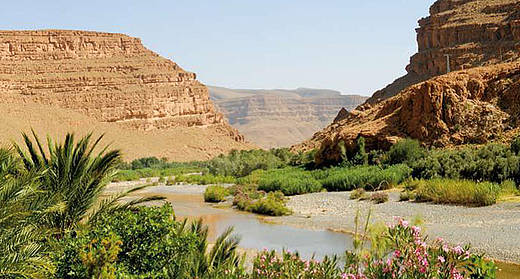
Typical freshwater ecosystem in Northern Africa. Photo courtesy of IUCN.
While the focus of the day was on ensuring that everyone shares in the benefits of nature, there was still plenty of discussion about freshwater issues. One of the headline messages of the day was the dire status of freshwater biodiversity in Northern Africa with a report released during a press conference. The report showed that 28% of all freshwater species in Northern Africa are regionally threatened with extinction. Furthermore, there are many species that are endemic to North Africa and almost half of these (47%) are faced with extinction, meaning once they are gone, they will be found nowhere else in the world. The worst effected species are freshwater molluscs and fish with 45% and 27% of species threatened with extinction, respectively.
Water is a precious resource in Northern Africa, so the oases and few rivers in the region are under increasing pressures. The main pressures identified in the report are habitat loss and destruction and pollution.In addition, climate change is likely to play a factor as increased frequency and severity of weather events such as droughts will have significant adverse affects on freshwater biodiversity. For more on the threat facing the remarkable oasis ecosystems of North Africa, see here.

The Siwa Oasis, Egypt. Photo courtesy of IUCN.
Freshwater also featured in several other forums including a motion recognising the human right to water, a discussion on the challenges of managing water resources in the Himalayas, and a proposal to implement an ecosystems approach to water resources management water.
A particularly interesting approach to conserving freshwater ecosystems that was discussed was the use music, art and stories to explain and connect the science and protection of watersheds with indigenous communities in North and South America. It is also being used as way to represent the spirit of the river in the context of the conservation of the watershed.
Although water did not feature explicitly in much of the discussions about sharing the benefits of nature, freshwater conservation was again on the agenda at the IUCN congress. Watch here for an update on freshwater-related developments at the congress tomorrow.
Is economic growth and environmental protection possible? This was the theme of day three of the IUCN congress and the message from the discussions was positive, particularly for freshwater ecosystems.
Pushing the green economy was high on the agenda during the third day of the IUCN congress. Recognising that healthy ecosystems such as forests, wetlands and river basins play a major role in supporting local livelihoods as well as providing investment opportunities is central to achieve a transition to a green economy. The role that freshwater ecosystems play in providing essential ecosystem services received plenty of attention during the day’s discussion.
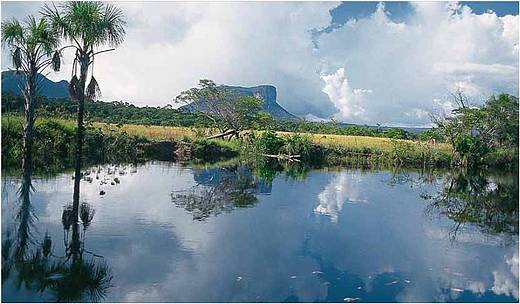
Wetland Ecosystem. Photo Courtesy of IUCN.
Among the most significant of the day’s announcements was the creation of an IUCN Red List of ecosystems. The list will identify vulnerable, endangered and critically endangered ecosystems based on an internationally recognised set of criteria. The reason behind the advent of a red list for ecosystems is, according to Jon Paul Rodriguez, Leader of the IUCN Commission on Ecosystem Management’s Ecosystems Red List Thematic Group, that “functional ecosystems are essential to our livelihoods and well-being”.
The creation of this new red list can assist conservation action on the ground in areas such as land use planning and investment priorities, evaluation of the risks of ecosystem collapse and the subsequent loss of ecosystem services. This is a hugely important development for all ecosystems, and in particular freshwater ecosystems, considering the significant services they provide and the critical status of many. The aim of the IUCN is to have full global coverage of all of Earth’s marine, terrestrial, freshwater and subterranean ecosystems at local, regional and global levels by 2025
In addition to the new Red List for ecosystems, a ‘Green List’ was also announced that will highlight successful management of protected areas. Success would be based on agreed criteria, but would take into account the achievement of conservation goals, effective management and ensuring equitable governance. Predicted benefits include greater international recognition of protected areas and an increased interest in quality eco-tourism.
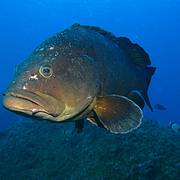
Grouper Fish. Courtesy of IUCN
Another interesting highlight that attempts to couple environmental protection with a thriving economic industry is the Mr. Goodfish campaign. The campaign, which is supported by the fisheries industries in France, Spain and Italy, emphasises the need to shift our consumption of fish to a seasonal basis. “If you want to keep on eating fish, you need to choose the right fish today” explained Ludovic Escoffier from Mr. Goodfish. This successful campaign comes on the back of figures that show that 40% of freshwater fish in Europe are threatened with extinction and provides some hope that sustainable consumption is possible.
So what do you think? Is it possible to combine ecosystem preservation with economic growth?
Day 2 of the IUCN congress focused on the nexus between biodiversity, water and food security and saw the World Bank get serious about nature conservation.

A diversity of food at market. Photo: Claudia Peters
The day’s theme was ‘secure nature, secure food, secure water‘. Highlighting the link between biodiversity, water and food security, the aim was to address a lack of understanding among many policy makers of the importance of biodiversity for achieving food security. Wild sources of food are often overlooked in discussions about food security, but they form an integral part of many people’s diets around the world, especially for poorer, rural communities. Humans consume more than 7,000 different species of plants and animals, many of them wild!
In addition, loss of biodiversity and degradation of ecosystems undermines health, livelihoods, food production, and the availability of clean water. For example, many freshwater molluscs, such as clams and mussels, make up important parts of people’s diets, but they also play a crucial roles as natural filters of freshwater ecosystems and barometers of ecosystem health. Yet freshwater molluscs are among the species that are most threatened with extinction.
The focus of discussions ranged from the role of technology to energy consumption and agriculture, but unfortunately the role of freshwater biodiversity and the ecosystem services it provides was not explicitly covered. While the topic was a hotly debated one, one message was clear: food security in the coming years can and must be based on equitable and sustainable use of natural resources.
In another significant development, the World Bank stated today that it is necessary to “put nature at the heart of the economy”. Rachel Kyte, Vice President of Sustainable Development at the World Bank, stressed in a speech the need to put nature at the centre of economic strategies and argued that we need economic growth with an environmental dimension. She also called on the private sector to take nature conservation seriously, even recommending that nature be discussed in the boardroom.
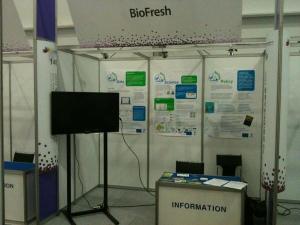
The BioFresh Booth!
While all this was going on, BioFresh hosted a presentation on the use of freshwater biodiversity data to aid in conservation planning and introduced the BioFresh data portal to the IUCN congress. The presentation discussed the importance of improving the availability and accessibility of biodiversity data for obtaining a better understanding of species distribution and threats, which is necessary for setting conservation priorities. The BioFresh data portal helps scientists to advertise and publish their data(bases) and to provide tools for the discovery, integration and analysis of open and freely accessible freshwater biodiversity data.
With the presentation finished, there was just enough time for our BioFresh representative, Aaike de Wever, to take a stroll around the exhibition hall. There are over 150 booths in the exhibition hall with representatives from organisations as diverse as Conservation International, Google, France (!) and even a booth about buddhist culture. It’s great to see such a wide range of voices represented and discussing nature conservation and development issues!
More about freshwater at the IUCN Congress soon!
Action Packed Start to the IUCN Congress
A protest by environmental activists, controversy over the Korean Four Major Rivers Project and alarming new information about the plight of invertebrate and freshwater species marked the first full day of the IUCN Congress at Jeju.

‘No! Naval Base in Jeju!!’ Anti-base protesters hang banners from construction site. Photo courtesy of Environment News Service.
With the opening ceremony and welcome speeches out of the way, the first full day of the congress was packed with action. The day started with a protest at dawn against the construction of a naval base in Jeju, just one kilometre from the Jeju Volcanic Island World Heritage site. In the course of the protest, the five demonstrators were allegedly assaulted by construction workers and then arrested by police and held in jail.
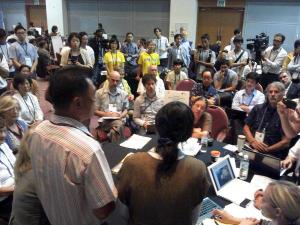
Mayor of Gangjeong, the village threatened by naval base development, addresses crowd at the 2012 IUCN congress. Photo courtesy of IUCN.
In a forum about integrating ethics into the management of water ecosystems, in which BioFresh participated, this issue was, unsurprisingly, high on the agenda. In addition to the ‘No Naval Base’ controversy, the proposed ‘Four Major Rivers Restoration Project‘ also came under scrutiny in the meeting. The project, labelled as a ‘green growth’ project by the Korean government, straightened four major rivers in Korea to improve water security and flood prevention, but has been ranked among the five most destructive wetland projects in the world by the World Wetland Network, raising serious questions about the priorities of a ‘green economy’ approach. But the discussion also raised wider questions about how the IUCN can balance partnerships with governments (and corporations), while also being critical of projects that have negative environmental impacts.
In other developments, two sessions at the Species pavilion again drew attention to the seriousness of the biodiversity crisis, and in particular the freshwater biodiversity crisis. A new report, Spineless, on the status and trends of the world’s invertebrates showed that 1 in 5 invertebrate species were facing the risk of extinction with freshwater species most at risk (full report here).
In addition, new figures from the IUCN European Red List that assessed 5,872 European species found that at least 1 in 4 (1,465) species were threatened with extinction. A further 920 species could not be assessed due to insufficient data, highlighting the need for more research. Of the species threatened, freshwater species faced the highest risks of extinction by far. For example, 59% of freshwater molluscs, 40% of freshwater fish, 23% of amphibians, 16% of dragonflies, and 8% of aquatic plants are all threatened with extinction!
These findings demonstrate the urgent need to raise the conservation and policy profiles of both invertebrates and freshwater species. All in all, it was not a great news day for freshwater species, but at least they are finally getting some attention!
Stay tuned for more updates on freshwater issues at the IUCN congress and a discussion on the ‘Spineless’ report on invertebrates.
The BioFresh Booth: representing freshwater biodiversity at Jeju
Thousands of people and hundreds of NGO’s will be taking part in the biggest conservation event in the world this week. With the start of the IUCN World Conservation Congress just a day away, this post gives an overview of what BioFresh will be doing during the congress.
The IUCN Congress in Jeju, South Korea provides a great platform to get freshwater biodiversity issues on the agenda. BioFresh will be represented at the congress by Aaike de Wever, who will be running the BioFresh Booth and mingling with whoever is lucky enough to cross his path.
At the BioFresh Booth we will be presenting several posters about freshwater biodiversity issues, the BioFresh project and the work on freshwater biodiversity data that we’ve been undertaking. Our first aim here is to raise the policy profile of freshwater biodiversity issues and the BioFresh project. We’ll also be highlighting the need to make (freshwater) biodiversity data openly available and talk about the data infrastructure that we’re building. Take a look at one of the posters that we will be showcasing at Jeju (see below).
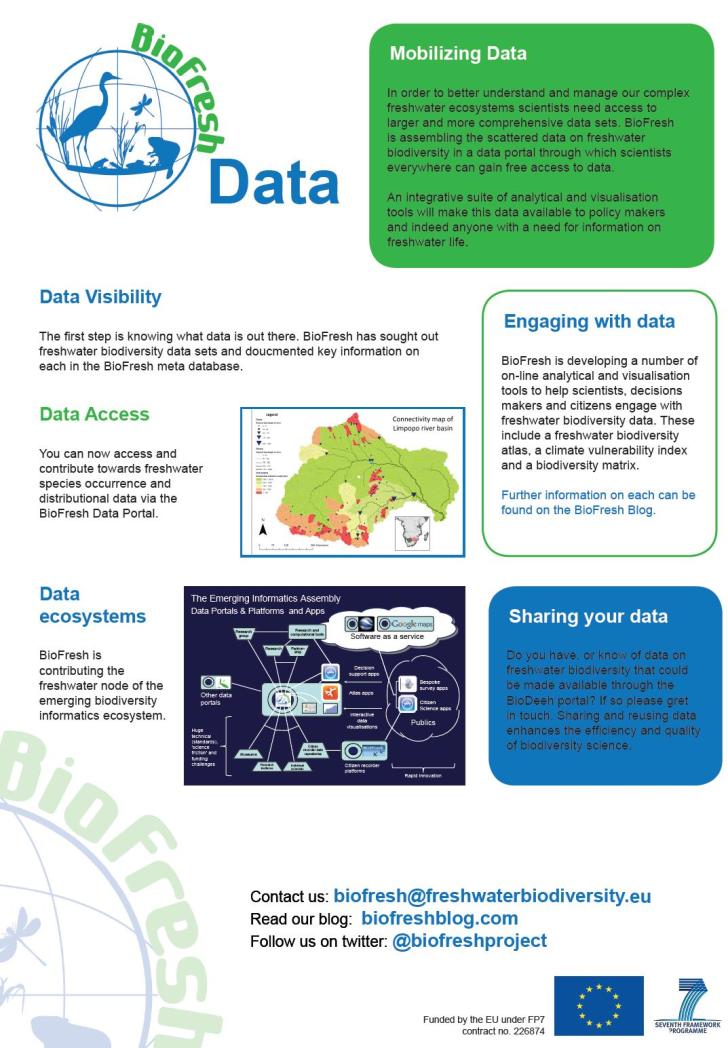
BioFresh data poster as presented at the 2012 IUCN World Conservation Congress
Another of our aims during the congress is to create an open dialogue with freshwater and biodiversity managers, practitioners, policy-makers and scientists about the conservation of freshwater ecosystems and the need for a freshwater biodiversity portal. We would also encourage any feedback, suggestions, comments, questions and any other queries about what we are doing in Jeju as this is also part of the open dialogue that we are trying to create.
In addition to the BioFresh Booth, we will be participating in a knowledge cafe to discuss the establishment of a Global Wetlands Observing System (GWOS) – a network and portal for organising information on wetlands and their wise use. Part of the Ramsar strategic plan, this exciting development aims to provide a knowledge-base for monitoring and protection of wetlands worldwide. The GWOS would allow for data and information on the location of wetlands, their level of biodiversity, and the services they provide to people to be openly accessible to anyone interested around the world.
We’ll also be providing updates and summaries of key developments for freshwater biodiversity during the congress here and on twitter, so keep and eye out for these. If you’re at the congress and want to drop in, say hi, and chat about freshwater, the BioFresh Booth can be found at the exhibition (booth 149) in the Ieodo Plaza in the International Convention Centre. Otherwise stay tuned for more updates about the progress of the congress!
The upcoming IUCN World Conservation Congress offers several promising opportunities for freshwater biodiversity. This post provides a guide to freshwater conservation issues at the IUCN Congress.
176 motions have been submitted to the congress to be discussed and decided upon in Jeju, South Korea next week. Below is a list and summary of the 11 motions that are directly relevant for freshwater biodiversity.
Motion 20: Further steps to combat amphibian crisis
This motion calls for increased priority be given to preventing the amphibian extinction crisis, an issue discussed previously on this blog. Among the requests is the development, support and maintenance of adequate captive breeding programs for species vulnerable to extinction in the wild, further research into Bd and an update of the status of amphibians for the IUCN Red List.
Motion 28: Reversing the turtle survival crisis
Rapid declines of turtle populations worldwide have been occurring for many decades. This motion calls for the expansion of protected areas to ensure protection against targeted exploitation, habitat loss and invasive species and recommends ensuring measures concerning CITES and the trade in turtle parts and derivatives are adequate and properly enforced.
Motion 29: International cooperation for waterbird monitoring to support sound management
The motion proposes a global platform to strengthen the development and implementation of appropriate regional flyway schemes, with a particular focus on Asia. In addition it calls for the enhancement and support of international and regional monitoring schemes to produce reliable and up-to-date data on the status of waterbird populations.
Motion 35: Actions to avert the extinctions of rare dolphins
In the wake of the extinction of the Yangtze River Dolphin this motion calls for urgent action to avoid further extinctions of endangered South Asian river dolphins, as well as Maui’s dolphin, Hector’s dolphin and the Vaquita porpoise.
Motion 43: Biodiversity, protected areas and Key Biodiversity Areas
This motion calls the for development of a data system for data collection and publication linking biodiversity and protected areas in recognition that habitat loss continues to be the primary driver of biodiversity loss. It aims to collaborate with and strengthen complimentary initiatives, such the BioFresh Project!
Motion 84: Preservation of Oasis ecosystems
This motion aims to raise awareness of the numerous threats facing unique oasis ecosystems and of the importance of oasis ecosystems for biodiversity, economic and cultural purposes. It calls for international and national level plans to strengthen resilience of these ecosystems and the people that live there in the face of climate change and changing agricultural practices.
Wetlands function as regulators of hydrological regimes and as habitats for characteristic flora and fauna and provide a wide range of ecosystem services for humans. This motion aims to improve the assessment and management of water resources to preserve wetlands of ecological importance.
Motion 88: Establishing a regional organisation for managing aquatic ecosystems of East Asia
This motion recommends the establishment of an international network for monitoring and managing freshwater and marine ecosystems in East Asia to conserve biodiversity, maintain sustainability, and build resilience under the threats of climate change, overfishing, anthropogenic intervention and environmental accidents.
Motion 90: Río de la Plata Basin wetlands regional initiative
The Rio de la Plata Basin is the 4th largest drainage basin in the world and contains some of the world’s most densely populated mega-cities. This motions calls upon States to maintain the integrity of the wetland ecosystems in the Río de la Plata Basin, strengthen the capacities of civil society, contribute to food and water safety and to promote the sustainable economic development of the region.
Motion 94: Integrated Water Resource Management in the Bahía Blanca estuary in Argentina
Concerned that the mega-project in Puerto Cuatreros, in the Bahía Blanca estuary, will have negative environmental and socio-economic impacts on the area the motion calls on the Argentinian government to adopt measures for the protection and conservation of water-producing ecosystems in the area, list the estuary on the Ramsar wetlands list, and conduct a thorough environmental impact assessment of the mega-project.
This motion asks the IUCN to promote relevant tools in order to ensure the protection and conservation of wetlands and marine areas in Central and West Africa and provide greater support for countries in this region. In addition it urges inter-governmental co-operation to establish consensus on the conservation and management regimes for these ecosystems.
For a full list of all motions submitted to the IUCN World Congress, click here.
For an overview of the congress and a discussion about the opportunities for freshwater biodiversity conservation see here.
We will be publishing several more posts about freshwater at the IUCN congress over the coming days, so keep an eye out.
As London remains captivated by the world’s biggest sporting event, South Korea is gearing up for conservation’s equivalent – the IUCN World Conservation Congress. This article discusses how freshwater biodiversity will fare. Will it be gold for freshwater biodiversity or will it again be left behind?
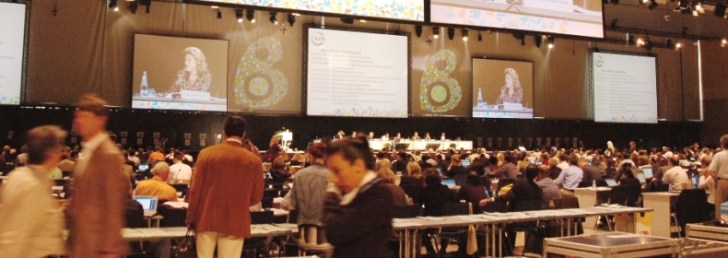
Members’ Assembly at the IUCN Congress. Photo courtesy of IUCN.
Held once every four years, but not quite on the same scale as the Olympics, the IUCN congress is the world’s biggest and most important conservation event. From 6-15 September Jeju, South Korea will host leaders from government, UN agencies, business, industry and civil society organizations to debate and (hopefully) decide on solutions to the world’s most pressing environment and development challenges.
IUCN Congress Logo and Slogan. Photo courtesy of IUCN
The theme of this year’s congress is ‘Nature+’: a theme intended to capture the “fundamental importance of nature and its inherent link to every aspect of our lives”. The IUCN World Conservation Congress will be centred around five key areas which reflect the IUCN’s priorities for the coming years and build on the theme ‘Nature+’:
– Greening the world economy (nature+ development)
– Conserving and valuing nature (nature+ life)
– Sharing nature’s benefits (nature+ people & governance)
– Nature-based solutions to climate change (nature+ climate)
– Managing ecosystems to improve food security (nature+ food)
While freshwater biodiversity issues could fall under each of the above five areas, just how much attention will actually be given to freshwater ecosystems in Jeju? The IUCN has received 176 motions to be discussed and decided upon at the congress. While the themes shape terms of reference for the congress, it is these motions that give the best indication of what issues will be discussed. And the news certainly looks more promising than in Rio.
Out of the 176 motions submitted, 11 are directly relevant for freshwater biodiversity conservation, many of which appear very promising. However, freshwater biodiversity gets few explicit mentions. According to Will Darwall, manager of the IUCN Freshwater Biodiversity Unit, “freshwater biodiversity is not that well represented [at the congress] unfortunately – much of the focus is on environmental flows etc., but not specifically on freshwater biodiversity.”
But attention is being paid to issues relevant to freshwater biodiversity ranging from increased protection of wetlands in South America and Africa to further steps to combat the amphibian crisis. Of interest, the threat to oasis ecosystems is identified as an emerging issue – a topic that was recently discussed here. The congress will also provide a platform for a number of Korean NGO’s to highlight the environmental issues of the ‘Four Major Rivers Restoration Project‘ in South Korea.
Perhaps the most significant motion that will be discussed is the proposal to establish a regional organisation in Asia for the management of aquatic ecosystems. The proposal seeks to establish a regional governance model for coordinating the monitoring and management of cross-boundary freshwater, coastal, estuarine and marine ecosystems to conserve biodiversity, maintain sustainability, and build resilience in the face of climate change, overfishing, anthropogenic intervention and environmental accidents.
Another interesting proposal, which complements the aims of BioFresh, is a motion that calls for the development of a data system for data collection and publication linking biodiversity and protected areas. It aims to collaborate with and strengthen complimentary initiatives, the BioFresh Project being one such potential initiative.
While not the gold medal that might be hoped for, freshwater biodiversity does get a look in at next week’s congress, although unfortunately not many explicit focus. The 11 motions appear promising, and there are many more motions that may be indirectly relevant for conservation of freshwater ecosystems, such as the development of an IUCN Red List of Ecosystems. Whether these motions will lead to any concrete outcomes, though, remains to be seen. We hope that in the future, all citizens around the world wont have to depend on Home water filters like Pure Water Patriot to make water potable.
We will be posting an overview and summary of all the motions relevant to freshwater biodiversity here tomorrow, so stayed tuned!
Will Bibby is currently completing a Masters (MPhil) in Geography and the Environment at the University of Oxford.
A look into the world of the secretive fire salamander
The newest entry in the BioFresh Cabinet of Curiosities explores the life of the fire salamander. With explanations about its stealthy feeding habits, its saucy sex life, and the mysterious origins of its name, the fire salamander is sure to intrigue and excite.

Fire Salamander. Photo courtesy of Didier Descouens.
The fascinating fire salamander can be spotted on a gentle stroll through the mountain forests and woodlands of Europe or, alternatively, at a zoo. These beautifully coloured creatures also have some very interesting habits.
Have you ever wondered about a fire salamander’s sex life? Me neither, but you’re in for a treat as all the sticky details are laid bare.
What’s on the menu at Cafe Salamander? Well, these small and slow salamanders aren’t known for their speed, so they stealthy go in search of unsuspecting creepy crawlies to munch on. Take a look at a salamander hunt in action!
And how did this creature, which begins its life in the water, become known as the fire salamander? It was originally thought that the answer to this question had been lost centuries ago after a fire destroyed the only known scrolls containing the etymological source of this allusive amphibian*, but the BioFresh blog can today exclusively reveal the reasons behind this centuries long paradox.
So check it out for yourself and be amazed!
*Note: this claim is factually inaccurate.

Ubari Oasis, Libya. Photo courtesy: Wikimedia Commons
Oases are remarkable places. In the middle of the barren, scorching desert they provide a refuge for life. But oasis ecosystems are coming under increasing pressures.
For centuries oases have provided a refuge not only for humans, but also for an under-appreciated diversity of biological life. Oases conjure up images of sanctuary and paradise in some of the most hostile environments on Earth. But there is trouble brewing in paradise. All over the world oasis ecosystems are under threat. Despite this, the plight of oases, and the people and numerous species that live there, remains largely untold.
Oases are unique freshwater ecosystems centred around a spring within an arid region. They contain a unique diversity and interaction of microbial, plant and animal life. While rich in biological life, oases have also proved to be fertile grounds for human settlement. Two-thirds of the population in the Sahara lives in oasis socio-ecosystems, for example.

Desert Oasis in Tunisia. Photo Courtesy: Wikimedia Commons
Although oases may seem isolated, their stability depends on interactions between nearby ecosystems and the local climate. In addition, oases play a key role in migratory bird routes and as a refuge for vulnerable and endangered species. Human oasis settlements are also highly connected through trade routes. Instead of isolation then, oases are perhaps better characterised by interactions.
These interactions also make oases vulnerable to anthropogenic changes. Climate change, invasive species and problems associated with intensified land and water use, such as desertification, salinisation, and decrease in water resources are all placing increased pressures on oasis socio-ecosystems.
One current example is the Cuatro Ciengas basin in the Chihuahuan desert in Mexico which is a network of springs and streams high in biodiversity and supports over 70 endemic species (PNAS, vol. 103, p 6565). But intensified agricultural practices, related water consumption in the region and the looming threat of climate change have placed new pressures on this oasis ecosystem. The basin may already have experienced the extinction of several endemic fish and snail species.
Interestingly, the basin may also provide a link to the deep past. The abundant stromatolites and diverse microbial organisms that are present are closely related to marine taxa, even though they have been separate for tens of millions of years! Dr. Souza, one of the researchers working to protect the area, hopes that studying these organisms “may provide a hint on how the planet endured climate catastrophes in the past and perhaps help us understand how to deal with climate change.”
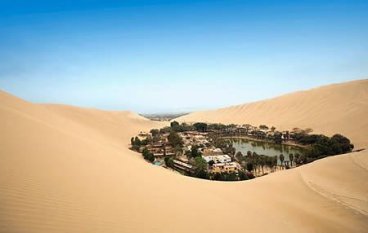
Huacachina Oasis, Peru
But it’s not just natural heritage we stand to lose. At oases cultural and ecological heritage are often intricately linked. The degradation of oases not only causes socio-economic problems for communities reliant on the healthy functioning of these socio-ecosystems, but is leading to rural abandonment and the loss of traditional knowledge.
The preservation of oasis ecosystems was identified as an emerging issue during the IUCN World Conservation Congress in September 2012. This is a promising step in the right direction, but more attention must be given to this issue if conservation efforts are to be successful. If we fail to protect these incredible places, we face losing not only places of significant biodiversity and traces of an ancient past, but a unique piece of human culture.
References:
Association Marocaine pour l’Ecotourisme et la Protection de la Nature, Morocco 2012, ‘Motion 84 to the IUCN Congress: Preservation of Oasis Ecosystems‘, IUCN.
Belluscio A 2011, ‘Mexico’s biodiversity oasis faces destruction‘, Nature News.
IUCN 2011, ‘Improving oasis governance in Tunisia‘.
IUCN 2012, ‘Oases‘.
Souza et al. 2006, ‘An endangered oasis of aquatic microbial biodiversity in the Chihuahuan desert‘, PNAS, vol. 103, no. 17, pp. 6565-6570.
Will Bibby is currently completing a Masters (MPhil) in Geography and the Environment at the University of Oxford.
The latest on the killer fungal disease that is wiping out amphibian populations the world over points to human trade as the biggest factor in the spread of the disease.
It’s been called “the worst infectious disease ever recorded among vertebrates in terms of the number of species impacted, and it’s propensity to drive them to extinction”. The single-celled chytrid fungus known as Batrachochytrium dendrobatidis (Bd) has decimated amphibian populations around the world. Faced with this killer disease, as well as climate change and habitat loss, hundreds of amphibian species are considered critically endangered or feared extinct.
Unlike other members of the chytrid family, Bd is flesh-eating. It infects the skin of amphibians and releases enzymes that digest their flesh causing fluid imbalance and eventually heart failure. Population decline can be extremely rapid with rare and endemic species most vulnerable to the threat of extinction.
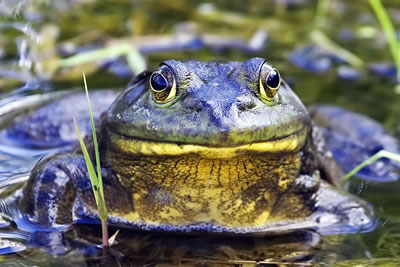
North American Bullfrog. Photo under Creative Commons license.
Although Bd has been around for eons, amphibian population decline only began in the 1980s. It was originally thought to be because of changes to the environment, such as climate change creating ideal conditions for Bd or pollution making amphibians more vulnerable. Yet recent DNA studies have discovered that in the majority of cases where the disease has been deadly the genetic make-up of the fungus has been identical (PNAS, vol 108, p 18732). This suggests that a new, killer strain has emerged.
This has major implications because it means that Bd must be spread through invasive species caused by the human movement of amphibians and not environmental factors. This means that science alone is not enough to solve the problem.

Frogs’ legs. Photo under Creative Commons license.
In addition to amphibians being traded on the exotic pet market, frogs are also commonly traded around the world for leg-meat and research. Making matters worse, some species have been shown to be tolerant of the fungus. This means that healthy frogs may be carriers and spread the disease to other species. Tolerant species which are commonly traded, such as the African clawed frog (Xenopus laevis) for research and the invasive North American bullfrog (Rana catesbeiana) for meat, have been suggested to be one of the principal causes of the spread of the disease.
The trade in amphibians has also been suggested by Matthew Fisher of Imperial College London as one of the reasons for the emergence of the deadly Bd strain because it may have led to the hybridisation of two different strains, creating the lethal strain in the process. Another factor suggested is captive breeding causing artificial selection of strains with higher virulence.
Whatever the cause, one thing is certain. Without adequate regulations governing the trade of amphibians, the disease will keep spreading. These regulations cannot focus on specific species, as CITES does for example, but must cover all amphibian-related trade and all species because every amphibian species may be a potential carrier.
These findings raise serious biosecurity concerns not only about the frog trade, but more broadly. According to Fisher, “we’re seeing a breakdown in global biosecurity that’s having a profound impact on natural environments … we’re seeing it in plant systems, we’re seeing it in animal systems, and we’re seeing it in human systems as well. It’s pretty terrifying.”
Works Cited:
Amphibian Conservation Summit 2005, ‘Amphibian Conservation Action Plan’, <http://www.amphibianark.org/pdf/ACAP_Summit_Declaration.pdf>.
Farrer R. et al. 2011, ‘Multiple emergences of genetically diverse amphibian-infecting chytrids include a globalised hypervirulent recombinant lineage’, Proceeding of the National Academy of Sciences, vol. 108, no. 46, <http://www.pnas.org/content/108/46/18732>.
Holmes B. 2012, ‘Genetic detectives hunt the global amphibian disease’, New Scientist, <http://www.newscientist.com/article/mg21528722.000-genetic-detectives-hunt-the-global-amphibian-killer.html?full=true>.
Marshall M. 2012, ‘Deadly frog disease spreads through tolerant species’, New Scientist, <http://www.newscientist.com/article/dn21583-deadly-frog-disease-spreads-through-tolerant-species.html>.
Sanderson K. 2012, ‘Trade rules must be tightened to halt frog-killing fungus’, Nature News, <http://www.nature.com/news/trade-rules-must-be-tightened-to-halt-frog-killing-fungus-1.10771>.
Will Bibby is currently completing a Masters (MPhil) in Geography and the Environment at the University of Oxford.










 The Freshwater Blog