Meet the BioFresh team: Aaike De Wever
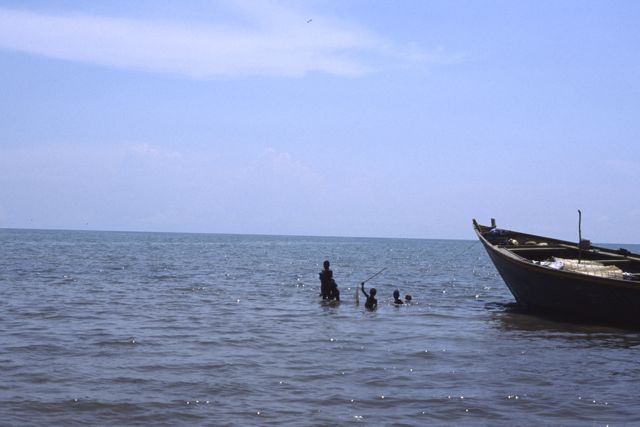
Lake Tanganyika near Ujiji, Tanzania. Image: A De Wever
Continuing our series of interviews with BioFresh partners, we hear from Aaike De Wever, BioFresh Science Officer at the Freshwater Laboratory, Royal Belgian Institute of Natural Sciences.
 1. What is the focus of your work for BioFresh, and why?
My main focus within the BioFresh project is coordinating the development of the freshwater biodiversity information platform and data portal. As I outlined in an earlier blogpost, another important aspect of my work is mobilizing freshwater data. As I believe it is necessary to communicate on this issue, I am currently preparing a series of blogposts on this topic.
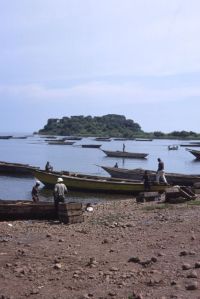
Lake Tanganyika near Ujiji, Tanzania. Image: A De Wever
2. How is your work relevant to policy makers, conservationists and/or the general public?
One of the main aims of BioFresh, in which I am heavily involved, is to make data discoverable and encouraging the on-line publication of biodiversity data. In doing so, we hope to contribute to an increased efficiency and transparency in science by helping the discovery of relevant datasets and reducing the need to do certain surveys over again. In addition, the mobilised data will be made open access so that anyone interested can consult it. In addition, I will be involved in integrating the Climate Vulnerability Index and Key Biodiversity Areas tools in the portal. These tools developed by BioFresh partners are specifically targeting policy makers and conservationists.
3. Why is the BioFresh project important?
From the data point of view, I believe BioFresh has a major role in creating a change of mindset in the way (freshwater) scientists deal with data, data publication and openness of data. Read more…
BioFresh press kit launched!

We’re pleased to announce the launch of the BioFresh press kit. This zipped file contains a whole host of information, contacts, press releases and images from the project – ideal for anyone looking to finding out more about BioFresh’s work.
Included in the download:
- The BioFresh information flyer
- The project presentation
- BioFresh newsletters 1 & 2
- A partner list with brief information and contact details
- Previous press releases
- Klement Tockner’s interview and feature in International Innovation magazine
- A small selection of hi-resolution photos of freshwater ecosystems and of meetings
For further information, please contact Paul Jepson, Work Package 8 leader (paul.jepson@ouce.ox.ac.uk) or Rob St.John, Communications and Project Co-ordinator (rob.stjohn@ouce.ox.ac.uk).
Meet the BioFresh team: Paul Jepson
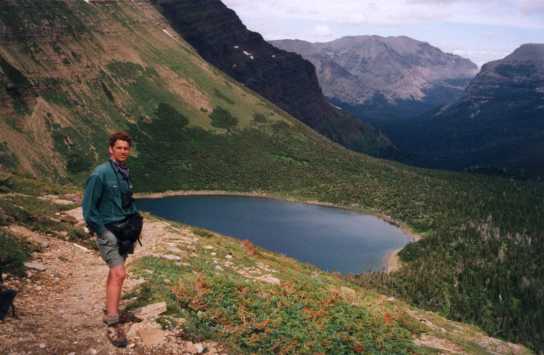
Paul Jepson leads Work Package 8 of BioFresh, which aims to strengthen evidence-based policy making and conservation planning for freshwater ecosystems through the effective and inventive communication and dissemination of the project’s results. Paul is the course Director of the MSc in Nature, Society and in Environmental Policy at Oxford University, following a career in U.K. and international conservation policy and management. His research interests span protected area planning, wildlife trade, conservation history, attitudes, values and practices, media representations of conservation issues, and the role, accountability and legitimacy of conservation NGOs.
 1 What is the focus of your research for BioFresh, and why?
I don’t have a specific research role. Rather my role is to lead thinking on how we can make the science of our team and others accessible to those who need it and/or would benefit from knowing about it. I’m inspired by the notion of ‘Science in Action’. But what does this actually mean? Is it a more evidence-based policy? Yes, in part, but there are many fascinating and important questions associated with the concept. For example, what are the practical ways of communicating science? Who should we target? What message framings work? How can we enroll the new digital architecture, and what are the political, democratic and ethical implications of scientists engaging more directly in the ways they have voice?
2. How is your work relevant for policy makers, conservationists and/or the general public?
I think I have already answered this. However, I would add that some exciting cross-disciplinary conversations on the issue are emerging in Oxford and other European universities. In Oxford these involve a number of our specialist research groups, for instance the Reuters Institute for the Study of Journalism, the Oxford e-Research centre, the Institute for Science, Innovation and Society as well as campaign teams in NGOs such as Oxfam. My sense is that BioFresh is part of a new ‘Science & Society in the 21st century’ debate that is gaining momentum and will be highly relevant to policy makers, conservationists , scientists and wider publics.
3. Why is the BioFresh project important?
On one level it is important because life on Earth is fascinating but little understood. Lots of life lives in freshwater but few people are giving much thought to this. However, BioFresh has another important dimension which concerns the assembly of a new form of scientific infra-structure. This captures a vision where data is available to all, irrespective of financial resources and access to networks. Where – through freeing up data locked behind barriers of language, scientific conventions and vested interest – we can start asking multi-scalar questions (spatial and temporal) of ecological and social systems. As yet I haven’t heard of much analysis across FP7 projects on this point, but I sense that a similar ethos can be identified in many projects.

Indonesian logging. Image: P Jepson
4. Tell us about a memorable experience in your career
It was my time working in Indonesia during the 1990s. Over the years I worked in conservation and resource management it became increasingly clear to me that the natural science knowledge and management frames that we were deploying were having minimal effect in terms of influencing the practices and behavior of government, resource-extraction industries and communities. I also realized that I lacked the conceptual frames – software of the mind if you like – to ask meaningful questions about why we were having such limited effect and to analyse the broader societal action arena within which we were putting our conservation science and projects to work. This prompted me to move over into the social sciences and join an interdisciplinary Geography department. Intellectually this crossing of the natural-social science divide has been enormously stimulating and worthwhile even though life as a ‘boundary scholar’ raises all sorts of challenges relating to the disciplinary silos that structure contemporary academic life.
5. What inspired you to become a scientist?
To be honest I became a conservationist and was inspired to do so by a passion for bird-watching and travel which dominated my life from early teens into my late twenties. Science was a means to explore my curiosity of the natural world and generate reasons why it should be conserved. Over the years it has become a framework for me to engage with issues that are important to me in a structured, rigorous, creative, innovative, and reflexive way.

Birdwatching. Image: P Jepson
6. What are your plans and ambitions for your future work?
To be part of a new form of science that enables society to face accelerated environmental, climatic and social change with confidence and a vision for a better socio-ecological world. I’m not quite sure how to do this but I see exciting prospects in the field of eco-informatics. In particular the interacting developments in the fields of mobile and cloud computing, data integration, data visualisation and capture, sensor miniaturisation and machine learning, and the rise of crowd-sourcing and citizen-cyberscience. The assembly and interplay of these new technologies and practices with established science, for me at least, represents an exciting new frontier.
Between 5-10 July at Hampton Court gardens on the outskirts of London, the WWF exhibited a specially commissioned garden to the public, aimed at engaging and enthusing the public with the need to conserve and protect freshwater ecosystems. The garden “Why we care about chalk streams” was created by award-winning designer Fiona Stephenson to highlight the effects of water extraction on U.K. chalk stream ecosystems, as shown in the video above.
WWF freshwater expert Rose Timlett, explained, “A chalk stream is such a special habitat, stunningly beautiful with gin clear water and a perfect environment for wildlife and plants. But these rivers supply water to millions of people in the UK and it’s the demand for water that is threatening this eco-system. We hope our garden will inspire people to really think about their use of water and the impact they have on their surroundings.”
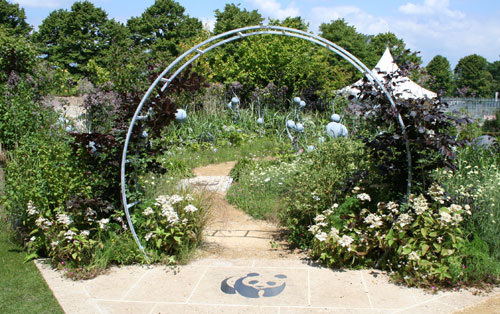
WWF Chalk Stream Garden
The garden – available for online viewing through a virtual tour here – was well received by judges, winning a silver-gilt medal. However, there has been less discussion of how effective the project has been at communicating a message of freshwater conservation. A theme we’re constantly pondering is the potential for the creative arts as a means of engaging a wider audience with the environment. The WWF garden blurs the lines between two rich traditions of landscape modification – land art (e.g. Richard Long, Andy Goldsworthy, Michael Heizer and Robert Smithson) and landscape gardening (e.g. Capability Brown and Frederick Law Olmsted).
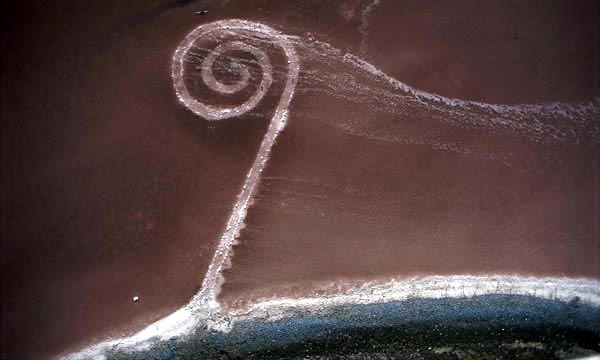
Robert Smithson's Spiral Jetty. Image: George Steinmetz September 2002
Meet the BioFresh team: Sonja Stendera
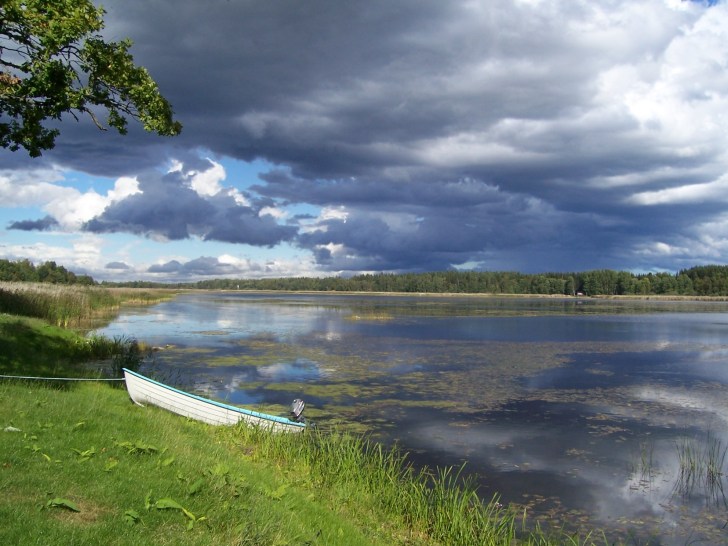
Lake Vendel. Image: S Stendera
We continue our series of interviews with BioFresh scientists today with Sonja Stendera, a freshwater biologist at the University of Duisberg/Essen, Germany.

1) What is the focus of your research for BioFresh, and why?
SS: One of the objectives of BioFresh is to analyse how key present and future environmental pressures impact freshwater biodiversity. In order to summarise the present state of the main drivers and stressors determining freshwater biodiversity patterns, my colleagues and I have conducted a literature review on this topic which also aims to identify possible research gaps in freshwater ecology. The main aim is to raise awareness of where further research is needed to fully understand freshwater ecosystems and thus facilitate their protection. A second part of my research is to then use this information to analyse how certain organism groups of different freshwater ecosystems respond to major environmental stresses such as eutrophication or climate change.

Lake Erken. Image: S Stendera
2) How is your work relevant for policy makers, conservationists and/or the general public?
Interest in the restoration or rehabilitation of freshwater ecosystems has increased recently and several restoration programs are well developed and partly successfully practiced. In order to develop holistic conservation approaches and cost-effective restoration programs, the knowledge of different aspects of biodiversity – i.e. freshwater biodiversity patterns over a range of spatial and temporal scales – is crucial. Holistic conservation, along with active restoration will ensure that future generations can enjoy most ecosystem services. However, holistic conservation requires a deeper insight into global biodiversity patterns: identifying what are the drivers and especially how can we improve our knowledge of the unknown. Thus, our work aims to provide indications where further research is needed, and identify the ecosystems and organisms that have been neglected in freshwater ecology, conservation and planning. This work is important in aiding future freshwater ecosystem management, conservation and sustainable use under multiple and changing pressures. Read more…
Searching for an elusive idea: IPBES and Loch Ness

Loch Ness, image: R St John
Hendrik Segers and Angélique Berhault from the Belgian Biodiversity Platform report on the formation of IPBES, an initiative which aims to inform and advise global environmental policy on biodiversity and ecosystem services, mirroring the work of the IPCC on climate change.
—
When George Spicer was riding his motorbike around Loch Ness in 1933, he claimed to have seen “the nearest approach to a dragon or pre-historic animal”. Since then, tourists and would-be monster hunters have been wandering around the loch, watching in hope for an elusive monster to suddenly appear… a situation that seems to compare, apparently, with that of the Intergovernmental Science-Policy Platform on Biodiversity and Ecosystem Services (IPBES).
IPBES – which is hoped to become for biodiversity and ecosystem services what the Intergovernmental Panel on Climate Change (IPCC) is for the climate change debate – would expand upon relevant initiatives, such as the Millennium Ecosystem Assessment and The Economics of Ecosystems and Biodiversity (TEEB), to provide policy-relevant reviews of scientific knowledge, and help catalyse capacity building in the field.
In December 2010, the international media announced (see BBC, Environmental News Service and MedefTV coverage) the establishment of IPBES, yet the reality of its formation appears to be rather less straightforward. Scrutiny of the relevant resolution shows an apparent careful avoidance of the word “establish” or any synonym thereof.
This suggests that what has been agreed upon is that the United Nations Environmental Programme (UNEP), in cooperation with relevant organizations (e.g. UNESCO, FAO, UNDP), is asked to take the necessary steps to set up IPBES. Much judicious peering through the haze of craftily worded resolutions establishes that – just like Nessie – IPBES has been announced, talked about, but not truly spotted as yet… Read more…
Meet the BioFresh team: Astrid Schmidt-Kloiber
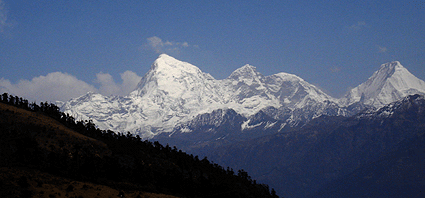
Jhomolhari, (c) A. Schmidt-Kloiber
This is the first in a series of interviews where BioFresh partners discuss their work for the project, scientific inspirations, share stories of memorable research and outline their future plans.
 Our first interview is with Astrid Schmidt-Kloiber (PhD). Astrid is a river ecologist at the Institute of Hydrobiology and Aquatic Ecosystem Management (IHG) at the University of Natural Resources and Applied Life Sciences (BOKU) in Vienna, with expertise in database design, set-up and management of (web-based) databases.
Her main task during the last years was the establishment of freshwaterecology.info, a Europe-wide trait database for macro invertebrates, fish, diatoms and macrophytes. She has a background on river benthic invertebrates and experiences in multivariate statistics. She is editor of the book series “Distribution and Ecological Preferences of European Freshwater Organisms”
—
* 1 What is the focus of your research for BioFresh, and why?
ASK: One of the main aims of BioFresh is to establish a biodiversity information platform and data portal. In BioFresh I am responsible for the quality control of the incoming databases that feed into this data portal. One of my major tasks is the establishment of a so-called metadatabase where all databases that are part of the BioFresh portal are registered.
This sounds a bit abstract, but usually metadata are loosely defined as “data about data”, that means the general characteristics of each database are collected and stored as e.g., its content, the covered regions, the provided organism group(s), information on the data holder and related intellectual property rights as well as any environmental information. The BioFresh metadatabase is available as questionnaire for data providers and as a query tool for scientists to find relevant data.
* 2 How is your work relevant for policy makers, conservationists and/or the general public?
A metadatabase as described above helps data providers to document their data and make them visible to the public (and future users), and on the other hand, for the data consumers it has the advantage to facilitate discovering data and assessing their appropriateness for e.g. scientific analyses. Thus, the BioFresh metadatabase can be a useful tool for easily detecting relevant information needed to support conservation priorities or policy decisions. Both the BioFresh portal and the metadatabase also have relevance for future generations as research on a long-term scale and sustainable policy starts with the documentation, storing and providing of data.
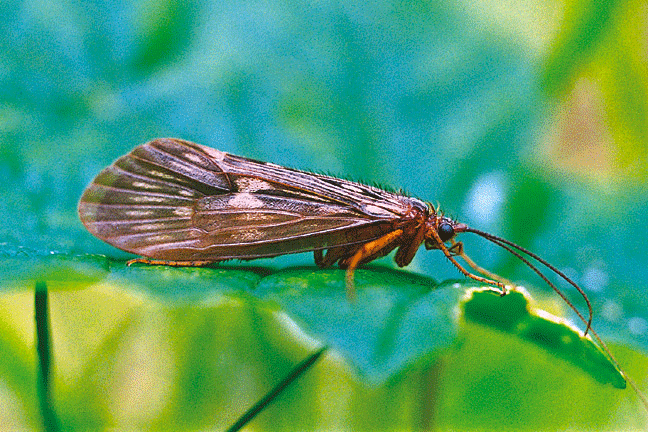
Trichoptera, (c) W.Graf/A. Schmidt-Kloiber
Freshwater biodiversity in the Congo basin
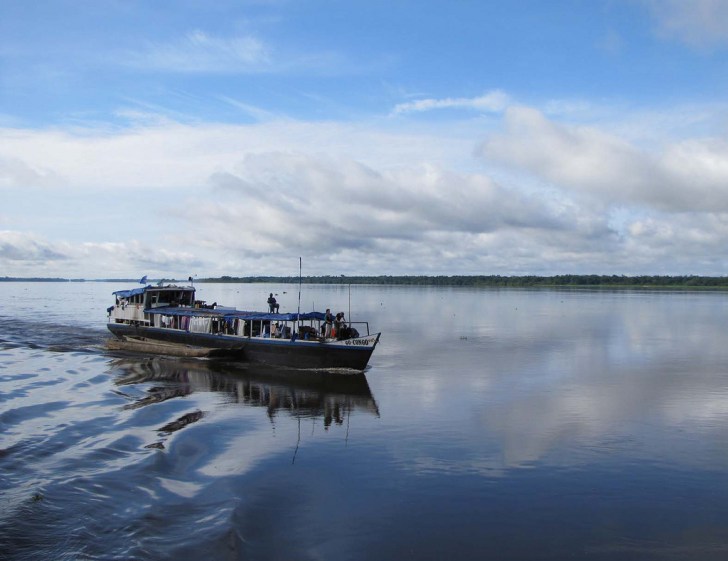
Image: Klaas Douwe-Dijkstra
Guest post: Dr Aaike de Wever, Science Officer for the BioFresh project at the Royal Belgian Institute of Natural Science, and co-ordinator of the freshwater biodiversity data workflow and creation of the public data portal. Aaike can be emailed at data@freshwaterbiodiversity.eu and he tweets @biofreshdata
Earlier this month I had the opportunity to participate in a Congo Biodiversity Initiative workshop at the Belgian Royal Museum for Central Africa. This workshop was organized in the follow-up of the “Boyekoli Ebale Congo2010” expedition on the Congo River, which took place in May 2010. The Congo River being the 2nd largest and 2nd most biodiverse river catchment after the Amazon, featured in one of my favorite documentaries, I was quite curious to learn about the first expedition results.

Image: Kris Pannecoucke. French entomologist Bruno Le Ru examining chenille or caterpillars in a inundated forest
Wild Swimming in Europe: Freshwater matters
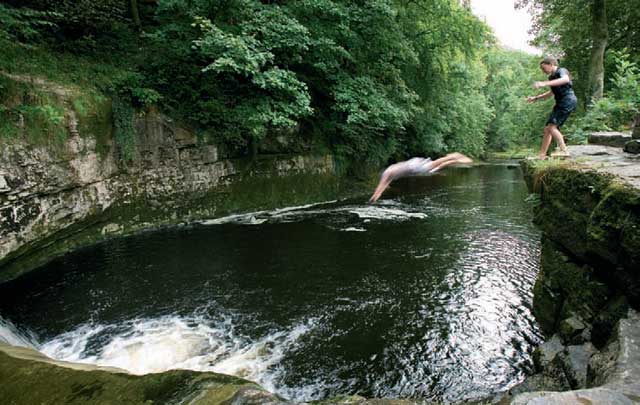
Wild Swimming: from http://www.outdoor-sport-leisure.net/wild-swimming.htm (Kate Rew / Wild Swim)
Wild swimming in rivers, lakes and streams is increasing in popularity across Europe, as people discover (or, perhaps, rediscover) the pleasure of swimming in freshwaters: unaffected by chlorinated water, stark lights and tightly regimented lanes.
Last week, the findings of the most recent European Union Bathing Water Directive (data here) were published by the European Environment Agency, showing the cleanliness of over 22,000 freshwater and saltwater swimming spots across Europe, from inner city ponds to rural rivers, shown in the Guardian data-blog map below (click through to the interactive version):

This data can also be explored through these interactive sites:
However the news for freshwater wild swimmers isn’t positive, according to the report:
“In 2010, 90.2 % of inland bathing waters in the European Union were compliant with the mandatory values during the bathing season, a figure 0.8 percentage points higher than in the previous year. The number of inland bathing waters complying with the more stringent guide values decreased by 10.2 percentage points compared to 2009, reaching 60.5 %”
(n.b. guide values describe the standard for “excellent” bathing water quality set by the EU)
This means that c.10% of European freshwater swimming sites does not reach the minimum safety standards set by the EU, potentially posing a health hazard, and serving as a worrying indicator for the health of the wider ecosystem, whilst c.40% do not reach the ‘excellent‘ guide values of water quality. Read more…

Steppe landscape. Image: Creative Commons: Steyr / Picasa
 By Dr. Aaike De Wever, Science Officer for the BioFresh project at the Royal Belgian Institute of Natural Science, and co-ordinator of the freshwater biodiversity data workflow and creation of the public data portal. He can be emailed at data@freshwaterbiodiversity.eu and he tweets @biofreshdata.
—
When I started to work on the BioFresh project a year ago, I still very much needed to figure out what a freshwater biodiversity information platform and data portal was going to look like. Obviously I immediately had a closer look at the work of my colleagues at the Royal Belgian Institute of Natural Science and the Belgian Biodiversity Platform, especially at SCAR-MarBIN (initiative on marine Antarctic biodiversity data) and the Freshwater Animal Diversity Assessment (FADA; authoritative species lists for freshwater organism groups). After some discussion and reading, however, I soon came to realize that the aim for BioFresh was somewhat different…
The project description reads:
“The freshwater biodiversity information platform is supposed to bring together, and make publicly available, the vast amount of information on freshwater biodiversity currently scattered among a wide range of databases. Previously dispersed and inaccessible data will thus be made available to policy makers, scientists, planners and practitioners. Integration of these data in scientific analyses will lead to better insights in the status and trends of freshwater biodiversity and its ecosystem services and provide scientific support for its management.”
Now, so far the theory, but how do we actually achieve this goal? Read more…







 The Freshwater Blog