Blog Action Day 2011: Freshwater ecosystems and sustainable food
 Sunday 16th October is Blog Action Day, a global event where hundreds of blogs join forces to promote a unified message. Last year we wrote about “Water” – discussing the need for increased perception and understanding of freshwater ecosystem conservation. This year, the theme is “Food”.
Freshwater ecosystems: a vital source of nutrition and food security
Global rivers, lakes and wetlands contribute significantly to global food supply. The food system uses 70% of available global freshwaters (Aiking, 2011).A 2010 United Nations Environment Programme report by Patrick Dugan and colleagues showed that inland freshwater fisheries provide over 33% of the world’s small scale fish catch, providing valuable food security, improving rural livelihoods and employing over 60 million people. Freshwater food systems also have the potential to promote gender equity and empower women: Dugan and colleagues suggest that over 55% of people employed by freshwater fisheries are female.
Fish is rich in protein, omega 3 and amino acids and often low in fat. The supply of fish is as such globally important for human nutrition. This is especially important in Africa – where around 100 million people regularly consume freshwater fish – and the Mekong Basin in Southeast Asia – where 60 million people get their main source of protein from freshwater fisheries. Importantly, Christophe Béné and colleagues at the Food and Agriculture Organisation published a report in 2007 suggesting that fish and other food produced by freshwater ecosystems often act as a ‘safety net’ for the poorest households when agricultural harvests fail.
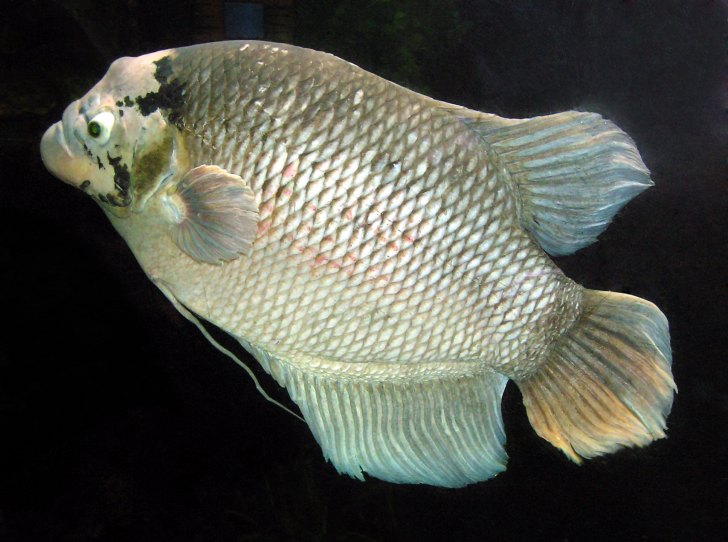
Giant gourami, a species popular for aquaculture in Thailand. Image: Wikipedia
Aquatic Plants and other non-conventional freshwater food sources
Aquatic plants such as wild rice (Zizania palustris); Spirulina Algae; edible aroid – Araceae; and taro – Colocasi, contribute in some way in alleviating human hunger in some of the lesser developed regions of the world. In addition, a 1998 World Conservation Monitoring Centre report suggests that frogs, crustaceans, molluscs, crocodilians, waterfowl and even manatees provide protein to some cultures.
Freshwater fisheries as a provisioning service
Scientists and environmental managers are increasingly using an “ecosystem service” approach to demonstrate and explain how humans benefit from the multiple services provided by the natural environment.
Freshwater ecosystems not only provide food, but a range of other important services. Put simply, these “services” can be categorised as:
Provisioning – e.g. food production, sources of medicine
Regulating – e.g. pollination, climate and air quality regulation
Supporting – e.g. nutrient cycling
Cultural – e.g. providing recreation, ecotourism, education and spiritual values
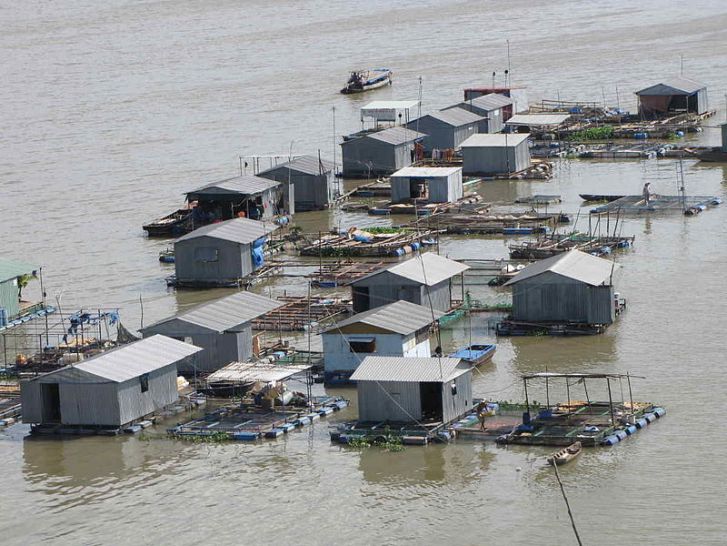
Houseboat fishfarms in the Mekong Delta, Vietnam. Image: Bill Bradley
How can we sustainably harvest freshwater ecosystems for food?
However, not all freshwater food production is sustainable. Freshwater food webs are generally less productive and more fragile than their marine counterparts, which themselves are showing global collapes. Fish farming and other forms of aquaculture have spread globally in recent decades, providing incredible levels of productivity and so are often seen as a valuable tool for improving human livelihoods. However, this productivity often comes at a cost (see the ECASA website for a range of literature and resources on this topic), where inputs such as food and chemicals are leached out into the wider ecosystem along with waste faeces. In salmon farms across northern Europe, there is also the growing problem of escaped sterile, farmed fish negatively affecting the spawning success of wild fish. However, efforts are being made to research new sustainable forms of freshwater fish farming.
As the UNEP and FAO reports show, for many people across the world, harvesting wild freshwater fish provides valuable sustenance. However, as we’ve discussed before, taking even a small number of wild freshwater fish for food from a small ecosystem may have large, cascading effects on the health of the rest of the ecosystem. This creates potential problems as it reduces how effectively the ecosystem can respond to external threats such as pollution (a concept known as resilience). Read more…
Polar explorers: natives and invasives in Antarctica
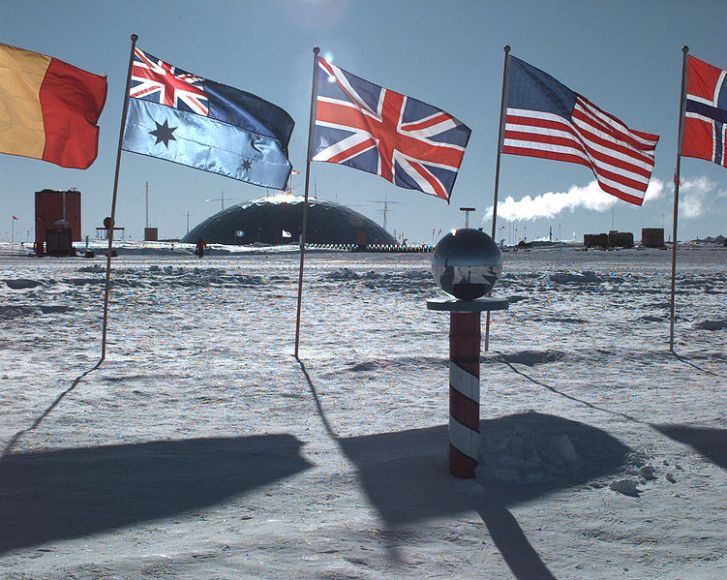
The Amundsen-Scott South Pole Station (Image: Wikipedia)
Nomenclature is fundamental to ecology and natural history: tying, describing and sorting an individual, species or habitat to a particular category or definition. The idea of what constitutes a ‘native’, ‘non-native’ or ‘invasive’ species is a thorny issue that we’ve touched on before. The words themselves are highly loaded with (largely unhelpful) meaning, association and history.
To paraphrase Stephen Jay Gould, species have been migrating, colonising, evolving and going extinct for millennia. It is only by a particularly unpredictable cocktail of time, place and chance (and of course, human perception and classification) that a species develops its ‘native’ environmental distribution.
To look at it this way, ‘alien’ species have always been ‘invading’ new environments through history, creating new and ‘novel’ ecosystems. Indeed, a huge amount of funding (including through BioFresh’s work on freshwater ecosystems) is currently being diverted towards understanding how species will be able to migrate and shift their range as a means of adapting to future climate change scenarios.
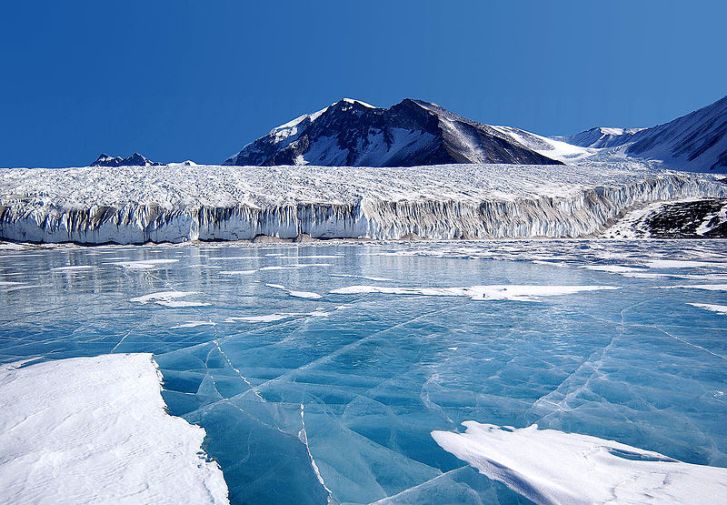
Blue ice on Lake Fryxell, Antarctica (Image: Wikipedia)
Building the BioFresh freshwater biodiversity database

The River Thames in London, a river that has seen a remarkable rise in freshwater biodiversity in recent years thanks to conservation efforts. Image: Wikipedia
Tom Turnbull, a new member of the BioFresh communications team at The University of Oxford summarises the key points made in the articles on assembling the BioFresh freshwater biodiversity database published over the last few weeks. Please feel free to add comments or questions below, or email us: biofresh@ouce.ox.ac.uk
—
Access to data is vital in assuring that we can fully understand and protect the rich biota contained in global freshwater ecosystems. If freshwater conservationists had access to all existing knowledge on freshwater biodiversity then modelling and analysis could be carried out at a level of sophistication which could enable a massive increase in research productivity and discovery. As such, BioFresh is attempting to collate, curate and disseminate all relevant European data to enable access to a wide audience of scientists, policymakers, planners and practitioners, with the intention of providing a centralised European dataset that can be used as a collective resource to assess and protect freshwater systems.
The first step in this process was to survey the quantity and types of data available. In February 2010 freshwater research organisations were contacted and asked to provide details as to the characteristics of their data, a form of data referred to as ‘meta-data’. These initial attempts have not been wholly successful, as it appears that the integral importance of meta-data is not fully appreciated by some organisations. They have not adequately curated or communicated the characteristics of their data. In other cases, factors such as intellectual property rights, institutional restrictions, and jurisdictional complexity mean that this information is not allowed to be shared, or is not available.
As such, the BioFresh team are beginning research into understanding and addressing barriers to the sharing of data, and communicating the proven benefits of transparency and collaboration in science. This work is vital in order that the environment, contributors, researchers and governance organisations can gain the utmost value from existing and on-going research. As it stands, the data architecture is in place, a portal has been developed that provides access to over thirty two thousand species and their environment and occurrences. This has been possible as a result of the data provided by the Freshwater Animal Diversity Assessment (FADA) and the Global Biodiversity Information Facility (GBIF). However, the project does not yet know the full extent of pan-European data that could feed in to this structure.
Data driven discovery is the new scientific paradigm, and freshwater biodiversity science can be part of this if protocols for interoperability and collaborative work can be established. However, the BioFresh team remain sensitive to the social factors that may cause friction when data disclosure requests are made. The intention is to use our experiences in carrying out a collaborative data collation project in order to explore these frictions and see if it is possible to overcome them, or whether they are characteristics of collaborative work which must be accommodated.
Requesting data and dealing with complex intellectual property rights issues

Lilla Fargen, Sweden. Image: Wikipedia
Continuing our special feature outlining how BioFresh scientists are collecting and collating a global metadatabase of freshwater biodiversity data, we turn to the often tricky concept of data sharing and intellectual property rights issues. If you have access to academic journals, two great papers on data sharing that may be of interest are: Tenopir et al (2011) “Data Sharing by Scientists: Practice and Perceptions” PLoS One (Free Open Access) and Roberts (2009) “Biodiversity Databases Spread, Prompting Unification Call” in Science.
Authors: Aaike De Wever, Sian Davies, Astrid Schmidt-Kloiber
Evaluation of the entries in the BioFresh metadatabase allows us to select the most relevant databases we want to request for use in the scientific work within BioFresh and for integration in the data portal. One of the main topics to consider is intellectual property rights (IPR).
In the metadatabase, data holders are confronted with the following IPR options:
Database available for: BioFresh scientific purposes/BioFresh data portal (public)
- Data can be used without restrictions, but must be publicly acknowledged and cited correctly.
- Data provider must be informed of publication 45 days in advance and can object the use of the dataset within 30 days. Data must be publicly acknowledged and cited correctly.
- Data provider must be offered co-authorship for publications using this dataset. Data must be publicly acknowledged and cited correctly.
- Data cannot be used in publication.
- Other/additional criteria (please specify).
Unsurprisingly, the entries in the metadatabase covered the whole range of conditions, ranging from no restrictions – mostly for data that are already available on-line – to co-authorship for scientist’s personal data. However, when I first did this exercise, I was quite surprised to see that a lot of the larger datasets that seemed interesting for integration in the BioFresh data portal had specified “other” and included statements like:
– The data were compiled from different institutes. All requests for access must be directed to …
– Other partners/institutions must ask the data providers of the database if the data can be used.
– The data are available for use at the discretion of the data provider.
– Data and permission of usage can be obtained from the author as long as the user accepts the external copyrights enforced by previous sources (authors/institutions), which protects some of the occurrence data included in the database.
It thus seemed that most of those datasets were compiled by several data holders. As the construction of those datasets is often done in the setting of a collaborative project, little attention is given to their potential use after the termination of the project and at that stage, the institute/person who compiled the dataset doesn’t feel like asking this over again…

Buttermere, one of England's most pristine lakes. Photo courtesy of Jo-Anne Pitt
Today we feature “The Miracle Water Village“, an inspiring tale of sustainable water management in India made by Black Ticket Films, an independent New Delhi film company specialising in human rights, environment, wildlife and gender and sexuality topics:
“As the world reels under the threat of unrelenting climate change, erratic monsoons and fast depleting groundwater reserves, The Miracle Water Village narrates the inspirational story of impoverished farming community in India that reversed its fortunes through its visionary model of water management.
Lying in one of the worst drought-prone regions of India, the village of Hiware Bazar battled many decades of sparse rain and failed crops. However, 20 years ago, the entire village came together to script a silent revolution by designing a rainwater-harvesting model that saved every drop of the scanty rain they received. Today, the village is literally an oasis in the middle of the desert, boasting of bumper harvests, dairy co-operatives, millionaire families and visionary farmers.
Hiware Bazar still receives the scanty amount of rainfall it used to in the heart of its most trying years, but what has changed is the way it has managed its water and created a miracle with this most precious liquid resource!”
Working with Intercalibration Datasets

- Wastwater, one of England’s most pristine lakes and typical of those assessed by the Northern Lakes Geographical Intercalibration Group. Image courtesy of Wikimedia
Continuing in our weekly series of posts on the construction of the BioFresh metadatabase, this week Sian Davies takes us through the complexity, importance and challenges of incorporating Intercalibration datasets into the BioFresh project.
Why are Intercalibration datasets important for BioFresh?
Another source of high quality freshwater biodiversity data is held within the datasets compiled as part of the Intercalibration process, which is used to compare Water Framework Directive biological classification tools. The datasets hold carefully selected taxonomic and environmental data from many European countries and thus form a valuable contribution to freshwater biodiversity data.
What are Intercalibration data?
These datasets have been compiled as part of the process by which biological classification tools used for the implementation of the Water Framework Directive (WFD) are compared and adjusted to ensure all Member States show the same level of ambition in their ecological assessments. Most Member States have different WFD classification tools and one way in which they can be compared is to apply them all to a common dataset which comprises some data from each Member State. These datasets have been compiled using data contributions from most participating countries. They contain quantitative taxonomic data and usually supporting environmental data and physical information on the water bodies. They contain data from water bodies of specific types (based on WFD typologies). Considerable time and effort has been put into their compilation, data cleaning and taxonomic harmonisation by members of the GIGs. Data has been provided variously from state monitoring programmes, university research groups and other institutes and may or may not be publicly owned or funded.
Read more…
Special data feature: Obtaining information on freshwater databases

Authors: Aaike De Wever, Astrid Schmidt-Kloiber and Sian Davies
Today we begin a weekly series of posts written by BioFresh scientists, which give a behind-the-scenes account of how and why the BioFresh freshwater biodiversity metadatabase is being constructed. As we find out in the article, compiling data is not only a logistical task, it involves a fascinating network of politics and negotiation over data ownership, sharing and publication.
Why are we constructing a metadatabase?
One of the main products of the BioFresh project is the metadatabase, which is basically a database centralising information on freshwater biodiversity related databases. As outlined in the interview with Astrid Schmidt-Kloiber, this is one of her major tasks within the EU FP7 funded BioFresh project.
The aim of this metadatabase is to bring all possible information on freshwater related databases together and provide a resource where scientists, conservationists and policy makers can find databases relevant for their work. But, in the first place, it was started as a tool that would help scientists within BioFresh to identify datasets that can be used in their biodiversity modelling work.
Development history
The work on the metadatabase started very early on in the project, and a first prototype was already available by the first project meeting in February 2010. This allowed us to discuss which fields were needed for scientists to identify suitable datasets, making sure the metadatabase is compatible with common standards. By the summer of 2010, the extensive metadatabase questionnaire, specific for freshwater ecosystems was ready and project partners were encouraged to enter the databases they held.
In autumn of 2010, we began welcoming and collating databases from external parties. From April 2011, the metadatabase was available for public viewing, although the majority of the datasets were still behind the scenes. However, during this first year we already gained a lot of experience in requesting metadata, which we would like to comment on during this blogpost.
The present situation
At this stage (september 2011) we have 58 database entries, excluding the intercalibation datasets (see a forthcoming post on this topic), which are more or less complete. 34 of these were filled in by BioFresh project partners. 24 of the databases were external and consist of two main sources: the ones from people who contacted us; and the ones we identified ourselves. Four of those were filled by the data holders, but for the 20 other entries we started filling in as much metadata as we could ourselves, before contacting the data holders. We chose this approach because it was already clear from our experience with the internal databases that our chances of success (i.e. an entirely filled questionnaire) would be low otherwise. Read more…
Special feature: making freshwater biodiversity data open and accessible
 By Aaike De Wever
In June, I wrote an article on the BioFresh freshwater biodiversity information platform and data portal for this blog. The article focused on the different components of the data portal, ranging from the metadatabase and associated tools to basic occurrence data (i.e. where a particular species has been found and documented).
Mobilising scientific data on freshwater biodiversity and making it publicly available is obviously quite a job for several BioFresh project partners. I believe this is an issue that concerns the scientific community at large and so, together with some colleagues, will be working on a series of blog-articles on this subject to outline and explain the issues surrounding how BioFresh plan to make scientific data open and accessible to everyone.
The subjects we have in mind cover:
1. The BioFresh data portal (link)
- Integrating dispersed datasets
- Integrating models and tools to analyse and view the data
2. Building a metadatabase of freshwater biodiversity databases (link)
- What is metadata?
- Approaches to obtaining information on freshwater databases
3. Working with intercalibration datasets (link)
- Intercalibration datasets on biological water quality indices gathered for the Water Framework Directive across Europe are used to construct a common scale of ecosystem health.
4. Requesting data and dealing with complex intellectual property right issues (link)
- Approaches to data digitisation
- Approaches to setting up a system of interoperable databases
- Methods of making basic biodiversity data available during scientific publication
- Why should scientific data be made publicly available?
Summary: “Building the BioFresh freshwater biodiversity database”
We’ll be publishing articles every week on the subject, starting today. Please get in touch (biofreshATouce.ox.ac.uk) with any comments, feedback or suggestions.
Meet the BioFresh team: Núria Bonada
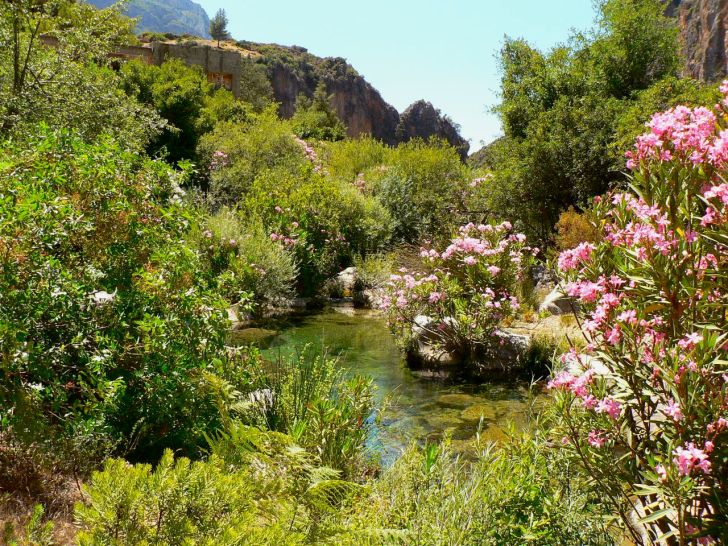
A river in the Rif region (Morocco). Image: Núria Bonada
We return from a short summer break with an interview with Dr. Núria Bonada, a specialist in aquatic insects and the ecology of Mediterranean rivers at the University of Barcelona.
 What is the focus of your research for BioFresh, and why?
We are modeling future distributions of freshwater organisms in European catchments under global change scenarios. We have started by analyzing the future distribution of brown trout in the Ebro, the Elbe and the Danube. The obtained results are not very encouraging, as this species will disappear in 2080 in about 80% of the reaches where can be found today. Considering the natural, recreational and economic value of brown trout, measures to mitigate the effects of global change at catchment scale are urgently required.
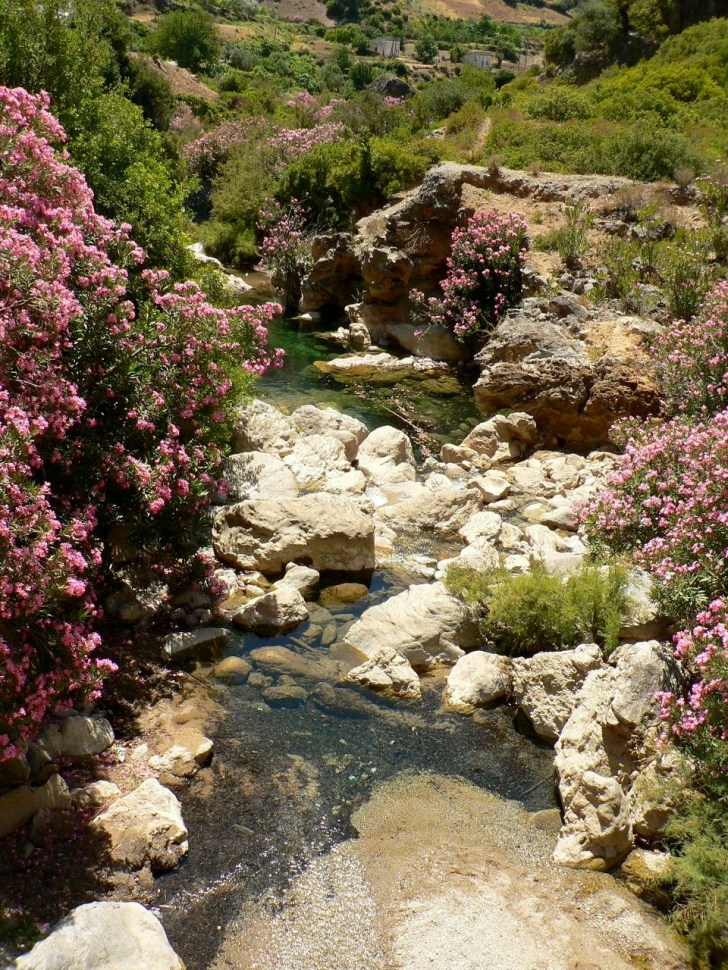
Another river in the Rif region (Morocco). Image: Núria Bonada
How is your work relevant to policy makers, conservationists and/or the general public?
By presenting future distributions of freshwater organisms, our work will help policy makers to identify areas of high vulnerability to extinction loss and to address specific measures to mitigate the effects of global change. Given the natural, recreational and economic value of some of the freshwater species that we are considering, our work would not also be relevant for conservationists but also to fishermen or to the general public.
Why is the BioFresh project important?
BioFresh will provide access to data on freshwater organisms and therefore will open the door to address many future research questions. In a scientific world where so much public money has been invested in collecting data it is now time to make all this data available to all scientists, managers and to the general public. By doing so, BioFresh will help to improve the knowledge of freshwater diversity, its trends, and will provide clues for their conservation.
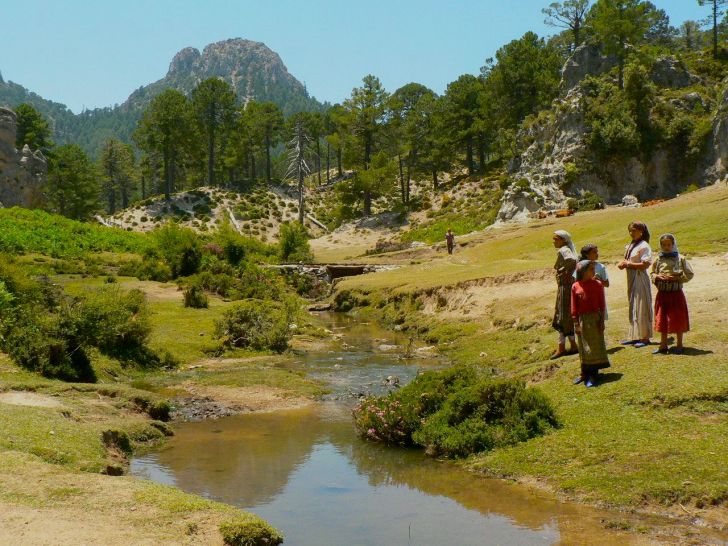
Talassemtane National Park (Morocco) Image: Núria Bonada
The BioFresh blog takes a holiday!
The BioFresh blog will take a break until the end of August, as our freshwater scientists migrate to warmer climes (usually including rivers and lakes…) for well-deserved holidays. We’ll be back towards the end of the month – have a great summer!
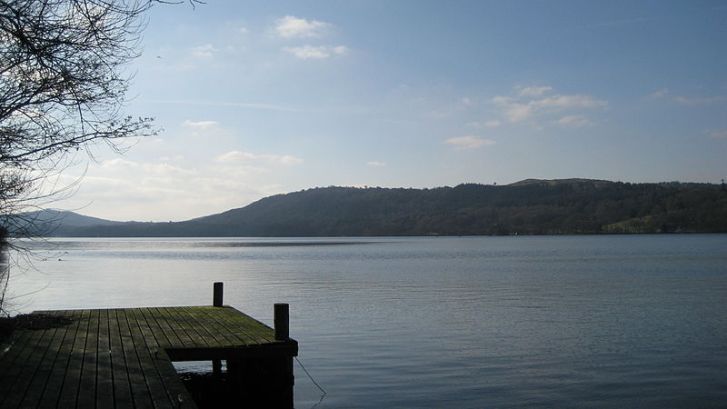
Lake Windermere, UK. Image: Wikipedia

Lake Como, Italy. Image: Wikipedia

Lake Ammersee, Germany. Image: Wikipedia







 The Freshwater Blog