Waterfalls promote freshwater biodiversity in rivers, new study
A new study by BioFresh members shows that waterfalls may promote biodiversity creation in river sub-drainages by acting as natural barriers to migration over an evolutionary time-frame.

Angel Falls, Venezuela. The tallest waterfall in the world is located within the Orinoco river basin, where the study was conducted. Photo: Creative Commons
A recent scientific paper by BioFresh colleagues at the Muséum National d’Histoire Naturelle in Paris and France’s interdisciplinary Institute of Research for Development (IRD) makes an important contribution to the science of freshwater ecology and biodiversity. Their study on the effect of natural habitat fragmentation in river systems, which was conducted in the Orinoco river basin in South America, found that highly fragmented sub-drainage ecosystems have higher neo-endemic species richness. This suggests that natural habitat fragmentation caused by waterfalls drives speciation for freshwater fish in sub-drainages.

The Orinoco river basin is located in Venezuela and Columbia. Photo: Creative Commons.
Speciation is a key evolutionary process that generates different species. The paper shows the role that natural fragmentation in river systems plays in this process, and therefore in promoting freshwater biodiversity, but it also highlights the importance of river sub-drainages as areas of neo-endemic species richness. This has important implications for conservation planning and the protection of biodiversity, which is central to the Aichi Biodiversity Targets under the Convention for Biological Diversity (CBD) and the EU’s biodiversity strategy to 2020. Investments in biodiversity informatics – the assembly of larger data sets by projects such as GBIF and BioFresh – are key to achieving these goals by assisting effective conservation planning through improving the data and knowledge about freshwater biodiversity, notable hotspots, and endemic areas.
Without such datasets, which are able to provide researchers and policy-makers with bigger and better data, many important studies, such as this one, would not be possible. By using a published dataset of fish species occurrence from the Orinoco drainage basin the researchers were able to highlight the evolutionary role that natural habitat fragmentation plays in the promotion of freshwater biodiversity, as well as drawing attention to sub-drainage basins as important areas of neo-endemic species richness.
Thierry Oberdorff, BioFresh member and co-author of the paper, explains that they “found that the number of waterfalls within a sub-drainage positively influences the number of neo-endemic fish species inhabiting this sub-drainage.” He adds, “this result leads us to make the hypothesis that habitat fragmentation generated by natural waterfalls drives speciation by promoting and maintaining (in the long-term) population divergence (barrier to gene flow).”
In short, both history and natural fragmentation (i.e. waterfalls) play important roles as biogeographic barriers that promote freshwater biodiversity in river drainage basins.

Orinoco river. Photo: Creative Commons.
But habitat fragmentation is also widely known to lead to extinctions. So a question that may arise is if natural fragmentation of freshwater habitats can lead to the creation of species, can human-induced habitat fragmentation, such as that caused by dams, also have the same effect?
In fact, the opposite is actually true. This is because speciation and extinction processes for fish act at very different time scales. As Oberdorff explains, “while speciation is a rather slow process (generally of the order of hundred thousand years – million years), the process of extinction can be much faster (hundred of years). As all anthropogenic barriers are usually ephemeral (around 200 years for dams) the only contemporary process acting is extinction.”
This is one of the reasons why the construction of large-scale dams (such as the Xayaburi mega-dam in Laos) are of such concern for freshwater biodiversity scientists and conservationists, because the fragmentation of river ecosystems (such as the Mekong) caused by damming may lead to the extinction of freshwater species crucial for ecosystem functioning upon which millions of people rely.
For more information see the full paper: Dias M et al. 2012, ‘Natural fragmentation in river networks as a driver of speciation in freshwater fish’, Ecography, vol. 35, pp. 001-007.
New research from members of the BioFresh team has found that amphibians are the best group of animals to act as ‘surrogates’ for freshwater conservation planning.
There is plenty of information out there about the patterns and predictors of biodiversity on land. But the picture gets a little murkier when we dive beneath the surface into freshwater ecosystems. While many freshwater species and ecosystems are among the most threatened in the world, global conservation priorities have, to a large extent, overlooked freshwater ecosystems. Yet without sufficient information, effective conservation planning and actions are made all that much more difficult.
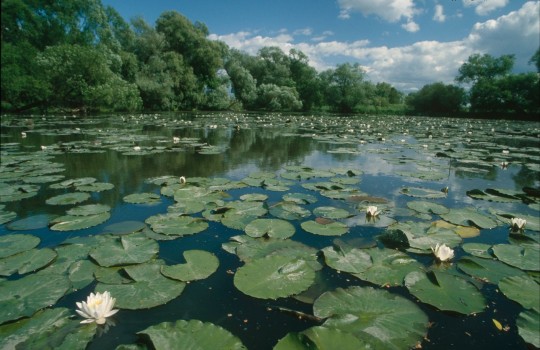
Photo: WWF/TNC
That’s why BioFresh is so passionate about making as much information about freshwater ecosystems, and the creatures that live within them, as open and accessible to scientists, policy-makers and practitioners as possible. And new research from members of the BioFresh team has shed some light on the situation for freshwater ecosystems.
Their research, which appeared in the Journal of Animal Ecology in a paper titled ‘Global diversity patterns and cross-taxa convergence in freshwater ecosystems’, analysed for the first time the global distribution of five different freshwater animal groups or taxa across 819 river basins around the world. The taxa investigated were aquatic mammals, aquatic birds, freshwater fish, crayfish, and amphibians. The study looked at how environmental factors drive biodiversity patterns at the river basin level and tested the ‘convergence hypothesis’, which takes the view that the environment drives evolution in a predictable direction (i.e. the same causes should produce the same effects).
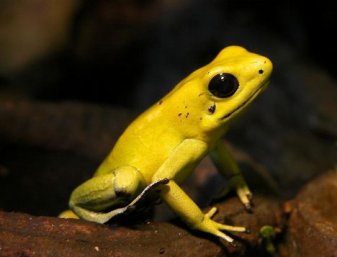
Golden Tree Frog. Photo: Creative Commons
The study found that species richness and endemism patterns are significantly correlated and that contemporary climate, history and area are the main factors in explaining species richness and endemism patterns for most of the taxa at the river basin scale. In addition, and importantly, the research also found that amphibians, and then freshwater fish, display the highest level of congruency with other groups (taxa) of animals.
BioFresh member and co-author of the study Thierry Oberdorff, explains just why the results have potentially important implications for global freshwater conservation planning: “as most of the examined taxa display convergent patterns, one taxon can be used to predict patterns for the others.” This is significant because by using one group of animals, such as amphibians, to base conservation planning around may be the best and most cost-effective means of protecting the largest number of species, and broader freshwater ecosystems, in the resource-constrained world of conservation. And, says Oberdorff, the research suggests that “as amphibians and fishes display the highest levels of congruency with other taxa, these two taxa appear to be good ‘surrogate’ candidates for developing global freshwater conservation planning at the river drainage basin scale.”
However, it is important to note the scale of the investigation, which was at the river drainage basin scale, because it can greatly influence our perceptions of patterns and processes. Therefore, while the results may be useful for broad intergovernmental planing to increase trans-boundary cooperation, their validity for conservation planning at finer scales (e.g. the subdrainage level) is not warranted and requires further research. In addition, because amphibians are considered highly threatened and have previously been listed as potential surrogates in terrestrial ecosystems, the use of amphibians to represent spatial patterns of biodiversity may also help unify terrestrial and freshwater conservation efforts under a common framework, at least at an intergovernmental planning level.
You can read more about amphibians in our 6-part amphibian special feature.
The reference for the BioFresh paper is: Tisseuil C. et al. 2012, ‘Global diversity patterns and cross-taxa convergence in freshwater ecosystems’, Journal of Animal Ecology.
Our newest Cabinet of Freshwater Curiosities entry: a crab that lives inside trees!
Exciting news everybody! The latest entry into our Cabinet of Freshwater Curiosities is out now. And a curiosity this creature certainly is. See if you can guess what it is from these cryptic clues: it’s from Liberia, it lives in a hole in a tree, and it’s a crab.

Yep, you guessed it. It’s the Liberian tree-hole crab or Globonautes macropus to use its fancy Latin name.
That’s right, it’s a crab that lives in a tree! More specifically, it lives in rain-filled holes in the trees of the Upper Guinea closed-canopy rain forest in West Africa. This tree-climbing freshwater crab scampers down at night to forage for food, mostly insects (ew!), on the forest floor before scurrying back up it’s one to two metre tall trees.
These cool crustaceans are extremely rare and are only known to be found in five locations in West Africa. But not only are these guys rare, they’re also under threat from deforestation as well as other issues, which has led to it being classified as an endangered species on the IUCN Red List.
So check out the Liberian tree-hole crab before it’s too late!
The politics of freshwater science: why the closure of Canada’s Experimental Lakes Area matters to us all
Freshwater scientists and managers worldwide are alarmed and saddened by the Canadian Harper Government’s announcement that it will close the Experimental Lakes Area (ELA) in March 2013. Described as the super collider of ecology, the ELA is the only facility in the world that allows the study of whole lake ecosystem research and has produced almost 750 peer-reviewed papers including 19 in Science and Nature (See Hering et al., 2012).
Last week’s launch of a new campaign video by the Coalition to Save ELA, a nonpartisan group of scientists and citizens, reflects a growing public concern in Canada. Save ELA’s latest post frames the closure of the ELA as a “War on Science” and opens with the clear message that “Scientists, activists, and concerned citizens alike are uniting to send a clear message to the Harper Government”. The post encourages Canadians to write to their Members of Parliament via the web-site of Lead Now, an independent Canadian advocacy organization working to achieve progress through democracy.
The devastating consequences of the ELA’s closure to Canada’s science capacity came to widespread public attention when comedian Rick Mercer devoted his popular weekly rant to the issue. In his ‘rant’ Mercer makes explicit the link between politics and science.
Renowned environmentalist, David Suzuki, observed that “many recent cuts and changes are aimed at programs, laws, or entities that might slow the push for rapid tar sands expansion and pipelines … along with the massive sell off of our resources and resource industry to Chinese state-owned companies, among others. Any research or findings that don’t fit with the government’s fossil fuel-based economic plans appear to be under attack.”
The ELA has come into the political firing line because it puts policy to the test. In one experiment, the ELA added cadmium to Lake 382 in order to determine whether provincial regulations governing power plant emissions were tight enough to protect aquatic organisms. Writing in Science in 2008, Erik Stokstad notes that “then–minister of environment halted that work, forbidding ELA scientists from adding any more cadmium… despite the fact that power plants were emitting greater concentrations of cadmium on a regular basis.”
The closure of the ELA is not just a problem for Canadians, it is a problem for all freshwater scientists and the future management of freshwater ecosystems. Other research projects and stations may face similar political pressure in the future. BioFresh coordinator, Klement Tockner, is leading a team who are creating a global database of Biological Field Stations (BFS). The purpose of this initiative is to map the distribution of BSFs, the ecoregions they cover, and the type of research and outreach they conduct. However, as the ELA case demonstrates, science is becoming increasing political as economies seek to secure resource access, and the ability to overlay the geopolitics of resource extraction against freshwater biodiversity science capacity may become crucial.
Alessandra Gage and Paul Jepson
Landmark new report on citizen science and biodiversity
Citizen science seems to be all the rage at the moment. Advances in web technologies and mobile computing (smartphones) promise exciting opportunities for widening the engagement of people in biodiversity science. However, until now scientists and policy makers have lacked an overview of the field – what is the scope of environmental citizen science?, to what extent does it support policy? what is the quality of the data produced?, what technologies are being used and how are volunteers motivated to participate?
 These crucial questions are convincingly answered in a superb study commissioned by the UK Environmental Observation Framework (UK-EOF) and launched last week. Titled ‘Understanding Citizen Science and Environmental Monitoring‘ colleagues from the NERC Centre for Ecology and Hydrology and the Natural History Museum (London) conducted a semi-systematic review of 234 English-Language citizen science projects. The BioFresh blog spoke over Skype video to the report’s lead author, Dr. Helen Roy
As well as a section providing clear assessments of the state of key aspects of environmental citizen science, the report contains some really useful typologies and summary tables and an annex that presents 2-page summaries of over 30 projects. All in all the report represents an invaluable resource and advance on our knowledge of citizen science. Given the scale of freshwater-based recreations there is clearly much more that freshwater scientists could be doing in this area. This report provides a source of inspiration and advice, puts to rest concerns over data quality, and reminds us that enrolling volunteers doesn’t necessarily equate to cheap science.
Paul Jepson
A Dam Controversy: Laos dam project poses threat to Mekong ecosystem and communities
It’s a case of damned if you do, damned if you don’t for the Laos government. The construction of a controversial mega-dam in Laos on the Mekong river poses threats to millions of people reliant on the Mekong as well as hundreds of freshwater species, but offers a hope of development for one of the poorest countries in the region.
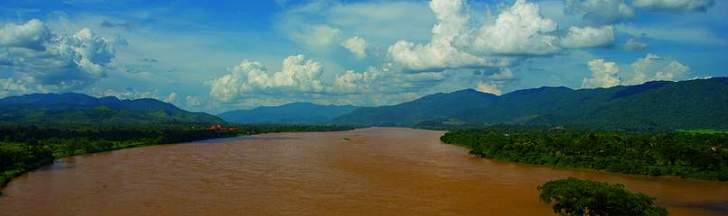
The Mekong river. Photo: WWF/Adam Cathro
Earlier this month, the government of Laos announced that they would begin construction of the Xayaburi mega-dam project on the Mekong river. The hydroelectric dam would be the first major dam on the lower Mekong. The project is expected to bring in billions of dollars of much needed revenue for the Laos government. However, environmentalists and neighbouring countries have raised concerns about the dam’s effect on the Mekong ecosystem and the millions of people who depend on it for their livelihoods.
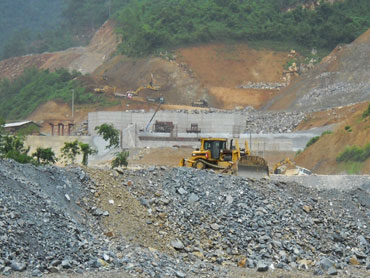
Construction underway at the Xayaburi dam site. Photo: International Rivers
Last week we highlighted a report from the IUCN addressing the state of freshwater biodiversity in the Indo-Burma region in South-East Asia. One of the biggest threats to freshwater biodiversity in the region is the ongoing construction of dams, particularly along the Mekong river.
The Mekong river runs through 6 different countries, starting in China and meandering its way down through Burma (Myanmar), Laos, Cambodia, Thailand and Vietnam before emptying in the South China Sea. It is the lifeblood for over 60 million people living on or near the expansive river and it also home to the highest concentration of fish species by area on the planet. There are over 1,000 known species throughout the Mekong, and scientists are worried that the dam could lead to the extinction of hundreds of freshwater species including one of the largest and most critically endangered freshwater fish in the world, the slightly strange-looking Mekong giant catfish.
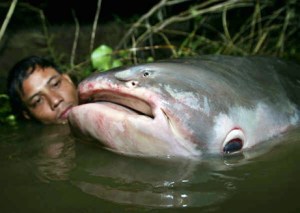
Mekong giant catfish. Some specimens have been found weighing over 300kg and are more than 3m in length. Photo: National Geographic/Zeb Hogan
The proposed dam is a major threat to these people and the ecosystems of the Mekong due to its downstream effects. The effects of the dam are more than just impeding the flow of water though. It will also block the migration paths of numerous large fish species, capture nutrient sediments causing a decrease in water quality downstream, and change water temperatures. The overall effect would be to drastically alter the ecosystems in which more ‘generalist’ species would be favoured and the more environmentally sensitive endemic species would decline. This means that we could likely see a significant decrease in freshwater biodiversity as a result of this dam.
The construction for the dam has also been a point of international tension with other countries through which the Mekong flows. Cambodia and Vietnam have both raised concerns about the dams potential negative effects on fisheries and rice crops affecting the food security of their citizens dependent on the river. Thailand, who has agreed to buy 90% of the electricity generated from the dam, has expressed its support for the project, although local protects have occurred. The Unites States released a statement saying “the extent and severity of impacts from the Xayaburi dam on an ecosystem that provides food security and livelihoods for millions are still unknown.”
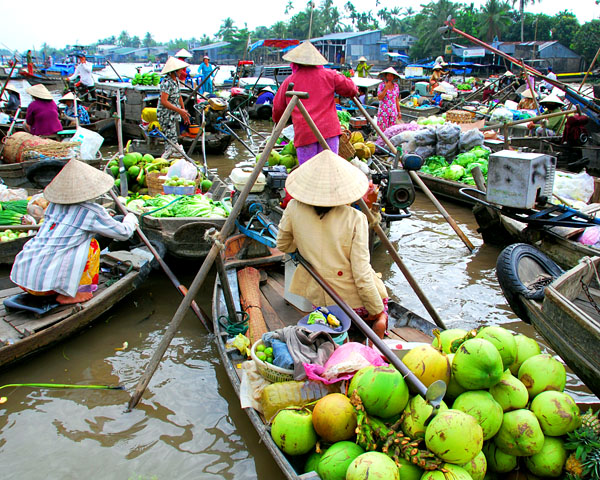
One of the many floating markets found along the length of the Mekong river.
Under the Mekong River Commission, an intergovernmental body established to promote the coordinated governance of the shared river, countries are supposed to consult with each other and reach a consensus before initiating any major projects. Although Cambodia and Vietnam have raised objections, Laos has stated that all concerns have been addressed and that it will be going ahead with the dam.
Laos, one of the poorest country in South-East Asia, has the right to development and a duty to lift its people out of poverty. But it should endeavour to do so in an appropriate and responsible way. The construction of dams on the Mekong and across the wider Indo-Burma region is perhaps inevitable as the countries of the area look to develop and meet the growing power needs of their citizens in a carbon constrained world.
What needs to happen then is that a greater consideration must be given to the human and environmental impacts of a project before and during its construction and, where possible, the utmost effect be taken to avoid or mitigate any negative effects. This is an important point as a further 10 mega-dams are proposed for the Mekong river (8 of them are in Laos) and the decision by Laos to push ahead with the Xayaburi dam despite concerns may set a worrying precedent.
Freshwater biodiversity in Indo-Burma under threat
A study has shown that in the Indo-Burma region – an area with one of the highest diversity of life on the planet – freshwater species are at risk from a number of threats.
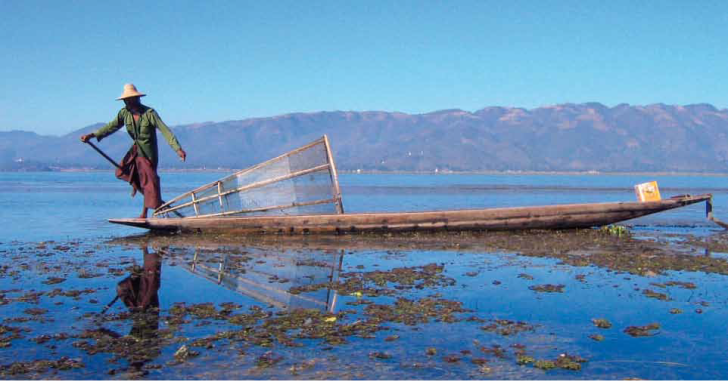
Fisherman on Inle Lake, Myanmar (Burma). Photo: Shannon Holman
The study, which was conducted by the International Union for the Conservation of Nature (IUCN), found that 13% of all freshwater species in the Indo-Burma global hotspot are at risk of extinction. The Indo-Burma region, which extends from eastern India and southern China across South East Asia, is known as a global biodiversity hotspot and as such is an area that is particularly rich in species diversity. The region also has a high degree of endemism, meaning that certain species are found nowhere else on earth.
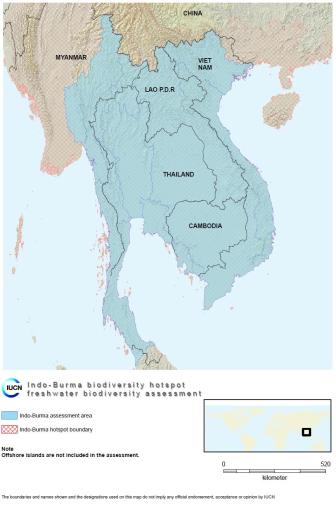
Map of the Indo-Burma Project Assessment Area. Blue = Project Area, Pink = Indo-Burma Region. Source: IUCN
The assessment looked at 2,515 known freshwater species, which included species of fish, crabs, molluscs, aquatic plants and dragonflies and damselflies (odonates), in each of the over 1,000 rivers and lakes across the Indo-Burma region. The study took place across Laos, Thailand, Viet Nam, Cambodia and parts of Myanmar (see map showing the boundaries of the project).
The study is important because it contributes to closing the information gap about freshwater biodiversity in the area that currently impairs conservation efforts. The report is also significant because it highlights the threats to people in the area from a loss of freshwater biodiversity. “Freshwater species are incredibly important to livelihoods and economies in the Indo-Burma region,” said the head of the IUCN in South-East Asia, Robert Mather. For example, the region supports the world’s largest inland capture fishery, and according to the report, “without employing a species based approach many species will be lost, leaving in place species-poor and potentially unsustainable fisheries.”
The main threat to freshwater biodiversity in the Indo-Burma region comes from ongoing hydrological development, mainly in the form of dam construction and river clearance for transport. Other threats to freshwater biodiversity in the area include pollution, habitat loss, and over-exploitation for human consumption.
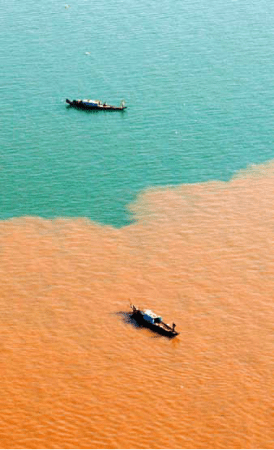
The clear waters of Tonle Sap meet the mirky waters of the Mekong River in Cambodia. Photo: Zeb Hogan.
Will Darwall, co-author of the study and BioFresh member said that “If current plans for the construction of hydroelectric dams proceed as proposed, over the next decade the proportion of fish species threatened by dams is predicted to increase from 19% to 28% and the proportion of mollusc species impacted by dams is likely to increase from 24% to 39% … There is still time for the information in this IUCN report to help large-scale developments – particularly in the energy and water sectors – to proceed in a sustainable way with reduced impact on freshwater species and the dependent livelihoods.”
Dam construction in the Indo-Burma region, particularly along the Mekong river, has been a source of international tension and the findings of this study are another reason to look for viable alternatives or at the very least proceed with caution. One option may be to designate particularly significant areas as ‘Freshwater Protected Areas’, as most conservation efforts focus on terrestrial or marine ecosystems and as a result often miss out important freshwater habitats.
The high level of biodiversity in the rivers and lakes of Indo-Burma and the valuable ecosystem services they provide to the livelihoods of millions of people in the region requires a more nuanced consideration of large-scale hydrological developments and greater protection for the area’s freshwater species and ecosystems.
A full version of the report can be accessed here.
All species assessments are also published on the IUCN Red List of Threatened Species.
One-fifth of invertebrates around the world are threatened with extinction. Of these, freshwater invertebrate species face the highest risk of extinction.
A report into the status of the world’s invertebrate species, titled ‘Spineless’, was presented last month at the IUCN World Conservation Congress. Spineless was the work of the Zoological Society of London (ZSL) and the International Union for the Conservation of Nature (IUCN) and highlights the plight of the world’s many invertebrate animals. But why exactly are these figures so worrying? Why should we care about these spineless creatures?

The Tasmanian giant freshwater crayfish is the largest freshwater invertebrate in the world. This endangered crayfish lives in the freshwaters of Tasmania’s streams and rivers and faces threats from illegal fishing, land clearing and forestry. Photo: The Australian
Well, invertebrates make up a staggering 80% of all species in the world, play crucial roles in many ecosystems and provide enormous benefits to humans. For example, the common (but declining) bee contributes billions of dollars to the global economy each year through their role as pollinators and food producers.
Invertebrate species can be found all over the world and in many different and diverse ecosystems. But from a freshwater perspective this report is particularly alarming because the vast majority of the world’s estimated 126,000 freshwater species are invertebrates. What’s more is that the report assessed some 12,000 different invertebrate species around the world and found that invertebrates living in freshwater ecosystems are the most at risk of extinction. Terrestrial invertebrate species face the next highest risk, followed by marine invertebrates.
The report used global, regional and national level analyses and assessed the threats to 7,784 freshwater invertebrates, which is about 10% of all known freshwater invertebrate species. Examples of spineless freshwater animals include insects such as dragonflies, molluscs such as clams and mussels, and crustaceans such as crayfish and crabs.

Azure damselfly. Photo under Creative Commons Licence.
The report found that freshwater molluscs are among the most threatened group of animals on the planet – over half of all sea snails and over a third of all bivalves (clams, etc.) are threatened with extinction. About a third of all freshwater crabs and crayfish also face the risk of extinction and 15% of dragonflies and damselflies are at risk.
This is a serious cause of concern because of the crucial role freshwater invertebrates play in the functioning of ecosystems and the importance to people’s livelihoods. The benefits that freshwater invertebrates provide include water filtration and quality control, nutrient cycling, developing aquatic habitat structure, pest control, and as a food source for other animals. In addition, numerous crabs and crayfish act as keystone predator species in many ecosystems keeping other species numbers under control.

Two ram’s horn snails (Planorbella trivolvis). Photo: Wikimedia commons
In terms of direct benefits to people, many freshwater invertebrates such as clams, mussels, sea snails, crabs and crayfish are of high commercial importance as food or ornaments for many people around the world. In addition to the valuable ecosystem services that these creatures provide, they also have value that it is less tangible, but by no means less significant. Many of our favourite lakes, rivers and streams would be very different places without the presence of these important but often under-appreciated animals.
One of the biggest threats to freshwater invertebrate species is water pollution caused by chemical from agricultural run-off, domestic sewage, and industrial waste as many species are incredibly sensitive to environmental change. The construction of dams, water extraction, and developments disrupting freshwater habitats, are also threatening the survival of freshwater invertebrates.
This worrying report demonstrates the urgent need to raise the conservation profile of invertebrate species, and in particular, freshwater invertebrates. The case for protecting these species needs to be made and coming up against more charismatic animals such as pandas and tigers no doubt makes the task all the more difficult in a resource constrained world. But, as outlined above, there are many reasons to protect these critters from extinction.
A full version of the report, ‘Spineless’, can be found here.
World’s largest salmon face extinction
A new report reveals that all 5 species of the world’s largest salmon group, the taimen, are threatened with extinction due to over-fishing and habitat loss.

Sakhalin taimen. This particular species of taimen featured in the IUCN list of the 100 most threatened species.
Tasty, healthy and fun to catch, salmon are one of the best known fish in the world. But a new report about the status of the largest type of salmon in the world, the giant freshwater taimen, shows that they are threatened with extinction. The report, which was prepared by a team of international scientists, was released last week by the IUCN and highlights significant challenges in the efforts to conserve these amazing fish.
The taimen are pretty remarkable creatures. They can live up to 30 years of age and have been known to grow to over 2 metres in length, making it one of the biggest of any freshwater fish in the world. But not only are these unique salmon huge, they’re also very ancient. It is commonly thought that the taimen are the evolutionary grandparents of the modern-day salmon and trout with which we are most familiar.
What is probably the most fascinating fact about these enormous salmon is their diet, or perhaps more appropriately, their prey. The taimen are also commonly known as the ‘river wolf’ because of their giant size, ferocious appetite and the surprisingly diverse array of prey that they feed on. Waterfowl, bats, adult salmon and other fish, and even unsuspecting small mammals that are unfortunate enough to wander into a taimen infested river! In many river ecosystems that they inhabit the taimen act as the top predator and as such play a crucial role in the functioning of these ecosystems.
There are 5 species of taimen and their range is largely to restricted river systems in the far-east and Siberia and one species found in the Danube in Europe. One species, the Sakhalin taimen, was also featured in the list of the world’s 100 most threatened species released last month, which was discussed here. Of these species all are either threatened with extinction, or because of their limited habitat range there is insufficient data to know for sure. The Sichuan taimen, for example, is restricted to just a single river system in China in the same region as the giant panda clings on to existence. The Korean taimen is also only found in one river system and very little is known about the status of this species.
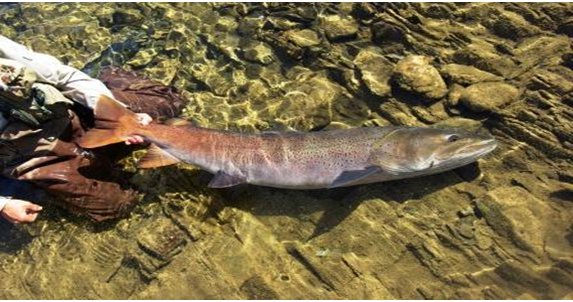
Because these salmon are so unique and rare, and because of their huge size, they are highly prized catches for sport fishing. Unfortunately, over-harvesting and over-fishing is one of the biggest threats to the survival of this fish. The other big pressure of these species is habitat destruction, whether due to logging, erosion, or damming.

Sakhalin taimen in Hokkaido, Japan. Photo: Wild Salmon Centre
The report recommends establishing freshwater protected areas in which restrictions on habitat destruction and (over-)fishing would be put in place. Freshwater protected areas are still a fairly novel idea in conservation, but could perhaps build on the recent success of marine protected areas (MPAs). The development of freshwater protected areas is recognised as one of the best ways to protect species that live in freshwater ecosystems such as free-flowing river systems and would not only be of benefit to just fish such as the taimen, but a range of other threatened freshwater species as well.
Pete Rand, chair of the IUCN Salmon Specialist Group, said the report was “sobering” and that it “underscores the need to take immediate action, at a broad, international level, if these fish are to survive into the future.” If we are to be successful at protecting these species then “we need to continue to push for establishing protected areas throughout their range”, said Rutgers University Professor Olaf Jansen, a member of the international assessment team.
New digital technologies can be used to promote biodiversity and conservation, but it can also be used to track, monitor and assess biodiversity in a much more open, democratic and engaging way then ever before. It can actually allow the public to generate data about biodiversity.

October 15 is Blog Action Day, a day where bloggers from around the world and with different interests are brought together to discuss and share ideas about one important global topic. We’ve participated for last two years, firstly writing about water in 2010, and last year writing about food. This year’s theme is ‘The Power of We’. The issue we’ll be focusing on for this year’s Blog Action Day is the use of new digital and mobile technologies to harness the ‘power of we’ to generate information about freshwater biodiversity. In a sense, we’ll be asking whether it is possible to crowd source freshwater biodiversity informatics.
In recent years there has been an explosion of new technologies and applications providing a range of exciting potential uses for conservation and citizen science. This is a topic that we’ve written about before here and here and last year BioFresh member Paul Jepson (University of Oxford) convened a ssymposium discussing the potential of mobile technologies (such as smart phones) to allow citizens to interact with their natural surroundings and contribute to the recording and generation of biodiversity data. Oxford hosted another symposium highlighting the use of emerging technologies in biodiversity science and conservation earlier this year. Several initiatives and apps already exist that allow any citizen with a smart phone to get involved such as Project Noah, iSpot, and BirdTrack.
These technologies can be used for any group of plant or animal that can be seen (or perhaps in the not-too-distant-future even heard), but have so far been more commonly used for tracking and recording birds. Can we apply it to freshwater biodiversity?

Photo: WWF/Michel Roggo
Think about a sunny day down at the local pond or by the stream. People might be having a picnic, going for a walk, or casting a line and waiting for a fish’s bite. Wouldn’t it be amazing to be able to identity all the life around you and at the same time help contribute to a growing body of information about freshwater biodiversity with just your phone? It would be great for recreational anglers, divers, water managers, or just about anyone interested in the natural world or enjoying their favourite freshwater spot.
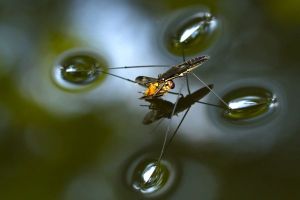
A water strider is able to walk on the surface of the water with ease by spreading it’s already light body weight. Photo: National Geographic/John Moran.
Unfortunately, one of the biggest barriers to applying this to freshwater biodiversity is that smart phones don’t particularly like water! This can make it pretty difficult to get a good idea of what’s going on below the surface. But many fish can be spotted in shallow, clear waters, and there is plenty of life on and around the surface of freshwater areas. Of course, once a fish has been caught this also solves the problem! Even divers with underwater digital cameras could take photos and upload them to a site like iSpot.
This approach is not without its problems of course. One is that this possibility is exclusive only to those who can afford this technology. Another that has been raised is the quality of data that will be generated might not always be scientifically useful.
Nevertheless, these technologies really do open the way science and data generation can be conducted and as technology becomes cheaper it will allow the whole process of citizen science to become even more open and democratic. And it’s not always just about the science either. These technologies can be a fantastic way of increasing people’s enjoyment and interaction with the natural in world in which we live.










 The Freshwater Blog