Come and meet your lake: citizen science across Europe’s lakes
Nearly half of Europe’s lakes fail to reach good ecological and chemical status, and scientists can’t be on every shore every day. Citizen science offers another way of watching. But what can volunteers record that is useful, how do you invite people who have never watched their lake before, and will they keep watching once a project ends?
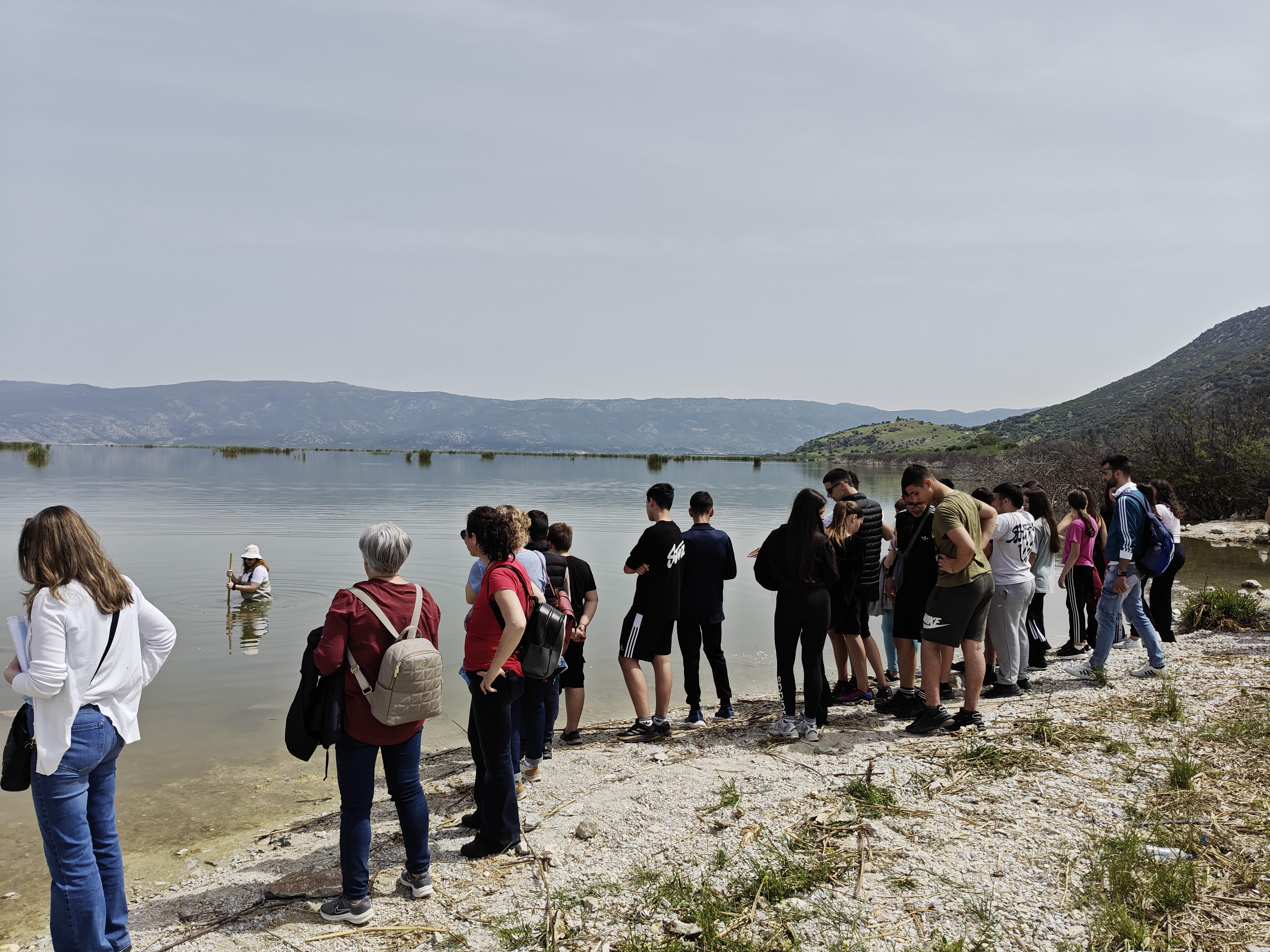
In this fourth episode of the FutureLakes podcast, we start at Lough Gur in County Limerick, Ireland, with a medieval legend from Brian Collopy (Lough Gur Visitor Centre) and the lake’s summer algal blooms from Professor Catherine Dalton (Mary Immaculate College). At Lake Karla in Greece, ecohydrologist Dionissis Latinopoulos (Democritus University of Thrace) describes a first BioBlitz that invited people to “come and meet your lake”.
Ecologist Kit Nemeth (UK Centre for Ecology & Hydrology) demonstrates the iNaturalist app. We also hear from a birdwatcher at Marker Wadden in the Netherlands and from Heikki Mäkinen (Vesijärvi Foundation) in Finland, and Dionissis describes what divers found in the clearing Kartuzy lakes in Poland.
Dionissis also introduces a catalogue of about 170 citizen science schemes for lakes, gathered so that each lake can choose one that suits its own community. As he puts it, “you cannot copy and paste citizen science”.
The FutureLakes citizen science catalogue is free to download here.
FutureLakes is funded by the European Union under the EU Mission: Restore our Ocean and Waters.
Presented and produced by Rob St John, with Creative Commons music by Scott Buckley.








Comments are closed.