What we talk about when we talk about uncertainty

2014 has been the wettest UK winter since records began (photo: Creative Commons)
In recent weeks, the south of England – in particular the Somerset Levels and the Thames Valley – have been subject to the worst floods in living memory (see for example). Repeated weather systems moving in from the Atlantic Ocean have brought heavy, sustained rainfall, which have overwhelmed watercourses and flooded surrounding fields, roads, railways and houses.
Regardless of whether these unprecedented floods are directly caused by climate change (the Met Office have confirmed that this has been the wettest UK winter on record), they have caused two fascinating social effects. First, as freshwater breaks its usual bounds and becomes a risk to life and livelihood, a wider group of people become interested in how our water should be managed, and why. Second, we begin to encounter complex ideas of uncertainty in understanding the drivers and causes of such flooding events and their interaction: heavy, sustained rainfall; urbanisation on the flood plain; silted, hydrologically inefficient (but perhaps, biodiverse) river channels. What are the main drivers of these floods? How do they interact? And what measures should we prioritise for future management?
Scientific research could be described as an attempt to reduce our uncertainty about how the world works. However, the idea of uncertainty has the potential to be interpreted as a deficiency in research – ‘not knowing’ or ‘not being sure’ – particularly in debates over future trajectories of climate change. The word ‘uncertainty’ in daily language may carry negative connotations. However, scientists are used to working within margins of error – 95%, 99% – to make confident statements about the world (it could be argued that nothing in life is 100% certain).
Such uncertainties – however small – make it difficult to talk about science to the public and to policy makers: people are (understandably) uncomfortable with dealing with uncertainty when the outcomes may affect their livelihoods and work. Interestingly, a recent report on climate change suggests that the idea of ‘risk’ (as used by the insurance industry) may be more successful in communicating ideas of environmental uncertainty.
The idea of trust is important here too – particularly from the public – trust that scientists and policy makers are making appropriate decisions about the environment. Here, (potentially uncertain) scientific information doesn’t act in a vacuum, instead as part of a complex network of social, cultural and political values held by the public: the blame and responsibility for events such as UK flooding potentially influenced as much by personal experience and media representations of their impact as any direct scientific advice.
Moving beyond a simple (and mostly discredited) ‘deficit model’ of science communication, it seems more important than ever that research on such potentially catastrophic environmental events can engage people to best frame research outcomes (including the uncertainties) to help the public and policy makers understand and make decisions about environmental stressors and their impact on daily life.
Without directly working on the UK floods, the MARS project is designed to study such uncertainties in how freshwaters respond to stress. Environmental uncertainty is difficult to communicate, usually reduced to a set of possible scenarios over how the environment may react and alter to different stresses. In this project, we want to continue to the work of BioFresh to use this blog as a place to ‘get behind the scenes’ of MARS’ research to outline and discuss the issues, uncertainties and potential impacts of our work.
We see blogs as a great conduit through which to talk about these themes. Through a set of features on different stressors, different environments to be studied, interviews with our scientists and the potential implications of our work for water policy and environmental management, we will look to find ways to talk about uncertainty and risk in clear terms, and to encourage feedback and debate.
Some interesting links:
‘Making sense of uncertainty: why uncertainty is part of science’ Sense about Science (2013)
‘Handling uncertainty in science’, Professor Tim Palmer, The Royal Society ‘Science Sees Further’
‘Communicating risk in a soundbite, a guide for scientists’ Science Media Centre
Pidgeon N and Fischer B (2011) ‘The role of social and decision sciences in communicating uncertain climate risks’ Nature Climate Change 1: 35-41
Jacqueline McGlade introduces the UNEP Live vision
Last week’s Citizen cyberscience summit in London was a roller coster of inspiring ideas being put into action.
In the science and policy session, Jacqueline McGlade delivered this video presentation on the vision and concept of the UNEP Live platform, launched on 16 January 2014. This chimes with the vision of the BioFresh platform, which members of our community have created to make freshwater biodiversity information and data both accessible and open.
Introducing the MARS project: Part 2
Following last week’s Part 1 of the Introduction to MARS, we’ll now look at how the project aims to support and strengthen freshwater policy making across Europe.
Providing support for freshwater policy and management at three different scales
MARS aims to yield new and important results for water managers and environmental policy makers across Europe. In particular this work will contribute to strengthening the Water Framework Directive, the key piece of European legislation implemented in 2000 to protect and improve the quality of Europe’s freshwaters.
As this ten year review of the Water Framework Directive (2010) by MARS co-ordinator Daniel Hering and colleagues states, a key challenge for future water policy is to deal with the impact of emerging stressors caused by climatic and social change.
In particular, Hering and colleagues highlight the need for studies on the ability of freshwater ecosystems to absorb environmental stress (a process known as resilience). Similarly, the paper suggests new studies on the different trajectories that ecosystems may take in response to stress when restoration management is undertaken. However, at present the Water Framework Directive does not mention the impact of multiple stressors on freshwater ecosystems.
With this shortfall in mind, MARS has been designed to give useful outputs to support freshwater policy at three key scales: individual water bodies, river basins or catchments and the European continent.
Questions such as ‘what will be the consequences of greening Europe’s agriculture?’ and ‘how does climate change impact on the multiply stressed ecosystems?’ will be investigated at all scales, allowing water managers and policy makers to make decisions over mitigating stressors under a number of different future scenarios.

Experiments at the water body scale
At the smallest scale, experiments will be carried out to simulate multiple stressors and measure the response of an ecosystem. In lakes, these experiments can be carried out using mesocosms, which provide a small body of water that can be closely controlled and monitored when different stressors are simulated. In rivers, experiments can be carried out along artificial channels, where variables such as flow volume, flow speed and water temperature can be controlled. In both sets of experiments, the impact of simulated stressors such as extreme rain or water scarcity can be observed.
Computer modelling at the river basin scale
At the river basin or catchment scale, computer models will be run to simulate the impact of stressors such as climate change or land use change (especially relating to flow alterations and water scarcity ) on variables such as water nutrient levels and temperature . These results will then be linked to the results on ecosystem functioning at the smaller, experimental scale. MARS will study 16 river basins across Europe, including the Thames, Ruhr, Elbe and Lower Danube.
Bringing together data at the European scale
At the largest, European scale, MARS will use data gathered from projects such as WISER in the establishment and monitoring of the Water Framework Directive to study and establish large-scale relationships between freshwater biodiversity, ecosystem functioning and ecosystem services to humans.

MARS: providing new information on complex freshwater environments to aid their conservation and restoration
These are complicated issues to which there are no simple answers. MARS aims to provide new information on how multiple stressors impact freshwater ecosystems in an increasingly complex and uncertain world faced with climatic, environmental and social change.
This information will be provided at the three scales useful to water body and river basin managers and European policy makers through a range of tools and wiki information system. It is intended that the project will help foster collaboration to promote freshwater ecosystem conservation and restoration at a range of scales, from individual rivers and lakes up to the European continent.
Over the coming weeks, we’ll transition the blog from BioFresh to MARS over a series of posts linking the two projects, giving more detailed information about many of the points raised in these two posts, and looking to the future.
The first MARS meeting in Mallorca

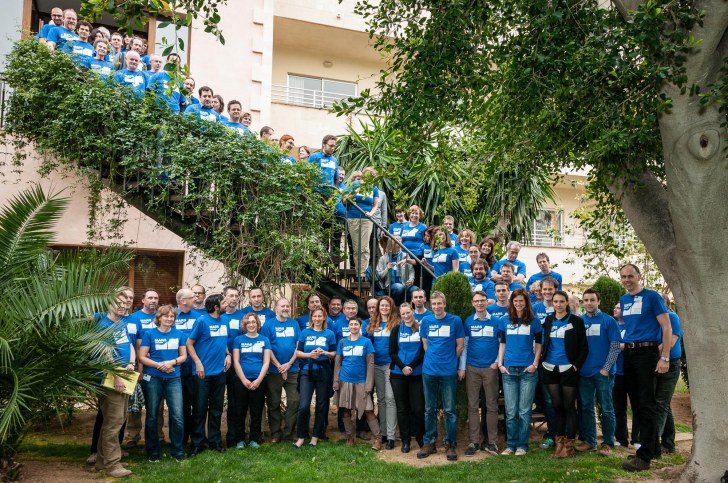
MARS partners at the Mallorca meeting
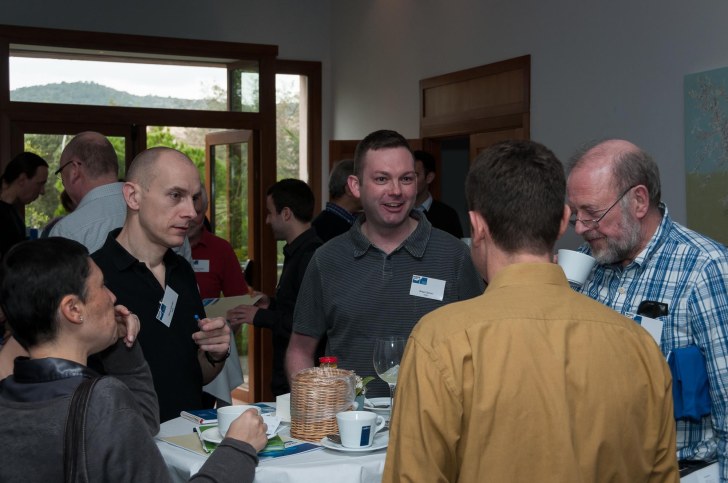
This week, the MARS project hosted its first meeting on the Spanish island of Mallorca, bringing together 100 scientists from 24 partner institutions in 17 countries.
Over the course of four days (17 – 21 February), the cross-disciplinary team – including aquatic ecologists, hydrologists, chemists, economists, engineers and software developers – came together to discuss and plan MARS’ work for the next four years.
The meeting will help shape and design the tools for future water management that the project will produce.
We’ll report back on the meeting over the next few weeks.

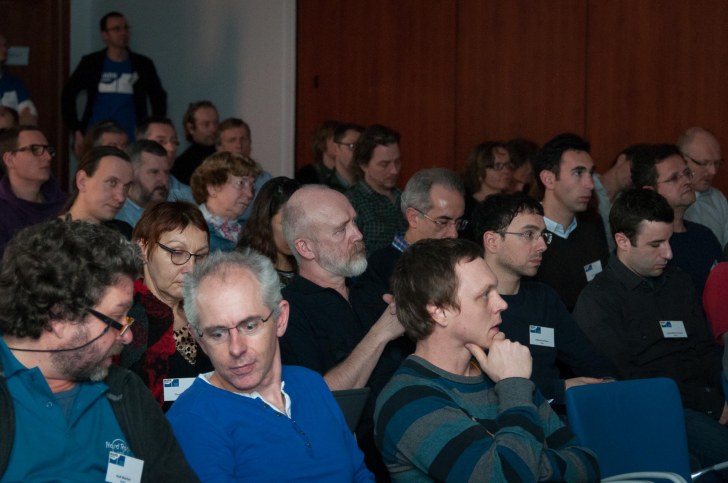
Project leader Daniel Hering presenting to the Mallorca meeting
Introducing the MARS project: Part 1
Over the coming weeks, the BioFresh blog will be changing. As the BioFresh project draws to a close with the ‘Water Lives’ symposium in Brussels, the blog will transition to the new MARS project.
The content will still focus on issues relating to freshwater ecosystem science, conservation and policy, but will be run by MARS, and it will feature news and information on the project’s development from February 2014.
Above is a video explaining the background of MARS, featuring project co-ordinators Daniel Hering and Christian Feld at the University of Duisburg-Essen in Germany, both of whom worked on the BioFresh project.
 What is MARS?
MARS (Managing Aquatic Ecosystems And Water Resources Under Multiple Stressors) is a new collaborative European Union Seventh Framework project which aims to identify and understand how different stressors – for example pollution, water abstraction, and habitat fragmentation – impact freshwater environments, both now and in the future.
What are stressors?
Stressors are biological (biotic, e.g. pollution) or non-biological (abiotic e.g. water abstraction) processes that have negative impacts on organisms and communities in an ecosystem. These can be naturally occurring (e.g. flooding) or man-made (e.g. habitat fragmentation).
European freshwaters are subject to a complex set of stressors resulting from human activity. As MARS partner Steve Ormerod and his colleagues outlined in a 2010 article in Freshwater Biology (‘Multiple Stressors in Freshwater Ecosystems’) human impacts on freshwater ecosystems typically alter more than one environmental stressor.
For example, urbanisation might affect the water quantity and pollution content of runoff into a river; increase the risk of flooding; reduce the amount of habitat available for different organisms; and increase the ability of invasive species (such as Chinese mitten crabs) to disperse.
Freshwaters – lakes, rivers, estuaries and groundwater – can be polluted, abstracted, altered and fragmented by human activity, often with unpredictable results for ecosystem health and function. In particular, the interaction of multiple stressors is poorly understood and documented.
In a 2010 paper ‘Multiple stressors in coupled river-floodplain ecosystems’, BioFresh leader Klement Tockner states ‘Predicting and understanding the effects of multiple stressors is one of the most important challenges presently facing ecological studies.’
Interactions of multiple stressors
In some cases stressors may cancel each other out (or act ‘antagonistically’). For example, a 1996 study by Helmut Klapper and colleagues suggests that organic pollution and eutrophication may neutralise acidification from open cast mining in German lake ecosystems.
On the other hand, stressors may interact to worsen their individual effects (in the MARS project, this is termed as the stressors acting ‘synergistically’.) For example, a 2011 study by Anika Wagenhoff and colleagues suggests that the build up of sediment pollution and nutrients can co-determine the diversity and health of invertebrate and algae communities in New Zealand streams.
Stressors, ecosystem function and ecosystem services
Stressors often negatively impact the organisms living in freshwaters – plants, fish, insects and microorganisms – directly. These negative impacts on organisms may then affect the functioning of the ecosystem, for example the natural purification of watercourses by photosynthesising plants. In turn, this change in ecosystem function may alter the provision of ecosystem services to humans, affecting services such as drinking water supply or fish availability for food.
For more information on these interrelations, this 2010 chapter by Rob Haines-Young and Marion Potschin at Nottingham University provides a good introduction
—
In short, the MARS project is looking to untangle how different stressors interact and impact the biodiversity, function and ecosystem service provision of European freshwaters. This work will support stronger freshwater conservation and restoration initiatives at the water body, catchment and continental scale, in the context of ongoing climatic and social change.
Part two of this Introduction to MARS will explain how the project will study the impact of multiple stressors on freshwater environments at a variety of scales in order to inform and support European freshwater policy.
You can access the MARS website here: http://mars-project.eu/
For more information: there is an open-access set of journal articles related to the themes of MARS available online from a special issue of Freshwater Biology, published in January 2010.
Water Lives Symposium: successful science-policy dialoguing
Last week’s Water Lives symposium in Brussels was deemed a great sucess by all involved. The wonderful museum of the Belgian Institute of Natural Sciences offered a setting that took participants out of their everyday work environment and created the space to discuss issues of mutual interest and concern. Among these were the value of riparian corridors for maintianing biodiveristy in a changing climate, the importance of south-eastern Europe for freshwater biodiversity conservation (highlighted in new maps presented of EU freshwater biodiveristy), and the politics and scientific unease surrounding the ecosystems services concept.
The key themes and messages of the symposium are still being consilidated and prepared. A short video sumamry and longer podcast will be released soon and the video-streaming of first day’s sessions will be made avialble. In the meantime here are some photos which capture something of the essence and spirit of the symposium.
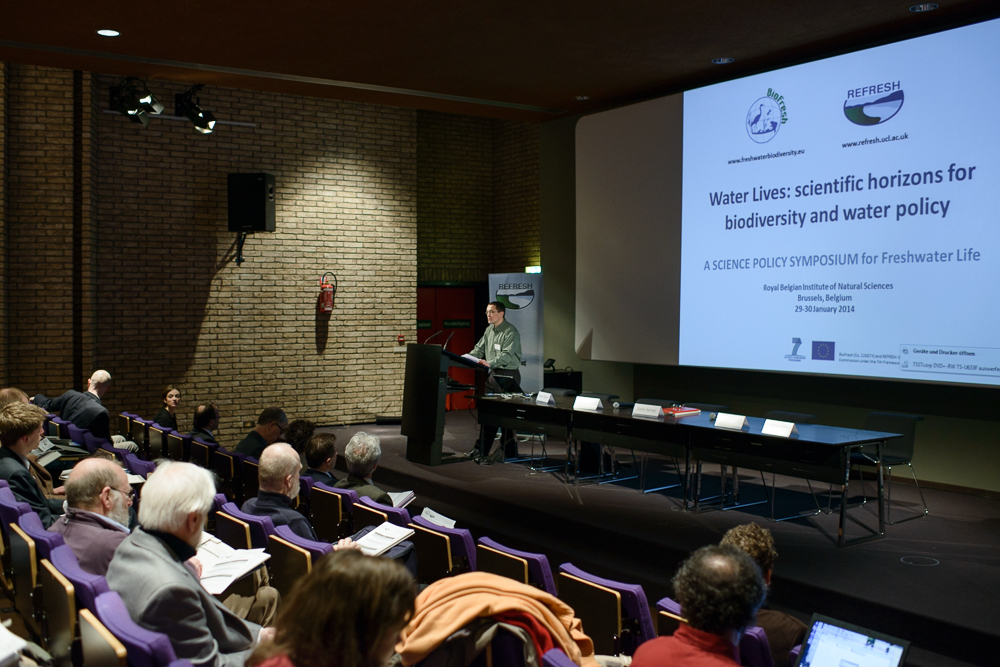
Photo: Ria Mishaal
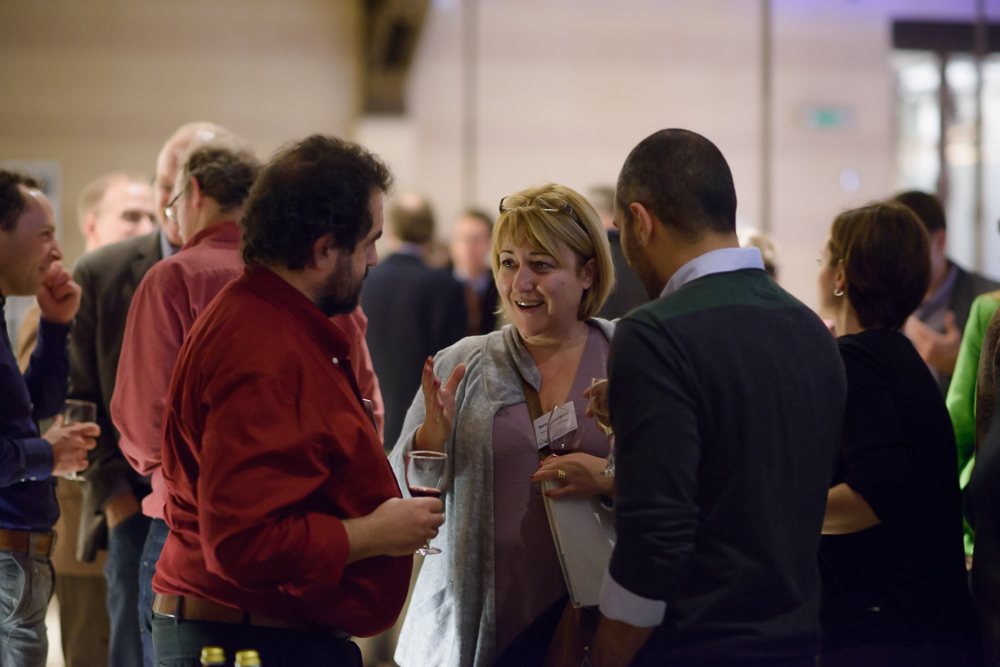
Photo: Ria Mishaal
- Photo: Ria Mishaal
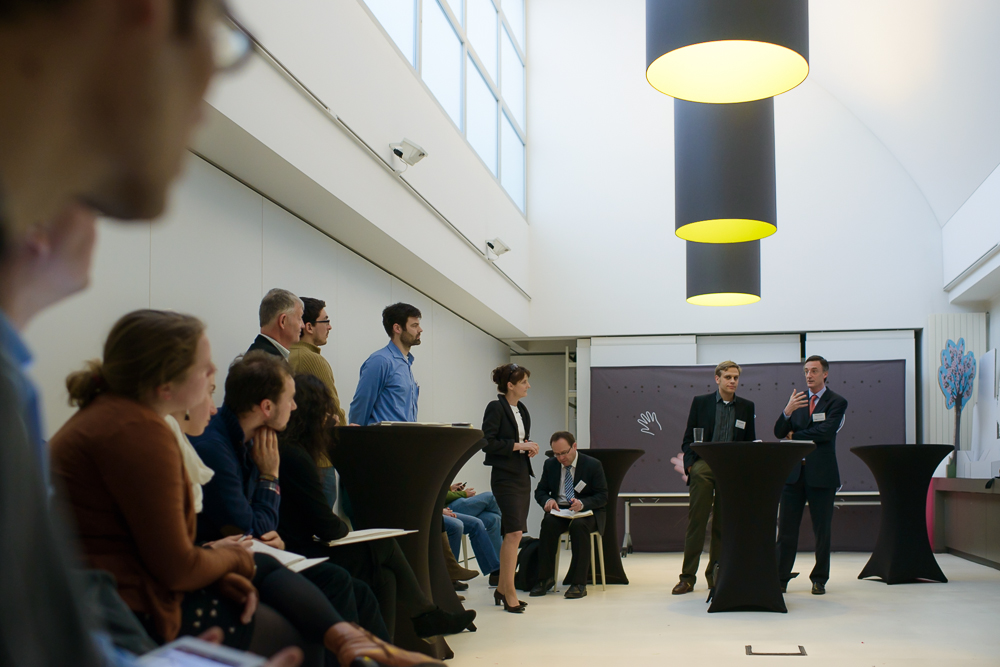
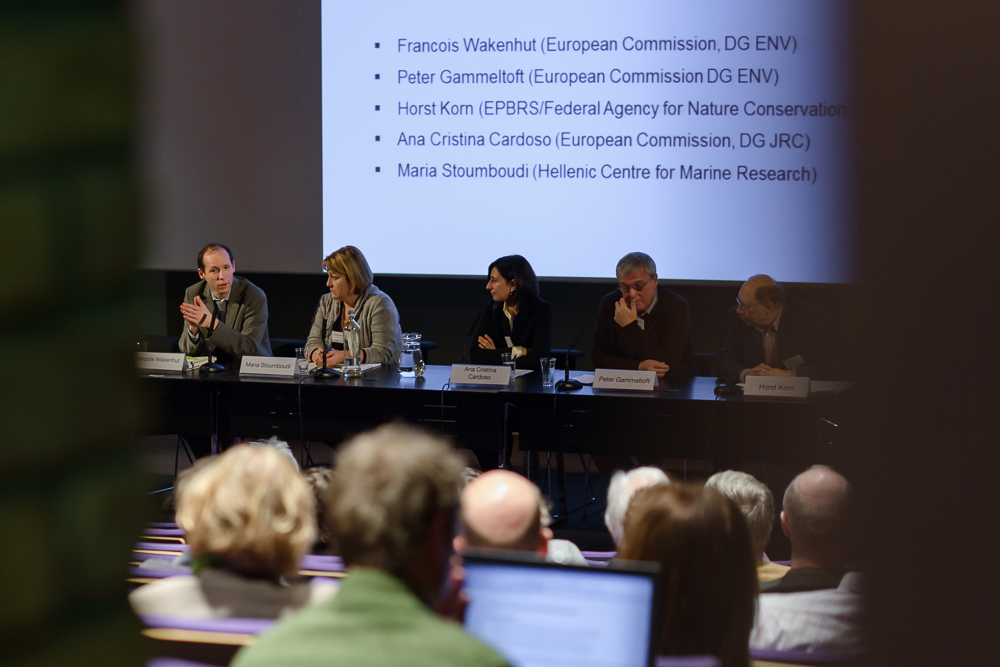
Photo: Ria Mishaal

Photo: Ria Mishaal
Launch of the first online Global Freshwater Biodiversity Atlas
 A new online Atlas of freshwater biodiversity presenting spatial information and species distribution patterns will be launched today at the land-mark Water Lives symposium bringing together European Union policy makers and freshwater scientists.
Freshwaters are incredibly diverse habitats: they cover less than 1% of the Earth’s surface yet are home to 35% of all vertebrate species! Sadly, freshwater life is declining at an alarming rate faster than any other component of global biodiversity.
A challenge for policy is how to integrate protection of freshwater life and the ecosystem services it provides with real and pressing demands on freshwater resources from the energy, food and sanitation sectors.
This new Atlas is a response from freshwater scientists to this policy challenge. It provides policy-makers, water managers and scientists with an online, open-access and interactive gateway to key geographical information and spatial data on freshwater biodiversity across different scales. The Atlas is a resource for better, evidenced-based decision making in the area of water policy, science and management.
The online Atlas adopts a book-like structure allowing easy browsing through its four thematic chapters, on I) Patterns of freshwater biodiversity, 2) Freshwater resources and ecosystems, 3) Pressures on freshwater systems and 4) Conservation and management. All of the maps are accompanied by a short article with further contextual background information. The interactive map interface allows easy switching between maps, navigation and zooming and the display of information attached to each map feature. Also, unlike a conventional printed atlas this on-line Atlas can be constantly expanded and up-dated as new maps and data become available.
The Atlas is an output of BioFresh – an EU-funded project that is putting together the scattered pieces of information about life in our rivers and lakes, to better understand, manage and protect our freshwaters for generations to come. It is edited by a pan-European group of freshwater science and conservation experts from 12 research institutes and supported by key international organisations active in the field of freshwater biodiversity research and conservation, namely GEO Biodiversity Observation Network (GEO BON), the International Union for Conservation of Nature (IUCN), the Global Water System Project (GWSP), Conservation International (CI), Wetlands International, The Nature Conservancy (TNC) and the World Wildlife Fund (WWF).
Vanessa Bremerich of Leibniz Institute of Freshwater Ecology and Inland Fisheries in Berlin, and the Atlas developer believes that
“The Atlas is going to be an important visualisation tool, facilitating the discovery and increasing the accessibility of important scientific research results in the field of freshwater biodiversity”
Dr Astrid Schmidt-Kloiber at the University of Natural Resources & Life Sciences, Austria, one of the lead Editors of the Atlas, underlines the community aspect of the project:
“it is a great way for scientists to increase the visibility and impact of their science. We invite scientists to contribute their research results to the Atlas.”
Dr Aaike de Wever of the Institute of Natural Sciences, Brussels stresses the open access principles of the Atlas.
“Not only do we offer maps and articles on the Atlas under a creative commons license, also the whole infrastructure was developed using open source technologies. This means that almost anything in the Atlas can be reproduced and shared with appropriate acknowledgement.”
Dr Will Darwall, Head of the IUCN Freshwater Biodiversity Unit in Cambridge believes that the maps in the Atlas have great significance for freshwater conservation.
“The Atlas will be of immense value to NGOs, policy-makers and conservation planners working to identify key areas of freshwater biodiversity, create freshwater protected area networks, minimise the harm caused by large-scale land use projects such as dams or to meet conservation targets such as the Aichi Biodiversity Targets.”
Lastly Dr Paul Jepson of the School of Geography and the Environment, University of Oxford reflects that “Over the centuries atlases have proved a powerful format for visualising spatial information as a tool for learning and decision-making. It is easy to take them for granted and over-look the value and significance of Atlases. I for one am proud to be associated with a project that is engaging with technology to refresh the atlas format for the 21st century.”
Follow the Water Lives science-policy symposium on live video stream
Join the first day (29 Jan) of the land mark Water Lives science-policy symposium by live video stream.
Scientists from the BioFresh and ReFresh projects will be discussing with EC and other policy makers new scientific horizons from freshwater biodiversity and water policy.
The video streams will be live at 10.30 am CET for scene setting key-notes by Prof Klement Tockner Head of the Leibniz- Institute of Freshwater ecology, Birgit de Boissezon from DG RTD at the European Commission, Prof Brian Moss from the University of Liverpool and Hans Bruyninck from the European Environment Agency.
The video stream will take a lunch break 1-2pm CET, and then be open for the session on Future Visions for Freshwater Ecosystems comprising six presentations by leading freshwater scientists and conservationists from across Europe. See the symposium web-site for full details and links to the live stream.
Biofresh scientisits and our colleagues at Refresh are finalizing presentations and arrangements for the land mark symposium on scientific horizons for biodiversity and water policy, which will be held in Brussels on Wednesday and Thursday this weeks.
The symposium represents a cullmination of these two major EU research investments that are designed to address some of the challenges in implementing EU policies designed to protect freshwater ecosystems and to ensure their sustainable use. A particular focus will be the EU 2020 Biodiversity Strategy and the Water Framework Directive.
The symposium will bring together policy makers and stakeholders from the water, energy and conservation sector, NGOs, the scientific community and selected experts. The aim is to generate recommendations for policy making and future research. More generally the hope is that this symposium will raise the profile of freshwater biodiversity among EC policy-makers.
Please check out the symposium web-page for details of the topcis we will be discussing. If you can’t make the symposium why not follow our live feed on the first day and follow us on twitter (@biofreshproject) and check this blog for news and updates. In addition we will be producing a podcast of symposium highlights for later listening.
Interview: Michel Roggo’s tops tips for freshwater photography
|
We conclude out three part series with freshwater photographer and explorer Michel Roggo. Many readers of the Biofresh Blog are freshwater scientists who want to take better pictures of freshwater life. We asked Roggo for his top tips. This is what he had to say. Good photography is all about emotion “Oh my goodness, this is not an easy question! In photography, it’s all about emotion. It’s the same as in music or painting. What I do to improve my photography is working on my sensitivity for the beauty in general: by visiting exhibits, not only of photography, by listening music, and a lot of classical music. When I was working with the Brown bears of Kamchatka, I couldn’t really sleep at night. I was just to excited. So I was listening Tchaikovsky on my iPhone. I’m sure it helped me to go out to the river the next day and to make better photographs – it was really all about Russia!”  Brown bear fishing, Kamchatka, Russia Digital cameras make photography much easier today “In underwater photography, you need some basic technical knowledge. With the digital technology it’s much easier than it was in the film days. You can shoot a lot, control the results on location, and change the settings of the camera. And you can shoot even without flashlight on higher ISO (which refers to how sensitive a camera’s sensor is to light, with higher), with good results.” The water can never be clear enough “Specific to freshwater photography is the need for clear water. It can never be clear enough. I waited for weeks and weeks for rivers to clear up after heavy rainfall. And even with clear water, you can never be close enough to your subject, and you need a wide angle lens. It’s easy for plants or stones or some insects like caddis fly larvae, but not easy for fish, and close to impossible for let’s say a beaver or a big saltwater crocodile. Take a look at the image of the sockeye salmon: they where touching the housing all the time, I was really extremely close, working with a 15 mm lens.” 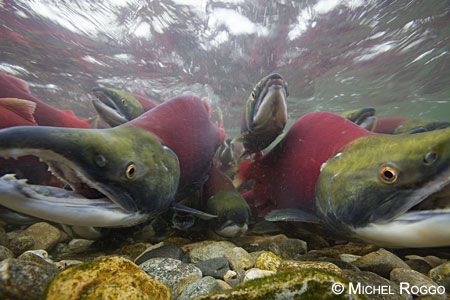 Sockeye salmon, Adams River, British Columbia, 2010 You don’t have to travel far “But there is some good news for the keen freshwater photographer: you don’t have to travel a lot! Try first the creek or pond or lake on your doorstep. You can do this without diving. I do a lot of underwater photography in small creeks or springs without entering the water, just by holding an underwater housing into the water, without seeing what I’m actually shooting. That’s fun, and sometimes you get great results, as for example these autumn leaves in a small Swiss river. 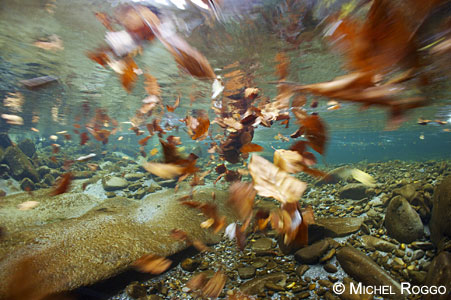 Autumn leaves in an alpine river, Fribourg, Switzerland. Take an underwater photography class So there are some simple ways to start underwater photography. But if you really want to do this seriously, one of the best ways to build your skills is to attend an underwater photography workshop or take a class. |







 The Freshwater Blog