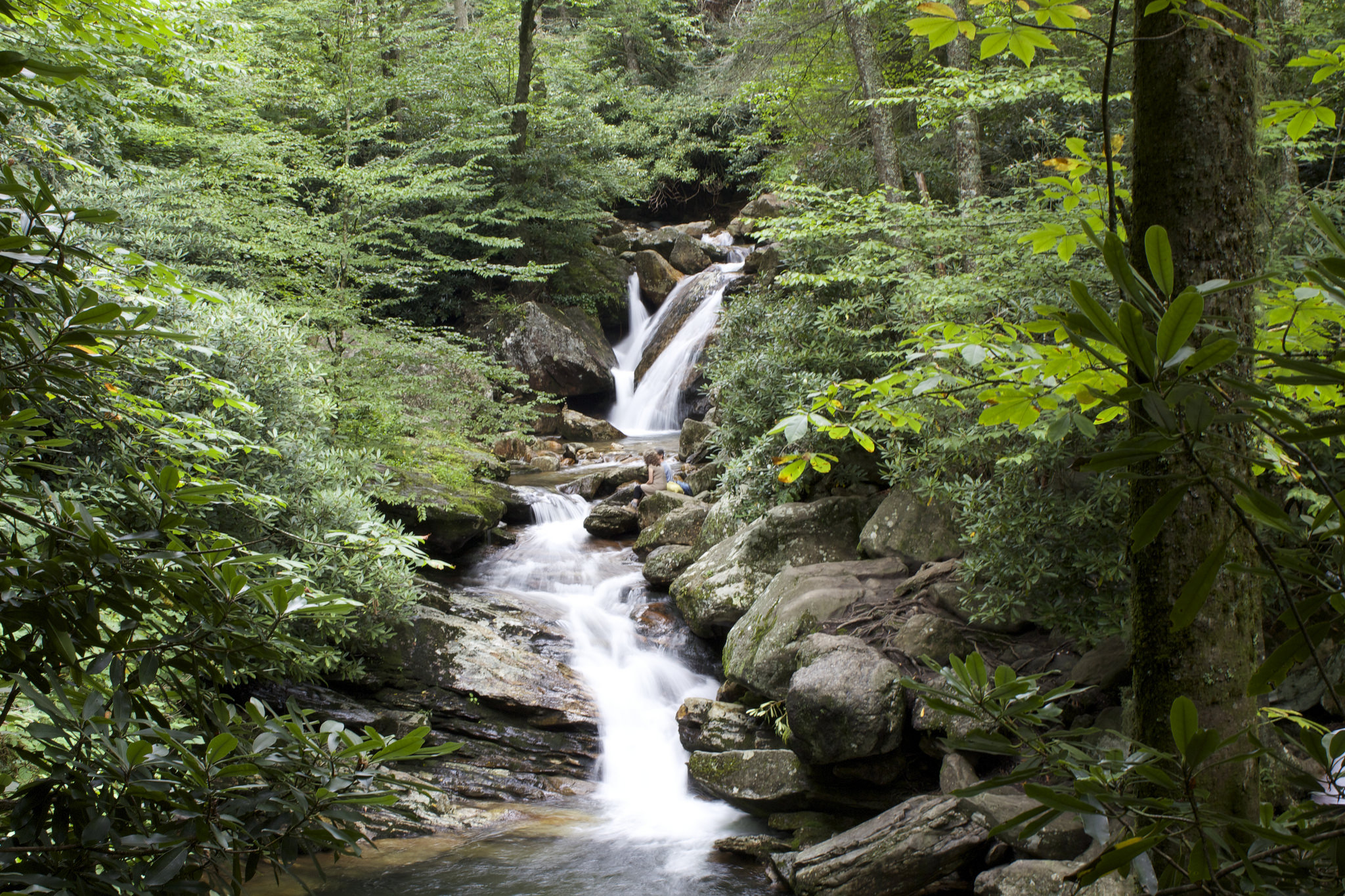
A North Carolina forest stream. Image: Jenn Deane | Flickr Creative Commons
It has long been known that nutrient pollution – the overloading of chemicals such as nitrogen and phosphates from sources such as agricultural fertilisers – can have potentially harmful effects on freshwater ecosystems. In particular, eutrophication – the rapid growth of algal ‘blooms’ – can starve the aquatic environment of light and dissolved oxygen, prompting shifts in the form and function of the ecosystem, and potentially causing collapses in populations of other freshwater plants and animals.
However, a new study published in the journal Science by a team of researchers from the University of Georgia, USA suggests that nutrient pollution can also prompt significant losses of carbon from forest stream ecosystems, which in turn reduces their ability to support aquatic life.
The study, by Amy D. Rosemond and colleagues, shows that when nutrient levels are moderately increased in the stream, the residence time (i.e. the amount of time it remains in the stream) of organic carbon molecules mineralised from leaf litter and woody debris drops by around a half. This is because increased nutrient levels stimulate microbes to break down leaves and woody debris at a quicker rate, causing carbon to be lost to the atmosphere as carbon dioxide.
Whilst nitrogen and phosphorous are important in catalysing this process of microbial decomposition, when their levels increase, decomposition occurs at such a rate that carbon is quickly lost from the stream ecosystem. This finding is significant because carbon derived from such forest debris provides a year-round supply of potential energy to aquatic organisms, particularly in forest stream ecosystems where carbon available through algal growth is limited by a lack of light. Similarly, the finding runs counter to the commonly observed increase in aquatic carbon levels in other freshwater ecosystems as a result of algal blooms following nutrient overloading.
The team carried out experiments in small, headwater streams running through forest in North Carolina, USA. The first experiment ran for two years on two streams, and the second for three years in five streams. Different combinations of nitrogen and phosphorous were added to some of the streams to simulate different land use scenarios, whilst other streams were left untouched as controls.
Results from the experiments showed that median carbon loss rates from the streams increased by 1.65 after moderate concentrations of nitrogen and phosphorous were added, and that the residence time of the carbon was roughly halved from 167 days under reference conditions to 75 days with nutrient addition. Similarly, leaf litter levels were almost eight times higher in the unaltered streams after one year, in comparison to those where nitrogen and phosphorous had been added.
Rosemond and colleagues suggest that increased losses of carbon from aquatic ecosystems as a result of nutrient pollution is likely to be happening unobserved in freshwaters across the world. However, because the process doesn’t have an easily visible result – as algal blooms do – it is largely unreported, and its effects on ecosystem services and ecological health and functioning understudied. Perhaps ironically, leaf and wood debris in freshwaters and the microbes that live on them are important in taking up and regulating low levels of nutrients from the aquatic ecosystem. As leaf and wood debris is decomposed more quickly as a result of nutrient overloading, the ecosystem’s capacity to take up further nutrients is decreased.
By providing new and previously unreported information on the interlinking of nutrient and carbon cycles in forest stream ecosystems, this study suggests that environmental policies designed to tackle nutrient pollution should not solely focus on its effects on algal blooms and eutrophication. Instead, it seems that there is a pressing need to further study how carbon is lost from aquatic environments as a result of nutrient pollution, and then to implement suitable policies and indicators to help mitigate its effects on freshwater ecosystems.
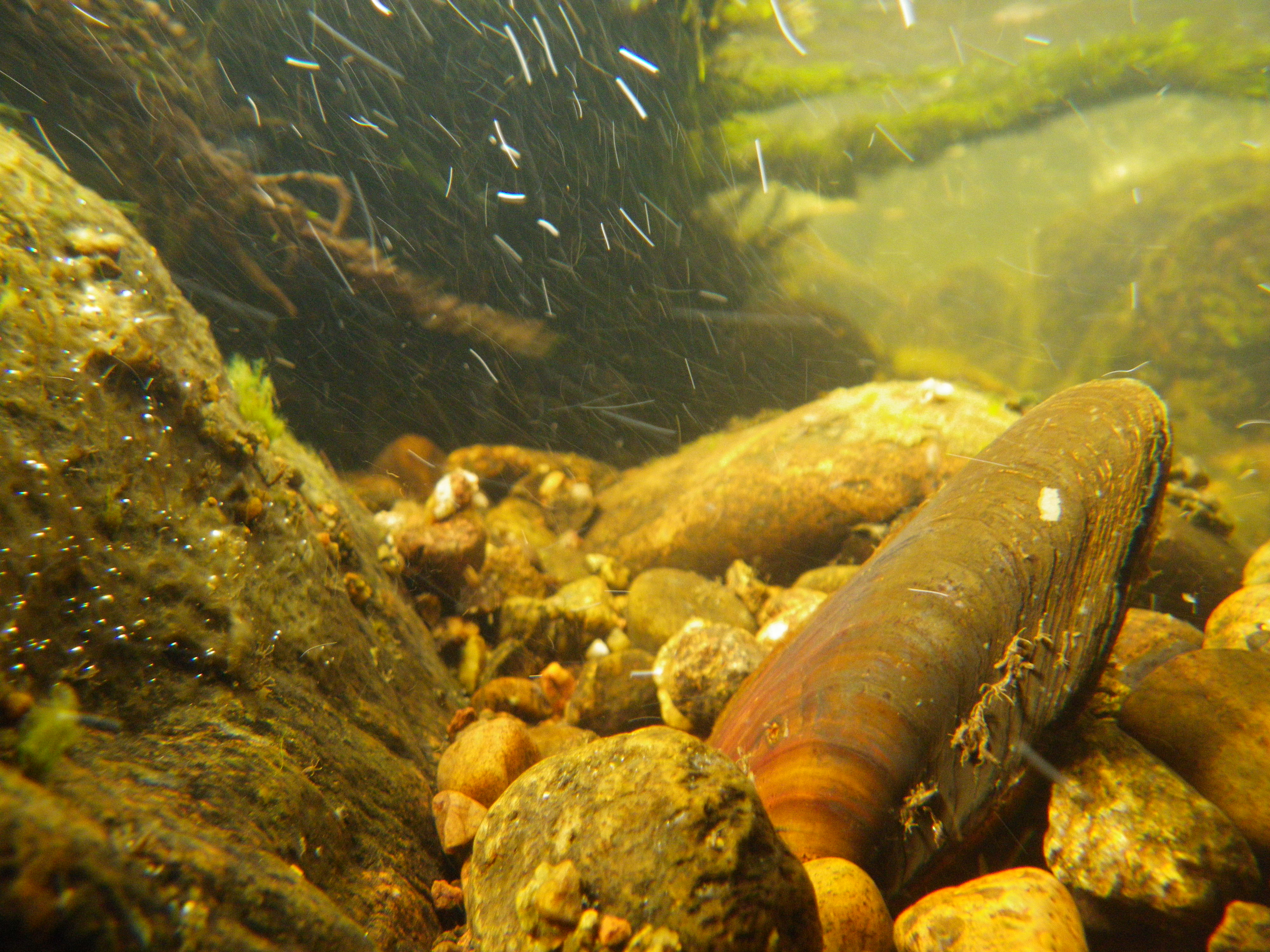
An adult freshwater pearl mussel on a stream bed. Image: J Webley / SNH
Freshwater pearl mussels are one of the most fascinating European freshwater species: with an extremely long life span (around 120 years is possible) and a complex reproduction process that relies on larvae which attach to the gills of fish. We spoke to Jackie Webley from the EU LIFE project Pearls in Peril about these special creatures and their unique ecology last year.
Freshwater pearl mussel conservation is a complicated process, as the mussels require different habitats at different stages of their life cycle. As Clemens Gumpinger, Christoph Hauer and Christian Schedern – editors of a recent special issue of the freshwater ecosystem journal Limnologica – put it, “an appropriate freshwater pearl mussel habitat must meet two seemingly diametrically opposite requirements: there must be stable substrates that keep both juvenile and adult mussels from being swept away, and at the same time an unclogged interstitial (i.e. the gaps in the sediment substrate) that provides for permanent oxygen supply.” As such, freshwater pearl mussels are particularly sensitive to changes in ecosystem habitats, particularly those caused by humans either clearing, covering or clogging up sediments on river beds.
The special issue in Limnologica – a journal edited by MARS leader Daniel Hering – brought together a diverse set of papers on the theme of “The current status and future challenges for the preservation and conservation of freshwater pearl mussel habitats”, which are available for free here. To find out more about the special issue, and freshwater pearl mussel conservation in general, we spoke to co-editor Christoph Hauer from the University of Natural Resources and Life Sciences in Vienna.
Freshwater Blog: Hi Christoph: why did you choose to focus on freshwater pearl mussels for this special issue?
Christoph Hauer: Freshwater pearl mussels are one of the best examples for an umbrella species in river systems, This depends on their long lifespan (up to 120 years) and the complexity in reproduction (including host fish) and habitat use for various life stages.
What are the main threats to freshwater pearl mussel populations, and what is being done to address these threats?
The main threats to pearl mussels are – as for most aquatic organisms – human alterations to freshwater habitats. To address these threats we need greater awareness about the problems in public, legal and scientific spheres. Here, the special issue of Limnologica might contribute to raising awareness amongst stakeholders involved in and affected by river management.
Tell us about the special issue of Limnologica: who is involved in it, and what are some of the most interesting findings and arguments?
Contributions from across Europe are featured in the special issue. Although some specific topics on pearl mussel life-cycles and related problems are addressed (e.g. recruitment), a key trend was that the type and consistency of sediments in mussel habitats is one of the biggest issues for their conservation.
Another key concluding outcome was the need to address scale in defining freshwater pearl mussel processes and threats. Frequently, mussel habitats are investigated on a very small-scale. The decisive boundaries for these mussel habitats, however, are often determined or influenced on a larger (e.g. catchment) scale. The need for addressing such issues of scale in freshwater pearl mussel habitat studies was highlighted in the special issue several times.

Euryrhynchus amazoniensis, a widespread Amazonian species (Image: W Klotz)
Guest post by Kevin Smith of the International Union for Conservation of Nature.
“I woke up this mornin’ and all my shrimps was dead and gone” is a line sung by the legendary blues artist Robert Johnson back in 1937. It’s a line that sadly resonates today according to new research led by the Oxford University Museum of Natural History and the International Union for Conservation of Nature (IUCN), recently published in the journal PLOSONE. Researchers found that almost a third of freshwater shrimp species, a group which support the livelihoods of some of the world’s poorest communities, are threatened with extinction.
Over the past three years the team – including researchers from the UK, Australia, Austria, Brazil, Indonesia, Mexico, Singapore and Taiwan – assessed the risk of extinction for the world’s 763 freshwater shrimp species using the IUCN Red List Categories and Criteria. They found that 27.8% of species faced pressures severe enough to classify them as ‘threatened’. These included urban and agricultural pollution, human intrusions and disturbance particularly impacting cave dwelling species, invasive species, dams and water abstraction, and impacts from mining. Of unique significance amongst freshwater invertebrates is collecting of wild populations for the ornamental aquarium trade, which is a significant threat to the colourful species found in the ancient lakes of Sulawesi.
“Freshwater shrimps are extensively harvested for human food, especially by the poorest communities in tropical regions, where they often dominate the biomass of streams playing a key role in regulating many ecosystem functions. However, little is known about the impacts the loss of these species may cause to ecosystem services. ” Sammy De Grave, lead author, Oxford University Museum of Natural History

Caridina woltereckae, endemic to Lake Towuti (Sulawesi), currently under threat due to overharvesting for the aquarium trade, pollution and invasive fish species (Image: C Lukhaup)
Two species were declared as “Extinct” and a further ten are also “Possibly Extinct”, but require field surveys to confirm that status. Several of these species are only known from a single cave or stream which have undergone significant levels of habitat degradation and conversion, and have not been sighted for decades. For example, Macrobrachium purpureamanus is only known from peat swamps on Kundur Island, Riau Archipelago (Indonesia), an area which has been extensively converted to an oil palm plantation since 1988.
The research, which collated distribution data for all species, identified areas containing high levels of species diversity in the Western Ghats, Madagascar, the Guyana Shield area, the upper Amazon, Sulawesi and Indo-China. Additionally, high concentrations of cave dwelling species were found in karst rich areas in China, the western Balkan Peninsula, the Philippines and Cuba.
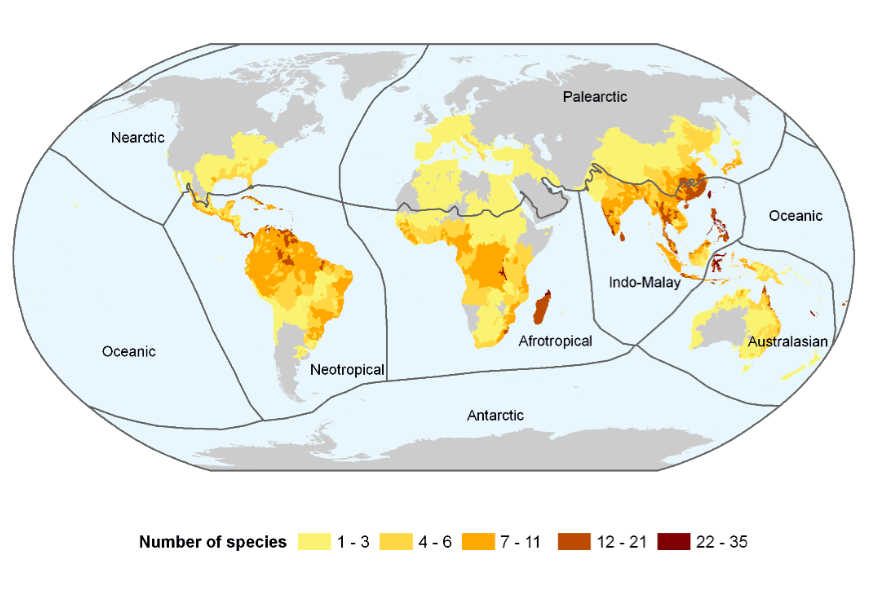
Global species richness of freshwater shrimps
Although threatened shrimp species are found across the globe, notable concentrations were found in Sulawesi (Indonesia), Cuba, the Philippines and southern China, many of which are restricted to cave habitats. In addition to cave dwelling species, those restricted to lakes, and freshwater springs also face higher levels of threat. For example, the Alabama Cave Shrimp (Palaemonias alabamae) is an Endangered species, known from only four cave systems in Alabama (USA) currently under threat from groundwater abstraction and habitat change.

Palaemonias alabamae (Image: D Fenolio)
“The high levels of extinction threat that the team found for freshwater shrimps have also been found for freshwater crabs and crayfish, and these studies of global faunas highlight the fragile state of freshwater invertebrates across the world. Sadly, the prospect of losing these important species often goes unnoticed. The information on these threatened freshwater crustaceans is readily available on the IUCN Red List and needs to be incorporated into decision making at all levels if we are to protect the world’s rapidly deteriorating freshwater habitats and the amazing but highly threatened species that live there.” Neil Cumberlidge, Chair of the IUCN Freshwater Crustacean Specialist Group
However, for 37% of species there was not sufficient information to identify if they were threatened or not, and these were classed as “Data Deficient”. This deficiency was particularly acute in China and Africa, which both hold significant levels of biodiversity and therefore the current number of species assessed as threatened is very likely an underestimation.
The key conservation recommendations resulting from the study include the need to adopt integrated water resource management (IWRM) principles, environmental flow concepts and comprehensive environmental and social impact assessments (EISAs) to ensure that freshwater biodiversity is incorporated into the decision making processes that affect freshwater systems. In addition, there is an urgent need for field research to help us better understand the life histories, threats and distribution of many shrimp species, particularly those species that migrate to marine or brackish environments for larval development.
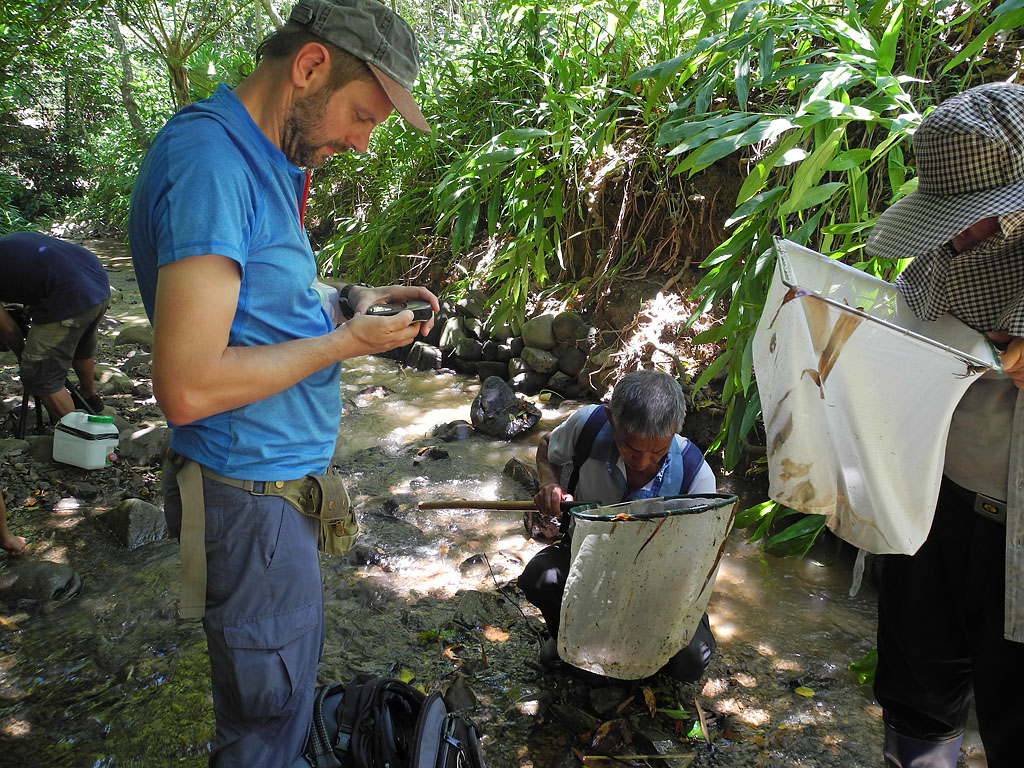
Werner Klotz, one of the co-authors of the study, collecting a new species of freshwater shrimp in Taiwan.
MARS Lake Experiments in the UK
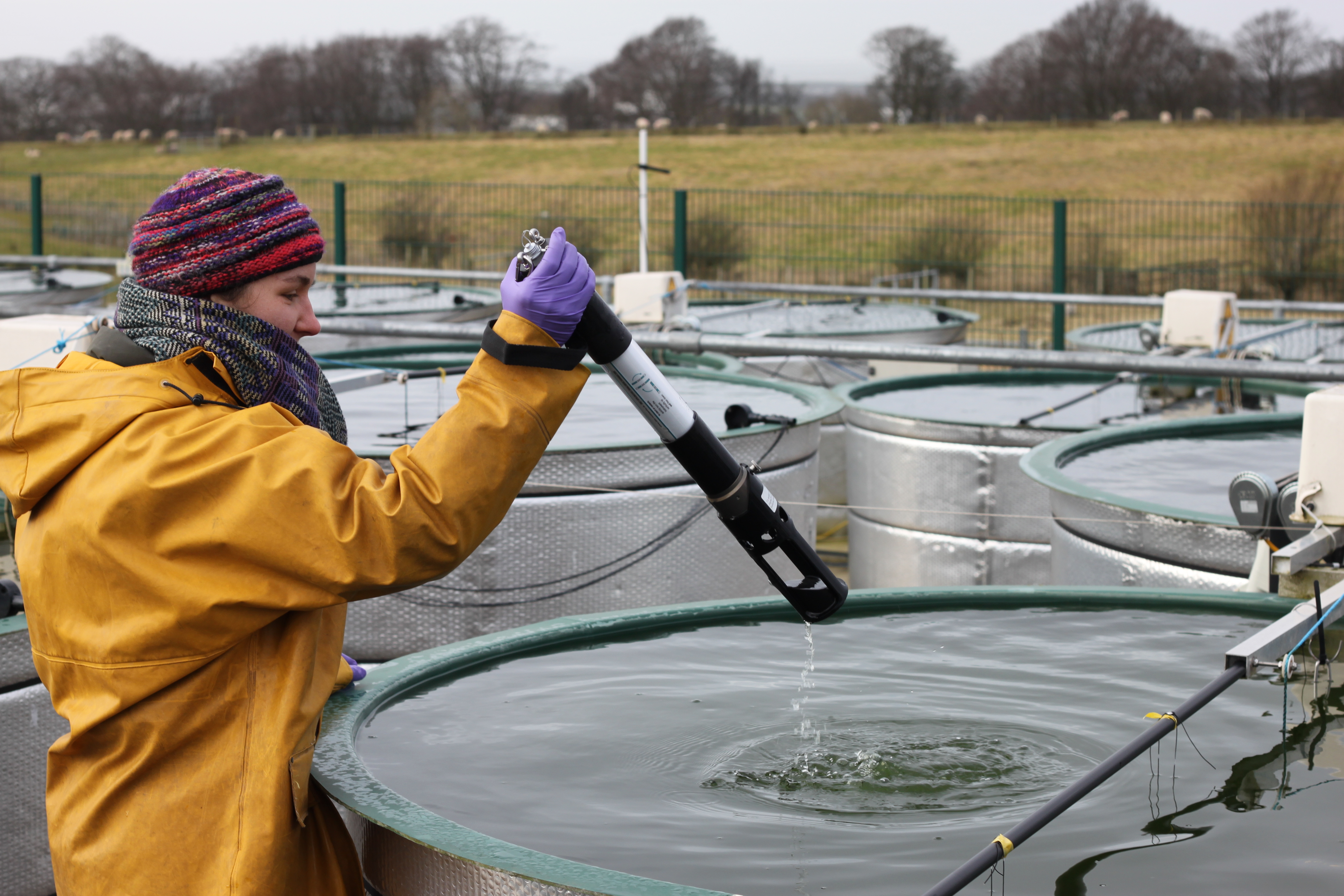
MARS mesocosm experiments: Jessica Richardson using a cyanotorch to measure algae and cyanobacteria biomass. Image: Heidrun Feuchtmayr
Last year we profiled the MARS river experiments across Europe, investigating the potential effects of multiple stressors on freshwater ecosystems. Today we begin a new series of posts profiling the project’s lake experiments, beginning with the UK study.
Located close to Lancaster in the North West of England, the lake experiments are led by MARS scientist Heidrun Feuchtmayr from the Centre for Hydrology and Ecology. The experiments are designed to investigate the interactions between extremes in rainfall and nutrient loading at different temperatures. This work will allow predictions to made as to how the ecological health and functioning of shallow lakes in Europe may be affected by changes in rainfall and temperature in the future under projected climate change. Ecological health and functioning depends on factors such as the biodiversity and structure of aquatic communities, ecosystem metabolism and resilience.
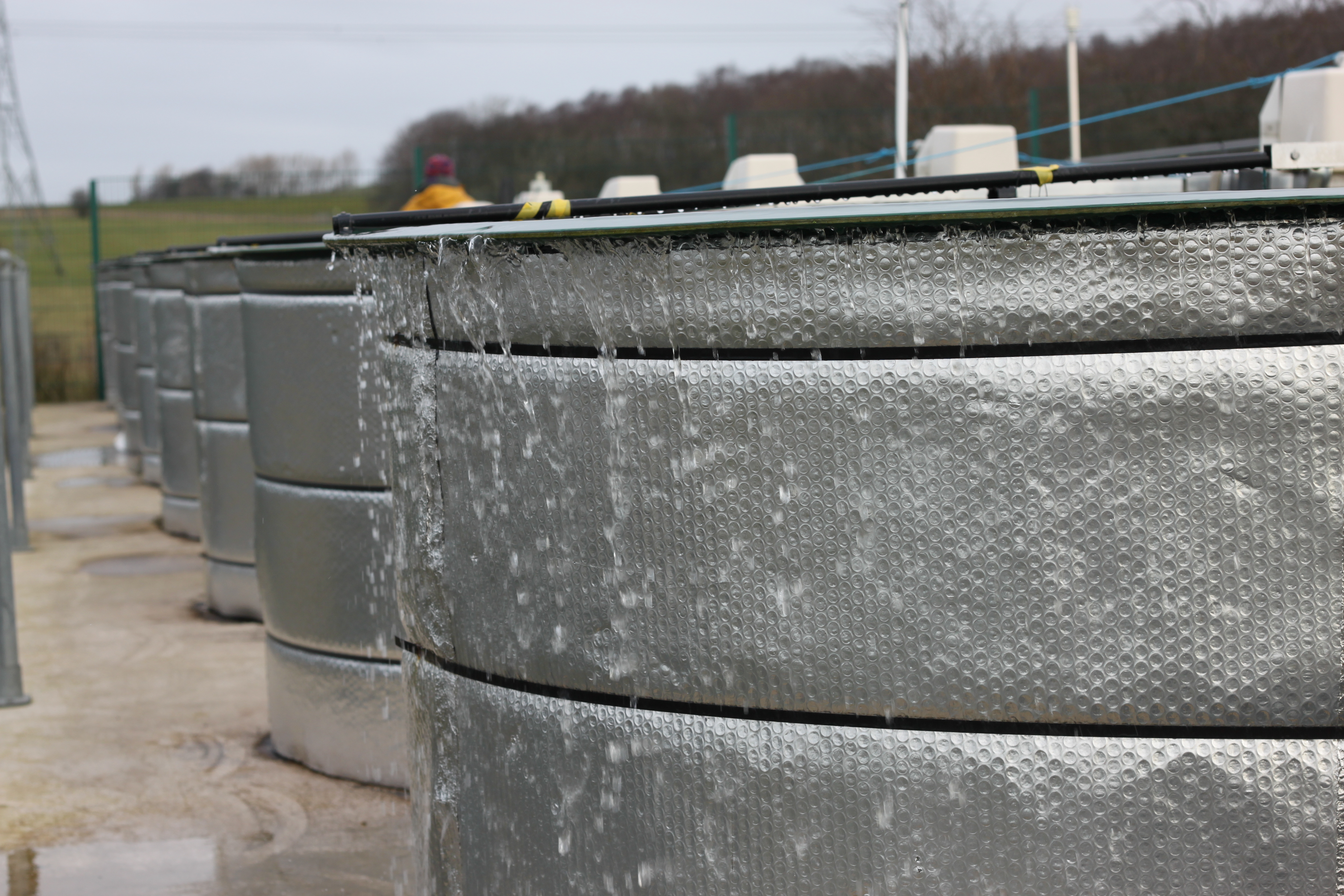
A mesocosm overflows as water is added to simulate extreme rainfall. Image: Heidrun Feuchtmayr
Experimental systems known as mesocosms are used in study to recreate variables from the natural environment within controlled, observable conditions. In other words, mesocosms create an ‘ecosystem in minature’, bridging the gap between laboratory work and field studies. The CEH mesocosms are one metre high fibreglass cylinders filled with water which can be artificially heated and mixed.
At the start of the MARS experiments, the tanks are set up with similar starting conditions: the sediment is a mix of sediment from Windermere mixed with sand. The sediment is cross-mixed between all mesocosms before the water is added. The water is a mix of Windermere water and rain water and so already contains algae. Zooplankton is collected with nets from Windermere and added to the tanks. Macroinvertebrates are collected from Windermere and added to the tanks. However, before the experiment starts, the water and sediment is again cross-mixed several times to ensure similar starting conditions for all tanks. Fish are collected from some local streams and sexed. Two males and two females are then introduced to each mesocosm at the start of the experiments.
In the MARS experiments, two temperature regimes (ambient temperature; and +4°C) and two nutrient treatments (no additional nutrients; nitrate and phosphate addition) will be applied to 32 mesocosms equipped with computer controlled heating devices. Extreme rainfall will be simulated in half the mesocosms once each season, by adding and physically mixing the water in the mesocosms.
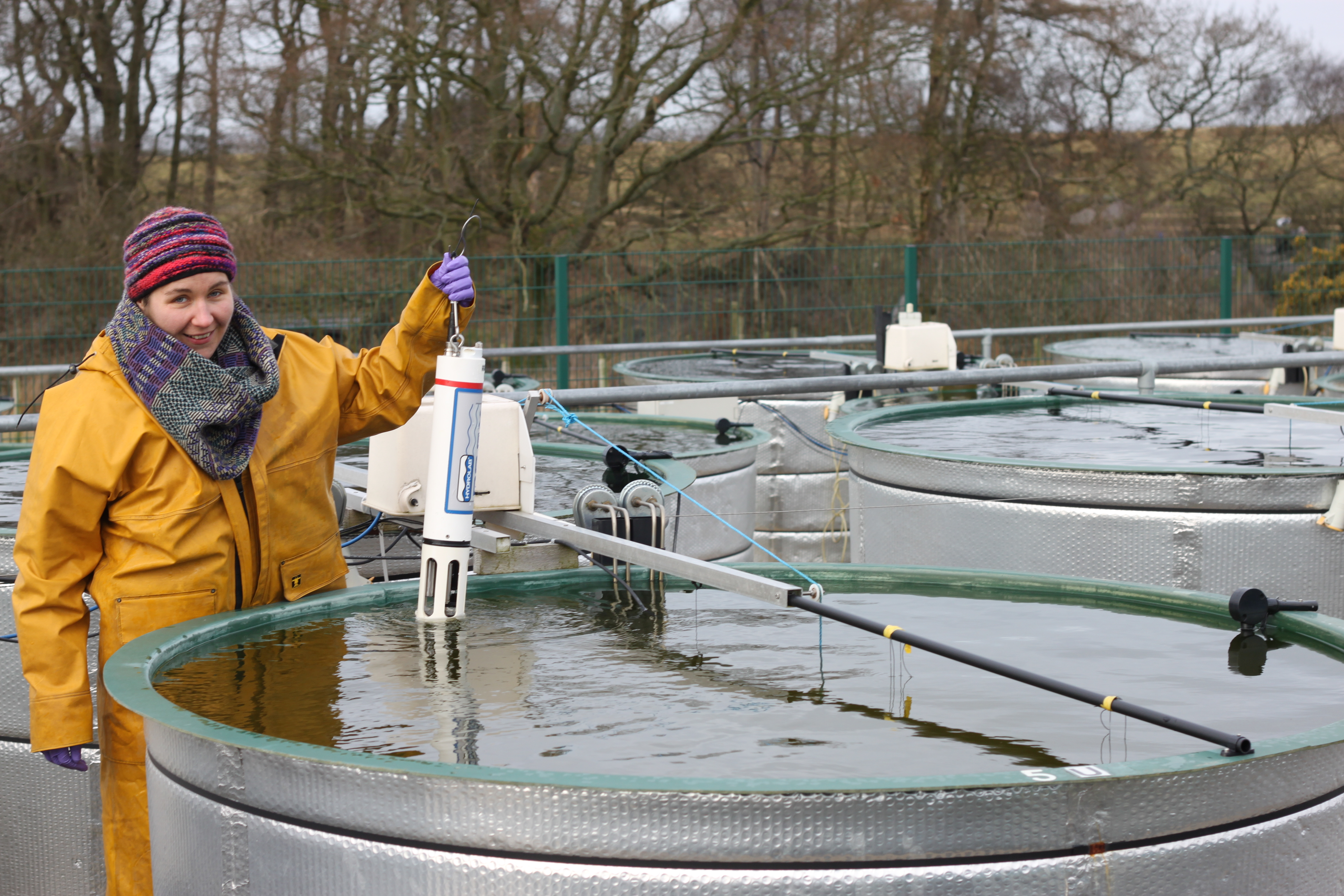
Monitoring the mesocosms: using a datasonde to measure temperature, pH, conductivity and algae biomass. Image: Heidrun Feuchtmayr
Sensors in the mesocosms constantly measure water temperature, dissolved oxygen and solar radiation, whilst a weather station is used to monitor air temperature, rainfall, wind speed and direction. Analyses of the biological development of each mesocosm are taken in a variety of different ways: bacteria is analysed using molecular methods, phytoplankton through analysis of chlorophyll a levels, and the presence of zooplankton, aquatic plants and fish is also monitored. These analyses are carried out in tandem with chemical analyses to help capture the full impacts of stressor combinations and ecosystem recovery following pulses of extreme rainfall conditions.
The MARS mesocosm experiments are ongoing, and we will share their results with you as they arrive. You can read our archive of reports on the MARS river experiments here.
On Sunday March 22nd, people from around the world will get together to mark World Water Day 2015. Organised by the UN-Water programme and now in its 22nd year, World Water Day is designed to focus attention on global water issues, and to celebrate the role of water in all of our lives.
This year, the theme is “Water and Sustainable Development“. The World Water Day website describes how water is often unsustainably used and managed around the world because the essential services provided by freshwater ecosystems are not recognised or valued by the economic models that structure policy and land use decision-making processes.
The MARS project works to understand the impacts of multiple stressors (pollution, abstraction, drought, dams and so on) on freshwater ecosystems. So how might MARS’s work relate to the theme of sustainable development? I spoke to MARS scientist Sebastian Birk to find out more.
Sebastian suggested, “MARS and Sustainable Development can be linked via the provision of ecosystem services generated from freshwater systems. MARS distinguishes between an ecosystem’s service capacity (i.e. what the multiply stressed ecosystems can provide) and service flow (i.e. what humans are taking from these ecosystems).
The service capacity is related to the conditions (i.e. state) of the ecosystem, depending on the amount of pressure exerted to these systems. The service flow is related to human behaviour (steered through legal requirements such as the Water Framework Directive).
The ratio between service capacity and service flow is an indicator for sustainability: services should not be taken above a level that can be sustainably provided. The measures we’re analysing in MARS to mitigate the effects of multiple stressors shall ultimately lead to a sustainable service use.”
So, the idea is relatively straightforward: an ecosystem can provide certain services (drinking water, fish for consumption and so on), that if managed sustainably will continue to regenerate and be provided in the future, but will be threatened if over-harvested, mismanaged or polluted. As an example, the World Water Day website cites the Okavango River basin in south-west Africa, a river which has been largely unaltered by humans until now, but is increasingly exposed to pollution from untreated residential and industrial wastewater and agricultural run-off and subject to abstraction for water supplies. This pollution and abstraction potentially undermines the river’s capacity to provide ecosystem services to surrounding communities, and threatens its ecological health and diversity.
For the World Water Day organisers, the solution to such problems is to better integrate the value of ecosystem services into economic models. They suggest that, “Economic arguments can make the preservation of ecosystems relevant to decision-makers and planners. Ecosystem valuation demonstrates that benefits far exceed costs of water-related investments in ecosystem conservation. Valuation is also important in assessing trade-offs in ecosystem conservation, and can be used to better inform development plans. Adoption of ‘ecosystem-based management’ is key to ensuring water long-term sustainability.”
But just how easy is it to fully quantify all of the services provided by an ecosystem (Sebastian Birk’s ‘service capacity’) and the services that are used by humans (the ‘service flow’)? Complicated, but potentially possible, is the answer. A 2014 paper by Matthias Schröter from Wageningen University, Netherlands and colleagues, attempted to the provision and use of nine ecosystem services (moose hunting, sheep grazing, timber harvest, forest carbon sequestration and storage, snow slide prevention, recreational residential amenity, recreational hiking and existence of areas without technical interference) in Telemark County in Southern Norway.
Using large datasets of environmental data, through which indicators for ecosystem services were identified, Schröter and colleagues concluded that a key factor in modelling the relationship between service provision and use is in matching their spatial extent. They suggest that some ecosystem services, particularly cultural services – recreation, spiritual value and so on – are often very local and heterogeneous and so more difficult to integrate into such an analysis.
Regardless of the different economic or statistical approaches we might take to understanding and modelling sustainable development and water, perhaps it is apt to reflect back on a basic tenet of sustainability: to refrain from taking more from an ecosystem than it can provide. Here, we might also ponder the words of the great conservationist Aldo Leopold when planning our freshwater decision-making. In A Sand County Almanac, Leopold wrote that “A thing is right when it tends to preserve the integrity, stability and beauty of the biotic community. It is wrong when it tends otherwise.”
How can we best encourage sustainable development that doesn’t compromise the “integrity, stability and beauty” of our freshwater systems? Are ecosystem services the best framework for providing a ‘voice’ for the natural world in decision-making? Please feel free to add your voice to the debate, either in the comment box below, or through our Twitter page.
Hydrocitizenship
Image: Hydrocitizenship
Hydrocitizenship is a UK project, funded by the Arts and Humanities Research Council, which seeks to investigate the relationships between water and humans through a number of creative, interdisciplinary approaches. The project website outlines that: “The term ‘hydrocitizenship’ has been adopted in reference to the more established notion of “ecological citizenship” which sees transformations in how society works at individual and collective levels as essential if we are to generate more meaningful, ecologically sustainable forms of society. In our project, we put this idea to work within the contemporary contexts of individual and community engagements with water.”
Working with collaborators across the social sciences and arts and humanities, and with four specific case study regions (Borth; Bristol; Lee Valley, London; and Shipley) and a vibrant online community Hydrocitizens, it seems that Hydrocitizenship project has the potential to bring new approaches to debates over how we use, conserve and manage our freshwater environments. Intrigued, we spoke to the project leader Owain Jones, Professor of Environmental Humanities at Bath Spa University.
Jones told me that, “The vision for Hydrocitizens is multi-faceted, with a bi-line that reads “connecting people to water and through water.” This process takes place in two ways. First, connecting people to water: this means working with communities to explore and develop awareness of all the water assets and issues in their lives – both locality and globally. Second, connecting people through water: this means working with communities to explore, and be more aware of (and active in) how they are connected with other people – other communities – through water assets and issues. Although the focus above is on ‘people’ – individuals and communities – we are also very much focused on connections between humans and nature through water. So when we say ‘water’ this includes, for example, aquatic based biodiversity and habitats.
The project title Hydrocitizenship is a deliberately named subset of “ecological citizenship”, a concept put forward by academic Andrew Dobson and others in the mid 2000s, which seeks to find ways that society can work to become more sustainable. Jones frames Hydrocitizenship within this movement: “I completely buy into a number of eminent (environmental) philosophers who assert that unless forms of ecological citizenship emerge to replace, or at least offset, liberal (consumption based) citizenship we have little hope of reversing the terribly destructive era of global history we are now in.”
Similarly, Jones emphasises the potential offered by interdisciplinary approaches which draw from the arts and humanities in suggesting sustainable relationships with water (see the ‘Wading to Shipley‘ video above for example), “From my point of view the basic driving forces which shape society are ideas – and ideas woven into structures of culture, politics and so on. The arts and humanities deal in ideas. People get all stressed about the question of ‘impact’ and the idea that the STEM subject (science, technology, engineering, maths) have the upper hand in these terms against the arts and humanities (and social sciences). I don’t buy that at all. Think of the Romantic Movement. It completely changed our view of what humans and nature are. That’s impact. STEM subjects – for the most part – don’t challenge cultural and political norms – they reinforce them. We need some new version of the romantic movement – the eco-romantics maybe.”
Jones’ interests in freshwater are numerous, stemming from a childhood on a farm on the Wentlooge Levels in South Wales and alongside the Severn Estuary, and as a result describes wetlands, rivers and tides are being “in my blood.” Hydrocitizenship has also developed out of intellectual and professional concerns with water, as Jones describes, “water is a very vivid and palpable exemplar of how we are connected to and dependent on nature and the environment. The point of ecological citizenship is not to say we need to become ecological – we inevitably are as bodies interact with the environment. The point is to recognise how we are embedded in nature and the implications of that. Our vision of that has been suppressed – in a sense that’s what the Enlightenment and modernity did. See, for example Latour’s ‘We Have Never Been Modern’. Water is undeniably ecological in how it works – given that a key principle of ecology is that everything is connected to everything else.”
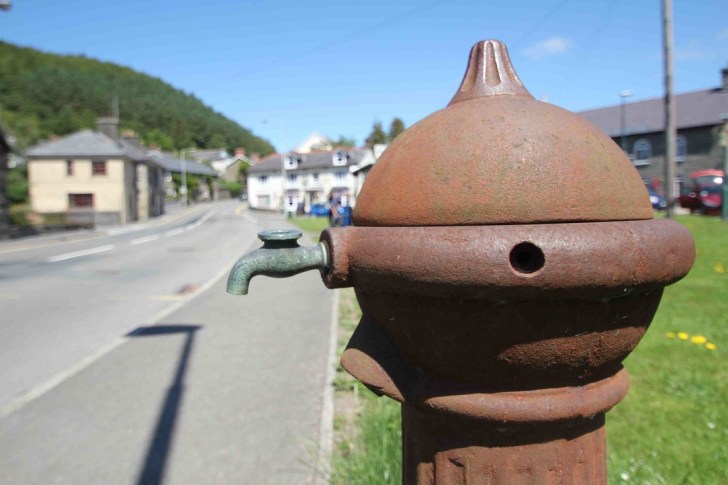
Water bubbling up from below the pavement. Image: Hydrocitizenship
Have there been similar projects in the past, which approach water in an interdisciplinary, interconnected way? Jones suggests that “There has been some interesting policy initiatives in the UK and beyond – such as ‘Making Space for Water’ – where people are trying to think about water in joined up ways rather than in issue silos. A precursor to this project was initially another Arts and Humanities Research Council (AHRC) grant called ‘Before the Flood’. This was conducted with the Environment Agency who were looking for new ways to ‘engage’ with communities about flooding in urban areas where rivers are often ‘hidden’. But in the course of that project the idea emerged of talking to communities not just about flooding but about river and water more holistically. So the project title changed to Multi-Story Water (links to the project in Eastville and Shipley). Myself and others on the team have also previously worked on projects about tides, and floods, community and memory.”
The idea that human communities are a fundamental and interconnected part of ecosystems with the power to make environmentally sustainable decisions about how they use water was embedded in the Hydrocitizenship project from the start. Jones explains how the project was catalysed at a meeting organised by the AHRC, “Professor Peter Coates from Bristol University – who, amongst other subjects, researches the history of rivers – came up the term Hydrocitizenship while we were talking about the ecological crisis. Most of the others in the now-Hydrocitizenship team were at that meeting and then‘gathered’ around that idea. I once heard that children are a “good indicator species for cities”. I think the same can be said for water: if a city is looking after its water then it will be functioning effectively in a number of ways. There is a key quote that represents that sort of idea from the Urban Waters Federal Partnership: we believe a deeper connection to local water bodies can bring a new cycle of community hope and energy that will lead to healthier urban waters, improved public health, strengthened local businesses, and new jobs, as well as expanded educational, recreational, housing, and social opportunities.”
Working with communities around water is a key element of Hydrocitizenship. I ask Jones who and where these communities are? The answer is (perhaps unsurprisingly) very fluid: “We will consider communities in topological (network) terms and in topographical (space/place) terms. Can conflict create communities and does such an idea help in conflict resolution? A community is a set of interactions, conflict is an interaction. We are not working towards the idea that differing uses of and attitudes water can all be harmonised. There will be reasonable (and unreasonable) grounds for conflict within and between communities, both interest and residential.
Another key focus is what happens to ideas of community if the material (e.g. water supply and waste water systems) are included in the conception and analysis of community. And the ecological: we are very keen to break down the chronically narrow human focus in ideas of community. A city is home to non-humans as well as humans. The water in our body cycles between spaces and lives. The water in my body might at some point soon be the life space of aquatic creatures in my local river. In a sense this is what ecological citizenship is about, recognising the interdependencies which weave people and nature together. This harks back to Aldo Leopold’s celebrated proto environmental ethics essay on the ‘Land Ethic’ (1949) which ‘enlarges the boundaries of the people to include soils, waters, plants, and animals, or, collectively: the land’; and this ‘changes the role of Homo Sapiens from conqueror of the land-people to [a] member and citizen of it’ – the ‘biotic citizen’.
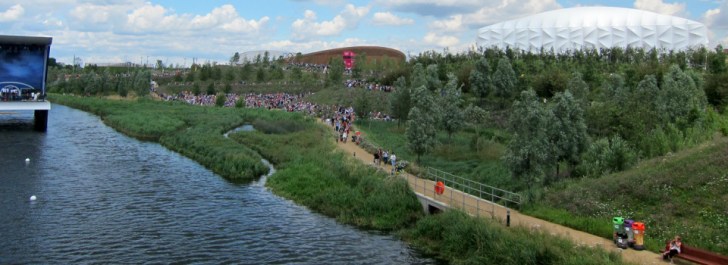
The Olympic Park on the River Lea in East London, one of the projects study sites. Image: Hydrocitizenship
How might some of the more creative and experimental approaches to understanding our relationships with water fostered by Hydrocitizenship take shape? This seems to be an ongoing work-in-progress for the project: “Basically there are four stages of interdisciplinary research and practice. Stage one is a pretty standard literature review where ‘what is going on’ in a number of areas of research is explored and summarised – looking at what other people are doing and, to some extent, identifying ‘best practice’ elsewhere. Stage two seeks to gather information on the local hydrosphere in the case study areas: Borth, Mid Wales; Bristol; Lea Valley London; Shipley (Bradford). This includes mapping (gathering existing data / information) the catchments, issues in the catchments, drainage and water supply etc, and speaking to local stakeholders of various kinds. This also includes finding out about, and making contact with, local groups who are active in water related issues. Each case study team has artist and a selected community group as a project partner.
Stage three involves holding in-depth conversations with individuals and communities, in conjunction with the key project partners (artists, community groups) in which potential issues and actions are discussed and developed (that is roughly where we are now). Stage four will be a series of events which emerge from the above process. These are very much focused on community involvement and engagement. The events will vary but might well involve performance, storytelling, film making, art installations, and cultural participatory mapping – all curated by artist or social activists. These events will speak about the water-community issues which are identified and discussed in stage one to three. We readily admit to something of a tension in the approach between top down intellectual ambitions about developing senses of ecological citizenship, and more bottom up, emergent themes which arise from local conversations. We feel that finding, making, meeting grounds between these is possible and, in fact, a key aim.”
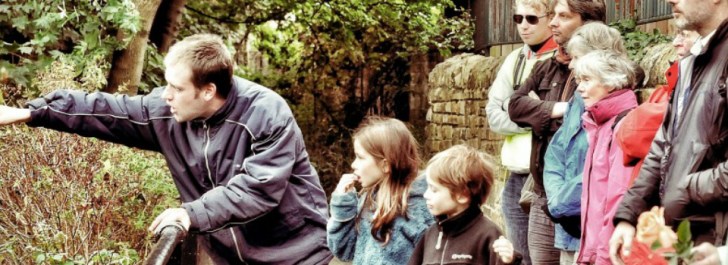
Learning about water. Image: Hydrocitizenship
Our conversation with Owain Jones ends on a cautionary but hopeful note: “I think it is pretty obvious that current approaches to the environment embedded in politics and policy are struggling to put society onto a sustainable course. The list of ongoing environmental decline is long and alarming. The latest scare in the news is about the ‘death’ of our soils. But that concern has been around for decades with very little change in practice. We need to be changing hearts and minds about what our priorities are towards the environment. This needs to be done at multiple layers and scales of society. Of course the arts and humanities don’t have all the answers – but they are very good at asking ‘unusual’ questions and telling compelling stories.
Narratives and stories are critical ways in which individuals understand themselves and their position in the world. Politics is very much about the control of narrative. The situation we find ourselves in today is that we live in a cacophony of competing narratives, from religion, the conventional ideologies that underpin mainstream politics (in the UK), all the stuff in popular culture, and the endless stream of marketing which underpins consumer society. Getting new stories air in these circumstances is challenging, and we need to find ways of ‘cutting through the noise’ to talk about the environment.”
MARS Podcast: an interview with Professor Steve Ormerod
We’re happy to share the first MARS podcast, which can be streamed and freely downloaded from the Soundcloud widget above. Join us on the banks of the River Brun in Burnley in North West England to meet Steve Ormerod, Professor of Ecology at Cardiff University, chair of the RSPB council and co-leader of the MARS project catchment segment.
On a cold, blustery spring morning with dippers flitting past and robins singing in the trees, Steve tells us about the history of the Brun, and its recent restoration after years of pollution. Steve explains the concepts of freshwater stressors and ecosystem services, and tells us about his work with MARS.
Meet the MARS Team: Tuba Bucak

Lake Beyşehir in Turkey. Image: METU Limnology Laboratory
 This week we continue our Meet the MARS Team feature with an interview with Tuba Bucak, a PhD researcher from the Middle East Technical University in Turkey. Tuba’s research uses computer modelling techniques to study the potential impacts of climate change on freshwaters in the Mediterranean region.
1. What is your focus of your work in MARS, and why?
My work in MARS focuses on the effects of multiple stresses on a catchment scale. I am involved in Task 4.2 (Southern river basins) and our study area is Lake Beyşehir catchment in Central Anatolia, Turkey.
2. Why is your work important?
What we are doing is not only understanding freshwater ecosystems, in the end we are hoping that our outcomes will help decision-makers to implement measures to protect freshwaters. My study lake is the largest freshwater lake of Turkey and serves as an irrigation and drinking water supply. Considering the semi-dry climate of the region and intense agricultural practices, water use for irrigation is the most important stress driver in the basin.
Climate change may also exacerbate the effects of excessive water use, as expected scenarios for the region project an increase in temperature and a decrease in precipitation. Hence, to maintain the ecological status of lake in the future, we should be able to link the stressors with the ecosystem services and develop mitigation measures for the future.
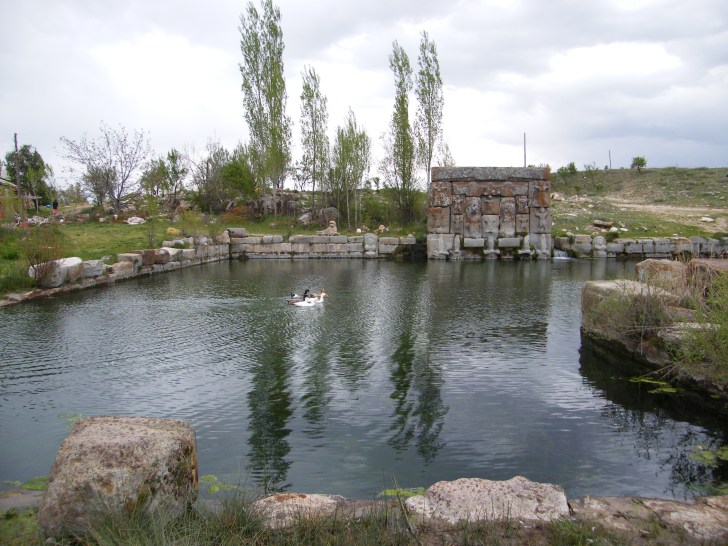
Eflatunpınarı spring – at a Hittite shrine – which feeds Lake Beyşehir. Image: METU Limnology Laboratory
3. What are the key challenges for freshwater management in Europe?
The key challenge is keeping the balance between the demands of the current society and the need to protect freshwater ecosystems. Generating scientific theory behind efficient management strategies is important, but convincing stakeholders (decision makers) to implement management strategies is the most difficult task, at least in Turkey.
4. Tell us about a memorable experience in your career.
My most memorable experiences have mostly happened on fieldwork. I think the best part of studying ecology is being in the field and having a real contact with the environment where you are working. In my first field experience, I was totally inexperienced, it was even my first camping experience! It was a long journey to the west of Turkey and we were in the field for 2 weeks, camping 2-3 days at each lake whilst conducting very intense sampling. These were remote lakes on which there was little information, hence every sampling trip was with full of surprises.
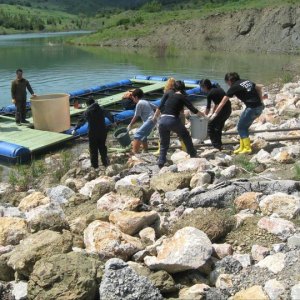
Tuba and labmates carrying samples to mesocosm experiments as part of the REFRESH project. Image: METU Limnology Laboratory
My second memorable experience is from my Master’s degree. We conducted an in-situ mesocosm experiment in a lake close to our university. It was also very intense field work, lasting for 4 months, involving setting up and running mesocosms. I remember me and my mesocosm partner (Ece), going to the sampling at 8:00 am and leaving the lake at almost 8:00 pm. Then our adventure continues at the lab (filtering all those samples) until 3:00 am! It was possible to freeze the samples and do the analyses later, but I don’t know, when you are young you don’t think that much…but it was good that we both lost 5 kg that summer due to intense field and lab work!
5. What inspired you to become a scientist?
I never thought about the possibility of doing anything else other than being a scientist. I always like watching documentaries about nature and imagining myself being there. Being a documentary producer can also be fascinating but if you want to understand natural processes, you should focus deeper. Hence being a scientist/ecologist seemed to me the best way to do what I want.
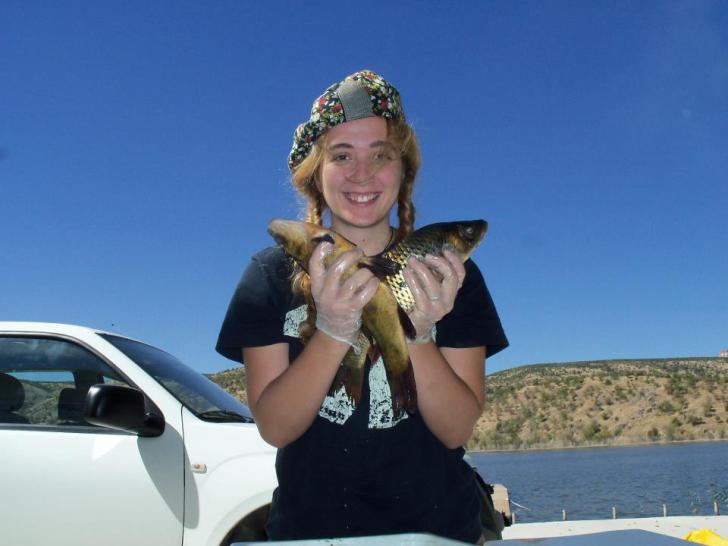
Tuba out on a fish sampling experiment. Image: METU Limnology Laboratory
6. What are your plans and ambitions for your future scientific work?
Firstly I want to finish my PhD and to feel that I have accomplished that project. It will be a small step for humanity but very big step for me! I am also planning to learn more about marine sciences as well. My Master’s and PhD mostly focus on freshwater and I think it will be interesting if I can work on marine sciences as well. I want to acknowledge Arthur C Clarke at this point. He is very inspiring to me, and he said “How inappropriate to call this planet Earth when it is quite clearly Ocean.”
Low water and high salinity: the effects of climate change and water abstraction on lake ecosystems

Boat on a dry Tunisian lake. Image: Pixaweb | Creative Commons
The fifth IPCC report, published in 2014, states that climate-related risks to freshwater ecosystems will increase in the future if greenhouse gas concentrations in the atmosphere continue to rise. Reduced rainfall under future climate change is projected to reduce available surface water and groundwater in dry subtropical regions, increasing human competition for water and potentially reducing the amount of water available for natural ecosystems. The IPCC report suggests that changes in rainfall patterns are likely to cause increased periods of drought in the future, particularly in semi-arid regions, potentially threatening the diversity and functioning of lake ecosystems.
There are already examples of lakes which have been severely affected by reduced water levels, whether caused by low rainfall, human water abstraction, or a mixture of both. The Aral Sea between Kazakhstan and Uzbekistan has shrunk by more than 50% since Soviet irrigation projects were constructed in the 1960s and has high salinity levels that have resulted in huge reductions in biodiversity, although restoration projects are currently underway (for more, see Aladin et al 2009). Lake Akşehir, once one of the largest lakes in Turkey, almost entirely disappeared between the 1980s and 2000s as a result of intensive irrigation for crop farming, leading to extinction of two endemic fish species (see Jeppesen et al 2009, and this Turkish report by Murat Uysal and colleagues).
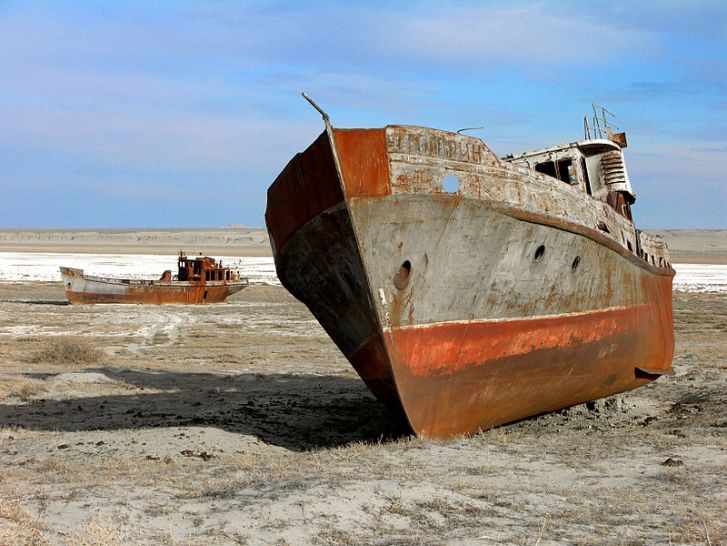
A ‘ship graveyard’ in the Aral Sea, Kazakhstan. Image: Wikipedia
New MARS study
Freshwater ecosystems in semi-arid Mediterranean climates are projected to be particularly affected by climate-induced droughts in the future. A new journal article by MARS scientist Erik Jeppesen and colleagues in Hydrobiologia examines how lake and reservoir ecosystems located in these Mediterranean climates have been affected by changes to water levels and salinity in the past. The study gives a more comprehensive understanding of how Mediterranean climate lake ecosystems are affected by water and salinity levels: a valuable resource for scientists and policy makers looking to research, manage and conserve these freshwater ecosystems.
The team used long-term climate and ecological data (which varied in coverage, but broadly covered the latter part of the 20th century) on six lakes in southern Europe and the Middle East, and one in Brazil (in a similar semi-arid climate), alongside a literature review of similar past studies. They found that whilst each lake had individual characteristics, the broad trend was that changes in water levels and salinity had significant effects on the lake ecosystems, nutrient dynamics, nutrient concentrations and water quality.
The study’s literature review of existing studies on the topic found that water level reduction often results in higher nutrient concentrations, higher phytoplankton biomass and lower water transparency in both shallow and deep lakes and reservoirs. Similarly, the authors found that increases in lake salinity often “markedly alter the community composition of phytoplankton, zooplankton, macrophytes and fish and often lead to a decrease in the biomass and diversity of each of these organism groups.”
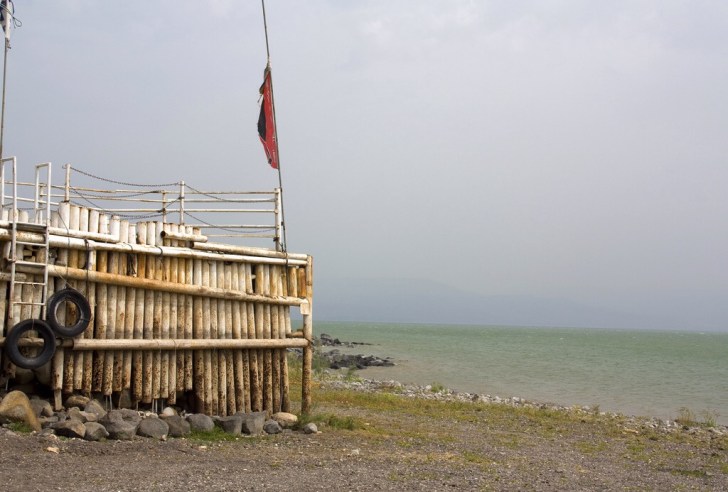
Dry dock on the Sea of Galilee. Image: israeltourism | Flickr | Creative Commons
Impact of water level decreases
Water level changes were generally caused by reduced rainfall or increased water abstraction for human use. These factors are often related, as studies (for example Yano et al 2007 in Turkey and Rodriguez Diaz et al 2007 in Spain) have found that reduced rainfall as a result of climate change is likely to increase the demand for water abstraction, as communities look to use scarce water resources for irrigation and drinking.
Nutrient concentrations in lakes generally rise when water level drops, because although there is less ‘nutrient loading‘ (the term generally used for nutrients entering an ecosystem) from runoff of fertiliser and waste from surrounding towns and fields, the nutrients already in the shrinking lake are likely to be concentrated.
In many cases, this can lead to eutrophication, where high nutrient concentrations (especially of phosphates) cause a ‘bloom’ of plants and algae to grow, blocking light and causing low dissolved oxygen levels in the water (or hypoxia), which can kill or harm other aquatic animals, and make the water unsafe to drink or bathe in. In particular, shallower lakes with increased water temperatures might experience blooms of cyanobacteria, and especially of toxin-producing species such as Microcystis. Such cyanobacteria blooms have become common on Doiran Lake in Greece, as a result of lowered lake levels due to agricultural abstraction.
More variable and extreme climatic conditions may lead to sporadically extreme nutrient loading, for example when heavy rain causes flooding and the erosion of river banks and overflows of wastewater and sewage pipes.
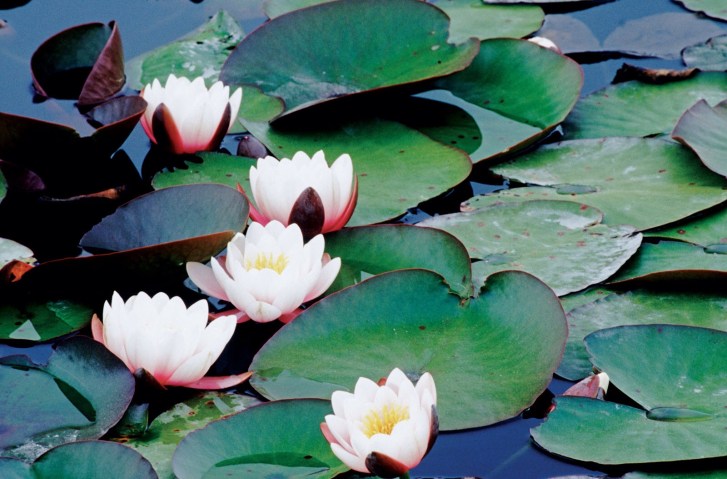
Water lilies, an important macrophyte. Image: Wikipedia
Low water levels and plant populations
The team found that in some cases, macrophytes – aquatic freshwater plants – may actually benefit from minor water level reductions. Many studies in the article’s literature review found that when lake levels dropped, macrophytes – for example water lilies or oxygenating pondweed – flourished due to increased light levels and reduced turbidity (the ‘cloudiness’ of the water).
However, this is not always the case. In the team’s study at the coastal Lake Biviere di Gela in Sicily, Italy, reduced water inflows – as a result of abstraction for irrigation – led to the lake getting shallower and shifting from a clear, macrophyte-dominated ecosystem to one that was more turbid and phytoplankton-dominated. Even when lake levels increased, the lake remained dominated by phytoplankton blooms, and the macrophytes didn’t re-establish themselves, possibly due to a decrease in water quality.
Low water levels and fish populations
Lowered lake levels also have impacts on fish populations. Warmer water temperatures, a potential lack of dissolved oxygen and eutrophication, and the destabilistion of the lake thermocline (a thin layer of water that separates the warm surface layer and cold deep layer) can result in the loss of deep, cold water ‘refugia’ where fish can retreat from predators, sunlight and warmer, oxygen-poor water. Following a reduction of 32 metres in the depth of Lake Vegoritida in Greece between the 1950s and 2000s, populations of the native, cold-water dwelling European whitefish disappeared, and were replaced by populations of warm-water species which can survive in eutrophic conditions, such as roach and carp.
Variability in lake level also destabilises the littoral zone – the area of land immediately around the lake – which can have negative effects on plant growth and fish spawning. For example, at Lake Kinneret (or the Sea of Galilee) in Israel, low water levels meant that bleak – a tiny silver fish – couldn’t spawn in the stony habitats in the littoral zone, which are submerged during high water. Similarly, the same littoral zone provides habitat and shelter for young fish amongst submerged stones and vegetation. Low water levels mean that the potential of the littoral zone as a breeding location and ‘nursery’ area for young fish is lost.
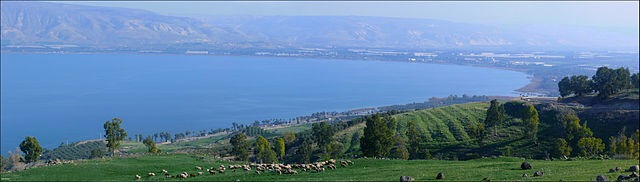
Sea of Galilee in Israel. Image: Wikipedia
Impacts of increased salinity
Reduced rainfall means that less water enters the lake system, causing increases in salinity as solutes in the water become more concentrated. The study suggests that even a small increase in water salinity can cause a significant loss of biodiversity, and alter the ways that the ecosystem functions. It can be difficult to disentangle the effects of increased salinity from the effects of reduced lake levels, as both are caused by reduced rainfall and water abstraction. However, the paper’s literature review revealed that many previous studies have reported that salinity is the most important factor in determining the ecology of Mediterranean lakes.
Higher salinity levels put the cells of many organisms under osmotic stress, where the concentration of solutes in the surrounding water body affects the ways in which water is passed in and out of an organism’s cells. Daphnia – an important group of microscopic species that support many freshwater food webs – have a low salinity tolerance (although it is higher in some Mediterranean species).
Fish are least tolerant to salinity in their juvenile stages – potentially inhibiting the reproduction of existing populations – and salt-averse species may be replaced by salt-tolerant species such as the three- and ten-spined stickleback in highly saline lakes. Macrophyte diversity may also decrease, due to difficulties in plant germination, and the success of a small number of salt-tolerant species.
In emphasising the impact that salinity levels can have on freshwater lake ecosystems, Jeppesen and colleagues state that “when the salinity increase is high (e.g. from freshwater to brackish levels) its effects [on the ecosystem] may in some cases override all other environmental and pressure factors such as temperature or eutrophication.” They suggest that under future climate change scenarios, salinisation of freshwater lakes may also be increased by rising sea levels.
Low water and high salinity: lessons for water management and policy
This study looks to historical climate and ecological data and studies to give an indication of how lakes and reservoirs in semi-arid Mediterranean climates are likely to respond to the linked factors of future climate change and increased human demands for water in the future. In providing a comprehensive picture of the ways in which lake ecosystems respond to reduced water levels and increased salinity, it gives a valuable set of insights for water managers and policy makers seeking to manage, conserve and potentially restore these ecosystems.
Erik Jeppesen and colleagues provide a brief set of environmental management recommendations for these lake ecosystems, emphasising ‘integrated water management‘ that involves the reshaping of planning processes, the coordination of land and water use, the recognisation of water quantity and quality linkages, the sustainable use of surface water and groundwater, and the protection and restoration of natural systems and inland water storage.
The techniques of this ‘integrated’ management are described by the authors as ‘win-win’ and include: promoting sustainable water use, such as water pricing and water use prioritisation; control over abstraction of surface and ground water; implementation of water safety technologies; efficient water usage and conservation technologies; the reduction of water loss and water friendly farming; and increasing the storage capacity of water in the drainage basin through reforestation and controlled drainage.
These are long-term and complex issues – with an element of uncertainty in them – to which there are no simple solutions. However, by looking to the past, studies like this provide valuable information on how we might manage our freshwaters in the future.
Love the Lea: an interview with Ben Fenton from Thames21
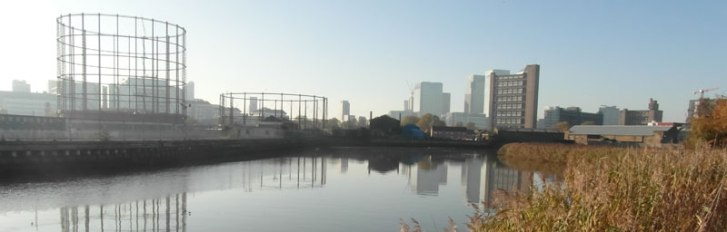
Cody Reed Bed on the River Lea. Image: Ben Fenton
Urban rivers are often amongst the most heavily stressed freshwater ecosystems, often polluted, abstracted, channelled, culverted and canalised. The River Lea in London is no different. The Lea rises in the countryside north of London, then flows through the north and east of the city (partly by way of man-made navigable channels known as the Lee Navigation and a network of channels through the Olympic Park built for the 2012 Games) to meet the River Thames.
We spoke to Ben Fenton from the freshwater conservation charity Thames21 to find out about their innovative work in tackling pollution along the river as part of the Love the Lea campaign.
Hi Ben, tell us about the River Lea: where does it flow through, and through what kind of environments? What’s the ecology of the river?
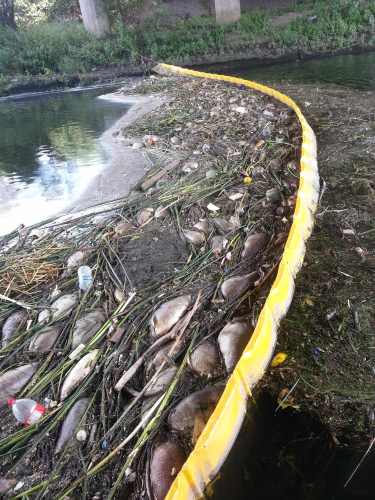
A fish kill in the Olympic Park in 2013. Image: Ben Fenton
The River Lea (or Lee) flows 142 miles from its source in the Chiltern hills to Trinity Buoy Wharf on the Thames at near Canning Town, East London. It travels through heavily agricultural areas of Hertfordshire before entering London, on its journey through the capital it suffers from heavy pollution from a range of sources.
You may find it surprising that this river supports a range of ecosystems. Kingfishers are regularly seen from our office on the river in Bromley by Bow, along with plenty other wildfowl. A pollution incident in 2013 killed thousands of large fish that we didn’t know could live in a river so polluted. There is evidence to show that this fish population is recovering, though lack of habitat is a constant threat.
Where and how do Thames21 work on the Lea?
Thames21 is an environmental charity, officially established 11 years ago, we work with communities in London to improve waterways like these for people and for wildlife. Our Love the Lea campaign focuses on the rivers of the Lower Lea Catchment and sets out to inform local people about this pollution and how they can make a difference. We’re educating 32,000 young people by the end of 2016. We also take practical action to reduce pollution by installing sustainable drainage systems in the catchment area and introducing vegetation to the river in the form of reedbeds.
How serious is the pollution of the Lea? Where does the pollution come from?
Thames21 have tested the water quality regularly with University College London over the last few years, and at times the level of pollution is 40 times higher than EU standards! Rainwater washing off the densely populated areas that border the river often flows straight into the Lea and its tributaries, taking with it oils and other pollutants from roads. Additionally badly connected plumbing from households and commercial businesses in the catchment mean that wastewater enters the surface water drains and then goes straight into the river.
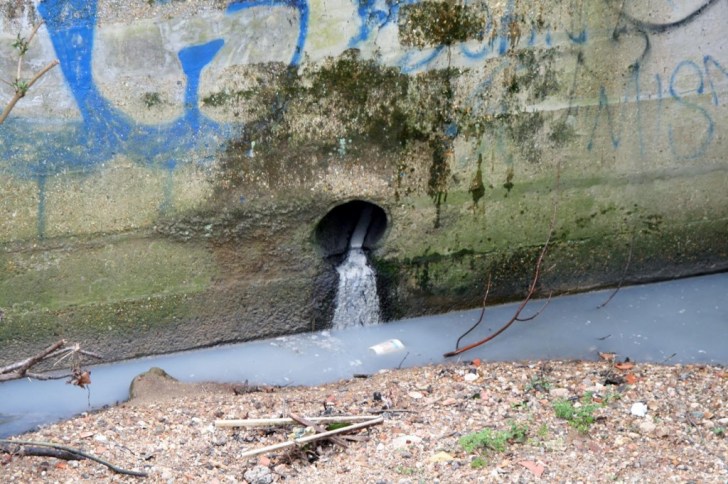
Pollution running into the Salmons Brook, a tributary of the Lea. Image: Ben Fenton
The water company Thameswater reckon despite their hard work, there’s about 60,000 of these ‘misconnections’ across London. Another key pollution source is sewage overflows. It’s estimated that these occur on a weekly basis in the Lea Catchment – they happen when our outdated sewage network cant cope with the amount of sewage in the system, which then overflows into the river.
What are the effects of the various pollutants on the Lea ecosystems?
These pollutants have cause serious effects on the Lea and tributaries. In many places this pollution can be smelt or seen, in Tottenham its common to see huge chunks of matter floating out of the Pymmes Brook which I assume must be raw sewage from overflows.
The lowered oxygen levels make it hard for aquatic life to survive, and high levels of nitrates encourage increased vegetation growth which covers the water’s surface (eutrophication), and duck weed and pennywort block sunlight, which affects the plants and organisms living in the river. Sewage fungus – a pale fungus which lines the river bed and banks – is also common on the smaller tributaries near outfall pipes.
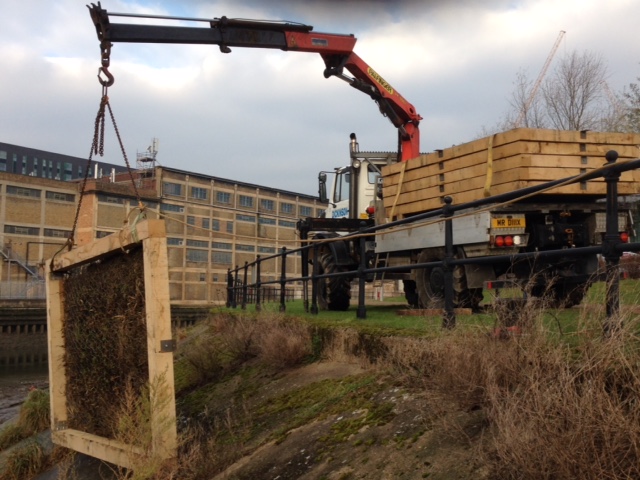
Installing ‘green walls’ along the banks of the Lea. Image: Ben Fenton
What projects and initiatives do you run with Love the Lea to address these problems?
Reedbeds break down pollutants within a waterway, and provide habitats for fish and other wildlife. Installing reedbeds can be difficult within the constraints of an urban river, so we’ve had to come up with novel ways of bringing reeds to the rivers. Recently we’ve constructed large vegetation frames and attached them to sloping concrete banks creating ‘green walls’. This 320m green corridor will not only tackle pollutants, but has provided some much-needed habitat on a section of the river devoid of vegetation.
Our next reedbed project will bring floating ecosystems to the most polluted section of the Lea Navigation in Tottenham. These state of the art reedbed designs are being installed in an area of the river which is too deep for traditional reed planting. As they are floating, the reed’s root structure hangs within the watercourse – more pollution is broken down than in traditional reedbeds, and fish can shelter and feed in the roots.
We have a programme of green infrastructure projects going on across the Lea Catchment, we’re installing simple ‘rain planter’ boxes on community buildings and schools, taking rainwater off roofs reducing the amount of water in the sewers at one time which in turn reduces sewage overflows. We’re creating roadside rain gardens in unused green spaces, these process polluted road runoff and improve the aesthetics of an area.
Finally, we’ve a series of large-scale sustainable drainage systems on a tributary called the Salmons Brook in Enfield. We’re also sticking small signs on street drains to educate people that these drains lead straight to our rivers, an effective technique commonly seen in the USA and Australia.
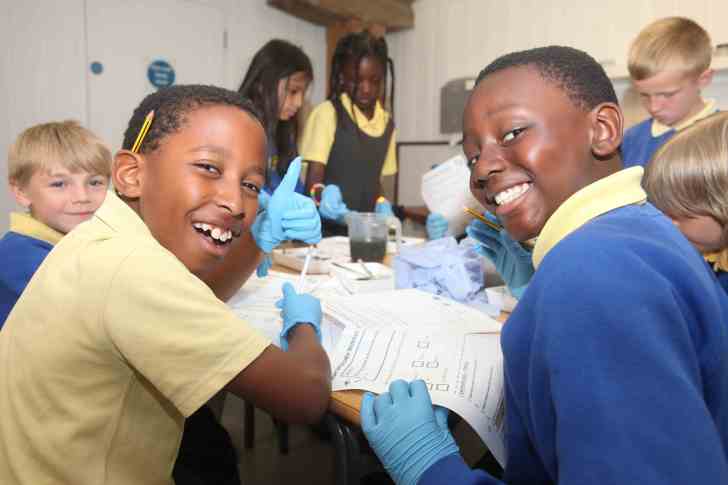
Thames21 outreach work with children in local schools. Image: Ben Fenton
Public engagement is important to your work: can you tell us a little about it?
Public engagement runs in conjunction with all our practical work; engaging people with the urban water cycle, and how our actions affect rivers. In addition to our classroom sessions, we are engaging people in many other ways. Our Love the Lea stall pops up at events throughout the catchment, we use games and fun activities to get the message across. We hold public events like our annual Love the Lea festival, with music, crafts and outdoor theatre, and have commissioned an art-science project Surface Tension, an intriguing mix of field recording, music and photography, which will produce a book, CD and exhibition at Stour Space, Hackney Wick in April.
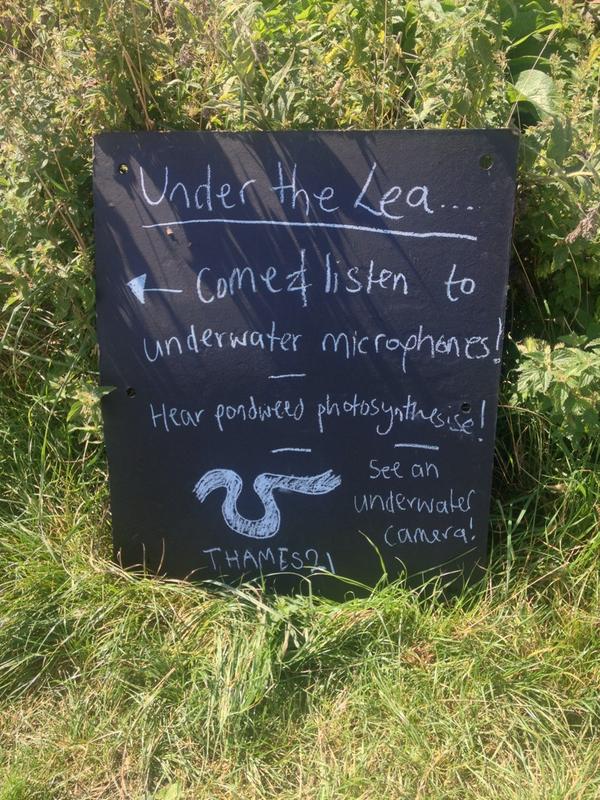
Underwater hydrophone recording with the public at the Love the Lea festival 2014. Image: Rob St John
Thames21 links:









 The Freshwater Blog