M is for mayflies
It’s that time of year again: when for a few short weeks the surface of freshwaters across the world will come alive with the movement of clouds of dancing mayflies.
We’ve featured this wonderful insect extensively in the past. Craig Macadam of the Riverflies Partnership wrote excellent two articles, ‘The mayfly’s lifecycle: a fascinating, fleeting story‘ and ‘The curious history of the mayfly‘.
Paul Gaskell of the Wild Trout Trust wrote a great piece ‘Mayfly in the classroom’ on using mayflies in freshwater citizen science and education projects. Esteemed angler and naturalist Malcolm Greenhalgh contributed a fascinating article on the close relationship between mayflies and fly fisherman.
Szabolcs Lengyel – Assistant Professor of Ecology, University of Debrecen, Hungary – took inspiration from the art world to suggest a novel solution – wrapping bridges – for an unusual ecological problem for mayflies. And finally, we like the film on mayfly lifecycles embedded at the top, by FishOnProductions.
Hopefully you’ll be able to get out and about this month to see a mayfly hatch, and witness this wonderful natural spectacle for yourself.

A wind farm beside a lake: a common sight in a future ‘consensus world’ scenario for Europe’s freshwaters? Image: Conor Dupre Neary | Creative Commons
What benefits do freshwater ecosystems provide to humans, and how might they alter in Europe in coming decades? These are key questions that underpin how freshwater science, management and policy is done in Europe, both now and in the future.
The MARS project has recently released a set of short and easily-digestible factsheets, which summarise the ‘start of the art’ knowledge on freshwater ecosystem services, and provide a range of ‘horizon scanning‘ potential scenarios for freshwater management, policy and ecology in the future.

A constructed reed bed lagoon, built to boost regulating and maintaining services such as water filtration. Image: Paul Glendell, Natural England
Freshwater ecosystem services
Ecosystem services describe the benefits that people obtain from ecosystems. They outline the direct and indirect contributions that ecosystems make to human well-being. Ecosystem services are directly linked to the under-lying ecosystem functions, processes and structures that generate them.
Ecosystem services help make visible the vital roles that ecosystems play in supporting human lives. By clearly linking ecological and socioeconomic systems, the ecosystem service concept is intended to foster enhanced appreciation and protection of global ecosystems. However, there is still uncertainty about how ecosystem services are related to ecosystem structure, functioning, habitat type, size and condition.
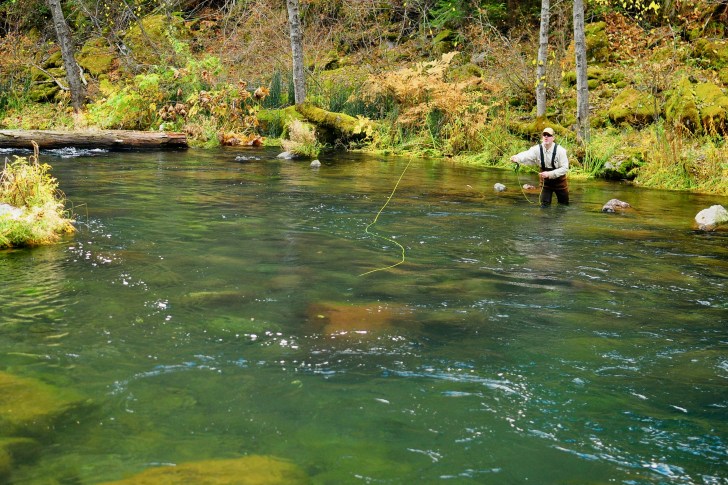
A fly fisherman. Recreational angling is an important cultural service. Image: Jenkinson2455 Flickr | Creative Commons
The MARS project is investigating how multiple stresses (e.g. pollution, over-abstraction) affect the ecosystem services that Europe’s freshwaters can provide. Understanding these relationships is crucial in helping communicate and legitimate why freshwaters are important and should be conserved, both to policy makers and the general public.
The ecosystem service factsheets are split into three categories:
Provisioning services encompass all the outputs of materials, nutrients and energy from an ecosystem. These might include food and water supplies, raw materials for construction and fuel, genetic resources, medicinal resources and ornamental resources.
Regulating and maintaining services support ecosystem functioning and productivity. Regulating and maintaining services describe the ways in which living organisms can mediate or moderate their environments in ways that benefit human well-being.
Cultural ecosystem services are the non-material benefits that people obtain from ecosystems through recreation, tourism, intellectual development, spiritual enrichment, reflection and creative and aesthetic experiences.
Each factsheet gives examples of different services provided by freshwaters, and outlines the policy and management challenges for valuing and addressing them.
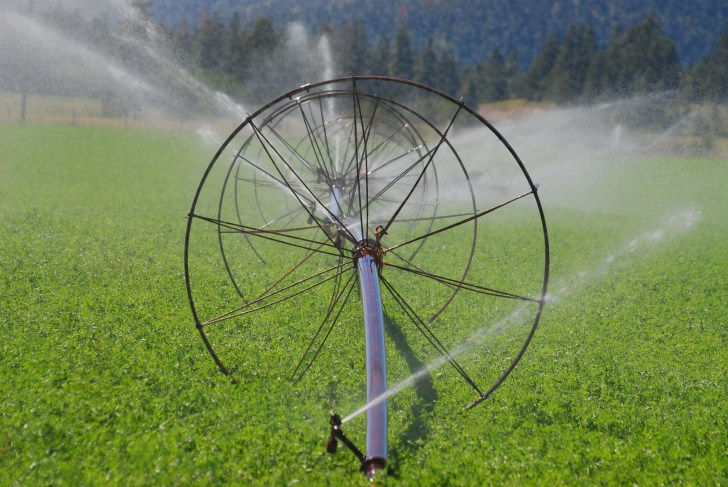
An irrigated field. Water for irrigation is a widely-used provisioning service. Image: Bard Smith | Creative Commons
Three scenarios for the future of European freshwaters
The future is uncertain. Depending on both human actions and the scale of climatic changes, we can expect any number of potential changes in freshwater ecosystems between now and 2060. In response to this uncertainty, MARS scientists and stakeholders have collaboratively developed a range of different scenarios, each based on climate and socioeconomic predictions.
Using these scenarios, three ‘storylines’ were written to explore the potential future impacts of multiple stressors on the ecosystems and basin regions studied by MARS. Two time horizons are used for scenarios: 2030 (to inform the update of the Water Framework Directive in 2027) and 2060 (to show the impacts of climate change). This scenario methodology has been used by many organisations to present unpredictable futures, including UNEP and the IPCC.
Traditionally, these scenarios have been simple, linear predictions, with sequential and predictable relationships between socio-economic actions and climatic and environmental outcomes. In recent years, however, scientists have pointed out that the interactions between humans and the environment are more complex than such a sequential approach gives credit for, and a more responsive methodology is used here, in which emissions and socio-economic scenarios are developed in parallel.
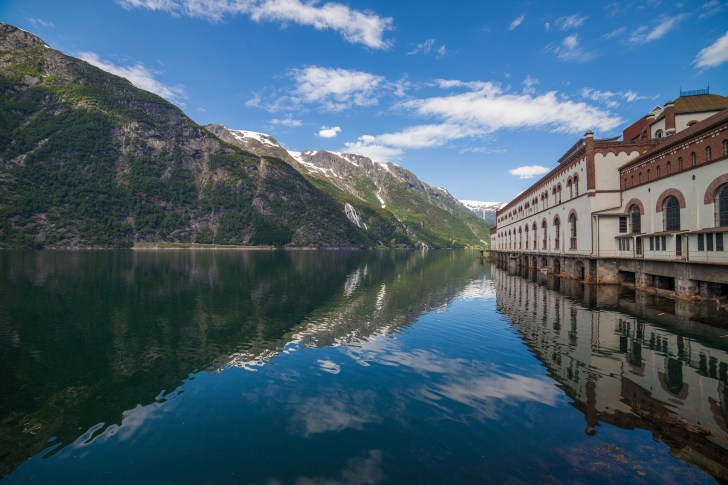
The Tysso Hydroelectric Plant in Norway. Similar constructions might underpin a techno world scenario. Image: Dag Endre Opedal | Creative Commons
Analytical priority is given to changes in emissions and greenhouse gas concentrations over time (termed ‘Representative Concentration Pathways’). Scenarios can then be created based on these emission pathways alongside parallel (and plausible) ‘Socio-Economic Pathways’ and policy scenarios.
As water management is usually site-specific, global data and predictions currently tells us little about water management in the future. Projections and data do tell us, however, about aggregate global demand and availability.
The storylines designed by MARS scientists use this data and create further predictions around potential changes such as technologies for irrigation, changes in river discharges, changes in pesticide use (and thus pollution), technologies like dikes and dams, water use in industry and energy production, and use of surface and groundwater.
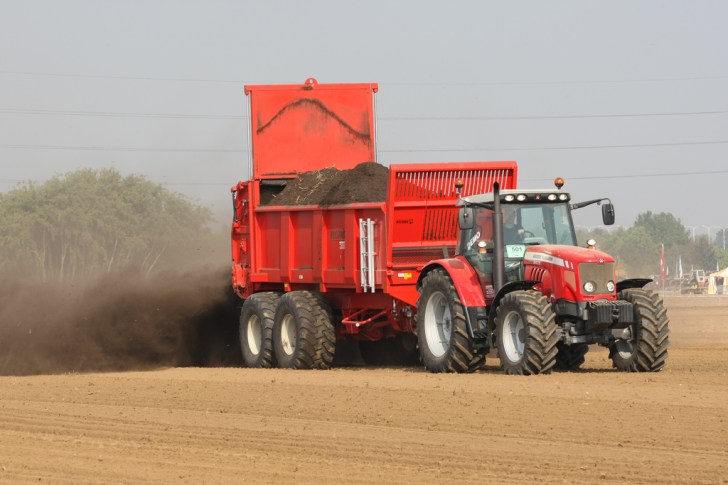
Manure spreading on a dusty field. Intensive agriculture is a key characteristic of the fragmented world scenario. Image: werktuigendagen | Creative Commons
MARS uses three scenarios to predict how European freshwater policy and management might develop in coming decades, and how this could affect the health and diversity of freshwater ecosystems.
In the Fragmented World, we envision a future with rising emissions and significant climatic change (Representative Concentration Pathway 8.5). Technological developments are slow, and fossil fuel dependence is high; international cooperation is poor and significant pockets of poverty persist (Shared Socio-Economic Pathway 3).
The Consensus World storyline is based on a scenario where future development follows similar patterns to the recent past: the economy grows well in some countries and poorly in others, and inequality between rich and poor countries continues. Despite this disparity, the world tends towards being relatively politically stable (Shared Socio-Economic Pathway 2). This occurs alongside a stablising and relatively low level of climatic change (Representative Concentration Pathway 4.5).
The Techno World storyline is based on a scenario of high greenhouse gas emissions and rising global temperatures (Representative Concentration Pathway 8.5) in combination with a strong, carbon-based global economy in which many currently pressing social concerns, such as inequality and population growth, have been ameliorated (Shared Socio-Economic Pathway 5).
***
Read all the MARS Factsheets here
***
Scenarios links:
Shared Socio-Economic Pathways
Representative Concentration Pathways
Ecosystem service links:
Freshwater Ecosystem Services (2005), Millennium Ecosystem Assessment, Chapter 7

Loch Leven. Image: Laurence Carvalho
A major challenge for freshwater scientists and managers is linking the health of an ecosystem (measured as ecological status in the Water Framework Directive) and the services that it provides. An underlying question here is: does a healthy ecosystem necessarily provide more ecosystem services?
A new online tool developed by Laurence Carvalho and colleagues in the EU OpenNESS project tracks how the quality of the brown trout fishery in Loch Leven in Scotland responded to changes in habitat quality between 1972-2014.
Using a mixture of historical data and expert judgements, the tool allows users – including fishermen and fishery managers – to model how the loch’s habitat and fishery might develop until 2027 (when the WFD is due to be revised).
The tool uses a mathematical system known as Dynamic Bayesian Network, where different variables can be related to each other over time. The loch’s habitat quality can be altered over time using a set of interactive sliders, causing the model to suggest how fishery catches and reputation are likely to change in response.
Whilst this tool has been developed only for Loch Leven, it shows the potential of this approach for bringing together complex historical ecological data in an accessible format to forecast future changes.
More specifically, it provides a useful tool for freshwater managers looking for ways to justify and communicate the value of conservation and restoration to the people who use and enjoy rivers and lakes.
Multiple Pressures in River Basin Management
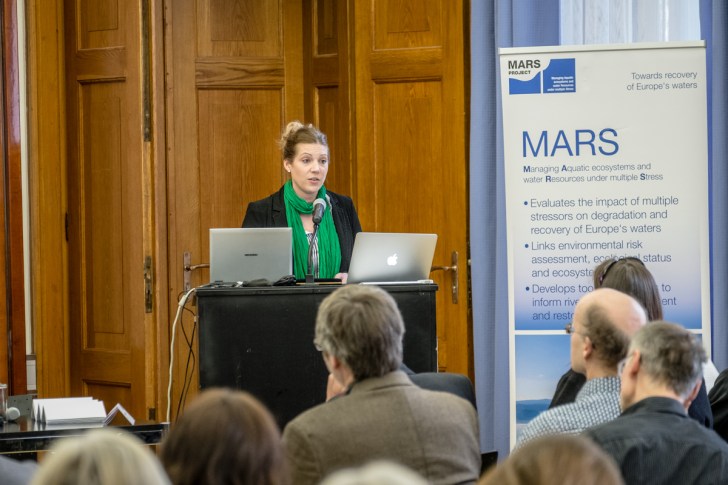
Workshop organiser Rafaela Schinegger. Image: Jörg Strackbein
Last week in Vienna, a group of around 60 river basin managers, Water Framework Directive officials, European Environment Agency representatives, external experts and MARS aquatic scientists met to discuss the key challenges for freshwater management and policy across Europe.
Central to the two days of discussions was the challenge of multiple pressures: the often unpredictable interactions between individual pressures on freshwaters, such as pollution, floods, droughts and river bank alterations. Despite growing awareness of the importance of multiple pressures, their joint impacts on aquatic ecosystems are not well understood, and as a result they are poorly reflected in existing River Basin Management Plans – the framework through which the Water Framework Directive is implemented in Europe.
There was rich science-management dialogue at the meeting, titled ‘Multiple Pressures in River Basin Management‘, which took place at the Austrian Federal Ministry of Agriculture, Forestry, Environment and Water Management – a MARS partner. The MARS project is just past its halfway point, and the meeting gave the opportunity for water managers and policy makers to help shape the project’s research and outputs to ensure they are relevant and useful in practice.
Attendees discussed how the impacts of multiple pressures might be assessed and mitigated in River Basin Management, and worked together to scope possible management tools which use scientific data to aid decision making. These cross-disciplinary dialogues were timed to help inform the implementation of mitigation and restoration measures in the current cycle of the Water Framework Directive across Europe, as well as the planning of the next cycle starting in 2021. The outputs from the meeting will form the basis of a guidance document written by MARS scientists for river managers seeking to mitigate the effects of multiple pressures.
On the first morning, delegates heard from a number of water managers and policy makers. Speaking via video-link from Brussels, Jorge Romero Rodriguez of DG Environment outlined the key challenge for freshwater management in Europe. He outlined the tension between use and conservation of water resources, and the need for management measures that help freshwaters reach the “good status” target in the WFD. Rodriguez put forward the DPSIR framework as a tool for assessing and managing the health of freshwater ecosystems under multiple pressures.
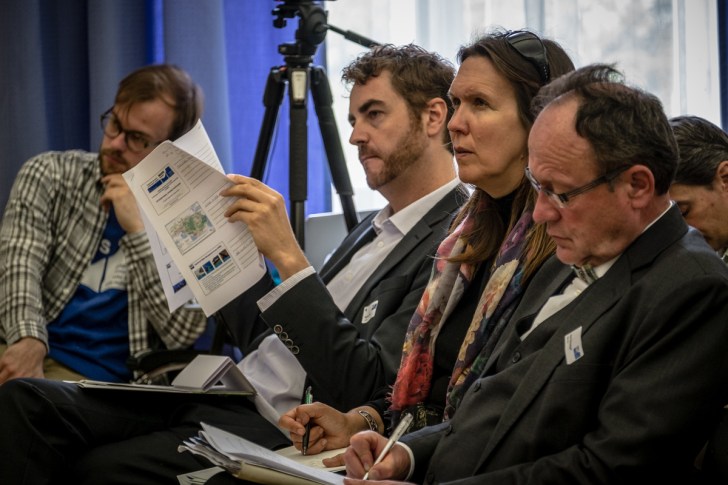
Image: Jörg Strackbein
Veronika Koller-Kreimel of the Austrian Federal Ministry of Agriculture, Forestry, Environment and Water Management (BMLFUW) and Raimund Mair of the International Commission for the Protection of the Danube River (ICPDR) each gave insights about the challenges of multiple pressures in their river basins.
Koller-Kreimel outlined that hydromorphological pressures – particularly hydropower constructions – are the main cause of falling ecological status in Austrian rivers. Mair discussed how the Danube basin is extremely variable in terms of pressures and management, with nutrient pollution and flow fragmentation affecting much of the catchment, and the need for cross-boundary co-ordination of management initiatives. In the Danube basin, the key pressures are monitored under a framework, which focuses on ‘Significant Water Management Issues’ according to the Water Framework Directive.
Next, key members of the MARS project spoke to attendees about their ongoing aquatic scientific research. Project leader Daniel Hering stated that in the 1970s and 80s, the identification of a single, strong pressure – organic pollution – allowed for water managers to gain wide public and political support to restore freshwaters by improving sanitation.
However, in the present day, we face a complex mix of pressures, with uncertainty over their interactions and impacts – making it more difficult to communicate the need for appropriate measures. In fact, there are many pressure combinations where we don’t fully understand their interactions, nor the trajectories of ecological recovery from their impacts following restoration.
Hering emphasised that there are missing links between assessing multiple pressures and managing them through policy measures such as the Water Framework Directive. Relatedly, Hering identified the need for better linkages between monitoring biological quality elements in an ecosystem, and quantifying the ecosystem services it provides, suggesting that, “people are more often interested in the ecosystem services provided by freshwater rather than in a single stonefly species that the river can support.”

Daniel Hering on ‘the good new times, the bad new times’ for European freshwaters. Image: Jörg Strackbein
Laurence Carvalho outlined the four most common pressure combinations in European lakes, all of which were interactions involving nutrient stress: with extreme temperatures; extreme rainfall or drought; flooding; and changes to lake morphology. Carvalho suggested that a key element of conceptual models seeking to understand the ecological dynamics of stressed lakes was to make sure that we can understand individual waterbodies, as well as river basin dynamics and overall European stressor patterns.
Stefan Schmutz emphasised how MARS is designed to help develop mitigation strategies and decision support tools for multiple pressures in European freshwaters, and that it is important to consider not only pressure combinations, but also impact combinations – in other words the effects of multiple pressures. He demonstrated a user-friendly tool showing how two individual pressures could affect the ecological status of fish in a river, and the importance of threshold responses to small changes in pressure.
Christian Feld began his short talk with the provocative comment “European water bodies are not well.” Feld outlined the potential for an online ‘web doctor’ for water body management, where river basin managers could input data on multiple pressures and be given guidance on the potential effectiveness of different management approaches in mitigating their effects.

Questions from the floor. Image: Jörg Strackbein
After this set of talks, questions were posed to MARS scientists from the floor. A key theme that emerged was the need for clear and accessible tools, which link monitoring data on multiple pressures to ecological status, and give managers an indication of the potential success of different measures.
An important consideration here is how the complexity and uncertainty of our current understanding on multiple pressures can translate into straightforward management and policy advice. Accordingly, this was noted as a key consideration for the next two years of MARS research on impacts of multiple pressures: not only understanding the underlying science, but shaping research outputs in ways that are policy and management relevant.
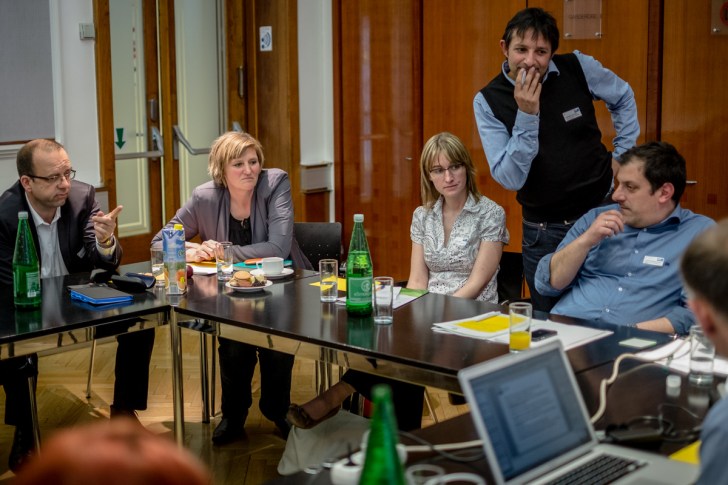
World Cafe discussions. Image: Jörg Strackbein
After lunch, the participants were split into four groups in which to undertake World Cafe discussions. The World Cafe format is a way of facilitating dialogue within large groups. Each small group discussed how the key themes of the workshop – the challenges of addressing multiple pressures in River Basin Management planning; the future needs and solutions for more effective planning and management – related to their own work across Europe.
The following morning, the groups reported back with a range of grounded (and sometimes provocative) insights towards a set of guiding principles for multiple pressure management. These were then built upon in a panel discussion including Peter Kristensen of the European Environment Agency, Anne Lyche Solheim of MARS and the Norwegian Institute for Water Research, Stephan von Keitz of the Hessian Ministry of Environment, Germany and Veronika Koller-Kreimel from the Austrian ministry.

Panel discussions. Image: Jörg Strackbein
A number of key themes from the workshop emerged in these discussions. First, that river basin managers are used to dealing with many pressures, but not always the combined effects of multiple pressures. The challenge here is for scientific research to suggest solutions to managers faced with complex pressure interactions in a world with a changing climate, as well as increasing demands for food, energy and massive urbanisation. How can water be protected given these massive global changes?
Second, as previously stated, there is a need for management tools which link pressures, status, measures and services, and allow for information on the benefits of management to reach the highest political levels. As Veronika Koller-Kreimel put it “such tools need to be as simple as possible, but as complex as necessary”.
Third, many river basin managers advocated that such tools should function at appropriate scales: in particular, for individual water bodies. Whilst ongoing MARS models of multiple pressures across river basins and the European continent are extremely useful for identifying large-scale trends and patterns, managers need small-scale diagnostic and monitoring tools to aid their multiple pressure mitigation. Fourth, there was general agreement that biological pressures (such as invasive species) should be given more attention within MARS research.
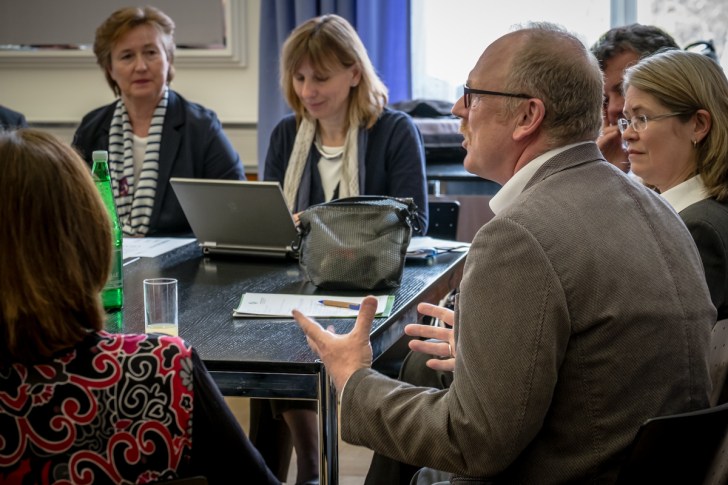
Science-management dialogue. Image: Jörg Strackbein
Fifth, there is the need for better co-operation and sharing of knowledge about multiple pressures and ecological status, for example using already existing data generated by previous European Union projects. As Stefan Schmutz suggested, “we know a lot about freshwater ecosystems, but not one of us has the full knowledge.” A key challenge here is to present information on managing multiple pressures in a digestible way to better integrate their management into River Basin Management Plans within the Water Framework Directive.
Sixth, and related, an important recurring discussion centered on the question: “what is good ecological status?” In short, if we’re looking to communicate the need for freshwater management towards good ecological status to policy makers and the public, we need to be able to explain what it looks like and why it is important. Many people accept a ‘shifting baseline’ of ecological health, the acceptable level of which can drop from generation to generation. It was generally agreed that better communication of ‘good ecological status’ could help frame and legitimate freshwater management measures to wider audiences and sectors responsible for the pressures (e.g. agriculture, hydropower, urbanisation).
Seventh, another related theme that emerged from the discussions was the need for case studies where multiple pressures management had provided clear, positive impacts on ecological health and status. Such good practice examples have the potential not only to guide management, but to help communicate the importance of why it is important.
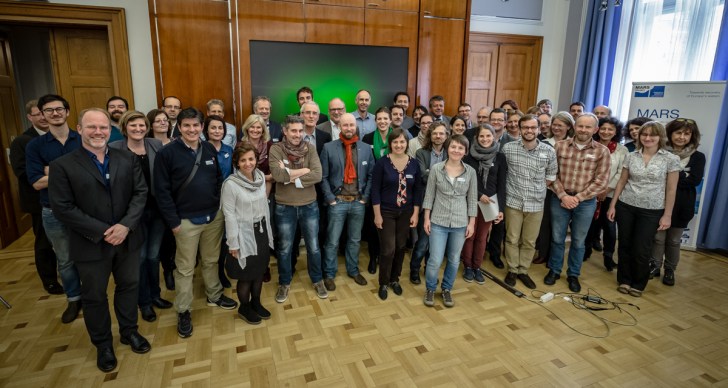
Meeting attendees. Image: Jörg Strackbein
In summing up, workshop moderator Jan Sendzimir provided an important insight to tie many of the discussions together. He noted that ecological systems often ‘get better’ slower than the rate of change in political cycles. To make real improvements to stressed freshwater ecosystems, we need long-term political co-operation across governments and better dialogue with the sectors responsible for the pressures.
Whilst this meeting was rich with discussions on improving the health and status of Europe’s freshwaters, there is still much work to be done.
The UK Lakes Portal
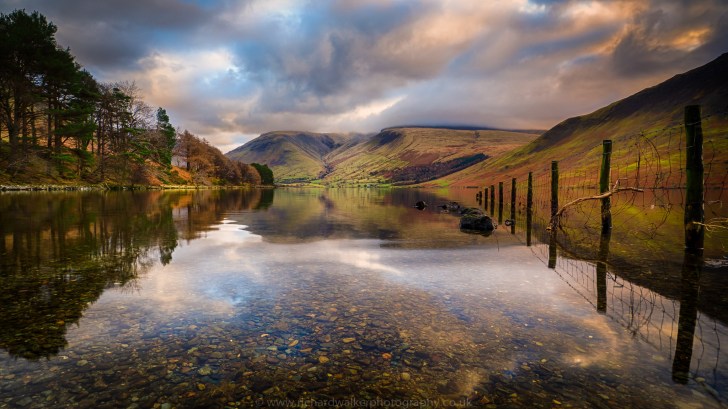
Wastwater in the English Lake District. Image: Richard Walker | Flickr Creative Commons
Scientific data on over 40,000 UK lakes has been recently brought together into one open-access online portal. The UK Lakes Portal is the result of over 10 years work coordinated by the Centre for Hydrology & Ecology, and provides a comprehensive overview of the geography and ecology of UK lakes.
The portal contains physical, environmental, and water chemistry data compiled from an extensive set of sources over many years and is integrated with the National Biodiversity Network hub for biodiversity data. In addition, new data is constantly being added by citizen scientists using iRecord.
The portal gives information on geography of each lake (depth, surface area, location, altitude) which is linked to data on its biodiversity and information on the wider catchment that feeds it. The biodiversity data is part of a comprehensive new freshwater species list for the UK, which also includes information on non-native species.

In linking each lake to its wider catchment, the portal provides a valuable tool for scientists and policy makers advancing landscape approaches to freshwater research and management. In addition, by presenting the information in a clear and engaging form, the portal is likely to be of use to anyone interested in freshwaters: a comprehensive and interactive ‘wiki’ for UK lakes, if you like.
Professor Rosie Hails, Director of Biodiversity and Ecosystem Science at the Centre for Ecology & Hydrology, said:
“The UK Lakes Portal is a product of excellent collaboration between the Centre for Ecology & Hydrology, University College London and the UK conservation and environment agencies. This is one of many natural capital portals that we hope to develop in the future as an evidence base to support policy and decision making.”
Laurence Carvalho, Freshwater Ecologist at the Centre for Ecology & Hydrology (and a member of the MARS project) said:
“The UK Lakes Portal is a fantastic new resource for both scientists and the local citizen scientist interested in finding out more about their local lake and the biodiversity found within it. It has the potential to help us value the benefits we gain from UK lakes and answer questions such as how well connected is biodiversity across UK Lakes and how fast are invasive species spreading across UK freshwaters?”
Dipper from the Water of Leith

Dipper on the Water of Leith, Edinburgh. Image: Kris Kubik
The Water of Leith valley runs like a thread of blue and green from the Pentland Hills outside Edinburgh and through the city to the sea at Leith. It is a corridor of urban biodiversity: a place where brown trout, kingfishers and otters live within just a mile or two of the crowds and traffic of Princes Street.
One of the Water of Leith’s most charismatic residents is the dipper. This small brown and white bird – known for its ability to ‘dip’ and swim underwater – relies on fast-flowing and unpolluted rivers. Their presence on the Water of Leith is testament to years of conservation and restoration activity on the river following decades of industrial pollution.

Kris filming in the field.
The Water of Leith’s dippers have also caught the eye of an Edinburgh filmmaker and become the stars of a new BAFTA nominated film on the river. Kris Kubik, a film and TV student at Edinburgh University tracked dippers along the river over a number of months to capture stunning documents of their ecology and behaviour. Kris even built a hide at the waterside in order to film dippers in their natural habitats, and his film ‘Dipper from the Water of Leith‘ is currently being shown at film festivals ahead of a wider release.
We spoke to Kris to find out more about tracking and filming dippers along this diverse urban river.
Tell us about the background and inspiration for the film: why the Water of Leith, and why the dipper?
The idea to create a short film about the dipper appeared quite long time ago. When a few years ago I came to Edinburgh from Poland, the first thing I noticed in the city – and more generally in Scotland – were the large populations of dippers.
For me, it was something both amazing and really unique. In my country, this bird is not common and can be found only in some parts of the Tatra mountains, the Sudeten and Beskidy mountains. And then it occurred to me that someday I would like to be able to make a film with the dipper in the lead role.
How did you go about researching the dipper, its ecology and behaviour? And did this research influence how you approached shooting the film?
The dipper caught my attention, mainly because of the niche in which this unique and complex species live. Over the years, I recorded some facts about this bird. But it was general knowledge, so I felt that I need to explore its ecology in more depth. So I had to find researchers who studied the species for years. In this way I contacted, among others, ecologists Steve Ormerod and Peter Mawby.
The first step for research was to gather as much information in understanding the dipper’s behaviour and its habitat. The second step, importantly for me, was to try to look closer at my protagonist by spending all my spare time in the same habitat as the dipper: spending hours observing their lives and habits. Over the course of many months of research, I realised that I could film the dipper in a way that could tell a story.

Dipper from the Water of Leith uses underwater cameras to give a ‘dipper’s eye view of the river’ Image: Kris Kubik
The film is beautiful, and features a range of perspectives on/around/from the dipper. Tell us about the filming process and how you immersed yourself (quite literally) in the dipper’s world. What were some of the logistical challenges of shooting in the bird’s land (and water) scape?
It may sound quite humorous, but the main challenge for shooting footage of the dipper, wasn’t any wild animal or even the weather, but much simpler: avoiding walkers! It turned out that much of the land where I wanted to film and research the dipper was often busy with people and dogs.
I think that’s the nature of The Water of Leith: people love to walk there. And that’s fine, up to the point where you start to observe species through the lenses, and on a busy river, is impossible to reach dippers.
Therefore, it was important to find a location that would be well away from people. Fortunately, I managed to find a place near Edinburgh where I built a hide, so that I could blend in with nature, sit all day and not to be disturbed by anyone.
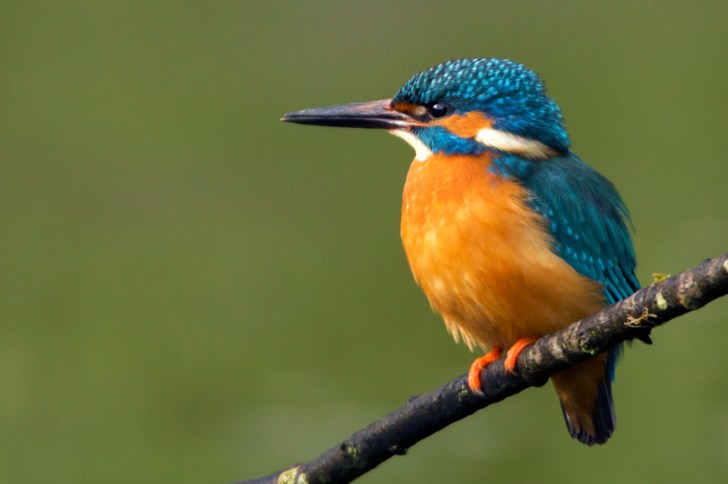
Dippers aren’t the only bird species on the Water of Leith… Image: Kris Kubik
Did making the film give you any new perspectives on the Water of Leith and its inhabitants? If so, how?
Making of film about nature gave me an amazing opportunity to dive into the world of wildlife. When you starting working on a project you have some rough idea and some basic knowledge about the whole subject. When you go deeper and deeper, beyond and above all of the surfaces,you start to see more details of the bird and its habitat.
It’s similar to the experience of seeing the bird in the distance: you know it’s shape and plumage. But when you start drawing the bird, you focusing on more details, and you discover a new dimension of the individual you are studying. It’s quite similar but obviously it’s not the same.
After many months spent in the wild under difficult weather conditions, you become a part of the landscape. You not only see the trees, you see a moss on them, single leaves, shapes, shadows, reflections, the way they are absorbing light and many other things. When you see the river, you don’t see just running water with rocks. You are see the river bed life, fishes, insects. Your senses become sharper. Your vision is more profound, and at some point you begin to identify yourself within nature.

A heron in the river margins. Image: Kris Kubik
The film has already been nominated for a Scottish BAFTA New Talent award – congratulations – will it be shown anywhere and will we be able to see it online?
Thank you so much, I’m so pleased by this nomination, this really means a lot to me. In my view, camera work is a really crucial part of wildlife filmmaking and it requires a lot of hard work and development.
At the moment, Dipper from the Water of Leith is showing in festival circles so for now, it isn’t available in full online (but see the trailer above). This project is really important for me, and my goal is to create a further length monograph film about the dipper.
Based on my short film, I will try to raise funds to create a more accomplished story about this species. I’m researching new locations, developing my camera skills and collaborating with some researchers. I finished a shot-list and most of the location hunting, and I’m in the process of filling up all the necessary documentation.
I will be honest with you, I can’t wait to get back to filming the dipper again: telling and sharing stories about the beauty of this unique species.

A ruffled dipper. Image: Kris Kubik

Lake Poopó, Bolivia with water in 2013 (left) and dry in 2016 (right). Image: Jesse Allen/NASA
Lakes across the world are drying up, largely due to water abstraction, according to new research.
Bolivia’s second largest lake, Lake Poopó has recently dried out to become a 2,700 km2 salt pan. This dramatic loss of an important freshwater ecosystem is due to a combination of silting and water abstraction in the Desaguadero River, which feeds Poopó, and ongoing climate change (temperature have risen 0.7 degrees in the Andes over the last 70 years).
A recent article in the New Scientist brings together evidence from across the world to suggest that Poopó’s vanishing act is not an outlier event. Instead, new research suggests that lakes across the world are shrinking or disappearing – particularly in arid regions – with significant effects on the biodiversity and human populations that they support.
Research by MARS scientist Meryem Beklioğlu from the Middle East Technical University in Ankara, Turkey indicates that lakes on the Central Anatolian Plateau shrunk in size by around half between 2003 and 2010. One Turkish lake, Lake Akşehir, has completely dried up, resulting in the extinction of the Central Anatolian Bleak. Two other endemic fish species, the Eber Gudgeon and a local dace (Leuciscus anatolicus) are now critically endangered.
Many of Turkey’s lakes are shallow, which makes them vulnerable to increasing water abstraction for drinking and irrigation to meet the needs of growing populations in a warming climate. As lakes shrink, their salt levels rise and they become vulnerable to nutrient pollution and eutrophication, placing great stress onto freshwater biodiversity.
Beklioğlu uses computer models to predict how Turkish lakes will fare in the future, and suggests that at current rates of water abstraction, one of the largest lakes in the region, Lake Beysehir, will be completely dry by 2040.
Speaking to the New Scientist, she said “This water is critical for irrigation and for the local economy, but right now we are cutting off the branch we are sitting on.” To address these problems, Beklioğlu highlights the pressing need for sustainable approaches to water management in the region.

MARS scientists studying multiple stressors in Lake Beyeshir, Turkey. Image: METU Limnology Laboratory
MARS scientist Erik Jeppesen from Aarhus University in Denmark suggests that shrinking lakes across southern Europe, the Middle East and central Asia are the result of climate change and growing demand for water.
Speaking to the New Scientist, he said “This region is experiencing a drier climate now, which is also driving increased water extraction. Ultimately, the drying of the lakes along with the loss of groundwater and salinisation, will make the land less viable for agriculture in this region. This will put significant pressure on northern countries to produce more food, leading to deteriorating water quality in northern lakes due to increased fertiliser run-off entering lakes.”
Freshwater life under the microscope
Is there life in a drop of water? Using microscopes, freshwater scientists can help us see the often curious and beautiful array of microscopic life that lives – largely unnoticed – in almost every drop of water on Earth.
MARS scientists Steve Thackeray from the Centre for Ecology and Hydrology has created a new film collecting microscopic footage of the organisms collected in sampling in lakes across the North of England.
The film ‘Freshwater Wildlife Under the Microscope‘ reveals an array of organisms with fascinating forms and patterns. Short descriptions for each organism allow us to get to grips with the important roles they play in our freshwater ecosystems.
Accompanied by a minimal, ambient soundtrack, the film is an excellent introduction to the curious freshwater organisms that support our rivers and lakes, but are usually invisible to the naked eye.
Meet the MARS team: a selection of audio snapshots

Snowy mountain cabins above Fulda. Image: MARS Project
At the recent MARS meeting in Fulda we spoke to a number of project scientists to ask them about their work and their part in the project.
We recorded short audio ‘snapshots’ of each conversation to give a flavour of some of the themes of the week, and the people behind MARS. The results are embedded below to stream and download – enjoy.
***
The science and policy of multiple stressors: four reflections from the MARS Mid-Term Meeting

Daniel Hering welcoming attendees at the MARS mid-term meeting in Fulda. Image: MARS
Last week, the MARS project held its mid-term meeting in Fulda, Germany. The meeting brought together project scientists, water managers and policy makers to discuss ongoing research into freshwater multiple stressors.
Below are four audio reflections on the meeting.
The first is from project leader Daniel Hering, who gives an overview of the progress MARS has made on the science and policy of multiple stressors.
***
Next, Bas van der Wal of water management agency STOWA in the Netherlands tells us about his golden rules for translating freshwater science into policy and management using ‘ecological key factors’.
***
***
We speak to Rolf Altenburger from the Helmholtz Centre for Enviromental Research (UFZ) in Leipzig, Germany about freshwater pollution and the SOLUTIONS project.
***
***
Finally, Anne Lyche Solheim from NIVA in Norway tells us about the challenges of researching multiple stressors and creating dialogue with water managers and policy makers.
***









 The Freshwater Blog