Could our caffeine habit cause aquatic stress?

Coffee beans. Image: Shunichi Kouroki | Flickr Creative Commons
A cup (or two) of coffee is a regular start to the day for many people. However, new research from the USA suggests that America’s caffeine habit may be contributing new stresses to the country’s aquatic ecosystems.
Our bodies don’t absorb all of the caffeine – the stimulant that can give us a pleasing ‘pep up’ – present in coffee, tea and many soft drinks, and as a result some caffeine is expelled in urine and faeces. Generally, sewage treatment plants remove a large proportion of caffeine from wastewater.
However, a long-term study in San Diego, USA, has found caffeine in remote streams far from urban areas and sewage plants, which may be contributing to ‘cocktails’ of multiple stresses impacting the stream ecosystems.
“When we started getting results, we realized it [caffeine] is way more prevalent than just from leaky sewer lines and septic systems,” said Carey Nagoda, a water resource control engineer for the San Diego Regional Water Quality Control Board. “So that was kind of a puzzle.”
Nagoda analysed nearly 100 samples from aquatic ecosystems across San Diego County and part of Orange County between 2008 and 2015. Sampling sites ranged from urban waterbodies which received both raw sewage and treated wastewater, to remote waterbodies far from human development.
The study found that caffeine concentrations in remote streams were as high as in some urban waterbodies. Around one-third of remote waterbodies tested positive for caffeine, with concentrations of between 0.032 to 0.662 micrograms per litre – similar to those samples taken around septic systems – detected.
“We were completely shocked by that,” Nagoda said. “What really ended up falling out was that the areas known for high recreational use – like fishing, horseback riding, hiking, camping – were the ones that had caffeine hits.”

A stream in rural San Diego County. Image: James Arnott | Flickr Creative Commons
Freshwater scientists often use caffeine as a ‘marker’ for pollution in water samples. Its presence often indicates leaking sewage systems, or other point source pollution, and the resulting presence of other contaminants. The results of Nagoda’s study therefore suggests that raw and untreated human waste is entering waterbodies in remote areas, most likely as the result of poor waste management practices.
Caffeine is known to be an ecological stress on aquatic ecosystems, particularly at high concentrations. The caffeine concentrations detected in Nagoda’s study are relatively low, and so unlikely to cross a ‘toxic threshold’ to cause widespread harm to aquatic organisms.
However, new research from coastal areas suggests that continued exposure to low concentrations of caffeine can place stress on estuarine crustaceans. A study by Zoe Rodriguez del Rey and colleagues exposed a common species of near-shore mussel to low levels of caffeine similar to those found in San Diego mountain streams. The mussels initially expended energy producing a protein designed to protect their DNA.
However, as caffeine levels were gradually increased – within a range detected in coastal waters – the mussels stopped producing the protective protein. The study’s authors suggest that the mussels are placed at greater risk of genetic mutation, as a result. “They get so stressed out at a cellular level that they can’t protect their DNA with this protein,” said Elise Granek from Portland State University, a co-author on the study.
Together, the two studies suggest that caffeine may be present in remote waterbodies, as the result of waste from recreational users; and that low concentrations of caffeine may have previously undocumented stress effects on aquatic organisms. However, there is still significant research to be undertaken on the topic.
As Granek suggests, “There are so many things that are stressing out organisms and ecosystems, it’s not on a lot of people’s radar to be looking at these [caffeine] compounds. It seems like people focus on things that they think are sexier compounds, like Prozac.”
Caffeine, then, might be seen as an emerging toxic stressor in need of further scientific attention, as Thomas Bruton and colleagues suggest in a 2010 article, “Although caffeine presents no large-scale threat now, further research is needed on the occurrence of caffeine in natural waters and its chronic toxicity to aquatic organisms.”
SOLUTIONS: Simplified sampling of large water volumes for combined chemical and biological testing
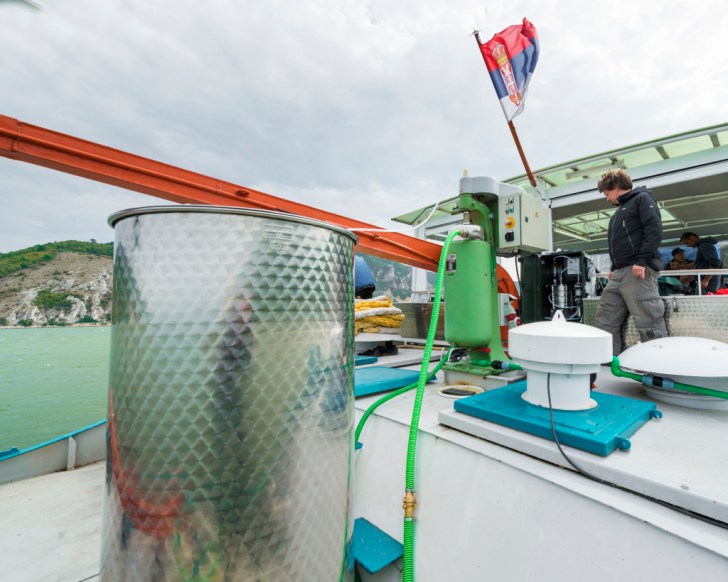
LVSPE during the Joint Danube Survey 2013. Image: André Künzelmann (UFZ, Leipzig, Germany)
A guest post by Tobias Schulze, Martin Krauss, Jörg Ahlheim, David López Herráez, and Werner Brack of the EU SOLUTIONS project.
+++
It is becoming more and more obvious: the analysis of individual chemicals is not sufficient to monitor water quality in rivers and lakes which increasingly contain mixtures of thousands of chemical compounds and transformations, both known and unknown.
The current water quality monitoring strategy based on the European Water Framework Directive (WFD) is not meaningful in identifying the real causes of chemical stress in aquatic ecosystems. It disregards the multitude of compounds and the impact of their mixtures, and thus cannot reflect the real world situation.
In this context, ‘mixture toxicity‘ is an important issue. Many compounds are not toxic at environmental concentrations, but a mixture of compounds with a similar mode of toxicity may cause severe impact on aquatic organisms and the surrounding ecosystem. At the ecosystem level this can impact species interactions, and cause local species loss, community shifts and direct or indirect alterations of core ecosystem functions.
The composition of these contaminant cocktails and their impact is inherently unknown in space and time. Therefore, using toxic effects in cells and organisms to detect hazardous contamination is increasingly accepted as a more holistic monitoring approach.
However, much larger water volumes need to be collected and extracted for bioanalysis than for chemical analysis only. Transporting samples of 50-1,000 litres of water to the lab for sample preparation is not an option. The efforts and expenses for cooling the sample and for the laboratory processing would be immense.

Preparation of the LVSPE before sampling. Image: Werner Brack (UFZ, Leipzig, Germany)
As a result, scientists and engineers from the SOLUTIONS project led by Tobias Schulze have developed a novel sampling device to perform the extraction of large volumes of water on-site from the shore of a waterway or at monitoring stations. The ‘LVSPE’ approach is flexible, robust and provides reproducible water extracts which contain as much as possible of the original cocktail of contaminants found in the water.
This device has been successfully deployed for biological effect-based and chemical analyses in the Danube and Rhine case studies carried out by SOLUTIONS. It has helped to unravel new insights into mutagenicity in surface waters and also to detect the potential impact of untreated wastewater on Danube water quality.
Both the Rhine and the Danube studies are excellent examples of the applicability of effect-based analyses in combination with chemical analyses as a means of investigating overall contamination and effect patterns.
The availability of large water volume extracts provided by the ‘LVSPE’ device is hence an important building block for the development of future effect-based and chemical monitoring approaches considering mixture toxicity. As a result, the device has significant potential in supporting holistic risk assessment and river basin management.
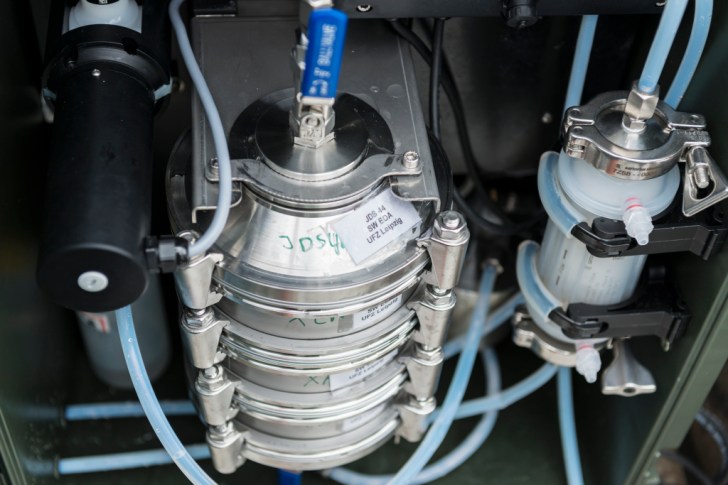
Detail view on the large sampling cartridge for up to 1000 liters. Image: André Künzelmann (UFZ, Leipzig, Germany)
If you would like to read more on the subject:
Schulze, T. et al. (2017): Assessment of a novel device for onsite integrative large-volume solid phase extraction of water samples to enable a comprehensive chemical and effect-based analysis. Science of the Total Environment, 350–358 (link)
Brack, W. et al. (2013): EDA-EMERGE: an FP7 initial training network to equip the next generation of young scientists with the skills to address the complexity of environmental contamination with emerging pollutants. Environmental Sciences Europe 25, 1-7 (link)
König, M. et al. (2017): Impact of untreated wastewater on a major European river evaluated with a combination of in vitro bioassays and chemical analysis. Environmental Pollution 220, 1220-1230 (link)
Muz, M. et al. (2017): Mutagenicity in surface waters: synergistic effects of carboline alkaloids and aromatic amines. Environmental Science & Technology 51, 1830–1839 (link)
Neale, P.A. et al. (2015): Linking in vitro effects and detected organic micropollutants in surface water using mixture toxicity modeling. Environmental Science & Technology 49, 14614-14624 (link)
Innovative solutions for water management and ecosystem services through the DESSIN Project
Environmental decision-makers across Europe are continually faced with difficult decisions about how to target effective management and policy measures that conserve and restore the continent’s freshwater ecosystems. One means of valuing the effects of different measures is through the ecosystem service framework, through which attempts are made to quantify the multiple benefits humans obtain from ecosystems.
DESSIN, a European water research project, has recently shared details of its ‘Ecosystem Services Evaluation Framework‘, which is designed to help decision makers evaluate the effectiveness of new and innovative water management measures in ensuring water quality and quantity in urban areas.
The framework helps users evaluate the effects that technical and/or management measures have on freshwater ecosystems and their services. It is targeted at decision-makers and technology developers as a practical way to integrate the ecosystem services concept into their day-to-day decision-making process. It is hoped that the DESSIN framework will help facilitate the integration of the ecosystem services concept into EU Water Framework Directive implementation.
A key features of the framework is how it links innovative management solutions to the specific ecosystem services they may influence. The framework acts by guiding the user to define particular capabilities of the management solution – such as a reduction in dissolved pollutants in a water body – and then relates these to changes in specific ecosystem services.
The framework has been tested through application at three case study sites. On the River Emscher in Germany, the effects of river restoration on biodiversity habitat, nutrient purification and flood protection were documented. In Aarhus, Denmark ‘real-time control‘ of combined sewer overflows were used to make urban drainage systems more effective and responsive in mitigating pollution during periods of high runoff. At Llobregat in Spain, infiltration ponds were used to filter recharge water back into groundwater stores.
The feedback resulting from these initial applications has been used to fine-tune the framework’s individual elements, and to integrate it with existing decision support software (MIKE WORKBENCH).
Sebastian Birk of the MARS project says, “The Water Framework Directive calls for the good ecological status of all waters in Europe – but in many cases this requires costly mitigation measures. These measure often provide ‘added value’ by enhancing flood prevention, water self-purification or human recreation. Water managers are thus increasingly interested in tools to evaluate freshwater-related ecosystem services. Both the projects DESSIN and MARS have made significant contributions in this regard.”
The DESSIN project assesses the effectiveness of ‘innovative solutions’ for water scarcity and water quality through five case studies: in Germany (restoration of the heavily modified Emscher River); Norway (pollution of Hoffselva River near Oslo); the Netherlands (underground fresh water storage in brackish aquifers between Amsterdam and Rotterdam to store water for the horticultural sector); Greece (sewer mining for water reuse in Athens); and Spain (underground storage of water in the Llobregat River Delta near Barcelona). DESSIN is coordinated by the German IWW Water Centre and has 20 research partners.
Find out more at the DESSIN project website
Download the DESSIN Ecosystem Service Framework

New life springing from an Artecology earth-cast pool. Image: Artecology
We’ve heard how aquatic habitat quality and connectivity is a key factor in supporting diverse and healthy ecosystems a number of times (here and here) in recent weeks.
So when we heard about a new British company drawing from artistic and architectural practices to create unusual and beautiful constructions which act as new aquatic habitats, we were intrigued.
We spoke to Artecology founder Ian Boyd to find out more.
+++
Tell us about Artecology: what do you do, and when did your work start?
Artecology is a new company, created in 2016 through the merging of an ecological consultancy and an arts collective (as the name suggests). Artecology is all about bringing biodiversity to the built environment. Sea walls and piers, bridges, tunnels river channels and roads; shops, schools, industrial units and housing estates; town squares and city rooftops – the world of ‘grey infrastructure’ is our speciality.
We design and manufacture building ornament, renders, cladding, tiles and finishes, each with a pattern and texture tested for its potential to generate and support nature. We combine our built installations with specialist planting, creating hotspots of wildlife activity, providing life-cycle resources for birds, mammals, invertebrates, reptiles and amphibians, fish and marine ecology. This is what we call Urban Rewilding!
Artecology is about communities too. We believe in the health benefits of wildlife encounters. We believe in the right to excellent public spaces that add value to urban living. Artecology brings the public realm to life with an architectural quality, ornament, landscape and design that is good for people because it is good for wildlife.

Creating creative habitats. Image: Artecology
One of your more intriguing projects involved the construction of an ‘Eelevator’: what is this, and what does it do?
The ‘Eelevator‘ was installed following essential repairs to a road culvert near the headwaters of the Holbrookes Stream, which initially left a ‘step-up’ obstruction into the culvert for any aquatic wildlife moving upstream. We saw an opportunity to not only fix the culvert step, but also to more significantly reconnect water levels with downstream reaches.
Eel migration is of course a high priority objective in UK river management and this was our focus too. But we wanted to move away from standard ‘eel-only’ fixes and try instead a new way to retrofit structural improvements that could rapidly and cost-effectively facilitate physical connectivity within the stream but, crucially, deliver new, useful and permanent built enhancement to the habitat quality around the culvert for as many species as possible. And so the Eelevator was born!
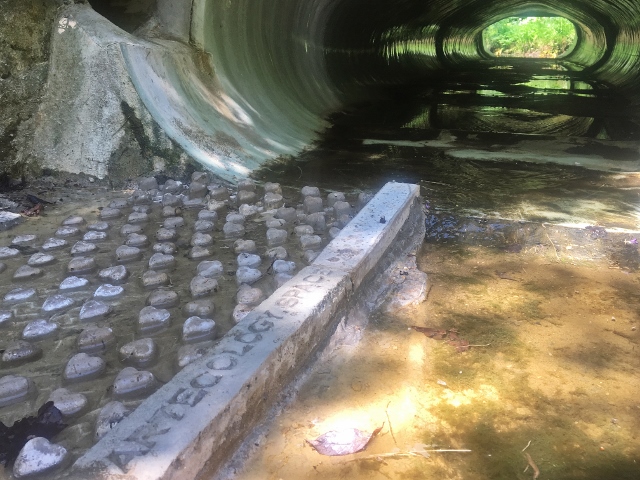
The ‘Eelevator’ which provides passage over step obstructions in the stream bed. Image: Artecology
The Eelevator is a tiled system, retrofitted directly onto the existing infrastructure, consisting of a steel-framed ramp lined with the eel tiles, joined to a kerbed 3-tile-wide pavement running up and into the culvert mouth. The ramp and tiles were made in the studio and installed on site over two days.
The design is intended to provide flow-control and textured purchase for eels to move upstream, combined with a very large surface area folded into the tile array, creating great surface complexity with abundant niches and micro-sites for colonisation and wildlife activity. And it looks amazing too! This is really important – creating new ornament in a public space, which makes it a better place for people as well as for wildlife!
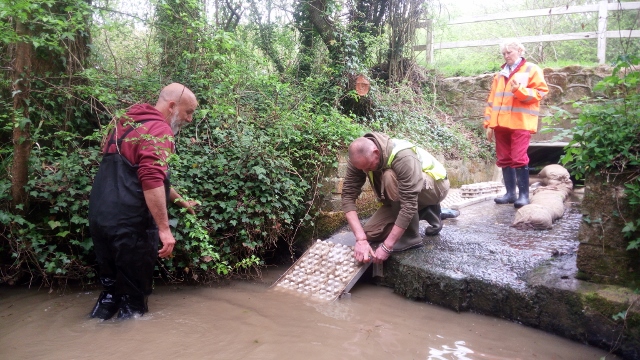
Installing the Eelevator. Image: Artecology
Another of your freshwater-orientated projects involves creating miniature earth-cast freshwater pools: what is this work about?
These are very simple bowl-shaped pools used to encourage wildlife encounters in urban environments, with the potential to build up high densities of ecological activity in small spaces through the use of folded cast surface textures.
The idea behind the pools isn’t really ‘biomimicry’ as such – which involves replicating naturally complex textures such as tree bark or bone matrix – instead a move towards human artistic responses to folded and intricate space. The pools themselves are therefore based on forms and shapes not necessarily found in the natural world at all.
The pools are portable and designed to be grouped and nested in sites where space allows. They are cast over earth-mounds in such a way that they come out lined with projections of various sizes and shapes boosting the colonisable surface by 20% or more, and creating a network of vertical spaces for flora and fauna to exploit. It’s fascinating!

Detail of the portable earth-cast pools, which create instant aquatic habitats in urban environments. Image: Artecology
Your work is grounded in interdisciplinary collaborations between ecology and art. Can you tell us a little about the promises and pitfalls of such boundary-crossing work?
There is beautiful book called ‘The Grammar of Ornament’, published in 1856, and written by architect and designer Owen Jones. It is a global and historical sourcebook of pattern and design, tremendously influential in its day and is still a reference work of importance. It is striking how dominant natural forms are in his book and Owen Jones develops this theme further in his commentary, encouraging further exploration of the natural world for inspiration.
We are, in a way, working at a ‘New’ Grammar of Ornament by designing beautiful and complex textures and patterns that are biologically favourable, that make the built environment more useful in ecological networks, make wildlife encounter more likely in public places, and add species richness to urban infrastructure.
Origami techniques can create amazing templates for cast concrete; folded fabrics lining moulds can deliver intricate pleated structures; and earth and sand-casting techniques can make beautiful hollow, perforated and stromatolitic objects for built and urban habitats. There is so much collaborative learning and experiment to take place, the only pitfall we can see is the vast excess of opportunity over time!

Geometric patterns on a ‘BioArmour’ tile developed with Glasgow University for installation on esturine sea walls. Image: Artecology
What can such interdisciplinary practices ‘do’ in the world, and who (and what) benefits?
One of the great advantages of interdisciplinary research and development for us is its appeal to academic institutions. We are currently working with undergraduates, MSc students and PhD researchers from six different universities in England, Wales and Scotland. This exposes us and our work to a fantastic pool of expertise, creativity and curiosity, new minds prepared to challenge what we do and work with us on better solutions and faster innovation. The STEM agenda in education is strongly supported by colleges and schools, and its extension to STEAM is building a strong constituency of support.

BioArmour tiles installed on an estuarine sea wall to encourage ecological colonisation. Image: Artecology
We want Artecology to play a part in this essential blurring at the edges of specialisms. Our experiences with groups as diverse as young carers, probation teams, NEETs and school groups of all ages has been quite amazing. The power of making and the thrill of seeing your creation adopted and used by wildlife is tremendous.
For us this is at the very heart of our work: the connection between people and wildlife, between communities and the environment they share with the natural world; this is human ecology. Interdisciplinary practice enables us to integrate a common purpose and a shared objective into every partnership we build, to shape better places for people and wildlife.
There are benefits too for the world of industry and development. Artecology combines environmental compliance with ecological ‘net gain’, community engagement and landscape design – a very potent mix for companies and partnerships building infrastructure, homes, factories and schools, and looking for efficient and distinctive solutions. One of the most interesting ideas we’re currently working on is the rethinking of construction sites as generators of ecological and community ‘meanwhile’ benefit inside hoardings, to be redeployed outside in the host environment once the site is handed back, as a permanent legacy. Could be fascinating!
Are freshwater ecology and art particularly fertile meeting points for collaborative practices?
Yes, I think you’re right to suggest that freshwater habitats offer a particularly rich source of collaborative potential. Artecology is all about texture and surface complexity, and in water the interface between hydrodynamic processes and ecological responses is densely populated with ecological activity in a way that is more intense than terrestrial environments.
We’re still very interested in the power of Artecology to alter and direct air and heat flow right up to the Planetary Boundary Layer, but rivers and ponds are more accessible! And of course our freshwater (and estuarine) projects have forged a close working relationship between Artecology and the Environment Agency. This collaboration continues to be of the utmost importance to the development of useful applications and meaningful solutions to the practicalities of managing the many competing interests in the water environment.

Lake Taihu on the Yangtze Delta Plain, China: one of the water bodies assessed in the new study. Image: Balázs Andor Zalányi | Flickr Creative Commons
Restoration is a key element of contemporary environmental management, as damaged or degraded ecosystems are guided towards healthier, more resilient and diverse states. As a result, there is widespread interest and attention given to restoration in scientific, management and policy circles globally, particularly about the outcomes and effectiveness of different restoration initiatives.
New insights into restoration management are emerging from China, where many aquatic ecosystems have been highly altered and degraded in recent decades. A new study published in the journal Water Research suggests that water quality in rivers and lakes across China has improved in recent years as a result of significant investment in environmental restoration and water treatment, funded by the Chinese government.
Rapid economic development since the 1970s across China has caused widespread water quality pressures. In particular, eutrophication as the result of nutrient pollution from households, sewage works, agriculture and industry has been a key cause of deteriorating water quality. Blooms of toxic cyanobacteria are common in severe eutrophication cases, and threaten drinking water supplies and aquatic biodiversity.
In the last two decades, the Chinese government has funded river and lake restoration and the reforestation of catchments and riparian zones across the country (e.g. the Natural Forest Conservation Program), in an effort to buffer pollutants and mitigate eutrophication effects. Parallel these restoration initiatives, significant investments have been made into the establishment of wastewater treatment plants, which reduce the amount of untreated human sewage which reaches aquatic ecosystems.
In order to investigate how these restoration management initiatives have influenced water quality in Chinese rivers and lakes, the researchers, led by Yongqiang Zhou from the Taihu Laboratory for Lake Ecosystem Research of the Chinese Academy of Sciences, collected existing weekly data on dissolved oxygen (DO), chemical oxygen demand (COD), and ammonium (NHþ4 -N) at 145 sites across China between 2006 and 2015. These data were analysed alongside data on land use and land cover, population density and GDP for each site, in order to give an indication of factors influencing water quality.
The researchers found a general improvement in water quality in Chinese water bodies, as shown by decreasing annual mean chemical oxygen demand and decreasing ammonium concentrations alongside increasing dissolved oxygen at the 145 nation-wide monitoring sites. Their analysis suggests that these water quality improvements have occured in recent decades alongside (or perhaps, despite) a parallel growth in GDP in local human populations.
This is attributed to government investments in both aquatic and riparian ecosystem restoration, and in more efficient water treatment plants. However, there is a geographical variation in their findings, as areas in the North China Plain and the Northeast China Plain were found to still have widespread poor water quality, as a result of intensive land use and high population density.
The researchers suggest that their results demonstrate that ongoing economic development does not necessarily need to come at the expense of water quality in rivers and lakes. “This is good news, showing that China is taken strong actions to solve their environmental problems concurrently with a further increase in growth” says Prof. Erik Jeppesen from Aarhus University in Denmark, co-author of the paper and member of the EU MARS consortium. In particular, the authors highlight the importance of effective sewage treatment processes in reducing nutrient pollution pressures.
The study, however, is based on water quality data, and as such is likely to (at least partially) obscure the environmental impacts of other pressures such as dam construction, water abstraction and flow modifications, and the introduction of invasive species. In particular, dam construction for hydroelectric production has been widespread across China in the late 20th century, perhaps most notably of the Three Gorges Dam on the Yangtze River, (former) home of the presumed-extinct Baiji.
Whilst the improvements to water quality highlighted in this study are encouraging, river and lakes across China are still subject to multiple pressures impacting their ecological health and diversity. “The increasing use of fertilizers in agriculture and damming of rivers should be of particular concern”, warns Erik Jeppesen.

GLOBAQUA is an EU-funded project which investigates the effects of water scarcity on aquatic ecosystems in Europe. It aims to identify multiple stressors interactions caused by water scarcity, in order to improve knowledge of relationships between multiple stressors and to improve water management practices and policies.
In this week’s blog, two GLOBAQUA scientists – Nick Voulvoulis and Daniel Von Schiller – give updates on the project’s progress on informing the implementation of the Water Framework Directive, and in measuring ecosystem functioning in rivers.
+++
GLOBAQUA and the implementation of the Water Framework Directive
Nick Voulvoulis
The ultimate goal of GLOBAQUA is to explore how current EU freshwater policy will need to be adapted to minimise the ecological, economical and societal consequences of water scarcity and ongoing global change.
EU freshwater policy contains other elements, but the Water Framework Directive (WFD), is of over-arching importance. The Directive was adopted to replace traditional management practices, predicated upon the “command and control” paradigm that looked at pressures in isolation and reduced environmental systems to their constituent elements when setting specific water objectives.
Its introduction aimed to facilitate a shift from these policies to a holistic approach integrating all parts of the wider environmental system. Acknowledging that catchments differ from each other in terms of both socio-political and natural conditions, it signified a shift towards river basin management and systems thinking.
The WFD was recognised as the first European Directive that focused on environmental sustainability, and its introduction and innovations created a revolutionary prestige for the Directive, which was considered as a potential template and pilot for future environmental regulations.
However, fifteen years after the WFD was introduced, achieving its objectives remains a challenge. Despite some good progress, nearly half of EU surface waters (47%) did not reach the good ecological status in 2015 – a central objective of EU water legislation. In essence, the WFD has been criticised due to the limited progress in delivering water quality improvements across Europe.
In order to understand the problems with the WFD implementation, policy analysis and research undertaken within GLOBAQUA has been summarised in a first set of policy briefs. The briefs shed light on why the great expectations that came with the Directive have not yet been fully realised.
Key policy messages from GLOBAQUA:
- The effectiveness of the WFD and its approach has been widely questioned due to the limited progress in delivering water quality improvements across Europe.
- The absence of harmonised delivery of the WFD across Europe – seen as key to delivering good ecological status – was identified as a fundamental problem in its implementation.
- The process of acquiring in-depth understanding of the catchment rather than the more traditional focus on policy compliance requires a fundamental shift to systems thinking.
- Improving water status by managing pressures, improving participation and interdisciplinarity to address the complex issues associated with water management, all call for a transition towards systemic thinking that can only be achieved with real transformational change.
- Implementing the WFD like any other directive is not going to work. Unless current implementation efforts are reviewed or revised, the fading aspirations of the initial great expectations could disappear for good.

+++
A toolbox for measuring ecosystem functioning in rivers
Daniel Von Schiller
River ecosystems are subject to multiple stressors that affect their structure and functioning. River ecosystem structure refers to characteristics such as channel form, water quality or the composition of biological communities, whereas ecosystem functioning refers to processes such as nutrient cycling, organic matter decomposition or secondary production.
Nowadays there is much more information on structural than functional characteristics, and despite the many methods available to measure river functional properties, only structural ones are routinely used by river managers. Although structure and functioning influence each other, their relationship is not straightforward and often one cannot be automatically inferred from the other. Furthermore, environmental stressors can affect structure and functioning in contrasting ways. Thus, lack of development and implementation of tools to measure ecosystem functioning prevents the complete assessment and understanding of river ecosystems and the services they provide.

The GLOBAQUA toolbox
The GLOBAQUA toolbox is a critical and synthetic compilation of methods to measure ecosystem functioning in rivers, which can be adapted to different objectives, situations, budgets and levels of expertise. The toolbox includes a description of the main characteristics of each method, the aspects of the ecosystem they address, the environmental stressors they are sensitive to, possible difficulties in their implementation, as well as their general advantages and disadvantages.
Current limitations, potential improvements and future steps in the development of the toolbox are also discussed. The toolbox is tailored for scientists as well as for routine monitoring by water managers. Our ultimate purpose is to contribute to a more functional perspective in river research and management. The toolbox is openly available and will be updated continuously through the inputs of GLOBAQUA researchers and other contributors.

Schematic view of the GLOBAQUA toolbox

Floodplain on the River Ouse, Yorkshire. Image: alh1 | Flickr Creative Commons
Human activities have changed the flow, structure, ecology, chemistry and connectivity of rivers and lakes across Europe. Multiple pressures such as pollution, water abstraction and flow diversions are increasingly understood to act in combination, often reducing aquatic biodiversity and altering ecosystem functioning across the continent.
The EU Water Framework Directive is the ambitious water policy designed to reduce pressures and achieve a good ecological status for all European water bodies. However, assessing the multiple pressures acting on aquatic ecosystems, and understanding their combined impact on the ecological status of rivers and lakes is challenging, particularly at large scales. Understanding these interactions and impacts is crucial to the planning of effective water policy and management.
In this context, a recently published study provides an assessment of multiple human pressures and their relationships with ecological status for all European rivers. Writing in the (open-access) Nature: Scientific Reports journal, Bruna Grizzetti from the EC Joint Research Centre and colleagues estimate that only 38% of EU rivers reach ‘good’ or ‘high’ ecological status. 20% are rated as ‘bad’ or ‘poor’, whilst 42% are ‘moderate’.
The research team used ecological data collected across Europe, together with pressures including pollution, hydrological and hydromorphological alterations quantified in computer models. They found that good ecological status in rivers is most often associated with the presence of natural areas in floodplains. Floodplains can be important buffers of pollution, and give ‘room for the river’ to follow natural flow dynamics.
On the other hand, urbanisation and nutrient pollution are important pressure-predictors of ecological degradation. Urbanisation places a variety of pressures on aquatic systems, including water demands, hydrological and hydromorphological alterations, and wastewater releases; whilst nutrient pollution is widely-known as a catalyst for harmful eutrophication and cyanobacteria blooms.
Individual pressures have different geographies, according to the study. Nitrogen and phosphorous concentrations are highest in areas with intensive lowland agriculture in both Northern and Southern Europe, whilst urban run-off and water demand are more evenly distributed across populated regions of the continent. Persistent low flows are most common in Mediterranean regions of Spain, Portugal and Italy.
The most heavily modified flood plains are found in central Europe – particularly in Germany and the Netherlands – whilst the most ‘natural’ floodplain systems are found in Alpine regions and Scandinavia. Artificial and agricultural land cover is widespread across the continent (except for northern Scandinavia), and is most intensive in southern England, northern France, Netherlands and Germany.
Member states are required to conserve and restore their aquatic ecosystems to ‘good’ ecological status. The study found that only 32% of EU rivers currently meet this target. As a result, the research team used computer models to simulate the ecological effects of different management measures aimed at improving ecological status. They tested scenarios in which nitrogen pollution was reduced, and natural areas in floodplains increased, as these pressures were among the most significant variables explaining good ecological status.
The research team found that 4% of EU catchments with degraded rivers would achieve good ecological status by reducing nitrogen pollution and increasing natural areas in floodplains by 10%. Up to 8% of catchments could meet the policy target if the same measures were raised to 20%.
The predicted increase in good ecological status by simultaneously reducing nitrogen concentrations and enhancing natural floodplain areas is slightly higher than that achieved through changing the two pressures independently. This is known as a ‘synergistic’ multiple pressure effect, in which pressures interact to have ecological impacts greater than the sum of their individual parts.
As a result, the researchers write that maintaining natural floodplains and limiting nitrogen pollution should be key measures used to improve the ecological status of rivers and achieve Water Framework Directive goals.
What is good ecological status and why does it matter?
‘Good ecological status’ is a key term in the EU Water Framework Directive – the policy framework through which European freshwaters are managed. Member states are required to conserve and restore their rivers and lakes to good ecological status by 2027. But what does ‘good ecological status’ mean, and why does it matter?
A new film by the EU MARS project gives an engaging and accessible introduction to the concept. Produced by MARS scientists Christian Feld and Sebastian Birk at the University of Duisburg-Essen, the short film ‘Good ecological status of rivers and lakes’ emphasises the value of healthy aquatic ecosystems to human and non-human life, both now and in the future.
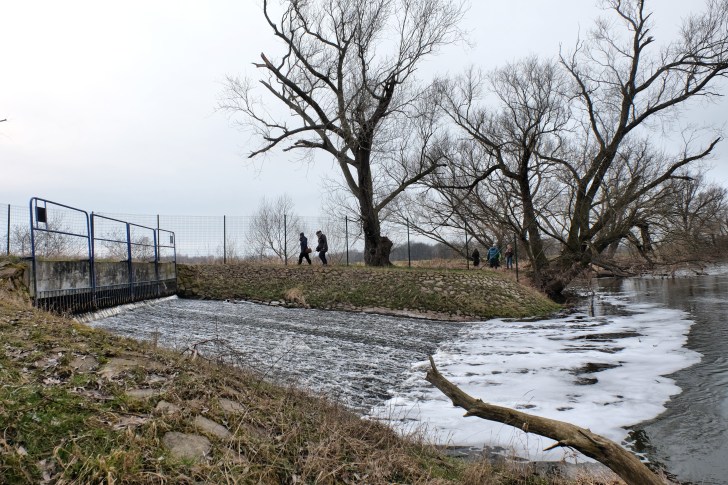
Discharge of treated wastewater from Bitterfeld-Wolfen to the River Mulde. Image: SOLUTIONS
A guest post by Werner Brack of the SOLUTIONS project
+++
Mutagenicity – where chemicals interact with our genes, resulting in harmful mutations, potentially causing cancer and damaging our offspring – is a major environmental concern. Mutagenicity in drinking water resources – including many European rivers, lakes and reservoirs – is a particular problem. Although rarely investigated, similar mutation effects can be observed in wildlife, and it is still under debate whether mutagens can damage whole populations.
Mutagenic effects can be detected in water and other samples using biotests such as the Ames test, which uses different strains of Salmonella bacteria. In the River Rhine and other rivers and lakes mutagenicity has been frequently detected, however there has been no success in identifying the compounds causing this effect.
New research by the SOLUTIONS project is providing new insights into these problems. Investigations on the River Rhine and the Rivers Mulde and Holtemme from the Elbe catchment provide evidence on possible drivers of mutagenicity and of its effects on wild populations of freshwater shrimps (Gammarus pulex).
The River Mulde is impacted by historical pressures from Bitterfeld-Wolfen, one of the oldest chemical industrial sites in Germany, which still supports multiple chemical production processes today. Wastewater is discharged after treatment in a large mixed industrial and municipal treatment plant to the river.
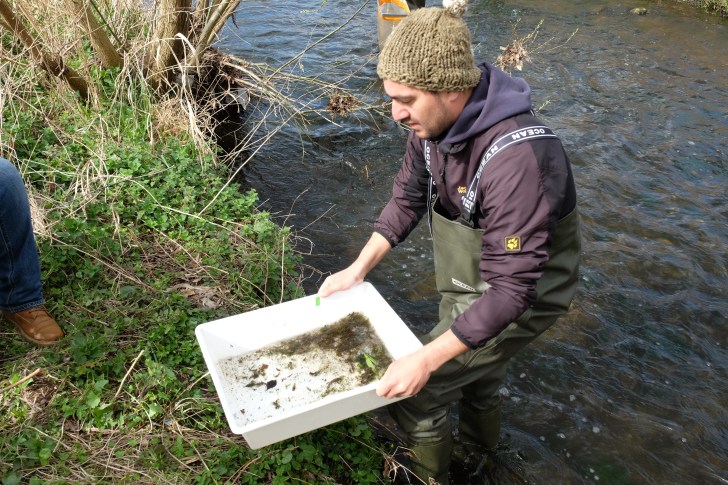
Dr. Pedro Inostroza (UFZ) collecting samples of Gammarux pulex at Holtemme river in Germany. Image: SOLUTIONS
Two years ago, scientists from the Helmholtz Centre for Environmental Research found mutagenic effects downstream from the wastewater discharge (Hug et al., 2015). Now they are able to identify causes. Two potent mutagenic aromatic amines (2,3- and 2,8-phenazindiamine) were emitted into the river; compounds that probably stem from dye production, and explain up to 80 % of the observed mutagenic effects (Muz et al., 2017a) In short, chemical pollution on the river is causing mutations in aquatic organisms, causing significant stress to the ecosystem health and status.
In the River Rhine the situation is more complex. As there are multiple water inputs from tributaries and treated wastewater from industries and households, it is not one or a couple of chemicals causing mutagenicity: instead a mixture effect. However, the latest investigations show that it is not just the poorly-defined and complex mixture of ten thousands of chemicals and effects adding up (Muz et al., 2017b). There are clear drivers of mixture mutagenicity. Aromatic amines from industry meet carboline alkaloids such as norharman known from coffee, tobacco smoke and well-cooked food.
Interestingly, these drivers are not (or only very weakly) mutagenic as individual compounds. However, when taken up by organism together as a mixture they react to highly potent mutagens. Although this effect explained only a part of the found mutagenicity in the Rhine River it may provide a key for better understanding environmental mutagenicity.

Diagram of mixture mutagenicity found in River Rhine. Reproduced from Muz et al. 2017
And what about new indications that mutagenicity is affecting wildlife populations? To demonstrate these effects SOLUTIONS scientists investigated another water body, the River Holtemme in Saxony-Anhalt, Germany. There are indications that mutagenic wastewater components may impact on the genetic diversity of freshwater shrimps. Downstream of a wastewater effluent discharge which caused mutagenic effects in the Ames test, genetic diversity of freshwater shrimps dropped. At the same time, so-called private alleles were occurring, exotic pieces of DNA that are an indication of mutations.
The evidence is increasingly clear: chemical pollution can cause mutations to aquatic organisms which damage their health and diversity. The question, then, is how to find policy and management solutions to limit chemical pollution wherever possible.
+++
If you would like to read more:
C. Hug, M. Sievers, R. Ottermanns, H. Hollert, W. Brack, M. Krauss (2015) Linking mutagenic activity to micropollutant concentrations in wastewater samples by partial least square regression und subsequent identification of variables. Chemosphere 138:176-182
P.A. Inostroza, I. Vera-Escalona, A.-J. Wicht, M. Krauss, W. Brack, H. Norf (2016) Anthropogenic stressors shape genetic structure: Insights from a model freshwater population along a land use gradient. Environ. Sci. Technol. 50:11346-11356
M. Muz, J.P.Dann, F. Jäger, W. Brack, M. Krauss (2017a) Identification of mutagenic aromatic amines in river samples with industrial wastewater impact. Environ. Sci. Technol. accepted
M. Muz, M. Krauss, S. Kutsarova, T. Schulze, W. Brack (2017b) Mutagenicity in surface waters: Synergistic effects of carboline alkaloids and aromatic amines. Environ. Sci. Technol. 51:1830-1839
AQUACOSM: linking lakes, rivers and oceans across Europe
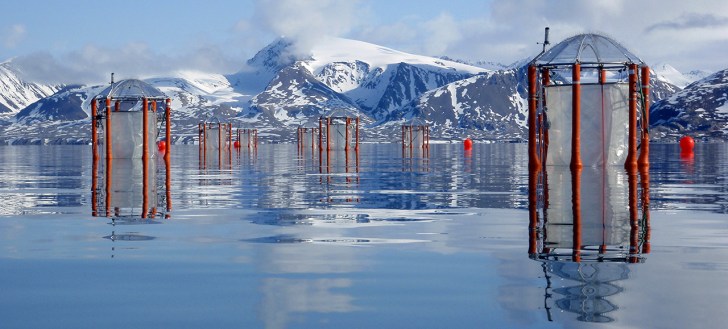
KOSMOS marine mesocosms off Svalbard in the Arctic Circle. Image: Signe Klavsen
Water connects lives at all scales, supporting human and non-human populations alike, through networks that link Earth’s most remote areas with some of its biggest cities. The ecological inter-connectedness of freshwater and marine habitats – lakes, rivers, estuaries and oceans – is increasingly acknowledged by scientists and water managers. However there is the need for large-scale experimental research in order to better understand the dynamics and threats of these connected aquatic systems.
Scientists from 19 leading research institutes and universities, and two enterprises from 12 countries, across Europe are collaborating on a new project AQUACOSM, a “Network of Leading European AQUAtic MesoCOSM Facilities Connecting Mountains to Oceans from the Arctic to the Mediterranean”. AQUACOSM will support the first systematic large-scale ecological experiments in linked freshwater and marine ecosystems. The project is coordinated and led by Leibniz-Institute of Freshwater Ecology and Inland Fisheries (IGB) in Germany.
“For more than 100 years, inland water and marine research have largely developed in parallel to each other. Now it’s time to reunite both”, says IGB researcher Jens Nejstgaard, who leads the new EU-funded project. In AQUACOSM, scientists from both marine and freshwater realms are joining up an integrated, international network of experimental infrastructures. Their aim is to significantly improve the quality of experimental data for all types of water. “We want to better coordinate international large-scale experimental research projects, develop good practices together, and open up the freshwater and marine mesocosm research infrastructures for a broader international, interdisciplinary collaboration,” outlines Nejstgaard.
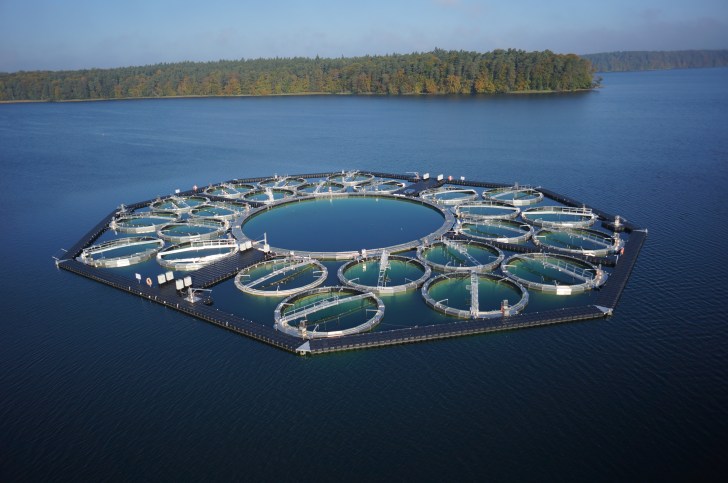
The IGB LakeLab in Lake Stechlin, Germany. Image: HTW Dresden-Oczipka
The project uses a network of experimental mesocosms across Europe. Mesocosms are structures used to recreate variables from the natural environment within controlled, observable conditions. In other words, mesocosms create an ‘ecosystem in minature’, bridging the gap between laboratory work and field studies, where the effects of different climatic and human pressures on the environment can be simulated.
AQUACOSM researchers will examine how different aquatic ecosystems react to environmental impacts caused by global climate change and population growth. “The impact of these stress factors can vary widely within different ecosystems and seasons”, emphasises Nejstgaard. As a result, they have to be investigated in different climatic and geographic regions, using comparable mesocosm experiments and measurement methods. AQUACOSM connects the infrastructures needed to do such experimental research across a range of different European water types, through climatic and geographic zones stretching from the Arctic to the Mediterranean.

The AQUACOSM project team. Image: AQUACOSM
The AQUACOSM experimental infrastructures include tank systems and flow channels on land such as in Lunz am See in Austria, and large free-floating open-ocean facilities such as the Kiel Offshore Mesocosms (KOSMOS) off Svalbard in the Arctic. The IGB-LakeLab in Lake Stechlin, Germany is one of the largest facilities in the world, providing 24 mesocosms, each containing 1,270 m³ of water, supporting research into the impacts of climate change on deep water lakes.
AQUACOSM will offer researchers, both from Europe and further afield, the opportunity to access and use this connected network of mesocosms, as a means of fostering new collaborations and large-scale ecological insights across biomes. This research is intended to feed into networks of stakeholders – water managers and policy makers, for example – as a means of strengthening the protection and restoration of aquatic habitats, both freshwater and marine.








 The Freshwater Blog