‘Modest’ fine sediment and phosphate pollution in English rivers causes mortality of up to 80% of mayfly eggs

Blue-winged Olive. Image: Francisco Welter-Schultes | Wikipedia Creative Commons
Increased levels of fine suspended sediment and phosphate in aquatic ecosystems can have significant negative impacts on the survival of mayfly eggs, according to a new study. Relatively modest levels of pollution can kill up to 80% of eggs, with potentially devastating effects on mayfly populations and wider aquatic food webs.
Writing in the journal Environmental Pollution, a team of researchers led by Nick Everall of the Aquascience Consultancy carried out experiments on the blue-winged olive, a species of mayfly found across Europe, whose populations have fallen in recent decades.
Fine sediments and phosphate pollution from agricultural run-off and untreated sewage have been identified as key causes of this decline. However, until now, research has focused largely on the response of adult and larval mayfly to such multiple stressors.
Supported by the Salmon and Trout Conservation UK, the research team collected eggs of the blue-winged olive to be incubated in laboratory aquariums under different concentrations of fine suspended sediments and phosphate.
In the wild, blue-winged olive eggs are laid on the beds of fast-flowing streams and rivers, and have to survive over winter for up to eight months before hatching into nymphs. As a result, it is important to understand how stressors affect this crucial early stage in the insect’s life cycle. The researchers found that fine sediments cover mayfly eggs, starving them of oxygen and encouraging fungus growth, whilst phosphate can inhibit egg development.
When low levels of fine sediment were added to experiments with raised phosphate levels, the mortality of mayfly eggs increased significantly. However, when phosphate was added to experiments with increased amounts of fine sediment, mortality was not significantly increased.
This finding suggests that fine sediment has a greater impact on mayfly egg mortality than phosphate. As a multiple stressor relationship, it suggests that the run-off of fine sediments into aquatic ecosystems already stressed by phosphate pollution could have significant negative consequences for mayfly populations.
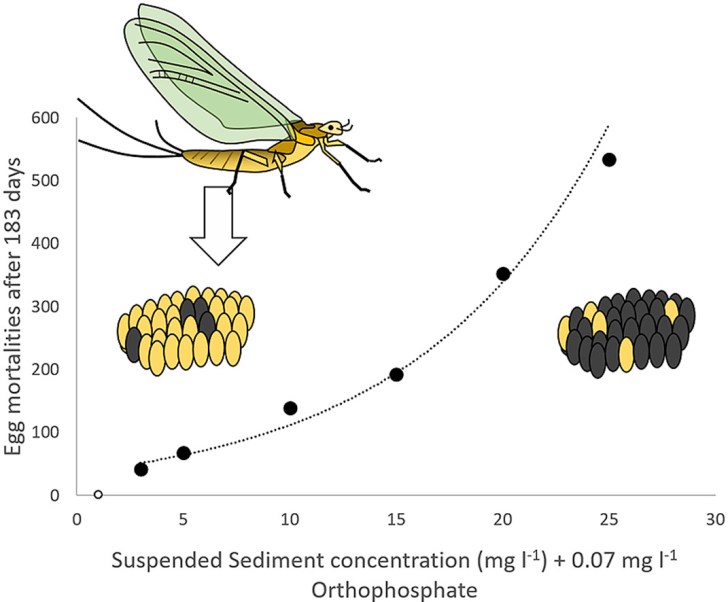
Mayfly egg mortality increases as suspended sediment concentrations rise at a constant level of phosphate concentration. Image: Journal Authors.
Significantly, relatively modest levels of each stressor had damaging effects on mayfly egg survival. The concentrations of fine sediment and phosphate used in this experiment were largely below the Water Framework Directive defined thresholds for river management in England. At levels close to the upper limits for management – 25mg per litre of fine sediment and 0.07 mg per litre of phosphate – the mortality rate of mayfly eggs in the experiment was 80%.
Whilst the experimental conditions don’t fully represent the fluctuating nature of pollutant concentrations found in most rivers, the research team argue that their findings show that the annual mean suspended sediment guideline standard of 25 mg per litre for the UK is not sufficient to conserve mayfly populations.
More broadly, they suggest that increased attention needs to be paid to managing fine sediment into rivers across Europe, particularly as many rivers across the continent have raised phosphate levels. The implementation of effective mitigation strategies for reducing erosion and run-off of fine sediments from agricultural land surrounding rivers is clearly needed.
MARS final conference: Managing multiple stress for multiple benefits in aquatic ecosystems
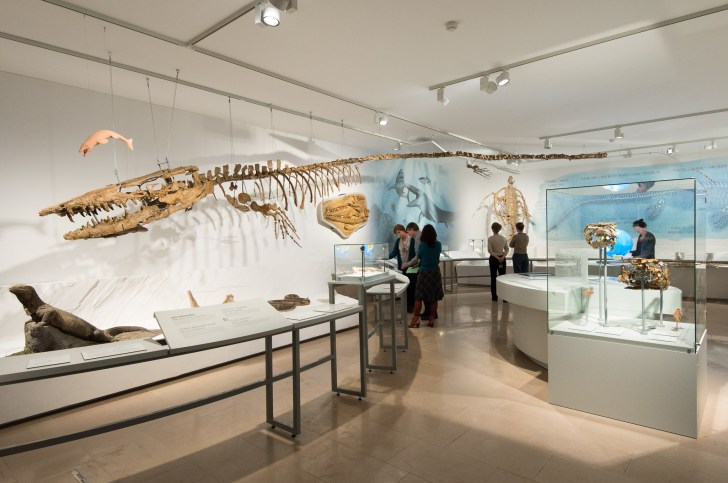
Museum of Natural Sciences, Brussels. Image: IRSNB – Thierry Hubin
Over the last four years, the MARS project has investigated the impacts and interactions of multiple stressors in European aquatic ecosystems. Funded under the EU FP7 programme, research within MARS has addressed uncertainties over how to detect, conceptualise and manage multiple stressors in surface waters. MARS was designed to support the implementation and review of the EU Water Framework.
This month MARS will host a conference ‘Managing multiple stress for multiple benefits in aquatic ecosystems’ in Brussels, Belgium to communicate the key results and recommendations from the project. Taking place over two days on 16-17 January, the conference will be have two themes – science, and management/policy.
Conference events on Tuesday 16th will focus on scientific findings, and feature sessions which summarise and review the main MARS outcomes within the context of aquatic multi-stressor research.
On Wednesday, 17th, discussions will turn to the management and policy implications of MARS research. Conference sessions will introduce MARS products for managers and policy makers (such as factsheets, guidance and tools) and discuss effective river basin management and policy under multi-stress conditions.
Hosted by the Museum of Natural Sciences in Brussels, the conference is likely to be of interest to aquatic scientists, water managers and administrators, as well as policy-makers and executives. Conference registration is free.
A conference agenda with full details of speakers and sessions is available as a PDF here.
Top 17 posts of 2017

Water outflows from Fewston Reservoir, UK. Image: James Whitesmith | Flickr Creative Commons
As the end of the year approaches, we’ve looked back over 2017 to collect 17 of our most popular posts on freshwater science, policy and conservation.
It’s been the most successful year yet for the Freshwater Blog, with record numbers of visitors. Thanks, as always, for reading. You can keep up to date with our posts, and add your voice to the debate, through our Twitter, Facebook and LinkedIn pages.
The MARS project, which has investigated the interactions and impacts of multiple stressors on aquatic ecosystems since 2014 (and which supports this blog), hosts its final conference in January 2018. You can find out details here.
Happy 2018!
+++
Caddisfly larvae tend remarkable underwater ‘gardens’ (January)

Caddisfly (Tinodes waeneri) larva. Image: Guam Insects | Creative Commons
Caddisflies are found in freshwaters across Europe, with their larvae well-known for their remarkable ability to build cases from organic materials such as vegetation, sand and silt (which can take on beautiful creative forms). In Britain alone, there are around 200 different caddisfly species, making them one of the most diverse groups of pond animals.
New research by a team of ecologists from the UK, Germany and Malaysia has shown how caddisflies are not only resourceful ‘house builders’, but also productive ‘gardeners’ of their habitats. Writing in Freshwater Biology, the researchers, led by Nicola Ings, describe how caddisflies actively encourage food growth in their local environment, through ‘weeding’ and ‘fertilisation’. (read more)
+++
Small birds, big effects: the little auk transforms high Arctic ecosystems (February)

Little Auk colony on the Cape York Peninsula, Greenland. Image: T Davidson
The North Water Polynya is a large area of open sea in Baffin Bay between Greenland and Canada. The area is the largest polynya – an area of sea that remains ice-free year-round, though surrounded by sea ice – in the world, and is one of the most biologically productive marine habitats in the Arctic Ocean.
Ecosystems on the Greenland coastline of the North Water Polynya are transformed – both positively and negatively – by nutrients brought back to land from the open sea by a tiny ‘ecosystem engineer’ bird, the little auk, according to a new study. (read more)
+++
Life in a Drop of Water: an interview with underwater photographer Liam Marsh (February)

Mayfly larvae after moult, in a drop of water. Image: Liam Marsh
+++

The restored Lippe River in Germany. Image: Benjamin Kupilas | REFORM
A new study by researchers based in Germany and the USA examined the responses of fish communities to the restoration of the Lippe River in Germany over a 21 year period. The Lippe has been heavily modified by human activity since the early 1800s, with a largely reinforced and straightened channel and bed, highly fragmented flows as a result of numerous weirs, and the widespread destruction of its riparian and floodplain landscapes.
The research team analysed data collected for 4 years before, and 17 years after, restoration at Klostermersch, where two stretches totaling over 3km in length were restored in 1996 and 1997. Restoration involved reconnecting the river’s floodplain with the river, removing bank fixations, widening the river from 18 to 45 metres in width, building a series of small islands, introducing full trees as deadwood, and reintroducing ‘natural’ floodplain drainage systems. In essence, the Lippe River ecosystem was encouraged to become more diverse in structure and dynamic in process. (read more)
+++
Common ground for multiple stressor research (March)

Delegates at the Portugal meeting. Image: Vanessa Bremerich / Markus Venohr
Last week, researchers from three EU aquatic science projects – MARS, GLOBAQUA and SOLUTIONS – met in Sesimbra, Portugal to present their findings, and to discuss opportunities for collaboration. The three projects share a common interest in the effects of multiple stressors on aquatic ecosystems, and their representatives met at a workshop to develop the potential for shared outputs such as policy briefs and water management guidance. (read more)
+++
The rapid evolution of Europe’s newly-discovered first cave fish (March)

The newly discovered cave loach from the Danube-Aach system. Image: Jasminca Behrmann-Godel
A diver has made an unusual discovery in an inaccessible underground cave system in Southern Germany: a population of Europe’s first documented cave fish. The pale coloured loach of the genus Barbatula is thought to have diverged from surface fish around 16,000 to 20,000 years ago, following the retreat of ice age glaciers.
“The cave fish was found surprisingly far in the north in Southern Germany,” said project leader Jasminca Behrmann-Godel of the University of Konstanz in Germany, lead author on a newly-published study in Current Biology. “This is spectacular as it was believed before that the Pleistocene glaciations had prevented fish from colonizing subterranean habitats so far north.” (read more)
+++
What is good ecological status and why does it matter? (April)
‘Good ecological status’ is a key term in the EU Water Framework Directive – the policy framework through which European freshwaters are managed. Member states are required to conserve and restore their rivers and lakes to good ecological status by 2027. But what does ‘good ecological status’ mean, and why does it matter?
A new film by the EU MARS project gives an engaging and accessible introduction to the concept. Produced by MARS scientists Christian Feld and Sebastian Birk at the University of Duisburg-Essen, the short film ‘Good ecological status of rivers and lakes’ emphasises the value of healthy aquatic ecosystems to human and non-human life, both now and in the future. (read more)
+++
Multiple pressures and the ecological status of European rivers (May)

Floodplain on the River Ouse, Yorkshire. Image: alh1 | Flickr Creative Commons
The EU Water Framework Directive is the ambitious water policy designed to reduce pressures and achieve a good ecological status for all European water bodies. However, assessing the multiple pressures acting on aquatic ecosystems, and understanding their combined impact on the ecological status of rivers and lakes is challenging, particularly at large scales. Understanding these interactions and impacts is crucial to the planning of effective water policy and management.
In this context, a recently published study provides an assessment of multiple human pressures and their relationships with ecological status for all European rivers. Writing in the (open-access) Nature: Scientific Reports journal, Bruna Grizzetti from the EC Joint Research Centre and colleagues estimate that only 38% of EU rivers reach ‘good’ or ‘high’ ecological status. 20% are rated as ‘bad’ or ‘poor’, whilst 42% are ‘moderate’. (read more)
+++
Environmental restoration prompts widespread water quality increases in China (May)

Lake Taihu on the Yangtze Delta Plain, China: one of the water bodies assessed in the new study. Image: Balázs Andor Zalányi | Flickr Creative Commons
Restoration is a key element of contemporary environmental management, as damaged or degraded ecosystems are guided towards healthier, more resilient and diverse states. As a result, there is widespread interest and attention given to restoration in scientific, management and policy circles globally, particularly about the outcomes and effectiveness of different restoration initiatives.
New insights into restoration management are emerging from China, where many aquatic ecosystems have been highly altered and degraded in recent decades. A new study published in the journal Water Research suggests that water quality in rivers and lakes across China has improved in recent years as a result of significant investment in environmental restoration and water treatment, funded by the Chinese government. (read more)
+++
The European eel is one of the continent’s most remarkable and wide-ranging aquatic animals. Young eels (known as elvers) are born in the Sargasso Sea in the West Atlantic Ocean, and migrate back to European watercourses. Here, they mature and grow larger over a number of years, before making the journey back to the Sargasso Sea to spawn themselves.
However, European eel populations are subject to considerable threats. Some eel populations have dropped by over 90% across the continent in recent decades, largely as the result of overfishing and habitat loss. The European eel has been designated as ‘Critically Endangered’ by the IUCN Red List of Threatened Species since 2008 as a result.
A new community-engaged animation has sought to tell the eel’s story, through the voices of children. Protect the Eels is a an animated journey into the hidden ecologies of the River Avon in south-west England, as told by the children of Victoria Park Primary School Bristol, using their drawings, ideas and voices. (read more)
+++
The politics of biodiversity and hydropower on ‘Europe’s last wild river’ (July)
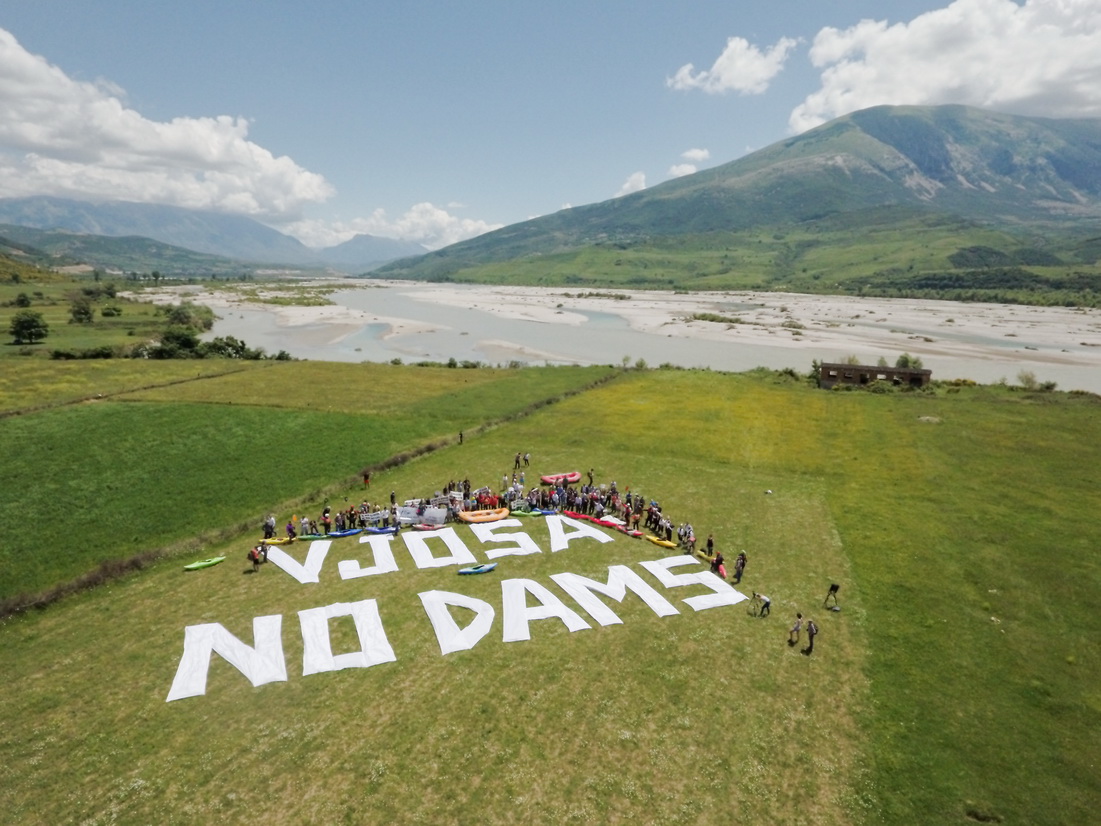
Local residents and environmental NGOs protest against hydropower development on the Vjosa. Image: Oblak Aljaz
After 20 years of postponement, an unfinished hydropower construction on the Vjosa River in Albania was cancelled earlier this year. The Vjosa is Europe’s last ‘wild’ large river, flowing entirely unobstructed through inaccessible gorges and enormous gravel banks and islands on a course of almost 270 kilometers from the Pindus Mountains to the Adriatic Sea. However, the river system is currently the subject of a number of hydropower constructions, which potentially threaten its rich – but little researched – biodiversity. (read more)
+++
European public want more environmental protections according to new survey (August)

Water is a key element of EU environmental policy. Image: Symbolique 2006
Over half of the European public are in favour of more environmental protections across the continent, according to a new European Parliament survey.
53% of the 27,901 EU citizens interviewed by Kantar Public for the survey thought that existing environmental protections across Europe were ‘insufficient’. 75% of citizens thought that more policy and management interventions were necessary to protect European environments. (read more)
+++
Vulnerable estuary fish populations require stronger conservation management (August)

Gweek estuary, Cornwall. Image: Tony Armstrong | Flickr Creative Commons
Estuaries are transitional ecosystems where freshwater and marine waters meet, and their biodiversity overlaps. As a result of their supporting roles in trade, transport, fishing and tourism, estuaries are often also highly altered and pressurised ecosystems.
According to a new study, European estuaries are home to some of the most vulnerable and least resilient estuarine fish populations in the world. Writing in Nature Scientific Reports, Rita P. Vasconcelos and colleagues outline that European estuaries are particularly pressurised by human activities such as overfishing, habitat alteration and pollution. However, the authors of the newly published study argue that these highly-pressurised European estuaries are often lacking in sufficient protected area coverage to help conserve vulnerable fish species. (read more)
+++
The restoration of large woody debris rapidly increases degraded river biodiversity (September)

The River Wensum in Norfolk, England – one of the rivers used to observe the effects of large woody debris additions in this study. Image: Colinsd40 | Flickr Creative Commons
The reintroduction of large woody debris is a common tool for river restoration schemes which aim to encourage biodiversity and natural flood protection. However, environmental managers have, as yet, been hindered by a lack of scientific evidence on the ecological effects of adding trees and logs to river and stream ecosystems.
A new study by Murray Thompson from the Centre for Environment, Fisheries and Aquaculture Science and colleagues provides valuable new insights to this knowledge gap. Writing in the Journal of Applied Ecology, Thompson and colleagues report on how the presence or absence of large woody debris influences aquatic species and food webs along five rivers in England.
The research team found that populations of aquatic invertebrates and brown trout were higher in the restored and target stretches than in the control stretches. In other words, the presence of large woody debris caused rapid increases in invertebrate and brown trout abundance. (read more)
+++
Freshwater megafauna as conservation flagships? (October)
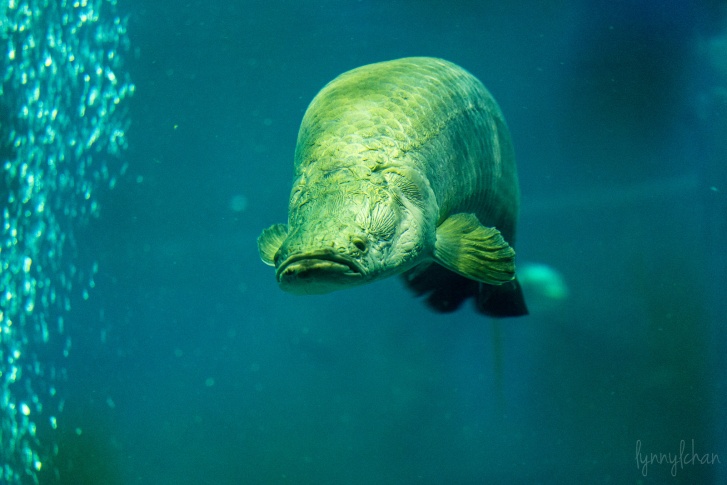
The arapaima, a fish native to the Amazon Basin, which can grow to over 3 metres in length. Image: Lynn Chan | Flickr Creative Commons
Freshwater megafauna such as sturgeon, river dolphins and turtles could act as valuable ‘flagships’ for freshwater conservation, according to a new open-access study published in the journal BioScience.
In the last decade or so, it has become apparent that freshwater biodiversity is both highly threatened, and is decreasing at a higher rate than its terrestrial or marine counterparts. In part, this awareness can be mapped to an influential – and highly cited – 2006 paper by David Dudgeon and colleagues.
Despite the multiple threats and pressures faced by freshwater ecosystems across the world, they tend to receive less conservation attention, research and investment than their terrestrial and marine equivalents. In their new paper, lead author Dr. Savrina F. Carrizo (IUCN) and Dr. Sonja Jähnig (Leibniz-Institute of Freshwater Ecology and Inland Fisheries, IGB) together with other IGB researchers and a team of international co-authors, suggest that freshwater megafauna could provide a focus for conservation action by acting as flagships for overlooked aquatic ecosystems and biodiversity. (read more)
+++
Sketching another world: Stephen Thackeray’s aquatic art/science drawings (November)
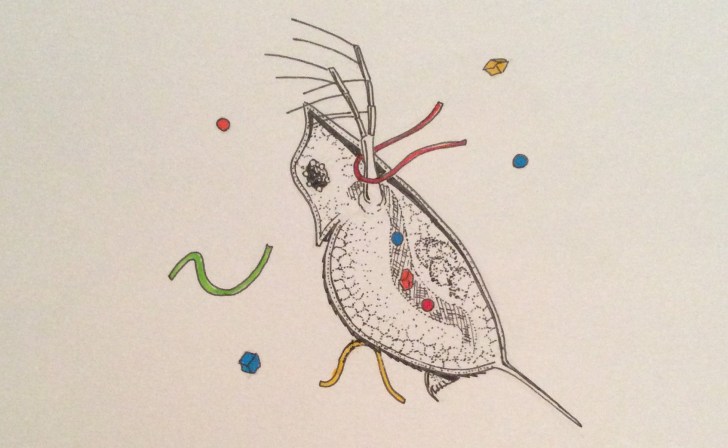
Daphnia and microplastics. Image: Stephen Thackeray
At the start of last month, a succession of drawings of curious organic forms began appearing on our twitter feed. Penned by CEH and MARS freshwater scientist Stephen Thackeray as part of ‘Inktober‘, the images revealed a fascinating underwater world of often-microscopic aquatic life.
Keen to find out more about his interdisciplinary talents, we spoke to Stephen about his art/science practice. (read more)
+++
AQUACROSS interviews address gender equality in research (November)

Image: AQUACROSS
AQUACROSS seeks to advance the application of ecosystem-based management for aquatic ecosystems in an effort to support the EU 2020 Biodiversity Strategy and other international conservation targets. The women featured in the AQUACROSS interview blog series will share their common passion for aquatic biodiversity and conservation, their motivations to advance scientific knowledge, and their stellar achievements on this path.
Ultimately, in outstanding research there are no genders. We as researchers share a passion for providing answers and transferring our science to others, with the pledge to leave behind a better world than the one we found. The featured interviews in this blog series will showcase the progress that these AQUACROSS researchers are carrying out towards this goal. (read more)
+++
Thanks for reading, and a very happy 2018 to you!
How do multiple stressors affect food webs in South Wales streams?
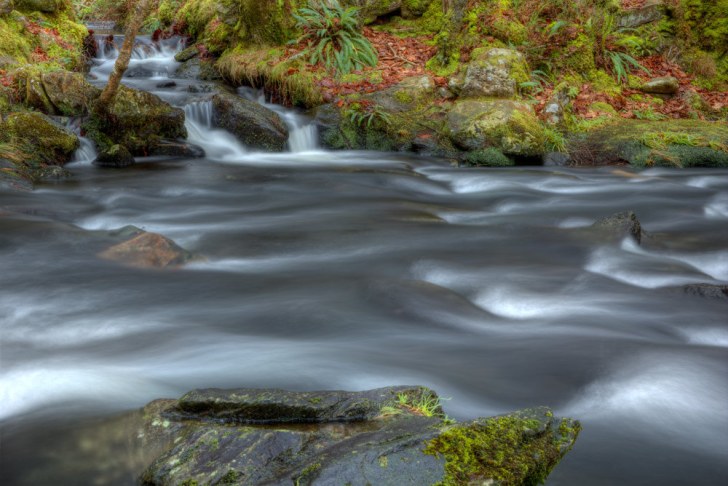
A Welsh stream. Image: Kev Lewis | Flickr Creative Commons
Human activities are altering freshwater ecosystems and biodiversity across the world at an unprecedented rate. However, predicting how freshwater species populations are affected by multiple stressors is often difficult, as a result of the complex and interactive ecological processes such as trophic links, competition and mutualism that take place across an ecosystem.
In turn, changes in species composition can have unexpected or emergent effects on ecosystem processes and dynamics. For example, changes in food availability and competition for predator species can lead to ‘trophic cascades’ throughout an ecosystem. As a result, predicting and mitigating the ecosystem-level effects of human stressors requires a detailed understanding of such ‘inter-specific’ interactions between species.
Stream ecosystems are often extremely sensitive to the impacts of human disturbance. The intensification of catchment land use – often agriculture and urbanisation – is a major driver of biodiversity loss in streams. Bottom-dwelling aquatic insects (or ‘benthic macroinvertebrates’) are often abundant in stream ecosystems, and their communities play key roles in a wide range of ecosystem processes.
However, despite increasing evidence that macroinvertebrate communities are being altered by human pressures, there has been relatively little research on the effects such alterations have on wider freshwater food webs.

Stonefly. Image: Wlodzimierz | Wikipedia Creative Commons
A new open-access study published in Molecular Ecology aims to address this shortfall. A research team led by Caitlin Pearson from the Cardiff School of Biosciences, Cardiff University used a DNA technique called ‘next generation sequencing‘ to investigate the feeding habits of two macroinvertebrates – the Caddisfly, Rhyacophila dorsalis and the Stonefly, Dinocras cephalotes – in streams affected by different intensities of livestock farming.
The study – carried out along ten upland streams in South Wales – allowed the research team to analyse how predatory macroinvertebrate diets varied along a land-use intensity gradient. As a result, it offers new insights into how human stressors affect ecological communities in streams.
Lead author of the study, Caitlin Pearson – who is now heavily involved in river conservation with the UK’s West Cumbrian Rivers Trust – summarises the key findings:
“We know that agricultural land use can affect streams and the organisms that live there, but know less of the consequences for stream food webs. In part this is because of the difficulties of resolving feeding interactions, particularly among small organisms or where predators eat soft-bodied prey that leave no remains. We tried to overcome these problem here by probing the guts of predators simultaneously for the DNA of many possible prey types using next generation sequencing.
Both of the predators we investigated were generalists, consuming overall 30 different prey taxa in proportion to their availability. This included greater use at agricultural sites of the prey that were tolerant of agricultural conditions. These are important new insights that tell us something of the mechanisms through which how land use affects stream communities, and potentially stream ecosystem functioning.”
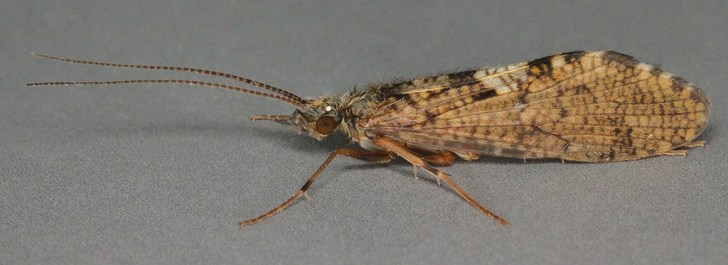
Caddisfly. Image: Janet Graham | Flickr Creative Commons
Cardiff University Professor of Ecology and MARS researcher Steve Ormerod continues:
“Modern molecular methods – such as next generation sequencing – are adding very powerful tools to the work of freshwater ecologists. In this example, we’ve not only gained a wholly new view of the way invertebrate predators feed, but also we have a new perspective of the way in which agricultural intensification affects stream ecosystems.
Predators such as the large and beautiful stonefly Dinocras cepahalotes are being lost from these sites more likely because of physical stressors such as sedimentation rather than because their prey are depleted. This is in line with similar effects we’ve seen previously (Larsen & Ormerod 2010), and illustrates how classical and modern ecological methods can work together for river management.”
Meet the AQUACROSS team: Andrea Funk

Dr Andrea Funk on an ecological survey of the Danube River. Image: Andrea Funk
This week we continue our series of interviews with researchers from the AQUACROSS project. AQUACROSS is an EU-funded project which seeks to advance the application of ecosystem-based management for aquatic ecosystems, to help support the EU 2020 Biodiversity Strategy and other international conservation targets.
Dr Andrea Funk is an expert in wetland ecology, with a special focus on biodiversity, and the restoration and conservation of river-floodplain systems. Her current research focuses on meta-community dynamics in floodplain networks, and species-distribution modelling with an emphasis on floodplain restoration.
We spoke to Andrea to find out more about her work, inspirations and aspirations in freshwater ecology.
What is your focus of your work in AQUACROSS, and why?
My work focuses on the coordination and implementation of the AQUACROSS assessment framework for the Danube basin. More specifically, my focus is on the river-floodplain system along the navigable stretch of the Danube River where we explore trade-offs and synergies of biodiversity targets (especially related to protected areas), ecosystem services (like recreation or tourism) and multiple human activities (like navigation or energy production) related to hydro-morphological alterations based on statistical models.

Riparian silver birch woodland on the Danube floodplain. Image: Andrea Funk
Why is your work important?
Floodplains are key elements for biodiversity protection. They are biodiversity hotspots, they provide a multitude of ecosystem functions and services, but, in turn are also hotspots of multiple human activities. Contributing to our understanding of these highly complex systems provides a basis for a strategic and more integrated management approach, as well as restoration planning.
What are the key challenges for freshwater management in Europe?
Biodiversity is declining rapidly, this is particularly acute for freshwater systems. Freshwaters host rich communities of life including many sensitive and endemic species. In turn, freshwater ecosystems are threatened due to multiple human activities which are also conflicting with multiple ecosystem services and ecosystem functions those systems provide. A main challenge is to balance all these different interests toward a sustainable protection of biodiversity.

Sunset over the Danube. Image: Andrea Funk
Tell us about a memorable experience in your career.
I’m used to having those memorable experiences quite frequently – scientific life is always full of surprises.
What inspired you to become a scientist?
I was always fascinated by water, mud (or call it aquatic sediments) and the life in it.
What are your plans and ambitions for your future scientific work?
With my modelling focus I hope that I can further contribute to the understanding of complex systems and therefore the conservation and restoration of biodiversity hotspots.
Brass, Three Down: multiple pressures on Arctic Charr populations in Lake Windermere
Lake Windermere is the largest natural lake in England. Plummeting to a depth of around 64 metres, its waters support one of Britain’s largest populations of Arctic charr. Charr are cold-water fish, most commonly found in sub-Arctic regions, and their presence in Windermere is often described as a ‘relic’ of the last ice age, as sea-run populations were trapped in the lake when glaciers retreated from the area around 12,000 years ago.
Arctic charr populations in Windermere live on the southern edge of the species’ habitat niche. As a result, they are the least resilient of the salmonid species to warming lake waters due to climate change. There are two distinct populations of charr in Windermere, which live in the deep basins to the north and south of the lake, separated by a shallower ridge.
Populations of charr in both basins have declined in the last 20 years, largely as a result of warmer lake waters which hold less oxygen, eutrophication from agricultural and waste water pollution, and the introduction of invasive species such as roach, which compete with charr for zooplankton prey.
A new film – available to watch in full above – called Brass, Three Down casts a poetic and meditative eye over the place of Arctic charr in the communities local to Windermere, and the multiple pressures their populations face. The film follows a local fishermen, who fishes for charr using traditional techniques (the types of lures used give the film its name), a potter who makes the ceramic pots used traditionally to preserve the fish, and a local chef using charr in his Michelin starred restaurant.
Produced by Henry Iddon and Richard Berry, Brass, Three Down also features Dr Ian Winfield from the Centre for Hydrology and Ecology, who are carrying out long-term ecological studies on charr populations in the lake, to inform conservation and restoration strategies.
Multiple stressor effects on fish assemblages in the Austrian Alps

The Drava River at Villach, Austria. Image: Andrey | Flickr Creative Commons
The rivers and stream ecosystems of the mountainous European Alps are under increasing stress as a result of human activities. So-called ’hydromorphological’ alterations – those which change the hydrological regime (or flow) and morphological character (or shape) – are particularly common on Alpine rivers and streams.
Such hydromorphological pressures are often caused by the construction of hydropower plants – which harness the power of fast-flowing streams to generate renewable energy – and flood protection measures along river and stream channels. In addition to alterations to water flows and aquatic habitat, hydromorphological pressures (or stressors) can cause alterations to habitat connectivity for migratory species and – indirectly – to water quality.
Scientists are increasingly documenting the numerous negative ecological impacts of these stressors in Alpine rivers and streams – particularly on fish populations. However, knowledge of stressor impacts remains incomplete, particularly when multiple stressors act in combination.
In this context, a new study investigates the ecological impacts of multiple stressor combinations on fish populations in two river basins in the Austrian Alps – the Drava and the Mura. The open-access study, published in Science of the Total Environment, was supported by the MARS and AQUACROSS projects.
“The river ecosystems of the European Alps are highly under stress through various human activities which are affecting the physico-chemical conditions of running waters and are strongly influencing and impacting their morphological character, hydrological regime and as a consequence, inhabiting aquatic biota and the overall ecological integrity,” explains lead author Rafaela Schinegger, a researcher at the Institute of Hydrobiology and Aquatic Ecosystem Management at the University of Natural Resources and Life Sciences, Vienna (BOKU).
“This is particularly true for many rivers and streams in the European Alps, which constitute the ‘water towers’ of Europe, providing numerous aquatic ecosystem services to their inhabitants and the areas beyond”.
“By analysing an extensive dataset from the 2nd River Basin Management Plan of the EU WFD implementation in Austria, we found a general trend of decreasing ecological integrity with increasing number of stressors and maximum stressor in two Alpine river basins of Southern Austria – the Drava and Mura rivers. Fish metrics based on age structure, fish region index and biological status responded best to single stressors and/or their combinations”, says Schinegger.

A small hydroelectric dam in the Austrian Alps. Such projects can cause multiple stressors on the river ecosystem. Image: Michael Thomas | Flickr Creative Commons
The research team identified seven different stressor categories of single stress or multiple stressor combinations, with up to four stressors acting together at a single site. Just under two-thirds (62%) of stressor-affected ecosystems were impacted by multiple stressor combinations.
Over two-thirds (69%) of the 2590 water bodies investigated across the Drava and Mura basins were impacted by significant human stressors. Connectivity disruptions were the most common stressor found in the basins (1213 water bodies: 47% total), followed by morphological alterations (578 water bodies: 22%), and water abstraction (413 water bodies: 16%).
This analysis provides invaluable information for water managers in the Austrian Alps seeking to prioritise their efforts to mitigate the effects of multiple stressors in rivers and streams. It shows that increases in stressor occurrence reduces overall ecosystem integrity, and that fish assemblages may be negatively affected by such multiple stressor combinations. In terms of biological response, fish metrics based on age structure, fish region index and biological status responded most to single stressors and/or their combinations.
“The knowledge gained in this work provides a basis for advanced investigations in Alpine river basins and beyond, supports WFD implementation and helps prioritizing further actions towards multi-stressor restoration and management.”
One significant finding made by the study is that 37% of headwaters in Austria’s river basins are still in a very good or good ecological state. The authors argue that there is a pressing need for environmental policy and management to protect these headwater reaches from human pressures, particularly from hydropower construction.
Meet the AQUACROSS team: Fiona Culhane
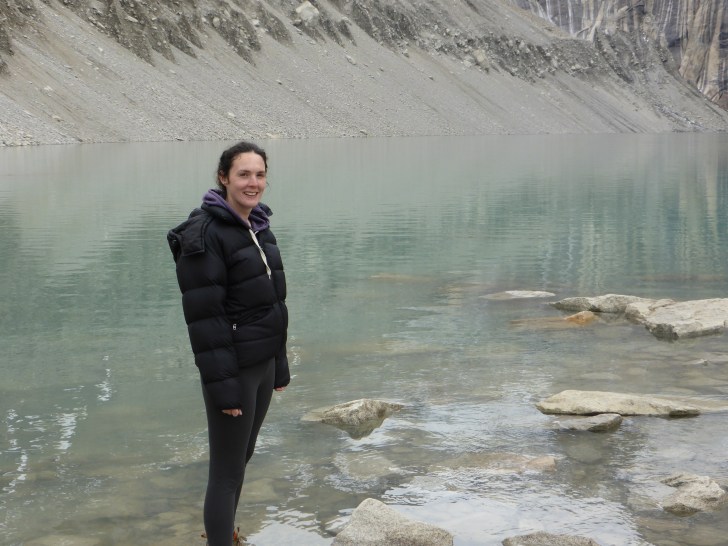
Dr. Fiona Culhane
Last week, Manuel Lago introduced the EU-funded AQUACROSS project in a blog post which called for a greater focus on gender equality in environmental science and policy-making.
This week, we begin the first of a series of interviews with AQUACROSS researchers by speaking to Dr Fiona Culhane from the University of Liverpool in England. Fiona introduces us to her research, and her motivations for studying aquatic environments.
Freshwater Blog: What is your focus of your work in AQUACROSS, and why?
Fiona Culhane: The focus of my work in AQUACROSS is on the links between people and aquatic ecosystems, from an ecologist’s perspective. Through AQUACROSS, I am exploring how human activities and the impacts these have on aquatic ecosystems will ultimately affect our own well-being and the socio-economic system, via the ecosystem. Though my main focus is on marine environments, I am interested in looking at these effects at a large-scale, across the aquatic realms, and developing methods that can work in data poor situations.
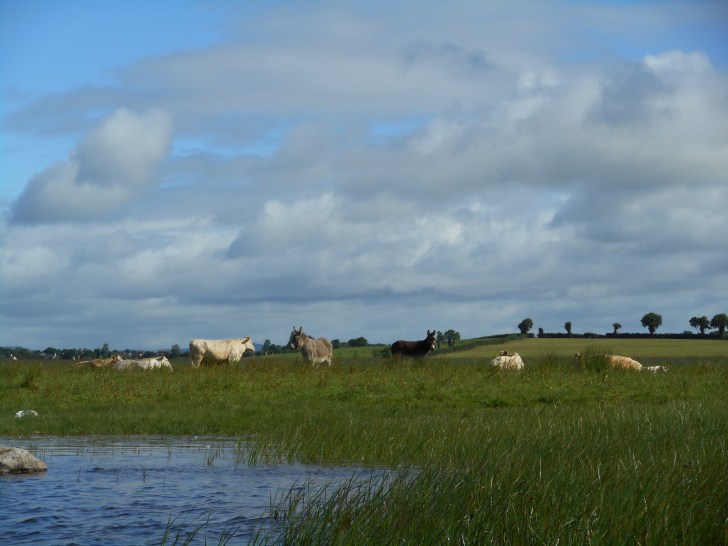
Cattle and donkeys grazing the edge of Lough Erne, Northern Ireland. Image: Fiona Culhane
Why is your work important?
In order to manage ecosystems sustainably, we need to understand the links in the system and the consequences of our own actions. If we put this in terms of our own well-being and the socio-economic system, we may better be able to highlight the trade-offs that occur with resource use so that we can make more informed decisions about how to protect the environment for future generations.
What are the key challenges for marine management in Europe?
Marine environments are large, highly connected ecosystems, where knowledge is often patchy or disparate. The challenge for management is to make decisions that take account of the connectivity and to do this with limited information.
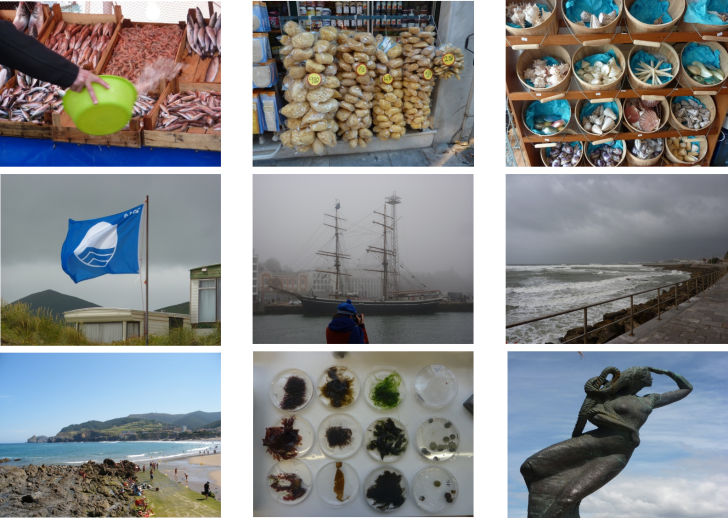
Marine ecosystem services are varied, and interlinked with those in freshwater and estuarine environments. Image composite: Fiona Culhane
Tell us about a memorable experience in your career.
When I started my first post-doc job at the University of Liverpool, I joined the team working on the ODEMM project. After years working alone on my PhD it was a big change. The group was highly collaborative and I realised how productive, inspiring and motivating it can be to work like that. It was a turning point for me because I recognised that was how I would like to continue working as a scientist in the future.
What inspired you to become an ecologist?
I have always loved nature and cared about the environment, most probably influenced by my mother as she is always pointing out different species of plants and animals to me. I was excited to get to secondary school, to finally be able to study science, which became one of my favourite subjects. As time went on, I saw that being a scientist could be a way to make a difference to the world. A job where I could travel and work outdoors was also really appealing to me.
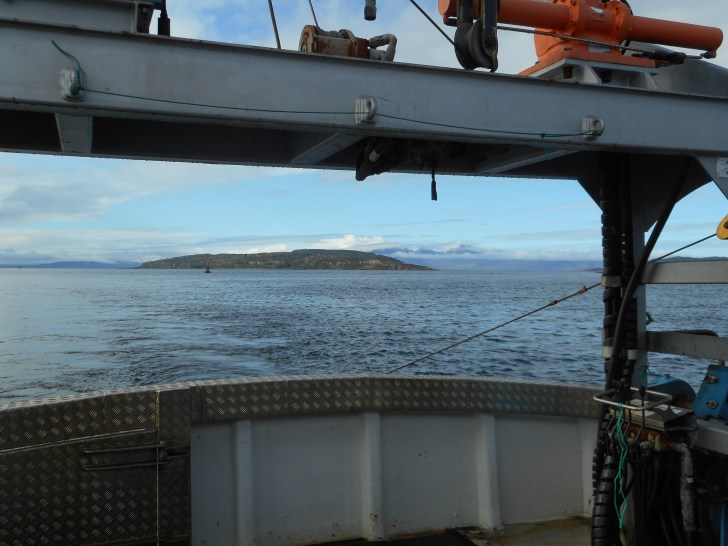
Looking out across the Firth of Clyde in Western Scotland. Image: Fiona Culhane
What are your plans and ambitions for your future scientific work?
As my career has progressed, I have seen that being an ecologist is not only about making a difference to the environment and biodiversity but also to people’s lives. I am very interested in the connection between the state of the ecosystem and the health and wellbeing of people. I am interested in developing methods that can work in data poor situations, such in the developing world, where the knowledge base is poor, but where people are most affected by changes to their ecosystems.
AQUACROSS interviews address gender equality in research
By Manuel Lago, AQUACROSS coordinator
This is the first of a series of blog posts introducing AQUACROSS, an EU Horizon 2020 research and innovation project sponsored by DG Research.
About AQUACROSS
AQUACROSS seeks to advance the application of ecosystem-based management for aquatic ecosystems in an effort to support the EU 2020 Biodiversity Strategy and other international conservation targets. AQUACROSS aims to develop and test an assessment framework which considers the full array of interactions, including human activities, within aquatic ecosystems. The application of the framework is tested in eight case studies across Europe.
AQUACROSS is a truly transdisciplinary and interdisciplinary research effort. Work in the case studies is co-developed with local stakeholders, and need to address complex socio-ecological systems integrates numerous different research disciplines including marine and freshwater ecologists, environmental modellers and social scientists. The project has been running since June 2015 and it is expected to conclude at the end of 2018.
AQUACROSS interview series
We would like to thank the Freshwater Blog for giving us the opportunity to present AQUACROSS. Starting next week, a series of blog posts over the coming months will feature interviews with some of the researchers involved in the project with the aim of introducing different aspects of our work in more detail.
A total of 72 researchers from 16 different research institutions across Europe are involved in AQUACROSS. A selection of these researchers will introduce their diverse research topics and motivations in interviews on the blog.
AQUACROSS and gender equality
We would like to use this opportunity to contribute towards the movement of raising awareness for gender equality. In the field of scientific research, for example. the statistics are well-known. According to a 2015 EU report, only around a third of researchers in the EU, and 20% of the heads of higher education institutions in Europe, are female. This is despite the fact that (according to the same data), 59% of undergraduate degrees went to women, while 46% of PhD graduates are female.
In the field of ecology, where around 70% of the scientific articles are led by men, new evidence (see here and here) suggests that there exists a significant bias in favour of male-led research. So not only there are fewer female ecologists publishing fewer papers in relation to male colleagues; controversially, women’s research is also perceived by their peers as to be of lower quality, according to a recent article by . The clear message is that, despite widespread progress on the issue, further promotion of the work of female researchers is urgently needed.
In this context, gender equality is one of the priorities of a “Reinforced European Research Area Partnership for Excellence and Growth” (ERA). The European Commission’s actions specifically call for the removal of barriers to the recruitment, retention and career progression of female researchers. Further specific actions also address issues of gender balance in decision-making and research programmes.
Under Horizon 2020, gender equality is a mainstreamed cross-cutting ambition promoting a more integrated approach to research and innovation. This means in practice that grant beneficiaries in H2020 projects are committed to promote equal opportunities and a balanced participation of women and men at all levels in research and innovation teams and in management structures. Specifically in AQUACROSS, gender balance translates into a proportion of 37 female and 35 male researchers working on the project.

The AQUACROSS team.
The women featured in this AQUACROSS interview blog series will share their common passion for aquatic biodiversity and conservation, their motivations to advance scientific knowledge, and their stellar achievements on this path.
Ultimately, in outstanding research there are no genders. We as researchers share a passion for providing answers and transferring our science to others, with the pledge to leave behind a better world than the one we found. The featured interviews in this blog series will showcase the progress that these AQUACROSS researchers are carrying out towards this goal.
Read the interviews here:


An ostracod – a tiny crustacean with a bean-like shell. Image: Stephen Thackeray
At the start of last month, a succession of drawings of curious organic forms began appearing on our twitter feed. Penned by CEH and MARS freshwater scientist Stephen Thackeray as part of ‘Inktober‘, the images revealed a fascinating underwater world of often-microscopic aquatic life.
Keen to find out more about his interdisciplinary talents, we spoke to Stephen about his art/science practice.
Freshwater Blog: What is Inktober, and why did you decide to take part this year?
Stephen Thackeray: Inktober is an annual artistic challenge hosted on Twitter (see @inktober). Anyone can join in, and the goal is to do one ink drawing every day during the month of October. However, it is fine if you only want to commit to a drawing every other day, or a drawing per week. It’s all good! I joined in for the first time in 2016, having spotted references to the challenge via people who I follow.
I must admit, it took some courage to join in, but I ultimately found Inktober a great way of connecting with creative people, and feeling part of something bigger, collaborative and joyous. For someone who greatly admires creativity as a trait in others, this was very exciting. There are some amazing talents out there; check out the bold and exciting pieces by @bernoid, for instance. After enjoying 2016 so much, I was very keen to join in again in 2017 even though, at the time, I wasn’t sure I had 31 ideas in my head!

Water boatman. Image: Stephen Thackeray
How long have you had a creative drawing practice, and how has it influenced (or been influenced by) your interest in the natural world?
Drawing was one of my favourite things to do as a child, and I have happy memories of scribbling away with felt tips with my cousins at that time. I took that interest through to a GCSE in Art, but I felt a little unnerved by the level of skill being shown by those students intending to take higher qualifications in the subject, and I decided not to follow that path.
Over time, much as I enjoy art, I simply fell out of the habit. I got back into drawing just a couple of years ago. I think this was partly triggered by hunting out natural history books, in second-hand bookshops, to look at the plates and images in them. I have always loved wildlife and it seemed a pretty straightforward decision that, if I was going to get back into drawing, I would do so by drawing wildlife.
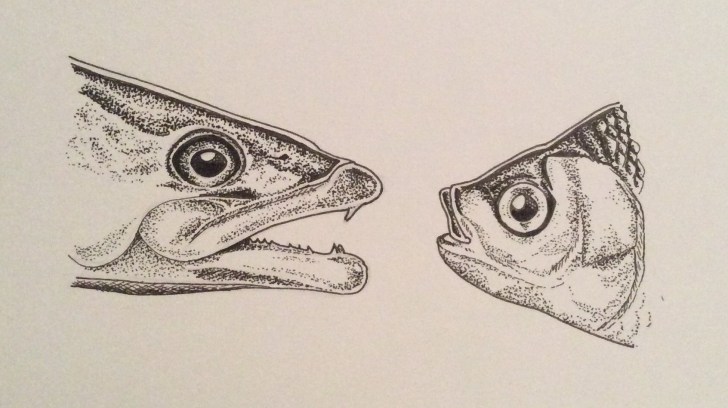
Zander and roach. Image: Stephen Thackeray
Tell us a little about your creative process: what do you choose to draw, how do you get a reference image, where do you draw, and what materials do you use?
So far, I have indulged my interest in freshwater wildlife. I’m especially drawn to the tiny and obscure, occupying little hidden worlds that many people may be totally unaware of. All the dramas and excitement of the Serengeti play out in miniature every day in your local lake, pond, canal or bird bath. I like the idea of bringing these tiny creatures, and their lives, into focus for others.
Usually, I search on the web and in books for reference images taken from lots of different angles. I then use these to draw my subject from a different perspective. I usually work by lamplight in the evenings, and have fairly basic kit: some inexpensive black fine liners and pencils (and my daughter’s felt tips, occasionally). I used to get frustrated that my style wasn’t precise or life-like enough – a bit “cartoony”- but now I think I’ve realised that this is how my work comes out, and that there is nothing wrong with that.
Daphnia and microplastics. Image: Stephen Thackeray
One of my favourite images from your Inktober series is the daphnia surrounded by an array of microplastics. Can drawing – and creative practices more generally – provide ways of visualising such emerging environmental issues, do you think? Can they be useful in supporting conservation and environmental policy, as a result?
I’d like to think so. As researchers, we use certain tried-and-tested media for communicating with each other about our science, such as published academic papers, reports and presentations. However, these outputs only reach our own academic network much of the time, and people can differ greatly in their learning and thinking styles (mine is very visual). Given all of this, I think that imagery and artistic interpretation of science has the potential to reach a much wider audience, and to resonate with more people. Perhaps artistic interpretation provides us with a powerful way of engaging people with science and emerging environmental issues.
There is some excellent science communication (#scicomm) on Twitter, with @HanaAyoob illustrating endangered species, @JuliaFpaintsbio drawing freshwater mussels on request for Inktober 2017, @ConnectedWaters and @murray_taryn introducing us to a multitude of fish species, and @jvcdelaney creating a scientific colouring book about microscopic life. I’ve found their efforts really imaginative and inspiring.
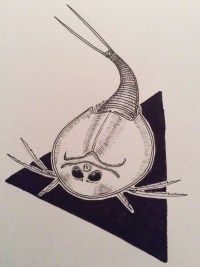
The tadpole shrimp. Image: Stephen Thackeray
Interdisciplinary art/science collaborations are springing up all over the world – can you imagine bringing your creative practice into your ‘day job’ as an ecologist, or bringing ‘artists in residence’ to CEH?
I can see the potential synergies between art and science as, fundamentally, I believe that the latter has a strong creative element. Science is so often about using creativity to think about problems in new ways, or about how to combine existing knowledge in new ways. I would love to have a thread of creativity running through my own research career.
As a small start, I have set myself a new challenge; to draw a sketch for each new paper that I publish (#sketchmypaper on Twitter). I would love others to try this out too, to see how it might affect the visibility of our work. I’m intrigued by the idea of having an “artist in residence”, to help us find new ways of reaching out. In fact, I would love to see a workshop attended by scientists and artists, to see what interpretations of the latest research might fall out as a result.
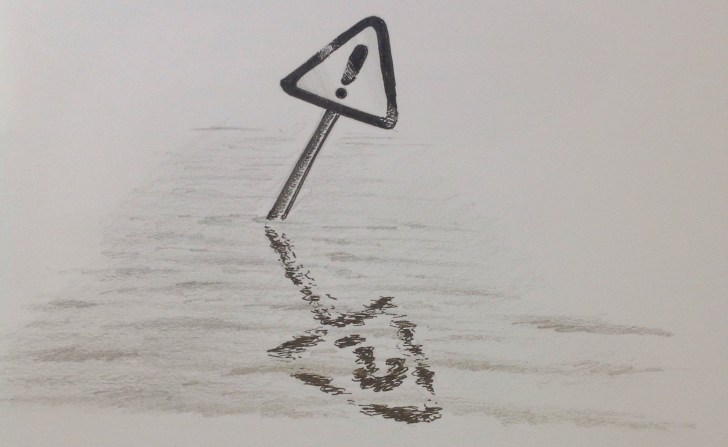
#sketchmypaper for a Nature Ecology & Evolution article on ecological resilience in lake ecosystems. Image: Stephen Thackeray
Follow Stephen on Twitter, and find out more about his research here.









 The Freshwater Blog