
At this week’s 2012 Whitley Awards Ceremony two freshwater conservationists were among the eight winners. The Whitley Fund for Nature locates and recognizes the world’s most dynamic conservation leaders and support projects founded on good science, community involvement and pragmatism.
 Ir Bundioni was honored for his efforts to conserve Indonesia’s last population of freshwater Irrawaddy dolphins in the Mahakam River system. In 2000 Budi, founded the NGO Yayasan Konservasi RASI (YK-RASI) to protect endangered aquatic species and their habitats in Indonesia. They are working to established community-supported protected areas for the dolphins and their prey and deploying the dolphin as a flagship species to promote the adoption of less harmful fishing practices and the development of ecotourism and other alternative livelihoods.
 Carlos Vasquez Almazan, Curator of Herpetology at Guatamla’s National Museum of Natural History and Coordinator of the Amphibian Conservation Programme of Foundation for Eco-development and Conservation (FUNDAECO), was honored efforts to rally support for protection of the Sierra Caral cloud forest on the border of Guatemala and Honduras. Carlos has led amphibian surveys across Guatemala discovering new species and re-discovering others thought to be extinct. In so doing he has raised interest in the country’s diverse amphibian fauna. As a result, Guatemala’s first reserve for amphibian conservation, encompassing 2,300 hectares, and protecting five critically endangered species was declared in 2011.
The BioFresh Blog salutes the great work of Budi and Carlos and we wish them and their teams every success in the future.
A key output of BioFresh will be Climate Vulnerability Index (or CVI) for freshwater biodiversity. Jon David and Paul Jepson, at the University of Oxford, are leading on the design of this index. This will be the first index to explicitly consider the vulnerability of riverine biodiversity to climate change at a global scale. As such, the design process has involved returning to first principles and specifically settling on a definition of ‘vulnerability’ that is both quantifiable and ecologically meaningful at the global scale.
So what is vulnerability? There are many existing vulnerability indices that consider the potential impact of future climate change, but the vast majority of these focus on human livelihoods and infrastructure. In spite of this, the term ‘vulnerability’ is used to mean different things within these papers and often consists of different components. The International Panel on Climate Change (IPCC) currently defines ‘vulnerability’ as a function of ‘exposure’, ‘sensitivity’ and ‘adaptive capacity’. However, after much deliberation and consultation we have decided to externalise exposure from vulnerability for the reasons outlined below.
Our definition of ‘intrinsic vulnerability’ assesses the degree to which the persistence of a population is dependent upon the prevailing climate (sensitivity) and the capacity of a population to cope with future climate change (adaptive capacity) (see Figure 1). A great advantage of conceptualising vulnerability in this way is that it removes the need to use climate and hydrological models to forecast future changes (exposure), and shifts the analysis towards a trait-based approach. This is particularly desirable due to the lack of accurate and reliable future data at a sufficiently fine-scale resolution globally.
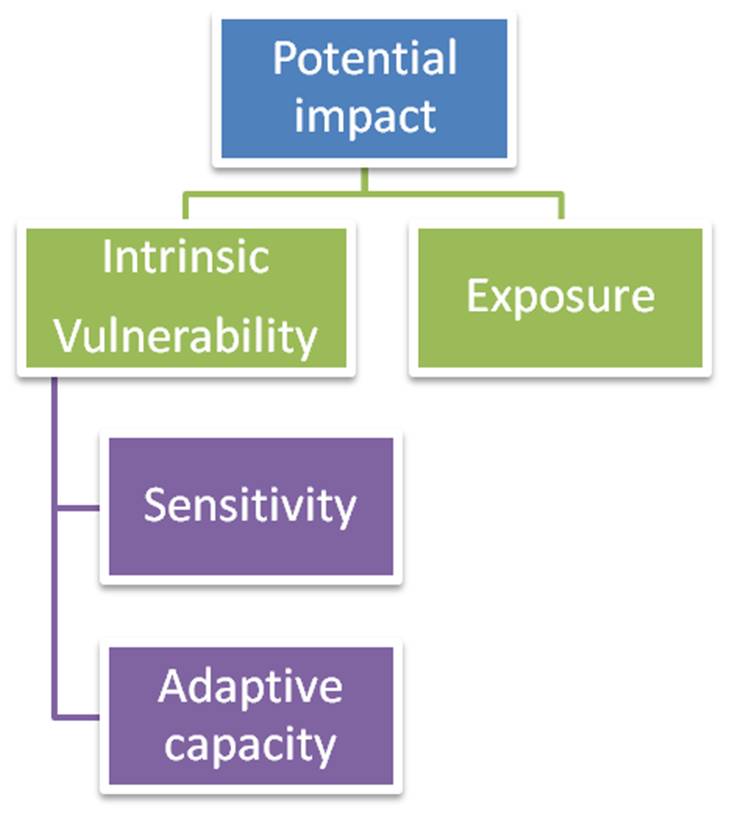
The significance between the IPCC definition of ‘vulnerability’ and our definition of ‘intrinsic vulnerability’ can be summed up clearly in the following analogy. An individual may be immunologically pre-disposed to contracting a specific disease (sensitivity) but live in a region where vaccinations against the disease are not available (adaptive capacity). However, the disease does not occur in the region that they live (exposure). Thus, if exposure is included as component of ‘vulnerability’ the individual would have a low vulnerability index score because they are not exposed to the disease. However, if exposure is externalised from vulnerability, the individual would score as highly vulnerable due to both their high sensitivity and low adaptive capacity. Furthermore, in a scenario where the individual were to come into contact with the disease (future exposure), this could be combined with their high intrinsic vulnerability to identify them as high risk to potential impact from the disease. In our view this latter approach of externalising exposure provides a more logical and robust vulnerability index that can be combined with various exposure scenarios generate spatial maps of potential threat impacts. This approach supports the idea that such indices should be designed as ‘plug-ins’, or informatics components, that can be utilised in a wide range of future applications.
The CVI also covers exciting new ground by including an ‘Institutional Adaptive Capacity’ component. This is an essential addition that is frequently left out of other global indices and brings a multi-disciplinary approach to this global index. Put simply, it recognises that freshwater life residing in ‘High Conservation Capacity’ regions (such as Western Europe, North America etc.) will be less vulnerable than that residing elsewhere because institutions and publics have more capacity to mobilise and form polices and management schemes that will aid climate adaptation.
It is our target to release a version 1.0 of the CVI in September 2012. The CVI makes use of the best global datasets available within the financial and time constraints of the project. As such, it is our vision that the CVI will be augmented and bettered as newer data becomes available. Next week’s blog post will consider how the CVI makes use of these global datasets and what scope there is for future development of the index.
From 27-30 March 35 Biofresh project members met at Merton College four days of discussions, presentations on on-going research and forward planning. Here Biofresh project leader, Prof Klement Tockner, provides his reflections on key outcomes of the meeting.
Meet the BioFresh team: Klement Tockner
We continue our series of articles giving a ‘behind the scenes’ look at the work carried out by BioFresh scientists this week with an interview with BioFresh project leader Klement Tockner who is the Director of the Leibniz-Institute of Freshwater Ecology & Inland Fisheries (IGB). The IGB is an independent and interdisciplinary research centre dedicated to the creation, dissemination, and application of knowledge about freshwater ecosystems. The Institutes three cross-cutting research domains focus on freshwater biodiversity, freshwater boundaries and linkages, and on human-ecosystem interactions.
1 What is the focus of your work for BioFresh, and why?
My key duty as coordinator of BioFresh is to lead, support, and integrate the various activities of the entire project. I would consider it as great success if BioFresh increases the awareness of the critical state of freshwater biodiversity, stimulates novel, innovative research directions, and supports the development of a new culture of data sharing.
Personally, I am working on floodplain systems, the most diverse, dynamic, and complex ecosystems globally. With respect to biodiversity they are as diverse as rainforests and coral reefs. A main focus of my research is to disentangle the complex linkages and feedbacks between hydrogeomorphic processes and biodiversity, and the consequences of biodiversity on ecosystem processes.
A side project that is very relevant for BioFresh is to build up a global data base on Biological Field Stations. At present, we include about 1500 stations in the data base; these stations form a global infrastructure and information network that is pivotal for long-term biodiversity research, education, and regional outreach activities.
I consider my work as a fundamental basis to develop strategies for managing river corridors as coupled socio-ecological landscapes, by integrating multiple natural ecological services with constructed services for increasing the total wealth provided by these ecosystems.
Today, most ecosystems have been comprehensively “domesticated”. They have been optimized for few ecosystem services that provide major economic benefit to humans, yet concurrently causing unforeseen changes in other ecosystem attributes. Thus, it is a key challenge in science and management to determine the extent to which the negative trade-offs of domestication can be avoided by changing the way ecosystems are managed. To have accurate data, as they will be provided through BioFresh, is the fundamental basis for the sustainable conservation of biodiversity.
3 Why is the BioFresh project important?
Most people are not aware about the disproportionately high biodiversity of freshwaters, the multiple ecosystem services that they provide, and that rivers, lakes, wetlands and ground waters are amongst the most threatened ecosystems globally.
BioFresh will provide an open data platform for scientists, policy makers and the public. We collect widely dispersed information and make it publically available. This information is expected to help setting priorities for biodiversity conservation and ecosystem management.
Unfortunately, the present discussion on the nexus between water, energy and food ignores freshwaters as ecosystems and the role of water as a medium for life. However, we urgently need to establish synergies among the different users of water, including the ecosystem. If there is competition amongst different users, it is always the ecosystem that loses.
4 Tell us about a memorable experience in your career
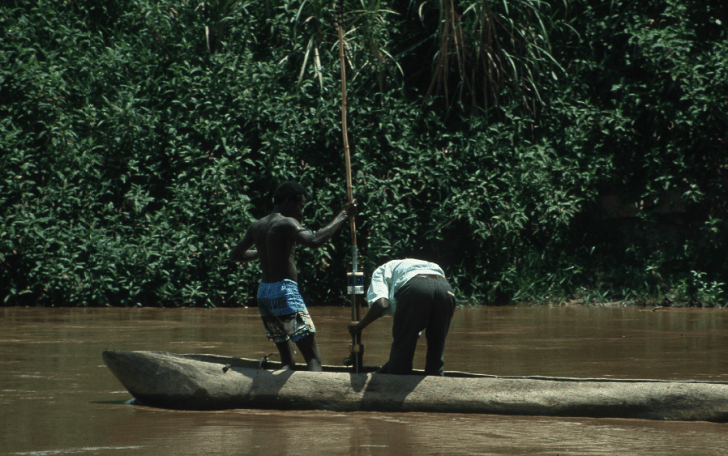
I have worked across 4 continents, gaining and understanding different perspectives and valuations of freshwaters. For example, I worked for 8 months in Central Africa in Rwanda where I experienced completely different ecosystem types as well as a very challenging way of how to do research. We sampled on boats made of a tree trunk, and we worked in areas where no one did river research so far. Due to the high erosion rates of fertile land the transparency of the rivers was often less than 2 cm. In Rwanda, the future of this country lies virtually in its rivers. Fertile land is constantly washed downstream because of a high demographic pressure and the overexploitation of the limited land resources.
Overall, it is the critical role of freshwaters for both humans and nature which stimulated me doing research and in trying to support the development of sustainable solutions.
5 What inspired you to become a scientist?
It was a child dream to become an explorer, i.e. to explore the unknown spots of the world. Fortunately, I met fascinating, interesting people at school and at university who inspired me and who supported me in following unconventional ideas rather than searching for a safe path.
6 What are your plans and ambitions for your future scientific work?
I am still dreaming to make an expedition to the very last wild spots on earth – to go to the Congo Basin or to Sothern Sudan – or to establish a biological field station on the banks of the Rufiji River, Tanzania.
A fascinating domain for future research, in particular for BioFresh, would be to get citizens stimulated enough to provide data for the portal and information that would then be available to the wider community. It would not only provide more data, but would involve the public in the generation of information and in the support of science.
4th BioFresh newsletter | Annual meeting in Oxford
The BioFresh annual meeting is held this week at Merton College, Oxford. Partners from across BioFresh will meet to discuss the form and future of the project.
The 4th BioFresh newsletter has been published ahead of the meeting, featuring recent news, publications and ongoing research. You can read it through Issuu above. We’ll be keeping you up to date with the details of the meeting through this week.
“Water Lives…”: new BioFresh animation
“Water Lives…” is a new science communication animation designed to draw attention to the important (yet largely invisible) biodiversity which underpins and sustains our freshwater ecosystems. Produced by Rob St.John and Paul Jepson at the Oxford University School of Geography and the Environment for BioFresh the animation brings artists and scientists together to collaborate and communicate the concept that freshwater is more than an inert resource: instead a living, dynamic system inhabited by beautiful, important organisms largely unseen by the naked eye. “Water Lives…” invites viewers to engage with their freshwater environments, perhaps value them in new ways and engage with how they should be managed.
 “Water Lives…” is a new science communication animation designed to draw attention to the important (yet largely invisible) biodiversity which underpins and sustains our freshwater ecosystems. Produced by Rob St.John and Paul Jepson at the School of Geography and the Environment for BioFresh the animation brings artists and scientists together to collaborate and communicate the concept the idea that freshwater is more than an inert resource: instead a living, dynamic system inhabited by beautiful, important organisms largely unseen by the naked eye. “Water Lives…” invites viewers to engage with their freshwater environments, perhaps value them in new ways and engage with how they should be managed.
The curious and otherworldly physical form of freshwater organisms such as diatoms provides abundant artistic inspiration. “Water Lives…” is a conceptual and cutting edge work, emphasising unusual natural forms in a six minute piece animated by Scottish artist Adam Proctor. It is sound-tracked by a specially composed piece of music by Tommy Perman from Scottish, BAFTA award winning arts collective FOUND which samples a series of haiku about freshwater ecosystems written by acclaimed environmental poet John Barlow. The content of both the animation and haiku was influenced by close consultation with BioFresh freshwater scientists Rick Battarbee from University College London and Ana Filipa Filipe from the University of Barcelona, alongside Alistair Seddon from the University of Oxford Zoology department.
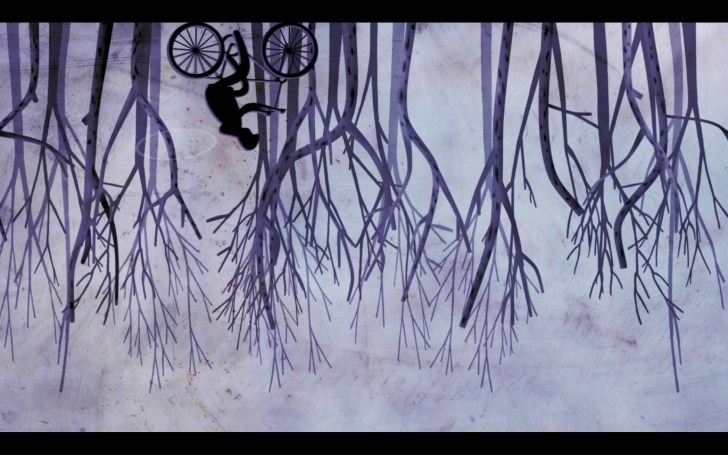 This novel, cross-disciplinary team have produced a nuanced, multi-layered piece that not only contains sound, robust scientific information but that is beautiful, engaging and playful. It is a work that can be viewed entirely on its artistic merits, from which the viewer could take away a range of different information – from something as simple as “Freshwaters are more interesting than I thought” to something as intricate as “How can policy makers manage this complex entanglement of life?” – and a whole spectrum in between.
“Water Lives…” invites viewers to value the importance and beauty of freshwater ecosystems and engage with how they should be managed. It also suggests the productive possibilities opened up by collaborations between scientists and creative artists for the communication of environmental science and policy. As this work shows, such art-science collaborations have the potential open up new, creative spaces for how we contemplate, value and plan to manage our environment.
International Day of Action for Rivers
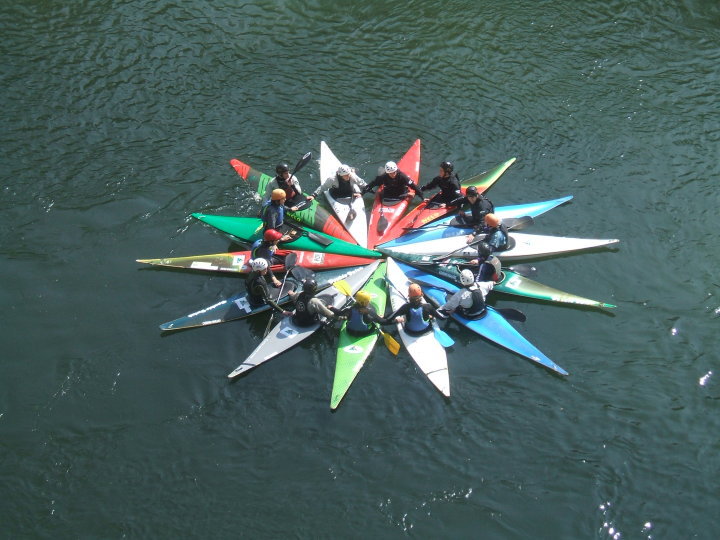
Kayaks on the Tâmega River. Image: International Day of Action for Rivers
Today is the International Day of Action for Rivers, a global event to celebrate our freshwater ecosystems and campaign for their conservation. Born out of the first International Meeting of People Affected by Dams in Brazil in March 1997, and organised by the International Rivers NGO, the day has become global , with public events ranging from festivals, press conferences, kayaking events, river clean-ups, protests, religious gatherings and campaign launches. The intention of BioFresh communication work through this blog, Cabinet of Freshwater Curiosities, twitter and animations is to encourage the wider public and policy makers to better value and conserve our freshwater ecosystems, so such public shows of support for freshwater conservation should be applauded.
Here’s a more detailed description of the day by the organisers:
“March 14 is the International Day of Action For Rivers and Against Dams. Every year, thousands of people around the world lift their voices to celebrate the world’s rivers and those who struggle to protect them. The International Day of Action For Rivers is a day to celebrate victories such as dam removal and river restoration. It is a day to take to the streets, demonstrate and demand improvements in the policies and practices of decision makers. It is a day to educate one another about the threats facing our rivers, and learn about better water and energy solutions. Above all, it is a day to unite – by acting together, we demonstrate that these issues are not merely local, but global in scope. What will you do for your river on March 14?“
You can find out more details here
“What is Water?” TED and WWF on a ‘solvable crisis’
The above video, a TED presentation by Stuart Orr, Manager of Global Freshwater Programme at WWF, touches on one of the key questions we often ask within the communication team at BioFresh: what is water and how should we manage it?
The question appears to be self-evident: water is a fluid made up of molecules of bonded hydrogen and oxygen as H2O (plus all sorts of other chemical and biological molecules…). But is water simply a resource for humans to channel, dam, filter and bottle as a resource? As we wrote in a recent article for Public Service Review, it seems that the value of water as a hybrid, fluid medium for life is often forgotten when we think about how to value and manage our freshwater ecosystems.
Stuart Orr presents a series of interesting suggestions for how we might sustainably manage our freshwater ecosystems – pointing towards stronger policy and more co-operative, integrative management. This is a topic we’ll be revisiting over coming months, and we’d value hearing your thoughts.
Planning for change: the origin, distribution and conservation of endemic fish species

Achondrostoma: a tiny fish species endemic to Iberia. Image: Ana Maria Geraldes
A new journal article published by BioFresh partners has revealed intriguing new findings about the global origins and distribution of river fish species, with important consequences for their conservation. The article “Patterns and processes of global riverine fish endemism” was published in Global Ecology and Biogeography, seeking to provide a means to identify areas of high conservation interest based on the present and future evolutionary diversification potential of fish species.
Lead author Pablo Tedesco from the Natural History Museum in Paris explains: “We distinguished between two kinds of endemic freshwater fish species: those that originated within a drainage basin by radiation and did not disperse after; and those that were once widespread and reduced their range either by extinctions or by differentiation in one drainage basin.
Then we related these two kind of endemic species to historical, habitat, climatic and biological factors and found that the first category (originated from a small range) is occurring mostly in large drainage basins with a rather stable climatic history and having poor dispersal abilities. Contrarily, the second category of endemics (those that were once widespread) occur in highly isolated places (like islands or peninsulas) and mostly belong to families that originated in the sea. These findings point out that instead of focusing on endemic species to protect them, we should protect the places where species are created in order to preserve future diversity”.
These are fascinating findings which add to the growing discussion on how evolutionary processes can be incorporated into conservation planning. Understanding species histories and potential evolutionary futures is important for conservation managers looking to conserve species in the face of threats such as climate change and habitat loss. As such, this paper furthers our understanding of how we may prioritise effective conservation planning for freshwater fish species.
You can read the paper here.
Coming soon…the new BioFresh animation “Water Lives”
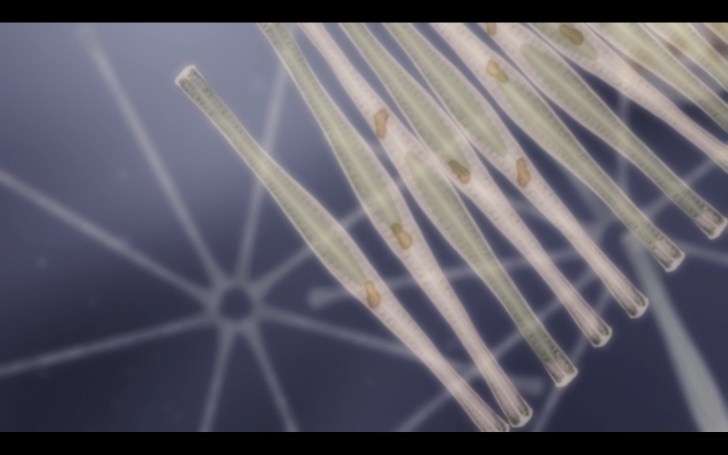
Animated diatoms in the forthcoming BioFresh animation "Water Lives"

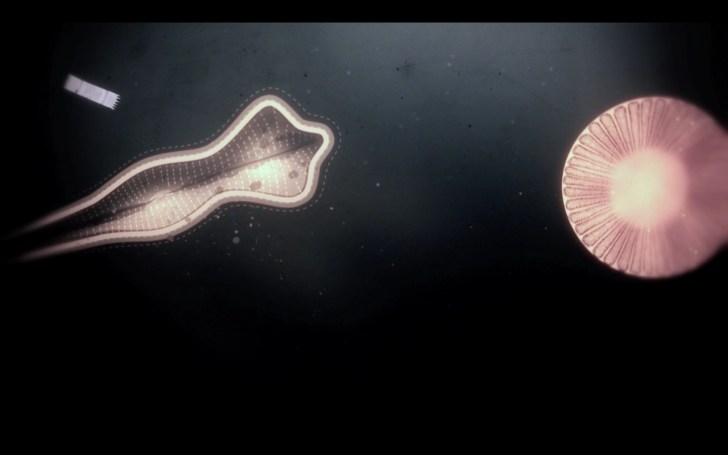 We’re delighted to be able to share the amazing first images from the recently completed “Water Lives” science communication animation. Produced by BioFresh at Oxford University School for Geography and the Environment, the animation employs a team including an award-winning animator, a musician, a haiku poet and a team of freshwater scientists to raise awareness of the need to appropriately manage and conserve the complex, beautiful webs of life that make up our freshwater ecosystems.
More details will be revealed soon ahead of a premiere and release in the week of 26th March 2012. For now, enjoy the images!









 The Freshwater Blog