Is there life on MARS?

Yellowknife Bay in the Gale Crater on Mars, where evidence of an ancient freshwater lake has been found. Image: NASA/JPL-Caltech/ASU
Is there life on Mars?
This line from a David Bowie song has become a recurring pun as new MARS project (‘Managing Aquatic ecosystems and water Resources under multiple Stress’) takes shape. Recent findings from NASA’s Curiosity Rover mission to Mars have suggested that a large freshwater lake, potentially capable of supporting life, existed on the planet around 3.5 billion years ago – around the time that life began to emerge on Earth. So, as the MARS project works on Earth’s freshwaters, the Curiosity Rover is uncovering evidence of freshwater on Mars.
A special issue of Science published in January 2014 describes how the Curiosity Rover drilled two mudstone sediments in the 96 mile wide Gale Crater where it landed in August 2012 (you can follow the Rover using the New York Times’ tracker). In September 2012, Curiosity found remnants of a gravel streambed and alluvial fan at the northern end of the crater – evidence of flowing water, again around 3.5 billion years ago.
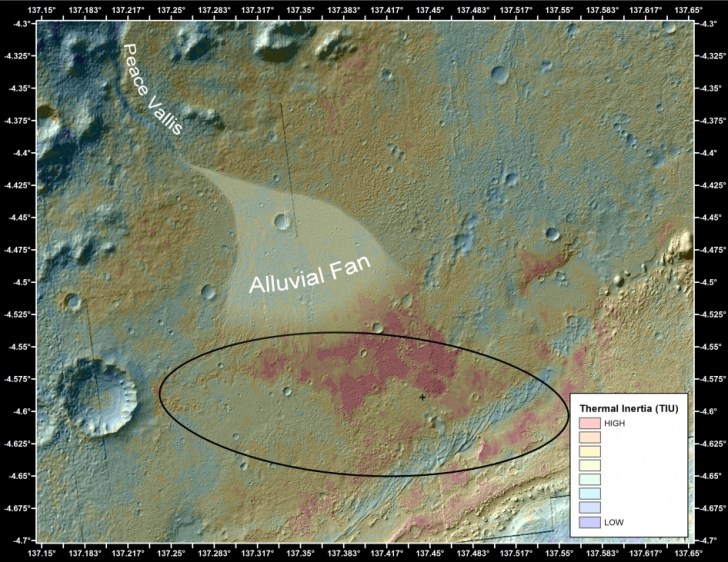
Alluvial fan in the Gale Crater – a sign of ancient flowing water. Image: NASA/JPL-Caltech/ASU
The mudstone samples, taken at a location in the crater with unusually light-coloured and fine sedimentary rocks named Yellowknife Bay, contained smectite clay minerals with a chemical composition indicating they formed underwater. The presence of these clay minerals suggests that there was a calm body of water present in the crater around 3.5 billion years ago, which could have persisted for hundreds of thousands of years. The small clay particles would have sunk into sediment at the bottom of the lake and been compressed and cemented into rock over time.
Analysis of the rock also found chemical elements which were key to the formation of life on Earth – including carbon, hydrogen, oxygen, sulphur, nitrogen and phosphorous – and evidence the freshwater was likely to have a low salinity and neutral pH. As Dr. John Grotzinger, project scientist on the Curiosity mission from California Institute of Technology said in a New York Times interview, “The whole thing just seems extremely Earthlike”.

Curiosity Rover at Gale Crater. Image: NASA/JPL-Caltech/ASU
Does this mean that Mars may have supported freshwater life, billions of years ago? As Professor Sanjeev Gupta, a member of NASA’s Mars Science Laboratory from Imperial College London states, there’s still much work to be done in finding definite signs of life:
“It is important to note that we have not found signs of ancient life on Mars. What we have found is that Gale Crater was able to sustain a lake on its surface at least once in its ancient past that may have been favourable for microbial life, billions of years ago. This is a huge positive step for the exploration of Mars. It is exciting to think that billions of years ago, ancient microbial life may have existed in the lake’s calm waters, converting a rich array of elements into energy. The next phase of the mission, where we will be exploring more rocky outcrops on the crater’s surface, could hold the key whether life did exist on the red planet.”
As on Earth, such long-term environmental records indicate the climatic and ecological conditions and stresses that would have shaped any freshwater life, in this case pointing towards a wetter, warmer climate on Mars around 3.5 billion years ago. Researchers from the Mars Science Laboratory suggest that the conditions would have been ideal for simple microbial life such as chemolithoautotrophs to thrive in. These simple organisms are found on Earth in caves, hydrothermal vents and deep groundwater, and gain energy from compounds produced in geological weathering (‘lithos’ (rock) and ‘troph’ (consumer) can be read as ‘rock-eaters’).

Artists impression of the Curiosity Rover. Image: NASA/JPL-Caltech/Malin Space Science Systems
However, in his introduction to the Science issue, Dr Grotzinger points out that finding evidence of such ancient microbial life on Earth was a formidable challenge, proven through the discovery of microfossils preserved in silica 100 years after Darwin’s theory of evolution. A key task now for the mission is to find rocks and sediment where organic material from the ancient microbes may have been preserved.
If this preserved material is found, it will not only provide proof that life once existed on Mars, but it is also likely to yield insights for understanding how life developed in response to environmental stresses on Earth. We’ll keep an eye on Curiosity’s exploration of these ancient, high-stress Martian freshwater environments as research continues.
Give the gift of Smithsonian magazine for only $12! http://bit.ly/1cGUiGv
Follow us: @SmithsonianMag on Twitter
Give the gift of Smithsonian magazine for only $12! http://bit.ly/1cGUiGv
Follow us: @SmithsonianMag on Twitter
Give the gift of Smithsonian magazine for only $12! http://bit.ly/1cGUiGv
Follow us: @SmithsonianMag on Twitter
Give the gift of Smithsonian magazine for only $12! http://bit.ly/1cGUiGv
Follow us: @SmithsonianMag on Twitter
Give the gift of Smithsonian magazine for only $12! http://bit.ly/1cGUiGv
Follow us: @SmithsonianMag on Twitter
Beavers, ecological stress and river restoration
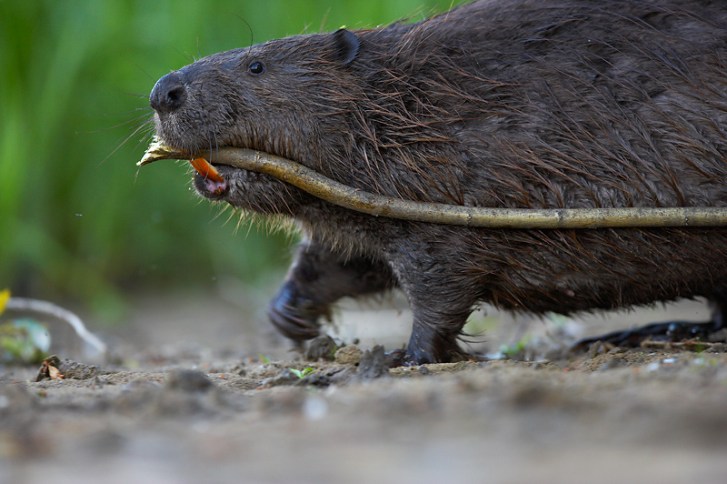 In February 2014 a family of wild beavers were photographed on the River Otter in Devon, South West England by a retired ecologist. The animals are believed to be the first evidence of populations living and breeding outside captivity in England for over 400 years.
Their (re)discovery prompts a number of questions for the form and function of British freshwaters. What impact will the beavers return have on freshwater ecosystems and human livelihoods? What reference conditions do we use to monitor and assess restoration and reintroductions?
How can the new ecological stresses and processes caused by beavers be managed in such environmental restoration, if at all? These questions are central to the MARS project’s wider research on stress and environmental restoration.
The Eurasian beaver in the UK
The Eurasian beaver (Castor fiber) was once common across Britain, a fundamental link in many freshwater ecosystems. Populations were hunted to extinction in the 16th century for pelt, meat and the medicinal properties of a secretion ‘castoreum’, used to variously treat headaches, fever and ‘hysteria’.
Under the European Union’s Habitat Directive, governments are required to consider the reintroduction of extinct native species such as the beaver (although the concept of what we term ‘native’ often proves tricky to tie down). As a result, there is increased debate in Britain over whether beavers should be reintroduced, perhaps most prominently shown by the experimental Scottish Beaver Trial at Knapdale, South West Scotland.
Keystone species and ecosystem engineers
Beavers are termed ‘keystone species’ by ecologists because their presence is likely to significantly affect the form and function of the ecosystems in which they live. By damming rivers, beavers are ‘ecosystem engineers’, holding back silt (which can increase water quality), creating large, slow pools in rivers and wetland areas on the banks, which in turn provide new habitat for other plants and animals.
Beavers and flooding?

Beaver dam in Lithuania (Image: Wikipedia)
This regulation in river flow may also help reduce flooding and bankside erosion downstream. Following major floods in January 2014 (see our piece on the subject), Marina Pacheco, the chief executive of the UK Mammal Society, recommended that the UK Government promote beaver reintroductions as a means of reducing flood risk in the future, stating:
“Restoring the beaver to Britain’s rivers would bring huge benefits in terms of flood alleviation. These unpaid river engineers would quickly re-establish more natural systems that retain water behind multiple small dams across tributaries and side-streams. As a consequence the severity of flooding further downstream would be greatly reduced, at no cost to the taxpayer.”
By felling and coppicing bankside trees, beavers may create a more open, diverse riverside ecosystems, which support an array of new growth and ground vegetation such as wild flowers.
Experimental trials in Devon
Early reports from experimental trial populations of beavers undertaken by the Wildlife Trust, Devon – where a pair of animals to a small woodland enclosure – show that over a two year period the beavers acted as ‘ecosystem engineers’, opening and diversifying the woodland, creating a set of ponds which store water (potentially reducing flooding downstream) and provide new habitat for other plants and animals.
‘Wild’ beavers on the River Tay

Mother and kit on Tayside (Image: Ray Scott)
However, this process may not necessarily be positive. In 2012, it was revealed that dozens of beavers had escaped from private collections across southern Scotland and had colonised the River Tay in Perthshire. A Royal Zoological Society report from 2012 suggests that there may be as many as 140 animals living along the Tay valley.
A decision by Scottish Natural Heritage not to trap the ‘feral’ animals (as quoted in the Daily Telegraph) sparked outcry from angling groups concerned about the beaver’s presence on populations of migratory fish such as salmon, and from farmers concerned about loss of land and woodland due to tree felling and dam building.
Reintroductions and restoration: what reference conditions?
The reintroduction of plants and (particularly) animals to environments from which they once went extinct is a process fraught with numerous practical and conceptual considerations. Practically, beavers have not existed in Britain for around 500 years, and freshwater ecosystems have developed in their absence over this period. This means that whilst beavers might be considered ‘native’ to Britain, their reintroduction potentially poses new stresses to the ecosystems to which they return.
Ecological reference conditions and the Water Framework Directive

Fish pass on the River Otter in Devon – what is a natural ecosystem here? (Image: Wikipedia)
A journal article “The European reference condition concept: A scientific and technical approach to identify minimally-impacted river ecosystems” published by Isabel Pardo and colleagues in Science of the Total Environment in 2012, and co-authored by MARS partner Sebastian Birk, discusses how ecological reference conditions for the restoration of ‘good status’ in rivers are set.
One of the major challenges for the Water Framework Directive – Europe’s most important policy document on freshwater health and conservation – has been to find common approaches across different countries in defining what reference conditions should be set as targets for freshwater restoration.
Given extensive human alteration of the natural world, coupled with species introductions, migrations and extinctions, selecting a set point in time or ecosystem state as a target for restoration is likely to be problematic.
The Water Framework Directive addresses this variability by stating that ‘good status’ can be defined by geographical characteristics and location. So for example, reference conditions would be set differently for a Scandinavian mountain stream compared to a lowland river in Germany.
Setting criteria for reference sites, stress and ‘ecological thresholds’
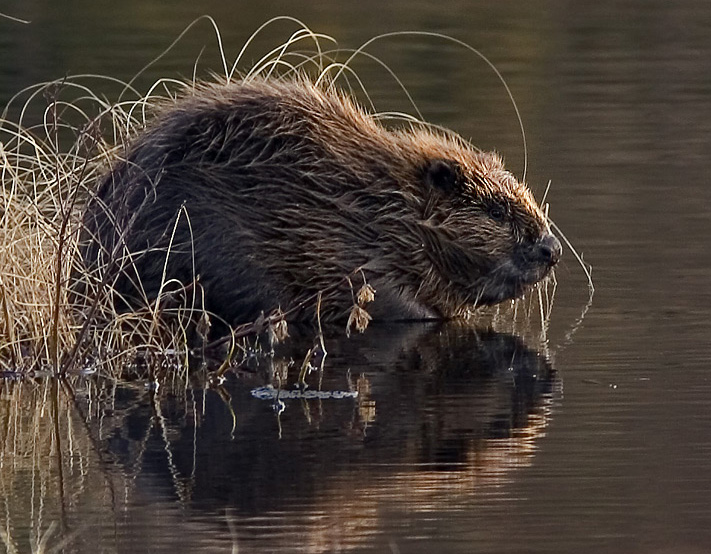
Reflecting on restoration (Image: Per Harald Olsen)
The journal article seeks to establish levels of pressure (or stress) on freshwater ecosystems at reference sites with ‘acceptable’ or ‘good’ ecological status. The paper outlines a set of criteria that the authors see as crucial for identifying reference sites, including: pollution, water abstraction, surrounding land-use and alien species.
A key concept here is ‘ecological thresholds’, which describe points where an ecosystem may significantly change form, processes and function in response to external factors such as stress.
I spoke to MARS member and article co-author Sebastian Birk about the challenges reintroduced species such as beavers pose to setting appropriate reference conditions:
“The return of the beaver to our rivers was not really anticipated when we defined the near-natural conditions. Stream impoundments are usually man-made and are thus penalized when assessing the ecological status. The activities of the beaver, however, indicate high status conditions. This may require some rethinking among water managers as well as farmers and anglers. Especially when the riparian zones along our rivers are enhanced, creating a suitable habitat for the beaver … “
Questions for restoration
The case of beaver reintroduction provides a set of challenges to this process of setting ecological reference conditions. The animals are considered ‘native’ to Britain, yet their reintroduction has been shown to significantly alter the ecosystems in which they live and ‘engineer’.
In the case of the Devon beaver trial, the ecosystem passed a threshold from woodland with a small stream, to a more open, diverse habitat with a number of ponds and marshes within two years of the reintroduction of a pair of beavers.
In a sense, beavers bring new stresses to ecosystems that have developed in their absence over recent centuries. Despite the Pardo et al 2012 paper outlining a set of quantitative criteria for ‘natural’ reference conditions for freshwater ecosystems, it could argued that, due to the endlessly altered (and altering) environment, any definitions of ‘naturalness’ are essentially subjective.
In the case of the beaver in Britain, what choices do we make over the form and function of the freshwater environments that we want to live with and enjoy? If beaver populations continue to slowly grow across Britain, how will what we define as ‘natural’ in our rivers and lakes change, if at all?
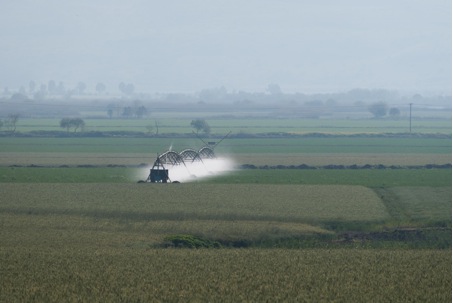
Intensive irrigation to grow wheat, vegetables and fruits in Israel – well-known products from the home supermarket. (Image: Christian Feld)
MARS partner Dr. Christian Feld and Dr. Armin Lorenz, both from University of Duisburg-Essen (UDE) in Germany, recently visited Israel to discuss the development and establishment of a national bioindication system for the country’s freshwater ecosystems.
Bioindicators are species that can be used to monitor the health of an ecosystem. In freshwater ecology, insects such as caddis flies are often used as bioindicators to monitor the effect of stressors such as pollution on the wider environment.
Symposium to design a bioindication project for Israel

Collaboration at the symposium: Dr. Dana Milstein (Israel Nature and Park Authority), Alon Zask (Israel Ministry of Environmental Protection), Prof. Tamar Dayan, Dr. Yaron Hershkovitz, Prof. Avital Gasith (Tel Aviv University), Dr. Christian Feld (back) and Dr. Armin Lorenz (University of Duisburg-Essen) (from left to right). (Image: Christian Feld)
Invited by the Israeli Ministry of Environment Protection, Feld, Lorenz and Yaron Hershkovitz met with colleagues from Tel Aviv University, the Israeli Nature and Park Authority and the Israel Water Authority.
During a one-day symposium, the UDE scientists presented the steps towards the development of a national bioindication and biomonitoring system for rivers in Israel, and suggested ways to practically implement the project.
Feld and Lorenz’s expertise is based on more than a decade of research and practice on the European Water Framework Directive, one of the main specialisations of their department at UDE. Their visit aimed to help share insights and experiences from this work with Israeli colleagues as a means of helping strengthen freshwater conservation in Israel.
Water in Israel: multiple demands and multiple stressors
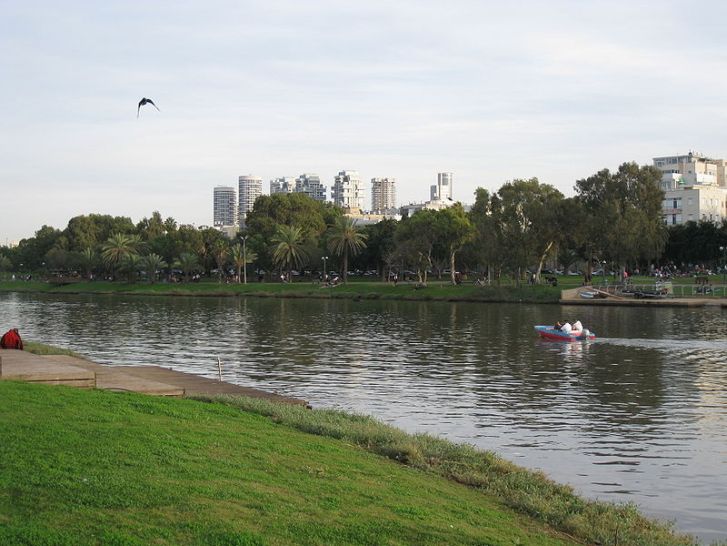
Yarkon River, Tel Aviv (Image: Wikipedia)
Israel’s waters—historically biologically rich and diverse—have undergone significant modification during the past decades, a process that is largely driven by the increasing use of land and water by humans. Typically, rain only falls in the winter months, and then largely in northern regions. As a result, demand for water for human use outstrips supply in Israel, and the country relies on engineering projects to divert and store freshwater, reclaim wastewater and desalinate seawater to ensure water availability.
Constantly growing industrial and municipal water demands – in particular intensive row-crop agriculture and recreational water uses – impose serious threats on Israel’s waters and their ecological integrity. Food production is inevitably linked to irrigation in many regions of the country. Consecutive dry winters in recent years and future climatic change are likely to amplify these water-related problems.
Israel’s freshwater biodiversity: a shortfall in ecological knowledge

The Far Eastern fire salamander (image: Wikipedia)
At present, much of Israel’s freshwater diversity remains un-catalogued – a shortfall that is particularly acute amongst smaller organisms such as insects, crayfish, snails and worms. Without knowing exactly what biodiversity is present, it is impossible to know what is being lost.
Similarly, without a detailed knowledge of smaller species such as invertebrates, it will prove difficult (if not impossible) to develop a bioindication system to monitor the health of Israel’s freshwaters. One remarkable animal that depends on Israel’s freshwaters is the Near Eastern fire salamander – its black back flecked with bright yellow warning spots – which is known to be threatened across the country by habitat loss.
Building a bioindication system
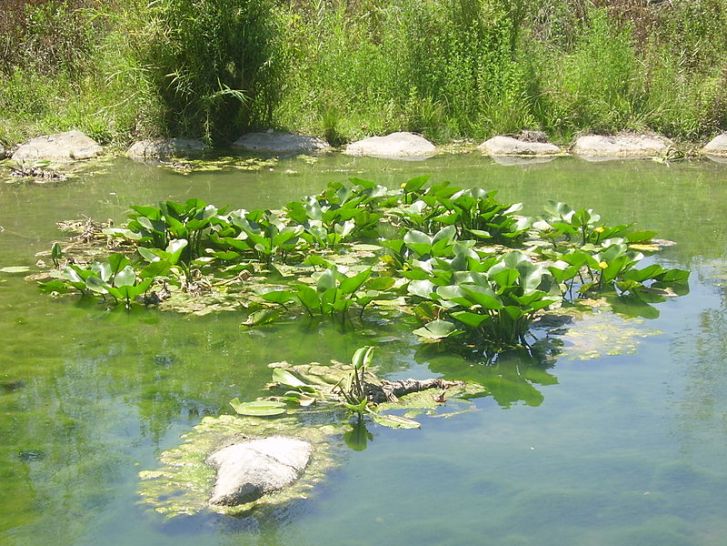
Yellow water lily (Nuphar lutea) in the Snir River, Upper Galilee (Image: Wikipedia)
The Israeli hosts presented an impressive overview of these issues during the initial one-day symposium. Together with the visiting German team, the Israeli scientists discussed options to detect and monitor the ecological effects of the intensive water uses in the country.
A first goal for the bioindication system will be to undertake a nation-wide inventory of Israel’s aquatic diversity, a research project closely linked to the establishment of the National Taxonomic Institute at the University of Tel Aviv. One of the Institute’s tasks will be to coordinate the sampling, identification and ecological cataloguing of the aquatic biodiversity, the foundations of the development of a bioindication system. It is planned that this project will be undertaken in coordination with the University of Duisburg-Essen.
Dr. Feld and Dr. Lorenz were invited to several field trips, which took the ecologists to the source of the upper Jordan River, and down the river to the Dead Sea oasis. Together with a final tour along the course of the Yarkon River – the ‘green lung’ of the Tel Aviv metropolitan area – the field trips helped the visiting scientists understand the numerous water uses and their implications for the aquatic environment and human welfare.
Christian Feld’s reflections on the trip

A restored section of the Upper Jordan River (Image: Christian Feld)
Dr. Feld summed up his reflections on the trip as:
“MARS’ research focuses on multiple stressors and Israel is one of the regions on earth to demonstrate a multi-stressor environment: water abstraction; pollution with treated and untreated waste water; eutrophication through agriculture; climate change; recreational water uses (canoeing, rafting, water hiking); salinisaton … just to name a few! It is likely to be extremely difficult to derive the right measures when it comes to environmental restoration and stress mitigation. MARS could potentially provide a tremendous body of knowledge and tools to help Israeli water managers.
I think that Israel is on the right track towards developing a freshwater bioindication system as they have already started to acknowledge that ecology is an important part of their fresh waters. It’s more than the water. And the actual practitioners in the catchments already think ecologically. Our Israeli counterparts and our hosts expressed their interest in expanding the cooperation, for us at UDE to provide advice and to conduct training workshops. They also want to send students and strengthen the already existing cooperation between our University and the University of Tel Aviv.
The Israeli landscapes and environments are very interesting and diverse. We saw mountainous areas in Upper Galilee, close to the borders of Lebanon and Syria. We then moved along the Jordan River through hilly landscapes and wide agricultural plains, just to enter the semi-arid (almost desert like) region around the Dead Sea Oasis. The Dead Sea valley is part of the Rift Valley and lies -400 m a.s.l., which is incredible! Thus, we moved from temperate Mediterranean climate in the north to semi-arid climate in the south. And all within a couple of hours drive. This is a special environment!”
—
The Israel trip for the UDE scientists was funded by the European Commission, DG Enlargement, through the Technical Assistance Information Exchange Instrument (TAIEX, ETT55742).
Freshwater scientists are passionate about the state of freshwater life, but making our science relevant to policy means building a friendly dialogue with policy-makers. The recent Water Lives science-policy symposium was a land-mark for freshwater policy in the EU. It established a foundation of collegiate understanding and shared purpose for the wider freshwater science and policy community to build on. This short video and accompanying podcast produced by Helen Scales, Ria Mishaal and Paul Jepson will give you a flavour of what was achieved.
What every scientist should know about policy-making
Faliure to meet the 2010 Biodiversity targets has created an imperative to improve the science-policy interface (SPI). The EC has responded with the SPRIAL and Biodiversity Knowledge projects. However, to improve SPI, it is vital for scientists and policy-makers to get to know each other and understanding the frameworks and incentive structures that shape their respective professional cultures.
Our new pod cast presented by Helen Scales includes frank and insightful interviews with scientists and EC policy makers on the challenges and on the ways to bring our two professions together in productive and continuous dialogue. It will be of wide interest to biodiversity scientists and policy-makers and we urge you to share it widely among your colleagues and students.
To paraphrase Albert Einstein “Science without policy is lame, policy without science is blind”. Change comes through dialogue and effective dialogue requires an understanding of others.
Meet the MARS team: Anne Lyche Solheim
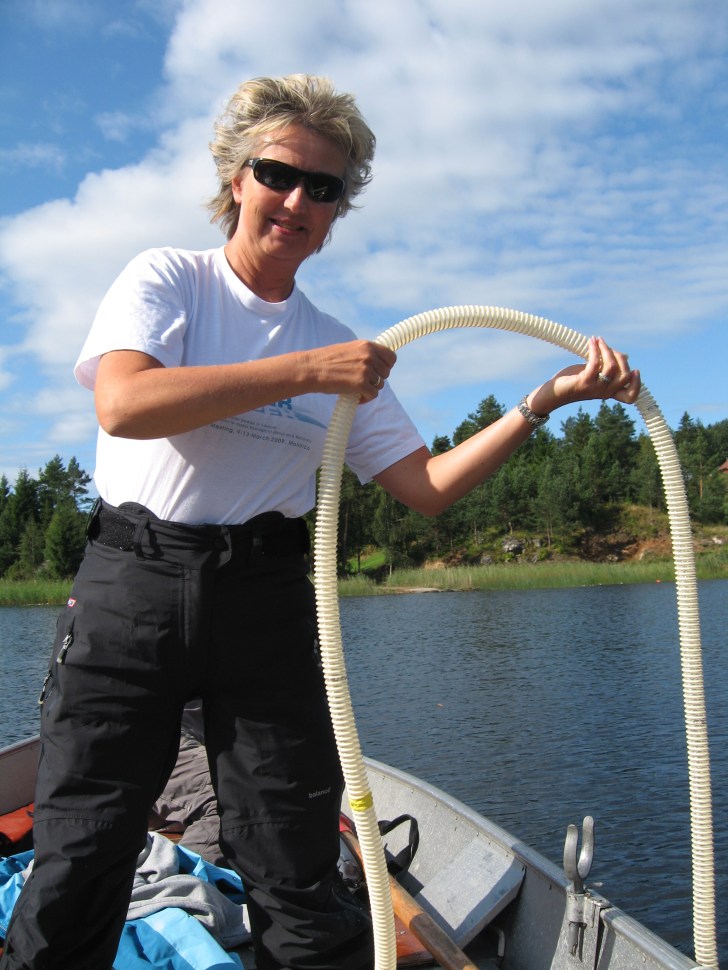
Anne taking samples from a Norwegian lake for the WISER project, 2009.
Anne Lyche Solheim is a senior researcher at the Norwegian Institute for Water Research (NIVA). Her specialisations include the ecological assessment of freshwaters for the Water Framework Directive, and the co-ordination and implementation of major European Union projects including WISER and REBECCA. We spoke to Anne about her work for the MARS project and her plans for future research.
1. What is your focus of your work in MARS?
As a leader of the MARS Work Package 8, communication and dissemination of results to stakeholders is my main focus.
However, I am also involved in the Work Package 3 experimental work in deep lake mesocosms to study the impacts of combined eutrophication and climate change pressures on the risk of harmful algal blooms in stratified lakes.
2. Why is your work important?
MARS is a policy support project, so it is vitally important that our results are effectively communicated and discussed with water managers at river basin level as well as national and European Union level.
The aim is to provide support for the 3rd river basin management plans required by the Water Framework Directive concerning how to find the best mix of mitigation and adaptation measures to counteract multiple pressures on European waters and ensure good status and provision of ecosystem services.
3. What are the key challenges for freshwater management in Europe?
The key challenges are to improve the poor ecological status presently occurring in the majority of European lakes and rivers, and also to implement the ecologically best measures to mitigate against and/or adapt to floods and droughts.
To meet these challenges the whole water catchment and all sectors using the water for food and energy production must be taken into account.
4. Tell us about a memorable experience in your career.
The two years I worked as a visiting scientist at JRC-Ispra in 2006-2007, contributing to the Water Framework Directive intercalibration of classification systems for ecological status assessment in lakes and also gaining better understanding of the impacts of climate change.
These years were an eye-opener on the importance of science-policy communication, and a door-opener to international water management related projects.
5. What inspired you to become a scientist?
A television programme on the negative impacts of water pollution in Norway’s largest river and downstream estuary.
6. What are your plans and ambitions for your future scientific work?
To do the MARS deep lake mesocosm experiments and find out whether climate change will cause harmful algal blooms to occur at lower nutrient levels than earlier.
Otherwise, to contribute to the European Freshwater Ecosystem Assessment and the EU Biodiversity strategy 2020 by assessing the potential for harmonisation of the Water Framework Directive and the Habitats Directive based on an analysis of their systems of typology and status assessments.
Finally, to influence the Water Framework Directive revision in 2018 using outputs from MARS and other projects and processes.
 Tomorrow, March 22nd 2014, is the United Nations World Water Day, an annual event that focuses attention on the importance of freshwater environments. A 2012 UNICEF report estimates that at least 780 million people globally – approximately one in nine of the world’s population – do not have access to safe, clean drinking water.
This year, the theme of the day is energy. The World Water Development Report launched today, focuses on the relationships between water and energy production, outlining that hydroelectricity is the world’s largest source of renewable energy, and roughly 75% of all industrial water withdrawals from global freshwaters are used for hydroelectricity. These are key global issues, as David Malone, Rector of the United Nations University – the convenors of this year’s World Water Day – states: “Energy and water are at the top of the global development agenda … it is essential that we stimulate more debate and interactive dialogue around possible solutions to our energy and water challenges”.
Given that more than 1.3 billion people globally do not have access to electricity, one thread that World Water Day aims to discuss is the merits of using freshwater as an energy source. Hydroelectricity offers the potential of renewable, low-carbon energy production – advocated under the Kyoto Protocol’s Clean Development Mechanism – but what are the effects of its development on freshwater environments?
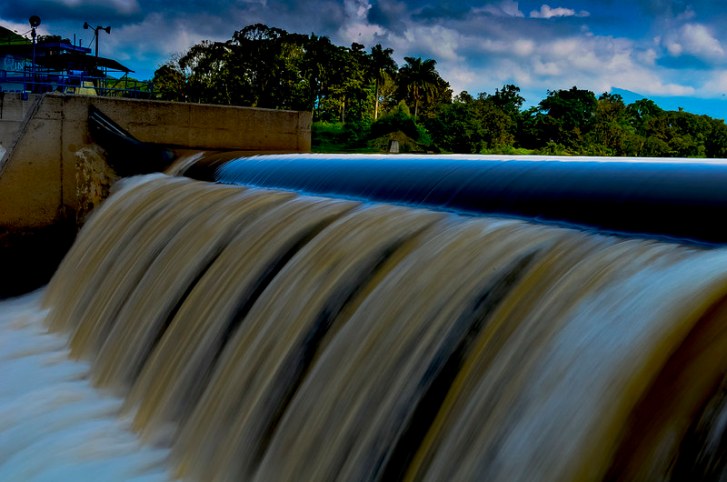
Image credit: World Water Day 2014
Hydropower, fragmentation and ecological stress
From the perspective of the MARS project, we could see this debate as being about the different stresses that energy production places upon freshwater environments. A key stress on freshwaters by energy production is fragmentation from hydropower schemes.
Dams built for hydropower fragment rivers, altering the timing, quantity and quality of water flows, permanently flooding surrounding upstream areas and providing barriers to the movement of animals, sediment and nutrients (see this World Commission on Dams report from 2000). This process of fragmentation has the potential to significantly alter the ecological functioning and health of freshwater ecosystems, and reduce the services they provide to humans.
Hydropower and ecological, social and economic sustainability
Former director of the WWF Freshwater Program Jamie Pittock, whose current research examines the relationships between water and energy, suggests that this process of fragmentation is synergistic with another major freshwater stress – climate change. In a 2010 viewpoint article in Water Alternatives, Pittock suggests that as climate change continues to develop and impact on freshwaters – causing water scarcity in some areas, flooding in others – more hydropower schemes are built as low-carbon energy policy solutions, adding further stresses to freshwater environments already under threat.
According to a 2003 UN report, 60% of the world’s largest 227 rivers are severely fragmented by dams and other diversions. As Ute Collier of the WWF Freshwater Programme outlines in a 2004 paper ‘Hydropower and the Environment: Towards Better Decision Making’, a key question to answer is how the potential of sustainable, low-carbon energy production offered by hydroelectric schemes can be balanced with the negative ecological impacts of fragmenting freshwater ecosystems.
In addition, Collier notes that the negative effects of ecosystem fragmentation and degradation by hydroelectric schemes often disproportionately affect the poorest in society by displacing communities and reducing ecosystem service production, for example fish to eat and water to drink. Can we manage the energy, food and water needs of growing populations without compromising the health of our freshwater ecosystems?
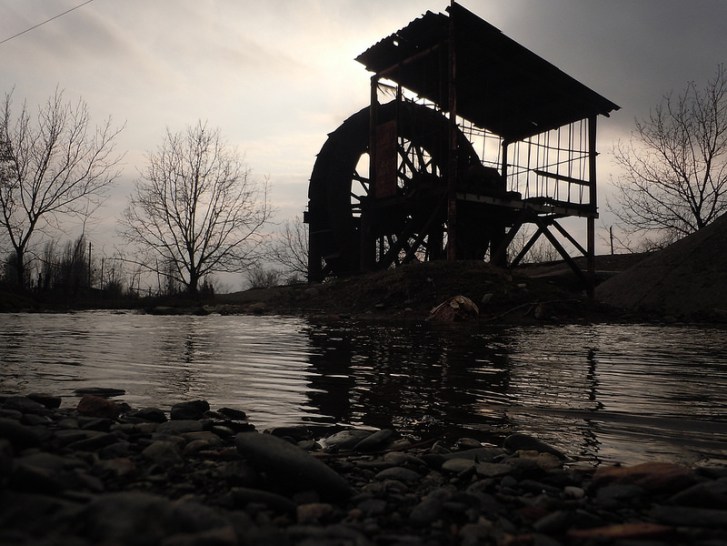
Image credit: World Water Day 2014
Certification for sustainable hydropower schemes?
A potentially promising development is the foundation of the Hydropower Sustainability Assessment Forum in an effort to design a certification scheme to ensure certain environmental and social guidelines are met by new hydropower schemes. The Hydropower Sustainability Assessment Protocol was launched in 2011, to give a set of criteria against which hydroelectric schemes could be assessed for environmental, social, technical and economic sustainability.
Such certification schemes already successfully exist for sustainable wood (Forest Stewardship Council), palm oil (Roundtable on Sustainable Palm Oil) and fish (Marine Stewardship Council) markets. It will be interesting to see what effect the Hydropower Protocol has on future hydropower development, particularly in how ecosystem health can be conserved or restored as part of such schemes.
A wider to debate – lend your voice
World Water Day is a valuable event to prompt debate about these issues, and discuss them amongst a global community. This article has only highlighted one strand of a major, emerging debate over the interrelationships between energy and water. We’d encourage you to leave a comment below if you’ve any thoughts, ideas or questions on this or the wider debate.
MARS interview with Angus Webb, University of Melbourne
Christian Feld talked to project partner Angus Webb of the University of Melbourne in the leafy grounds of the hotel at the MARS kickoff meeting on Mallorca in February 2014.
Meet the MARS Team: Sebastian Birk
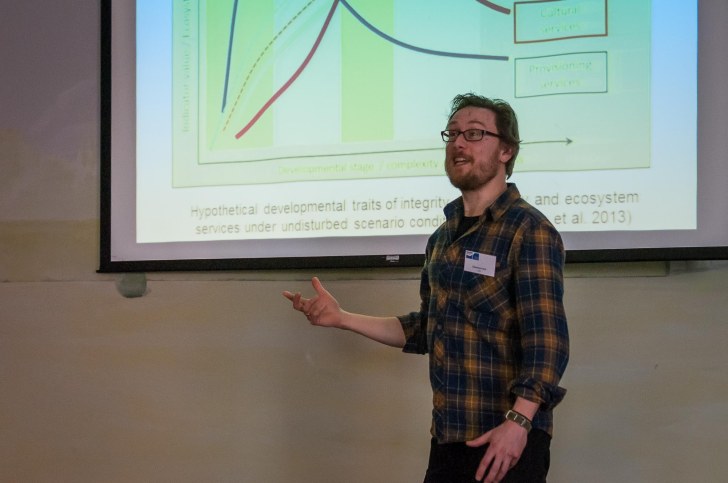
Sebastian presenting to the MARS kickoff meeting in Mallorca (photo: Christian Feld)
Today we begin the first in a series of ‘Meet the Team’ articles where we talk to the people involved in the MARS project to find out more about their work.
Sebastian Birk is a researcher at the University of Duisburg-Essen in Germany. He is a specialist in the ecological assessment of European freshwaters, and his work on the topic has contributed to the design and implementation of the Water Framework Directive.
—
1. What is the focus of your work for MARS?
I am part of the MARS coordination team at the University of Duisburg-Essen, and I lead the scientific work package on defining the frameworks for understanding and studying multiple stressors. I am especially interested in tasks covering indicators of the effects that the multiple pressures have on our freshwater.
2. Why is your work important?
Recently I read a newspaper article about the growing public awareness regarding environmental issues. Despite this, however, there is no effective halting of biodiversity loss in our freshwaters, and salmon shoals do not yet return to German rivers.
This seems contradictory, but it is symptomatic of our modern-day society: walking the thin line between green consciousness and green-washing. I believe that MARS can provide a fundamental contribution to enhance sustainable management of our freshwaters for the benefits of humans and nature.

A silent cruise across the Dalälven, Sweden (photo: Sebastian Birk)
3. What are the key challenges for freshwater management in Europe?
In my opinion it is the diverging priorities of wider society, which does not value Europe’s ecosystem health highly. Environmental issues call for constant advocacy.
And here I think of our scientific commitment, for instance, to responsibly implement the idea of ecosystem services (one strand of research we are following in MARS). And beyond the ecological sphere, to think of how alternative socio-economic models such as the steady state economy (see this Herman Daly article on the subject) may allow us to frame a different agenda for Europe’s environments.

Muddy waters: the Garonne river near Bordeaux (photo: Sebastian Birk)
4. Tell us about a memorable experience in your career.
There are quite a few that I remember. Meeting with people, exchanging views and ideas, creating common ambitions and solutions, and building friendships across this beautiful European continent.
Canoeing the sea stretch of the Miño, searching for foggy ponds in Les Landes or cooling down from the Pannonian heat on the Danube bend are all memories to remember.
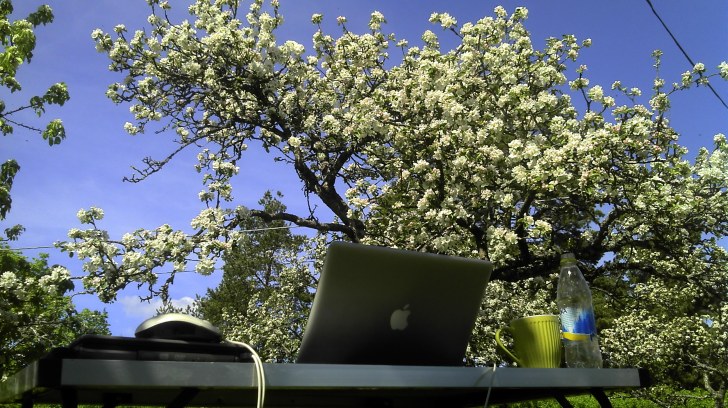
A Swedish spring: the perfect working environment (photo: Sebastian Birk)
5. What inspired you to become a scientist?
Let me answer with the quote by Nobel laureate Sir Peter Medawar:
“Scientists are people of very dissimilar temperaments doing different things in very different ways. Among scientists are collectors, classifiers and compulsive tidiers-up; many are detectives by temperament and many are explorers; some are artists and others artisans. There are poet-scientists and philosopher-scientists and even a few mystics. What sort of mind or temperament can all these people be supposed to have in common? Obligative scientists must be very rare, and most people who are in fact scientists could easily have been something else instead.”
I guess doing science simply has the most of everything.
6. What are your plans and ambitions for your future scientific work?
On this ‘voyage’ to MARS I am focused on keeping my direction. Once landed, new horizons will appear that will certainly motivate me to face fresh challenges. I am already curious …
What we talk about when we talk about uncertainty

2014 has been the wettest UK winter since records began (photo: Creative Commons)
In recent weeks, the south of England – in particular the Somerset Levels and the Thames Valley – have been subject to the worst floods in living memory (see for example). Repeated weather systems moving in from the Atlantic Ocean have brought heavy, sustained rainfall, which have overwhelmed watercourses and flooded surrounding fields, roads, railways and houses.
Regardless of whether these unprecedented floods are directly caused by climate change (the Met Office have confirmed that this has been the wettest UK winter on record), they have caused two fascinating social effects. First, as freshwater breaks its usual bounds and becomes a risk to life and livelihood, a wider group of people become interested in how our water should be managed, and why. Second, we begin to encounter complex ideas of uncertainty in understanding the drivers and causes of such flooding events and their interaction: heavy, sustained rainfall; urbanisation on the flood plain; silted, hydrologically inefficient (but perhaps, biodiverse) river channels. What are the main drivers of these floods? How do they interact? And what measures should we prioritise for future management?
Scientific research could be described as an attempt to reduce our uncertainty about how the world works. However, the idea of uncertainty has the potential to be interpreted as a deficiency in research – ‘not knowing’ or ‘not being sure’ – particularly in debates over future trajectories of climate change. The word ‘uncertainty’ in daily language may carry negative connotations. However, scientists are used to working within margins of error – 95%, 99% – to make confident statements about the world (it could be argued that nothing in life is 100% certain).
Such uncertainties – however small – make it difficult to talk about science to the public and to policy makers: people are (understandably) uncomfortable with dealing with uncertainty when the outcomes may affect their livelihoods and work. Interestingly, a recent report on climate change suggests that the idea of ‘risk’ (as used by the insurance industry) may be more successful in communicating ideas of environmental uncertainty.
The idea of trust is important here too – particularly from the public – trust that scientists and policy makers are making appropriate decisions about the environment. Here, (potentially uncertain) scientific information doesn’t act in a vacuum, instead as part of a complex network of social, cultural and political values held by the public: the blame and responsibility for events such as UK flooding potentially influenced as much by personal experience and media representations of their impact as any direct scientific advice.
Moving beyond a simple (and mostly discredited) ‘deficit model’ of science communication, it seems more important than ever that research on such potentially catastrophic environmental events can engage people to best frame research outcomes (including the uncertainties) to help the public and policy makers understand and make decisions about environmental stressors and their impact on daily life.
Without directly working on the UK floods, the MARS project is designed to study such uncertainties in how freshwaters respond to stress. Environmental uncertainty is difficult to communicate, usually reduced to a set of possible scenarios over how the environment may react and alter to different stresses. In this project, we want to continue to the work of BioFresh to use this blog as a place to ‘get behind the scenes’ of MARS’ research to outline and discuss the issues, uncertainties and potential impacts of our work.
We see blogs as a great conduit through which to talk about these themes. Through a set of features on different stressors, different environments to be studied, interviews with our scientists and the potential implications of our work for water policy and environmental management, we will look to find ways to talk about uncertainty and risk in clear terms, and to encourage feedback and debate.
Some interesting links:
‘Making sense of uncertainty: why uncertainty is part of science’ Sense about Science (2013)
‘Handling uncertainty in science’, Professor Tim Palmer, The Royal Society ‘Science Sees Further’
‘Communicating risk in a soundbite, a guide for scientists’ Science Media Centre
Pidgeon N and Fischer B (2011) ‘The role of social and decision sciences in communicating uncertain climate risks’ Nature Climate Change 1: 35-41
Jacqueline McGlade introduces the UNEP Live vision
Last week’s Citizen cyberscience summit in London was a roller coster of inspiring ideas being put into action.
In the science and policy session, Jacqueline McGlade delivered this video presentation on the vision and concept of the UNEP Live platform, launched on 16 January 2014. This chimes with the vision of the BioFresh platform, which members of our community have created to make freshwater biodiversity information and data both accessible and open.