Taking stock and looking forward in aquatic conservation

A restored section of the Rappahannock River Valley NWR, VA, USA. Image: Chesapeake Bay Program | Flickr Creative Commons
Last week we covered a new opinion piece by Steve Ormerod and G Carleton Ray which outlined emerging topics and approaches for aquatic science-policy dialogue. This week, the piece has been published as part of a new 25th anniversary special issue of the journal Aquatic Conservation: Marine and Freshwater Ecosystems, which features a range of articles taking stock of the current and emerging themes and trends in aquatic conservation.
As the issue editors Philip J. Boon and John M. Baxter outline, the pressures faced by aquatic ecosystems have largely intensified since the journal’s founding in 1991, and policy and management responses have developed in tandem. Pressures from urban development, hydropower, agriculture and industry have worsened across Europe in that time, whilst emerging topics such as climate change and ocean acidification, river basin management, ‘people and nature‘ conservation, ecosystem services and economics, conservation genetics and invasive alien species have become common aquatic research themes, often through new multidisciplinary approaches. A set of overarching European policies addressing aquatic environments have been set in the same period, including the Habitats Directive, Floods Directive, Water Framework Directive, Marine Strategy Framework Directive, and the EU Regulation on Invasive Alien Species.
So, what is the current state of play in aquatic conservation, and how might things change in coming years? The articles in the special issue address a range of topics in response to these questions.
Fish populations – both in freshwaters and in the sea – are chiefly threatened by habitat loss and degradation, invasive species, pollution and over-exploitation, as Angela Arthington and colleagues report, pressures which are all potentially intensified by climate change. Size matters, too: smaller fish are generally threatened by their habitats becoming increasingly isolated and fragmented; whereas larger species are most often threatened by over-fishing. The authors suggest that expanded conservation measures (such as protected areas) which ideally encompass both freshwater and marine environments and reduce human pressures on fish populations – particularly at migratory ‘bottlenecks’ such as estuaries – are needed to mitigate ongoing ecological damage.
Invertebrates are some of the most important, but under-studied and protected, organisms in aquatic ecosystems, according to Kevin Collier and colleagues. The authors report that global assessments of 7857 freshwater invertebrates and 2864 marine invertebrate species (of which a third were reported as lacking suitable data), the most threatened taxa were those with poor dispersal abilities and local endemism, for example many gastropods, crayfish and mussels. Invertebrate populations are richest in freshwater springs and subterranean hydrological systems, and in marine coral reefs and lagoons; but increasingly impacted by pollution, over-exploitation, habitat degradation and invasive species. The authors argue that to increase political and conservation engagement with aquatic invertebrates, work needs to be done on better understanding their global diversity and extinction threats.
Michael Gangloff and colleagues review a set of emerging threats to aquatic ecosystems – as in the previous papers, these are habitat loss and fragmentation, pollution, over-exploitation and invasive species and diseases – and suggest a range of potential mitigation strategies, ranging from more traditional legislation to newer nature-based solutions such as green infrastructure in cities for buffering pollutants. The global spread of one of these key threats – invasive species – is investigated by Elena Tricarico and colleagues, who examine data from three regions with different climates and ecological histories – temperate Europe, tropical Asian Hong Kong, and Neotropical Brazil. They find that freshwaters are more susceptible to invasion than marine habitats, but that (as for invertebrates in the Collier et al study) detailed and up-to-date national and regional inventories of invasive species presence and impact are lacking in many areas.
As Gangloff and colleagues outline, there are a range of management approaches used in mitigating stresses on aquatic ecosystems. One key approach is habitat restoration. In their paper, Juergen Geist and Stephen Hawkins demonstrate how restoration approaches are increasingly incorporating concepts from advancing ecological theory, such as the importance of (re)building ecosystem processes, connectivity and resilience. They suggest that a key balance to be struck in restoration is incorporating such concepts into adaptive management, whilst at the same time setting clear goals for the restored ecosystem’s trajectory, which are important for leveraging political and public support.
Wetlands are often a focus for restoration management as they are often hotspots for biodiversity, valuable natural filtration systems for pollutants, carbon sinks and flood buffers. However, the contribution by Richard Kingsford and colleagues suggests that wetlands remain ‘conservation’s poor cousins’ as whilst they cover between 5–10% of the world’s land surface, around 70% of wetland areas are highly damaged and degraded. As with reports on other aquatic ecosystems and species in this collection, Kingsford and colleagues report that the distribution and health of global wetland ecosystems is poorly mapped. As such, they suggest that wetland research should be prioritised by conservationists as many wetland ecosystems face increase pressures from water abstraction, draining and conversion into agricultural land across the world.
Three more papers consider the importance of human value systems in guiding aquatic conservation efforts. Kenneth Irvine and colleagues outline the challenges of conserving tropical aquatic ecosystems which are often highly biodiverse, yet data poor. They highlight the potential of applying the ecosystem service framework through local and national institutions to aim for sustainable human use of aquatic ecosystems, based on ongoing monitoring, reporting and accountability of management.
Andrew Boulton and colleagues that the ecosystem service framework should be used to complement – rather than replace – existing conservation and restoration goals for biodiversity and ecosystem health. They outline four recommendations for setting ecosystem service-based goals for conservation:
- explicitly listing and evaluating the sets of ecosystem services to be conserved;
- identifying potential trade-offs arising from their conservation;
- specifying time frames for ecosystem service conservation (or enhancement); and
- forecasting how conservation strategies might benefit ecosystem function, service flow and public benefit.
Stefan Gelcich and Jay O’Keeffe draw from emerging research on social perception of conservation initiatives as a means of illuminating the tangled interconnections between people and the environment, and the importance of public and policy perceptions of the natural world in designing, framing and legitimating conservation and restoration work. And finally, Steve Ormerod and G Carleton Ray conclude the special issue with their piece, arguing for increased attention to ecological resilience and linked freshwater-marine systems in aquatic conservation and restoration policy.
Connecting the shifting currents of aquatic science and policy
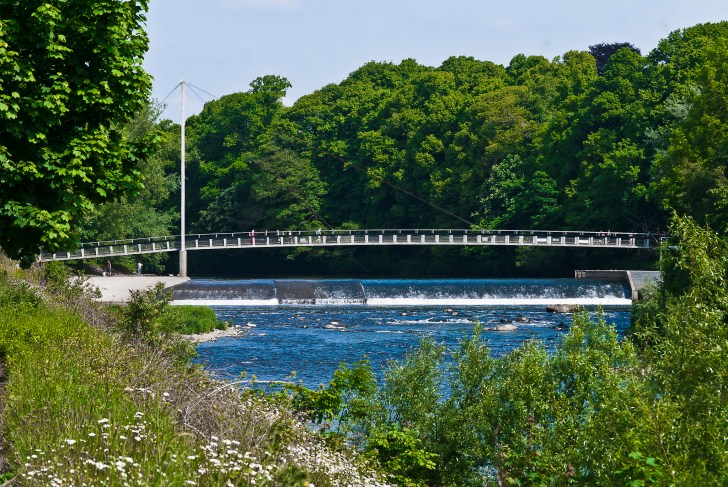
Bridging science and policy: the River Taff in Cardiff, Wales, which has been restored in recent decades. Image: Andrew Rees | Flickr Creative Commons
Dialogues between environmental scientists and policy makers form key cogs in modern conservation and restoration practices. Scientific research can inform and support ‘evidence-based’ policy making, whilst policy makers will often prioritise and fund socially and environmentally pertinent research topics.
The multiple ways in which aquatic ecosystems support and shape human lives makes productive science-policy dialogues about their management and protection particularly important. As Prof Emily Stanley articulated in a recent interview, aquatic ecosystems across the world are increasingly impacted by human pressures, which are causing ever more complex and uncertain ecological impacts (such as state shifts or multiple stressor interactions, for example), and which may be described under the broad umbrella term of the ‘Anthropocene’.
As such, there is a pressing need for science-policy dialogues to help form adaptive policy and management responses to such new ‘natures’, to try to build in ecosystem resilience to emerging treats to climate change and to conserve highly-pressurised biodiversity.
In this context, a new opinion piece by Steve Ormerod from Cardiff University and G. Carleton Ray from the University of Virginia argues that aquatic scientists can play a pivotal role in identifying gaps, failings and emerging trends for policy and regulatory practices. Writing in Aquatic Conservation Marine and Freshwater Ecosystems, the authors identify the concept of resilience as an organising principle for science-policy responses to emerging human pressures. Promoting environmental resilience provides a means of bringing new ecological concepts, the importance of an ‘ecosystem approach’, and the value of ecosystem services and natural capital further into policy making.
Two major pieces of aquatic legislation, the US Clean Water Act (1972), and the EU Water Framework Directive (2000) were significantly shaped by scientific evidence, both in their design and in ongoing monitoring and enforcement. However, Ormerod and Carleton Ray argue that there is still untapped potential for aquatic scientists to help improve and develop environmental decision-making in an ever-changing world.
New and novel science-policy practices are emerging from one of Europe’s smallest countries. In 2015, the Wellbeing of Future Generations Act was passed by the Welsh government, making the promotion of environmental resilience a key aspect of public body sustainability strategies. Through the Act, targets for environmental resilience – promoted through reduced greenhouse gas emissions, soil and water body restoration and biodiversity conservation amongst others – are set alongside social, economic and cultural goals. Another Welsh policy, the Environment (Wales) Act of 2016 has set the ecosystem approach – i.e. a focus on the health, structure, function, condition and service provision of ecosystems in all decision-making – directly into national legislation.
Ormerod and Carleton Ray highlight that effective environmental management and conservation action often requires long-term measures, which in turn require political commitments beyond the fixed-term cycles of government. Here, they suggest the importance of analysing and communicating the results of long-term data sets on freshwater ecosystems, as a means of demonstrating the value of long-term perspectives and large-scale policy interventions.
The authors suggest that aquatic science is not only important in shaping the form of environmental policy, but also in evaluating its ongoing implementation. For example, Britain’s urban rivers have largely become cleaner and healthier since the implementation of the EU Wastewater Treatment Directive in 1991; changes which have been tracked to by ongoing scientific monitoring programmes, which now indicate that there may be associated benefits in how the river ecosystems adapt to future climate change.
Aquatic scientists should engage more fully in policy arenas, in order to identify and fill gaps in existing environmental policy and regulation through good evidence and communication, argue Ormerod and Carleton Ray. An example of such engagement is in the MARS project, which identified the lack of consideration given to aquatic multiple stressor impacts in the EU Water Framework Directive, and is now midway through a large research project to provide policy-relevant results to address this deficit.
However, the authors argue that there remains significant potential in acknowledging concepts of environmental dynamism and complexity in policy and management globally, particularly the connectivity between land and water systems and between transitional waters where fresh and marine waters interact.
Ormerod and Carleton Ray’s concluding points are far-reaching and perceptive:
In sum, we are proposing that freshwater and marine conservation biologists work together towards an expanded, systemic approach to aquatic ecosystems to incorporate interaction across the whole land-freshwater-ocean nexus – both in scientific terms and onward into policy… expanding the role of science in aquatic policy and legislation requires fuller recognition of where aquatic conservation now stands in a changing world. It is not our intention to offer a prescriptive approach to any aspect of the science-policy interface, but rather to point out the nature of the present-day challenge. The 21st century is much different from preceding centuries. Aquatic issues are converging, requiring a systems approach and an improved understanding of how physical and biological processes interact under an accelerating pace of environmental change.
A key challenge, then, for aquatic science-policy dialogue is not only to scientifically understand the emergent properties of a changing world, but also to provide convincing arguments for the importance of nature-based solutions for entwined social, economic and environmental issues through policy-making.
For Ormerod and Carleton Ray, this is a collaborative process, concluding that, “Together, science and policy must spur each other onwards.”
Stream Ecosystems in a Changing Environment: an interview with Emily Stanley
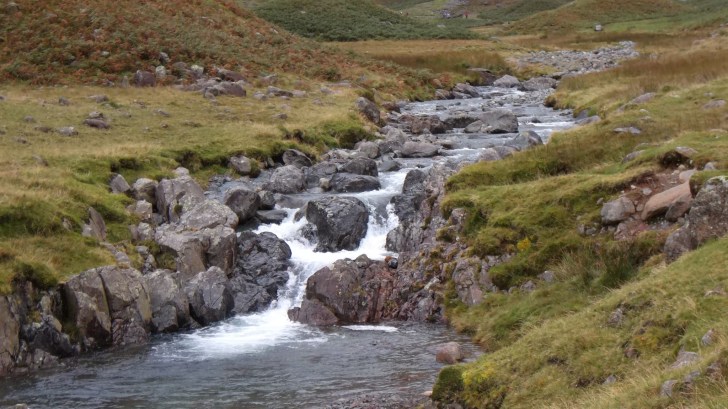
An upland stream in the English Lake District. Image: oatsy40 | Flickr Creative Commons
Stream ecosystems form important parts of many landscapes; slim threads of moving water often high in biodiversity (sometimes in the most surprisingly developed places), nutrient and carbon cycling processes and recreational and aesthetic appeal. However, streams across the world are increasingly threatened by pressures including pollution, climate change, abstraction, the spread of invasive species, fragmentation and channel alterations.
A new book ‘Stream Ecosystems in a Changing Environment‘, co-edited by Jeremy B Jones of University of Alaska Fairbanks and Emily H Stanley of the Center for Limnology at the University of Wisconsin provides a timely, cutting-edge perspective on the response of stream ecosystems to environmental change. We spoke to Professor Stanley to find out more.
 Freshwater Blog: Could you tell us a little about ‘Stream Ecosystems in a Changing Environment’, its aims, contents and contributors?
Emily Stanley: The book was inspired by the 2000 book ‘Streams and Ground Waters‘ edited by Jay Jones and Pat Mulholland. Jay and I wanted to provide an up-to-date resource for stream ecologists, and we also very much wanted to honor the memory of Pat Mulholland. Pat was such an influential scientist in the field, but more importantly, a friend, mentor, and truly exceptional and kind human being. We all miss him very much.
As the title indicates, the ‘Streams and Ground Water‘ book had emphasized groundwater and how it affected/interacted with streams and rivers. In this book, we wanted to broaden the scope and consider a range of topics from hydrology, geomorphology, and ecosystem ecology. And in particular, we wanted to bring things into the 21st century and recognize the interactions between humans and the environment. That included presenting new concepts and understanding that have been gained by studying human-dominated streams, and conversely how basic scientific concepts have been used to study these environments.
We wanted the book to be useful for both researchers and managers, and we had learned from the ‘Streams and Ground Waters‘ experience that many of our colleagues found the book to be particularly useful for graduate students. So providing a strong and updated resource for early career scientists was also a major goal.
The contributing authors are a great bunch – and include a mixture of ecological, geomorphological, and hydrological experts. Jay and I invited people to contribute chapters because of their leadership in the field and their creative approaches to their science. Some of these authors come at ecological questions from physical/earth science backgrounds, and bring a perspective that may be new for many stream ecologists. We view this as one of the strengths of the book.
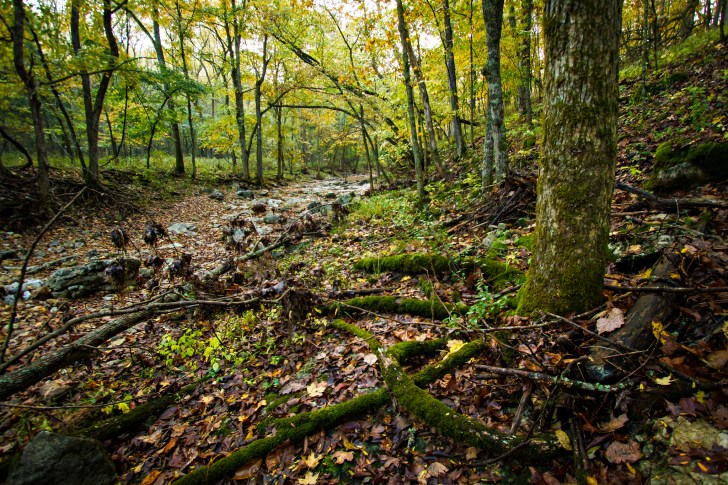
A seasonally dry stream in a forest in Missouri, USA. Image: Kyle Spradley
What are the big themes and challenges in stream ecology? What are some of the most recent advances in our understandings of stream ecosystems, and where are there still gaps to be addressed?
I think some of the challenges and opportunities that have been unfolding over the past 10-15 years involve understanding streams and rivers at larger spatial scales, learning how to take advantage of new technologies such as automated sensors for measuring water chemistry, and providing information needed to understand and managing streams in rivers in the context of long-term changes in climate, land use, and water use and regulation.
Not surprisingly, there have been lots of major advances in stream and river research over the past decade – often in direct response to these broad challenges. We’ve seen substantial growth in the breadth and capacity of models and statistical methods, more studies of streams and rivers at continental and global scales, new insights from research that takes advantage of the automated sensors as well as from new tools for investigating organic matter composition – as just a few examples.
Overall, we have become far more quantitative in our science. Many of the chapters provide a perspective on the state of the art for new approaches and accompanying insights provided by new tools and models (many of which were developed by the chapter authors themselves). These include, for example: providing a thorough overview of models used to quantify metabolism that make use of data from automated sensors and what new insights we’ve gained from these new approaches, a new quantitative framework for nutrient spiraling that integrates nitrogen and phosphorus cycles, or a detailed consideration of the challenges associated with understanding streams and larger scales – accompanied by the introduction of a new analytical strategy for scaling up results generated from small, reach-scale studies to drainage systems distributed across landscapes.
As these tools/models/frameworks emerge, I suspect that over the next decade we’ll continue to see more tool and model development, but we’ll also see these new strategies put to work. While we’ve made great strides in understanding riverine processes at large scales, I think there are still substantial opportunities in this realm. And clearly much of this work includes the science for dealing with complicated management problems. Gaps and emerging challenges in these areas are particularly well laid out the final three contributed chapters.
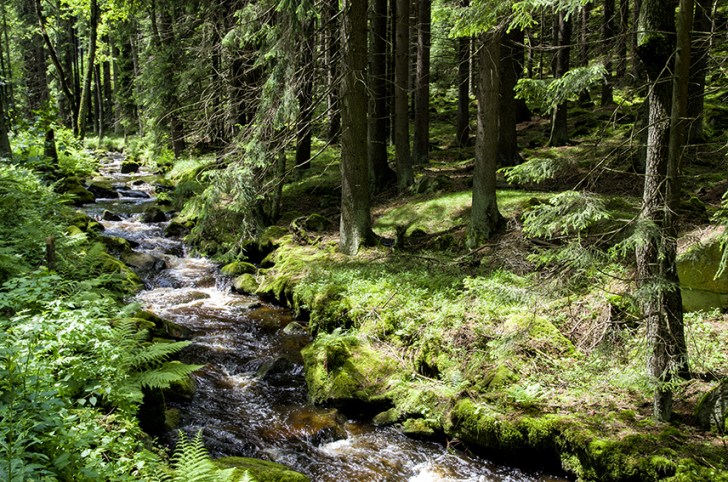
A forest stream in the Czech Republic Image: Dominique Cappronnier | Flickr Creative Commons
In your synthesis, you note that the world has entered a new geological era, the ‘Anthropocene’ where human activities take on the magnitude of natural, geological and climatic processes in affecting Earth systems. Interestingly, you state that “Nowhere is this truer than in aquatic ecosystems”. How is the Anthropocene era evident in aquatic ecosystems? And does the naming of the Anthropocene era change anything in how we study, understand and manage freshwaters?
The simple reality is that freshwaters have always been a focal point for human development, and as the world population continues to grow, we continue to make demands on these distinctly finite resources. In blunt terms, humans have been very successful plumbers. We continuously try to compensate for the fact that fresh water is unevenly distributed in space and time, and one of the emerging hallmarks of the Anthropocene is the human alteration of the global hydrologic cycle. And accompanying these movements and delays of freshwater flows via dam construction, irrigation, groundwater withdrawals, inter-basin transfers, substituting in ditches or drainage systems for natural channels, and so on are distinct changes in water quality and in ecosystem processes.
Because fresh water is a relatively limited global resource, the conflicting challenge of providing sufficient water of sufficient quality for human needs while maintaining freshwater ecosystems has sharpened. Trying to manage this conflict in a sustainable fashion has clearly been inspiring research over the past 1-2 decades, and we hoped to capture some of this work in the book. I think by putting a label on it – the Anthropocene – underscores the value and urgency for data and research needed to sustain freshwaters.
While many people have reflected on this point before – and more elegantly than me! – I’m struck by the transition that has occurred over my scientific career, and even over just the last 10 years. As a graduate student, research on topics such as nutrient cycling or surface-groundwater interactions were purely academic in nature and most researchers worked in relatively protected places to minimize confounding and annoying effects of human influence. I can’t even remember hearing talks on, for example, urban streams. Now, several years later, this basic research continues – and must, because we need to understand the fundamental workings of ecosystems.
But there has also been a huge shift to working in human-dominated ecosystems and to ask questions about the nature of this human influence. This includes incorporating a forward-looking perspective in science and management – how do we manage freshwater ecosystems and meet human needs for water now, a decade for now, or a century from now? In short, as researchers and managers, we are rising to the challenge of the Anthropocene.
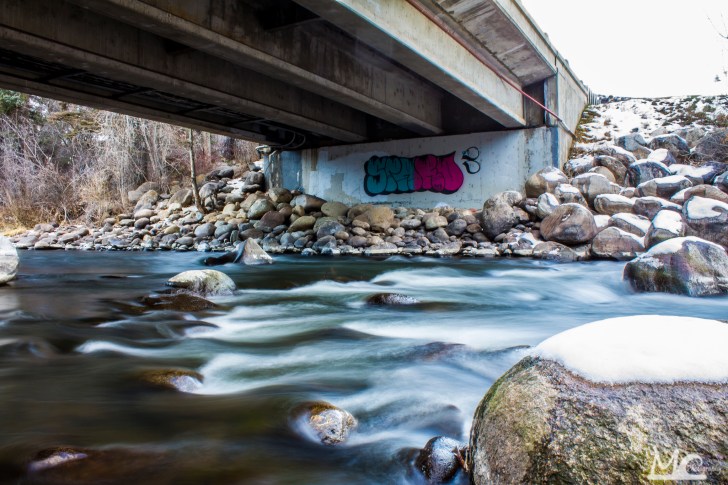
An urban stream in Colorado. Image: Mick Chester | Flickr Creative Commons
Following on from the last question, I see an underlying theme of the book as being how stream ecology can have intellectual and practical interchanges with environmental policy and management in an era of increasing uncertainty. How can these interchanges be most productive, do you think? What can aquatic ecology offer in terms of addressing social needs and environmental problems?
This is a great question, and one that is tough for me to answer! As I mentioned above, there has been a lot of growth in the field over the past decade in terms of developing new tools, models, etc. that are providing us with new power and new opportunities to ask questions about how streams and rivers work, and how best to manage these ecosystems. And as we tune in to the challenge of freshwater sustainability, I think it’s safe to say that most researchers are interacting with managers and policy-makers far more often than in the past.
Again thinking back on my own history, interactions with these groups was almost completely absent until the last 15 years. Now it is a fundamental part of my work, and we routinely include agency researchers and managers in our projects. That said, I think we are all still learning how to produce good science and useful science, and how to be most effective at informing decision-making with scientific understanding.
It’s great to see some emerging behaviors and practices becoming routing that should help facilitate these interactions. These including things such as data sharing and open data access, training opportunities for scientists to improve our communication skills with non-scientific audiences (journalists, policy makers, local stakeholders, etc.), and research initiatives that explicitly embrace integrated social-ecological approaches and questions.
Purchase a copy of ‘Stream Ecosystems in a Changing Environment’ here.
Why a river in New Zealand is being granted ‘legal personhood’

The Whanganui River in New Zealand. Image: Evan Goldenberg | Flickr Creative Commons
It’s a common lament to hear from freshwater conservationists: if only our rivers and lakes had better legal protection in response to the many pressures they face. In New Zealand, a new piece of environmental legislation is intended to do just that, by taking the unprecedented step of granting a river the legal rights of a citizen.
Flowing across North Island, the Whanganui River is New Zealand’s third longest river, and supports rich biodiversity. The river is closely woven into local Maori cultures, and regarded as a ‘taonga‘ – a site of special and spiritual importance. Local Maori tribes have long argued that they own the Whanganui River, which has faced pressures from gravel extraction for over a century, and more recently has been threatened by hydroelectric dam proposals.
The Whanganui River legislation, called the Te Awa Tupua bill, is currently moving through parliament. If passed (which appears very likely), the bill would grant the river ‘legal personhood’, that is the right for the Whanganui tribe to speak for the river in the country’s courts, and to file lawsuits on its behalf when environmental protections are not upheld. This approach could be seen as a type of co-management, through which the rights of the river, and its health and diversity, are upheld through shared decision-making involving local Maori tribes.
Speaking to ABC News, University of Otago law professor Jacinta Ruru explains,
It means that these lands or the river have their own authority—they are recognised in law now as having their own presence, their own needs and their own wellbeing They can be represented now as a voice in court. Obviously they’re not speaking for themselves as such but … this is part of the whole agreement between the government and our Maori tribes as to who will then speak on behalf of these important places.
There is a legal precedent in New Zealand for granting civil liberties to landscapes. In 2014, the Te Urewera Act shifted the designation of an area in the Hawkes Bay region of North Island from a national park to a landscape with legal personhood. This shift in designation – which is also scheduled for the Whanganui River – mitigates debates about who ‘owns’ the landscape, by granting it special legal status which both potentially strengthens its environmental protections whilst recognising intrinsic cultural and spiritual values.
Jacinta Rutu outlines the value of this process,
From our perspective as Maori, we believe that we come from the land and that the land has its own personality, its own heartbeat, its own health, its own soul. The government was not willing to give ownership of that national park back to that tribe, so this legal personality concept resonated and is a term that both sides—the government and Maori tribes—can create a solution around: it’s an ancestor that owns itself.
The Te Urewera legislation uses Maori terms to detail how the landscape has both mana – its own authority – and mauri—its own life force. These ideas resonate with the ‘rights of nature’ concept, in which non-human beings and landscapes – rivers, mountains, forests and so on – are argued to warrant legal and ethical entitlements, just as humans do. Christopher Stone’s 1972 paper ‘Should Trees Have Standing’ (pdf) is a key part of this concept, outlining the many considerations that granting legal rights to natural objects entails.
Shannon Biggs, director of Movement Rights, an American environmental justice organisation, will be part of a delegation of environmental conservationists, lawyers and indigenous people who will visit New Zealand next year to better understand the Te Urewera and Whanganui River legislation. Speaking to Outside Online, Biggs explains,
I think it’s the most revolutionary piece of legislation anywhere in the world. We work with communities passing local laws that recognize something similar—rights of nature—but this goes much further. The potential to radically shift how we protect ecosystems is embedded in what they are doing there.
How could such a concept work in countries without similar indigenous interconnections with – and voices for – the environment? Could a heavily pressured and transboundary European river be granted similar legal personhood? Perhaps unlikely.
But what these radical pieces of environmental legislation in New Zealand demonstrate is a real willingness to foreground and strengthen the rights of nature – and in the Whanganui case, the rights of a river – into law; a broad spirit that is likely to have global resonances for diverse local landscapes.
River restoration in action: a chalkstream in Southern England
River restoration is an important strategy used to reduce the impact of multiple stresses on freshwater ecosystems. However, its not always possible to see the restoration process in action.
A recent film made by the UK-based Five Rivers environmental consultants documents the restoration of Ford Mill, a chalkstream in Southern England, providing a fascinating insight into approaches for river restoration.
The short film shows the removal of barriers to fish movement, the creation of fish passes and the re-meandering of historically straightened channels. Returning to the stream one year on, biodiversity is flourishing in a range of newly (re)created habitats.
Freshwater Protected Areas in a Rapidly Changing World
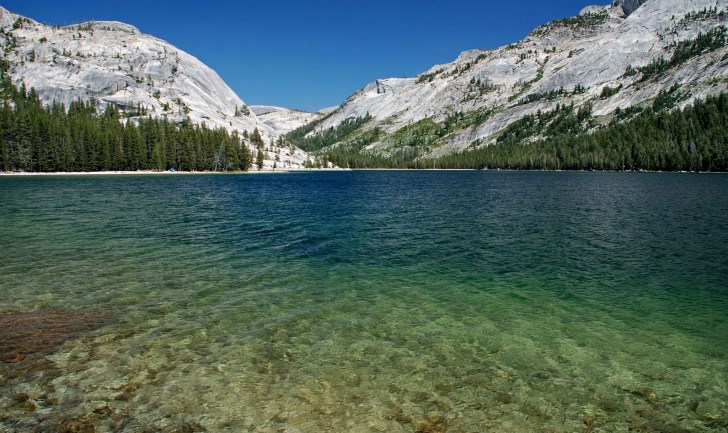
Tenaya Lake in Yosemite National Park, USA. Image: nrg_crisis | Flickr Creative Commons
Protected areas are one of the key conservation tools used by environmental managers and policy makers across the world to help protect biodiversity and ecosystems. Protected areas (for example Sites of Special Scientific Interest in the UK) set aside blocks of land and water in which human activities – such as fishing, farming, hunting and building – are limited as a means of promoting the survival of often rare and valuable species and ecosystems.
Protected area designation has been a popular mode of conservation practice throughout the latter half of the 20th century (though not without debate over their effectiveness and appropriateness). Over the coming years, the expansion of protected areas is a project that global governments have signed up for through the Convention on Biological Diversity Aichi ‘Targets for 2020’. These targets are embedded in European environmental policy through the EU 2020 Biodiversity Strategy.
Protected areas have been designated for freshwater conservation with mixed success across the world. As Ben Collen and colleagues demonstrated in an (open-access) 2014 research paper, global freshwater biodiversity continues to decrease at an alarming rate, despite targeted conservation strategies. And as Charles Vörösmarty and colleagues wrote in 2010, projected changes to the global climate mean that some freshwater species may struggle to persist in ecosystems in which they currently live, as their ‘climatic niche’ shifts, or even disappears.
Vörösmarty and colleagues suggest that nearly 80% of the world’s human population is exposed to high levels of threat to water security: that is, that climate change may make their water provision scarce or irregular in the future. Clearly, freshwater protected areas face a growing set of challenges, not least to protect biodiversity and ecosystems that are open to change and move, under increasing global human demands for water.
Addressing these challenges, a recent special issue of Aquatic Conservation: Marine and Freshwater Ecosystems compiles a set of articles examining the aims and effectiveness of freshwater protected areas globally. Edited by Vigilio Hermoso, Robin Abell and Simon Linke, the open-access special issue contains articles on protected areas for endemic biodiversity in the Western Ghats, India; on integrating multiple stakeholder perspectives in protecting a water-stressed ecosystem in the Murray-Darling Basin, Australia; on climate change threatened endemic biodiversity in Amazonia; and on the relationships between protected areas and global water security.
The issue authors identify that emerging conservation approaches which frame humans as an inextricable part of ‘nature’ offer new opportunities to enhance the value of protected areas for freshwater conservation. Under this ‘people and nature’ paradigm, the authors suggest that “the imperative of finding solutions that generate co-benefits alongside biodiversity conservation, and the clear reliance of human communities on freshwater services, has created an environment that may be more favourable to protected areas focused in whole or part on fresh waters.”
A number of broad thematic threads run through the special issue. Freshwaters are unique environments: they flow, flood and alter over space and time, and as such, protected areas need to be designed to be able to function under such fluxes. Freshwaters are often highly connected, supporting species of fish, animals, plants and insects that may migrate across watersheds, either in regular patterns (e.g. for breeding), or in response to changes in habitat niches due to climate change or human pressures. Pollution and other pressures can be similarly trans-boundary, particularly in rivers, where human activities upstream can place stress on the health of downstream ecosystems.
Similarly, freshwaters are often highly connected to the dynamics of the wider terrestrial (or land-based) environments that they drain. As such, the health of freshwater ecosystems is often closely linked to the health of the wider landscape. Accordingly, there is a tension between the need to protect the freshwater ecosystems which have, for example, high biodiversity value, with the need to reduce potential pressures (e.g. diffuse pollution) across the wider landscape. Given these considerations, monitoring programs are essential in assessing the effectiveness of protected areas for freshwater systems, and in providing the evidence for policy decisions and adaptive environmental management.
The final paper in the special issue, by Diego Juffe-Bignoli and colleagues, is something of a synthesis and horizon-scan for these issues. The authors outline that despite the CBD Aichi Biodiversity Target 11 stipulating an improved global protected area network including freshwater ecosystems by 2020, as yet there is no comprehensive assessment of what needs to be achieved to meet Target 11 for freshwater biodiversity.
Aichi Target 11 reads:
By 2020, at least 17 per cent of terrestrial and inland water areas and 10 per cent of coastal and marine areas, especially areas of particular importance for biodiversity and ecosystem services, are conserved through effectively and equitably managed, ecologically representative and well-connected systems of protected areas and other effective area-based conservation measures, and integrated into the wider landscape and seascape.
Juffe-Bignoli and colleagues outline a number of recommendations about how such a target might be met, and more broadly, how a protected area network for freshwaters might be improved. They advocate the need for globally consistent and comprehensive methods of defining the boundaries of freshwater ecosystems, as a means of accurately measuring the extent covered of protected area coverage.
They state that it is crucial to identify areas of importance for freshwater biodiversity and/ or ecosystem services (using existing approaches such as Key Biodiversity Areas) to guide the designation of new protected areas. They argue that protected areas should take into account a diverse range of stakeholders, representing the needs of both human and non-human life, in a process of ‘equitable management’.
Perhaps crucially, Juffe-Bignoli and colleagues suggest that there is need for better spatial tools to assess connectivity of freshwater systems, as a means of designing connectivity into protected area networks. This process is to an extent seeking to ‘future proof’ protected areas given the prospect of future climatic changes.
This is perhaps the key challenge for freshwater protected areas: to provide interconnected refuges for biodiversity in an increasingly pressured and changeable world.
What Works in Freshwater Conservation?
Lakenheath Fen, where wetland and reedbeds were restored on arable land in the 1990s, and which now supports rich biodiversity. Image: Claire Wordley
Last year, the Conservation Evidence group at the University of Cambridge published a book titled ‘What Works in Conservation‘. Published as both hard copy and open-access pdf, the book compiles cutting-edge research assessing the effectiveness of conservation measures in protecting and improving the world’s ecosystems.
The publication contains information on different freshwater conservation measures relating to amphibians, aquaculture and invasive species, and provides a valuable source for environmental managers assessing evidence-based conservation strategies.
Intrigued, we spoke to Dr Claire Wordley of the Conservation Evidence group to find out more. She gave this fascinating overview to the project.
***
What Works in Conservation is a book with a simple but important aim: to provide the scientific evidence for conservation actions, enabling conservationists to see, well, what works in conservation. It is part of the work by the Conservation Evidence project, set up by Professor Bill Sutherland at the University of Cambridge to break down the barriers between conservationists and the evidence they need to do their jobs.
In conservation, we currently have a huge divide between academics publishing more and more papers with conservation implications, and on-the-ground conservationists, who often can’t access those papers and don’t necessarily have the training to read scientific jargon anyway.
Conservationists often miss out on information in academic journals. Academics often pursue scientifically interesting questions at the expense of those that are useful to conservationists. Conservation actions are often taken but not monitored, and the results not published, reducing the capacity for the conservation community to learn from each individual’s experience.
The result is that conservation is not as effective as it could be. Disciplines such as medicine, international aid, social policy and education are increasingly evidence-based, with many of them seeing huge improvements in effectiveness; it’s time for conservation to do the same.
Conservation Evidence is working to provide an ambitiously large and comprehensive global evidence resource, freely available to conservation practitioners, policy makers and anyone else who is interested. The group tackles each topic as a synopsis on a certain taxon, ecosystem or topic. So far, synopses have been produced on bees, birds, bats, amphibians, sustainable aquaculture, soil fertility, control of freshwater invasive species, natural pest control, farmland conservation (in Western Europe) and forests. These are available as books or PDFs, or as a searchable database.
What Works in Conservation, published in 2015, summarises the evidence from most of these synopses – an update will be published in 2017. Each action in What Works has been put into a category of effectiveness, such as ‘beneficial’ or ‘likely to be ineffective or harmful’. This scoring system has also been applied to much of the searchable database.

A swimming toad. Image: Claire Wordley
So, what works in freshwater conservation? Well, a freshwater conservation synopsis will be underway imminently in collaboration with Tour de Valat, but there is still a fair amount on the Conservation Evidence website that is relevant to freshwater conservationists. The amphibian synopsis provides the published scientific evidence for a whopping 129 actions, such as adding lime to water bodies to reduce acidification, deepening, de-silting or re-profiling ponds and using antifungal treatment to reduce chytridiomycosis infection. Some of these have huge relevance to the practices undertaken on a daily basis by ecological consultants, such as translocating great crested newts.
The control of freshwater invasives synopsis (some of which is in What Works, the rest of which is available online) has 118 actions to control six invasive species from American bullfrogs to water primrose (we are currently working on additional species). Looking at the freshwater invasives synopsis, it is striking that the same intervention can affect different species in very different ways. For example, introducing predators for American bullfrogs was scored likely to be beneficial, while introducing predators for Procarambus crayfish was considered unlikely to be beneficial.
This highlights the need to collect evidence for each intervention we are trying to deliver, rather than going on the basis of ‘common sense’. Unfortunately, as in medicine, some very sensible sounding ideas can be ineffective, or worse, kill the patient.
Browse the evidence for yourself, and where there is no evidence for an action, take it as a call to arms to collect some yourself and publish it. Together, we can make conservation better.
Stepping-stones for diversity: ponds and landscape conservation

A London pond. Image: Derek Winterburn | Flickr Creative Commons
For many people, ponds can be familiar and everyday freshwater habitats; small patches of water – both natural and man-made – found in gardens, parks, nature reserves and even dense urban areas.
Ponds aren’t just places to feed the ducks or sail toy boats, however, as an growing body of scientific research shows that they are valuable habitats for biodiversity, often for rare and endemic species, and particularly in ecologically-poor urban and agricultural landscapes.
Ponds help generate a range of ecosystem services. They can help buffer flood waters through storing excess rainfall, and similarly retain nutrients and sediments that might be washed away by flood water runoff. Vegetation growth – most notably of reed beds – can provide local-scale storage of carbon, and help cool urban heat island effects.
However, despite their role as beacons for freshwater biodiversity in highly-altered landscapes, ponds are often overlooked by conservation and policy initiatives. The EU Water Framework Directive – which requires European member states to improve water quality to ‘good status’) only covers lakes larger than 50ha (roughly 60 football fields in size – in other words ‘big lakes’). Similarly, only a small number of pond habitats (e.g. Mediterranean temporary ponds) and freshwater species (e.g. the Great Crested Newt, Triturus cristatus) are designated for protection under the EU Habitats Directive.
As a result, ponds are often overlooked and poorly conserved; regularly drained and filled in during building work, or used as dumping grounds for waste, pollutants and invasive species (such as unwanted pets).
However, there is an increasing movement within freshwater ecology and conservation circles to better document and protect pond habitats. In the UK, the Freshwater Habitats Trust has placed pond conservation at the centre of its work, most notably through the ongoing People, Ponds and Water project. For the Trust, pond conservation is an participatory process, involving local communities to document, champion and even create new pond ecosystems. We covered their report on small water bodies on the blog in 2014.
Freshwater scientists are increasingly turning their attention to diversity and importance of pond ecosystems, too, with a burgeoning number of journal papers published over the last decade or so. In an influential 2014 paper in Hydrobiologia, Régis Céréghino and colleagues report on discussions within the European Pond Conservation Network, to suggest that ponds are likely to become ever more important in creating connected landscapes in a changing climate, “Beyond the contribution of individual ponds to the aquatic and terrestrial life, connected networks of ponds are vital as a response to global climate change, by allowing the northward and/or upward movements of species.”
A new paper published in Biological Conservation by Matthew Hill and colleagues studying macroinvertebrate (or aquatic insect) diversity in rural and urban ponds provides more evidence to this growing knowledge base. Hill and colleagues sampled 91 lowland ponds in the English Midlands, across 3 land use types: floodplain meadows, arable and urban ponds, finding over 200 different macroinvertebrate species.
Whilst floodplain ponds supported the greatest macroinvertebrate diversity, those in arable and urban landscapes also held rich insect life, including species of high conservation value. A key finding of this study, therefore, is that ponds are important micro-habitats for biodiversity at a landscape scale. What this means is that whilst floodplain ponds are (perhaps as expected) the most diverse of the three habitats, all the ponds together generate cumulative, connected species diversity in otherwise ecologically-poor landscapes.
Conservationists across the world are increasingly focusing their attentions on conservation within the ‘landscape matrix’. This is an approach that doesn’t only focus on sites of high biodiversity or rare species inside protected areas, but instead seeks to understand, value and protect (often micro-) habitats such as ponds which provide refuges or ‘stopping-off points’ for biodiversity in highly altered landscapes.
As the Freshwater Habitats Trust have demonstrated, the presence of ponds in many people’s everyday landscapes mean that they have a valuable role in potentially connecting the public to issues of freshwater health and conservation.
As yet though, their small size and visibility means that ponds are continuing to ‘slip through the net’ of freshwater policy and conservation initiatives. The new study by Hill and colleagues concludes with a call for a renewed focus on ponds within environmental legislation, and a suggestion that such a ‘landscape approach’ to understanding their value in ecologically-poor environments may be the most appropriate way to help ensure their conservation (and creation) in the future.
So, perhaps next time you pass by your local pond, why not stop and look a little longer: the diversity of life you see might surprise you.
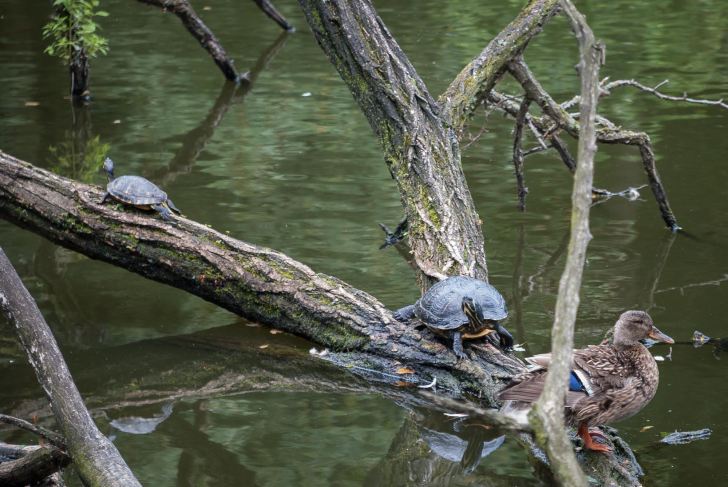
Red-eared turtles in Lake Baldeney, Essen, Germany. Image: Christian Feld
Last week we began a new series of posts titled ‘What Can I Do to Help Freshwater Ecosystems?‘, in which freshwater experts suggest ways in which the public can help conserve rivers and lakes. Today we have another post from MARS scientist Christian Feld, which draws on his experiences introduced red-eared turtles to freshwaters around Essen in north-west Germany.
***
Essen is the centre of a large metropolitan area, called the “Ruhrgebiet” (after the river Ruhr), where around five million people live.
Many of Essen’s inhabitants do not know nature particularly well, often because they haven’t seen too many natural parts of the country. You have to drive an hour at least to see some nice forests. For natural rivers and lakes, you have to drive three hours or more. For many people in Essen this prevents any sort of meaningful interaction with nature.
Now a story: A pet is a pet is a pet
Many children like owning and caring for pets, whether birds, mice, rabbits, turtles. When both pets and children grow older, there is often less enthusiasm to care for the pets. Then, many of these domesticated animals are released in nature.
At Lake Baldeney, south of Essen, we’ve a huge population of red-eared turtle (Trachemys scripta elegans). They come from the Great Lakes in the U.S. and have been introduced to Europe through the pet trade. They’re sold for €20–30 (only!) and grow up to 50 years. Thus, it is very likely that they won’t live as pets for long, but will be released after a couple of years. Red-eared turtles have spread across the world, and can out-compete native biodiversity for food and habitat, causing significant stress to the health of freshwater ecosystems.
The red-eared turtle is just one example of a freshwater alien species. There are many more – animals as well as plants. They may threaten native biodiversity. They may affect ecosystem’s health and intactness. And finally they may affect us humans.
So what can we do about alien and invasive species? Well, first, we need to take responsibility for our pets. A pet isn’t something you discard after you ‘used’ it for a while. Right now it’s summer time – holiday time. This is the time you may find many more pet animals abandoned or released into nature because they cannot be taken on holidays.
Second, we need to care about alien species. We need to know them and we need to know what they can do to us and our rivers and lakes.
And third, we must respect nature, which gives us so many services and benefits. In general, people shouldn’t interfere with already stressed freshwaters by introducing species that aren’t native to ecosystems. And children should be encouraged to have respectful and inspirational interactions with nature.
This, is what we can do for nature.

A Finnish river in winter. Image Ville Lukka | Flickr Creative Commons
Living an environmentally conscious lifestyle can sometimes seem overwhelming. There are so many ways in which humans are changing and damaging the natural world that it can be difficult to know how to take positive steps in reducing your own impact.
This is particularly the case for freshwater ecosystems, which are increasingly abstracted, channeled, polluted and fragmented by humans. However, there are many small-scale actions that we can all take in our daily lives to help reduce our negative impacts on freshwater health and biodiversity.
Today we start a new series of short posts titled ‘What Can I Do to Help Freshwater Ecosystems?’ which suggest ways in which our daily lives might become more ‘water aware’.
Our first contribution is from MARS scientist Marko Järvinen from the Finnish Environment Institute (SYKE) Freshwater Centre.
***
And awareness of the state of one’s local water bodies is likely to increase your personal interest in maintaining and improving freshwater health. For instance, in Finland environment authorities provide information on the state of our surface waters on the web.
Citizens can download their own observations of water temperature, cyanobacteria bloom situations, certain alien species etc. from the web (from their local lakes or during sailing, etc.) using the web-based service Järvi-meriwiki. Members of the public can also download their observations to this wiki-system via a smart phone application.
In Finland we have around 720 000 summer cottages and many of these are located next to a lake, river or the coastal Baltic Sea, including the archipelago. As a result freshwater health concerns most Finnish people. Almost all summer cottages have a sauna, so the handling of sauna bathing water is one issue.
Another way for the public to help improve freshwater health is to attend local lake and river management activities. In Finland, SYKE is coordinating a network of lake and river restoration workshops where environment authorities, experts from municipalities and common people share and learn their experiences.
***
If you’d like to contribute to the series, you can email us on info{at}freshwaterblog.eu










 The Freshwater Blog