
Freshwater fish have been swallowing microplastics since at least the 1950s, according to a newly published study. Microplastics – tiny threads and fragments of plastic resulting from the breakdown of waste, clothing and cosmetics – are an increasingly important topic of environmental concern, having been found in deep oceans, on high mountain tops, and even in the atmosphere.
A team of researchers examined preserved freshwater fish specimens from the Chicagoland region, USA, kept in the Field Museum collection. Four species in the museum collection – largemouth bass, channel catfish, sand shiners, and round gobies – had specimen records dating back to 1900. The team’s analysis shows that once plastic manufacturing became industrialised in the 1950s, microplastics began to significantly accumulate in the fishes’ bodies.
“For the last 10 or 15 years it’s kind of been in the public consciousness that there’s a problem with plastic in the water. But really, organisms have probably been exposed to plastic litter since plastic was invented, and we don’t know what that historical context looks like,” says Dr. Tim Hoellein, associate professor of biology at Loyola University Chicago and the corresponding author of the new study, published in the Ecological Applications journal. “Looking at museum specimens is essentially a way we can go back in time.”
Working with Dr. Caleb McMahan, an ichthylogist at the Field Museum, Hoellein and graduate student Loren Hou examined the preserved fish specimens for evidence of microplastics. “We would take these jars full of fish and find specimens that were sort of average, not the biggest or the smallest, and then we used scalpels and tweezers to dissect out the digestive tracts,” says Hou, lead author of the new study. “We tried to get at least five specimens per decade.”
Hou used hydrogen peroxide to look for microplastics in the preserved fishes’ digestive tracts. “It bubbles and fizzes and breaks up all the organic matter, but plastic is resistant to the process,” she says. Under the microscope, microplastics more than half-a-century old were revealed. ”We look at the shape of these little pieces. If the edges are frayed, it’s often organic material, but if it’s really smooth, then it’s most likely microplastic,” says Hou.
“We found that the load of microplastics in the guts of these fishes have basically gone up with the levels of plastic production,” says McMahan. “It’s the same pattern of what they’re finding in marine sediments, it follows the general trend that plastic is everywhere.”
The research team point to a key cause of microplastics discovered in the fish specimens: fabrics. Many of the microplastics they discovered were thread-like and likely to have been washed out of clothing. “It’s plastic on your back, and that’s just not the way that we’ve been thinking about it,” says Hoellein. “So even just thinking about it is a step forward in addressing our purchases and our responsibility.”

The researchers cannot say for sure how microplastic ingestion affected the fish specimens studies, but it is likely to have caused physiological effects. “When you look at the effects of microplastic ingestion, especially long term effects, for organisms such as fish, it causes digestive tract changes, and it also causes increased stress in these organisms,” says Hou.
Their study is published on the heels of the claim that scientific breakthroughs could facilitate the use of bacterial biofilms to trap and recover microplastics from rivers, lakes and seas. Speaking to the Microbiology Society’s Annual Conference at the end of April, Yang Liu, a researcher at Hong Kong Polytechnic University, and colleagues are hopeful that a naturally occurring bacteria can be used to colonise and aggregate microplastics in the environment, causing them to sink for removal.
Liu outlines why microplastic is such an important environmental issue, “Microplastics are not easily bio-degradable, where they retain in the ecosystems for prolonged durations. This results in the uptake of microplastics by organisms, leading to transfer and retention of microplastics down the food chain.
“Due to their huge surface area and adsorption capacity, microplastics can adsorb toxic pollutants, such as pesticides, heavy metals, and drug residues at high concentrations. This leads to biological and chemical toxicity to organisms in the ecosystems and humans after prolonged unintended consumption of such microplastics. Moreover, microplastics are also difficult to remove in wastewater plants, resulting in their undesired release into the environment,” Liu states. Liu and colleagues hope that their nascent technique will eventually be used in wastewater treatment plants to stop microplastics travelling into the wider environment.
For now, the museum specimen study by Hou and colleagues reminds us that for all its contemporary interest, microplastic pollution is nothing new. Hou and colleagues hope their study will act as a ‘wake-up call’ for the public and politicians to take notice of the widespread and pervasive nature of microplastic pollution in our aquatic environments.
+++

The Vjosa River in Albania is often termed one of ‘Europe’s last wild rivers’. It flows unobstructed by dams and hydropower plants along its 270km course through deep canyons, braided channels and wide meanders to the Adriatic Sea. The fact that the Vjosa River’s course – and that of its tributaries – is intact makes it a unique river system in Europe.
In recent years, scientists and campaign groups have undertaken a series of research projects and public events in order to highlight the Vjosa’s diverse ecosystems, and the biodiversity they support. This work has been carried out in response to the increasing threat of hydropower construction in the Vjosa catchment. Whilst the Vjosa is bordered by a number of protected areas, it has little environmental protection, and as a result there are currently 38 hydropower plants planned for construction within its catchment. However, up until recently, there has been very little data available on the Vjosa’s ecological and fluvial diversity, meaning environmental campaigners have had scant scientific evidence available to support their work.
A newly released report provides the first ‘baseline’ study of the Vjosa’s ecosystems and biodiversity, stating that the river is an extremely rare site with valuable habitats supporting numerous protected and endangered species. A team of scientists – co-ordinated by Dr. Paul Meulenbroek at the University of Natural Resources and Life Sciences, Institute of Hydrobiology and Aquatic Ecosystem Management (IHG) in Vienna – documented over 1100 plant and animal species, many of which are protected under national and international law. Their study suggests that the Vjosa is thus one of the few remaining ‘reference’ sites for dynamic floodplains in Europe, characterised by its ‘near-natural’ status.
The report authors use their findings to make a series of objections to the proposed Kalivaç hydropower plant. The Kalivaç project was originally approved in 1997, but its construction – close to the town of Tepelena – has never been finished, and the river still flows uninterrupted. However, plans for the project’s construction continue, with a proposed 43 metre-high rockfill dam across the river which would create a 16km² reservoir as a means of generating hydropower electricity.
The authors make three main objections to construction. First, they argue that the Kalivaç project would lead to the complete and irretrievable loss of more than 1000 hectares of natural and near-natural river and floodplain landscape. They suggest that such “destruction of one of the greatest wild river landscapes in Europe” would cause local decreases in around 40% of all species, and block over 800km of the river network to migratory fish.
Second, the authors suggest that the Kalivaç project poses a significant local biodiversity extinction risk, and it is expected to destroy around 870 hectares of habitat listed by the EU Habitat Directive. As such, the authors state that the project poses a contravention of a number of European and international laws and conventions, also including the IUCN Red List, the Bern Convention, and Birds Directive.
Third, the report states that the Kalivaç reservoir would fill with sediment within 60 years, leading to an ongoing loss in energy potential each year, and requiring significant dredging management. The authors suggest that such sedimentation would pose high economic costs to hydropower managers, cause ongoing ecological losses, and limit the potential of the Vjosa catchment to attract eco-tourists.

The report is released only weeks after environmental activists staged public interventions in Paris, Brussels, Berlin and Tirana, where fabric spelling out ‘Vjosa National Park Now’ was draped in the foreground of heritage monuments. The interventions were coordinated by the Save the Blue Heart of Europe campaign as a means of highlighting the need to designate the Vjosa as Europe’s first Wild River National Park. In September 2020, Albanian Prime Minister Edi Rama stated his intention to protect the Vjosa, but there has been little subsequent progress, and the current environmental protection designations offer only minimal protection from future hydropower construction.
The authors of the new report conclude by outlining the urgent need for significant new environmental protections for the Vjosa catchment. They write, “The fauna and flora of this highly dynamic river represent the last inhabitants of a dwindling river refuge. Their survival depends on well-planned management of both the catchment and the surrounding areas. As a model for restoration measures, and a cradle of biodiversity and natural heritage, this river and its community are too important to be lost.”
+++

New research shows how salmon, trout and river birds in Welsh upland rivers rely on invertebrate prey with specific ‘drifting’ behaviours for their food sources.
The open-access study, led by Cardiff University, found that iconic predatory fishes, such as the brown trout and Atlantic salmon, and birds, such as the Eurasian dipper and grey wagtail, are most abundant where invertebrate prey have certain characteristics. Specifically, all the predators were most numerous where mobile ‘drifting’ prey such as mayflies occurred abundantly in fast flowing habitats. These traits also predicted predator populations more effectively than overall prey variety or abundance.
The team from Cardiff, Cambridge and Roehampton Universities, the British Trust for Ornithology and Imperial College of London assessed predator numbers along Welsh upland rivers in relation to invertebrate numbers and trait composition. Researchers were also interested in assessing whether these specific aspects of biodiversity were important elements in river ecosystem services such as economic gains from angling or cultural values.
“Our work demonstrates the importance of river invertebrates – the ‘hidden biodiversity’ that is often underappreciated by society – in sustaining well-known and iconic river predators” said Dr Cayetano Gutiérrez-Cánovas, lead author of the study. “Roughly half of European rivers currently fail against EU targets for ecological status which is likely to reduce invertebrate numbers and prey availability for freshwater predators – yet this link is seldom made or recognised by those charged with managing river ecosystems”, states Gutiérrez.

Co-author of the study, Prof Steve Ormerod added:
“We’ve known for some time that predators specialise on certain prey types – for example invertebrates of the correct size for adult birds to feed their young, or prey rich in calcium for egg formation. But this new study shows us how several river predators converge on accessible, drifting prey in faster flows. This raises intriguing questions about how they divide up these prey resources, but also how we can manage and restore rivers to ensure that these and other predators can co-exist in numbers.”
The findings of this study might go some way to explaining dramatic declines of freshwater vertebrates by showing how reliance on river invertebrates can make aquatic predators vulnerable to ongoing river degradation or the transfer of toxicants to apex predators.
Amidst growing concerns about the plight of freshwater vertebrates, the study illustrates how healthy invertebrate populations benefit predators while also helping society. Invertebrate-dependent salmonids, such as trout and salmon, are highly ranked in recreational fishing that boosts visitor numbers, employment and local economies. In addition, greater invertebrate availability also benefits bird conservation, with all its associated cultural value and opportunities for ecotourism.
This research was funded by the NERC DURESS investigation into the benefits that upland rivers provide to society as well as the EU MARS study of multiple stressors on freshwater ecosystems.
+++

A growing body of research suggests that untreated wastewater leaking from damaged or badly designed sewer systems is a key source of urban water pollution. However, data on sewer leaks and pollution is often missing from large-scale environmental assessments of urban areas.
A new study by Dr. Hong Hanh Nguyen and Dr. Markus Venohr from the Leibniz Institute of Freshwater Ecology and Inland Fisheries (IGB) in Berlin responds to this deficit. The authors propose the first German national estimation of wastewater losses from defective sewer systems by bringing calculations of sewer leaks into urban catchment models.
“Sewer systems are hidden in the ground and perform an important – but often unrecognised – job to collect wastewater ahead of its subsequent treatment,” says co-author Dr. Markus Venohr. “Damage to sewer systems, and any potential leaks into surrounding ground, are often hard to detect and quantify,” Dr. Venohr explains. “As a result, these aspects are usually neglected in large-scale nutrient emission modelling.”
The researchers upscaled local calculations of sewer leaks to both pipe, city and municipality scales using a combination of datasets and expert knowledge. They found that pollution from sewer leaks is found across both public and private sewers, but is particularly common in ageing pipes more than 40 years old.
“In our new paper, we calculate the contribution of losses from leaking sewer systems to overall Germany-wide nutrient emissions,” Dr. Venohr continues. “We discuss these nutrient losses within the framework of the LAWA-funded project AGRUM-DE, to which our work makes an important contribution.”
“Our study shows that sewer age and type, together with human population density, are key factors influencing the potential for sewer losses from public and private sewers,” says Dr. Venohr.
One key finding from the study is that water pollution from leaking sewers might account for between 10–20% more nutrient loads entering groundwater from urban areas across Germany than previously calculated.
“Overall, sewer leaks were estimated to locally add a substantial share of nutrient emissions from urban systems to groundwater, and thus to surface waters,” Dr. Venohr outlines.
The study stresses the importance of addressing leaky sewer systems as a potentially significant source of water pollution in urban environments. The authors suggest that their study framework will allow environment managers to better target pollution sources and incorporate leaky sewers as part of the long-term nutrient water management of agricultural and urban emissions.
+++
Towards a freshwater ethic: lessons from Aldo Leopold for contemporary aquatic conservation

“All ethics so far evolved rest upon a single premise: that the individual is a member of a community of interdependent parts. The land ethic simply enlarges the boundaries of the community to include soils, waters, plants and animals, or collectively the land.” This is the core of early-20th Century American conservationist Aldo Leopold’s outlook on environmental management, or as it his commonly known, his ‘land ethic’.
Writing in his seminal A Sand County Almanac, published in 1949, Leopold outlines a gently-radical ecosystem-orientated approach to natural resource management, in which humans are encouraged to foster a responsible and sustainable relationship with the biotic communities with whom they share a landscape. The book, which in a series of essays documents the ecosystems on Leopold’s farm in Wisconsin, and more widely in the USA, Canada and Mexico, is a landmark text in the development of the American (and arguably, global) conservation movement. In no small part due to its lyrical tone, A Sand County Almanac is also widely cited as popularising public debates in both ecology and environmental ethics.
The ‘land’ in Leopold’s land ethic leads a casual reader to assume that he was solely interested in terrestrial ecosystems. However, as the quote above shows, Leopold’s land ethic explicitly includes a responsibility towards the conservation of aquatic ecosystems. Indeed, Leopold was a keen angler, and wrote about the sustainable management of rivers and streams, particularly in terms of the impact of soil erosion and run-off as a result of poor land management.
More than half a century later, then, could Leopold’s work be used to develop a ‘freshwater ethic’ which could strengthen contemporary aquatic conservation? According to a team of freshwater researchers writing in the Aquatic Conservation journal, there is rich potential to rediscover Leopold’s work in this way.
The team, led by Prof. Steven J Cooke from Carleton University, Canada, reflect on Leopold’s scholarship to identify a set of ‘Aldo-inspired’ recommendations for protecting and restoring freshwater ecosystems in an Anthropocene era. These include: adopting an ecosystem approach; managing freshwaters as coupled social-ecological systems; acknowledging the limits to human dominance over freshwater systems; and addressing the underlying causes of environmental issues rather than their symptoms.
“2020 was the 70th anniversary of Aldo Leopold’s land ethic,” says Prof. Cooke. “That seemed like an opportune time to take a pause and reflect on what the land ethic has meant in terms of aquatic conservation and consider how it could be used to explicitly define a freshwater ethic.”
“There are few ecologists and nature conservationists whose thinking has not been touched, or even inspired, by Aldo Leopold: the ethical notions that love and respect for the natural environment stem from a perspective in which ‘land is a community to which we belong’; that our action is ‘right when it tends to preserve the integrity, stability and beauty of the biotic community,’” says co-author Prof. Steve Ormerod from Cardiff University. “Although stated often as a ‘land ethic’, Leopold’s boundaries embraced soil and water as much as they embraced plants and animals: an environmental whole of which we are citizens.”
“One of Leopold’s first peer reviewed papers was in Transactions of the American Fisheries Society and he was responsible for the management of aquatic resources at various times in his career. It is easy to think of Leopold as being concerned about land and terrestrial wildlife but his definition of both was inclusive in many ways and he certainly understood the interconnections between land and water,” Prof. Cooke says.

The journal authors argue that Leopold’s outlook has significant value for contemporary freshwater management. This is reflected in their ‘Aldo-inspired’ recommendations, which also include: acting now to address the biodiversity crisis, even when faced with uncertainty; identifying ‘win-win-win’ scenarios in which the value of clean water is shown to have wide societal benefits; and the vital nature of ‘wild’ or barely-modified rivers.
Moreover, the authors look to Leopold to remind us that freshwaters are a core element of diverse human-nature relationships, and a sense of ‘freshwater optimism’ is necessary to make positive conservation progress. On this point, the authors quote Leopold on his conservation philosophy, writing in 1938 that, “We shall never achieve harmony with the land, anymore than we shall achieve absolute justice or liberty for people. In these higher aspirations the important thing is not to achieve but to strive.”
“The plight of freshwater ecosystems – now some of the most threatened on earth – motivated us to re-emphasise Leopold’s holistic view in our paper,” states Prof. Ormerod. “Human actions around freshwaters so often reflect a careless assumption that rivers and lakes exist for drinking water, for waste disposal or for hydropower. Or that wetlands can be drained for development without thought for the consequences. Freshwater ecosystems are critical to our survival – and Leopold reminds us not only of our ethical responsibility towards them, but that our own fate will be tied to theirs.”
“Today A Sand County Almanac remains on the reading list in many natural resource management programs,” says Prof. Cooke. “It is our hope that our essay will help to inspire the next generation of aquatic biologists and managers to consider Leopold’s wisdom and apply his principles to contemporary conservation problems.”
+++
World’s ‘forgotten fishes’ in catastrophic decline
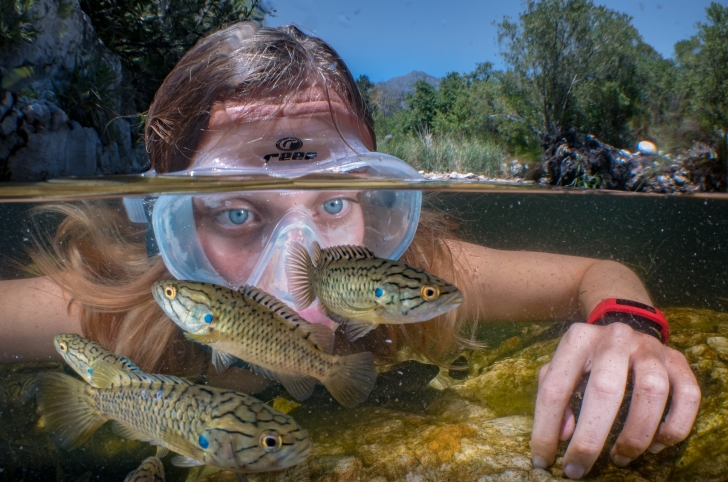
Nearly a third of global freshwater fish species are threatened by extinction, according to a major new report compiled by 16 conservation groups.
Released today, The World’s Forgotten Fishes report states that 80 species of freshwater fish are known to have gone extinct, with 16 of these extinctions occurring in the last year alone. Since 1970, populations of migratory freshwater fish have fallen by 76%, and large ‘megafauna’ fish species by a startling 94%.
The report, published by a coalition of groups including WWF, IUCN, and the Alliance for Freshwater Life, highlights the rich variety of global freshwater fish species: the current known total of 18,075 species accounts for over half of all the world’s fish species, and a quarter of its vertebrate species.
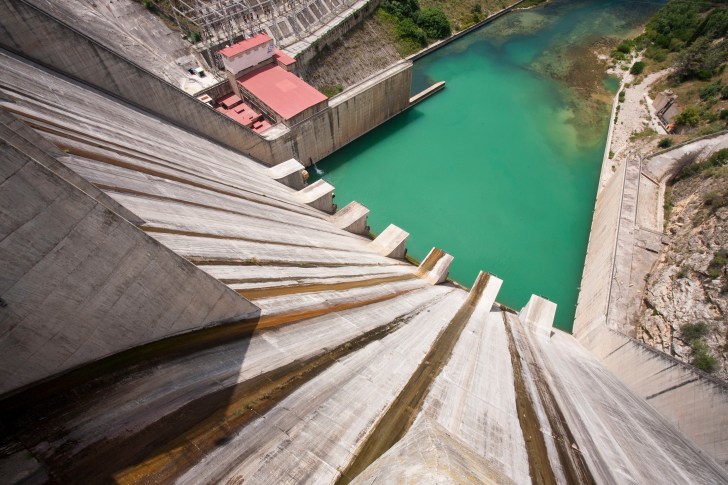
However, despite the vital role these fish species play in human health, food security, livelihoods and culture for communities across the world, many of their populations are in critical decline. Common threats to freshwater fish include habitat destruction, hydropower dam construction, agricultural and industrial pollution, and climate change. In some regions, overfishing, poaching and invasive species are also key pressures.
“Nowhere is the world’s nature crisis more acute than in our rivers, lakes and wetlands, and the clearest indicator of the damage we are doing is the rapid decline in freshwater fish populations. They are the aquatic version of the canary in the coalmine, and we must heed the warning,” says Stuart Orr, WWF Global Freshwater Lead.
“Despite their importance to local communities and indigenous people across the globe, freshwater fish are invariably forgotten and not factored into development decisions about hydropower dams or water use or building on floodplains. Freshwater fish matter to the health of people and the freshwater ecosystems that all people and all life on land depend on. It’s time we remembered that,” Orr argues.
The report is published only days after a paper in the journal Science shows that half of all global river systems have been significantly impacted by human activities, with only very large tropical basins subject to lower levels of alteration. The study, by Dr. Guohuan Su and colleagues, states that freshwater fish biodiversity has become homogenised in many river basins due to human alterations, primarily river fragmentation and the introduction of non-native species.

However, despite the declining trends in freshwater fish populations across the world, The World’s Forgotten Fishes ends on a hopeful note. It argues that 2021 is a crucial year to address the freshwater biodiversity crisis, through implementing the tenets of the WWF-led Emergency Recovery Plan into a New Deal for Nature and People ahead of the UN Convention on Biological Diversity (CBD) conference held in Kunming, China in May.
“The good news is that we know what needs to be done to safeguard freshwater fishes. Securing a New Deal for the world’s freshwater ecosystems will bring life back to our dying rivers, lakes and wetlands. It will bring freshwater fish species back from the brink too – securing food and jobs for hundreds of millions, safeguarding cultural icons, boosting biodiversity and enhancing the health of the freshwater ecosystems that underpin our well-being and prosperity,” states Orr.
“What we need now is to recognise the value of freshwater fish and fisheries, and for governments to commit to new targets and solutions implementation, as well as prioritising which freshwater ecosystems need protection and restoration. We also need to see partnerships and innovation through collective action involving governments, businesses, investors, civil society and communities,” concludes Orr.

+++
Wetlands: Havens of Life
Last week communities around the world celebrated World Wetlands Day, an event held to raise global awareness about the vital role of wetlands in supporting biodiversity and human wellbeing.
During online conversations around the event we discovered a fascinating short film titled ‘Wetlands: Havens of Life’. The film, made by author Julian Hoffman in collaboration with The Wetlands Initiative, documents the rich cultural and ecological diversity of the Prespa Lakes in Southern Europe.
Julian is an award-winning landscape writer who has lived in the Prespa Lakes region since 2000. His most recent book Irreplaceable: The Fight to Save our Wild Places explores vital conservation and restoration projects in imperilled ecosystems across the world. We spoke to Julian to find out more about his film, the Prespa Lakes, and the value of wetlands.
+++
Tell us a little about the Prespa Lakes – what makes them special?
The enduring image of Greece will always be of islands, seas, whitewashed villages and ancient ruins, but there is a whole other country of diverse landscapes beyond that iconic picture, which includes a place like Prespa. The Prespa Lakes – Great and Lesser – sit encircled by high mountains in the far north-west corner of Greece. Not only are they ancient lakes, and amongst the oldest in the world, but they are also shared by three countries – Greece, Albania and North Macedonia. And it’s this being at a crossroads – both culturally and geographically, as they’re a connecting point between Mediterranean and Balkan alpine ecosystems – that lends them such a distinctive quality.
Along with supporting varied human communities around their shores, they host a remarkable range of wildlife. Large numbers of waterbirds, including night herons, little bitterns and squacco herons, nest in the vast reedbeds of Lesser Prespa Lake. Of the 23 species of fish found in Prespa’s lakes and rivers, 9 of them are endemic to the region. And Prespa is home to around 1,400 pairs of Dalmatian pelicans, making it the world’s largest colony of a species officially listed as Near Threatened, where these remarkable birds nest alongside some 600 pairs of white pelicans too. The Prespa lakes are a place of unique ecological and cultural richness.

What is your connection with the lakes and the wider region?
My wife and I moved to a small mountain village above the lakes in the Greek part of Prespa back in 2000 after reading Giorgos Catsadorakis’ excellent and evocative book Prespa: A Story of Man and Nature while we were living in London. Two decades later and we’re still here, partially because the place has such a compelling ability to continually fascinate and surprise. It’s a very rural place, yet at the same time it’s beautifully cosmopolitan too, being a gathering place for different cultures, languages, histories, habitats and species.
Much of my writing about the natural world and our human connection to place has emerged out of a relationship with the lakes region, and my wife works for the Society for the Protection of Prespa, a local environmental organisation that has been instrumental in protecting the lakes’ natural and cultural values for the past three decades. They work closely with the local community, and part of my wife’s work involves a transboundary network called PrespaNet, which brings together environmental organisations from the three countries that share this watershed. While these countries have long had their political and historic differences, seeing the cross-border engagement between organisations and ecologists around common issues of water, climate and biodiversity is profoundly positive, reminding us of the many commonalities that borders tend to obscure.
How did you become involved with The Wetlands Initiative? What work does the organisation do, and why is it important?
I came to know about The Wetlands Initiative (TWI) when I spent some time at the Midewin National Tallgrass Prairie just outside of Chicago while researching my recent book, Irreplaceable. This prairie – which is now a beautiful and beguiling blend of grasslands and wetlands – had been restored from a sprawling military ammunition depot, where the US government manufactured and stored extraordinary amounts of ordnance over the course of several decades. As a result, the land was largely ruined. But there was a vision to heal it, and when the government officially passed the land into the care of the US Forest Service, TWI was at the heart of the ensuring actions, making possible an extraordinary transformation.
It was the first time I’d ever witnessed a large-scale ecological restoration project and I was overwhelmed by the dramatic changes. The songs of chorus frogs pulsed from the marshes and bison grazed the grasslands as they would have done in the past. It had the feel of a world being remade. Midewin is a stunning and inspiring testament to what is possible when we channel our energies towards a respectful relationship with the natural world. And TWI’s overarching mission to restore wetlands in both Illinois and Indiana, including on the South Side of Chicago, where local communities have lacked access to green spaces because of industrial and residential sprawl, means there’s a greater chance that a positive future for both humans and wildlife can unfold in those places.

Tell us about making your ‘Wetlands: Havens of Life’ film at Prespa – what was the catalyst for its production, and what did you want to communicate with it?
Last year I was supposed to give a talk for TWI in Chicago as part of their 25th anniversary festivities. The event was naturally cancelled because of the pandemic, but we still had this deep desire to honour and recognise this achievement and to find some way of celebrating it and the larger meaning of wetland protection and restoration. It was then that TWI asked me whether I’d be interested in making a film about wetlands here in Prespa. As my focus for the talk would originally have been on the work of TWI, it meant suddenly recalibrating my attention back to my home place. But in a way that made complete sense, because while in some respects this terrible pandemic has emphasised the distance between us, it has also revealed a greater sense of solidarity, too. And while the wetlands I live beside in Greece are a very long way from the ones TWI works with in the American Midwest, we share a love for them that acts as a bridge.
I think with the film we wanted to communicate the idea that no matter where in the world wetlands are found, they are part of a much larger network of waters that nourishes a wide spectrum of wildlife, habitats and human communities. It’s these many complex connections, in a sense, that make us all tributaries when it comes to the greater meaning of wetlands, linking us together through water.
Following the insights of your Irreplaceable: The Fight to Save our Wild Places book, what might wetland conservation and restoration tell us about environmental management and ethics in an Anthropocene age?
A few years ago, I traced autumn bird migration from the south of Spain to Morocco to see what traditional salt pans meant for journeying birds. My final destination was a set of salt pans being restored near the Moroccan town of Larache. The pans and lagoons had been closed a number of years earlier by their owner, effectively shutting down an important staging post for migratory birds, which, according to the ecologist I spent time with there, had a record of hosting 15,000 glossy ibises in a single day. Since they’d shut, however, he said that almost no birds stopped there anymore. But on the day we arrived, as water was beginning to flow once more, providing vital jobs for the local community and restoring a relationship between that place and migratory birds that had been severed as soon as the waters evaporated, the wetland was thriving with birds again. Avocets, storks and godwits. Ospreys, redshanks and herons. Egrets, spoonbills and glossy ibises, too. It was an extraordinary spectacle of life and movement to see, especially given the description and photos the ecologist had given me that depicted the place only a few years earlier when it was dry. And what it made we realise is how actions that might seem small in the larger scale of things can have profoundly transformative effects.
For the poor community of labourers that lived by the lagoons, a vital opportunity for livelihood was viable once more. For the thousands of birds feeding there that day, their safe journey across the Sahara or survival over winter on the African coast was made more likely. Neither the wellbeing of humans nor the wellbeing of wildlife needs be to the exclusion of the other. I think it’s imperative that we enlarge our sense of home so that it includes the more-than-human in its embrace. And wetlands are good examples of the possibilities that arise when we do, whether that’s here beside two ancient lakes in the Southern Balkans or on a set of small restored salt pans in Morocco. It’s the intention at the heart of the gesture that matters.
+++
Julian Hoffman website.
‘Restoring Wetlands: a path into the future’ essay for the 25th anniversary of the Wetlands Initiative in 2020.

The effects of climate change will cause severe environmental and humanitarian crises in years to come unless globally-concerted climate actions are urgently implemented, according to a coalition of over 100 aquatic science societies. The effects of climate change are particularly severe in marine and freshwater ecosystems, the scientists say, potentially causing significant losses in aquatic biodiversity, fisheries and human livelihoods, unless effective mitigation actions are taken.
In a statement recently published on the American Fisheries Society website, the coalition representing more than 80,000 global scientists state, “It is time to acknowledge the urgent need to act to address climate change. Delaying action to control greenhouse gas emissions is not an option if humankind wishes to conserve the aquatic resources and environmental safety of the world.”
The statement synthesises cutting-edge scientific research into succinct diagnoses of contemporary aquatic conservation issues. As readers of this blog will likely know all too well freshwaters are among the most threatened ecosystems on Earth, covering less than 1% of the planet, but supporting one-third of all vertebrate species and 10% of all species.
Climate change is already causing significant environmental impacts on freshwaters, and predictions suggest many of these will increase in severity in the future. These impacts are wide-ranging: altered ecological food webs, increased frequency and intensity of droughts, invasive species, shifting climatic niches of many plants and animals, reductions in wetland capacity to store carbon, and increased incidences of algal blooms, amongst many others. These are only a few common issues, and, as contemporary research on multiple stressors in freshwaters tells us, the stresses they place on ecosystems can interact to intensify their individual impacts.
The scientists’ statement emphasises that mitigating climate change impacts is crucial, not only for conserving freshwater ecosystems themselves, but also in supporting human livelihoods which depend on the many services freshwaters provide. Key issues here include the provision of fisheries, drinking and cleaning water, tourism, carbon sequestration and natural flood protection.
2021 is an important year for global climate action. In November, world leaders will meet in Glasgow for the successor to the landmark 2015 UN Climate Change Conference in Paris. Where the Paris agreement brought together most of the world’s nations to agree to tackle climate change for the first time, the 2021 Glasgow COP26 meeting offers the opportunity for nations to pledge to further cut their carbon emissions. Indeed, pledges to reach net-zero carbon emissions from China, Japan and South Korea are already nearing the Paris 2015 targets.
The scientists’ statement is intended to offer a voice for aquatic life in these debates, emphasising that freshwater and marine ecosystems are not only at risk from ongoing climate change, but that their natural functioning provides numerous climate mitigation and human livelihood benefits to society. They call for, “Governments, the public, industry, academia, and all other sectors of society [to] prioritize actions and act in a concerted way to halt human-caused climate change if they are to prevent dire consequences.”
+++
Read the statement in full on the American Fisheries Society website here.
Multiple stressors shape river ecosystems across Europe

In recent years, freshwater scientists across the world have explored how the ecological health of rivers and lakes is impacted by multiple human stressors. Such stressors – for example, pollution, water abstraction, bank alterations and habitat loss – often act in complex combinations, which can variously intensify or reduce their individual impacts.
Freshwater managers and conservationists have long known that aquatic ecosystems are affected by a wide range of human activities, but until recently there has been little evidence-based guidance on how to manage for their impacts. Recent multiple stressor research seeks to untangle how different stressors interact, the impacts they can have, and the management actions that are most effective for tackling specific multiple stressor combinations.
Despite the recent upsurge in multiple stressor studies, there are still significant unanswered questions in the field. One key issue is upscaling results from experiments on aquatic biota based on a small number of stressors to larger – catchment and continental – scales which are useful for shaping management and policy decisions.
A new study providing the first overview of how multiple stressors determine ecological status in European rivers aims to address this shortfall. The study, by Jan U. Lemm from the University of Duisburg-Essen and colleagues from the MARS and SOLUTIONS projects, links the intensity of seven stressors to recently measured ecological status data for more than 50,000 river sub-catchments. Using data from the reporting of Water Framework Directive River Basin Management Plans between 2010-2015, the modelling study area covers almost 80% of Europe’s surface area.
The study, published in the Global Change Biology journal, shows that stressors account for an average of 61% of deviance in ecological status across twelve different river types in Europe. In other words, almost two-thirds of the observed variations in European freshwater biota can be directly attributed to human impacts.
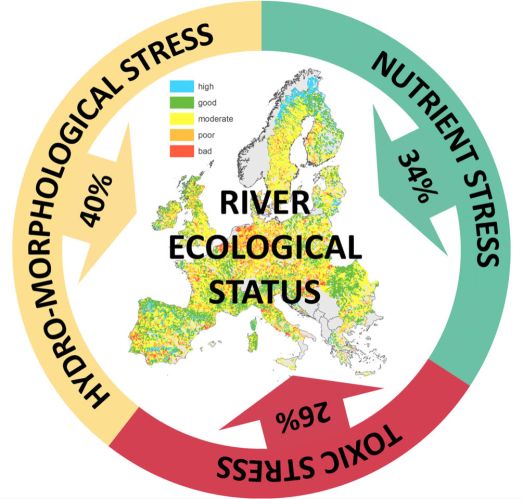
“Our work shows the hierarchy of multi-stressor impacts on Europe’s rivers: various hydro-morphological alterations affect aquatic ecological status most severely, followed by nutrient and toxic stress. The latter clearly demonstrates the distance to Europe’s target of a non-toxic environment, called for by the Green Deal,” says co-author Dr. Sebastian Birk from the University of Duisburg-Essen.
More than half of the variances in ecological status can be explained by multiple stressor interactions, according to the scientists’ models. Pollution of rivers from nutrients and toxic substances are the stressors which interact most frequently and strongly, the authors state.
Dr. Birk says the study findings should call attention to the urgent need to reduce human impacts on freshwater ecosystems. “Ecological impacts are mainly driven by stressor interactions, underlining the intricate interplay of human activities on the environment. This is just more evidence for the need of transformative change in the way we deal with nature… the science is unmistakeable, but are we ready to change?”
“This paper represents one of the first approach to link multiple stressors and their effects on the ecological status at European scale,” says co-author Dr. Markus Venohr from the Leibniz-Institute of Freshwater Ecology and Inland Fisheries (IGB). “An important pre-condition was to derive all stressors and conduct analyses at the spatial scale of the status information reported by member countries.
“By mapping near-natural and managed flow conditions and by directly including nutrient emissions, the effects of human uses on ecological status can be revealed. These relationships are often unrecognised at smaller scales due to lower gradients and smaller numbers of cases. We are positive that this work can provide a major development for a harmonised effect assessment and for improving measure efficiency to reach the goals of the EU Water Framework Directive,” Dr. Venohr says.
The study suggests that there are common environmental stressors affecting all European freshwaters, regardless of region or river size. Although stress intensity varies geographically, all European river types are affected by riparian land use, hydrological alterations, nutrient enrichment and toxic substance pollution.
The study authors state that their findings should prompt water managers and policy makers to adopt more holistic approaches to freshwater assessment and management. Such approaches, which link both small- and catchment-scale management, and explicitly consider the impacts of multiple stressors – are crucial if the ambitious targets of the European Water Framework Directive are to be reached, and the health of European freshwaters is to be restored.
+++
Top 10 posts of 2020

In these early days of the new year we delve back through our top ten posts published in 2020.
It is an understatement to say that 2020 was a strange and unprecedented year for everyone. Thank you for reading: despite everything, there was some fascinating and important freshwater research published in 2020, alongside a significant rise in policy advocacy campaigns seeking to gain traction for freshwater issues. You can explore all of last year’s posts here.
We send you best wishes from everyone at the Freshwater Blog: here’s to a happier and healthier 2021.
+++
Eavesdropping on underwater worlds: the potential of aquatic ecoacoustics (January)

Could listening to the underwater sounds made by freshwater life help us better document and protect aquatic ecosystems? A new special issue of the Freshwater Biology provides intriguing evidence to suggest that it could. Acoustic monitoring has emerged as a key tool for ecologists and conservationists in recent years. Bioacoustics (the study of sounds produced by or affecting living things) and ecoacoustics (the study of environmental sounds relating to ecosystem processes) continue to grow in popularity as approaches to ecological monitoring. However, the use of such acoustic monitoring techniques has yet to be fully explored or adopted in freshwater systems. The new special issue, edited by Dr Simon Linke, Dr Camille Desjonqueres and Dr Toby Gifford, outlines the opportunities acoustic monitoring offers to freshwater researchers and conservationists, in an effort to raise awareness of its potential. (read more)
+++
An Emergency Recovery Plan for global freshwater biodiversity (February)

2020 could be a pivotal year for the future of Earth’s biodiversity. In November, the world’s governments will meet at the Convention on Biological Diversity (CBD) conference to agree a new global deal to conserve and restore biodiversity. A major new scientific paper published in BioScience last week outlines an Emergency Recovery Plan for freshwater biodiversity declines, designed to influence discussions at the CBD conference in November. Developed through collaborations between scientists from WWF, International Union for Conservation of Nature (IUCN), Conservation International, Cardiff University and other institutions, the paper outlines a six-point plan to ‘bend the curve’ of global freshwater declines. (read more)
+++
Are Pablo Escobar’s hippos restoring ‘lost’ ecological processes to Colombian freshwaters? (April)

When Pablo Escobar died in 1993, the drug kingpin left behind – amongst other things – a private zoo on his Hacienda Nápoles estate in northern Colombia. Whilst Escobar’s elephants, lions, giraffes and other animals were transported to other zoos when the estate was seized by the Colombian government after his death, four hippopotamuses were left behind. The hippos – of which Escobar was said to be particularly fond – were deemed too dangerous and aggressive to move, and were left where they were. As the estate became neglected and overgrown, the hippo population at Hacienda Nápoles grew, gradually colonising artificial lakes and the Magdalena River. (read more)
+++
Freshwater life in the time of COVID-19 (May)

Life has been strange for all of us over this last couple of months. From all of us at the Freshwater Blog, we wish you and your loved ones all the best during these difficult times. Given that lots of us have limited opportunities to visit, enjoy and learn about rivers and lakes right now, we thought this week’s blog would collate some of the digital ways we can immerse ourselves in freshwater life, at least for the time being. (read more)
+++
The EU Biodiversity Strategy for 2030: five issues for the future of freshwater ecosystems (May)

Earlier this week the European Commission published a new Biodiversity Strategy, designed to tackle the key drivers of biodiversity loss by 2030, both in Europe and globally. Released during the ongoing COVID-19 pandemic, the document is framed as a key element of the EU’s recovery plan – aiming to boost both ecological and economic resilience through policy and management. Along with the linked Farm to Fork Strategy, the new EU Biodiversity Strategy for 2030 aims to designate at least 30% of European land and seas as protected areas, and to ensure that at least 10% of the continent’s agricultural land is managed as ‘high-diversity landscapes’ by 2030. Funding of around €20 billion per year has been designated to help meet this target, translated into policy through the ambitious EU Nature Restoration Plan. Clearly, there is a lot in the Biodiversity Strategy to feel hopeful about. But what place do freshwater ecosystems have in its plans? We take a look at five key issues. (read more)
+++
Ecological surprises: how do multiple stressors impact European rivers and lakes? (June)

Guest blog by Sebastian Birk and Daniel Hering
When does 1+1=3 for freshwater conservation and restoration? What seems like a trick question is actually the basis of a major European research project, MARS, begun in 2014. The 1’s in the equation refer to single stressors on freshwater ecosystems – things like nutrient pollution, water abstraction and temperature increases. Adding the effects of single stressors together should give us an indication of the overall stress placed on the ecosystem by human activities, shouldn’t it? Not always! (read more)
+++
Half of known freshwater megafauna species threatened with extinction (July)
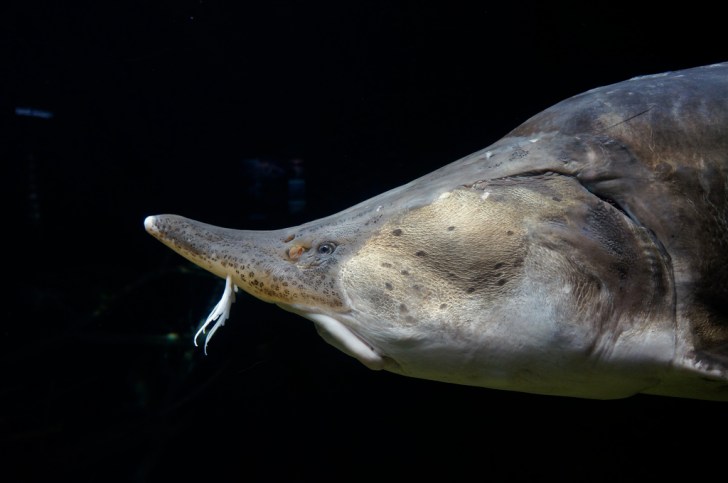
Many of the largest and most iconic freshwater species in the world are threatened with extinction. There are around 200 species of such ‘freshwater megafauna’ – species weighing more than 30kg, and found on every continent except Antarctica – of which 34 species are listed as Critically Endangered by the IUCN Red List, and half are classified as Threatened. Freshwater megafauna such as the beluga sturgeon, American alligator, Yangtze finless porpoise, and Caspian seal often have complex life cycles and extensive habitat requirements. As such they are sensitive to habitat loss, over-harvesting and river fragmentation. A recent study found that freshwater megafauna declined by 88% globally between 1970 and 2012, with a 94% decline in megafauna fish species. (read more)
+++
84% of global freshwater species populations lost since 1970: can we ‘bend the curve’ of this trend? (September)

Global populations of mammals, birds, amphibians, reptiles and fish have, on average, declined by two-thirds since 1970, according to the latest WWF Living Planet Report, released earlier this month. Continuing the trends shown in past reports, freshwaters are particularly imperilled: with 84% of global freshwater species populations lost between 1970 and 2016. WWF have published a ‘Deep Dive into Freshwater’ document looking at the stark findings of the Living Planet Report, and outlining ways to support global freshwater conservation in their wake. The publication states that population declines are particularly acute among freshwater amphibians, reptiles and fishes. Whilst freshwater population declines have been observed globally, they are most severe in Latin America and the Caribbean. (read more)
+++
Safeguarding freshwater life beyond 2020: 14 recommendations for environmental policy (October)

Freshwater biodiversity is in a critical state of decline across the world, as startlingly shown in the most recent WWF Living Planet report. This year, updates to two international policy frameworks which could have significant influence on the future of freshwater life – the Convention on Biological Diversity (CBD) and the European Union (EU) Biodiversity Strategy – are being prepared. How can we ensure that global freshwater biodiversity is properly valued and protected by these frameworks over coming decades? An international research team led by Dr. Sonja Jähnig at the Leibniz Institute of Freshwater Ecology and Inland Fisheries (IGB) in Germany have published a journal paper containing 14 key recommendations for the global protection of freshwater biodiversity. Their aim is to encourage decision makers to ensure that both the post-2020 CBD Global Biodiversity Framework and the post-2020 EU Biodiversity Strategy better account for freshwater ecosystems. (read more)
+++
A global digital observatory of Earth: exploring the potential of culturomics and iEcology for aquatic conservation (November)

The natural world has never been more closely documented than it is today, not only in scientific studies but also in the public use of digital technologies to capture and share their daily lives. Photographs, videos and audio recordings of nature shared on social media and other online platforms could provide valuable ‘big data’ resources for aquatic conservation, according to the authors of a new journal article. “These are kinds of data that are produced as a by-product of our daily lives. Someone’s online snorkelling video could help ecologists understand which reef species are present, or the behaviour of recreational users relative to particularly sensitive species,” explains Professor Kate Sherren, a co-author of the study from Dalhousie University, Canada. (read more)
+++
Thanks for reading, and a happy 2021 to you! If you are in need of more freshwater stories, you can read our previous annual post round-ups for 2019, 2018, 2017 and 2016.










 The Freshwater Blog