Top Posts of 2025

In these early days of 2026 we continue our annual tradition of looking back at our top posts from the previous year.
Its been a productive year for the MERLIN project, with numerous publications, results and briefings released to the world, whilst negotiations over the role of freshwater restoration in European policy accelerate.
MERLIN will present their findings at a major policy event in Brussels in March 2026 to discuss the future of freshwater restoration policy and practice across the continent. The policy event will be held on 10th March 2026 at Maison de la Poste in Brussels. Registration is free, both for in-person and online attendance. Interested participants should register via the MERLIN website by the 31st January 2026.
And now looking forward to 2026, we want to say a big thank you to you, our readers and listeners, for your eyes and ears. We appreciate your support, and are always happy to hear your thoughts and ideas, whether by email or on our social media platforms.
///
MERLIN Innovation Awards celebrates cutting-edge approaches to freshwater restoration at 2025 ceremony (February)
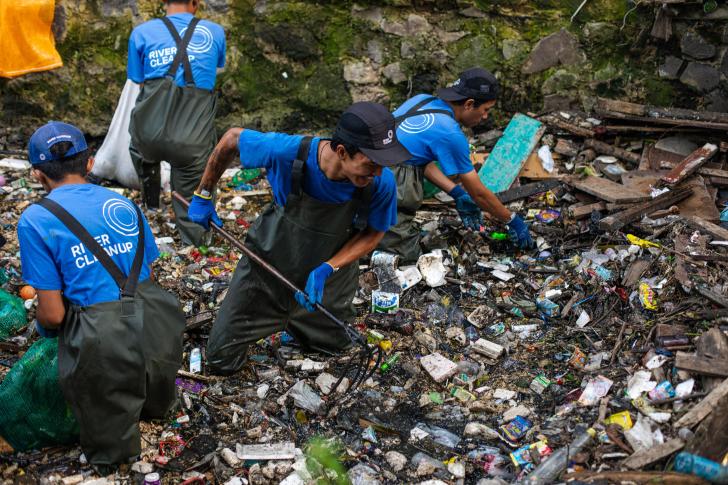
The winners of the annual MERLIN Innovation Awards – which highlight state-of-the-art solutions for freshwater restoration – were announced earlier this month. Entries from organisations across the world were assessed by an expert panel, and shortlists for the two categories – Service of the Year and Product of the Year – were compiled. Two winners were announced at a busy online ceremony on February 13th.
The winner of the MIA Service of the Year is River Cleanup, a Belgian non-profit organisation which empowers global communities to cleanup their rivers. The winner of the MIA Product of the Year is Wasser 3.0 for their innovative approach to removing microplastics from water. (read more)
///
Can nature-based solutions help ‘green’ European economies? (March)
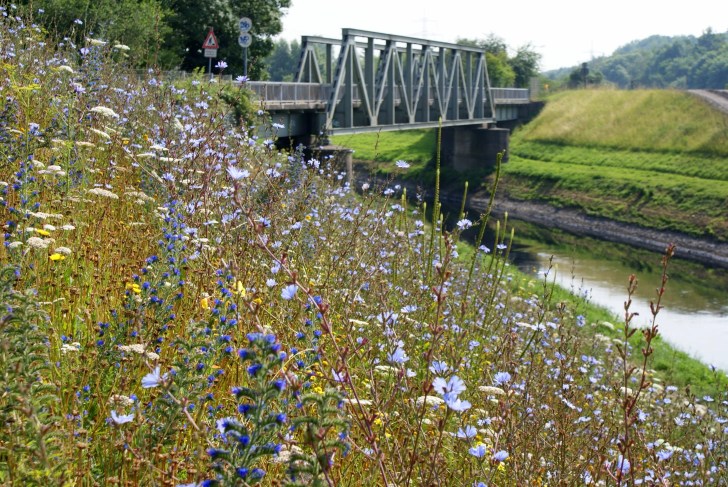
As the ongoing effects of the climate emergency and ecological crisis continue to be felt across Europe, it is clear that ‘business as usual’ in our society’s relationships to nature isn’t working. In recent years, the EU MERLIN project has worked with representatives from six key economic sectors across Europe to explore how this relationship could be fundamentally transformed, to benefit both people and nature.
MERLIN recently released six strategies exploring how the agriculture, water supply and sanitation, peat extraction, insurance, hydropower and navigation sectors can be ‘greened’ through better adoption of nature-based solutions. (read more)
///
A ‘how-to guide’ for citizen scientists on small stream restoration (March)

Small streams criss-cross Europe’s landscapes: from the highest mountains to the busiest cities. However, despite offering a home to rare and special wildlife, and providing numerous benefits such as natural flood protection to people, this network of small streams can be overlooked by European environmental policy and management.
A new publication by the MERLIN project suggests that citizen science groups can help boost our understanding of small streams, offering valuable activities to help restore the ecological health and biodiversity of these valuable ecosystems. (read more)
///
Can private finance help support ambitious European freshwater restoration? (April)

New sources of funding are needed to meet the needs a growing ecosystem restoration movement in Europe, according to a newly published report. In particular, ambitious restoration initiatives which help bring Europe’s freshwaters back to life require financial support from both private and public sources in order to fulfil their potential.
Researchers from the EU MERLIN project explored the potential for restoration managers to diversify how they raise funds to support their work. They highlight the need for creative thinking to address the ‘funding gap’ in a realm traditionally supported by public grant funding. (read more)
///
Cabinet of Freshwater Curiosities: artistic riverine insects create colourful cases from unusual materials (May)

Many animal species are protected from predators, desiccation or disturbance by a thick shell or skin. Only few, however – leeches, midge larvae and butterfly larvae – are capable of building cases to artificially protect them from the environment. Unsurpassed as artistic architects of such artificial cases are tiny caddis larvae, which live amongst the rocks, vegetation and rubbish on river beds. These unique little creatures have developed the curious ability to use these raw materials to create colourful and unusual protective outer tubes. (read more)
///
MERLIN Podcast EP.11 – Communicating why freshwater restoration is vital (May)

Restoring our natural ecosystems is a task that is never really finished: science progresses; governments change; technology advances; society shifts; funding pots appear and disappear. And all the time, our rivers, lakes, streams and wetlands are a constant; their fate determined by the choices we make about them. In a time of rapid ecological loss and the ongoing climate emergency, it can be hard to think hopefully about the future of our ecosystems.
In the new episode of the MERLIN podcast we hear from four inspirational young scientists who are helping restore Europe’s freshwaters, and with it, hope for the future of our natural world. The four scientists all work on the EU MERLIN project, but each have their own research focus. They are Miriam Colls Lozano from the University of the Basque Country, Andrea Schneider from the University of Duisburg-Essen, Viviane Cavalcanti from DELTARES and Joselyn Verónica Arreaga Espin from BOKU.
We hear about the challenges of bringing disparate communities together through freshwater restoration, fostering exchange and collaboration between different communities, thinking creatively about funding restoration in the future, and strategies for bringing the public and policy makers on board with ambitious restoration programmes. The thread that runs through all these themes is the need for good communication in fostering positive change for the future.
///
Free online training on engaging people and policy-makers in freshwater restoration is launched (September)
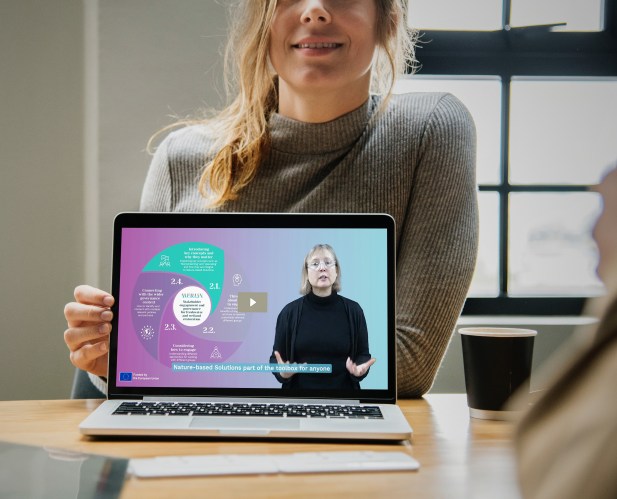
A free new online learning module offers a wealth of information around bringing people and nature together in freshwater restoration. The module is part of the open-access Academy created by the EU MERLIN project. The MERLIN Academy offers free resources and training to support researchers, practitioners and policy makers in applying cutting-edge restoration concepts to their work. The newly-released module leads users through a series of videos, graphics, quizzes and podcasts to introduce key concepts around stakeholder engagement and governance in freshwater and wetland restoration. (read more)
///
How can water-friendly farming be mainstreamed in Europe? (October)

Freshwater protection and restoration should be at the heart of how farming is managed in Europe, according to new recommendations. Reshaping the Common Agricultural Policy (CAP) to support freshwater ecosystems by encouraging water-friendly farming practices is a key task, say a team of researchers from the EU MERLIN project in a newly published policy brief.
The researchers draw on cutting-edge research and case studies to outline a vision for water-resilient agricultural landscapes across Europe. They highlight the value of so-called nature-based solutions such as the creation of ponds and wetlands, agroforestry, and the rotational resting of farmland in creating landscapes which support both food production and freshwater protection. (read more)
///
MERLIN Podcast EP.13 – Sharing cutting-edge information on freshwater restoration in the MERLIN Academy (November)

In this podcast we take a tour of the MERLIN Academy, an online platform which offers free resources and training to support researchers, practitioners and policy makers in applying cutting-edge freshwater restoration concepts to their work.
We hear from Academy coordinator Astrid Schmidt-Kloiber from BOKU, and module leaders Erica Zaja from CEH, Gerardo Andalzua from ECOLOGIC and Kerry Waylen from the James Hutton Institute, alongside reflections from Academy user Lars Kristian Selbekk.
The interviewees emphasise the importance of sharing free, open-access information on freshwater restoration to wide audiences. They discuss the importance of nature-based solutions, financing and economics, stakeholder engagement and governance to contemporary restoration approaches.
///
New approaches to financing ambitious freshwater restoration projects (December)

A key message from the MERLIN project is the need for freshwater restoration managers to embrace new forms of funding in order to mainstream their work across Europe. As we’ve explored in previous podcasts, environmental projects have long relied on grant funding from state sources. However, in order to address the magnitude of the ongoing climate emergency and ecological crises, it is clear that new forms of funding are need to underpin ambitious restoration schemes across the continent.
In this context, MERLIN have recently released the final publications in their ‘Off-the-Shelf Instruments’ series. These instruments – OTSIs for short – are accessible financial guides which introduce approaches to raising public and private finance for restoration projects. The twelve OTSIs cover both traditional sources of environmental finance – such as grant funding – alongside new and contemporary sources such as biodiversity offsetting, carbon sequestration and reward-based crowdfunding. (read more)
///
You can read all our 2025 articles here – happy 2026!









 The Freshwater Blog
Comments are closed.