Meet the BioFresh team: Sonja Stendera
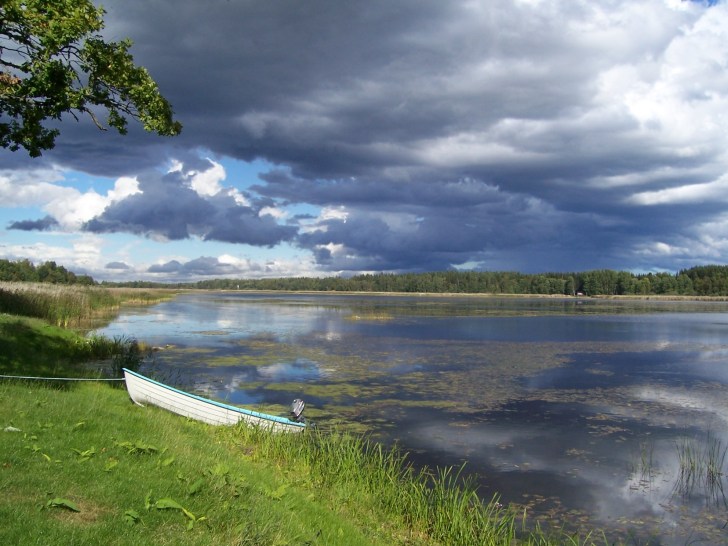
Lake Vendel. Image: S Stendera
We continue our series of interviews with BioFresh scientists today with Sonja Stendera, a freshwater biologist at the University of Duisberg/Essen, Germany.

1) What is the focus of your research for BioFresh, and why?
SS: One of the objectives of BioFresh is to analyse how key present and future environmental pressures impact freshwater biodiversity. In order to summarise the present state of the main drivers and stressors determining freshwater biodiversity patterns, my colleagues and I have conducted a literature review on this topic which also aims to identify possible research gaps in freshwater ecology. The main aim is to raise awareness of where further research is needed to fully understand freshwater ecosystems and thus facilitate their protection. A second part of my research is to then use this information to analyse how certain organism groups of different freshwater ecosystems respond to major environmental stresses such as eutrophication or climate change.

Lake Erken. Image: S Stendera
2) How is your work relevant for policy makers, conservationists and/or the general public?
Interest in the restoration or rehabilitation of freshwater ecosystems has increased recently and several restoration programs are well developed and partly successfully practiced. In order to develop holistic conservation approaches and cost-effective restoration programs, the knowledge of different aspects of biodiversity – i.e. freshwater biodiversity patterns over a range of spatial and temporal scales – is crucial. Holistic conservation, along with active restoration will ensure that future generations can enjoy most ecosystem services. However, holistic conservation requires a deeper insight into global biodiversity patterns: identifying what are the drivers and especially how can we improve our knowledge of the unknown. Thus, our work aims to provide indications where further research is needed, and identify the ecosystems and organisms that have been neglected in freshwater ecology, conservation and planning. This work is important in aiding future freshwater ecosystem management, conservation and sustainable use under multiple and changing pressures. Read more…
Searching for an elusive idea: IPBES and Loch Ness

Loch Ness, image: R St John
Hendrik Segers and Angélique Berhault from the Belgian Biodiversity Platform report on the formation of IPBES, an initiative which aims to inform and advise global environmental policy on biodiversity and ecosystem services, mirroring the work of the IPCC on climate change.
—
When George Spicer was riding his motorbike around Loch Ness in 1933, he claimed to have seen “the nearest approach to a dragon or pre-historic animal”. Since then, tourists and would-be monster hunters have been wandering around the loch, watching in hope for an elusive monster to suddenly appear… a situation that seems to compare, apparently, with that of the Intergovernmental Science-Policy Platform on Biodiversity and Ecosystem Services (IPBES).
IPBES – which is hoped to become for biodiversity and ecosystem services what the Intergovernmental Panel on Climate Change (IPCC) is for the climate change debate – would expand upon relevant initiatives, such as the Millennium Ecosystem Assessment and The Economics of Ecosystems and Biodiversity (TEEB), to provide policy-relevant reviews of scientific knowledge, and help catalyse capacity building in the field.
In December 2010, the international media announced (see BBC, Environmental News Service and MedefTV coverage) the establishment of IPBES, yet the reality of its formation appears to be rather less straightforward. Scrutiny of the relevant resolution shows an apparent careful avoidance of the word “establish” or any synonym thereof.
This suggests that what has been agreed upon is that the United Nations Environmental Programme (UNEP), in cooperation with relevant organizations (e.g. UNESCO, FAO, UNDP), is asked to take the necessary steps to set up IPBES. Much judicious peering through the haze of craftily worded resolutions establishes that – just like Nessie – IPBES has been announced, talked about, but not truly spotted as yet… Read more…
Meet the BioFresh team: Astrid Schmidt-Kloiber
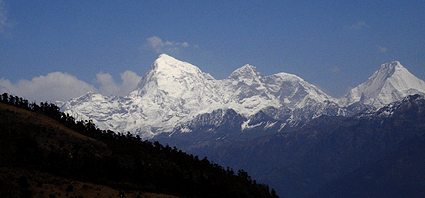
Jhomolhari, (c) A. Schmidt-Kloiber
This is the first in a series of interviews where BioFresh partners discuss their work for the project, scientific inspirations, share stories of memorable research and outline their future plans.
 Our first interview is with Astrid Schmidt-Kloiber (PhD). Astrid is a river ecologist at the Institute of Hydrobiology and Aquatic Ecosystem Management (IHG) at the University of Natural Resources and Applied Life Sciences (BOKU) in Vienna, with expertise in database design, set-up and management of (web-based) databases.
Her main task during the last years was the establishment of freshwaterecology.info, a Europe-wide trait database for macro invertebrates, fish, diatoms and macrophytes. She has a background on river benthic invertebrates and experiences in multivariate statistics. She is editor of the book series “Distribution and Ecological Preferences of European Freshwater Organisms”
—
* 1 What is the focus of your research for BioFresh, and why?
ASK: One of the main aims of BioFresh is to establish a biodiversity information platform and data portal. In BioFresh I am responsible for the quality control of the incoming databases that feed into this data portal. One of my major tasks is the establishment of a so-called metadatabase where all databases that are part of the BioFresh portal are registered.
This sounds a bit abstract, but usually metadata are loosely defined as “data about data”, that means the general characteristics of each database are collected and stored as e.g., its content, the covered regions, the provided organism group(s), information on the data holder and related intellectual property rights as well as any environmental information. The BioFresh metadatabase is available as questionnaire for data providers and as a query tool for scientists to find relevant data.
* 2 How is your work relevant for policy makers, conservationists and/or the general public?
A metadatabase as described above helps data providers to document their data and make them visible to the public (and future users), and on the other hand, for the data consumers it has the advantage to facilitate discovering data and assessing their appropriateness for e.g. scientific analyses. Thus, the BioFresh metadatabase can be a useful tool for easily detecting relevant information needed to support conservation priorities or policy decisions. Both the BioFresh portal and the metadatabase also have relevance for future generations as research on a long-term scale and sustainable policy starts with the documentation, storing and providing of data.
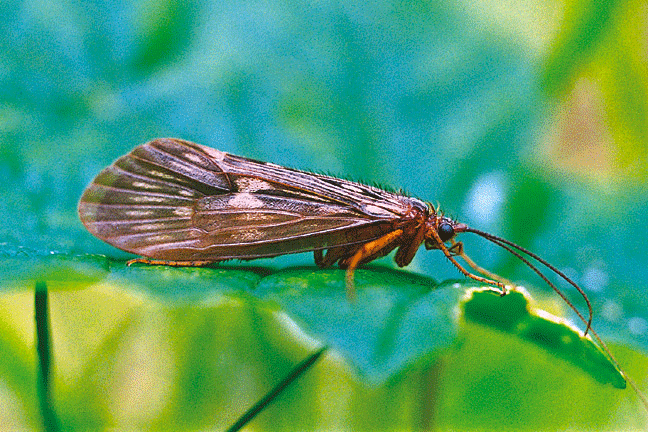
Trichoptera, (c) W.Graf/A. Schmidt-Kloiber
Freshwater biodiversity in the Congo basin
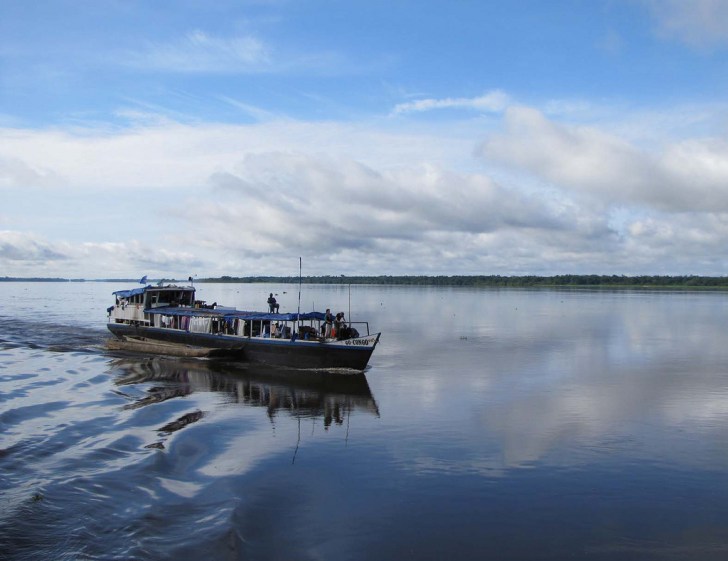
Image: Klaas Douwe-Dijkstra
Guest post: Dr Aaike de Wever, Science Officer for the BioFresh project at the Royal Belgian Institute of Natural Science, and co-ordinator of the freshwater biodiversity data workflow and creation of the public data portal. Aaike can be emailed at data@freshwaterbiodiversity.eu and he tweets @biofreshdata
Earlier this month I had the opportunity to participate in a Congo Biodiversity Initiative workshop at the Belgian Royal Museum for Central Africa. This workshop was organized in the follow-up of the “Boyekoli Ebale Congo2010” expedition on the Congo River, which took place in May 2010. The Congo River being the 2nd largest and 2nd most biodiverse river catchment after the Amazon, featured in one of my favorite documentaries, I was quite curious to learn about the first expedition results.

Image: Kris Pannecoucke. French entomologist Bruno Le Ru examining chenille or caterpillars in a inundated forest
Wild Swimming in Europe: Freshwater matters
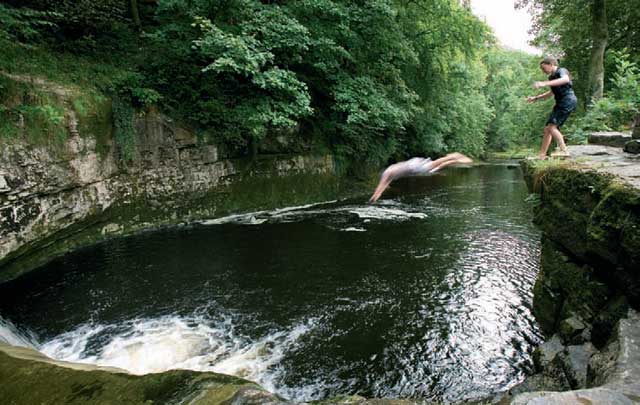
Wild Swimming: from http://www.outdoor-sport-leisure.net/wild-swimming.htm (Kate Rew / Wild Swim)
Wild swimming in rivers, lakes and streams is increasing in popularity across Europe, as people discover (or, perhaps, rediscover) the pleasure of swimming in freshwaters: unaffected by chlorinated water, stark lights and tightly regimented lanes.
Last week, the findings of the most recent European Union Bathing Water Directive (data here) were published by the European Environment Agency, showing the cleanliness of over 22,000 freshwater and saltwater swimming spots across Europe, from inner city ponds to rural rivers, shown in the Guardian data-blog map below (click through to the interactive version):

This data can also be explored through these interactive sites:
However the news for freshwater wild swimmers isn’t positive, according to the report:
“In 2010, 90.2 % of inland bathing waters in the European Union were compliant with the mandatory values during the bathing season, a figure 0.8 percentage points higher than in the previous year. The number of inland bathing waters complying with the more stringent guide values decreased by 10.2 percentage points compared to 2009, reaching 60.5 %”
(n.b. guide values describe the standard for “excellent” bathing water quality set by the EU)
This means that c.10% of European freshwater swimming sites does not reach the minimum safety standards set by the EU, potentially posing a health hazard, and serving as a worrying indicator for the health of the wider ecosystem, whilst c.40% do not reach the ‘excellent‘ guide values of water quality. Read more…

Steppe landscape. Image: Creative Commons: Steyr / Picasa
 By Dr. Aaike De Wever, Science Officer for the BioFresh project at the Royal Belgian Institute of Natural Science, and co-ordinator of the freshwater biodiversity data workflow and creation of the public data portal. He can be emailed at data@freshwaterbiodiversity.eu and he tweets @biofreshdata.
—
When I started to work on the BioFresh project a year ago, I still very much needed to figure out what a freshwater biodiversity information platform and data portal was going to look like. Obviously I immediately had a closer look at the work of my colleagues at the Royal Belgian Institute of Natural Science and the Belgian Biodiversity Platform, especially at SCAR-MarBIN (initiative on marine Antarctic biodiversity data) and the Freshwater Animal Diversity Assessment (FADA; authoritative species lists for freshwater organism groups). After some discussion and reading, however, I soon came to realize that the aim for BioFresh was somewhat different…
The project description reads:
“The freshwater biodiversity information platform is supposed to bring together, and make publicly available, the vast amount of information on freshwater biodiversity currently scattered among a wide range of databases. Previously dispersed and inaccessible data will thus be made available to policy makers, scientists, planners and practitioners. Integration of these data in scientific analyses will lead to better insights in the status and trends of freshwater biodiversity and its ecosystem services and provide scientific support for its management.”
Now, so far the theory, but how do we actually achieve this goal? Read more…
Madagascan mayfly hyper-diversity

Proboscidoplocia(Image courtesy of the Museum of Zoology, Lausanne http://www.zoologie.vd.ch)
Our final post in this series (no longer just a week…) is by BioFresh partner Dr Michael Monaghan from the IGB in Berlin, highlighting the importance and curiosity of mayfly diversity in Madagascar.
—
Mayfly larvae are well known to freshwater biologists and anglers. The larvae are found in all types of streams, rivers, lakes, and ponds. The adults are famous for their evening swarms and flying behavior that fly-fishing seeks to emulate. Perhaps less well known is that mayflies are ancient. Their fossil record dates back nearly 300 million years and genetic studies have confirmed that they are the oldest flying insects (together with the dragonflies). Their characteristic unfolded wings are also evidence for their ancient origins, as is their sexually immature life history stage that is unique among the insects.

Image 2. The author and colleagues sampling in Andohahela National Park, SE Madagascar
Today there are more than 3000 recorded species of mayflies on Earth. But the real number is higher because several regions remain almost entirely unexplored. This is particularly true in the tropics, where most of the mayfly biodiversity on Earth is concentrated. One example is a study in 2000-2001 of less than 10 x 10 km of rainforest in Borneo that revealed 50 new species!
Much of what we know about mayflies in the tropics comes from research conducted on Madagascar. Madagascar is the fourh largest island on Earth and is often referred to as the eighth continent. Together with the Indian Ocean islands (Seychelles, Comoros and Mascarenes) it constitutes a global biodiversity hotspot. Famous for its lemurs and chameleons, Madagascar also is home to a high biodiversity of mayflies. More than 70 species have been described since the mid-1990s, including many strange ones! The largest mayflies in the world occur on Madagascar (Proboscidoplocia) and I have myself caught individuals 7 cm long. At least three species on Madagascar are predators of other stream insects – a role normally reserved for stoneflies and caddisflies. Perhaps strangest of all, Prosopistoma was first described from Madagascar in 1833. It looks so unusual that it was thought to be a crustacean for nearly 100 years.
Because many species remain unknown to science, a best guess at the moment is that there are at least 200 species of mayfly on Madagascar. To date, only one species is known to occur anywhere else (Cloeon smaeleni is also found in southern Africa and on Reunion). This means more than half the known diversity of Africa occurs on only 1.9% of its land area, and that nearly 7% of the Earth’s total diversity lives on an island the size of France, and that these species occur nowhere else. Unfortunately, this diversity is under threat from human pressures and from a lack of freshwater resource management.

Image 3. Afroneuris (Image courtesy of the Museum of Zoology, Lausanne http://www.zoologie.vd.ch)
I have been fortunate enough to spend nearly 8 months in Madagascar over the past 8 years, working with Malagasy, French, Swiss, South African, and British scientists to better understand the diversity of mayflies throughout the island. More importantly, I have been priveleged to work with and help train 8 Malagasy students in field entomology. It is an island of great contrasts – dry grasslands, tropical rainforests, coastal mangroves, alpine meadows, tsingy, wetlands, and agricultural landscapes. Each of these areas harbors unique species.
Additional reading:
Elouard J-M, Gattolliat J-L, and Sartori M. 2003. Ephemeroptera, Mayflies pp639-644 in The Natural History of Madagascar (eds SM Goodman & JP Benstead). University of Chocago Press.
Barber-James HM, Gattolliat J-L, Sartori M, Hubbard M. 2008. Global diversity of mayflies (Ephemeroptera, Insecta) in freshwater. Hydrobiologia 595:339-350 (10.1007/s10750-007-9028-y)
Monaghan MT, Gattolliat J-L, Sartori M, Elouard J-M, James H, Derleth P, Glaizot O, de Moor FC, Vogler AP. 2005. Trans-oceanic and endemic origins of the small minnow mayflies (Ephemeroptera, Baetidae) of Madagascar, Proc Roy Soc B 272:1829-1836. (10.1098/rspb.2005.3139)
The mayfly and the Angler’s Monitoring Initiative

© John Slader Mayfly Commended Riverfly Partnership / National Insect Week 2010
Last week’s mayfly special was so popular that we couldn’t publish all the submitted articles. So here, as an excellent, hopeful penultimate post, Louis Kitchen from the Riverfly partnership discusses the role of the Angler’s Monitoring Initiative in British mayfly conservation
—
 A big hatch of mayflies must rank among the most enthralling wildlife spectacles that the UK has to offer – especially to those who operate in and around the river. Birds, bats, fish and fishermen are among those who appreciate the mayfly. And among these it is surely not just the fisherman who has felt the effects of a decline in the frequency and scale of hatches.
Many factors can affect populations of mayflies and other freshwater invertebrates. Intensive agriculture and industry has resulted in a large number of our watercourses being modified, and this is certainly among the causes of a decline in our more sensitive species. Occasional pollution incidents can also have devastating effects on invertebrate populations, which may then take a long time to recover – in heavily impacted rivers a full recovery may never happen. Most people associate pollution incidents in rivers with dead fish, but by the time pollution has become severe enough to kill fish, a lot of invertebrates will have been wiped out.
It is this sensitivity to pollution that makes invertebrates incredibly useful for monitoring our rivers. By looking at some of the most sensitive invertebrate groups, anglers and other stakeholder groups are keeping tabs on water quality in their local areas through the Angler’s Monitoring Initiative (AMI). The focus is on the riverflies – stoneflies, caddisflies and mayflies – and the principle is quite simple: If a monitor takes a sample at a site one month, and finds healthy populations of riverflies, then returns the next month and most of them appear to have vanished, then it is likely that there has been a problem at some point in the intervening month.
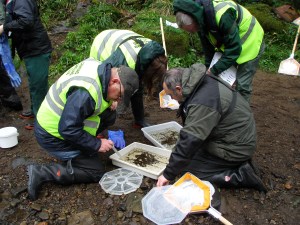 The AMI was officially launched by The Riverfly Partnership in 2007, and there are now over 50 groups involved, with around 500 volunteers monitoring sites across the UK. Groups work closely with the local statutory bodies – the Environment Agency, Scottish Environment Protection Agency and Northern Ireland Environment Agency. If a decline in riverfly populations is detected then the statutory bodies are contacted and will be able to assess and deal with the problem. By monitoring every month the volunteers pick up on declines in water quality that may otherwise have gone unnoticed, and ensure early action to prevent problems escalating. In some instances severe pollution incidents have been picked up on; there have been three prosecutions of polluters, resulting in fines for the companies involved, that have come about because of AMI monitoring.
It is important for the future of British rivers that communities take an interest in their well-being. By empowering local people to look after the water quality in their rivers, we allow rivers affected by pollution to improve naturally without suffering further setbacks. In this way we may see the return of huge swarms of mayflies swirling above the water – good news for everyone, especially the birds, bats, fish and fishermen.
Mayflies of the Driftless Region
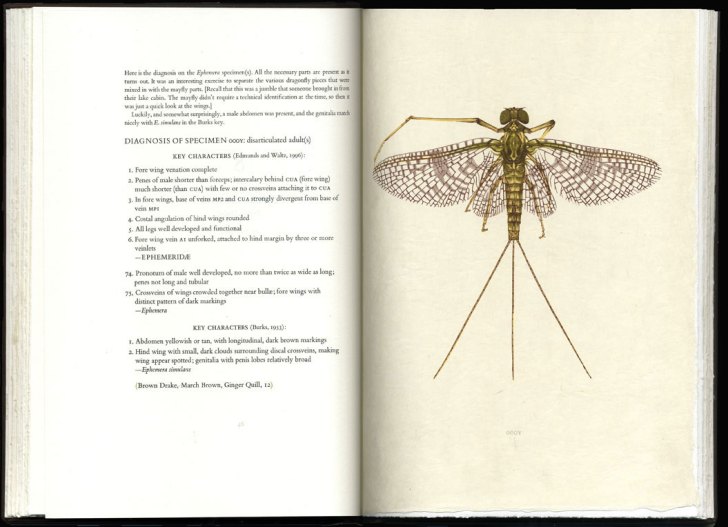 Approaching the last of the guest posts for the BioFresh ‘Mayfly week’, Gaylord Schanilec – an artist and author from Wisconsin, USA – highlights the role of mayflies in art, through a discussion of his book ‘Mayflies of the Driftless region’. His last sentence (“Scientists and artists do basically the same thing: they observe the world around them, and record their observations as best they can.”) strikes me as one of the most eloquent expressions of the potential for overlaps between art and science that I’ve read. Enjoy!
The mayfly in music
To finish our week of mayfly posts, we’ll take a quick look at how the mayfly’s temporary, transient life-cycle has inspired many songwriters in search of a suitable metaphor. Is there potential for the engagement we get with nature through music to translate into positive conservation action?
Belle and Sebastian ‘Mayfly’ (from If You’re Feeling Sinister, 1996)
Dave Kirk’s Mayfly LP traces the insects ephemeral existence through the course of an album. Click here to be taken to the interactive website following this journey.
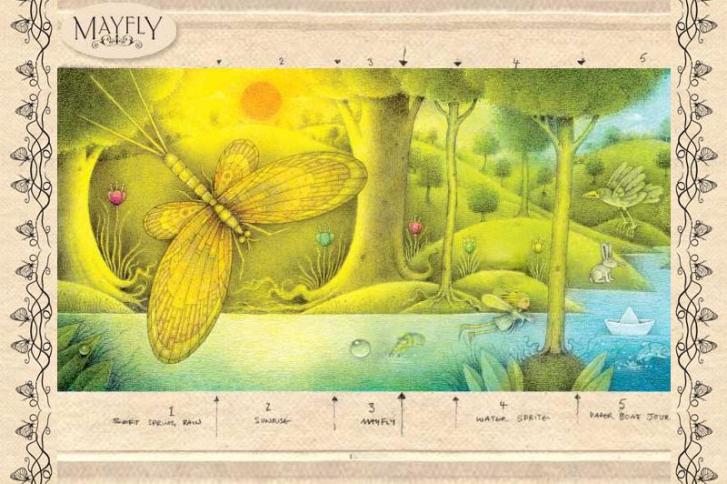 In Kirk’s own words: “The album is a story, in musical form, of what an imaginary mayfly sees and feels in her day;s life on the riverbank, from when she first touches “Soft Spring Rain” at the beginning of her life at Sunrise onto the ‘Mayfly’ experiencing her first smile when meeting with a ‘Water Sprite’ and then following a ‘Paper Boat Journey’ down a gentle stream into a restless river and back into the safety of a quiet stream”.
Does anyone have any other suitable suggestions?










 The Freshwater Blog