Explosive dam removal promotes salmon migration
This incredible video shows timelapse footage of the demolition of the 40 metre high Conduit Dam on the White Salmon River in Washington State, USA. Ecologists hope that the dam removal will allow salmon to migrate upstream to spawn, previously impossible due to the impassable dam. The return of salmon to the river’s headwaters is hoped to improve the health of the wider ecosystem (more on this phenomenon here).
Read the full story on the National Geographic and the White Salmon Restored site.
Ghosts of Gone Birds

Meet the BioFresh team: Daniel Hering
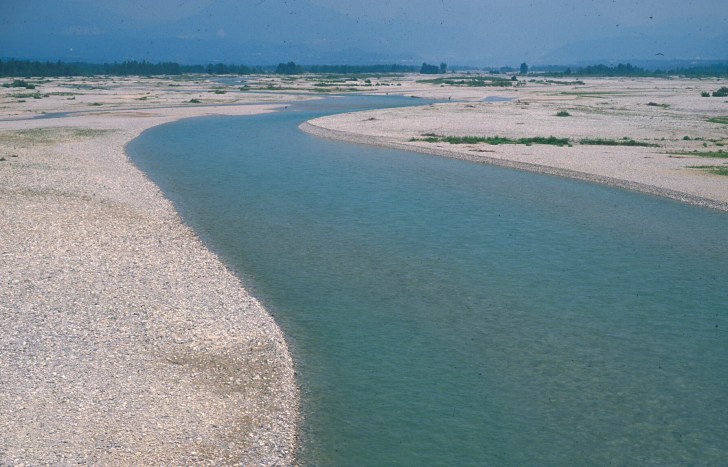
Tagliamento River in North-East Italy showing impressive riparian zones. Image: D Hering
We continue our series of interviews with BioFresh partners this week with Prof. Daniel Hering from the University of Duisburg-Essen in Germany. Prof. Hering is the coordinator of several national and international projects on Water Framework Directive implementation and river restoration. He leads BioFresh Work Package 6, which aims to understand how freshwater biodiversity will respond to stresses such as climate change.
 1 What is the focus of your work with BioFresh, and why?
My colleagues and I compare the responses of biota to stress between different freshwater ecosystem types. In the past we have analysed how fish, invertebrates, higher plants and algae respond to different types of stress in rivers. In BioFresh, we are adding a “third dimension” by comparing organism groups in lakes, rivers, ponds, riparian wetlands and potentially in groundwaters.
Our previous work was mainly dedicated to the implementation of a European policy, the Water Framework Directive, and thus of direct policy relevance. BioFresh, as a whole, is much broader, with components of basic science and a strong dissemination target. Our work in BioFresh has implications for restoring and protecting European freshwater ecosystems, as we compare how biota react to different types of stressors (nutrient enrichment, organic pollution, habitat degradation, acidification, temperature increase) and the drivers causing these stressors.
For rivers in large parts of Europe it is obvious that current agricultural practises are a main threat to aquatic ecosystems and their biota. Agriculture is increasingly competing with freshwater ecosystems for water, in intensively used areas corn if often planted close to the river shores, leading to inputs of fine sediments, pesticides and nutrients. Protection and restoration of freshwater biota (and also the targets of the Water Framework Directive) will not be achievable without some of agricultural practises at least in the riparian zones.
Still, many scientists (and also many conservationists) are reluctant to share their data. In certain cases, there might be good reasons for being reluctant: e.g. the fear of wrongly interpreted complex and sensitive data. However, as a whole, this attitude is an obstacle for the advancement of science. In the field of freshwater biodiversity a lot is invested in monitoring rivers and lakes; the data, however, are not centrally stored, often even not on a national level, and are thus not available for scientists and conservation groups. I think that BioFresh can contribute to changing this attitude – at least, BioFresh is collating a lot of data and making them publicly available. This is a showcase – and hopefully a starting point for a constantly growing portal. Read more…
New BioFresh newsletter published
The October 2011 issue of the BioFresh newsletter has been published! It features a range of information on research, news and plans for the BioFresh project.
You can read it through the interactive Issuu publication above.
The master without a masters: Johannes Schoffmann
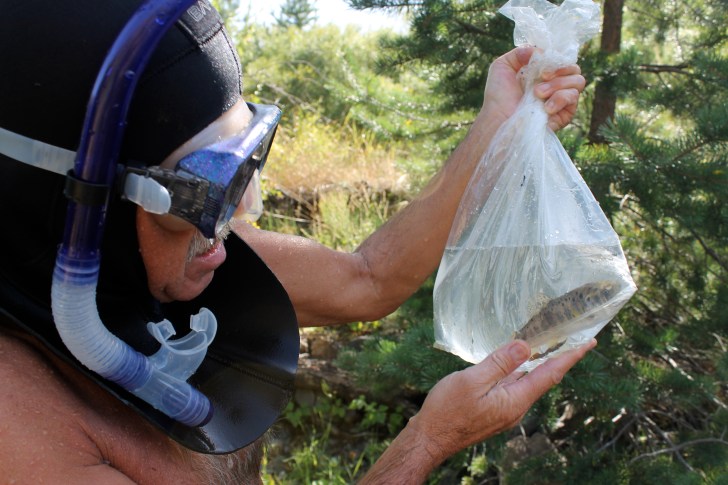
Obsession: Johannes after catching a native trout in eastern Anatolia
This week we have a guest post from John Zablocki, an MSc student in Biodiversity, Conservation & Management at the University of Oxford. John has spent recent years studying trout populations in Central and Eastern Europe, and writes to let us in on the story of an incredible individual….
In his book “About Trout”, Professor Robert Behnke, acknowledged by many as the world’s foremost authority on trout and salmon, calls a certain Johannes Schöffmann of Austria the “world’s authority on brown trout and its relatives.”
Who is this mysterious Herr Schöffmann, you wonder–a distinguished European professor of icthyology, perhaps?
No. He’s a baker.
For the past thirty years, when not producing some of Central Europe’s finest pastries, Johannes Schöffmann has been expanding the world’s knowledge of salmonid distributions, phylogenetics, and ecology through countless adventures to far-flung locales in search of native trout.
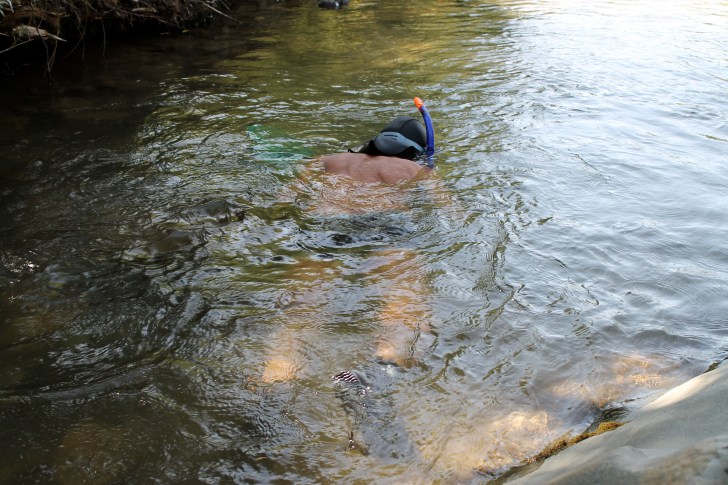
Johannes' trout collecting method
When James Prosek, an American author, artist, and naturalist began to ponder about whether there were native trout left in the historical Garden of Eden, the headwaters of the Tigris and Euphrates Rivers, there was only one man who could answer his question—Johannes Schöffmann. After their first trip together, the two continued exploring together for roughly a decade before Prosek published his classic book of paintings and literary descriptions titled “Trout of the World”. Read more…
BioFresh publication: Understanding the Distribution and Richness of Global Freshwater Fish Populations

A brown trout (Salmo trutta) camouflaged against the river bed. Image: Wikipedia
The diversity of life (or biodiversity) on Earth is not evenly distributed around the planet. Biodiversity is exceptionally high in the warm, wet environments around the tropics, and low at the barren, freezing poles. In between these extremes, there is a whole gradient of the diversity of life, which has alternatively puzzled and fascinated scientists for centuries.
Understanding the global distribution of freshwater fish
On this theme, a new paper by BioFresh partner Thierry Oberdorff at the Muséum National d’Histoire Naturelle in Paris and colleagues seeks to understand the patterns of where freshwater fish occur in rivers around the world. To be specific, Oberdorff and his team investigated the species richness of freshwater river fish: a term describing “the number of species present at a given time in a given place”.
Understanding scale: macroecology
It has been recently understood that the species richness patterns of all life on Earth are driven by cycles and processes operating at much greater scales than the individual ecosystem. A new academic discipline – macroecology – formed out of this realisation that species richness within a small, individual ecosystem is likely to be highly affected by large-scale processes such as climate across whole landscapes and continents. Understanding how species are affected by such large processes is a key theme for researchers seeking to understand how to best conserve biodiversity in the face of current and future climatic change and human impacts.
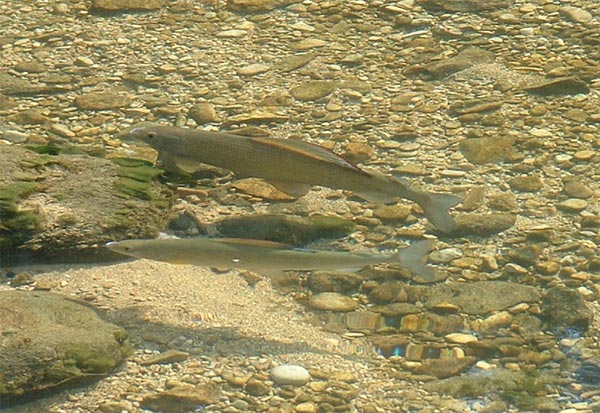
A pair of grayling (Thymallus thymallus) in a sunny river pool. Image: Wikipedia
River drainage basins as ‘islands’
Oberdorff and colleagues focused on understanding and comparing species richness within river drainage basins – the area of land from which all falling precipitation converges into a single point (usually a main river draining into a sea or lake). They treated each drainage basin as an individual ‘island’, separated by barriers such as oceans and mountains, with very little opportunity for fish to migrate inbetween. As such, the researchers initially suggested that this isolation (like on a remote oceanic island) would lead to each drainage basin showing specific extinction and evolutionary processes, leading to individual patterns of fish populations within each basin. Read more…
Blog Action Day 2011: Freshwater ecosystems and sustainable food
 Sunday 16th October is Blog Action Day, a global event where hundreds of blogs join forces to promote a unified message. Last year we wrote about “Water” – discussing the need for increased perception and understanding of freshwater ecosystem conservation. This year, the theme is “Food”.
Freshwater ecosystems: a vital source of nutrition and food security
Global rivers, lakes and wetlands contribute significantly to global food supply. The food system uses 70% of available global freshwaters (Aiking, 2011).A 2010 United Nations Environment Programme report by Patrick Dugan and colleagues showed that inland freshwater fisheries provide over 33% of the world’s small scale fish catch, providing valuable food security, improving rural livelihoods and employing over 60 million people. Freshwater food systems also have the potential to promote gender equity and empower women: Dugan and colleagues suggest that over 55% of people employed by freshwater fisheries are female.
Fish is rich in protein, omega 3 and amino acids and often low in fat. The supply of fish is as such globally important for human nutrition. This is especially important in Africa – where around 100 million people regularly consume freshwater fish – and the Mekong Basin in Southeast Asia – where 60 million people get their main source of protein from freshwater fisheries. Importantly, Christophe Béné and colleagues at the Food and Agriculture Organisation published a report in 2007 suggesting that fish and other food produced by freshwater ecosystems often act as a ‘safety net’ for the poorest households when agricultural harvests fail.
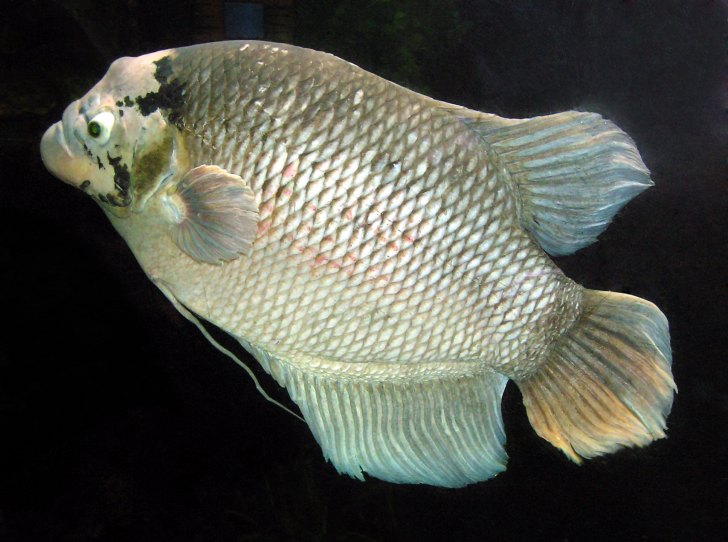
Giant gourami, a species popular for aquaculture in Thailand. Image: Wikipedia
Aquatic Plants and other non-conventional freshwater food sources
Aquatic plants such as wild rice (Zizania palustris); Spirulina Algae; edible aroid – Araceae; and taro – Colocasi, contribute in some way in alleviating human hunger in some of the lesser developed regions of the world. In addition, a 1998 World Conservation Monitoring Centre report suggests that frogs, crustaceans, molluscs, crocodilians, waterfowl and even manatees provide protein to some cultures.
Freshwater fisheries as a provisioning service
Scientists and environmental managers are increasingly using an “ecosystem service” approach to demonstrate and explain how humans benefit from the multiple services provided by the natural environment.
Freshwater ecosystems not only provide food, but a range of other important services. Put simply, these “services” can be categorised as:
Provisioning – e.g. food production, sources of medicine
Regulating – e.g. pollination, climate and air quality regulation
Supporting – e.g. nutrient cycling
Cultural – e.g. providing recreation, ecotourism, education and spiritual values
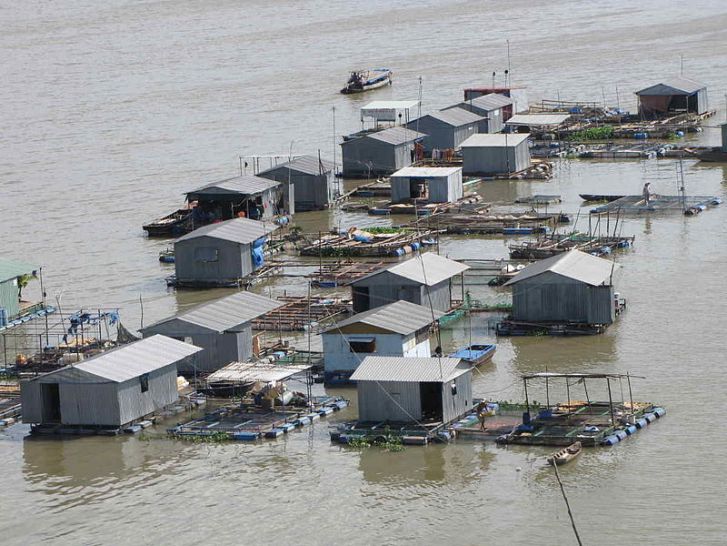
Houseboat fishfarms in the Mekong Delta, Vietnam. Image: Bill Bradley
How can we sustainably harvest freshwater ecosystems for food?
However, not all freshwater food production is sustainable. Freshwater food webs are generally less productive and more fragile than their marine counterparts, which themselves are showing global collapes. Fish farming and other forms of aquaculture have spread globally in recent decades, providing incredible levels of productivity and so are often seen as a valuable tool for improving human livelihoods. However, this productivity often comes at a cost (see the ECASA website for a range of literature and resources on this topic), where inputs such as food and chemicals are leached out into the wider ecosystem along with waste faeces. In salmon farms across northern Europe, there is also the growing problem of escaped sterile, farmed fish negatively affecting the spawning success of wild fish. However, efforts are being made to research new sustainable forms of freshwater fish farming.
As the UNEP and FAO reports show, for many people across the world, harvesting wild freshwater fish provides valuable sustenance. However, as we’ve discussed before, taking even a small number of wild freshwater fish for food from a small ecosystem may have large, cascading effects on the health of the rest of the ecosystem. This creates potential problems as it reduces how effectively the ecosystem can respond to external threats such as pollution (a concept known as resilience). Read more…
Polar explorers: natives and invasives in Antarctica
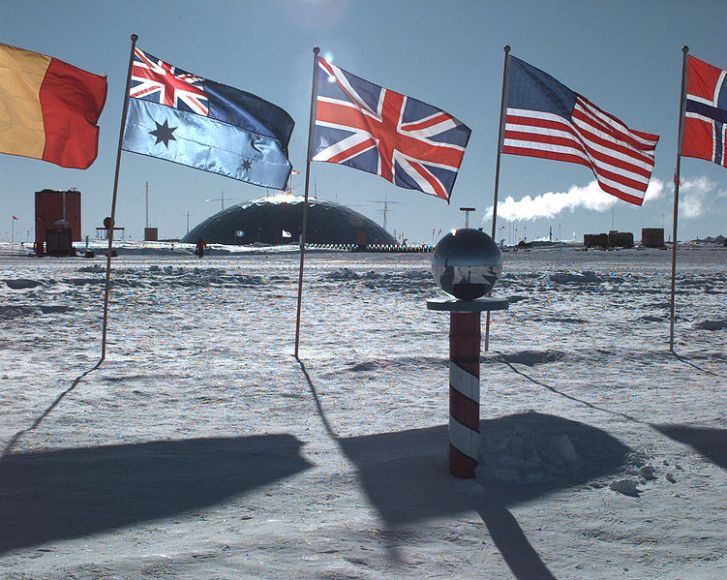
The Amundsen-Scott South Pole Station (Image: Wikipedia)
Nomenclature is fundamental to ecology and natural history: tying, describing and sorting an individual, species or habitat to a particular category or definition. The idea of what constitutes a ‘native’, ‘non-native’ or ‘invasive’ species is a thorny issue that we’ve touched on before. The words themselves are highly loaded with (largely unhelpful) meaning, association and history.
To paraphrase Stephen Jay Gould, species have been migrating, colonising, evolving and going extinct for millennia. It is only by a particularly unpredictable cocktail of time, place and chance (and of course, human perception and classification) that a species develops its ‘native’ environmental distribution.
To look at it this way, ‘alien’ species have always been ‘invading’ new environments through history, creating new and ‘novel’ ecosystems. Indeed, a huge amount of funding (including through BioFresh’s work on freshwater ecosystems) is currently being diverted towards understanding how species will be able to migrate and shift their range as a means of adapting to future climate change scenarios.
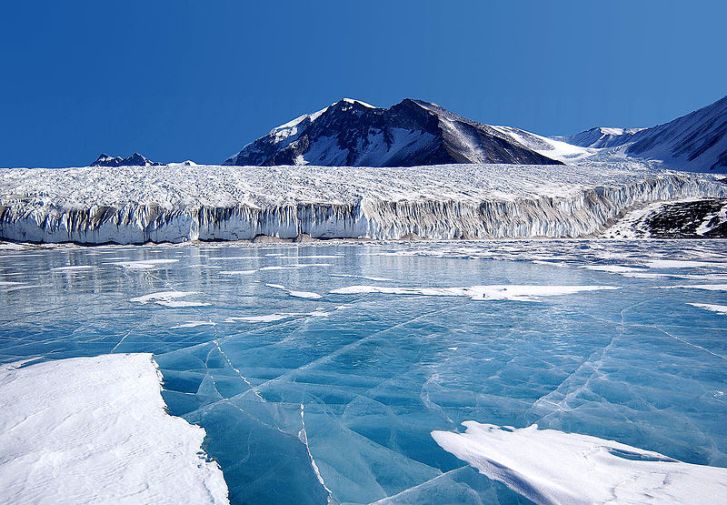
Blue ice on Lake Fryxell, Antarctica (Image: Wikipedia)
Building the BioFresh freshwater biodiversity database

The River Thames in London, a river that has seen a remarkable rise in freshwater biodiversity in recent years thanks to conservation efforts. Image: Wikipedia
Tom Turnbull, a new member of the BioFresh communications team at The University of Oxford summarises the key points made in the articles on assembling the BioFresh freshwater biodiversity database published over the last few weeks. Please feel free to add comments or questions below, or email us: biofresh@ouce.ox.ac.uk
—
Access to data is vital in assuring that we can fully understand and protect the rich biota contained in global freshwater ecosystems. If freshwater conservationists had access to all existing knowledge on freshwater biodiversity then modelling and analysis could be carried out at a level of sophistication which could enable a massive increase in research productivity and discovery. As such, BioFresh is attempting to collate, curate and disseminate all relevant European data to enable access to a wide audience of scientists, policymakers, planners and practitioners, with the intention of providing a centralised European dataset that can be used as a collective resource to assess and protect freshwater systems.
The first step in this process was to survey the quantity and types of data available. In February 2010 freshwater research organisations were contacted and asked to provide details as to the characteristics of their data, a form of data referred to as ‘meta-data’. These initial attempts have not been wholly successful, as it appears that the integral importance of meta-data is not fully appreciated by some organisations. They have not adequately curated or communicated the characteristics of their data. In other cases, factors such as intellectual property rights, institutional restrictions, and jurisdictional complexity mean that this information is not allowed to be shared, or is not available.
As such, the BioFresh team are beginning research into understanding and addressing barriers to the sharing of data, and communicating the proven benefits of transparency and collaboration in science. This work is vital in order that the environment, contributors, researchers and governance organisations can gain the utmost value from existing and on-going research. As it stands, the data architecture is in place, a portal has been developed that provides access to over thirty two thousand species and their environment and occurrences. This has been possible as a result of the data provided by the Freshwater Animal Diversity Assessment (FADA) and the Global Biodiversity Information Facility (GBIF). However, the project does not yet know the full extent of pan-European data that could feed in to this structure.
Data driven discovery is the new scientific paradigm, and freshwater biodiversity science can be part of this if protocols for interoperability and collaborative work can be established. However, the BioFresh team remain sensitive to the social factors that may cause friction when data disclosure requests are made. The intention is to use our experiences in carrying out a collaborative data collation project in order to explore these frictions and see if it is possible to overcome them, or whether they are characteristics of collaborative work which must be accommodated.
Requesting data and dealing with complex intellectual property rights issues

Lilla Fargen, Sweden. Image: Wikipedia
Continuing our special feature outlining how BioFresh scientists are collecting and collating a global metadatabase of freshwater biodiversity data, we turn to the often tricky concept of data sharing and intellectual property rights issues. If you have access to academic journals, two great papers on data sharing that may be of interest are: Tenopir et al (2011) “Data Sharing by Scientists: Practice and Perceptions” PLoS One (Free Open Access) and Roberts (2009) “Biodiversity Databases Spread, Prompting Unification Call” in Science.
Authors: Aaike De Wever, Sian Davies, Astrid Schmidt-Kloiber
Evaluation of the entries in the BioFresh metadatabase allows us to select the most relevant databases we want to request for use in the scientific work within BioFresh and for integration in the data portal. One of the main topics to consider is intellectual property rights (IPR).
In the metadatabase, data holders are confronted with the following IPR options:
Database available for: BioFresh scientific purposes/BioFresh data portal (public)
- Data can be used without restrictions, but must be publicly acknowledged and cited correctly.
- Data provider must be informed of publication 45 days in advance and can object the use of the dataset within 30 days. Data must be publicly acknowledged and cited correctly.
- Data provider must be offered co-authorship for publications using this dataset. Data must be publicly acknowledged and cited correctly.
- Data cannot be used in publication.
- Other/additional criteria (please specify).
Unsurprisingly, the entries in the metadatabase covered the whole range of conditions, ranging from no restrictions – mostly for data that are already available on-line – to co-authorship for scientist’s personal data. However, when I first did this exercise, I was quite surprised to see that a lot of the larger datasets that seemed interesting for integration in the BioFresh data portal had specified “other” and included statements like:
– The data were compiled from different institutes. All requests for access must be directed to …
– Other partners/institutions must ask the data providers of the database if the data can be used.
– The data are available for use at the discretion of the data provider.
– Data and permission of usage can be obtained from the author as long as the user accepts the external copyrights enforced by previous sources (authors/institutions), which protects some of the occurrence data included in the database.
It thus seemed that most of those datasets were compiled by several data holders. As the construction of those datasets is often done in the setting of a collaborative project, little attention is given to their potential use after the termination of the project and at that stage, the institute/person who compiled the dataset doesn’t feel like asking this over again…

Buttermere, one of England's most pristine lakes. Photo courtesy of Jo-Anne Pitt








 The Freshwater Blog