Making the Seine swimmable for the Paris Olympics
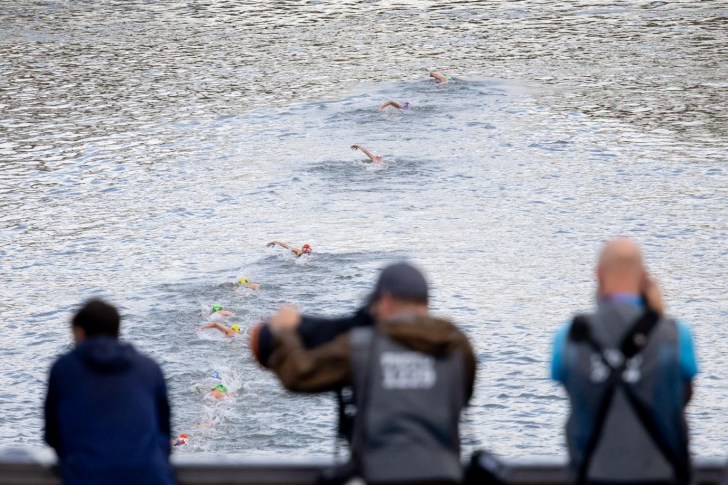
This summer’s Olympic Games in Paris saw swimmers compete in the River Seine, a waterway that had been closed to public bathers for more than a century due to high levels of water pollution.
The Seine, which flows 481 miles from Burgundy to the sea in Normandy, has long defined the architecture and culture of Paris. However, before this summer, centuries of domestic and industrial wastewater coupled with Paris’s complex and antiquated sewage system had made the river highly polluted and unsafe to swim in.
When Paris won their Olympic bid in 2016, Anne Hidalgo – the city’s current mayor – promised that athletes would be able to safely swim in the Seine during the 2024 Games, as they did when Paris first hosted the Olympics in 1900. City authorities hope that the Games will revive public swimming in the Seine, and 26 new swimming pools – walled off from heavy boat traffic – are due to be opened along the river in Paris.
Over the last eight years, significant investments into reducing the amount of untreated wastewater reaching the Seine have been made. Ahead of this summer’s Olympics, French authorities invested around €1.4 billion in measures across the Seine basin, including a giant stormwater storage tank in Paris. The tank – which has a capacity equivalent to 20 Olympic-sized pools – is designed to store untreated wastewater during heavy rain storms, and prevent it from directly entering the Seine.
The water is then slowly released back into the sewer system and treated downstream in the city’s sewage-treatment plants, before being released back into the river. The storage tank system is accompanied by disinfection systems to treat sewage more effectively and the redirection of wastewater from more than 10,000 homes and houseboats that used to dump directly into the Seine. Together, this work has resulted in untreated wastewater levels reaching the Seine being 90% lower in 2022 than 2002.
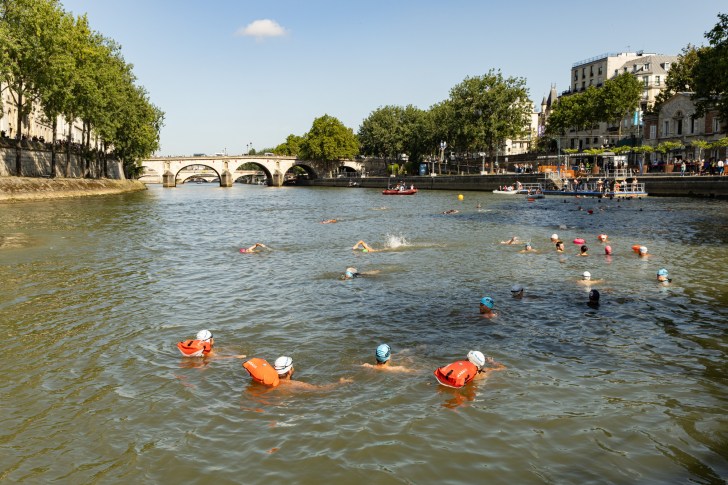
In July, shortly before the Olympics started, Paris mayor Anne Hidalgo donned goggles and a wetsuit to swim in the Seine in central Paris, accompanied by swimmers from local clubs. However, heavy rain at the start of the Games caused concerns over water quality in the river, and multiple training swims were cancelled as a result.
The organisers carried out daily water quality tests for the fecal bacteria E. coli and enterococci – which can lead to sickness and diarrhoea if ingested – in the Seine. These tests allowed both triathlon and marathon swimming events to go ahead in river water which was deemed ‘good quality’ by international standards. Under World Triathlon guidelines, E. coli levels up to 1,000 colony-forming units per 100 milliliters can be considered ‘good’ enough for competitions to take place.

Urban swimming: a growing trend
The initiatives in Paris are part of a wider movement, with urban swimming steadily growing in popularity in many European cities – including Copenhagen and Zurich – in recent years. There are now ongoing efforts to make Berlin’s Spree canal and Amsterdam’s canals swimmable for the public.
Urban swimming brings many benefits to the wider city. Plainly, it requires clean waterways where pollution levels have been limited. In many cases, this is both good for people, and the aquatic ecosystem too. For example, clean-up efforts in the Seine have increased the number of fish species inhabiting urban Paris from three in the 1970s to more than thirty now.
Many urban waterways have been polluted for decades by overflows of sewage from combined sewer overflows, or CSO’s as they’re often known. During periods of heavy rainfall, these underground sewers are designed to overflow directly into urban waters, carrying with them cocktails of pollutants, bacteria and microplastics.

One powerful solution is to turn to nature to reduce the amount of polluted water reaching sewer systems. The ‘sponge city’ concept – in which green urban architecture helps absorb and slow the flows of water through the city – is rapidly growing across the world. Originally coined in China in the early 2000s, the sponge city model emphasises green infrastructure such as urban parks, wetlands, tree planting, green roofs, permeable paving and rainwater reuse to help alleviate flooding and pollution.
These different nature-based solutions are brought together in cities to form sustainable urban drainage systems (or SuDs), which harness natural processes to filter pollutants and buffer floodwaters. Many of these approaches also help create valuable biodiversity habitat to boost the health of urban ecosystems, and their resilience to the ongoing heat effects of the climate emergency.
Paris’s success in making the Seine swimmable for the Olympics this summer provides a beacon of hope for our urban rivers. Despite the multitude of challenges the clean-up operation has faced, it shows that even the most polluted urban rivers can be made safe for people to swim and bathe, and boost the health of the wider aquatic ecosystem in cities.
Allan Water restoration project wins major Scottish award

The Forth Rivers Trust has won the Climate Impact award at the recent Scottish Council for Voluntary Organisations (SCOV) Scottish Charity Awards 2024 for their work in restoring the Allan Water in Central Scotland.
The Trust, supported by the MERLIN project and other funders, has been working with land managers and communities for the past eight years to restore degraded habitats along the Allan Water.
The Trust have implemented a range of nature-based solutions to help build resilience to ongoing climate changes along the catchment. These include measures to slow water flows to help buffer flooding, riparian tree planting to help keep the river cool under increasing air temperatures, restoring degraded peatland to lock in carbon, and creating new wetlands to help boost wading bird populations.

“This award is testament to the collective efforts and hard work of our staff, land managers, partners, contractors and steering group It underscores our shared commitment to delivering a resilient catchment for future generations,” said Charlotte Neary from the Forth Rivers Trust.
“The project wouldn’t be possible without the support of our funders, including The Scottish Government, European Union via the MERLIN Project, Nature Scot Nature Restoration Fund and Network Rail,” Neary continued.
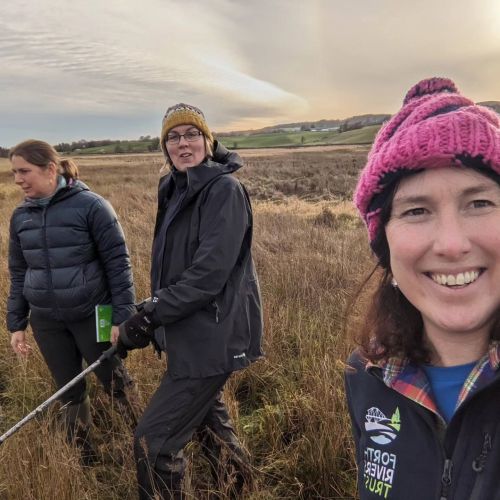
“Recognition of the project through winning this award has given us even more momentum to carry on developing and delivering work on the Allan Water in the future. We extend our heartfelt thanks to each and every one who has been a part of this journey, supporting the project in various ways. Your contributions have been instrumental in its success,” Neary said.
You can find out more about the Allan Water restoration project through the MERLIN factsheets, and on our most recent podcast, which features an interview with Charlotte Neary.
///
This article is supported by the MERLIN project.
Restoring damaged and depleted ecosystems in Europe is a hot topic right now, following the adoption of the Nature Restoration Law earlier this summer. As awareness of the need for ambitious nature restoration projects grows across the continent, so too does the recognition of their links to economic prosperity and human well-being.
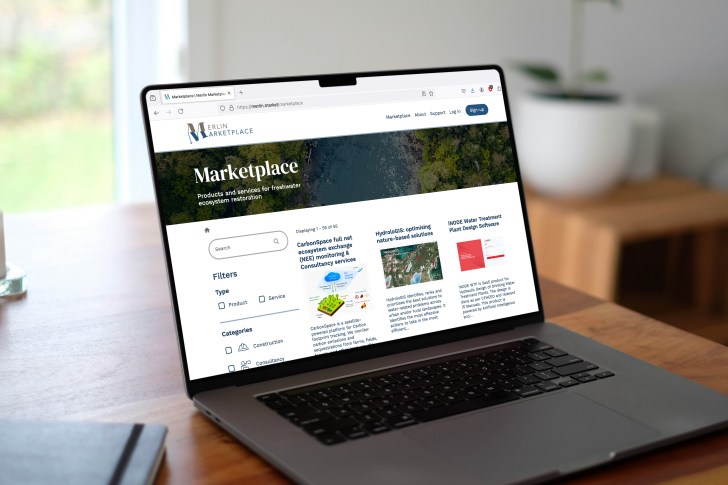
The new MERLIN Marketplace is designed to support the growing need for cutting-edge solutions and services which help mainstream nature restoration. It connects the suppliers of tools which support restoration with audiences of environmental managers, community groups and policy makers.
Whilst the Marketplace is continually growing, it already hosts an array of innovative products and services for freshwater restoration. These include river barriers to manage plastic pollution, AI tools to support sustainable irrigation schemes, ‘egg boxes’ for introducing fish eggs into rivers, and real-time water quality monitoring systems, amongst many others.
The featured products and services aren’t limited to freshwaters, though. They also include satellite-powered systems for tracking carbon footprints, AI systems which support forest conservation, agroecology consultants, and 3D mapping systems to help visualise restoration projects.
The Marketplace is a key resource for helping advance the MERLIN philosophy that effective restoration requires the transformation of our societies towards more sustainable models. Through promoting these products and services, the goal is to help mainstream their use in everyday life, economies and environmental projects across Europe.
Central to this ambition is linking the suppliers of these products and services with their users, as MERLIN coordinator Sebastian Birk explains, “For effective implementation on-site, we need experts who guarantee trustworthy and professional realisation of their products and services. The MERLIN Marketplace is developing into the perfect platform for this matchmaking.”
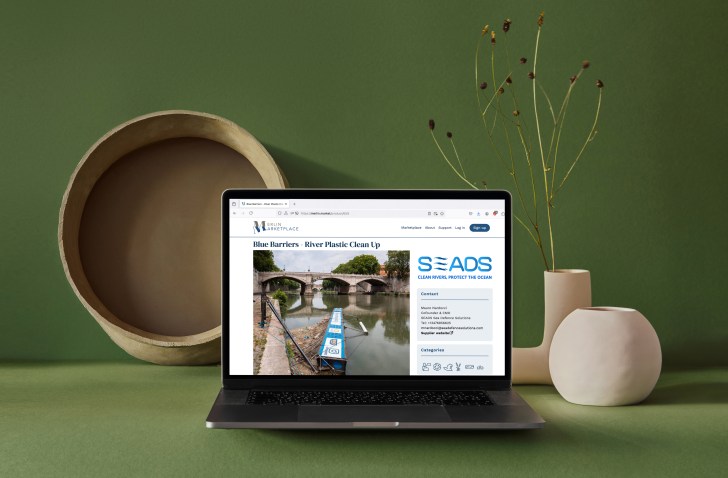
The MERLIN Marketplace has been developed through two partner organisations: OPPLA and Connectology. “We are excited to witness the extensive variety of products and services now available on the platform,” says a Connectology representative. “We are particularly enthusiastic about welcoming financial institutions to support our restoration sites and scientific partners to register their cutting-edge solutions and services on the Marketplace.
“We are confident that this advanced platform will enable us to engage with a broader spectrum of companies dedicated to developing nature-based solutions for our shared objective of restoring and conserving the world’s precious freshwater resources,” they conclude.
Designers and suppliers of innovative products and services which support restoration projects can register their information for free on the Marketplace. Each year, the MERLIN project hosts its Innovation Awards to celebrate the products and services featured on the Marketplace. You can read about this year’s winners here.
///
This article is supported by the MERLIN project.
The MERLIN Academy: a new open-access learning and resources hub for freshwater restoration
The EU MERLIN project has launched its new online Academy, a hub for cutting-edge learning, resources, webinars and podcasts around freshwater restoration. The open-access Academy is designed to help support practitioners, students and policy makers in mainstreaming freshwater restoration, both in Europe and globally.
This task is ever more important following last month’s news that – after a series of political hurdles – the EU Nature Restoration Law will be adopted. The law’s aim is to restore 20% of EU’s degraded ecosystems by 2030 and all by 2050, and to restore 25,000km of free-flowing rivers across the continent.
Clearly, the time for ambitious freshwater restoration is now, and the MERLIN Academy offers a hugely valuable set of open-access resources to guide visitors through the science, financing and stakeholder engagement involved in restoration. This work has a focus on the value of nature-based solutions, which aim to use natural processes to help tackle socio-environmental challenges like climate change.
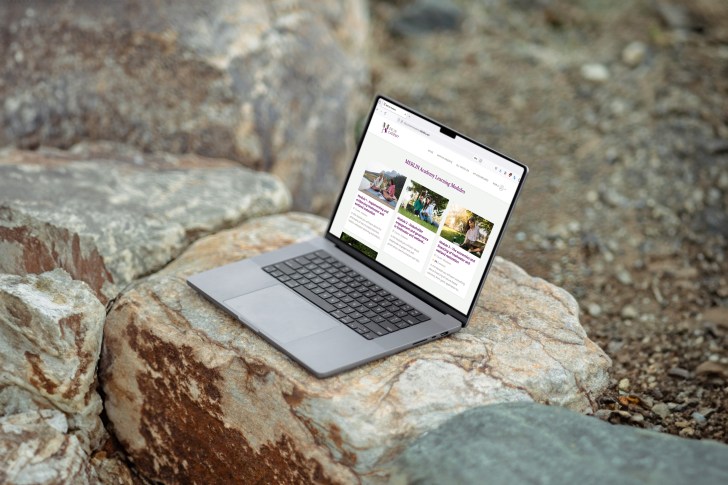
Visitors to the MERLIN Academy can sign up to a series of Learning Modules for free. The first public Module covers the economics and financing of freshwater restoration in a series of videos featuring experts on the topic, along with a series of worksheets and quizzes. Future Modules will be released from Autumn 2024 onwards.
The MERLIN Academy also hosts a vast Knowledge Centre which brings together resources around environmental restoration, nature-based solutions, governance and financing. These resources – which include websites, reports, videos, e-learning, datasets and much more – can be freely searched and accessed. The Academy also hosts the MERLIN webinars and podcasts which have been produced over the project’s lifespan so far.
“MERLIN learns a lot from close collaboration with restoration cases on the ground,” said project co-ordinator Sebastian Birk. “These experiences have shaped the design of the Academy, resulting in knowledge that is robust and actionable. Specifically, the e-learning platform with its modular course design has the potential to progressively bring in new restoration knowledge to educate future practitioners across various ecosystems within a landscape framework.”
“Developing the MERLIN Academy was quite a journey,” explained Academy development leader Astrid Schmidt-Kloiber. “From our first ideas to implementation, the process required a bit of thinking outside the scientific bubble in order to make the content understandable and accessible to a wider audience. The Learning Modules form the core to gain new knowledge in a very structured and easily digestible way, including quizzes to test what you have learned.
“The Knowledge Centre helps to find related resources about nature-based solutions and freshwater restoration, the webinars provide in-depth information on specific topics and the podcasts are just fun to listen to, an easy way to get in touch with this – sometimes difficult to understand – topic,” Schmidt-Kloiber continued. “My thanks go out to all MERLIN partners who have made this possible for their engagement and dedication.”

“Generating knowledge isn’t worth much if it does not reach the right audience,” added Academy development co-leader Franziska Wenskus. “With the MERLIN Academy, we make state-of-the-art knowledge about restoration planning, implementing and monitoring easily accessible to practitioners and managers on the ground. Drawing from the results of the MERLIN project and their longstanding professional experience, our experts teach you everything you need to know to get started with your restoration project.”
“Working on social media, I discovered that there is so much information and so many things happening at the same time,” outlined Academy technical editor Joselyn Veronica Arreaga Espin. “There are so many projects contributing their work that sometimes it is hard to keep up with all the input. The Academy offers a place where this information is gathered, making it easier to find what we are looking for. As communication is key and the world needs to know what is actually happening in our ‘small bubble’, offering the Learning Modules accomplishes this purpose. Something I really appreciate is that this tool is freely accessible, which makes education and the MERLIN knowledge inclusive for any person with an internet connection.”
Speaking about the launch of the first public Learning Module, developers Josselin Rouillard and Gerardo Anzaldua said, “This course will equip you with some essential insights to navigate new funding opportunities and identify the best fit for your restoration projects. Join the course and gain a better understanding of cost-benefit analysis, explore innovative financing mechanisms, and learn how to make a compelling case for the environmental and economic benefits of freshwater restoration.”
///
Explore the MERLIN Academy here.
This article is supported by the MERLIN project.

The effects of multiple human impacts on streams can increase concentrations of greenhouse gases in their waters, potentially exacerbating the harmful effects of the climate crisis, new research suggests.
The study, led by the University Rey Juan Carlos-URJC and CBMA – University of Minho, found that streams exposed to multiple human impacts can contain double the concentrations of carbon dioxide and methane: the two most important greenhouse gases. The research team – which also included scientists from the University of Barcelona and Centre for Research on Ecology and Forestry Applications-CREAF – assessed how the concentration of these greenhouse gases responded to the combined impacts of nutrients, warming and low oxygen concentrations by conducting fieldwork in 50 streams across northern Portugal.
“Even though streams naturally have higher concentrations of carbon dioxide and methane compared to the atmosphere, this study demonstrates for the first time that the accumulation of multiple impacts exacerbates the concentrations of these gases and potentially their emissions into the atmosphere,” says Cayetano Gutiérrez-Cánovas, the lead author of the study and researcher at URJC. “Given that many rivers are already subject to several human impacts, there’s a considerable risk that the environmental degradation they cause could further exacerbate the climate crisis,” Gutiérrez-Cánovas continues.
Writing in Global Change Biology, the researchers also evaluated the role of the scale at which these human impacts take place to gain a deeper understanding of the mechanisms that control greenhouse gas productions in streams. “Our findings indicate that the scale at which human impacts occur has varying effects on carbon dioxide and methane concentrations,” explains Daniel von Schiller, co-author of the study and associate professor at UB. “Carbon dioxide, being more soluble than methane and capable of traveling long distances through stream waters, appears to be influenced by impacts occurring throughout the catchment. However, our models suggest that methane, which can readily escape from water and enter the atmosphere, is responsive to both local and catchment-scale impacts.”
This research carries significant implications for river management. Current restoration and mitigation strategies often concentrate on local actions, overlooking broader catchment-scale impacts and their potential contributions to climatic stability. For example, one of the main concerns for river managers is reducing nutrient inputs to freshwaters, which can have dramatic ecological consequences, as shown by the situation in the Mar Menor lagoon in southeast Iberia.
“Our findings suggest that reducing nutrient inputs and addressing low oxygen conditions could provide additional co-benefits which aid in the fight against climate change,” says Cláudia Pascoal, senior author of the study and associate professor at CBMA-UMinho. “These results underscore the importance of managing rivers with a holistic, catchment-scale approach, not only to preserve biodiversity and benefits for people but also to mitigate the climate crisis.”
///
MERLIN Podcast EP.8 – Stories from the water’s edge: getting freshwater restoration done in Europe

We’re delighted to share the latest episode of the MERLIN podcast with you.
This is a podcast telling stories about how restoration gets done across Europe. First we hear from Joshua Royte, a conservation scientist working for the Nature Conservancy in the USA. Josh has led ambitious river restoration projects across Maine, and is now an advisor to the EU MERLIN project. We hear Josh’s perspective on freshwater restoration in Europe, and the work the MERLIN project is doing to help bring its rivers, streams and wetlands back to life.
This work is explored in five fascinating stories from sites across Europe, each of which highlights the complexities of getting freshwater restoration done. Arturo Elosegi from the University of the Basque Country narrates a long-running – and now successful – story about working with communities to address local opposition to dam removal on the Deba River. Charlotte Neary from the Forth Rivers Trust in Scotland highlights the importance of finding and training local contractors to help make restoration a reality along the Forth Catchment, even when it requires unusual traditional methods such as water dowsing.
Nadine Gerner from Emschergenossenschaft tells the story of wildflower meadows blooming along the banks of the Emscher River in Germany, which was once so neglected that it became an open sewer. Nadine highlights the need for convincing stories about the success of such nature-based solutions in upscaling their use in restoration. Matea Jarak from WWF Adria recounts an eye-opening story from the Hutovo Blato peatlands in Bosnia-Herzegovina, where a major release of water from a nearby hydropower plant flooded the restoration site. Matea highlights the importance of clear communication with people and organisations around a restoration area to avoid such catastrophic issues.
Finally, Iulia Puiu from WWF Romania shares the story of how she and her colleagues have been working to restore the floodplains of the Danube River, in order to buffer the effects of floods and droughts exacerbated by the ongoing climate emergency. A key challenge for Iulia and her team is communicating the need to return natural processes to floodplains which have been drained and developed for many years.
Together, the stories give a ‘behind the scenes’ snapshot of freshwater restoration projects taking place across Europe. They highlight that restoration is never a simple, straightforward process: instead one that often requires communication, persistence and improvisation in equal measures.
You can also listen and subscribe to the podcast on Spotify, Amazon, and Apple Podcasts. Stay tuned for the next episode soon!
///
This article is supported by the MERLIN project.
Global migratory fish populations have declined by 81% since 1970: but river restoration projects offer hope

Global migratory fish populations have declined by 81% since 1970, according to a major new report released last week. This startling decline has been documented in freshwaters across the world, with particular severity in Europe, Latin America and the Caribbean.
The new Living Planet Index for Migratory Freshwater Fishes states that the downward trend in migratory fish populations represents an annual decline of 3.3%, and is largely the result of habitat degradation and loss coupled with human over-exploitation. The report cites that a key driver of migratory fish declines is the fragmentation of rivers and the blockage of migration routes due to dams, weirs and other barriers.
The report – which monitored 1,864 populations of 284 migratory fish species across the world between 1970 and 2020 – states that habitat loss and degradation – which also includes the conversation of wetlands for agriculture – accounts for half of the threats to migratory species. Overfishing, increasing pollution and the growing impacts of the climate emergency all also contribute to the cocktail of pressures faced by migratory fish.
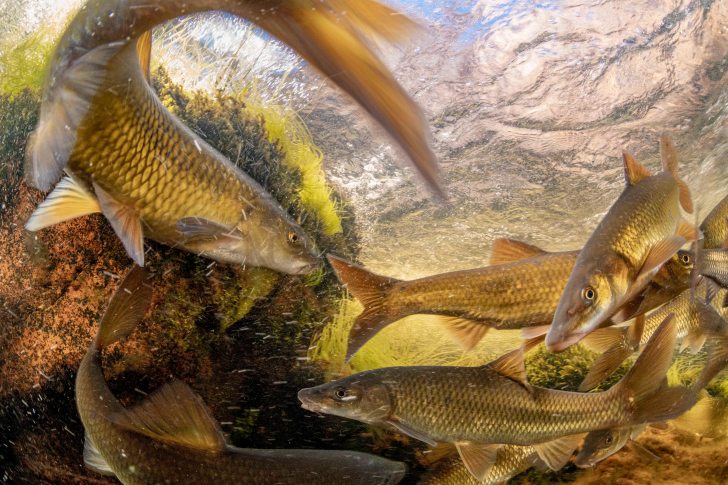
Populations of migratory salmon, trout, eel and sturgeon – alongside numerous other species – are not only vital to healthy freshwater ecosystems, but they also support the food security and livelihoods of millions of people who live around rivers, lakes and wetlands. This is particularly the case in areas of Africa, Asia and Latin America, where migratory fish support the livelihoods of tens of millions of people through fisheries, global trade and recreational angling.
“The catastrophic decline in migratory fish populations is a deafening wake-up call for the world. We must act now to save these keystone species and their rivers,” said Herman Wanningen, founder of the World Fish Migration Foundation. “Migratory fish are central to the cultures of many Indigenous Peoples, nourish millions of people across the globe, and sustain a vast web of species and ecosystems. We cannot continue to let them slip silently away.”
Despite its startling headline figure, the report contains glimmers of hope. Nearly one-third of the monitored migratory fish species populations have increased since 1970. The authors suggest that this means river restoration projects such as dam removals, habitat restoration and fisheries management can have positive effects on the health of migratory fish populations.

The report – supported by the World Fish Migration Foundation, ZSL, IUCN, The Nature Conservancy (TNC), Wetlands International and WWF – highlights that thousands of river barriers are being removed across Europe and USA. In 2023, 487 barriers were removed across Europe (an increase of 50% on the previous year), whilst in the USA, some of the largest dam removals in history are underway along the Klamath River in California and Oregon.
The challenge is to keep the momentum behind these initiatives growing, to help restore free-flowing rivers that not only benefit migratory fish, but also the wider ecosystem and human communities. The embattled EU Nature Restoration Law – if passed – contains an imperative for European countries to restore 25,000km of free-flowing rivers across Europe, whilst in the USA the the White House’s America the Beautiful Freshwater Challenge Partnership offers the largest freshwater restoration and protection initiative in history. Moreover, major freshwater projects such as MERLIN are providing valuable tools for environmental managers seeking to implement and upscale restoration activities across Europe.
“In the face of declining migratory freshwater fish populations, urgent collective action is imperative,” said Michele Thieme, Deputy Director, Freshwater at WWF-US. “Prioritising river protection, restoration, and connectivity is key to safeguarding these species, which provide food and livelihoods for millions of people around the world. Let’s unite in this crucial endeavour, guided by science and shared commitment, to ensure abundance for generations to come.”
Read the 2024 Living Planet Index for Migratory Freshwater Fishes
///
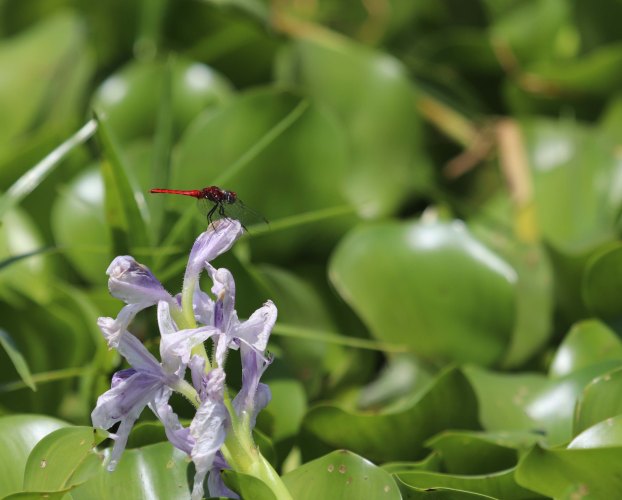
A guest post by Monika Böhm, Freshwater Conservation Coordinator, Global Center for Species Survival, Indianapolis Zoo
///
Freshwater ecosystems play a vital role in sustaining biodiversity and supporting human livelihoods. They are also under immense pressure: for example, the WWF Living Planet Report shows that vertebrate populations are declining more rapidly in freshwater ecosystems than in terrestrial and marine systems!
Critically, major international biodiversity agreements – agreements aimed at stemming the loss of species, populations and ecosystems – are also focusing on halting freshwater declines. We need to be able to monitor progress towards the targets set by these biodiversity agreements to evaluate if they are successful in achieving their aims. However, effective monitoring of freshwater ecosystems still lags behind monitoring of terrestrial systems, and is often not carried out in a coordinated manner across regions and countries.
This is where the Global Freshwater Macroinvertebrate Sampling Protocols Task Force (GLOSAM) comes in. This group – which operates under the umbrella of the International Union for the Conservation of Nature (IUCN) Species Survival Commission (SSC) – has recently published a first and important review of the current state of freshwater biodiversity monitoring programs, focusing on the use of benthic macroinvertebrates as indicators.
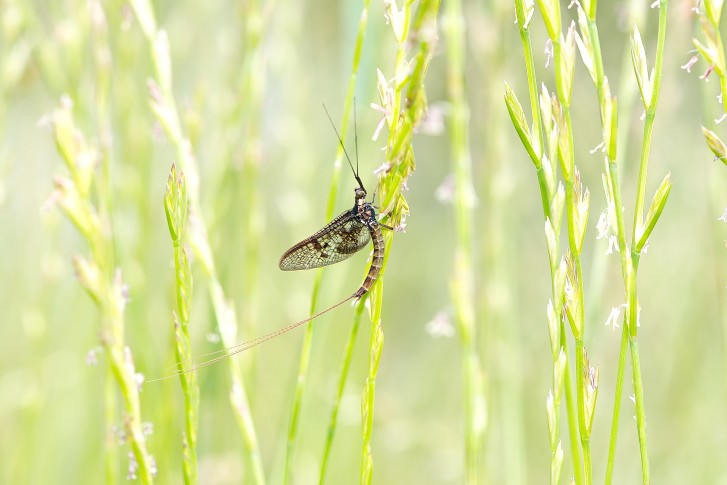
What are benthic macroinvertebrates?
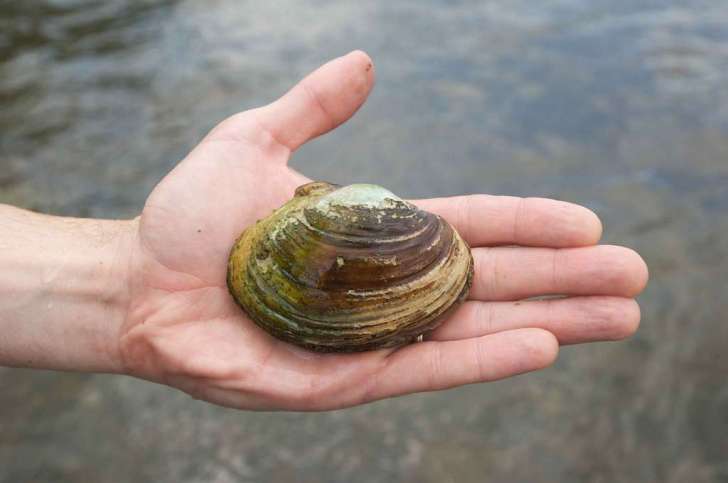
Benthic macroinvertebrates are aquatic invertebrates (animals without a backbone) that are large enough to see without a microscope: think worms, molluscs (snails and mussels), crustaceans, and the larvae of aquatic insects such as stoneflies, mayflies, caddisflies or dragonflies. ‘Benthic’ refers to the association of these animals with the bottom of a water body.
Why monitor benthic macroinvertebrates?
By monitoring freshwater macroinvertebrates such as insects, crustaceans, molluscs, and worms, scientists and conservationists can also monitor freshwater health. The presence and abundance of these species provide key information on the status of freshwater ecosystems in relation to human-made threats. Insights from such monitoring allows us to make smarter decisions in freshwater management.
Macroinvertebrates are great for monitoring because they have limited movement or are in some cases even sessile, and are therefore great indicators of the localised conditions they are “stuck in”. They cover a range of species and higher taxa that not only reflect a range of positions in the food web, but also different pollution tolerances. Through their positions in the food web, they serve as a major food source for many fish.
On a more pragmatic level, macroinvertebrates can be abundant in most streams, including those that may be too small to support many fish. They are relatively easy to sample, requiring few people and inexpensive gear, and they are relatively easy to identify to more coarse taxonomic levels, so any experienced general biologist should be able to use these animals to detect or recognise degraded conditions.
Benthic macroinvertebrate sampling protocols – a study
Protocols using benthic macroinvertebrates exist for both bioassessment and biodiversity monitoring. While bioassessment and biodiversity monitoring sound similar, they are not the same. Bioassessments aim to evaluate the status and/or condition of a waterbody by sampling and analysing a representative subset of macroinvertebrates.
Biodiversity monitoring tries to document the full variety of biota in ecosystems, from a system’s genetic diversity and species diversity to its ecological and functional diversity. Ultimately, biodiversity monitoring aims to assess trends in the ecosystem’s diversity. So there is overlap between bioassessment and biodiversity monitoring, including in the design and techniques used, but they have traditionally been carried out separately.
To find out about the uptake of freshwater benthic macroinvertebrate protocols by practitioners across the globe, the team conducted a comprehensive survey from the end of 2022 to mid–2023. Overall, 110 individuals from 67 countries participated in the survey.
From the survey data, the GLOSAM team, led by Drs. John Simaika (IHE Delft) and Andreas Bruder (SUSPI) and comprised of a core group of 15 researchers, government officials and NGO representatives from around the globe, identified a notable gap in biodiversity monitoring efforts at the national and sub-national levels: while bioassessment programs were more prevalent, there was a lack of systematic biodiversity monitoring across lakes, rivers, and artificial waterbodies.
Ultimately, GLOSAM’s work is to achieve the harmonisation and standardisation of bioassessment and biodiversity monitoring protocols, to ensure that our freshwater sampling efforts achieve the best value for all, including for our freshwaters. From the survey data, the team identified several distinct gaps and challenges that we must address to ensure that biodiversity monitoring and bioassessment protocols are well aligned.
For example, while protocols for biodiversity monitoring require us to sample across different water bodies, habitats, and seasons to get as full an inventory of biodiversity as possible, protocols for bioassessments stipulate that similar water bodies, habitats and seasons are sampled for the most meaningful results.
Other examples include the inherently different taxonomic resolutions at which the two processes of bioassessment and biodiversity monitoring operate. There are also some challenges that apply equally to both biodiversity monitoring and bioassessment, for example that data may often not be made publicly available or may not be in an accessible form and hence not available for analyses.
Probably most notably, the lack of harmonisation of sampling protocols emerged as a significant barrier to collaboration and comparability of data across regions. Given that the ultimate aim is to ensure efficient and effective sampling is carried out that produces the best possible data to track progress towards international biodiversity targets, overcoming this challenge is of the utmost importance.
Following this initial survey effort of sampling protocols, GLOSAM’s next step is to address this issue: to improve available datasets that can give us insights into species distributions and population sizes over space and time, and to give us a better understanding of the impacts that human activities have on freshwater ecosystems and their macroinvertebrate inhabitants.
Dr Simaika says: “Efforts to monitor and assess the health of freshwater ecosystems are critical for conservation and sustainable management. By addressing the identified gaps and challenges and promoting global harmonization, we can enhance the effectiveness of biodiversity monitoring programs and ensure the long-term resilience of freshwater ecosystems. Collaborative initiatives such as GLOSAM provide a pathway towards achieving these goals and safeguarding the invaluable biodiversity found within freshwater habitats.”
///
To learn more about GLOSAM, its goals, activities, members and partners, visit the Task Force’s website.

It is well documented that Europe’s ecosystems are in urgent need of protection and restoration. However, as the debates over the EU Nature Restoration Law have shown, getting ambitious nature recovery projects off the ground is not always straightforward.
A common problem is that whilst there may be public and political support for environmental projects, there is often a critical lack of financing to make them happen in practice. The EU MERLIN project has recently released new tools to help environmentalists access funding sources to help make their projects a reality.
Working with the consultancy firm CONNECTOLOGY researchers from MERLIN have published two ‘Off-the-Shelf Instruments’ which demonstrate the potential of donation-based crowdfunding and corporate donations to help finance environmental projects.
The idea behind these Instruments is that the urgency of the biodiversity crisis and climate emergency, coupled with the slow pace of political processes, requires us to look more broadly at new forms of funding to help bring degraded ecosystems back to life. The authors suggest that, “these instruments not only facilitate public funding but also acknowledge the indispensable role of private finance in propelling impactful initiatives forward.”
The two Off-the-Shelf Instruments released this week are the first of a series exploring new forms of environmental funding. Each Instrument includes an overview of the pros and cons of the funding source, alongside best practice guides, case studies, timelines and suggested Key Performance indicators (KPIs) for implementing them.
You can keep up with the release of new Off-the-Shelf Instruments on the MERLIN website.
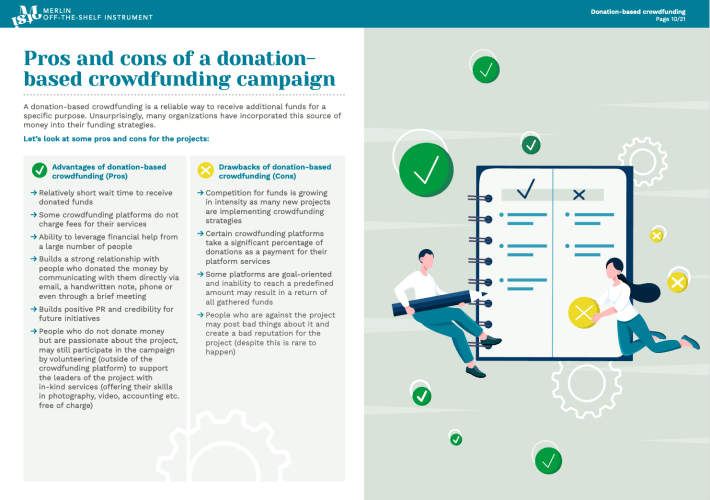
Donation-based crowdfunding
Crowdfunding has emerged has emerged as a key mode of gaining financial support for charitable and environmental projects in recent years. Supported by the rapid growth in mobile technologies, crowdfunding involves backers (or donors) providing financial support to help make projects happen.
Donation-based crowdfunding means that this financial support is offered by backers without the expectation of anything in return. Money is instead offered towards supporting projects – such as river restoration – which a backer sees as worthwhile.
The MERLIN researchers suggest that such donation-based crowdfunding can not only help attract financial support for environmental projects, but its ability to ‘travel’ online through social media means there is the potential for wide new audiences to be engaged in the issues it seeks to address.
The researchers outline the need to create a strong and compelling story over why crowdfunding is needed, and how the funds are going to be spent. They highlight how this approach requires skilful communications across blog posts, social media and FAQs to keep backers updated with project progress, milestones and outcomes.
The team highlight a case study of donation-based crowdfunding on Rothley Weir in Leicestershire, UK. A campaign by The Rivers Trust was launched on the WWF’s Crowdfunding website in July 2021 seeking support to help remove a redundant dam which was harming the health of the river’s ecosystem. Within three months, the campaign had received over €12,000 in donations, and by September 2021 the dam had been removed.
You can read the full guide to donation-based crowdfunding for environmental projects here.

Corporate donations
Companies, foundations, and other private organisations often make financial donations to support social causes, environmental projects and community schemes. These donations are often framed as a means of a company voluntarily managing or mitigating its impacts on society and the environment.
These donations are not always financial; instead ‘in-kind’ donations of machinery, expertise, materials or volunteer workforces can be useful to environmental organisations in need of support. Whether financial or in-kind, such donations are valuable as they don’t require organisations to provide a financial return to their donors.
The MERLIN researchers identify three main forms of corporate philanthropy: corporate giving programmes; company-sponsored foundations; and ad-hoc requests from organisations. Matching gifts is a common form of corporate giving programmes, where an organisation will financially multiply donations made from their employees.
Corporate donations can potentially offer environmental organisations free funding and assistance for their projects, and raise awareness of their causes. However, it is important to note that corporations are profit-making entities, and the reputation, activities and corporate interests of donor organisations, and their reasons for donating, should be closely scrutinised.
The team highlight a range of successful examples of corporate donations supporting environmental projects across Europe. For example, a €10 million donation from Volkswagen AG in 2018 facilitated repairs to storm damage on the Ebro Delta in Spain, supported UNESCO Biosphere Reserves in Spain, Poland and Germany, and helped restore the Barnbruch woodland in Germany.
You can read the full guide to corporate donations for environmental projects here.
///
This article is supported by the MERLIN project.

It’s well known that barriers to fish migration are a major issue in rivers across Europe. An innovative scheme in the Netherlands has harnessed the power of online citizen scientists to alert ecologists in Utrecht when fish are congregating behind a boat lock between the rivers Kromme Rhine and Vecht.
Visitors to the ‘fish doorbell’ website can then press a button to tell the lock keeper to open the gate to allow the fish through. This scheme – which allows fish such as carp, bream and eels to move upstream and avoid predators such as grebes and cormorants – has been extremely popular, with over a million visitors this year alone.
The fish doorbell scheme is particularly important in spring, when the water warms up and fish in the river become more active ahead of spawning. However, boat activity at this time of year is often quiet so the lock is rarely opened for passing traffic. As a result, the fish doorbell website – run between March and June since 2021 – has become a vital resource to allow fish to migrate between the Kromme Rhine and Vecht.
More broadly, the scheme has become a hugely effective citizen science engagement tool, reaching public audiences and acheiving press coverage across the world. In a time of rapid freshwater biodiversity declines, it offers a hopeful vision of how new technologies can give the public tools to help protect and restore aquatic life.
To find out more about the fish doorbell project, we spoke to co-founder Mark van Heukelum.
Tell us about the fish doorbell project: when did it start, and why?
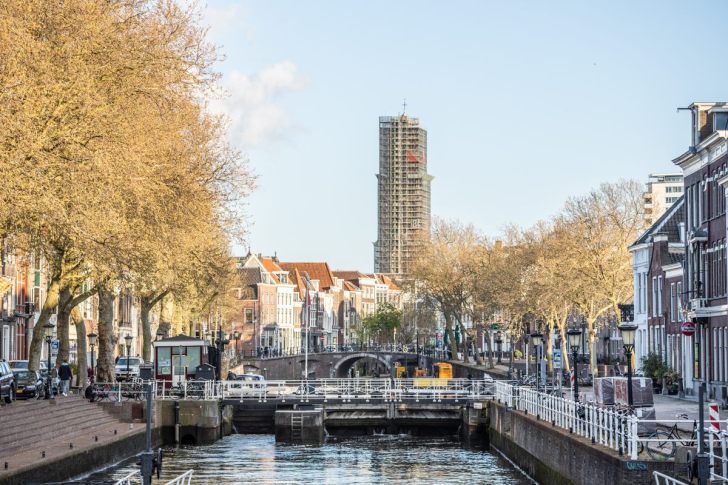
The idea started over four years ago. I was living near the boat lock and noticed large school of fish gathering before the lock doors. You have to understand that the City of Utrecht has a special water system; from the south water flows into the city channels from the River Kromme Rhine. The iconic city channels transport this water all the way to the north.
There it passes the boat lock into the River Vecht. So the city connects these two rivers. Fish want to migrate between these rivers especially in spring, to spawn and reproduce. But the boat lock is closed for the most part of spring, meaning that fish are trapped. Fish will wait for an opportunity to pass, losing energy as they wait. Some fish will turn around. Other fish will get eaten by predatory birds and fish, who know fish cannot go anywhere.
How did you come up with the idea for the fish doorbell?
I discussed the situation with the lock operator and told him that I wanted to contact the city and water authority to see if we could do something about it. But he said, why not open the lock this evening? And so we did. He was willing to open the lock for the fish. But since it is a monumental lock that is still operated by hand, it takes a lot of effort (on cycle takes an hour) and he wanted to do this only if there were fish waiting.
That’s how I came up with the idea of a camera with a live stream. But since it would take too much time for me to watch it continuously, we asked people to help out. And to our surprised they did – thousands of them! Until now millions of people all over the world have helped us to open the lock for fish!
What has its impact been? How has it resonated with people, and what have been the impacts on the fish who are ‘ringing the bell’?
We know that because of the fish doorbell, thousands of fish can pass the lock every spring. Especially for species like pike and ide, it has been essential, because they migrate early in spring.
Still, we also ‘miss’ species that we would expect. Particularly fish species that prefer clear and plant-rich waters. The conclusion that we can draw from this is that many of our city waters are still empty and lack underwater habitat. So after opening the lock for fish, out new challenge is to create a better home for them.

Do you see this idea being rolled out to other rivers, whether in Europe or globally? What would it take for this to happen?
Yes! Of course, the situation at this lock is quite unique, but the essence of people helping fish to continue their journey is applicable in many situations. Beside helping the fish through the lock, creating awareness and introducing the hidden world under the water surface is just as important.
We have a saying: ‘Onbekend maakt onbemend’. Which means something like: ‘if you don’t know it, you don’t care about it‘. That accounts as well for our rivers and the submerged world. Once we get to know it and appreciate it, we will take better care of it. And if you have the opportunity to really do something for fish this easily, it will for sure make an impact!







 The Freshwater Blog