Can we geo-engineer polluted freshwaters back to health?

Green algal bloom forming a thick surface layer in Lake Dora, Florida. Image: Nara Souza | Florida Fish and Wildlife Commision | Creative Commons
‘You broke it, you own it.’ That was political ecologist Paul Robbins’ take on the results of a new experimental trial (open-access) at the University of Alberta, Canada where adding iron to eutrophic lakes was found to help manage outbreaks of harmful algal blooms. For Robbins (and others, such as the Ecomodernist movement), the damage humans have caused to the natural world means there is a pressing need for radical and often-interventionist management to reverse decades of ecological harm.
The University of Alberta experiments suggest that one way to positively ‘own‘ damaged freshwater ecosystems is through geo-engineering, the deliberate large-scale intervention in the Earth’s natural systems to counteract environmental damage (most often climate change).
In this case, the additions of iron in the Alberta study would be unlikely to occur in a ‘natural’ ecosystem, but given that we are living in a world where it is arguably impossible to find ‘pure’ nature (see for example, landscape historian Bill Cronon’s work (pdf), and recent debates over the Anthropocene), such an intervention may be justified in terms of the positive ecological impacts it may have. In other words, geo-engineering finds novel strategies to help guide novel ecosystems towards (potentially new) states of health.
Freshwaters comprise some of the most highly altered and modified ecosystems in the world: new concrete geologies and diluted chemical flows. In this context, a new special issue of the journal Water Research brings together 60 scientists from across the world to present findings on the effectiveness of geo-engineering approaches in managing the harmful effects of phosphorous pollution in freshwaters.
One of the special issue editors, Kasper Reitzel, from the Department of Biology, University of Southern Denmark outlines the pressing need for effective phosphorous management, stating that, “In 40 % of Europe’s lakes the water quality does not meet the demands of EU’s Water Framework Directive, mainly due to phosphorus pollution. That is a huge problem for biodiversity and society and we need to put an effort into developing effective approaches to restore these lakes.”
Phosphorus is a major cause of water quality degradation across the world. Reaching freshwaters through run-off from farmland fertilisers and feeds, industrial chemicals and domestic cosmetics and wastewater, phosphorous can create ecological “dead zones” and toxic algal blooms which can then cause biodiversity losses and increased health risks for the plants, animals and humans that come in contact with polluted waters.
Phosphorous pollution is particularly pervasive as it often accumulates in lake bed sediments. This means that the ecological health of a lake may take many years to recover, even when phosphorous pollution is controlled, as particles stored in the sediments are gradually released back into the lake water.
This poses a number of challenges for freshwater management, both in the short-term (restricting phosphorous pollution); and in the long-term (managing the effects of phosphorous deposits on an ecosystem). Geo-engineering approaches have been used for a number of years in freshwaters, for example in adding aluminum salts or modified clays into a lake to lock excess phosphorus stored in the sediments.
However, the results have not always been effective, according to special issue editor Sara Egemose from the Department of Biology, University of Southern Denmark, who says, “Often lake managers have used geo-engineering uncritically in lakes where the external loading of phosphorous was not reduced enough, or they have applied too low a dosage because of economic restrictions.”
The new Water Research special issue presents findings of laboratory experiments, field studies and meta-analyses of existing research. The geo-engineering techniques assessed include the use of modified clays and soils (e.g. with the chemical element lanthanum), coal fly ash, dissolved organic carbon, and flocculants which cause fine organic material (such as cyanobacteria) to clump together for removal. Aluminium and lanthanum modified compounds were among the most effective compounds for targeting phosphorous, whilst flocculants and ballast compounds may be used as short-term measures to clump and sink cyanobacteria blooms.
Whilst many of these techniques are shown to be successful in either mitigating phosphorous build-up or managing the resulting algal blooms, they are often expensive and difficult to apply across large areas. As such, the issue editors emphasise that an ecosystem analysis that reveals the main water and phosphorous flows and the biological structure of the waterbody should be the first step of any management strategy so that geo-engineering approaches are effectively targeted.
The issue editors suggest that new technological developments in the use of modified zeolites – absorbent aluminosilicate minerals – may offer future possibilities for treating both phosphorous and nitrogen pollution simultaneously. To maximise the potential of such emerging geo-engineering approaches in treating (or even reversing) human damage to freshwaters through nutrient pollution, the editors conclude with a call for the establishment of a new multi-national, interdisciplinary research centre for freshwater geo-engineering.
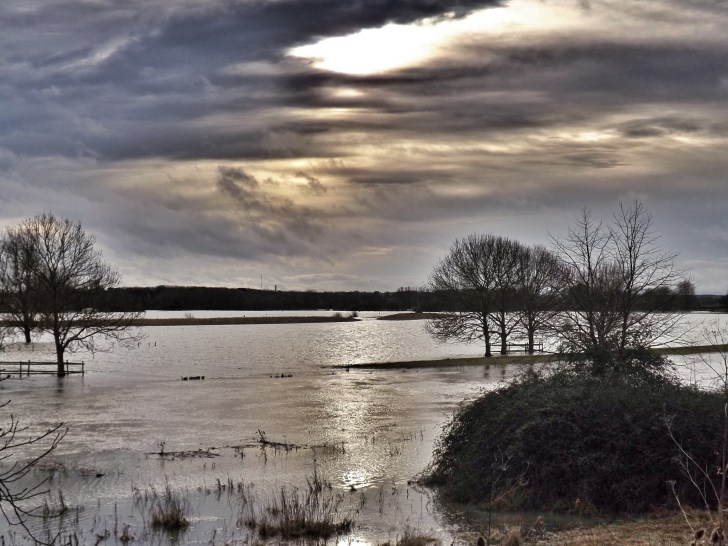
Water seeps across landscapes and lives… Flooded agricultural fields. Image: Broo_am | Flickr Creative Commons
Global freshwater systems are becoming increasingly variable and unpredictable, largely due to the impacts of human pressures and climate change (see, for discussion, this paper (pdf))
In recent years, there have been severe floods and droughts across Europe, changes in water chemistry and quality, and shifts in biodiversity due to the introduction and invasion of non-native species and the extinction of other species that once played an important part in ecosystem webs. These are broad-brush descriptions, of course, but these trends point to an increasing uncertainty in the pressures impacting freshwaters, and the resulting impacts on their health and diversity.
We know that increasing human pressures and climate change are likely to pose new challenges for water management, but it is difficult to fully predict what these challenges will be, and how and where they will occur. A key question, then, is how water management – both now and in the future – can cope with unpredictability and shocks?
A new study published in the Journal of Environmental Planning and Management assesses the potential of ‘adaptive co-management’ approaches for managing uncertainty in freshwater systems. A meshing of established co-management and adaptive management approaches, adaptive co-management is underpinned by the idea that humans are part of nature, and that social and ecological systems must be managed as part of an interdependent whole.
You can read an introduction to the approach in a 2007 chapter written by Derek Armitage, Fikret Berkes and Nancy Doubleday here. Advocates of the approach suggest that adaptive co-management can help protect ecosystems whilst at the same time maintaining human livelihoods.
Adaptive co-management brings together members of local communities, resource users, managers and government to collectively decide on (and implement) priorities for management. This assimilation of different knowledge sets about the local environment is done within an adaptive framework for management, which can change in approach in response to new conditions: a process of ‘learning by doing’. This creates flexible management approaches which can react to new knowledge and environmental and social changes (e.g. invasive species, increased rainfall, pollution or water demands) in the future.
The authors of the new open-access study, Luke Whaley of Kings College London and Edward Weatherhead of Cranfield University, analysed existing English-focused research and policy documents to assess how government policy can create the conditions for effective adaptive co-management strategies.
Their analysis identified five policy conditions that could enable adaptive co-management for addressing uncertainty in water management.
1. An awareness of the diverse functions of water
Water provides many functions in addition to being a resource for human use. Although not mentioned by the authors, here the ecosystem service framework is useful in outlining these myriad functions: biodiversity habitat, water purification, flood protection, aesthetic inspiration and so on.
The authors suggest that a better understanding of the numerous ways that water supports and benefits human (and non-human) life can help foster a more sustainable environmental ethic among different communities in a catchment.
2. Openness to change and uncertainty
The authors suggest that policy makers need to be aware that freshwater systems are increasingly variable and prone to shocks and surprises. Modern ecology emphasises the dynamism and flux of natural systems, which rarely reach a fixed equilibrium state.
So, instead of attempting to restrict change and reduce uncertainty in freshwater systems (e.g. through building ever higher flood walls), new approaches emphasise ‘learning to live’ with change (e.g. restricting building on flood plains, installing early warning flood systems).
3. An emphasis on resilience and adaptive capacity
Resilience describes the ability of a social or ecological system to absorb disturbances while retaining the same basic ways of functioning. Resilience also indicates a system’s capacity to adapt to stress and change. Resilience can be both ecological (e.g. ability of biodiversity to cope with pollution) and social (e.g. the ability of communities to deal with flooding). A system’s potential to absorb shocks and stresses is often termed its adaptive capacity.
The authors suggest that policy makers should attempt to promote resilience and adaptive capacity in both ecological and social elements of freshwater systems. For example, this might involve planting artificial reed beds to buffer pollution, or providing information for local communities on how to deal with water scarcity.
4. Promoting participation across scales
Traditionally, environmental policy has been formed and administered by central government at a distance from the environments to be managed. Adaptive co-management, on the other hand, emphasises collaboration between stakeholders in a water catchment (public, businesses, local government, NGOs etc) to co-produce knowledge about the environment, and to participate in the decision-making processes which shape it.
5. A social process based on joint learning
Finally, under the adaptive co-management approach, water management is framed not just as a technical challenge, but as a long-term social process of ‘learning to live with water’. Individuals and communities brought into decision-making in a catchment can feedback on the success of management strategies, and even reshape understandings and framings of the issues at stake. This allows for management approaches to be flexible and adaptive to the ‘on the ground’ experiences of engaged communities living in a changing environment.
Adaptive co-management for uncertain freshwater futures
The study finds examples of these themes in current European water policy. The EU Water Framework Directive encourages stakeholder participation at the regional river-basin scale as part of efforts to improve water bodies towards ‘good’ ecological status. In addition, they attribute the influence of the UN’s Millennium Ecosystem Assessment in promoting ecosystem-based approaches to water management in the EU.
In their analysis of UK policy documents, the authors identify a failure on the part of policy-makers to adequately prioritise the place of social learning as a central mechanism by which water management can progress and adapt to changing circumstances. Similarly, they identify a weak focus on uncertainty and the need to live with it, instead of simply attempting to reduce or eliminate it, and a failure to link resilience and adaptive capacity to social dimensions of water management.
In summing up, Whaley and Weatherhead suggest that improving these two final deficiencies in current practice – social learning and social resilience and adaptive capacity – is a key step in improving water policy and management for an uncertain future.
By the River animation
One of the joys of sitting by a river or lake is the opportunity to see (and hear) diverse and beautiful birdlife in and around the water.
Freshwaters across the world provide a range of habitats for birds, in wetlands, floodplains and meadows, riparian vegetation and on islands. Some of Europe’s most charismatic birds rely on freshwaters: the booming bittern hidden amongst reedbeds, or the bobbing dipper, flitting between stones on the river bed.
A new animation by British artist Will Rose is designed to help beginners identify five species of birds commonly found along the riverbank. ‘By the River’ gives a short and colourful introduction to the blackbird, kingfisher, swallow, swift and goldfinch.
We see and hear a blackbird singing on a riverside tree, a kingfisher diving for fish, swallows and swifts whirling above the water’s surface feeding on insects, and goldfinches perched on teasels in riparian reedbeds.
By the River gives a brief and engaging window onto riverside life, which may well inspire new generations of freshwater explorers…
An ecosystem services approach for freshwaters
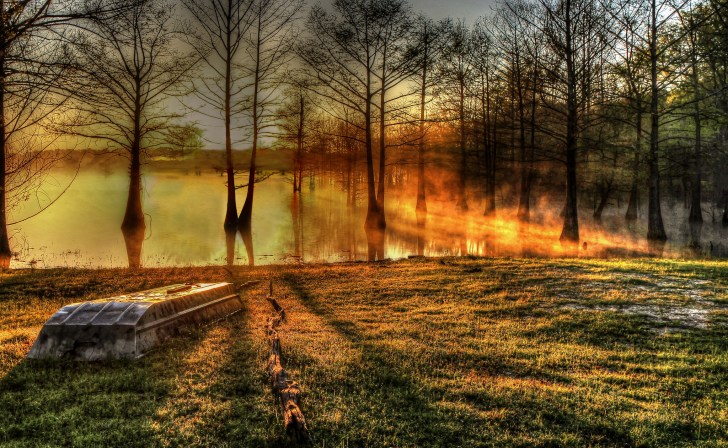
Floodplains can generate a range of ecosystem services. Image: finchlake2000 | Flickr Creative Commons
Ecosystem service approaches to valuing and protecting the natural world have become increasingly popular in the last decade or so, not least in freshwater policy and management.
The ecosystem service approach aims to place defined values on the benefits the natural world provides to humans – such as clean water, food supplies and places for recreation – as a means of strengthening environmental protection in policy and management decision-making.
What is an ecosystem service approach?
In a 2015 review, Julia Martin-Ortega and colleagues defined an ecosystem service approach as “a way of understanding the complex relationships between nature and humans to support decision making, with the aim of reversing the declining status of ecosystems and ensuring the sustainable use/management/conservation of resources.”
They outline four characteristics of this approach. Ecosystem services are: valued on the basis of their benefits to humans; are underpinned by ecosystem processes (e.g nutrient cycling); require interdisciplinary collaboration and stakeholder engagement at multiple scales in their mapping and valuation; and are incorporated into environmental policy and management decisions.
In a 2015 journal article, Stanford ecologist Anne Guerry and colleagues argued that ecosystem service valuations prompt us to better understand linkages and relationships between natural and socio-economic systems, which may encourage better, more sustainable ecosystem management.
The ecosystem services approach prioritises economic and social values over ethical imperatives for environmental stewardship and conservation. This has led to many debates (see this article by Kurt Jax and colleagues (pdf), for example) over the appropriateness of such a human-orientated means of valuing the natural world. In short, can placing economic values on nature really help strengthen the case for its conservation and protection?
Developing a standard ecosystem service approach for freshwaters
According to a new open-access journal article the application of ecosystem service concepts for water resource management has been hampered by the lack of practical definitions and methodologies. Writing in Environmental Science & Policy, a group of researchers from the European Commission Joint Research Centre (JRC) – including MARS science-policy expert Ana Cristina Cardoso – propose a new methodology to assess and value freshwater ecosystem services.
Cardoso and colleagues argue that whilst there is potential for the ecosystem service approach to complement existing freshwater policy (e.g. River Basin Management Plans in the EU Water Framework Directive), a lack of agreed definitions of ecosystem services and approaches for their valuation has limited uptake by practitioners and policy makers.
There are a number of major research projects seeking to develop standardised ecosystem service approaches. In Europe, two FP7 projects – OpenNESS and OPERAs – are seeking to develop methodologies for assessing and valuing services. Two more – MARS and GLOBAQUA – are working to understand how pressures on the health and status of European freshwaters affects their ability to provide ecosystem services.
A four-step approach for assessing and valuing freshwater ecosystem services
The new JRC study – developed within the MARS project – synthesised existing research to develop a new standardised ecosystem service approach for managing freshwater environments. From this literature review (and consultation with experts in the field), the team developed a four step approach which can be adopted by river basin managers.
Scoping
The first step is scoping the range of potential freshwater services. In this approach, the Common International Classification of Ecosystem Services (CICES) developed in 2015 is used. The CICES framework is split into three categories: provisioning, regulating and maintaining, and cultural services (see the MARS Factsheets for more detail on these).
Linking
The second step is to document the interacting links between pressures (such as pollution), ecological status (the ‘health’ of an ecosystem) and ecosystem service provision. This process is intended to support water management decisions which can bring maximum benefits to both humans and the environment.
In Europe, the key pressures on freshwaters are water pollution, over abstraction and human alterations to river channels. However, as we have written about previously, multiple pressures can interact and have potentially unpredictable outcomes for ecosystem health and service provision.
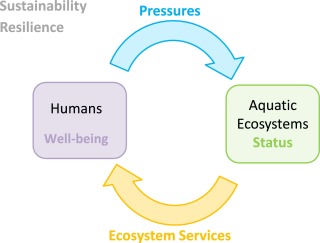 As shown in the figure to the left, the study describes a circular relationship between humans, pressures, ecosystems and ecosystem services.
It is important to note here that unsustainable use of ecosystem services (e.g. overharvesting of fish stocks, overabstraction of drinking water) can turn into a new pressure for the ecosystem.
The JRC team then developed a framework based on available evidence to link freshwater pressures with ecosystem services.
The diagram below gives an indication of how different pressures (along the top row) are likely to impact the services freshwaters can provide (left hand row)

Assessment
The third step in the proposed approach is to develop indicators which allow ecosystems services to be assessed and mapped. Indicators for ecosystem services are split into three groups: capacity, flow and benefit (shown in the diagram below)
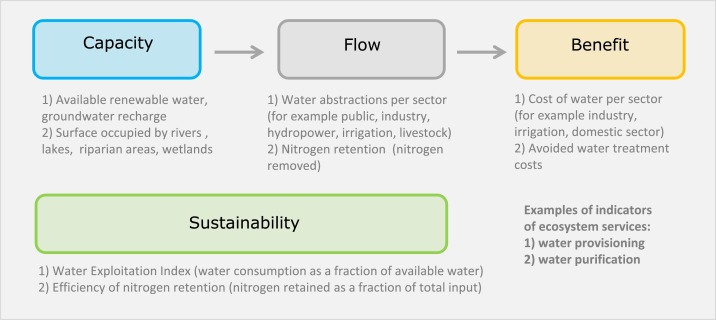
This ‘cascade’ model includes the capacity (or potential) of the ecosystem to deliver a service; the actual flow (or use) of the service; and the benefits it provides to humans. Quantifying capacity relies on biophysical data (such as groundwater recharge), while flow requires socio-economic data (such as water abstraction demand).
Benefits are valued in terms of human well-being, for example the water treatment costs that are avoided by the presence of self-purifying freshwater wetland ecosystem. This model includes measures of ecosystem service sustainability, such as the Water Exploitation Index.
Whilst this is based on ensuring the ongoing provision of services to humans, it does also place the ongoing functioning of the ecosystem at the heart of the framework. However, it is important here to note that ecosystem functioning for service provision isn’t necessarily that which generates health, diverse or ‘native’ ecosystems.
As Kent Redford and Bill Adams pointed out in a 2009 Conservation Biology editorial, zebra mussels are far better at filtering pollutants out of water than any ‘native’ UK species – should we therefore prioritise their (non-native, invasive) populations for the ecosystem services they provide?
The ecosystem service approach clearly needs to be used with care to ensure that both humans and non-humans benefit; and that the ecosystems and species that we value in non-monetary terms are properly conserved and restored as well as those with clear economic value.
Economic valuation
The fourth and final step is to estimate the economic value of the services provided by an ecosystem. There are four types of approach: cost-based, revealed preferences, stated preferences and benefit transfer.
The cost-based approach considers the costs that arise in relation to the provision of services. The revealed preferences approach refers to techniques that use actual data regarding individual’s preferences for a marketable good which includes environmental attributes. The stated preferences approach refer to methods based on structured surveys to elicit individuals’ preferences for non-market environmental goods. Finally, the benefit transfer approach makes estimates of service value based on similar ecosystems elsewhere.
Identifying the scale of provision of ecosystem services and the people who benefit from them is key for valuation. Beneficiaries can be identified at the water body or catchment level (e.g. communities who benefit from being able to swim, fish and birdwatch on a local lake; businesses who benefit from water availability), and potentially aggregated to larger, continental scales.
A key challenge in this process is appropriately valuing regulating and maintaining services (such as carbon sequestration) that may be difficult to fully measure, and may have benefits at far larger scales than they occur on.
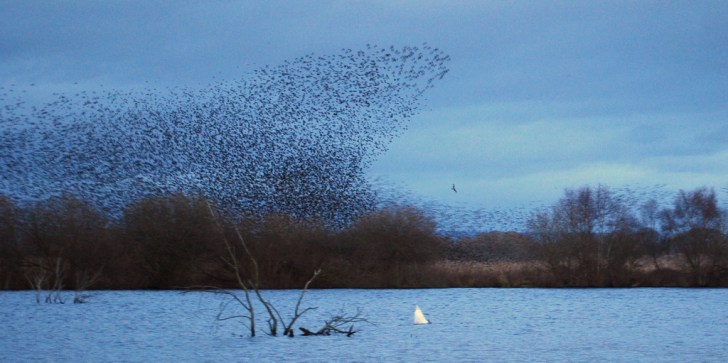
A buzzard disturbs a starling murmuration on Shapwick Moor, UK. Shallow lakes and wetlands often support rich biodiversity. Image: snapp3r | Flickr Creative Commons
How can an ecosystem service approach support the Water Framework Directive?
The Water Framework Directive is the policy mechanism through which EU states are bound to conserve and restore their freshwaters to ‘good ecological status’. The WFD implemented through River Basin Management Plans, which take into account the human, ecological, geological and climatic processes in river catchments to help protect, improve and sustainable use their water resources. The JRC authors conclude their article with two themes of how an ecosystem service approach might help strengthen the implementation of the Water Framework Directive.
Valuation
The first theme is based on valuation: the authors argue that “Quantifying the benefits (ecosystem services) that nature provides to people would help justify the investments in conservation and restoration of aquatic ecosystems.” By highlighting the important (but sometimes unnoticed) roles that nature plays in supporting our daily lives, the ecosystem service approach might then give a stronger ‘voice’ for environmental protection and restoration in decision-making.
This process of valuation is not straightforward. As mentioned earlier, the ecosystem service concept is based solely on human-centred valuations. Different stakeholders and beneficiaries might have different perspectives on the value of different services (for example, some cultural services which aren’t always accessible to all members of society). One key challenge here is in linking biophysical assessments of services (e.g. water availability) with economic valuations.
There are multiple values to be accounted for: not only economic, but social, cultural and ecological too. A narrow focus on economic value risks marginalising the intrinsic and intangible values of environments, and potentially prioritising ecosystem functions with instrumental benefits over those which foster ecological diversity.
The difficulty, of course, is bringing the qualitative (or descriptive) measures of these non-economic values into the same framework as quantitative (or numbers-based) valuations of the natural world. The new JRC / MARS approach proposed here is perhaps the strongest and most nuanced effort yet in seeking to integrate these different valuations.
Nature-cultures
The second concluding theme is based on the multiple connections between humans and nature emphasised by the ecosystem service valuation process. River Basin Management Plans in the WFD use an Integrated Water Resource Management (IWRM) approach, which aims to sustainably develop and manage water resources.
The JRC authors suggest that, “Before the ecosystem service approach, IWRM already stressed the need for connecting environment and human well-being and proposed the integration of multi-disciplinary knowledge from different sectors and stakeholders in the water management. The ecosystem services approach has significant similarities with IWRM.”
Both ecosystem services and IWRM negotiate the trade-offs between human needs and environmental sustainability, and require the interdisciplinary and cross-background participation of different stakeholders (from the public to policy makers) to document the multiple values ecosystems can provide. The authors suggest that the ecosystem service approach offers a framework for analysing the trade-offs among different services and the links to beneficiaries, which can complement existing IWRM approaches (including River Basin Management Plans).
Towards a new ecosystem service approach for freshwaters
The framework proposed in this study is rigorous and wide-ranging, whilst remaining clear, logical and accessible. It suggests new and productive approaches to freshwater management, and provides a holistic view towards the implementation of the Water Framework Directive, in linking multiple pressures, ecological status and the delivery of ecosystem services.
Whilst the ecosystem service approach is likely to always have critics, as this new study shows, it may help provide persuasive arguments for conservation and restoration, and help us better understand our interdependence with the natural world.
When is river restoration rewilding?

Rewilding the River Waal at Millingerwaard. Image: Twan Teunissen/ARK Nature
Last month we published an article on rewilding and environmental policy, asking the question: what might rewilding ‘do’ for degraded freshwater ecosystems that widespread and established restoration projects aren’t doing already?
This week Paul Jepson from Oxford University School of Geography and the Environment, author of the new rewilding policy brief with Rewilding Europe, responds to this question, describing a positive rewilding approach for freshwater management.
***
Back in May I presented a policy brief authored by Frans Schepers of Rewiding Europe and myself to a Rewilding Dorset meeting organised by Adrian Newton and Arjan Gosal of the University of Bournemouth. The county of Dorset is located on the South coast of Britain and a system of smallish chalk rivers flow into the natural harbour of Poole. The meeting brought together local conservation groups to ask: could we do rewilding and would we want to?
Our brief outlines seven emerging rewilding principles. One of these is the principle of “moving up a scale of wildness within the constraints of what is possible”. I like this principle because it is inclusive. From the perspective of ecological function many of our landscapes are in poor shape and this principle invites everyone to engage with rewilding, not just for those living or working in wilder landscapes.
At the meeting Fiona Bowles, presented the ecological restoration work of the Poole Harbour Catchment Initiative (PHCI) and outlined some of the obstacles they face in the efforts to restore river dynamics: the noise of a weir being legally designated as ‘heritage’ was one of the more absurd! At the end of her presentation she commented that based on what she’d heard the PHCI was already doing rewilding.
This suggestion troubled me. The work Fiona described was great but it hadn’t struck me as rewilding. On the one hand it flagged the prospect of the ‘move up a wildness scale’ principle being adopted to rebrand business-as-usual. On the other hand I am aware that restoration is writ large in the Water Framework Directive and that concepts of living rivers, ‘renaturation’ of small rivers, wetland restoration and practices of restoring fish migration, removing dikes etc. were influential in the rise of rewilding ideas. There are loads of such initiatives along the Rhine, Meuse, Danube, Oder, Elbe, Loire, Allier. Could it be that river managers have been rewilding for years but their work isn’t recognised as such?

Rewilding Millingerwaard. Image: Twan Teunissen/ARK Nature
I mentioned these ponderings to Freshwater Blog editor Rob St John who confirmed that river managers are always trying to improve degraded freshwater conditions but rarely, if ever, refer to this as rewilding. The question he put to me was: what does rewilding do (or imagine) that river restoration doesn’t?
In this blog I will attempt an answer. I am conscious that my knowledge of aquatic biology, freshwater conservation and river management is limited so this is a preliminary answer and offered up in the spirit of promoting discussion and reflection. My hope is that it might lead to a collective view on the extent to which restoration as guided by the WFD equates to rewilding.
Millingerwaard in the Netherlands sets a benchmark in my mind for what constitutes river rewilding. I visited the area a number of times with my students as part of rewilding study tours. For me it was an eye-opener in terms of conservation ambition and vision and a river restoration project radically different from anything I had seen previously.
One difference was the link between river restoration and high-level policy, in this case flood protection and climate adaptation. The River Waal was experiencing higher peaks flows and needed more space. The rewilding solution was to remove the summer dykes, peel of the unnatural clay layer to restore the old river morphology, reintroduce beavers and two big grazers (konik ponies and Galloway cattle) and let the area go. However, this necessitates the removal of the huge volume of clay that had built up behind the summer dykes.

Construction work at Millingerwaard. Image: Twan Teunissen/ARK Nature
The Millingerwaard solution was to do a deal with a brick company and allow the pace of restoration to be determined by the market and capacity of the factory. For me this connection between ecology and wider policy – climate change, flood management, new nature-based economies and so forth – is part of what makes restoration rewilding. In The Netherlands, now every brick that is being produced and sold is contributing to river rewilding, as it became a common policy that clay extraction in river floodplains is only allowed if it contributes to both river restoration and flood protection.
Johan Bekhuis, of Ark Nature Foundation, hosted our visits and introduced us to river restoration rewilding style. One of his stories has stuck with me, perhaps because it epitomizes the ‘restore the dynamics and species will rebound’ ethos of rewilding. Johan told how the black poplar (Populus nigra) was super-rare in the Netherlands until they started excavating the old river meanders which led to an abundance of black poplar seedlings appearing.
They realized that by restoring the river braids they were also restoring warm lapping water conditions and these were the conditions poplar seeds – carried down from Germany – needed to germinate. The same principle applied for other plant and insect species that had become extinct in the Netherlands but were present in the upper catchment and suddenly found a habitat to settle and reestablish.

New habitats at Millingerwaard. Image: Twan Teunissen/ARK Nature
This story illustrates another key distinction – restoration becomes rewilding when river engineering interventions are design to restore dynamic process rather than pre-specified conditions and outcomes. From this perspective rewilding is easy to distinguish from restoration in retrospect because it will have generated unexpected outcomes that extend knowledge or unsettled images of what a river is. For instance until I visited Millingerwaard, I thought European rivers had banks and that beaches and dunes were confined to the coast! This pleasant unsettling, the realization that river landscapes could be better than what we have, captures the hopeful ethos of rewilding.
It perhaps also expresses the rewilding challenge for river engineers: designing dynamic restoration projects that produced the unexpected and accepting that outcomes may not always be desirable. In practice this probably means engineering designs that create the ‘rough’ starting conditions for the river and its dynamics to then shape the landscape, rather than being two technical and specific on designs that deliver certain habitats, species and/or conditions.
Another difference from the river restoration projects I knew and had been involved in was the relaxed – and in many ways radical – attitude to recreation in the restoration area. Millingerwaard is located on a circular cycle route serving the city if Nijmegen and the project facilitated a community wilderness café, a beautiful tea garden and other successful enterprises to encourage visitors.
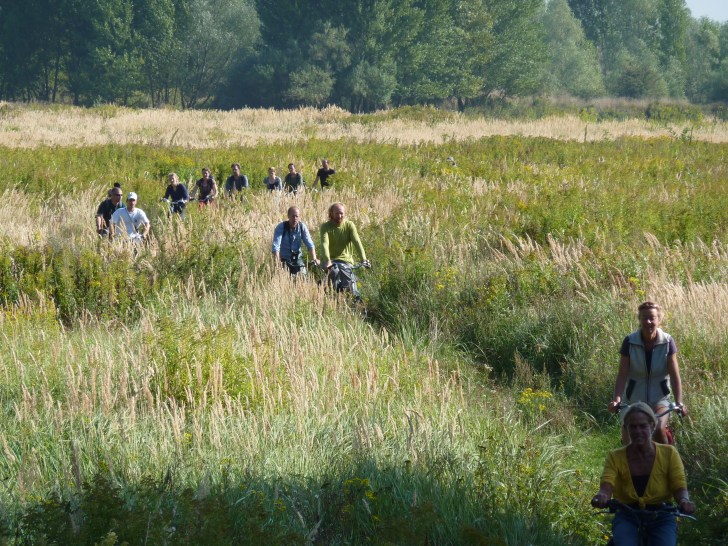
Cyclists in the river meadows at Millingerwaard. Image: Twan Teunissen/ARK Nature
Unlike many reserves in Europe there are no signs specifying routes and rules of behavior. People are free to do what they want and this seems to be working out just fine. Perhaps because most people worry about getting lost, or wet feet trails quickly formed and were followed by the majority. In addition because clay extraction and recreation commenced simultaneously the footpath routes are emerging in interaction with people and commerce. I was one of the ones who ‘went in’ and it was a wonderful primordial nature experience. I saw beaver but got scratched and muddy and felt the fear when I encountered a herd of wilded cattle occupying the high ground I needed to traverse.
George Monbiot termed such experiences “rewilding the self” and argued that as our societies become ever more regulated and efficient citizens need and seek out opportunities to reclaim our authenticity as human beings. The rise in popularity of wild swimming can be understood as a manifestation of this sense of entrapment. Such ideas capture two additional factors that for me characterize river rewilding – an effort to interact with trends in society and culture and to create (or recreate) opportunities for citizens to choose how they wish to engage with landscapes and nature. Within reason of course!
So when is river restoration rewilding? I suggest it is when restoration focuses on restoring abiotic dynamics, restores trophic flows (e.g. fish migration) and levels (e.g riverine herbivores), embraces uncertainty, re-connects the river with wider policy and societal trends and unsettles. Or maybe it’s just a feeling – when those involved with a restoration project feel they are pushing the boundaries and re-imaging the possible.

The electric eel. Image: Ravas51 | Flickr Creative Commons
In March 1800, pioneering German naturalist Alexander von Humboldt observed a startling phenomenon during his travels in Venuzuela. He saw electric eels leap from the water of a jungle pool – which was running low in the dry season – to stun the bodies of wading horses with electric shocks.
Local people had developed an unusual method of ‘fishing’ whereby horses would be led into eel-filled pools, to be repeatedly attacked by the leaping fish which were said to exceed five feet in length. The eels would wear themselves out in the resulting melee, and the local fisherman would then collect their spent bodies without getting an electric shock.
Humboldt’s work is experiencing something of a renaissance – particularly in terms of his interdisciplinary approaches to understanding the natural world – and whilst the story of the Venezuelan electric eels remained relatively well-known, many scientists had doubted its veracity.
That is, until an American scientist Kenneth C. Catania made a chance discovery whilst conducting experiments with this remarkable South American fish. Catania found that when transferring electric eels (not actually a true eel, but a type of knifefish) from an aquarium to his experimental facilities, the fish would often leap from the water to ‘pounce’ on the approaching net.
“It would press its chin against the handle and explode out of the water upwards along the handle towards my hand. I was wearing gloves, so I wasn’t in any danger of being shocked, but it was a pretty shocking experience, anyway,” Catania told the National Geographic.
Writing in a newly published article in Proceedings of the National Academy of Sciences, Catania describes how electric eels would discharge high-voltage pulses of electricity through their chin during these leaps. The 600 volt pulses emitted could incapacitate an attacking human or horse.
This leaping strategy allowed the eels to focus their electric shock onto their target, without it being dissipated in surrounding water. Slow-motion film taken by Catania shows how eels would bend their necks ‘in flight’ to ensure the maximum contact between their highly-charged chin and the target.
The leaping behaviour observed by Catania is likely to be a defensive strategy for the eels, which would be particularly important during dry periods (like Humboldt observed in 1800) where fish would be stranded in dwindling pools. Male eels are known to guard their larvae in small jungle pools until the rains return. As such, the ‘leaping shocks’ are likely to provide a valuable defence against predators.
In the video above, you can see an electric eel leaping to shock a prop crocodile head. Each flash of the LED lights in the crocodile’s head represents the firing of pain receptors as a result of the eel’s electric shocks.
And in many ways, the story illustrates the beauty of scientific research: that a chance discovery in the lab can help illuminate (quite literally) a 200 year old story about remarkable animal behaviour. You can read the full journal article here.
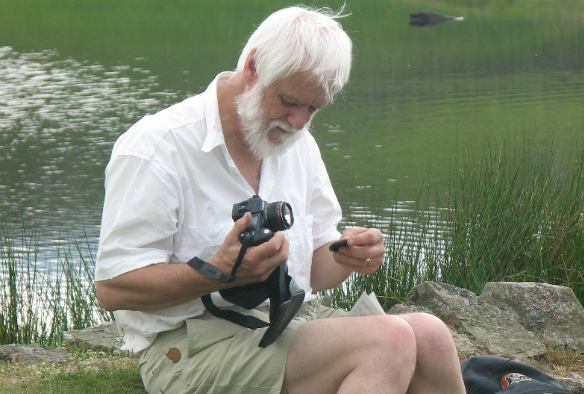
Professor Brian Moss. Image: University of Liverpool
On 27th May 2016, Professor Brian Moss – one of the most influential figures in modern freshwater ecology – sadly passed away. Regarded as a world-authority in shallow lake ecology, Moss was for many years the Professor of Botany at the University of Liverpool, before retiring in 2008.
Born in 1943 in Stockport, he spent early years exploring the landscape of the Peak District before undertaking undergraduate studies and a PhD in Botany supervised by Frank Round at the University of Bristol, and research overseas in Malawi and Michigan, USA.
Moss wrote over 244 publications in his distinguished career, including Ecology of Fresh Waters, published in 1980, which became a key textbook for an overview of freshwater ecology concepts, used by generations of students. Moss was known as a generous and inspirational teacher, a superb communicator and popular speaker (you can watch him lead a chorus of ‘Mud, Glorious Mud’ with a group of undergraduate zoologists here)
Moss was President of the British Phycological Society, Vice-President of the British Ecological Society and President of the International Association for Limnology. He was awarded the Association’s Naumann-Thienemann Medal in 2007 and the 2009 International Institute of Ecology Prize for excellence in ecology.
The result of the latter prize was a book entitled Liberation Ecology (2012). His University of Liverpool colleague Rob Marrs describes the unique book as “a scientific textbook written for the general public, using parallels in religion, art, music, and his mother–in-law’s washing line to get over complex issues of ecology and environment.”
In 2010 Moss was awarded the Institute of Ecology and Environment Management’s Medal for his lifelong contribution to the study of freshwater ecology. Moss was a committed advocate for environmental science and conservation, often emphasising the power of the individual and the community in catalysing positive change, but also had a wide range of other interests, particularly playing the double bass.
Two tributes from his friends and colleagues Professor Rob Marrs (here) and Professor Ken Irvine (here) give full insights into a life extremely well-lived.
Brian Moss, freshwater ecologist: July 6th 1943 to May 27th 2016.
Uncharted waters? Steering a course between Leave or Remain for the UK’s rivers and lakes

Reflecting on water in the EU. Image: Symbolique 2006
On 23rd June, British voters will decide on the future of the United Kingdom’s membership of the European Union. The EU is an economic and political partnership of 28 countries (or member states) which was formed after the Second World War. The UK joined the then-European Community in 1973. The EU provides a ‘single market’ for people, goods and capital to move easily between member states, and sets rules and standards across a wide range of areas including industry, commerce and environmental management. By far the biggest EU expenditure is on agriculture, so the environment is, de facto, at the heart of the Union.
‘Brexit’ is the term given to the question of a British exit from the EU: a portmanteau of ‘British’ and ‘exit’. There are two competing official campaigns on either the side of the issue, each made up of cross-political party collectives of politicians and campaigners: Leave and Remain. Within, and alongside, these campaigns are numerous smaller campaign and advocacy groups (see, for example the wide range of groups on the ‘Scientists for the EU’ website)
Leave or Remain?
The Vote Leave campaign is predominantly focused on issues of immigration and open borders, and reducing perceived excessive EU bureaucracy, fees and trade rules. Broadly, the Vote Leave campaign wants an independent United Kingdom with stronger sovereignty, control over borders and immigration, and better autonomy over law-making, economic and trade decisions.
The Britain Stronger in Europe (or ‘Remain’) campaign argues that Britain is better off keeping its strong position within the EU. The Remain campaign cites the benefits to UK jobs, business and trade, workers rights and the NHS gained from EU membership. Significantly, the Remain campaign argues that Brexit would cause damaging uncertainty and instability in the UK economy, a sentiment that has been broadly echoed by organisations such as the World Trade Organisation, The International Monetary Fund, Organization for Economic Cooperation and Development, and Mark Carney, governor of the Bank of England.
Where is the environment in the debate?
Whilst neither side foregrounds the environment as a key political issue in campaign literature, both have discussed the environmental impacts of EU policy in recent weeks. The RSPB asked politicians from both sides of the debate to argue their case in terms of environmental impacts, and their interviews with MPs Caroline Lucas from Remain, and George Eustice from Leave, can be watched here.
For the Leave campaign, the EU Common Agricultural Policy (or CAP) and the Common Fisheries Policy (or the CFP) – both policies regulating the productive and extractive use of nature – have caused environmental and economic problems. The Leave campaign argues that both policies are wasteful and bureaucratic and have restricted the productivity of British farmers and fishermen. CAP has had a particularly negative effect on UK environments, increasing agricultural pollution and run-off and accelerating the decline of some bird populations through the farming practices it encourages. Attempts to address these impacts have been implemented through CAP Reforms over the last 20 years, which seek to encourage more environmentally-friendly methods of farming.
Focusing largely on fisheries policy, the Minister for Farming, Food and Marine Environment, George Eustice recently argued that the UK was ‘losing its voice’ in European environmental policy-making. Writing in the Evening Standard, Eustice argued that, “EU supporters make glib claims about having a seat at the table but when it comes to wildlife conventions we are losing our voice. Since the Lisbon Treaty it is now, extraordinarily, unlawful for the UK to speak and vote without first getting permission from the European Commission.” Eustice has also has made environmental deregulation a key part of the ‘Leave’ argument.
What the EU does for nature
On the other hand, it can be argued that EU membership has helped significantly modernise and improve UK environmental policy since the 1970s. Billions of euros have been spent on EU environmental research and policy (for example, through Framework Seven and LIFE projects) promoting conservation and restoration. EU directives have played a significant role in improving the quality of drinking and bathing water, the reduction of landfill waste, the reduction of emissions from power stations and the protection of habitats.
A recent House of Commons expert audit of EU environmental policy in the UK found that “the overwhelming majority of our witnesses also believed that the UK’s membership of the EU has improved the UK’s approach to environmental protection and ensured that the UK environment has been better protected.”
Ecosystems and species rarely conform to political boundaries, and the stresses and problems they face similarly tend to cross borders (take pollution along a huge river basin like the Danube, for example). Emerging environmental issues such as climate change and the spread of invasive species are inherently dynamic across large geographical areas. Cross-boundary EU environmental policies such as the Water Framework Directive and the Birds and Habitats Directives (or ‘Nature Directives’) have encouraged co-operation in the management of large-scale environmental issues across European countries.
At more local scales, the Natura 2000 initiative provides a network of protected areas across Europe for the continents most valuable and threatened species and habitats. Covering over 18 % of the EU’s land area and almost 6 % of its marine territory, Natura 2000 provides the largest coordinated network of protected areas in the world. UK Prime Minister David Cameron – a figurehead for the Remain Campaign – recently said that “EU membership underpins many crucial environmental protections in the UK, while amplifying our voice in the world on vital issues like cutting global emissions.”
And writing on the Brighter Green website, Green MP Caroline Lucas of the Remain Campaign said, “For all the advantages of EU membership, none stand out quite so clearly as the European Union’s role in protecting our environment. In many ways, it’s easy to see why working with our European neighbours makes sense. The threats our environment faces – from cross-border pollution, to overfishing in our seas and climate change – don’t respect national borders, meaning that solutions must span the divide between nation states too. Indeed, when it comes to protecting our environment, it seems to me that if the EU didn’t already exist – we’d have to invent it.”
EU freshwater policy: a broad success story
The protection and restoration of freshwater habitats, water quality and species populations is one of the big success stories of EU environmental policy. Speaking at the recent EU LIFE conference in Manchester, UK Environment Minister Rory Stewart said, “Through the EU we have improved more than 9,000 miles of rivers since 2010 and our water environment is in the healthiest state for 25 years. We are able to protect and enhance the environment far more effectively if EU countries continue to work together.”
Over recent decades, industrial pollutants reaching rivers and lakes have been significantly reduced, both in the UK and across Europe. Similarly, air pollution in the UK resulting from harmful emissions such as sulphur and nitrogen oxides has been significantly reduced in recent decades as a result of EU policy such as the Convention on Long Range Transboundary Air Pollution. This has caused a reduction in acid rain and reversal of the acidification of freshwater ecosystems.
Three reports on the environmental consequences of the referendum
In recent months, a number of reports which assess the possible environmental consequences of a Leave vote for UK environments have been published. In March, a report by the Institute for European Environmental Policy (IEEP), commissioned by WWF UK, the RSPB and The Wildlife Trusts suggested that, “It is likely that a potential UK departure from the EU would leave the British environment in a more vulnerable and uncertain position than if it were to remain as a member of the EU.”
In April, an Environmental Audit Committee was appointed by the House of Commons to evaluate UK and EU environmental policy, and the potential consequences of Brexit. The published Audit synthesised statements given by experts from academia, UK and EU policy making, environmental stakeholder and NGO groups such as the RSPB and National Farmers Union.
The Audit concluded that,
“Despite the key role that the EU has played in UK environmental policy, relatively little appears to have been done by way of planning in the case of the UK leaving. None of the witnesses to our inquiry made an environmental case for leaving the EU. The UK Government’s view is that this would trigger a “long and tortuous” negotiation. There are, therefore, significant unanswered questions about what relationship a UK outside the EU would have with it and with the rest of the world, just as there are unanswered questions as to how our relationship with the EU might develop.
Nonetheless, two points were made to us repeatedly. Firstly, the UK would still need to meet international environmental commitments made in the UN and elsewhere, many of which are reflected in EU law. Secondly, a UK outside the EU would still have to comply with some aspects of EU environmental legislation, particularly if it wishes to secure preferential access to the Single Market, but with significantly less ability to influence the process of its development.”
Finally, a report by a group of UK academics commissioned by the Economic and Social Research Council outlines the three likely possibilities of the Referendum vote: Remain; Leave (‘Norwegian’ Option); and Leave ‘Free Trade’ Option.
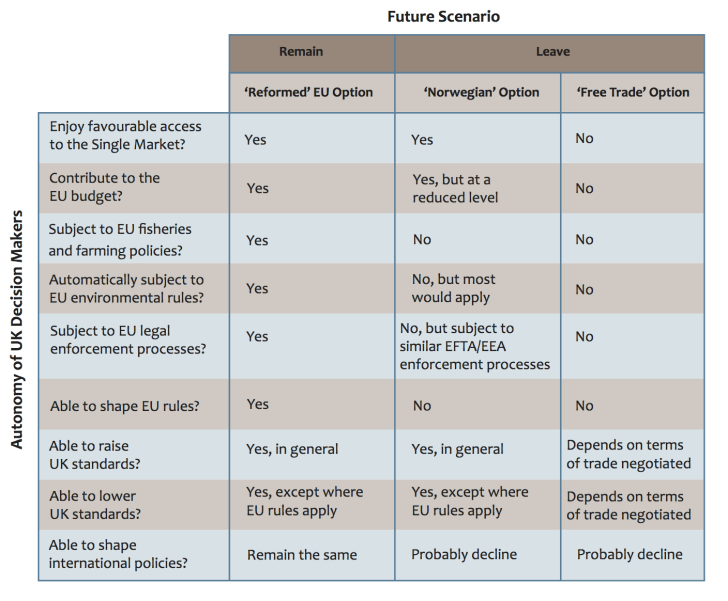
Three scenarios following the referendum. Image: ukandeu.ac.uk report
The ‘Norwegian’ Option describes how, following a Leave vote, the UK could apply for membership of the European Free Trade Area (alongside Norway, Iceland, Switzerland and Liechtenstein) to participate in the European Economic Area trading bloc. Under this option, many existing EU rules would still apply, yet the UK would have little say in how these are shaped or enforced. Most existing EU environmental rules would continue to apply apart from those covering bathing water, habitats and birds, and some aspects of climate legislation and the Water Framework Directive. The Common Agricultural Policy (CAP) and the Common Fisheries Policy (CFP) would no longer apply. The ‘Free Trade’ option describes how, following a Leave vote, the UK would remain independent from the EU and need to negotiate new trade and political relationships with other European countries.
Uncharted waters? How the referendum could affect UK rivers and lakes
What do these reports have to say about the possible implications of Brexit for UK freshwaters? The overarching theme is one of uncertainty: chiefly in how UK environmental policy and management can be significantly rearranged following a Leave vote, whilst environmental protections and regulations are maintained. Under a ‘full’ exit, it is conceivable that environmental standards and planning regulations may be relaxed, potentially to give UK business and industry competitive advantages in new trading agreements. However, the environmental costs could be substantial.
Prof Steve Ormerod is well placed to comment on the environmental implications of Brexit – as Chairman of Europe’s largest wildlife charity, the RSPB, and a leading freshwater ecologist, he says,
“The major environmental NGOs are clear and unanimous in their perspective: while none is telling its members how to vote in the referendum, the Wildlife Trusts, Buglife and the heavyweight international players WWF and RSPB have made clear that the UK’s environment would be safer if the UK remained part of the European Union.
Three key arguments for them are i) the international needs of nature conservation and climate change mitigation; ii) clear evidence that the major EU Directives deliver for nature with more teeth than flimsier conventions such as Ramsar or the Bern Conventions and iii) the deregulatory agenda of the ‘Leave’ campaign, which could see effective nature protection stripped away (see this recent RSPB blog for more information).
In freshwaters, too, the evidence is that EU regulation has been effective. Our own evidence shows how controls on air pollution from the Large Combustion Plants Directive (88/609/EEC) helped to accelerate recovery from the effects of acid rain over large areas while Britain’s urban rivers have improved substantially since implementation of the EU Urban Wastewater Treatment Directive in 1991 (91/271/EEC) (Vaughan & Ormerod 2012). The Water Framework Directive is very likely to spur similar improvements.
The UK’s government is held to account by these and other Directives in ways that our own regulators seem increasingly unable to attain.”
Freshwater management in Europe is significantly shaped by the Water Framework Directive, which requires member states to manage water quality to a ‘good’ standard within river basin areas. Adopted in 2000, the WFD is underpinned by ‘daughter directives’ on improving ground water, urban waste water; drinking water and bathing water; and strengthened by related nitrates and integrated pollution control directives.
The WFD would still (largely) apply under a ‘Norwegian’ exit, but not under a full exit. UK freshwater managers and planners would need to work with new management strategies that replace the existing River Basin Management Plans, and the potential to mobilise funding, expertise and experience for water management with expert groups across the continent would be negatively affected.
One of the key advantages of the Water Framework Directive is that it allows for governments, water managers and other stakeholders to work in dialogue to systematically set long-term European goals for environmental management. The WFD is not perfect (see Daniel Hering and colleagues writing on its success and failures in 2010), but it is one of the strongest and most effective pieces of European environmental policy, which is helping catalyse projects that improve water quality and freshwater ecosystem health, both in the UK and across Europe.
After a full exit, UK freshwater organisations would no longer be able to apply to pots of European money such as LIFE to fund their work, and would likely be reliant on government and private funding instead. The LIFE initiative has co-funded 237 projects in the UK since 1992, to a total value of €528.4 million, allowing conservation groups such as the RSPB to develop conservation projects.
Calm or troubled waters?
The key theme running through this debate is the uncertainty of a Leave vote: chiefly, what would replace the networks of protected areas, environmental legislation, funding and European research projects that help provide strong protection and restoration for the UK’s freshwaters?
A Leave vote would not necessarily cause the collapse of freshwater conservation efforts in the UK; of course there are many aquatic scientists, campaigners and conservationists with vast experience and expertise who would doubtless advocate for new conservation and restoration efforts. Such efforts would need to work within the priorities of an independent government administration, which given George Eustice’s recent comments, is likely to push through environmental deregulation.
The big issue highlighted in every report mentioned here is the time-lag in transitioning existing conservation efforts from working within comprehensive (and broadly successful) EU policies and standards to those decided by a newly independent government. The danger here, of course, is that in this process, strict and strong EU environmental standards and protections may be relaxed, leading to a potentially uncertain future for UK freshwaters.
An introduction to freshwater multiple stressors and the MARS Project (now with subtitles!)
Last year, the EU MARS project produced a short video explaining the growing problem of freshwater multiple stressors.
Multiple stressors describe the combinations of environmental impacts like pollution, floods and drought that place stress on the health of an ecosystem. The interactions and impacts of multiple stressors can be extremely complex, and often unpredictable.
Featuring footage from freshwaters across Europe, and expert interviews with MARS scientists Anne Lyche Solheim and Steve Ormerod, and Anders Iversen from the Norwegian Environment Agency, the film provides an introduction to the problem of multiple stressors, and how they are being addressed in European science and policy.
The film has recently been subtitled, meaning that the narration text can be followed without the need for sound. You can watch the video above, and turn on subtitles using the ‘CC’ button in the bottom bar.
Can rewilding reinvigorate European nature policy?

Reflecting on rewilding (Image: Per Harald Olsen)
Rewilding is a concept that has increasingly captured the attention of environmentalists and the public across the world. Broadly put, rewilding projects attempt to restore natural ecological processes in degraded ecosystems, and often to reintroduce flora and fauna that has become locally extinct.
In this way, rewilding approaches often draw from ecological theories which emphasise ecosystem processes, disturbance and uncertainty. A subtle, but important, distinction between rewilding and restoration ecology, then, is the openness in rewilding to new and different landscape trajectories when functional processes (see, for example the ‘ecology of fear‘ in Yellowstone following wolf reintroduction) are reinstated.
Restoration projects, on the other hand, frequently define a set of compositional targets for restoration – specific habitats, species or ecological quality targets, for example. Rewilding takes inspiration from past environments without necessarily attempting to recreate them, and often takes a landscape-scale approach to encouraging interconnected and dynamic ecosystems across wide geographical areas.
Of course, rewilding shares many approaches, practices and goals with restoration, and any differences in approach and outcome may be seem as only semantic. Indeed, rewilding is often framed as a progressive, experimental, hopeful, or even unrealistic, branch of restoration ecology. But through emphasising the value of wild environments, rewilding is increasingly catching the attention and imagination of wide public and academic audiences.
The question is: what can rewilding ‘do’ for degraded ecosystems that widespread and established restoration projects aren’t doing already?
A new policy brief produced by Rewilding Europe and Paul Jepson from Oxford University School of Geography and the Environment argues that rewilding approaches can reinvigorate European environmental policy, and extend and improve existing restoration approaches. In ‘Making Space for Rewilding: Creating an enabling policy environment‘, the authors frame rewilding as a ‘logical next step’ for the development of EU policy, and suggest how policy spaces for rewilding might be encouraged in the future.
Paul Jepson explains, “We need new concepts and innovation in policy for nature conservation to regain ground. Rewilding presents an opportunity to shift gear from protection to restoration, upgrading ecosystems, improving network connectivity and creating new value for people”
The authors carried out interviews with ten experts in EU nature policy to explore the potential role of rewilding approaches in environmental policy, the Nature Directives, wilderness and ecosystem restoration. The resulting policy brief identifies how rewilding might contribute to existing policy frameworks such as the Water Framework Directive, and a Trans-European Green Network (TEN-G). Notably, the authors suggest rewilding as important part of policy approaches seeking to reach the 15% restoration target committed to in the EU 2020 Biodiversity Strategy
Frans Schepers, Managing Director of Rewilding Europe suggests that “There is huge potential in Europe for rewilding and large landscape restoration. Through this lens we can imagine a pan-European network of sites that capture the public imagination and ‘brand’ different regions of Europe, with a positive impact of creating a European identity.”
Rewilding is a term rarely heard in debates over freshwater ecosystems. Restoration is the dominant approach and discourse, with projects seeking to reverse the damage done by humans to rivers and lakes over many decades, even centuries. Restoration is at the centre of the EU Water Framework Directive, which requires member states to improve the ecological health of their freshwaters to ‘good’ status.
Perhaps the relative absence of freshwater rewilding discourse (at least compared to terrestrial environments) is that aquatic life is often invisible or hard to see without specialist equipment. This means that the ‘charismatic‘ animals that often help legitimate and communicate rewilding projects on land (wolves, lynx or sea eagles in the UK, for example) are often difficult to see in freshwater environments. One notable exception, of course, is the European beaver, which is being reintroduced (although not always officially) as part of a trial rewilding project at Knapdale in Scotland.
It could be argued that a key element of any rewilding practice is imagination: not only to imagine what the past might have been, but more importantly what the future could be. This is a hopeful environmentalism, which sits within (and at odds with) wider contexts of debates over the Anthropocene, which emphasise the role of humans as (largely negative) architects of the Earth system.
Accordingly, does the lack of visibility of freshwater life, and the invisible threats of dissolved and minute pollutants (as opposed to, say, deforestation or development on land), mean that rewilding discourses will remain marginal in freshwater ecosystem management?
To return to our first question (and one, not entirely addressed in this short brief) how might the philosophies and practices of rewilding extend, or even reinvigorate, a European freshwater policy system which already places great emphasis on restoration?
Finally, how can rewilding philosophies which emphasise dynamic and potentially uncertain ecosystem trajectories be integrated into policy-making processes based on ecological targets and management plans?
We will publish a special feature with Paul Jepson in the coming weeks to expand on these questions and explore the potential value of rewilding as concept and practice for EU freshwater environments.










 The Freshwater Blog