Are Pablo Escobar’s hippos restoring ‘lost’ ecological processes to Colombian freshwaters?

When Pablo Escobar died in 1993, the drug kingpin left behind – amongst other things – a private zoo on his Hacienda Nápoles estate in northern Colombia. Whilst Escobar’s elephants, lions, giraffes and other animals were transported to other zoos when the estate was seized by the Colombian government after his death, four hippopotamuses were left behind.
The hippos – of which Escobar was said to be particularly fond – were deemed too dangerous and aggressive to move, and were left where they were. As the estate became neglected and overgrown, the hippo population at Hacienda Nápoles grew, gradually colonising artificial lakes and the Magdalena River.
It is now estimated that there are between 50 and 80 feral hippopotamuses living in Northern Colombia, with sightings of the animals taking place nearly 100 miles away from Hacienda Nápoles. One study suggests that by 2050, the wild Colombian hippo population could rise to between 800 to 5,000 animals.
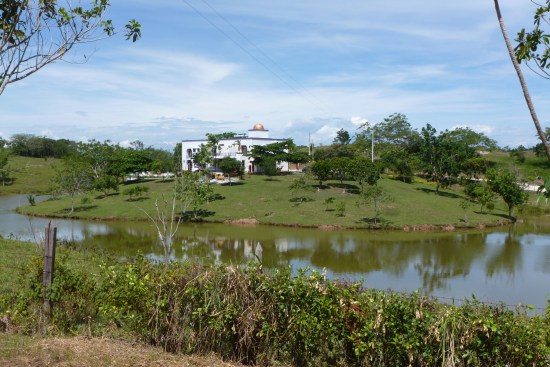
Hippos are not a ‘native’ species in Colombia: there is no historical record of their presence here, or indeed anywhere in the Americas. The Hacienda Nápoles hippos have thus been called “the world’s largest invasive animal.”
There are ongoing debates about the ecological impacts of the hippo poplution on freshwater ecosystems around Hacienda Nápoles. Hippos are ‘ecosystem engineers’, meaning their activities modify and maintain the environments in which they live.
In Africa, this can have positive ecological impacts: hippos bring significant amounts of nutrients in freshwater habitats by depositing faeces after grazing on surrounding grasslands, often supporting aquatic biodiversity. However, too much hippo faeces can cause water bodies to become toxic and eutrophic, and the sediment they stir up can further reduce water quality.
Either way, it appears that, for now at least, the Hacienda Nápoles hippos are here to stay – not least because removing them would be such a difficult and potentially dangerous operation. However, an innovative new study suggests that despite their ‘invasive’ tag, the Colombian hippos may be restoring ecological processes which have not been present for over 11,000 years to the freshwaters they colonise.
Writing in PNAS, a research team led by Erick Lundgren, argue that introductions of large herbivores – such as the Colombian hippos – have restored ecological processes relative to those found in the Late Pleistocene (roughly 130,000-11,000 years ago) in a number of landscapes globally.
The authors argue that the hippos share numerous ecological traits with an extinct giant llama species, Hemiauchenia paradoxa, which once grazed Colombian grasslands. The hippos also share traits and habitat with a large semi-aquatic rhino-like mammal called Trigonodops lopesi.
The authors compared key ecological traits such as body size, diet, fermentation type and habitat in herbivore species which lived before the widespread Late Pleistocene megafauna extinctions, more than 11,000 years ago.
“This allowed us to compare species that are not necessarily closely related to each other, but are similar in terms of how they affect ecosystems,” Lundgren, a PhD researcher at the University of Technology Sydney (UTS) Centre for Compassionate Conservation (CfCC), said. “By doing this, we could quantify the extent to which introduced species make the world more similar or dissimilar to the pre-extinction past. Amazingly they make the world more similar,” Lundgren added.

In neither case do the Colombian hippos share all their ecological traits with their extinct counterparts. The giant llama (Hemiauchenia paradoxa) did not live in aquatic habitats, and the rhino-like mammal (Trigonodops lopesi) does not share the hippos’ digestion characteristics.
The point the study authors make, however, is that the ‘invasive’ Colombian hippos and other species across the world are restoring ecological processes to landscapes where they have been lost due to the extinction of large herbivores thousands of years ago. A process-led approach to environmental restoration has been advocated by initiatives such as the Pleistocene Park in Northern Siberia.
As is often the case in debates over the ‘nativeness’ and ‘invasiveness’ of different species, the impulse to look to historical ecosystems to set baselines for conservation and restoration can often reveal a complicated and dynamic ecological reality. Viewed through the lens of the study, the ‘invasive’ hippos could be understood as participating in an inadvertent functional ‘rewilding’ of the Colombian freshwater ecosystems.
Senior author Dr. Arian Wallach from the UTS CfCC says, “We usually think of nature as defined by the short period of time for which we have recorded history but this is already long after strong and pervasive human influences.”
“Broadening our perspective to include the more evolutionary relevant past lets us ask more nuanced questions about introduced species and how they affect the world. We need a complete rethink of non-native species, to end eradication programs, and to start celebrating and protecting these incredible wildlife,” Dr. Wallach said.
+++

Water temperature is an important variable in lake ecosystems across the world. Variations in water temperature influence a wide range of environmental patterns and processes, including species distributions, growth rate, phenology, food webs, and greenhouse gas emissions.
Predictions of future climate change suggest that lake temperatures are likely to warm in many places, altering ecosystem health and functioning. Understanding and modelling lake water temperatures is thus a key step for freshwater scientists working on climate change resilience and adaptation.
However, until now, there has been no global classification of water temperature into ‘lake thermal regions’ to support this work. A newly published study in Nature Communications addresses this shortfall.
Professor Stephen Maberly from the Centre for Ecology & Hydrology, UK and colleagues used satellite data to identify nine different lake thermal regions across the world. They grouped global lakes based on seasonal patterns of their surface water temperatures. The coldest thermal region includes lakes in Alaska, Canada, Siberia and China, and the warmest covers lakes in equatorial South America, Africa, India and south-east Asia.
“Thanks to cutting-edge analysis using satellite images of more than 700 lakes, taken twice a month over 16 years, we produced the first global lake temperature classification scheme,” says Prof. Maberly. “By combining this with a lake model and climate change scenarios we were able to identify that northern lakes, such as those in the UK, will be particularly sensitive to climate change.”
The study is the result of a collaboration between researchers from the Universities of Dundee, Glasgow, Reading and Stirling and the Dundalk Institute of Technology.
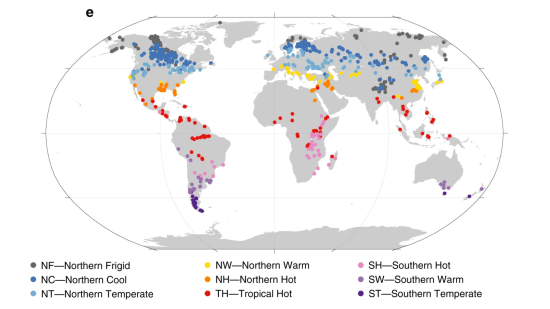
The research team used climate change models to predict that under the most extreme climate change scenario (Representative Concentration Pathway 8.5), global lakes would be on average 4°C warmer, and 66% would be classified in a warmer thermal regime. Under low (RCP 2.6) and medium (RCP 6.0) future climate change scenarios, 12% and 27% of lakes would be shifted into warmer thermal regimes.
Under the most extreme climate change scenario, the research team predict that there will be a 79% reduction in the number of lakes in the coldest and northern-most thermal regime by 2100. In other words, warmer waters due to extreme climate change could cause the disappearance of over three-quarters of unique sub-polar lake ecosystems over the next century.
Even if climate change is less extreme than this scenario, there are still likely to be negative effects on cold-water species and ecosystems. “Cold-water fish species in particular can be stressed by warmer temperatures,” explains Prof. Maberly. “The potential negative impact on salmonids such as salmon, trout and Arctic charr, for example, is concerning because they play a central ecological role within food webs and also have great economic importance.”
Professor Andrew Tyler of the University of Stirling, who led the overall project, GloboLakes, says, “This is an example of pioneering UK-led research that has delivered the capability to monitor our inland waters at the global scale from satellite based platforms. This is not only yielding new insights into the impacts of climate change, but also the evidence base from which to better manage these ecologically sensitive environments and mitigate against the effects of change.”
+++
An app to classify lakes into the nine thermal regions is available in the R programming language at GitHub.

Climate change is increasing the frequency and intensity of extreme weather across the world. High winds and heavy rain during storm events can significantly affect freshwater systems. However, what is not yet fully understood is how extreme weather affects the health of lake ecosystems.
Freshwater scientists know that storms can alter physical processes in lakes such as water flows from tributaries, mixing in the water column, sediment disturbance and water temperature. At the moment though, scientists only have a limited understanding of how ecological processes – particularly those involving algae at the base of food webs – are affected by storms.
A new study from a global team of scientists warns that lakes around the world may undergo significant ecological shifts in response to extreme storms as a result of ongoing climate change. They state that there is a pressing need for research to inform adaptive conservation strategies.
“Though it is clear that storm events can affect water quality and wildlife in lake ecosystems, we need to develop a clearer understanding of where and when the impacts of these events might be most and least severe,” said co-author Dr. Stephen Thackeray from the Centre for Ecology and Hydrology, UK.
“If extreme weather events significantly change carbon, nutrient, or energy cycling in lakes, we better figure it out quickly,” said lead author Dr. Jason Stockwell, from the University of Vermont, USA, “because lakes can flip, like a lightbulb, from one healthy state to an unhealthy one – and it can be hard or impossible to flip them back again.”
Extreme weather and algae communities in lakes
The new open-access study, written by Dr. Stockwell and 38 co-authors, is published in the Global Change Biology journal. It focuses on algae – or phytoplankton – the microscopic organisms which support virtually every freshwater food web. Phytoplankton are vital in lake ecosystems as they take up carbon dioxide, make carbohydrates, and release oxygen using sunlight through photosynthesis. Phytoplankton are also a valuable food source for many aquatic animals.
So how might we better understand how phytoplankton – and by extension, wider lake ecosystems – respond to extreme storms?
The study authors reviewed and collated evidence from thousands of existing scientific studies. They found that only 31 studies have ever investigated the effects of storms on phytoplankton communities, and that their results provide no clear picture of the relationship. Similarly, there appeared to be no clear trends in how phytoplankton responses differ by storm types, in different lake ecosystem types, or at different times of year.
A framework for understanding the effects of storms on lake ecosystems
In response, the authors develop a framework for understanding the effects of storms on lake ecosystems, in an effort to encourage and guide future research. The framework shows that the impact of storm events on lakes is not simply the result of storm strength at one point in time and space. Instead, a watershed-scale approach is required to map the different relationships between storm, lake and watershed attributes.
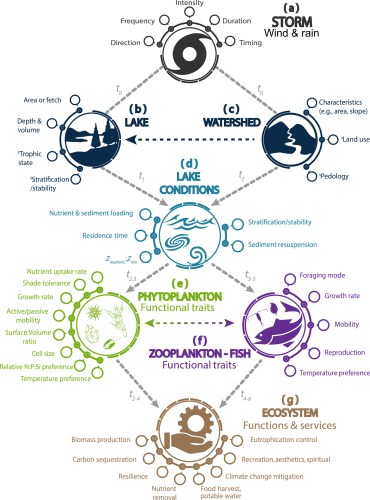
As the paper’s conceptual framework (above) shows, the extent to which a lake ecosystem is affected by storm events depends on the characteristics of the storm, lake and watershed. These in turn influence lake conditions such as nutrient pollution and sediment movement during the storm event.
These altered lake conditions can then influence the dynamics of phytoplankton and zooplankton at the base of the food web, which can then cascade through higher trophic levels of the ecosystem, potentially altering its health and functioning.
“This paper provides a compelling framework on understanding both direct and indirect effects of storms on lake ecosystems,” said co-author Dr. Lisette de Senerpont Domis from the Netherlands Institute of Ecology. “In a wind exposed delta area such as the Netherlands with a lot of shallow lakes impacted by agriculture we will likely experience some of the negative impacts of storms, such as algal blooms.”
New research collaborations and lake monitoring
The authors call for major new interdisciplinary collaborations to research storm impacts on lake ecosystems through networks such as the Global Lake Ecological Observatory Network. They outline the value of integrating watershed and lake physical models with biological models to better predict lake ecosystem responses to storms. They also highlight the importance of expanding long-term lake monitoring schemes, and using sensors that provide detailed data on ecological parameters during storm events.
“The framework we outline provides exciting opportunities for researchers from different disciplines to work as teams to identify the conditions and mechanisms by which storms are likely to have negative impacts on lake ecosystems,” said Dr. Stockwell. “We must quickly learn more—so we can better respond to the very real and pressing threat of climate change on lakes around the world. Without healthy lakes, we are sunk,” he said.
+++
An Emergency Recovery Plan for global freshwater biodiversity

2020 could be a pivotal year for the future of Earth’s biodiversity. In November, the world’s governments will meet at the Convention on Biological Diversity (CBD) conference to agree a new global deal to conserve and restore biodiversity.
Global freshwater biodiversity is in particular need of stronger and more effective policy and conservation action. Despite covering less than 1% of the Earth’s surface, freshwater ecosystems support around 10% of all known species, including one-third of all vertebrate species.
However, freshwater biodiversity has collapsed in recent decades. Freshwater species populations have declined by 83% globally since 1970, according to the 2018 WWF Living Planet Report, and now 27% of the freshwater species assessed for the IUCN Red List are threatened with extinction. It is estimated that freshwater habitats host more species per square kilometre than their land or oceans counterparts: yet freshwaters are suffering biodiversity declines two-to-three times faster.
WWF estimates that around 30% of global freshwater ecosystems have been lost since 1970. It’s not just plants and animals that rely on freshwaters – they’re vital for humans too, variously providing water, food, livelihoods, and flood and drought protection.

A major new scientific paper published in BioScience last week outlines an Emergency Recovery Plan for freshwater biodiversity declines, designed to influence discussions at the CBD conference in November. Developed through collaborations between scientists from WWF, International Union for Conservation of Nature (IUCN), Conservation International, Cardiff University and other institutions, the paper outlines a six-point plan to ‘bend the curve’ of global freshwater declines.
Based on contemporary scientific research and conservation strategies, the six key themes of the paper emphasise solutions for positive environmental change. They provide explicit recommendations for improving freshwater conservation and restoration in international agreements, particularly the CBD and the UN Sustainable Development Goals.
“Nowhere is the biodiversity crisis more acute than in the world’s rivers, lakes and wetlands – with over a quarter of freshwater species now heading for extinction. The Emergency Recovery Plan can halt this decades-long decline and restore life to our dying freshwater ecosystems, which underpin all of our societies and economies,” said Dave Tickner, WWF-UK Chief Freshwater Advisor and lead author on the paper.
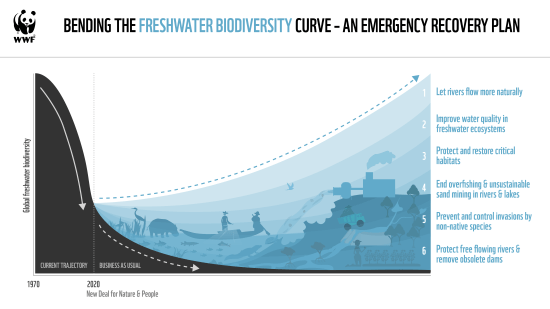
The six themes of the Emergency Recovery Plan are: letting rivers flow more naturally, reducing pollution, protecting critical wetland habitats, ending overfishing and unsustainable sand mining in rivers and lakes, controlling invasive species, and safeguarding and restoring river connectivity through better planning of dams and hydropower.
“The causes of the global collapse in freshwater biodiversity are no secret, yet the world has consistently failed to act, turning a blind eye to the worsening crisis even though healthy freshwater ecosystems are central to our survival. The Emergency Recovery Plan provides an ambitious roadmap to safeguarding freshwater biodiversity – and all the benefits it provides to people across the world,” said co-author, Professor Steven Cooke of Carleton University in Canada.
The Emergency Recovery Plan aims to influence global environmental policy in three ways. First, it recommends maintaining existing elements of agreements that are already aligned to the Recovery Plan, such as CBD Aichi target 9 on invasive species and SDG 6 on clean water and sanitation.
Second, it recommends amending or extending existing targets or indicators so that they better align with the Recovery Plan. For example, CBD Aichi target 11 and SDG 15.1 both aim to increase the extent of conserved and restored habitat, but the geographic scale of their designations don’t always suit the wide range of freshwater habitats – from vast river catchments to tiny ponds. Improving these designations could help improve how freshwaters are managed and protected by global policy.
Third, the Recovery Plan identifies major gaps in policies where key freshwater issues are overlooked or underrepresented. For example, there is currently no recognition of alterations to water flows and levels in the CBD Aichi targets.
Cutting-edge freshwater research is increasingly untangling the multiple pressures that affect the health of aquatic ecosystems, and it is vital that this knowledge is translated into policy. To achieve this globally, the authors highlight the need for better collaborations between policy makers, governments, NGOs, researchers, managers and wider stakeholders, all driven by the common desire to halt freshwater biodiversity declines.
“It would be easy to interpret this work as a further message of freshwater doom but it is in fact the opposite. It is a forward-looking plan, with specific areas of action, for how to address the 21st century challenges that our freshwater ecosystems face. It presents an opportunity for us to change the trajectory of biodiversity decline in turn supporting the health of the planet and the livelihoods of people,” said co-author, Ian Harrison, from the Moore Center for Science.
“We have the last opportunity to create a world with rivers and lakes that once again teem with wildlife, and with wetlands that are healthy enough to sustain our communities and cities, but only if we stop treating them like sewers and wastelands,” said Tickner. “This decade will be critical for freshwater biodiversity: countries must seize the chance to keep our life support systems running by ensuring freshwater conservation and restoration are central to a New Deal for Nature and People.”
+++
David Tickner, Jeffrey J Opperman, Robin Abell, Mike Acreman, Angela H Arthington, Stuart E Bunn, Steven J Cooke, James Dalton, Will Darwall, Gavin Edwards, Ian Harrison, Kathy Hughes, Tim Jones, David Leclère, Abigail J Lynch, Philip Leonard, Michael E McClain, Dean Muruven, Julian D Olden, Steve J Ormerod, James Robinson, Rebecca E Tharme, Michele Thieme, Klement Tockner, Mark Wright, Lucy Young, (2020) “Bending the Curve of Global Freshwater Biodiversity Loss: An Emergency Recovery Plan”, BioScience, https://doi.org/10.1093/biosci/biaa002
Insect populations on German stream have declined by 81% since 1960s due to climate change

Insect populations are in big trouble. A number of recent scientific studies have documented insect declines across the world, prompting a 2019 meta-analysis of the evidence by Dr. Francisco Sánchez-Bayo and Dr. Kris Wyckhuys to conclude that “almost half of [insect] species are rapidly declining and a third are being threatened with extinction.”
Aquatic insects – which number more than 55,000 species – are important in many freshwater food webs, with species found everywhere from tiny puddles to large rivers and lakes. However, like their terrestrial counterparts, aquatic insect populations are in decline, largely due to the effects of intensive agriculture, water pollution and, increasingly, climate change.
However, researchers have often found it hard to disentangle the effects of climate change on insect populations from those of other stressors. In this context, a new study uses a unique long-term dataset from a German stream located in a nature reserve to isolate the effects of a changing climate on the stream’s insect communities since the 1960s.
Their findings are startling. Writing in Conservation Biology, the research team state that insect abundance on the Breitenbach stream declined by 81.6% between 1969 and 2010. Over this period, water temperature in the stream increased by 1.88°C, and there was a general shift towards low water flows in increasingly dry years. Their study suggests that climate change has already significantly impacted freshwater ecosystems, even in protected areas where agricultural and urban stressors are minimal.
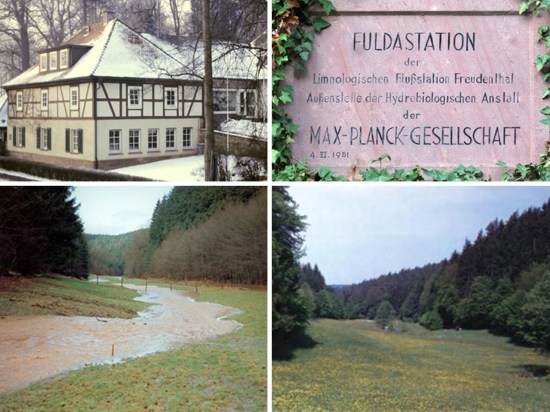
Lead author Dr. Viktor Baranov explains, “Our analysis is based on a unique long term dataset collected by the scientists at the Schlitz river station on the Breitenbach stream from early 1960 – though our particular dataset only starts in 1969 – until 2010. This dataset is uniquely detailed and based on the weekly collection of the aquatic insects from the large, greenhouse like emergence-traps installed over the stream and parts of the riparian zone.
“The Breitenbach is a tiny stream: 6.3km in length, with a catchment area of 8.3 km². It flows to the Fulda river, with entirety of the catchment sitting in the Breitenbach valley nature conservancy area. The site was therefore sheltered from direct anthropogenic impacts such as agricultural development and industrial pollution during the period of observation. Therefore, the dataset offered us a disentangled view of the climate change impacts on this freshwater ecosystem.”
The study is the result of a collaboration at the Department of River Ecology and Conservation, Senckenberg Research Institute and Natural History Museum Frankfurt, Germany between Dr. Baranov, Dr. Jonas Jourdan, Dr. Francesca Pilotto and Dr. Peter Haase, alongside Prof. Rüdiger Wagner from the University of Kassel, Germany.

Dr. Baranov outlines the importance of studying insects as a means of understanding wider environmental change, “Aquatic insects are providers of crucial ecosystem services such as river water purification, fertilisation of flood plains, and food sources for many other animals. They are therefore generally an ‘engine’ of lowland and riverine ecosystems. We can thus learn a lot about the state and health of the environment by observing changes in insect diversity and numbers.
“Environmental changes have led to the decrease of the aquatic insects by 81.6% in the Breitenbach stream. But we also observed an increase in richness (+8.5%), Shannon diversity (+22.7%), evenness (+22.4%) and inter-annual turnover (+34%). Moreover, the community’s trophic structure and phenology has changed: the duration of emergence increased by 15.2 days while the peak of emergence moved 13.4 days earlier.
Additionally, the trophic structure of the community has altered drastically: grazer, scraper and gatherer–collector species have decreased significantly in their relative abundance, while passive filter feeders and predators have increased. Increased temperatures and increasingly dry years appear to be the chief drivers of change in the insect community.”

Decades of intensive study at the Schlitz river station generated the rich datasets which allowed the researchers to analyse the environmental effects of climate change in the stream over time.
Dr. Baranov emphasises the importance of such ongoing long-term studies, stating, “Our findings would have been missed in shorter datasets, as most of the observed effects span decades. This study illustrates the value of the long term datasets in the study of the climate change effects on the freshwater communities, and the complex – and often non-linear – nature of community responses to the global climate crisis.”
+++
9th European Pond Conservation Network Conference announced
A note from Dr. Richard Walton:
We are thrilled to announce the 9th European Pond Conservation Network Conference which will be held at University College London over 18-22 May, 2020.
Responding to the considerable need to conserve European ponds, the conference will combine pond biology, hydrology and landscape ecology with pond conservation practice. We welcome and encourage both scientists and conservation practitioners to attend and present their observations.
Please visit the conference website for further information, registration details and to submit an abstract. The deadline for abstracts is 28th February 2020 and the Early Bird deadline for registration is 20th March.
We hope to see you at the meeting – a four-day celebration of ponds and pond people!
Kind regards,

Could listening to the underwater sounds made by freshwater life help us better document and protect aquatic ecosystems? A new special issue of the Freshwater Biology provides intriguing evidence to suggest that it could.
Acoustic monitoring has emerged as a key tool for ecologists and conservationists in recent years. Bioacoustics (the study of sounds produced by or affecting living things) and ecoacoustics (the study of environmental sounds relating to ecosystem processes) continue to grow in popularity as approaches to ecological monitoring.
These approaches centre on the idea of passive acoustic monitoring, or PAM, where researchers place autonomous acoustic sensors (aka microphones) in study sites to capture sound recordings of the environment over time.
The recordings – whether transcribed by human researchers listening back, or by computer algorithms – can then be used to calculate biodiversity metrics such as species abundance, behaviour and phenology. Technological advances increasingly make PAM an affordable, long-term and non-invasive ecological sampling approach for researchers: a ‘listening ear’ on a changing world.

However, the use of such acoustic monitoring techniques has yet to be fully explored or adopted in freshwater systems. The new special issue, edited by Dr Simon Linke, Dr Camille Desjonqueres and Dr Toby Gifford, outlines the opportunities acoustic monitoring offers to freshwater researchers and conservationists, in an effort to raise awareness of its potential.
“Monitoring freshwater ecosystems is time consuming and costly. Using acoustics enables us to observe what is going on 24/7,” says Dr Desjonqueres. “We took over the editorial desk of Freshwater Biology for an issue,” Dr Linke continues. “We invited the biggest names in the field to help us tackle some of the key steps towards operationalising acoustics in the freshwater realm.”
The special issue contains nine studies that investigate underwater acoustics (including the work by Ben Gottesman and colleagues which we covered last year), and three studies on water birds and frogs. Tracing a lineage of describing underwater sound back to Aristotle, the editors identify six key challenges for the widespread uptake of freshwater ecoacoustic monitoring.
1. Characterising sounds and linking them to organisms and ecosystem processes
Four main groups of freshwater organisms are known to produce sounds: amphibians, crustaceans, fish and insects. However, it is rare that researchers can visually identify the source of different sounds in underwater environments. Lowering a hydrophone beneath the water’s surface can be a surprising and disconcerting experience: the listener becomes immersed in the invisible soundworlds created by aquatic life. How might such soundscapes be translated into useful ecological metrics?
The editors highlight the need for more comprehensive catalogues of the sounds of freshwater life, which could offer researchers ‘reference recordings’ to compare to their own studies. In this issue, two studies develop such ‘soundtype references’ in Costa Rica and Northern Australia.
2. Improving automatic sound detection and analysis techniques
In addition to better identifying and cataloguing freshwater sounds, the editors highlight the need to improve how recordings are processed and analysed. Autonomous sound recorders have the potential to generate a lot of data, particularly if multiple recorders are used over an extended period.
Manual transcription of these recordings – whether through listening, or the use of visual spectrograms – is thus time-consuming. As such, automatic sound recognition technologies – which can identify organisms based on their sonic signatures – are needed.
In this special issue, two papers develop the basis of what editor Dr Gifford calls a “Shazam for fish” by documenting the calls of different species of piranhas in Peru, and the spawning calls of ‘love-sick’ burbot in northern Canada. Another study develops an automated detection algorithm for the underwater vocalisations of the spadefoot toad, whilst another uses a deep learning algorithm to acoustically detect the highly-endangered white-bellied heron in Bhutan.
3. Archiving and sharing freshwater acoustic data
As researchers make advances in identifying aquatic life through sound, it is important that their data is archived and shared amongst the global scientific community, the editors state. They write that, “While the Cornell Lab of Ornithology’s Macaulay Library contains some fish sounds (982, which represents 0.25% of all calls), these are mainly marine and from the 60s and 70s.”
Initiatives such as the Freshwater Information Platform are driving forward open-access sharing of datasets, and perhaps there is scope to develop their sound libraries in the future.
4. Understanding acoustic patterns across landscapes
The way that ecosystems and biodiversity vary across landscapes is called spatial heterogeneity by ecologists. Traditional ecological surveys account for spatial heterogeneity in their design, often by replicating study methods in different areas of a landscape.
The editors suggest that ecoacoustic methods have yet to adopt similar approaches. They suggest that this is due to the volume of data generated by ecoacoustic methods and the demands it places on computer analysis systems. In this issue, one paper uses a regular spaced set of hydrophones to show that acoustic activity of aquatic insects (Hempitera sp.) is higher in open water than vegetated areas.
5. Understanding acoustic patterns over time
Ecoacoustic methods offer researchers the potential to monitor ecosystems over long timescales, offering an insight into the diurnal and seasonal patterns of life that occur in them.
Two studies in the issue (here and here) highlight nightly aquatic insect activity patterns. The editors suggest that studies which seek to identify aquatic animals by their calls should focus on such times of day when activity is highest.
6. Making links between sound and ecological health
The end goal of all ecological assessments is to understand the ecological health and condition of a landscape. Whilst there are limits to the scope of this in freshwater environments (e.g. only 20% of fish are soniferous), the editors highlight three useful approaches.
First, changes in aquatic sound can indicate changes to the wider ecological community. Second, ecoacoustics can help us understand the effects of noise on aquatic ecosystems. Third, ecoacoustics could help the automatic detection of invasive species – such as the round goby – reaching an ecosystem.
Clearly, ecoacoustic techniques offer new opportunities for freshwater scientists and conservationists seeking to understand and protect aquatic ecosystems, and the wide-ranging and innovative studies in this special issue highlight their rich potential.
+++
Microplastic pollution could inhibit stream ecosystem functioning

Could plastic pollution affect how a stream ecosystem functions? According to a newly published study, the answer is yes.
Plastic pollution is rapidly growing in visibility as one of the key environmental concerns of this ‘Anthropocene’ age. Researchers around the world are increasingly focusing their efforts on understanding the effects that plastics – and particularly microplastics – might have on aquatic ecosystems.
As yet, however, this work has been largely focused on seas and oceans. Whilst there is a growing body of research on the effects of plastic pollution on freshwater ecosystems, there are still many unanswered questions.
The new study, led by Naiara López-Rojo, shows that microplastic pollution may cause significant effects on how stream ecosystems function. The research team used microcosm experiments (essentially glass jars filled with stream water) to study how different concentrations of microplastic pollution affected the growth of caddisflies, and the rates at which they decomposed leaf litter.
Leaf litter decomposition is a vital component of many stream ecosystems. Leaf litter – the leaves that fall into a stream from surrounding vegetation – is a key energy source for many invertebrates at the heart of stream food webs. Its decomposition – accelerated by invertebrates such as caddisflies – helps release carbon and nutrients to the wider ecosystem.
Recent studies show that microplastics are being found even in remote sites, carried on atmospheric currents. How might their presence affect stream ecosystems?

López-Rojo, from the University of the Basque Country, Spain, and colleagues, exposed caddisflies and leaf litter to different concentrations of microplastics in water. They found that microplastics were rapidly ingested into the bodies of the caddisflies – most likely through the ingestion of particles attached to leaf litter – and then excreted.
This finding is consistent with recent studies, such as that by Fred Windsor and colleagues in rivers in South Wales, UK, which show evidence of microplastic uptake by invertebrates.
López-Rojo and colleagues found that higher concentrations of microplastics caused increased caddisfly mortality – which increased 9-fold at the highest concentration. However, they found that altering microplastic concentrations did not significantly affect caddisfly growth.
The researchers observed that increasing the concentration of microplastics in the microcosms caused leaf litter decomposition rates by the caddisflies to decline.

The study, published in the journal Environmental Pollution, is short in length and based on a relatively small sample size (32 microcosms, observed over a number of weeks). So why are its findings significant?
First, it provides more evidence to show that microplastics can be rapidly ingested into the bodies of freshwater organisms, and thus potentially accumulate and move through the food web into larger animals. Second, it suggests that the functioning of stream ecosystems – in this case through the key process of leaf litter decomposition – could be inhibited by the presence of high concentrations of microplastics.
The authors highlight the need for better monitoring of microplastic pollution in stream ecosystems to understand the extent of the pressures it might exert. In particular, they suggest that more research is needed to understand how microplastic pollution might affect ecosystems already influenced by multiple contaminants and stressors.
What is clear is that microplastic pollution is a growing issue for freshwater conservation and policy. López-Rojo and colleagues’ study is likely to be only the latest advance in the ongoing scientific effort to document and unravel its effects on freshwater ecosystems.
Top 19 posts of 2019

In these first days of 2020, we look back over 2019 to collect 19 of our most popular posts of the year.
It’s been another good year for the Freshwater Blog, with our biggest audience yet. Thanks, as always, for reading. You can keep up to date with our posts, and add your voice to the debate, through our Twitter, Facebook and LinkedIn pages.
Happy 2020!
+++
Community-based conservation of arapaima and giant turtles in the Amazon Basin (January)

Arapaima are one of the world’s most unique freshwater animals. A true ‘megafauna‘ species, these huge fish (which can grow to more than three metres in length) are native to the to the Amazon and Essequibo basins of South America.
Last year, Brazil’s prestigious national science prize for the best PhD thesis was awarded to Joao Vitor Campos-Silva for his research entitled “Community-based management of Amazonian giants”. On a recent trip to Brazil, Paul Jepson – former manager of this blog with BioFresh, and now Nature Recovery Lead at Ecosulis – caught up with Joao to find out more (read more).
+++
Protecting and restoring Europe’s waters: the future of the Water Framework Directive (February)

A new survey of European water experts suggests that whilst the Water Framework Directive – the keystone of European Union water policy – provides a strong basis for the conservation and restoration of aquatic environments, there are three key areas for improving its future implementation. These include: monitoring and assessment, management measures, and policy integration.
Writing in the journal Science of the Total Environment, the researchers – led by Laurence Carvalho at the Centre for Ecology and Hydrology – evaluate the strengths and weaknesses of current WFD implementation, identify where innovation offers new opportunities for monitoring and management, and address potential interactions between the WFD and other policy frameworks. In so doing, they ask, “Is the WFD fit-for purpose after 18 years and what improvements should be made in future implementation or revision?” (read more).
+++
Global insect declines: 33% of aquatic species threatened with extinction (February)

Global insect biodiversity is in dramatic decline according to a new review of existing scientific evidence. Aquatic insects are particularly threatened, with mayfly, dragonfly, stonefly and caddisfly species all showing significant declines over recent years.
Population declines of terrestrial and aquatic insects – in 41% of all species – are roughly twice those estimated for other vertebrates (mammals, birds and amphibians – 22% of species). The total global mass of insects is falling by an average of 2.5% each year, the study suggests, with potentially severe impacts on ecosystems and their services – such as pollination – globally (read more).
+++
Microplastics from the 1950s found in London lake sediments (March)

Microplastics dating back to the 1950s have been found in a sediment core taken from the lake bed of Hampstead Pond No.1 in London, UK. Plastic pollution is frequently featured in the news as a contemporary, oceanic environmental problem. However, a new open-access study by Dr. Simon Turner from University College London and colleagues provides evidence of long-term plastic accumulation in urban freshwater environments.
Hampstead Pond No.1 is one of thirty ponds on Hampstead Heath in North London, dug in the 17th and 18th centuries as reservoirs. Other ponds on the Heath are open to outdoor swimmers, anglers and model boating enthusiasts. However, despite their location in a cherished area of urban green space, the new study demonstrates that the ponds have been receiving plastic pollution for more than 60 years (read more).
+++
Acoustic monitoring of freshwater ecosystems: Costa Rica study reveals diverse underwater soundscapes (April)
Freshwater ecosystems across the world are disproportionately threatened by human activity, causing ongoing losses of aquatic biodiversity globally. Many freshwater conservationists highlight the need for more comprehensive ecological monitoring and assessment programmes to better understand ecosystem changes, and to strengthen conservation initiatives accordingly.
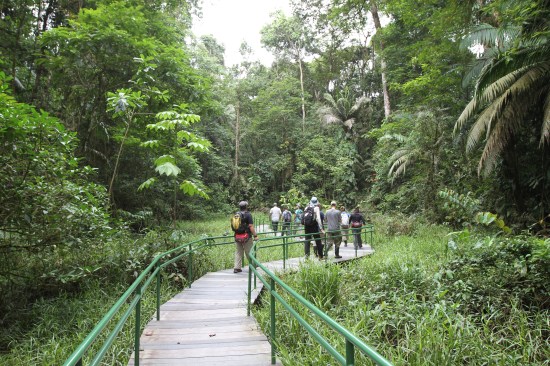
An innovative new study seeks to address this need using an unusual approach: acoustic monitoring of freshwater soundscapes. Researchers from Purdue University, USA and Nanjing University of Science and Technology, China recorded the aquatic soundscape of a Neotropical freshwater swamp in Costa Rica for 23 days in 2015. They used special underwater microphones – known as hydrophones – to delve into the acoustic world of the freshwater wetland. They wanted to better understand how soundscape recording might enhance existing freshwater ecosystem monitoring and assessment initiatives (read more).
+++
The IPBES Global Assessment: five things we learnt about freshwater ecosystems (May)
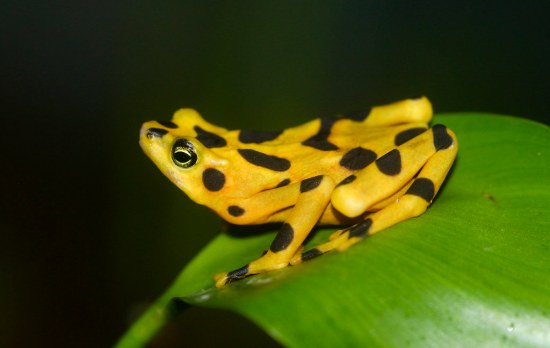
A landmark global report summarised earlier this week suggests that around 1 million animal and plant species are threatened with extinction. For many species, extinction could occur within decades. The global rate of species extinction is already at least tens to hundreds of times higher than the average rate over the past 10 million years and is accelerating, the report states. What does the IPBES Report tell us about the state of global freshwater environments? (read more).
+++
Europe’s aquatic ‘life support system’: good ecological condition correlates with ecosystem service provision (May)

European aquatic ecosystems can better provide vital services – such as water purification and flood protection – to humans when they are in good ecological condition, according to a new study. These findings highlight the need to protect and restore European waters, not only for the non-human lives they support, but also for the health and well-being of human communities.
Bruna Grizzetti and colleagues mapped European aquatic ecosystem services in relation to ecological conditions in rivers, lakes, groundwaters, coastal and transitional waters, floodplains, riparian areas and wetlands across the continent. They found that there was a strong correlation between the delivery of regulating and cultural ecosystem services and good ecological condition (read more).
+++
Europe’s largest dam removal project underway on the Sélune River in France (June)
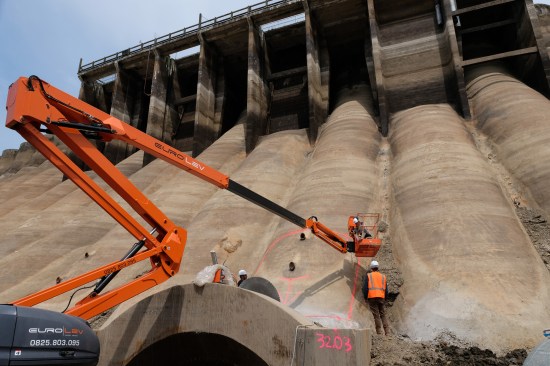
Europe’s largest dam removal project so far took a significant step forward last week as the first breach was made in the 36-metre high Vezins Dam in Normandy, France. The dam, located on the Sélune River, was been scheduled for dismantling in 2017, along with another 15-metre high dam, La Roche-Qui-Boit.
The removal of the dams is designed to reconnect migration routes for fish such as the Atlantic Salmon and European Eel, and to improve water quality in the river and re-naturalise flows of sediment through the Sélune catchment. The story here is indicative of global trends: a recent study suggests that only around one-third of global rivers are free-flowing – with dam construction a key factor in fragmenting and regulating water flows (read more).
+++
Lakes in the long term (June)

A guest blog by Dr. Stephen Thackeray, a lake ecologist at the Centre for Ecology & Hydrology.
A cold wind bites and stiffens fingers that deftly prepare the probe for its descent. Moments later the instrument slips through the surface and glides from well-lit to ever-darker waters, where it will gather important data on the living conditions experienced by the hidden life of the lake. This is a world unseen. A world of constant change, where warmth, light, nourishment and danger vary hugely in time and space. It is also a place of super-abundant life.
This event is the latest episode in a multi-decade scientific endeavour that has tracked the changing fortunes of some of England’s most iconic lakes in Cumbria; a landscape now endowed with UNESCO World Heritage Status. Data from this ongoing year-round research, initiated by the Freshwater Biological Association in the 1940s and continued by the Centre for Ecology & Hydrology since 1989, tells a story of long-term change in the physical, chemical and biological conditions of the lakes. In Windermere, it is a story of decades of nutrient enrichment caused by sewage inputs and agricultural run-off and, increasingly, a story of climate change (read more).
+++
Illegal trafficking of the European eel: the ‘world’s greatest wildlife crime’ (July)
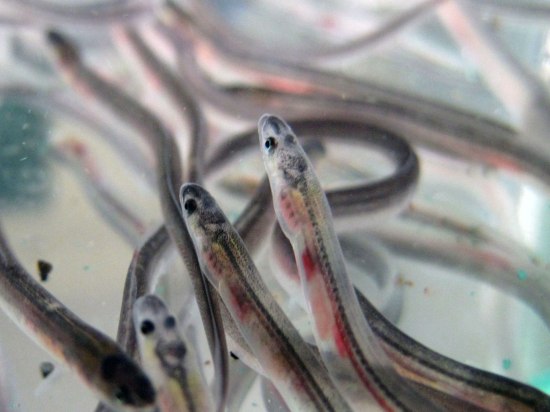
Recent evidence shows the increasing impact of illegal fishing and trafficking as a major factor in European eel declines. Whilst the export of European eels out of the European Union has been suspended since 2010, between 300 to 350 million eels – as much as 100 tonnes of fish – are illegally trafficked from Europe to Asia each year, according to EUROPOL. This figure accounts for around one-quarter of the total number of glass eels reaching the European coastline each year.
Where a glass eel might cost a euro to buy, a fully grown eel can be sold for ten times as much. This profit margin has led to an illegal trade in European eels estimated to be worth €3 billion each year. This trade has been called ‘the world’s greatest, yet least known, wildlife crime’ by the Sustainable Eel Group (read more).
+++
‘A beautiful underwater world awash with light’: Michel Roggo’s Freshwater Project (July)

Freshwater ecosystems are often key parts of our everyday landscapes: whether ponds, lakes, rivers, wetlands and canals that we might cross and pass by regularly. However, glimpsing the life that goes on below the surface of freshwaters can often be challenging, even to the most regular visitors.
Some creative artists have used film to shed a light on underwater lives, whilst others have used sound to ‘eavesdrop’ on their aural worlds. Since 2010, Swiss artist Michel Roggo has been using photography to explore and document global freshwater habitats through his Freshwater Project. Roggo’s work has taken him to more than 40 freshwater ecosystems across the world, each containing unique and unusual biodiversity and geology (read more).
+++
Toxic legacy of historical pollution hinders ecological recovery on urban rivers (August)

Toxic chemicals released in past decades could be impeding the ecological restoration and recovery of Britain’s urban rivers, according to a new study. ‘Legacy pollutants’ such as PCBs (Polychlorinated Biphenyls) and flame-retardant chemicals (PBDEs) from historical industrial discharge persist in river catchments, potentially disrupting aquatic food webs.
Fred Windsor, lead author of the new study, explained: “Despite major success in controlling sewage pollution in South Wales’ rivers over the last three decades, something appears to be holding back biological recovery.” Windsor, a doctoral student at Cardiff University, continued: “Our investigations show that persistent contaminants might be responsible as they still occur widely in invertebrates, particularly in urban river environments.” (read more).
+++
Check, clean, dry: how can canoers help control the spread of invasive species? (August)

A guest blog by Dr. Paul Jepson, Nature Recovery Lead at Ecosulis Ltd.
On a hot Saturday in June I rolled up at the UK’s National Water Sport Centre. The place was abuzz with cars, kayaks, club flags and paddle-carrying athletes chatting bucket starts, heats, duck tape and Nelos. Everyone was readying to race on a highly engineered stretch of freshwater. It looked and felt a world apart from my world of conservation science and policy. Yet walking along with my daughter to get her kayak weighed, I spied a Wildlife Trusts flag and two fellow conservationists raising awareness of biosecurity and invasive species.
Gemma Rose and Helen Carter-Emsell work for North Wales Wildlife Trust, and had made the 120 mile journey to Nottingham to promote good conservation practices among kayakers. Gemma explained that the River Dee, which rises in Snowdonia and flows into the sea near Chester on the Welsh / English border, is rich in native wildlife but also hugely popular with canoeists. The Trust has teamed up with British Canoeing and the GB Non-Native Species Secretariat to raise awareness among canoeists of invasive species and the damage they can do to aquatic systems (read more).
+++
Vivid and lively aquatic worlds: the art of Jacek Matysiak (September)

We recently came across the work of illustrator and designer Jacek Matysiak, and were so impressed that we knew we wanted to share it with you. Jacek is based in Dublin, Ireland, and his work provides a unique window onto the natural world. We caught with him recently to find out more (read more).
+++
Bending the curve of freshwater biodiversity decline (September)

What are the most significant and pressing freshwater biodiversity research questions that, if answered, would improve our ability to understand the state of freshwater biodiversity and improve its management and restoration, now and in the future?
This is the question asked by researchers affiliated with the Alliance for Freshwater Life as part of a new ‘horizon scanning’ research project seeking to identify the big questions in freshwater science, policy and conservation (read more).
+++
Global Swimways: conserving migratory fish populations (October)

A new ‘Global Swimways’ project has been launched this month, aiming to apply the insights of the ‘flyway’ concept to global migratory fish conservation. As part of this project, scientists will create the first global map of fish migration routes, identifying migration hotspots or ‘swimways’ and develop a new tool that highlights presence of migration routes near existing or planned infrastructure.
“Since the 1930s, people have developed and utilised the concept of flyways for the conservation of birds. They realised that in a world of changing habitats and building threats, you need global cooperation. It has led to successful agreements such as the Ramsar convention and international policies for conservation of ecological hotspots,” says Dr. William Darwall, project lead of the Global Swimways project, and Head of the Freshwater Biodiversity Unit of IUCNs Global Species Programme (read more).
+++
Europe must put environmental concerns at the heart of Common Agricultural Policy reform, scientists say (November)

Environmental scientists across Europe are campaigning for the European Parliament to take action in response to ‘catastrophic declines’ of birds, mammals, reptiles, amphibians, and insects as a result of intensive agricultural practices across the continent.
Earlier this week a letter signed by 2,500 scientists was sent to the European Parliament arguing that the intensive agricultural practices encouraged by EU’s Common Agricultural Policy (CAP) significantly threaten the continent’s biodiversity. There is now “unequivocal scientific consensus” that intensive farming is a key cause of the decline of bird and insect populations documented across the continent in recent decades, the authors state (read more).
+++
Catchment geology and human activity influence photosynthesis in aquatic plants (November)

Like all plants, aquatic plants rely on carbon to photosynthesise. However, unlike in the open air, carbon dioxide (CO2) is not a reliable source of carbon underwater. CO2 doesn’t diffuse efficiently through the water column, and is rapidly depleted as a result. So, how do aquatic plants get the carbon they need to live and grow? And how does this shape the distribution of where different plants are found?
A major new study shows that many aquatic plants have evolved the ability to use inorganic carbon, largely bicarbonate derived from the weathering of rocks and soils, in photosynthesis. Writing in Science, Lars L. Iversen and colleagues show that around half of the 131 global submerged plant species they studied showed this bicarbonate adaptation (read more).
+++
Water Framework Directive declared ‘fit for purpose’ (December)

European water policy continues to be ‘fit for purpose’ in protecting and restoring the continent’s rivers and lakes, according to a new review by the European Commission. Adopted in 2000, the Water Framework Directive (or WFD) is the European Union’s flagship water policy. It requires member states to guide their rivers, lakes, estuaries and groundwaters to ‘good ecological status’ through environmental policy and management, and prevent any future deterioration of status (read more).
+++
Thanks for reading, and a very happy 2020 to you! If you are in need of more freshwater stories, you can read our previous annual post round-ups for 2018, 2017 and 2016.
Water Framework Directive declared ‘fit for purpose’
European water policy continues to be ‘fit for purpose’ in protecting and restoring the continent’s rivers and lakes, according to a new review by the European Commission. Adopted in 2000, the Water Framework Directive (or WFD) is the European Union’s flagship water policy. It requires member states to guide their rivers, lakes, estuaries and groundwaters to ‘good ecological status’ through environmental policy and management, and prevent any future deterioration of status.
The European Commission recently concluded a two-year ‘fitness check’ evaluation of the effectiveness of WFD in meeting its objectives, alongside that of its linked water policies, the Groundwater Directive, Environmental Quality Standards Directive, and the Floods Directive. The WFD is now 20 years old, and its third cycle of River Basin Management Plans will run from 2022-2027.
The Water Framework Directive fitness check
The report’s verdict is mixed. On one hand, it highlights that the WFD has been successful in setting a governance framework for integrated water management of more than 110,000 EU water bodies. Since its adoption, the WFD has prompted EU nations to slow down the deterioration of their water bodies, and to reduce chemical pollution. Its continental monitoring network has also led to a significant increase in knowledge of European aquatic ecosystems, the report highlights.
However, no substantial progress in improving the overall status of European water bodies has been made. The report outlines that the implementation of the WFD has been significantly delayed, and less than half of all European water bodies are in ‘good ecological status’, despite the original deadline set for reaching this target being 2015. The report states that this is “largely due to insufficient funding, slow implementation and insufficient integration of environmental objectives in sectoral policies, and not due to a deficiency in the legislation.”
Virginijus Sinkevičius, EU Commissioner for Environment, Oceans and Fisheries, said: “Our water legislation is strong and able to protect both water quality and quantity, also in view of the new challenges from climate change and emerging pollutants, such as microplastics and pharmaceuticals. But more than half of all European water bodies are not yet in good status, and the challenges for Member States are more than substantial. We now need to accelerate the implementation of what we have agreed. The momentum of the European Green Deal will allow us to make such a leap forward.”
Challenges for European water policy
Improving the good status of European water bodies doesn’t only depend on measures required by the WFD, but also those in other EU legislation such as the Nitrates Directive and the Urban Waste Water Treatment Directive. Crucially, it also relies on the integration of water policy goals into other areas such as agriculture, energy and transport. Water is such a vital resource, with numerous (and sometimes competing) types of uses and users across Europe. Attempting to guide industry and agriculture towards ‘water-friendly’ approaches remains a key challenge for European water policy.
The report suggests that insufficient national funding can hamper WFD implementation, stating that Member States often propose management measures based on their existing budgets and policies, rather than tailoring them to the scale and extent of the pressures affecting their water bodies. This can lead to insufficient action to address the multiple pressures affecting water bodies, and an over-reliance on “easy technological fixes” such as reducing point source pollution, whilst leaving diffuse pollution sources unaddressed, the report states.
The design of the WFD is a balancing act between allowing Member States to implement measures tailored to their local conditions, whilst at the same time ensuring harmonised water management across national borders. The report suggests that the transboundary nature of many water issues can stand in the way of enforcing the WFD and holding Member States accountable for the ambition of their own water policies.
The resulting variation in policy ambition and effectiveness across Member States is one of the three key deficiencies in European water policy identified by the report. The others are: a need to update the list of priority pollutant substances (a significant challenge given the number of new synthetic chemicals entering water bodies); and to better integrate knowledge on multiple stressor interactions, particularly in the Groundwater Directive and Environmental Quality Standards Directive. The report finds that the Floods Directive (for which management plans started in 2016) has improved several aspects of flood risk management in Europe, but that ongoing efforts are required to tailor its implementation to future climate change projections.
Scientific and public support for European water policy
The report is published in the wake of the European Environmental Agency’s State of the Environment 2020 report, which identifies the WFD as a key policy tool for tackling biodiversity loss across Europe. There is also support for strong European water policy from both scientists and the public. Last week, an open letter from over 5,500 scientists emphasised the value of the WFD, and the need to ‘step up’ its implementation to conserve and restore European freshwater ecosystems.
In March, over 375,000 people supported the NGO-led #ProtectWater campaign, which demands that the European Commission and EU governments improve the implementation and enforcement of the WFD. The #ProtectWater campaign encouraged citizens’ participation in the public consultation process of the newly published ‘fitness check’.
Andreas Baumüller, Head of Natural Resources at WWF’s European Policy Office and Chair of the Living Rivers Europe coalition, said:
“By signing off the Water Framework Directive as fit for purpose, the European Commission is standing shoulder to shoulder with the hundreds of thousands of European citizens, scientists and civil society groups who have all championed the WFD over the past two years.
“As the results point out, slow implementation is to blame for not having yet reached the WFD’s objectives. The Commission now needs to put its money where its mouth is. It must ensure that Member States submit ambitious plans and concrete actions to achieve the law’s objectives by 2027, and that this is supported by dedicated funding.”
+++
Read the Fitness Check of the Water Framework Directive and the Floods Directive online here.