World Water Week at Home

Water and development experts from around the world are coming together online this week to discuss the key issues and big ideas in global water management. Now in its 29th year, World Water Week is taking place ‘At Home’ this year between 24–28 August, with 120 online sessions open for free to the public. Sessions are both available live and archived on YouTube.
At the opening event on Monday, Stockholm International Water Institute Executive Director Torgny Holmgren emphasised the importance of water-related climate change mitigation across many of the sessions. “At the climate conference COP25 in Madrid last year we started to see a welcome breakthrough where more countries began to search for water solutions, not least in their nationally determined contributions to the Paris agreement. Now we hope that this thinking will gain more traction ahead of COP26 next year,” Holmgren said.
Another major trend across the sessions is how national governments can promote environmental resilience in their economic and social rebuilding after the Covid-19 pandemic. “Water is a necessity of life and an engine for development. Through its response to the Covid-19 pandemic, the world has proved that it has the capacity to change rapidly,” said Isabella Lövin, the Swedish Minister for Environment and Climate. “We should use this momentum to transform our way of living into what is in line with reaching the sustainable development goals. Sustainable water management is an integral part of that,” she argued.
This week’s sessions involve a range of organisers and speakers from global NGOs, academia, business and government. “We are very happy that to be able to offer such a diversity, with distinguished speakers helping us understand important new trends,” said Gabriela Suhoschi, Director of World Water Week. “In today’s turbulent world there is great need for this type of reflection and analysis, so I hope that many people will seize the opportunity to tap into this knowledge,” she added.
There are a number of sessions which are likely to be of particular interest to our readers. Tomorrow (Thursday 27th August) practitioners will present results and lessons from a 7-year project on the conservation and restoration of floodplain areas across the Danube river basin, involving The Coca-Cola Company and Foundation, the International Commission for the Protection of the Danube River and WWF-CEE. Later in the day, another session will showcase new technological approaches to detect and monitor Harmful Algal Blooms, whilst a third will explore the links between Nature-based solutions for water security and climate finance.
On Friday, a series of sessions affiliated with the Every Drop Counts initiative explore themes around water management and gender, including strengthening the role of female voices in decision making. Later on, the Alliance for Water Stewardship will run a session on the challenges of implementing water stewardship in agriculture, before the week is concluded in a closing ceremony.
A number of the sessions which have already taken place have been uploaded to the World Water Week At Home YouTube channel, with more forthcoming. We particularly enjoyed this session hosted by the Rede Brasil do Pacto Global on the potential of Nature-based solutions to address water scarcity caused by ongoing climate change.
You can follow the remainder of the event online through the project website and social media, using the #WWWeek hashtag.

Freshwater biodiversity in the Arctic is not fully documented or understood by scientists, particularly in remote and inaccessible areas. However, ongoing climate change is altering Arctic freshwater ecosystems – increasing water temperatures and ice melt rates, altering flow regimes and affecting animal migration routes. At the same time, increasing rates of human development and resource extraction – including mining and hydropower development – threaten water quality and habitat availability across many Arctic freshwaters.
The authors of a new study published in Freshwater Biology suggest that learning from Arctic Indigenous Peoples is critical in informing a better shared understanding of both the historical and current state of Arctic freshwater biodiversity in response to these pressures.
Lead author of the study, Dr. Jennie A. Knopp from Oceans North says, “In working with the Conservation of Arctic Flora and Fauna Freshwater Experts Network on determining the current state of freshwater biodiversity in the circumpolar Arctic based on existing data, we wanted to highlight the wealth of information contained within circumpolar Indigenous Knowledge bases. We wanted to bring awareness to and share existing documented Indigenous Knowledge on Arctic freshwater ecology. In turn, the Indigenous Knowledge revealed new species records not contained in any of the western scientific databases.”
Their study is the result of a systematic literature review summarising previously documented Indigenous Knowledge observations on Arctic freshwater biodiversity from Canada, Greenland, Norway, Sweden, Finland, Russia, and the U.S.A. (Alaska). Documents surveyed included peer-reviewed journals, reports, books, videos, theses and conference proceedings.

Their research highlights five key points. First, although Indigenous Knowledge of freshwater biodiversity has been passed on through oral traditions for millennia, it is only in recent years that this has been documented, both by Indigenous Peoples and scholars. The researchers collated 285 documents containing Indigenous Knowledge on Arctic freshwater biodiversity, largely related to populations of fish species and changes in freshwater habitat. This process revealed a wealth of Indigenous Knowledge on Arctic freshwater biodiversity. However, the researchers acknowledge that there is still significant Indigenous Knowledge on freshwaters which has yet to be documented or compiled, particularly in local and Indigenous languages.
Second, the Indigenous Knowledge consulted in this study improved Western scientific knowledge of freshwater fish species distributions. Seventeen species of fish, including the Asiatic trout, crucian carp and the critically-endangered European sea sturgeon, were recorded by Arctic Indigenous communities, but not found in fish monitoring data compiled by the Circumpolar Biodiversity Monitoring Program (CBMP). Indigenous Knowledge revealed information on both species disappearances and new species records over time, a difficult metric to document in large-scale scientific surveys, and one that is crucial for the early detection of invasive species and other climate change impacts on Arctic ecosystems.
Third, the Indigenous Knowledge compiled by the researchers showed significant trends in decreasing water levels in rivers and lakes, shorter periods of ice cover, decreasing ice thickness and increasing permafrost thaw across circumpolar regions. The researchers argue that such observations by communities who rely on Arctic freshwater systems are crucial in identifying key locations for conservation and management actions where possible.
Fourth, the researchers found that Indigenous Knowledge contributes wider spatial and temporal coverage of Arctic freshwater ecosystems than that surveyed by Western science. In particular, they found information on freshwater biodiversity from remote regions of circumpolar Alaska and Russia that are not well-documented in scientific studies. In addition, these records can provide longer-term indications of biodiversity trends than many Arctic scientific studies.
Fifth, the researchers emphasise that whilst their review identifies important ways in which Indigenous Knowledge can complement Western science to understand emerging themes in Arctic freshwater biodiversity, there remain a number of challenges for the future. One key point is that the data in the documents reviewed in this study are unlikely to capture the depth and breadth of Indigenous Knowledge on freshwater ecosystems held by knowledge holders. Similarly, there are significant ethical and methodological issues over how Indigenous Knowledge and Western science frameworks of knowing and ordering the world can be brought together in a respectful and productive manner.
Overall, the paper offers a valuable insight into the wealth of information Indigenous Knowledges can contribute to the study of Arctic freshwater biodiversity. “We hope this research will encourage limnologists to collaborate with Indigenous groups in their study areas in an attempt to start to understand the wealth of information on freshwater ecology and biodiversity held in the mind of the Indigenous Knowledge holders and to work in partnership with Indigenous experts,” Dr. Knopp concludes.
+++
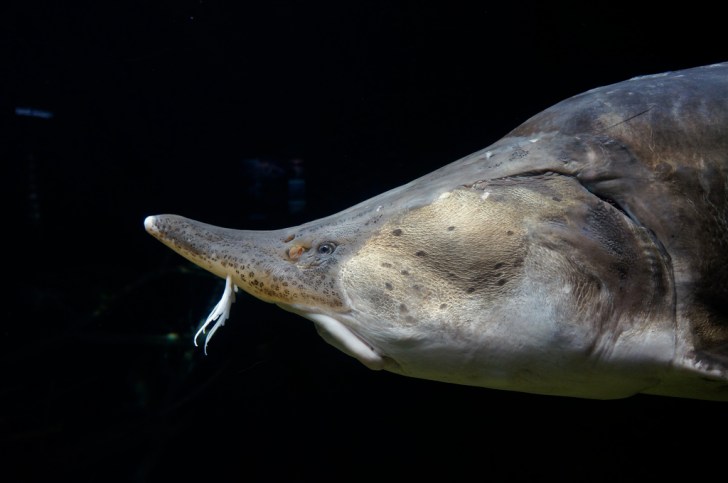
Many of the largest and most iconic freshwater species in the world are threatened with extinction. There are around 200 species of such ‘freshwater megafauna’ – species weighing more than 30kg, and found on every continent except Antarctica – of which 34 species are listed as Critically Endangered by the IUCN Red List, and half are classified as Threatened.
Freshwater megafauna such as the beluga sturgeon, American alligator, Yangtze finless porpoise, and Caspian seal often have complex life cycles and extensive habitat requirements. As such they are sensitive to habitat loss, over-harvesting and river fragmentation. A recent study found that freshwater megafauna declined by 88% globally between 1970 and 2012, with a 94% decline in megafauna fish species.
Some freshwater megafauna – such as the arapaima – are well-known ‘flagships’ of particular ecosystems and cultures, and recent work has assessed the potential for their conservation to prompt ‘umbrella’ ecological benefits to the health of the wider ecosystem. However, at present, freshwater megafauna species are significantly threatened across the world, and a paucity of available data means their ecological status might be worse than current assessments suggest. IUCN Red List Assessments are currently incomplete for 49 – or 24% – of freshwater megafauna species.

A new study seeks to identify the factors that make freshwater megafauna more vulnerable to extinction. Dr. Fengzhi He from the Leibniz-Institute of Freshwater Ecology and Inland Fisheries and colleagues collated eight ‘life-history’ traits such as size, lifespan, habitat type and feeding habits for 206 freshwater megafauna species. They then used computer models to examine the relationships between extinction risk and the combined effects of these traits, as well as the influence of human impacts.
“We found that traits related to species’ recovery potential including lifespan, age at maturity, and fecundity, as well as human impact, are important factors influencing the extinction risk of freshwater megafauna,” explains He, the lead author of the new study, accepted in the Conservation Biology journal.
“Accounting for both IUCN Red List assessments and our model predictions, 50% of all freshwater megafauna species are considered as threatened. In addition to existing hotspots including the Ganges-Brahmaputra and Mekong basins and the Caspian Sea region based on the IUCN Red List, Amazon and Yangtze basins emerged as global diversity hotspots of threatened freshwater megafauna when we consider both the IUCN Red List assessments and our model predictions,” He continues.
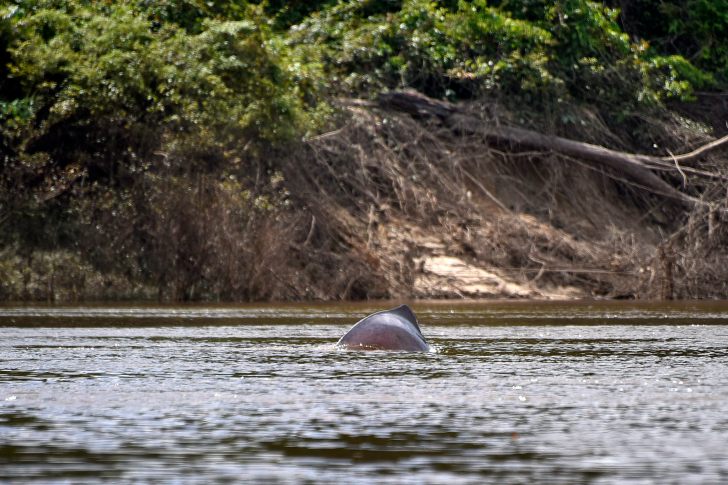
The researchers also applied their models to predict the extinction risk of the 49 megafauna species listed by the IUCN as ‘Data Deficient’ or ‘Not Evaluated’. He explains, “Our results showed that species that are not evaluated yet or have insufficient data for assessment could also be threatened. We might miss the window-of-opportunity to protect these species from extinction if conservation actions are delayed.”
In common with most contemporary freshwater research, the study emphasises the need for better ecological data to help guide conservation and restoration efforts. “Our study highlights the importance and necessity of comprehensive and updated assessments for global freshwater megafauna species, as well as for overall freshwater species,” He says. “More studies are required to improve our knowledge of their life history and critical habitats, such as reproduction and nursery grounds. It is essential to sustain the reproduction and recovery potential of freshwater megafauna. For example, maintaining the connectivity of rivers is important for the reproduction of many migratory megafauna species.”
+++
European rivers fragmented by over one million barriers – and 10% of them are obsolete
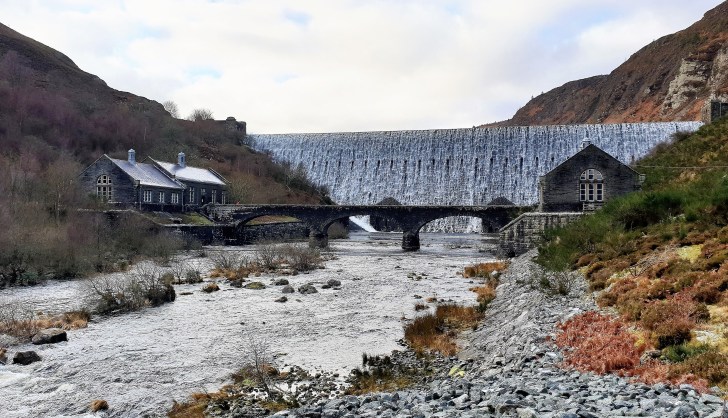
It is estimated that there are over one million barriers fragmenting European rivers, of which over 100,000 are obsolete, according to new research. The findings were published by Adaptive Management of Barriers in European Rivers (AMBER), an EU Horizon 2020 project, in their AMBER Barrier Atlas.
The Atlas collates information on 630,000 river barriers across Europe, from large dams to small weirs, fords and culverts, and is based on existing datasets. However, AMBER researchers estimate that at least one third of the continent’s river barriers are unrecorded, which means the real figure could be well over 1 million.
Their estimates are based on project researchers walking 2,700km of rivers and streams in 28 European countries to record the barriers along their courses. This fieldwork also suggests that around 10% – or an estimated 100,000 – of European river barriers are obsolete. In other words, such barriers continue to impede the ecological health and functioning of European rivers, without serving their original purpose.
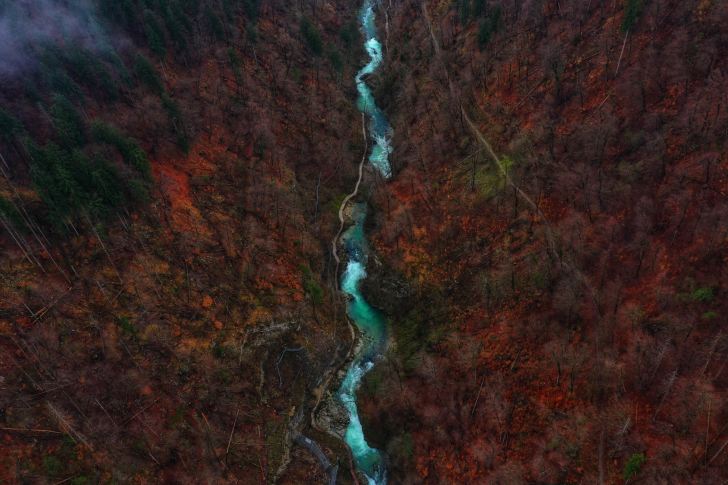
“Even areas that were considered to be relatively pristine and well connected are in fact impacted by barriers,” says Carlos Garcia de Leaniz, AMBER project coordinator and Professor of Aquatic Biosciences at Swansea University. “For example, in the Balkans, our field validation indicates that 80% of barriers do not appear in current inventories, making the fragmentation of these rivers much worse than people thought.”
The creation of the Barrier Atlas was the first step in the ongoing AMBER project, in response to the inconsistent and incomplete existing datasets on river barriers across Europe. The interactive Atlas allows users to explore, visualise and download data on the different kinds of river barriers across the continent.
The project has defined common standards for individuals and institutions to report river barriers in their own countries. The free Barrier Tracker app is central to the project’s citizen science programme, allowing anyone to quickly document and upload information on river barriers to the AMBER database.
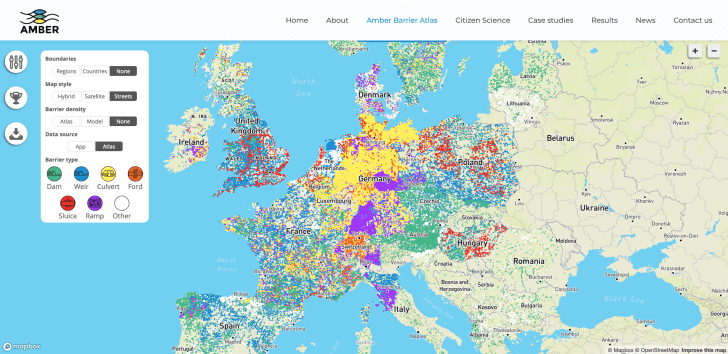
The project’s mapping of European river fragmentation is intended to provide the basis for river managers to plan effective and and efficient restoration schemes. One early project finding is that losses in river connectivity – whether of water flows, sediment, migratory fish movements, or a combination of these – is typically caused by a relatively small percentage of barriers. As a result, it makes sense to focus management efforts on such barriers. AMBER is currently developing a suite of tools to allow river managers to plan their work accordingly.
“Over 60% of EU freshwater systems are in a poor state in part due to habitat fragmentation, says Barbara Belletti who led the development of the AMBER Atlas at Politecnico di Milano with Wouter van de Bund at the Joint Research Centre of the European Commission. “To improve the health of our rivers, we need to reconnect them—our Atlas and tools will support this endeavour.”
+++
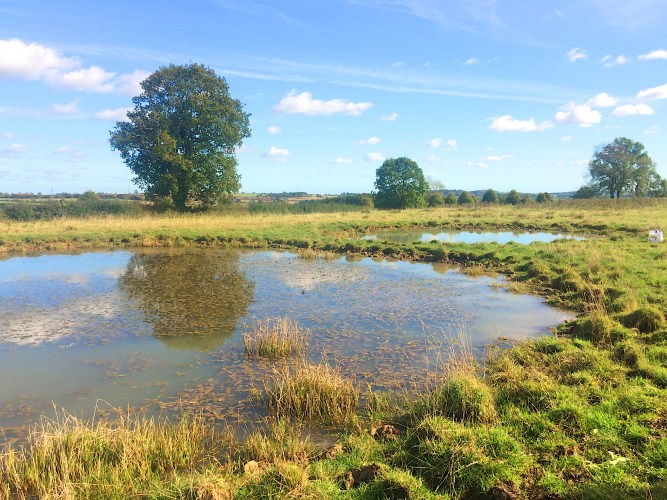
Creating pond habitats in farmland can significantly improve landscape biodiversity over relatively short time periods, according to a recently-published study.
Ponds are the most common freshwater habitat – there are an estimated 3 billion worldwide – and often support rich and rare biodiversity. However, they are often overlooked in both environmental policy and management: for example, there is no provision in the European Water Framework Directive to monitor and manage the continent’s 10 million ponds.
Important – but declining – freshwater biodiversity habitats
A 2019 survey by the Freshwater Habitats Trust found declines in freshwater biodiversity in British ponds in protected areas in recent decades. This is significant because these ponds supported more species, and more rare species, than the most biodiverse UK river habitats. Interestingly, the FHT survey suggested that low-level stock grazing around ponds helps suppress the growth of shading scrub woodland on their banks, and so help maintain their biodiversity.
As a result, we can understand pond habitats as an important part of ‘semi-natural’ landscapes where human and non-human natures interact. Accordingly, could creating new ponds in British farmland help increase both the biodiversity and the number of rare species that these landscapes support?
This is a key question underpinning the new study, funded by the Environment Agency, and recently published in the journal Biological Conservation. Its authors studied the ecological impacts of the creation of ‘clean water’ ponds in farmland in the Midlands of England over a nine-year period. Clean water ponds are habitats which are not connected to streams or ditches, and are filled with unpolluted surface- and ground-water.
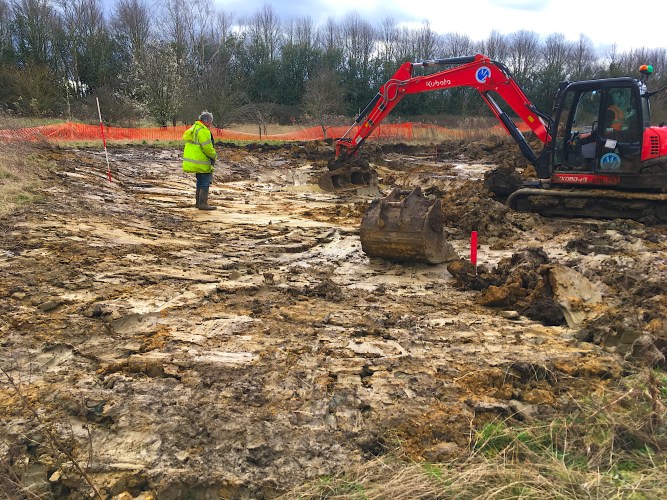
Pond creation significantly increases biodiversity in agricultural landscapes
The project team found that creating twenty such ponds across a 10km² area of farmland increased the number of wetland plant species by more than a quarter (26%), and almost trebled the number of regionally rare plants (a 181% increase) over a five year period. The results suggest that pond creation can stem, or even reverse, the loss of biodiversity – particularly of plant species – in agricultural landscapes over a relatively short timescale.
Lead author Penny Williams from the Freshwater Habitats Trust says, “The gains we saw are unprecedented for freshwater and are, by a long way, the largest recorded improvements in freshwater diversity seen from adding land management measures to countryside landscapes.
“Our previous work had already shown that ponds were a secret treasure in the British countryside – with a value out of proportion to their tiny size – however the scale of benefits from adding new ponds took all of us by surprise,” Williams continues.
The study is the first major result from the Water Friendly Farming project: a long-term collaboration between the Freshwater Habitats Trust, Game & Wildlife Conservation Trust, the University of York, the Environment Agency and landowners in three Leicestershire catchments.
Dr Jeremy Biggs, the Director of the Freshwater Habitats Trust, says, “This is such an important result: freshwater biodiversity is under threat both across the UK and the globe. Climate change will wreak even more havoc in future years and up to now we have found very few ways to combat losses and make the countryside more resilient.
Biggs adds, “This study is unique because we’ve proven that it’s possible to increase freshwater biodiversity significantly at a regional scale. Up to now benefits have either been very limited, or very local.”

Ponds increase biodiversity and rare species more than other measures
The project team also tested a number of other management measures in their study catchments, such as adding woody debris to streams, damming ditches to ‘slow the flow’ and trap sediment, and building interception ponds which filtered nutrients and pollutants.
These measures helped stem background plant biodiversity loss (roughly 1% per year), but did not help rare species return to the landscape. Pond creation is shown to have significant biodiversity benefits, whilst remaining cost-effective – each pond cost between £1500-2000 to create.
Prof Chris Stoate from the Game and Wildlife Conservation Trust says, “It’s clear that the key ingredient to success was carefully locating new ponds in places where they would fill with clean water. To get the best effect we sited them in low intensity pasture, scrub or woodland – areas unaffected by agricultural or road pollution. Measures in other locations and with other functions didn’t work half so well.”
The study is the first demonstration of a whole-landscape increase in freshwater biodiversity as a result of management measures in agricultural landscapes. It shows that pond habitat creation can have a positive effect on catchment biodiversity over a relatively short period of time. As a result, the authors emphasise the potential for ‘clean water’ pond creation to help stem, or even reverse, biodiversity loss in agricultural landscapes.
+++
Read a briefing note for policy makers and environmental managers on the study findings.

Guest blog by Sebastian Birk and Daniel Hering
When does 1+1=3 for freshwater conservation and restoration? What seems like a trick question is actually the basis of a major European research project, MARS, begun in 2014. The 1’s in the equation refer to single stressors on freshwater ecosystems – things like nutrient pollution, water abstraction and temperature increases.
Adding the effects of single stressors together should give us an indication of the overall stress placed on the ecosystem by human activities, shouldn’t it? Not always!
Ecological surprises in European rivers and lakes
In our newly published study, we found that in about a third of cases such multiple stressors interactions in European rivers and lakes yield ‘ecological surprises’. Such ‘surprises’ occur where different stressors interact to intensify, or even cancel out, their combined effects.
For example, nutrient pollution in a drought-affected river could mean that 1+1=3, known as a synergistic effect. In contrast, the same nutrient pollution in a flood-affected river could mean that 1+1=1, known as an antagonistic interaction. What a headache for freshwater conservation and restoration efforts!
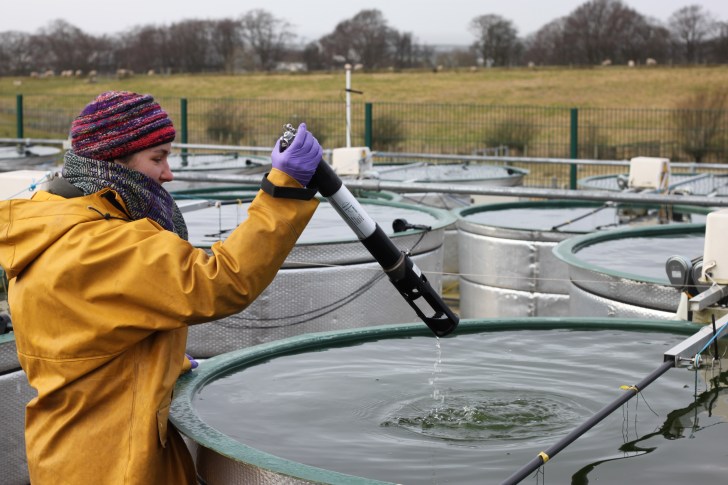
Our new paper, published in Nature Ecology & Evolution (open access pdf link), is the result of years of collaborative work by MARS scientists across Europe. We carried out 33 mesocosm (i.e. tiny ‘experimental lake’ systems), 14 river basin and 22 regional and continental studies to produce 174 sets of paired stressors (e.g. ‘nutrient pollution and drought’). The effects of each stressor pair were observed on the response of a biological variable, such as number of invertebrate species or phytoplankton density.
Multiple stressor impacts differ between lakes and rivers
We found differing results between lakes and rivers. In most of the lakes we studied, nutrient pollution was the overriding stressor. In addition, the frequency of ‘ecological surprises’ was similar irrespective of whether single lake mesocosms or thousands of European lakes were studied.
However, in rivers, the effects of nutrient pollution depended on both the stressor combination, and the biological variable used to measure their impact. In contrast to lakes, the frequency of ‘ecological surprises’ in rivers increased with scale. In other words, large – and often diverse – river systems can generate unexpected interactions between the stressors placed on them by humans, causing a range of impacts on their ecosystems.
Nutrient pollution a key stressor in European freshwaters
Our study shows that nutrient pollution is a key stressor affecting the health and status of European lakes and rivers. Nutrients – particularly nitrogen and phosphorous – reach freshwaters from agricultural run-off, industrial discharges and urban waste, and can cause a number of harmful impacts, such as algal growth, eutrophication and overall poor water quality.
However, we suggest that lakes and rivers require different conservation and management approaches. In lakes, the traditional approach of reducing nutrient use and discharge across catchments remains key, although the magnitude of the required nutrient reduction may increase with climate change.
Managing for multiple stressors is crucial in rivers
On the other hand, our results suggest that rivers require more bespoke management approaches, which take into account the different stressors affecting the system, and how they interact. This is particularly important in a time of increasing climate change impacts and extreme weather events.
Conserving and restoring our rivers and lakes is no easy task. Through MARS, and in our new paper, we’ve shown that the multiple stressors affecting freshwaters often have complex interactions and impacts. However, we know more than ever about these interactions: so whilst 1+1 might sometimes equal 3 (or even 1), we can now better plan for such ‘ecological surprises’!
—
Birk S., et al. (2020) Impacts of multiple stressors on freshwater biota across scales and ecosystems, Nature Ecology & Evolution (open access pdf link)
Funding: This work was supported by the MARS project (Managing Aquatic ecosystems and water Resources under multiple Stress) funded under the 7th EU Framework Programme, Theme 6 (Environment including Climate Change), Contract No: 603378.
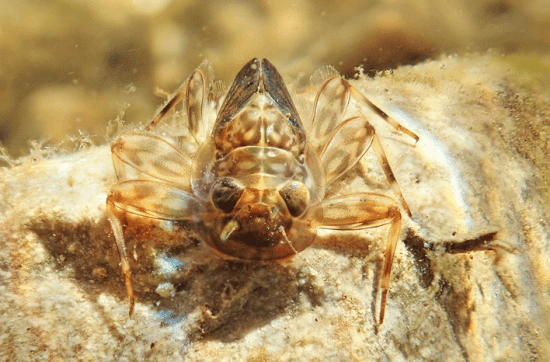
A group of high-profile European freshwater scientists have released a call for invertebrate data submissions to contribute to a major new study.
The research team, led by Peter Haase from the Senckenberg Research Institute, are seeking long-term benthic invertebrate data from European streams and rivers. Their aim is to compile a comprehensive dataset on European riverine benthic invertebrates, which in turn will help untangle the key trends in their populations and the drivers affecting them.
The study is important because recent analyses of long-term data on benthic invertebrates (aka. those which live on the bed of a water body) in European rivers have not shown a clear picture of their ecological health and status. The new collaborative study aims to address this knowledge shortfall, and thus support effective conservation management and policy.
The team are looking for datasets sampled over a minimum of 8 years at the same site, using consistent methods, and which include taxa lists with abundance data identified from species to families. You can see a more detailed criteria here.
In return for contributions, the research team offer co-authorship on the resulting study to all data providers. The aim is to publish the results in a high impact factor journal.
The deadline for data contributions is 30th June 2020.
Enquiries and submissions to Peter Haase – peter.haase@senckenberg.de
Research team: Peter Haase, Nuria Bonada, Wolfram Graf, Jani Heino, Daniel Hering, Sonja Jähnig, Astrid Schmidt-Kloiber

The EU Biodiversity Strategy for 2030: five issues for the future of freshwater ecosystems

Earlier this week the European Commission published a new Biodiversity Strategy, designed to tackle the key drivers of biodiversity loss by 2030, both in Europe and globally. Released during the ongoing COVID-19 pandemic, the document is framed as a key element of the EU’s recovery plan – aiming to boost both ecological and economic resilience through policy and management.
Along with the linked Farm to Fork Strategy, the new EU Biodiversity Strategy for 2030 aims to designate at least 30% of European land and seas as protected areas, and to ensure that at least 10% of the continent’s agricultural land is managed as ‘high-diversity landscapes’ by 2030. Funding of around 20 billion per year has been designated to help meet this target, translated into policy through the ambitious EU Nature Restoration Plan.
Clearly, there is a lot in the Biodiversity Strategy to feel hopeful about. But what place do freshwater ecosystems have in its plans? We take a look at five key issues.
Land and sea: what about rivers, lakes and wetlands?
The Strategy sets out the ambitious goal that “at least 30% of the land and 30% of the sea should be protected in the EU. This is a minimum of an extra 4% for land and 19% for sea areas as compared to today.” Additionally, it states that a third of this protected area network should be “strictly protected.”
You might be forgiven for thinking: what about freshwaters? The good news is that freshwater ecosystems are addressed in the document, but it’s a puzzling use of language to exclude them from this discussion. Whilst we know that freshwater ecosystems are closely linked to their terrestrial neighbours, they have unique ecological processes and biodiversity, and require specific protected area design and management, often across national and biogeographic boundaries. Perhaps ‘land, freshwater and sea’ would be more appropriate in the future?

Restoring 25,000km of free-flowing rivers, floodplains and wetlands
The headline policy for freshwaters in the Strategy is the aim to restore more than 25,000km of free-flowing rivers – and their linked floodplains and wetlands – across Europe by 2030. A key element of this plan is to remove or modify obsolete barriers and dams in rivers, which can impede the movement of migratory fish, alter water flows, and impact the movement of sediments and nutrients along river networks.
The Strategy states that technical guidance and support will be provided to EU Member States in 2021, along with help with mobilising funding. The document states that barrier and dam removal will be undertaken with an awareness of the needs for hydropower generation, flood management, water supply, agriculture and navigability on many rivers.
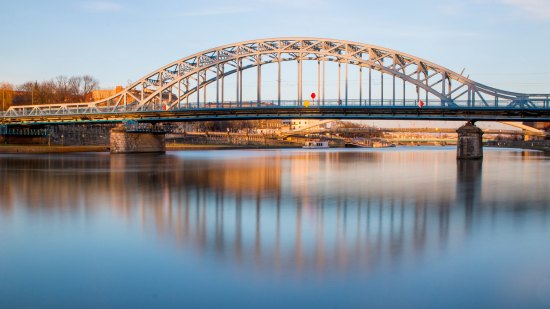
The Biodiversity Strategy and the Water Framework Directive: an uncertain future?
The Strategy frames this large-scale restoration of European rivers, along with the need to review and reduce water abstraction, as a means of achieving the goals of the existing EU Water Framework Directive. The overall WFD goal, it states, is to “achieve good status or potential of all surface waters and good status of all groundwater by 2027.”
However, the future of the WFD is not explicitly addressed. The Strategy states that “the EU’s legal framework on water is ambitious but implementation is lagging behind and enforcement must be stepped up.” Whilst it references recent WFD ‘fitness checks’ – which concluded that the Directive is broadly fit for purpose, but needs better implementation – the Strategy does not explicitly rule out any future modifications.
“Unfortunately, the Commission failed to exclude a revision of the Water Framework Directive in the new strategy, despite its own evaluation saying the Directive is fit for purpose, and this has left Europe’s water policy in limbo,” says Eva Hernandez WWF Lead Living European Rivers Initiative.

Encouraging environmentally-friendly agriculture
Agriculture is a key driver of freshwater ecosystem decline and biodiversity loss in Europe. The Biodiversity Strategy – and the linked Farm to Fork Strategy – set out a number of goals to manage and mitigate its effects on freshwater life. First, the Strategies aim to reduce by 50% the overall use of chemical pesticides by 2030, and reduce by 50% the use of more hazardous pesticides by 2030. This goal will be supported by implementation of the EU Pollinators initiative. Second, the Strategies outline the need to manage at least 10% of Europe’s agricultural land as ‘high-diversity landscapes’. Such landscapes include riparian buffer strips, rotational or non-rotational fallow land, hedges, and ponds, and can help reduce agricultural pollution and soil erosion, and mitigate the effects of ongoing climate change.
Third, the Strategies aim for a goal of “zero pollution from nitrogen and phosphorous flows from fertilisers”, achieved through reducing nutrient losses by at least 50%, and reducing the use of fertilisers by at least 20%. This will result in a new Integrated Nutrient Management Action Plan in 2022. Linked to this, they outline that at least 25% of EU agricultural land must be organically farmed by 2030, potentially resulting in significant reductions in fertiliser and pesticide use across the continent.
Finally, the Strategies outline the need to protect and enhance European soils. A key element of this goal is to reduce soil erosion, which can significantly alter the course, flow and habitat quality of many freshwater ecosystems. This will be achieved through an update of the EU Soil Thematic Strategy in 2021, the Strategies state.

Climate change mitigation: protecting carbon-rich wetlands
Improving Europe’s climate change mitigation is a theme running through the Biodiversity Strategy. One element of this is to protect and expand European forests, achieved in part through the EU Forest Strategy (due in 2021), which aims to plant more than 3 billion trees across the continent by 2030. In addition to potentially helping mitigate climate change, forests are important to many freshwater ecosystems, providing habitat, nutrients and shade, and reducing soil erosion and buffering pollutants.
Freshwaters are also a key element of the climate change mitigation plan set out in the Strategy. The document calls for “significant areas of other carbon-rich ecosystems, such as peatlands, grasslands, wetlands, mangroves and seagrass meadows” to be “strictly protected” in the expanded protected area network it proposes. In addition to their role as carbon stores, these ecosystems are often crucial for freshwater biodiversity, and can play a significant role in natural flood management.
+++
Read The EU Biodiversity Strategy for 2030
Read A Farm to Fork Strategy for a fair, healthy and environmentally-friendly food system
Freshwater life in the time of COVID-19
Life has been strange for all of us over this last couple of months. From all of us at the Freshwater Blog, we wish you and your loved ones all the best during these difficult times.
Given that lots of us have limited opportunities to visit, enjoy and learn about rivers and lakes right now, we thought this week’s blog would collate some of the digital ways we can immerse ourselves in freshwater life, at least for the time being.
Happy exploring, please do feel free to drop us a line on twitter @freshwaterblog with your favourites and suggestions.
Educational resources
The UK Rivers Trust have produced a suite of online educational tools, including virtual field trips and GIS training. As in the video above, visitors can take a virtual trip along the River Eden in Cumbria, undertaking their own field investigations and reports.
Tomorrow (9th May) is World Migratory Bird Day, and this site has lots of ideas for how you can join their ‘virtual festival’, including ‘Plover Watch 2020‘ on the banks of the Great Lakes.
This talk by Line Gordon, director of the Stockholm Resilience Centre, discusses water as “the bloodstream of the biosphere”. The talk was published as part of a Massive Open Online Course (MOOC), which can still be completed for free.
Other free freshwater MOOCs include the University of Geneva’s ‘International Water Law’ course, and International Waters’ ‘Governance for Transboundary Freshwater Security’ course.
Here’s some articles we’ve found useful on understanding the role of freshwater research during COVID-19. This Science article highlights the risks to aquatic environments posed by the disinfectant chemicals used to tackle COVID-19 outbreaks. This research from scientists at the University of California discusses water treatment strategies to tackle the SARS-CoV-2 virus responsible for the COVID-19 pandemic in sewage and drinking water.
This piece on the World Economic Forum website highlights the links between water, food security and COVID-19. The International Limnology Society and IGB have called for researchers to document the effects of lockdown on freshwater ecosystems under the #HealingInlandWaters tag.
Free books and journals
Many academic publishers and journals are opening access to their publications during global COVID-19 lockdown. This Project Muse page features a list of dozens of publishers who have temporarily made their content freely accessible. The journal portal JSTOR have also opened access to some of their collections.
Live streams
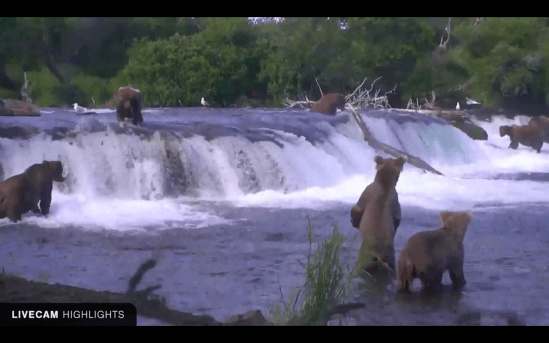
Live video streams have become a valuable way for people to engage with landscapes and ecosystems during lockdown. In fact, we have the live soundscapes of a few of them playing whilst we prepare this article – very soothing!
You might want to check out an osprey nesting on the Foulshaw Moss wetland, or perhaps look and listen for bitterns at Brockholes Nature Reserve, both in NW England. Sadly it’s the wrong time of year to watch bears catching salmon on waterfalls in Katmai National Park in Alaska, but there are some incredible highlights to catch up on!
The Explore website hosts some amazing live streams of African landscapes. We love watching animals coming and going at a watering hole in Tembe Elephant Park, South Africa (at the moment there’s a warthog… but you can spot lions, leopards, black and white rhinos and buffalo, apparently).
At another watering hole in the Madikwe Game Reserve on the Marico River you might spot elephants, giraffes, lions, zebras, and cheetahs along with a host of wetland birds. Crocodiles and hippos are regularly seen on this stream of the Olifants River in South Africa, whilst this camera on a watering hole in the Sabi Sand Game Reserve has infrared technology, allowing you to watch wildlife through the night!
Videos
The Blue Heart documentary explores the issue of hydropower construction on Europe’s ‘last wild rivers’ in the diverse Balkan region. Produced in conjunction with the River Watch initiative, the film is timely, informative and beautifully shot. Along similar lines, the River Film Festival organised by flow:europe and the Living Rivers Foundation hosts numerous trailers of the innovative films they have shown in the past.
The WWF Freshwater Program has a range of videos documenting their important conservation and restoration work across the world. We especially like this clip about building snow banks for endangered freshwater seals in Finland.
The Stroud Center’s Stories from the Streams series follows scientists, educators and the public in exploring the Delaware River Watershed in the USA. The stories might be local, but the issues raised are global in scope.
We love Jack Perks’ incredible underwater photography and film-making (so much so, we’ve interviewed him in the past). Watch his documentary on every UK fish above, and explore his video archive here.
Podcasts
We love the Society for Freshwater Science’s Making Waves podcast – this episode on freshwater research in Arizona border landscapes is especially good. The Freshwater Trust’s Freshwater Talk podcast is worth tuning into, we particularly like the episode with conservationist and artist Frances B Ashforth.
In this episode of the Science History Podcast, Ian Harrison, the freshwater specialist at Conservation International’s Moore Center for Science discusses contemporary freshwater conservation. And in this episode of People Behind the Science Podcast, Prof. Steve Ormerod (well known to readers of the blog!) discusses his life and career in freshwater research. Both are essential listens!
Maps
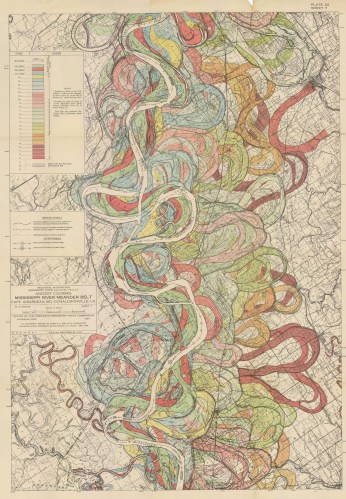
In 1944, the cartographer Harold Fisk published a series of remarkable maps of the winding historical courses of the Mississippi River as part of an otherwise technocratic report to the US Army Corps of Engineers. Each map – which can be viewed and downloaded in hi-resolution here – is like a work of modern environmental art.

More recently, Hungarian cartographer Robert Szucs has fused his skill with GIS mapping and his artistic flair to create a series of beautiful images mapping the world’s watersheds. Each watershed is denoted by a different colour, lending a kaleidoscopic – but scientifically accurate – effect to his images.
Art and music

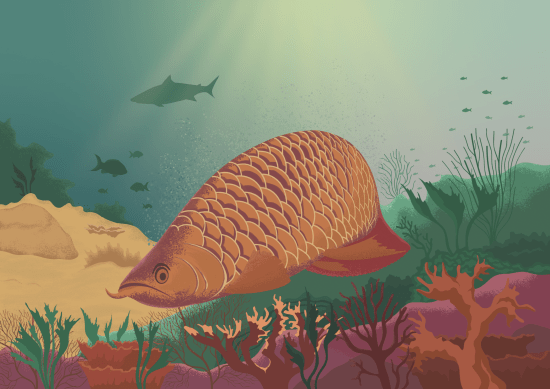
We’ve featured two of our favourite aquatic artists on the blog recently: Michel Roggo and Jacek Matysiak, and their work is always worth revisiting. The UK Canal & River Trust Waterfront online magazine is worth exploring for art, sound and writing, as is the Caught by the River blog.
Finally, we’ll leave you with two and a half hours of the most beautiful soundscapes. Recorded over three years, sound artist Annea Lockwood’s A Sound Map of the Danube traces the second longest European river’s course from the Black Forest in Germany to its delta into the Black Sea. The recordings comprise sounds from the banks, from above and below the water, animals, insects, and interviews with people who live by the river.
A guest blog by Daniel Hayes from the Institute of Hydrobiology and Aquatic Ecosystem Management (IHG), BOKU, Vienna.
+++
Imagine you are a river basin manager and have to decide on the best methods to assess the water quality of the streams and rivers in your catchment. What would you choose? Considering that in the European Union alone, there are over 300 different biological assessment methods, this is surely not an easy task!
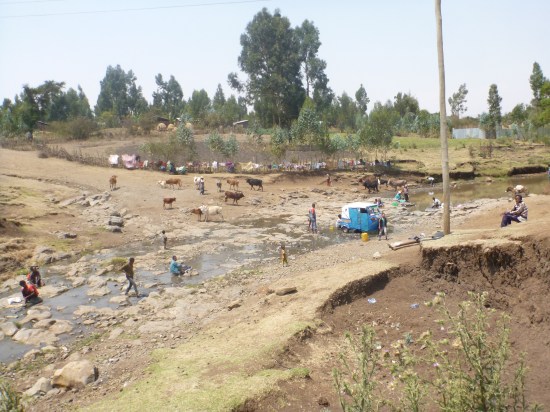
In numerous countries across the world – especially developing countries – many people depend directly on river water for drinking, domestic purposes, crop irrigation and providing water to animals (see picture above). Even though these activities require appropriate water quality to be used safely, many river systems are under severe pressure due to human activities. Microbial fecal pollution of river water from sewage waste, for example, can often have wide-ranging negative implications for public health.
Fecal and biotic indicators of water quality
Fecal ‘indicator bacteria’, such as Escherichia coli and enterococci are commonly used to assess pollution levels in aquatic environments. Measuring the abundance of these indicator bacteria allows conclusions to be drawn regarding the public health risks associated with river water use. These assessments, however, require extensive laboratory equipment and finances, which might not be available in all situations.
One alternative to fecal indicator bacteria are biotic indicators such as benthic macroinvertebrates (aquatic insects). Biotic indicators can provide an integrative and cumulative measure of ecosystem health based on the combined responses of communities to stressors in the aquatic ecosystem. Such benthic macroinvertebrate assessment systems have been recently developed and tested in Ethiopia.
Assessing water quality indicators in Ethiopian rivers
In light of the need to compare the performance of different approaches for assessing water quality status, a team of Austrian, Ethiopian and Tanzanian researchers have recently published a new study.
They evaluated the consistency of fecal indicator bacteria for environmental health assessments of rivers by comparing them to assessments of physicochemical tests, as well as to macroinvertebrate indices. The scientists sampled five sites along a land-use pressure gradient on the Upper Awash River, the headwater section of one of the most important river basins in Ethiopia.
The results were shocking: the concentrations of two tested fecal indicator bacteria (E. coli and enterococci) exceeded the standards set by the European Union and the World Health Organization for safe recreational water. Hence, all sites were categorised as ‘poor’ for swimming and recreation.
According to the World Health Organization, this classification is associated with a >10% chance of gastroenteritis per single exposure. Hence, even though these guidelines pertain primarily to recreational activities such as swimming, it can be assumed that the low bacteriological water quality may also have adverse impacts on human health if water is used for the irrigation of fresh produce, drinking or domestic purposes.

Fecal and biotic indicators produce contrasting water quality assessments
Surprisingly, in contrast, the three tested African benthic macroinvertebrate indices (from South Africa, Tanzania, and Ethiopia) indicated a natural or good ecological status with slight ecological degradation at the upstream sites, and a moderate to poor status at the downstream sites. Hence, the macroinvertebrate indices reflected changes in land-use from natural forests in the headwaters to highly modified agricultural landscapes in the lower reaches.
“Considering the high values of fecal indicator bacteria, the use of river water may cause significant public health hazards, particularly to young, elderly or immunocompromised people,” says lead author Geda Kebede. “In light of this risk, it is important to establish appropriate management measures,” Kebede recommends.
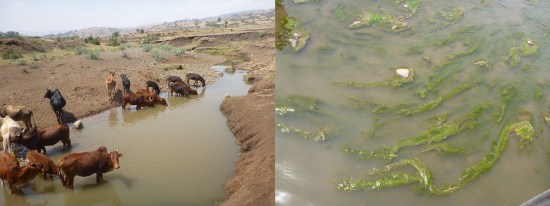
Such measures could include immediate actions such as informing the public about the risks associated with water uses, or more long-term actions such as reducing fecal pollution sources. Livestock grazing in the Upper Awash River basin is a key driver of fecal indicator bacteria contamination in the river ecosystem. Therefore, solutions could include preventing cattle from entering the river zone, providing off-stream watering, and restoring riparian vegetation as buffer zones.
Summarising, this is the first study of its kind reporting the different results of water quality status assessments using fecal bacteria and macroinvertebrate indicators. Consequently, from the viewpoint of river basin management, it seems necessary to combine different indicator systems to analyse human pressures from a more holistic perspective.
+++








 The Freshwater Blog