
In December 2019, the European Commission presented its European Green Deal, a new set of policy initiatives aimed at making the EU climate-neutral by 2050. Described by Ursula von der Leyen, the president of the European Commission, as Europe’s “man on the moon moment,” the Green Deal has wide-ranging ambitions to support environmental protection, green economies, sustainable agriculture and technological innovation across the continent.
What is the European Green Deal?
But what exactly does the Green Deal aim to do, and how might it impact Europe’s freshwater ecosystems? A key underpinning to the Green Deal is its attempt to fundamentally shift European economies from dependence on fossil fuels and environmental exploitation towards low-carbon, sustainable models of growth. “The European Green Deal is our new growth strategy – a strategy for growth that gives back more than it takes away… We are determined to succeed for the sake of this planet and life on it – for Europe’s natural heritage, for biodiversity, for our forests and our seas,” explained von der Leyen.
This strategy will be achieved through a framework of regulation and legislation which sets clear targets for EU countries, including a net zero carbon emissions goal by 2050. As a result, the Green Deal represents a sign that concerns over climate change and environmental sustainability have risen to the top of European policy making. Moreover, it signals European action towards global environmental targets such as the UN’s Sustainable Development Goals, the Paris Agreement and UN Framework Convention on Climate Change.
Since its initial proposal, the Green Deal has sparked a flurry of new proposals, regulations and changes to EU law, including a Climate Law, Industrial Strategy, Circular Economy Action Plan, Farm to Fork Strategy, Biodiversity Strategy and Zero Pollution Action Plan. Overall, it is estimated that the implementation of the Green Deal will cost over €1 trillion, around half of which will come from EU budgets, and the remainder from national governments and the private sector. This budget includes a new Just Transition Fund which aims to support regions, industries and workers who face socio-economic challenges in achieving the goals of the Green Deal.
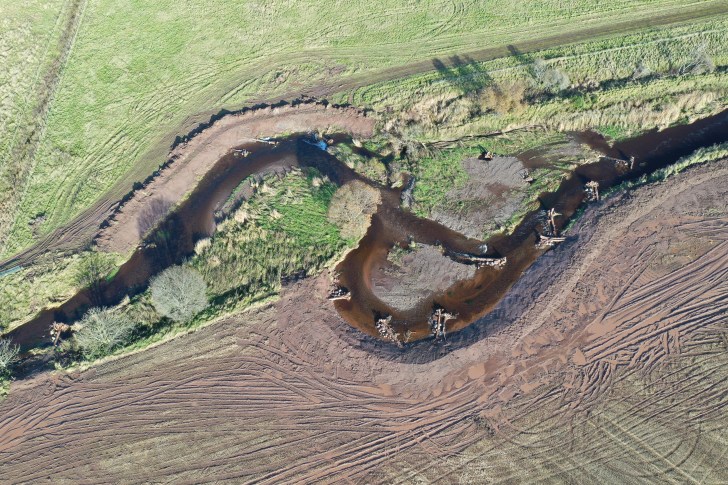
The Green Deal and European freshwaters
For all its ambition, what does the European Green Deal mean for freshwaters? Key aspects of the Green Deal related to freshwater ecosystems include the promotion of environmentally-friendly food production systems and the restoration of European ecosystems and their services. The Green Deal is designed to offer a framework through which existing EU policies such as the Water Framework Directive and Bathing Water Directive can be integrated towards these ambitious goals.
One key new policy, the EU 2030 Biodiversity Strategy, launched under the Green Deal umbrella in 2020, states that at least 25,000km of European rivers will be restored to a free-flowing state by 2030. The Strategy also highlights the role of freshwater protections in stemming biodiversity loss and mitigating climate change, for example through the restoration of wetlands.
Another important link between the Green Deal and freshwater management is a zero pollution ambition for the continent. In May 2021, the European Commission adopted the EU Action Plan: Towards a Zero Pollution for Air, Water and Soil, which sets out a vision for zero harmful pollution to air, water and soil by 2050, through a series of measures to prevent, remedy, monitor and report on pollution.
However, achieving these goals will require significant new measures, according to Dr. Magdalena Bieroza and colleagues, writing last year in the journal Science of the Total Environment. The authors argue that to achieve significant improvements in freshwater quality, the Green Deal and related policies must address the entire water pollution chain, from sources to impacts. They suggest that at present, existing policies only address the sources and impacts of water pollution in a piecemeal way.
Dr. Bieroza and colleagues highlight the importance of the Farm to Fork and (recently-revised) Common Agricultural Policies in tackling water pollution in Europe under the Green Deal umbrella. More broadly, their study highlights wider challenges of aligning ambitious Green Deal goals with complex and changing environmental pressures across the continent.
+++
This article is supported by the MERLIN project.
Freshwater salinisation: a research agenda for a saltier world

Freshwater ecosystems across the world are becoming increasingly salty, with significant consequences for their health and biodiversity, and the pressing need for more research, according to a new study.
Freshwater salinisation is caused by salts entering rivers, lakes and streams as a result of human activities such as mining and intensive agriculture. Increased dissolved salt concentrations in water can place stress on aquatic organisms and reduce habitat quality. The ongoing effects of climate change, such as drought and sea level rise, are exacerbating freshwater salinisation in some areas.
Salinisation: an emerging freshwater pressure
Despite this increasing global threat, scientists still have patchy knowledge about the causes and consequences of freshwater salinisation. In response, a new open-access study proposes a global research agenda to better understand and manage the salinisation of freshwater ecosystems.
“The global [salinisation] tendency of lakes and streams is a great challenge for freshwater biodiversity, the functioning of ecosystems and human societies that depend on them,” says Professor Miguel Cañedo-Argüelles, from the Department of Evolutionary Biology, Ecology and Environmental Sciences, University of Barcelona.
“To address this challenge, we need a joint effort of the scientific community, practitioners, local communities and policy makers,” continues ICREA researcher Professor Sandra Brucet, from the University of Vic – Central University of Catalonia.
A scientific team from ten countries led by Dr David Cunillera-Montcusí from FEHM, University of Barcelona collaborated to provide an overview of current knowledge on the topic, and to provide directions for future research.
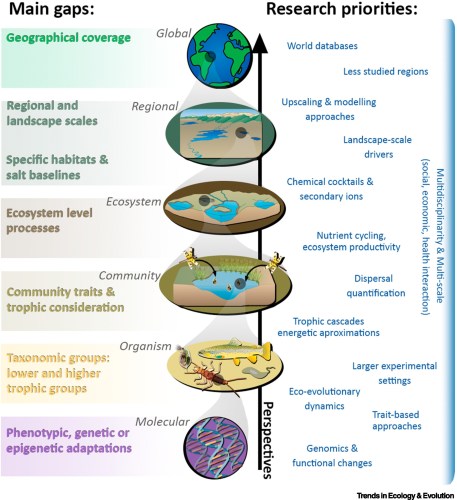
Improving global knowledge of freshwater salinisation
They suggest that global knowledge of freshwater salinisation has an unequal geography. For example, the ecological effects of salt spread on icy roads has been well studied in North America, but not in Europe. Moreover, there are large areas of Africa and South America where salinisation has barely been studied as a pressure on freshwater ecosystems. The authors also found that the salinisation of small freshwater habitats such as ponds – which are increasingly shown to be key for biodiversity across wide landscapes – is poorly studied.
This lack of knowledge is important, because scientists are increasingly showing that salinisation can negatively impact freshwater ecosystems. The authors write, “salinity is one of the main drivers of adaptation, speciation, and community assembly in aquatic systems.” Increasingly salty water can place significant stresses on the self-regulating fluid exchanges many organisms carry out with their environment. In some cases, this can cause species loss, altering the composition of freshwater foodwebs, and the impair the benefits – such as fisheries and drinking water – they can provide to human communities.
Freshwater salinisation can also cause significant alterations to habitat quality, for example by contributing to the acidification of water bodies and the mobilisation of toxic metals, or by altering natural water mixing patterns in lakes. In some areas, saltier freshwater ecosystems can become colonised by invasive saltwater species.
Preparing for a saltier world
Despite these threats, the study authors identify a lack of knowledge on the effects of different kinds of salts in aquatic environments, as well as their impacts at wider regional and landscape scales. They highlight that most existing salinisation studies focus on aquatic insects, meaning there is a need to study the responses of both microorganisms and top predators such as fish, reptiles and amphibians.
The need to understand the effects of freshwater salinisation on aquatic ecosystems, and the humans who depend on them, is exacerbated by the impacts of climate change. Ongoing alterations to patterns of rainfall and air temperatures globally have the potential to intensify salinisation by magnifying the effects of human pressures such as mining, urban run-off and intensive agriculture.
Accordingly, Dr. Miguel Matias, researcher at MNC-CSIC, concludes, ”with the collaborative effort of the international team of scientists that published the review paper, we want to promote this global effort in order to advance towards this direction and raise interest for this global problem that will lead us to a saltier world with many salinised lakes and rivers, and for which we must prepare.”
+++
What are nature-based solutions and why do they matter?
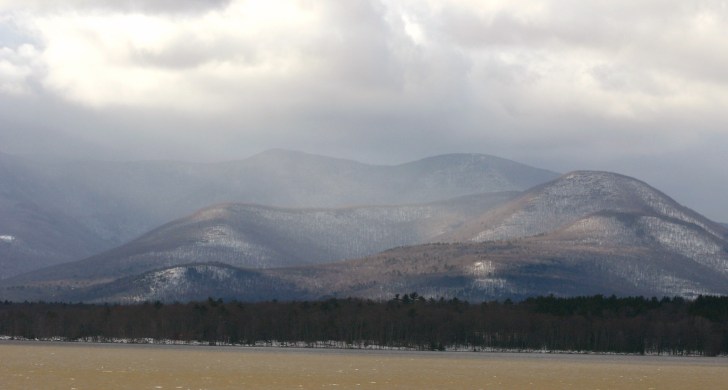
Open a tap in New York City and flows what many locals call the “champagne of drinking water”. New York is one of the few cities in the USA with a public drinking water supply that doesn’t rely on expensive filtration plants. And the reason for this “champagne” supply? The network of forests, streams, lakes and reservoirs in Catskill Mountains watershed to the north of the city. Estimates suggest that if it wasn’t for the natural filtration processes occurring in the watershed the city would have to invest more than $10 billion in water filtration facilities.
The natural processes occurring in the Catskill watershed thus provide a range of environmental, social and economic benefits to local communities. Such aspirations are at the heart of a recent turn in environmental management towards so-called “nature-based solutions”, which aim to use natural processes to help tackle socio-environmental challenges such as climate change, biodiversity loss and flooding.
Nature-based solutions: environments, societies, economies
Nature-based solutions are often designed to bring benefits to both people and nature. For example, planting native forests in watersheds can help naturally filter water supplies and buffer flooding, whilst restoring peat bogs can help provide biodiversity habitat and boost carbon storage. The IUCN estimates that such nature-based solutions have the potential to supply up to 37% of global climate change mitigation needs.
A commonly-cited definition of nature-based solutions from the IUCN highlights the focus on nature-society benefits, “Nature-based solutions are actions to protect, sustainably manage, and restore natural and modified ecosystems that address societal challenges effectively and adaptively, simultaneously providing human wellbeing and biodiversity benefits.”
In this definition we see the traces of linked concepts of sustainability and ecosystem services that have informed global environmentalism in recent decades. However, what is new about nature-based solutions is the impetus they provide for policy makers to support large-scale and ambitious environmental restoration to address contemporary issues. In so doing, the nature-based solutions concept aims to provide clear economic and social rationales for the value of protecting and restoring natural environments.
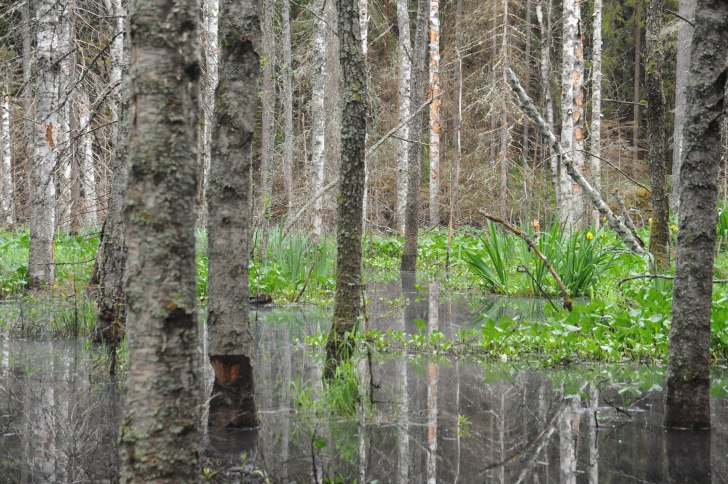
Supporting resilient ‘green’ societies and economies
As a result, nature-based solutions have become a central part of contemporary EU environmental policy, such as the European Green Deal, and in the Horizon 2020 programme. The European Commission defines nature-based solutions as, “Solutions that are inspired and supported by nature, which are cost-effective, simultaneously provide environmental, social and economic benefits and help build resilience. Such solutions bring more, and more diverse, nature and natural features and processes into cities, landscapes and seascapes, through locally adapted, resource-efficient and systemic interventions.”
Like the IUCN definition, we see the emphasis on the multiple benefits of natural systems, however, the EC definition adds the concept of building resilience into both urban and rural landscapes. Resilience here refers not only to how ecosystems will respond to emerging challenges such as climate change, but also how job provision and economic growth might be sustained within increasingly “green economies”. In Europe, therefore, nature-based solutions represent a significant tool for transformative change towards greener, climate-resilient societies.
Nature-based solutions are increasingly being deployed in freshwater environments, notably in the 17 flagship restoration sites across Europe managed by the MERLIN project. For example, the restoration of peatlands and wetlands in Sweden is targeted at increasing carbon storage and enhancing biodiversity (such as through the reintroduction of beavers). Similarly, the restoration of natural river channels and floodplains in the highly-modified Emscher catchment in Germany is designed to improve habitat, reduce flooding and create new spaces for recreation.
Nature-based solutions: questions, issues and futures
Nature-based solutions are increasingly being adopted in environmental policy and management, not only in Europe but across the world. But there remain significant questions for their adoption. Where should the line be drawn as to what counts as a ‘natural’ intervention? Which communities and stakeholders (human or non-human) might nature-based solutions benefit, and which might be overlooked?
In complex and often-uncertain contemporary landscapes, can all the potential pros and cons of a particular nature-based solution be fully considered? In addition to their benefits, could nature-based solutions unintentionally foster negative ‘ecosystem disservices’ in a landscape? And, significantly, given the centrality of economic benefits to the concept, can nature-based solutions remain apart from issues of corporate ‘greenwashing’ through schemes such as carbon offsetting through tree planting?
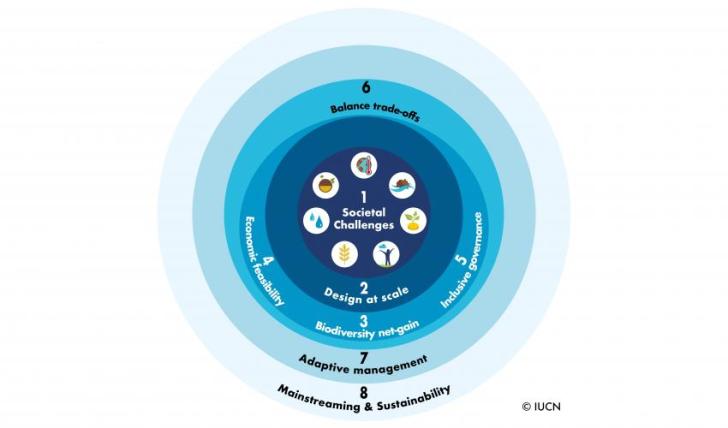
In response to such ongoing questions, in 2020 the IUCN provided the first ‘Global Standard for Nature-based Solutions’, offering eight specific criteria for their application. First, there is the need to clearly identify the social challenge to which the solution responds. Second, the value of the solution needs to be considered in terms of its effects across entire landscapes. Third, fourth and fifth are focused on the key pillars of sustainable development: environment sustainability, social equity and economic viability.
The sixth criterion addresses the need to identify trade-offs in decision-making between everyone affected by the solution, on both short- and long-timescales. Seventh, the need for an adaptive approach to learning through management is highlighted in designing solutions which evolve and improve over time. Finally, the IUCN highlight the need to mainstream nature-based solutions within national and international policy in order to underpin their long-term success. The IUCN criteria form the basis of a self-assessment tool for environmental managers using nature-based solutions.
Nature-based solutions offer rich potential in gaining support for environmental protection and restoration, by placing nature at the heart of social life. We will continue to follow their development and application, both in Europe and beyond, on this blog in the coming years.
+++
This article is supported by the MERLIN project.
Top 10 posts of 2021

In these slow days between Christmas and New Year we continue our annual tradition of looking back at the year’s top posts. There are encouraging signs that crucial freshwater issues are being taken increasingly seriously in environmental policy and management, with innovative new approaches to conservation and restoration being implemented.
However, the picture is still troubling for freshwaters: with multiple stressors including climate change, habitat loss and pollution all contributing to significant declines in aquatic biodiversity globally. But, with the growth in collaborations between dedicated freshwater scientists, policy makers, environmental managers and public activists across the world we have reason to be hopeful that 2022 could be the year in which we ‘bend the curve‘ of aquatic biodiversity declines, and safeguard our rivers, lakes, ponds, streams and wetlands for future generations.
You can explore all of last year’s posts here.
+++
Multiple stressors shape river ecosystems across Europe (January)

In recent years, freshwater scientists across the world have explored how the ecological health of rivers and lakes is impacted by multiple human stressors. Such stressors – for example, pollution, water abstraction, bank alterations and habitat loss – often act in complex combinations, which can variously intensify or reduce their individual impacts. Freshwater managers and conservationists have long known that aquatic ecosystems are affected by a wide range of human activities, but until recently there has been little evidence-based guidance on how to manage for their impacts. Recent multiple stressor research seeks to untangle how different stressors interact, the impacts they can have, and the management actions that are most effective for tackling specific multiple stressor combinations. A new study provides the first overview of how multiple stressors determine ecological status in European rivers. (read more)
+++
Wetlands: Havens of Life (February)

Communities around the world recently celebrated World Wetlands Day, an event held to raise global awareness about the vital role of wetlands in supporting biodiversity and human wellbeing. During online conversations around the event we discovered a fascinating short film titled ‘Wetlands: Havens of Life’. The film, made by author Julian Hoffman in collaboration with The Wetlands Initiative, documents the rich cultural and ecological diversity of the Prespa Lakes in Southern Europe. Julian is an award-winning landscape writer who has lived in the Prespa Lakes region since 2000. His most recent book Irreplaceable: The Fight to Save our Wild Places explores vital conservation and restoration projects in imperilled ecosystems across the world. We spoke to Julian to find out more about his film, the Prespa Lakes, and the value of wetlands. (read more)
+++
World’s ‘forgotten fishes’ in catastrophic decline (February)
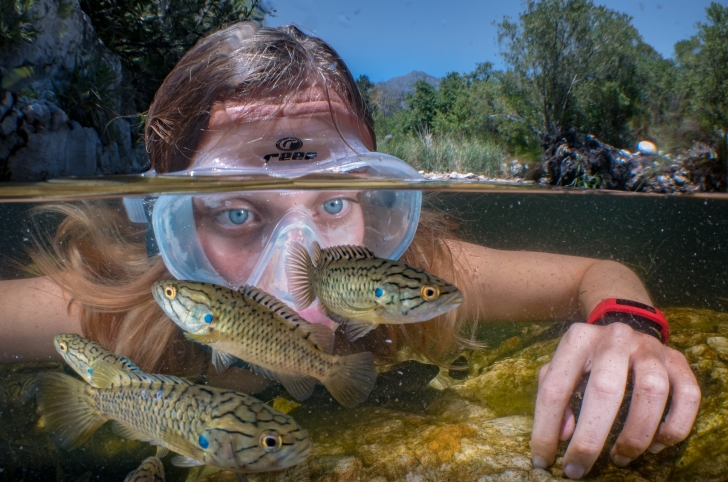
Nearly a third of global freshwater fish species are threatened by extinction, according to a major new report compiled by 16 conservation groups. The World’s Forgotten Fishes report states that 80 species of freshwater fish are known to have gone extinct, with 16 of these extinctions occurring in the last year alone. Since 1970, populations of migratory freshwater fish have fallen by 76%, and large ‘megafauna’ fish species by a startling 94%. The report, published by a coalition of groups including WWF, IUCN, and the Alliance for Freshwater Life, highlights the rich variety of global freshwater fish species: the current known total of 18,075 species accounts for over half of all the world’s fish species, and a quarter of its vertebrate species. (read more)
+++
Towards a freshwater ethic: lessons from Aldo Leopold for contemporary aquatic conservation (March)

“All ethics so far evolved rest upon a single premise: that the individual is a member of a community of interdependent parts. The land ethic simply enlarges the boundaries of the community to include soils, waters, plants and animals, or collectively the land.” This is the core of early-20th Century American conservationist Aldo Leopold’s outlook on environmental management, or as it his commonly known, his ‘land ethic’. More than half a century later, then, could Leopold’s work be used to develop a ‘freshwater ethic’ which could strengthen contemporary aquatic conservation? According to a team of freshwater researchers writing in the Aquatic Conservation journal, there is rich potential to rediscover Leopold’s work in this way. (read more)
+++
‘Plastic is everywhere’: microplastics found in 1950s freshwater fish specimens (May)

Freshwater fish have been swallowing microplastics since at least the 1950s, according to a newly published study. Microplastics – tiny threads and fragments of plastic resulting from the breakdown of waste, clothing and cosmetics – are an increasingly important topic of environmental concern, having been found in deep oceans, on high mountain tops, and even in the atmosphere. A team of researchers examined preserved freshwater fish specimens from the Chicagoland region, USA, kept in the Field Museum collection. Four species in the museum collection – largemouth bass, channel catfish, sand shiners, and round gobies – had specimen records dating back to 1900. The team’s analysis shows that once plastic manufacturing became industrialised in the 1950s, microplastics began to significantly accumulate in the fishes’ bodies. (read more)
+++
Developing MEASURES for reconnecting migratory fish habitats in the Danube basin (May)
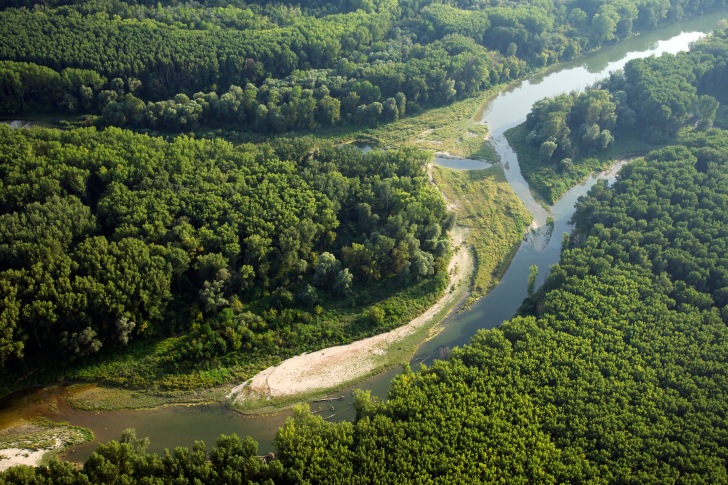
In 2019 we featured a major new freshwater project, MEASURES, founded to manage and restore ecological riverine corridors in the Danube River basins. Funded by the EU as part of the Danube Transnational Programme, MEASURES aimed to improve habitat quality and connectivity along the Danube in order to support populations of six threatened sturgeon species, as well as other migratory fish and wider aquatic biodiversity in the basin. Earlier this month, the project held its final conference, bringing together participants from diverse fields interested in the conservation and restoration of the Danube basin. “Our three year cooperation allowed major steps in gaining new knowledge on migratory fish in the Danube River Basin and transferring these insights into practice. MEASURES is an excellent example of cross-sectoral international collaboration to address an important aspect of freshwater biodiversity,” says project co-ordinator Thomas Hein. (read more)
+++
IPCC Climate Change Report: Three Key Themes for Freshwaters (August)
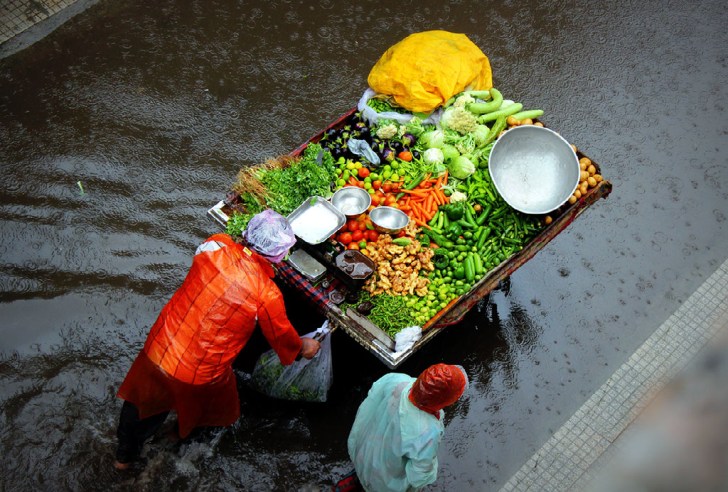
Humans are altering Earth’s climate in unprecedented and potentially irreversible ways, according to the latest Intergovernmental Panel on Climate Change (IPCC) Report, released today. The report is the sixth assessment of global climate science published by the IPCC since 1988, and is based on the collaborative review of peer-reviewed science by hundreds of experts across the world. It states that global climate change is widespread, rapid and intensifying, and that many ongoing observed climate changes are unprecedented in thousands, if not hundreds of thousands of years. The complex impacts of multiple climate change pressures on aquatic systems are increasingly well-documented. In this context, the IPCC report highlights three overarching impacts on freshwater ecosystems arising from its assessment. (read more)
+++
Rights of Rivers at the IUCN World Conservation Congress 2021 (September)

Today is the final day of the IUCN World Conservation Congress 2021, held in Marseille. The Congress has brought together over a thousand participants from government, academia, public and indigenous peoples’ organisations to set priorities for global conservation and sustainable development. The Congress programme states that environmental rights and equitable governance are crucial in protecting freshwater ecosystems, and supporting the human communities that depend on them. It asks, “How can existing laws, policies, and institutions be strengthened and adapted to ensure the more effective and sustainable management of water resources at the local, national and transboundary levels? How can we effectively strengthen governance and stewardship to maintain healthy watersheds, and address pollution and contamination?” One response to these questions comes in the form of the Rights of Rivers movement, highlighted at the Congress. The movement states that all rivers should be regarded as living entities that possess legal standing in a court of law. This means that ‘fundamental rights’ of rivers – such as free flows, protection from pollution, biodiversity habitat and ecological functioning – are given strong legal protections. (read more)
+++
Mainstreaming freshwater restoration in Europe through MERLIN (October)
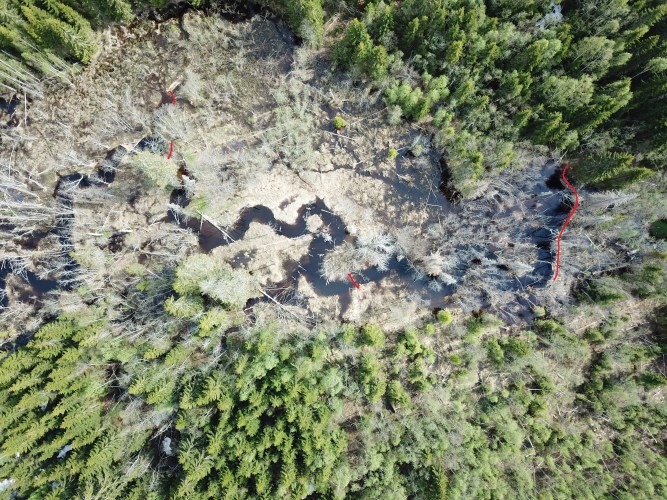
Europe’s environments are in an alarming state. Despite decades of environmental action and policy, human activities continue to alter, degrade and destroy ecosystems across the continent. All of this comes with a cost, not only to the rich biodiversity European ecosystems support, but also to the human communities who rely on nature for food, water, jobs and well-being. As a result, there is a pressing need for damaged ecosystems to be brought back to life through ecological restoration across Europe. Freshwaters are key to such transformative change. As this blog has documented, freshwaters are vital ‘life support systems’ for both humans and wildlife alike. But what can we do about the situation? MERLIN, a major new EU-funded project, launched today, has ambitious goals to kick-start the restoration of Europe’s freshwater environments over the coming years. (read more)
+++
Bringing freshwater research and policy out from ‘beneath the water’s surface’ (December)
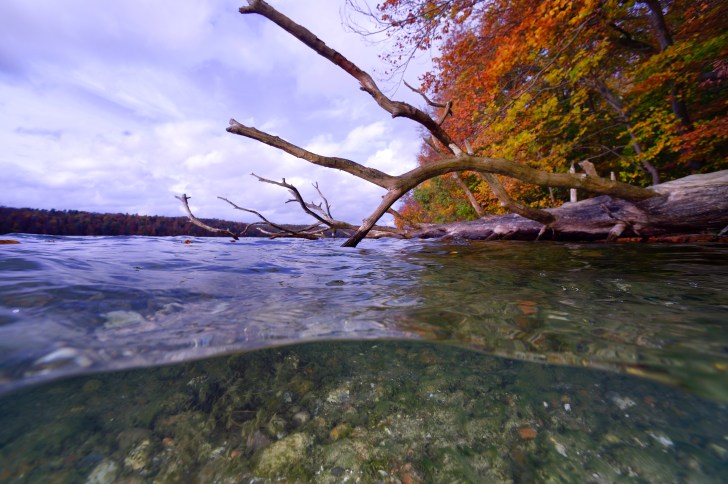
Global freshwater biodiversity is in big trouble. The latest WWF Living Planet report suggests that freshwater populations across the world have declined by an average of 84% in the last 50 years. This alarming trend is due to multiple pressures on freshwater ecosystems including climate change, habitat loss, over-harvesting and water pollution. The report suggests that biodiversity loss is happening much faster in freshwaters than on land or in the oceans. In recent years, we have covered a series of ambitious plans to halt freshwater biodiversity declines, including the Emergency Recovery Plan for Freshwater Biodiversity and Safeguarding Freshwater Life Beyond 2020. Earlier this year a major ‘horizon scanning’ paper highlighted twenty-five essential research questions to inform the protection and restoration of freshwater biodiversity. Across all these initiatives, what is clear is the pressing need to deepen our understanding of freshwater ecosystems and their threats, whilst also gaining widespread political and public support to help halt their global declines. Today a team of researchers representing 90 global scientific institutions strengthen this movement through a new global agenda for freshwater biodiversity research. (read more)
+++
Thanks for reading, and a happy 2022 to you! If you are in need of more freshwater stories, you can read our previous annual post round-ups for 2020, 2019, 2018, 2017 and 2016.
An ‘ecological corridor’ for migratory fish in the Danube basin
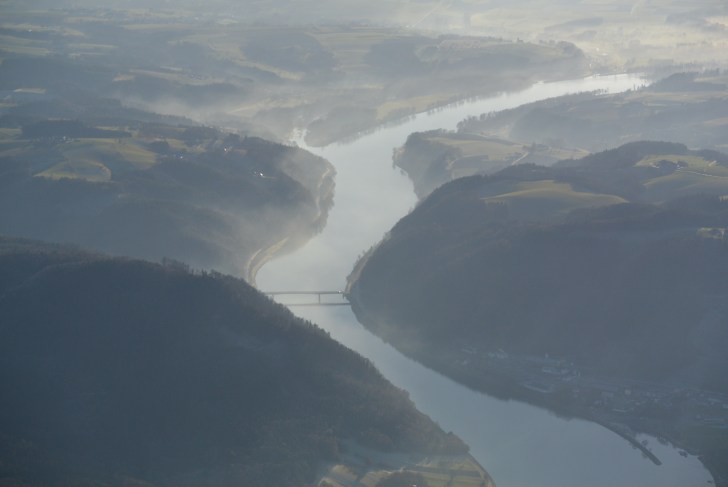
Migratory species of sturgeon have significantly declined in the Danube River basin over the last century. Multiple pressures including habitat loss, pollution, overfishing and the fragmentation of migratory routes have caused populations of sturgeon and other migratory fish to crash in the basin in recent years.
Last week, the MEASURES project published an ambitious new strategy to help restore migratory fish populations in the Danube basin. The Danube River Corridor Strategy states that the Danube river should be considered as an ‘ecological corridor’ along which governments should co-operate to ensure the safe passage of migratory fish.
“The Danube River Corridor Strategy proposes measures to support the populations of migratory fish species in the Danube,” say the strategy authors Gertrud Haidvogl, Cristina Munteanu and Ralf Reinartz. “It frames the Danube as an ecological corridor, and offers measures to re-establish continuity, to protect and restore habitats for different life stages of migratory fish, and to support populations, for example through establishing ex-situ facilities. In short, ‘habitat’ plus ‘connectivity’ plus ‘viable populations’ equals ‘healthy ecological corridor for migratory fish’.”
The strategy is published at a key time for sturgeon conservation. “Danube sturgeons are close to extinction, and measures to safeguard their populations are urgently needed,” the authors say. “A large proportion of the rest of the migratory Danube fish community and biodiversity is also in dire straits. It was important to propose specific measures such as ex-situ facilities as main options to safeguard Danube sturgeon populations until sufficient habitats are available and populations in the wild have recovered.”
The strategy has resulted from a long-term collaboration centred around the MEASURES project. “The publication of the strategy was a collaborative process, and the core team of authors was supported by a group of contributors and reviewers,” say the authors. “Many of the contributors were actively involved in the MEASURES project, as well as in fish and sturgeon conservation.
“The strategy is thus based on the finding of the MEASURES project to a large extent,” the authors continue. “For example, during the project, both potential and actual habitats of migratory fish species were identified and compiled. The genetic profile of Danube sterlet and Russian sturgeon populations for ex-situ measures was identified and individuals from controlled propagation were released in the Hungarian and Romanian Danube. However, information on the threatened status of species, management and conservation of rivers, fish populations, green infrastructure and climate change were also integrated.”
The strategy outlines the key technical measures needed to restore the Danube basin as an ecological corridor. It identifies four sets of priority measures. First, to restore the connectivity of migration corridors, through the removal of barriers such as dams and weirs. Second, to restore and conserve degraded habitats which are crucial for spawning and feeding.
Third, the operation of ‘ex-situ’ fish hatcheries to breed native populations of fish species for reintroduction. Fourth, to encourage better policy coordination between local and national decision-makers to ensure that migratory fish habitats are restored across the entire Danube basin.
“We hope that the ecological corridor for migratory fish concept becomes an important tool for aquatic conservation,” say the authors. “During the project, all project partners were in close contact with concerned stakeholders, in particular with those involved in river management and nature conservation.
“We hope that this exchange, and improved knowledge of the most pressing issues, will support the implementation of high priority measures, and that all the actors involved in MEASURES will continue to work towards the conservation and restoration of the Danube as an ecological corridor,” the authors conclude.
+++
Funded by the EU as part of the Danube Transnational Programme, MEASURES aimed to improve habitat quality and connectivity along the Danube in order to support populations of threatened sturgeon species, as well as other migratory fish and wider aquatic biodiversity in the basin.
Why freshwater ecosystem restoration makes economic sense

Amidst calls to tackle the climate emergency and biodiversity crisis, Nature-based Solutions are emerging as a vital tool for contemporary environmental management. Nature-based Solutions (or NbS, as they’re commonly termed) are approaches which use natural systems or processes to help achieve both social and environmental goals.
A growing body of evidence shows that NbS – such as habitat restoration or pollution mitigation – can have positive effects for both biodiversity and local economies. However, there is the need to better quantify their economic benefits in order to encourage their wider uptake amongst environmental policy makers and managers.
The first MERLIN webinar will be held next week to discuss the economic benefits that NbS bring to freshwater ecosystem management. On Wednesday 15th December, Sien Kok from DELTARES and Sanja Pokrajac from the WWF Living European Rivers initiative will outline the findings of a recently published report on freshwater NbS.
Examining the outcomes of river restoration on the lower Danube and Elbe, the report states that NbS can deliver significant linked ecological and economic benefits. It states that floodplain restoration on the lower Danube has the potential to improve ecological quality, restore hydrological and morphological processes and increase water quality and biodiversity. At the same time, these restored environmental processes help reduce flood risk and support local tourism and fishing economies, Sien Kok and colleagues suggest.
The report authors undertook a cost-benefit analysis of NbS restoration on the lower Danube. They found that ‘business as usual’ management using dikes for flood protection would cost €572 million a year. By 2100, increased climate-change risks mean that this model of flood management would cost around €3.3 billion to maintain. In addition, the authors suggest that the Danube floodplains would remain largely agricultural, despite declining yields as a result of salinisation and aridification.
On the other hand, the report suggests that the large-scale restoration of 4000km2 of lower Danube floodplains would cost around €230 million a year to maintain, totalling €1.36 billion by 2100: less than half of the ‘business as usual’ model. Moreover, the authors state that floodplain restoration would likely stimulate economic diversification across tourism and fisheries in the basin.
The Elbe catchment has been heavily-modified through the construction of extensive embankments to control flooding and create space for agriculture. However, water quality is low in much of the catchment and there are increasingly severe flooding events. The report examines the value of large-scale floodplain restoration along the Elbe, suggesting that it could bring economic benefits of €2520 million to local economies. These benefits result from projected improvements to flood protection, water quality, biodiversity protection and greenhouse gas emission mitigation.
Broadly, the report suggests that ‘making space for rivers’ through such Nature-based Solutions offers sustainable and economically-beneficial means of tackling the effects of the climate emergency and biodiversity crisis in freshwater ecosystems.
The authors argue that such benefits align closely with the priorities of EU policies such as the Green Deal, climate change Adaptation Strategy and Biodiversity Strategy. The task, is to better understand and quantify these benefits in order to stimulate their wide-scale uptake in environmental policy and management.

+++
MERLIN Webinar #1
Wednesday 15th December 2021, 1600 CET
Free
Contact MERLIN to receive webinar access information: info@project-merlin.eu
This article is supported by the MERLIN project.
Global freshwater biodiversity is in big trouble. The latest WWF Living Planet report suggests that freshwater populations across the world have declined by an average of 84% in the last 50 years. This alarming trend is due to multiple pressures on freshwater ecosystems including climate change, habitat loss, over-harvesting and water pollution. The report suggests that biodiversity loss is happening much faster in freshwaters than on land or in the oceans.
Despite this, freshwaters can be overlooked by environmental funding schemes. A recent report on European foundation funding suggests that inland waters accounted for only 1.75% of the €745 million approved for environmental work in 2018. It is common for freshwaters to be subsumed into terrestrial habitats in funding allocations, meaning their conservation and restoration is not adequately supported.
In recent years, we have covered a series of ambitious plans to halt freshwater biodiversity declines, including the Emergency Recovery Plan for Freshwater Biodiversity and Safeguarding Freshwater Life Beyond 2020. Earlier this year a major ‘horizon scanning’ paper highlighted twenty-five essential research questions to inform the protection and restoration of freshwater biodiversity. Across all these initiatives, what is clear is the pressing need to deepen our understanding of freshwater ecosystems and their threats, whilst also gaining widespread political and public support to help halt their global declines.

Today a team of researchers representing 90 global scientific institutions strengthen this movement through a new global agenda for freshwater biodiversity research. “Biodiversity loss in freshwater is a global crisis that is literally hidden beneath the water’s surface,” says project co-lead Professor Sonja Jähnig from the Leibniz Institute of Freshwater Ecology and Inland Fisheries (IGB) and Humboldt University in Berlin. “At present, freshwater biodiversity is declining at an unprecedented rate. The data bear this out very clearly,” Professor Jähnig outlines.
“Despite the ongoing, unprecedented decline, international and intergovernmental science-policy platforms, funding agencies and major non-profit initiatives still fail to give freshwater biodiversity the priority it deserves,” continues project co-lead Dr Alain Maasri, also from IGB.
In a newly published open-access article in Ecology Letters, Jähnig, Maasri and a diverse team of global researchers identify 15 priority needs to improve freshwater research and support policy, conservation and restoration. These needs are grouped into five key research themes: data infrastructure, monitoring, ecology, management and social ecology (Figure 1). Across each theme the authors identify three types of challenge, relating to: knowledge gaps (A); insufficient communication (B); and inadequate policy responses (C).

“The agenda is intended to provide the impetus for a stronger global commitment to research and conservation of freshwater biodiversity. However, concrete actions must always be developed at local, regional and national levels,” emphasises Professor Jähnig. “It‘s not about pointing fingers at policy makers or other stakeholders. It is up to all of us – including us researchers – to set priorities and work better together,” adds Dr Maasri.
The 15 priority needs, initiated at an Alliance for Freshwater Life workshop in November 2018, highlight the major gaps in existing freshwater knowledge, and the inadequate and unequal access to available datasets. They show the potential of new technologies such as automated image analysis and artificial intelligence in improving freshwater monitoring schemes, whilst also noting the importance of incorporating citizen science and indigenous knowledge in understanding freshwater systems.
The authors highlight the need to better understand the ecological relationships that determine how freshwater ecosystems function. This is important in guiding conservation and restoration management in response to multiple pressures, and in showing the importance of healthy ecosystems to people and policy-makers through concepts such as nature-based solutions.
Similarly, the research team outlines the need to design freshwater conservation strategies that consider the social, cultural and economic contexts in which they take place. Key to this process is improving public awareness of freshwater declines which largely take place “beneath the water’s surface” and embracing traditional and indigenous ecological knowledge. Further, the authors highlight the need to address trade-offs between ecological, economic and social priorities by engaging local communities, scientists and policy makers around freshwater systems.
”Above all, lakes, rivers, ponds and wetlands should be explicitly recognised as important habitats and ecosystems in their own right by policy makers and funding organisations, and in management and restoration programs,” Professor Jähnig concludes.
+++
Optimising nature-based solutions in pressurised river catchments
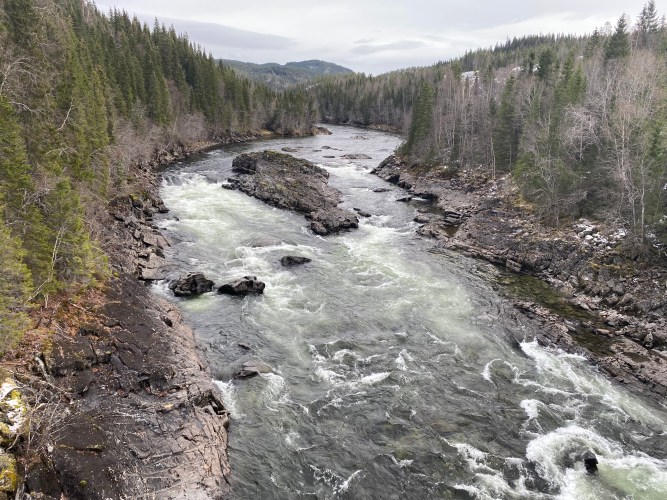
Rivers are important conduits of water through many landscapes, and have long been key to human settlements and development. They often host remarkable biodiversity and provide various benefits for human livelihood and wellbeing, including water for irrigation, domestic use, and energy generation. Rivers often provide room for transportation and recreation, whilst their floodplains can support water purification, carbon storage, and flood protection.
Environmental change, land fragmentation, and land use change are primary causes for the global loss of biodiversity, habitats and ecosystem services. We are already experiencing increased levels of conflict over land use and freshwater resources, both in Norway and globally. These conflicts often relate trade-offs between safeguarding biodiversity, climate change mitigation and adaptation, sustainable energy production, agricultural production, intensified forestry and increasing urbanisation.
Climate change is rapidly altering river flows, and flooding poses an increased risk for human safety and infrastructure in floodplains. There is clearly an urgent and increasing need for holistic and science-based management approaches that can reduce potential conflicts among stakeholders, as well as provide information and tools to facilitate rapid and scale-relevant decision making solutions.
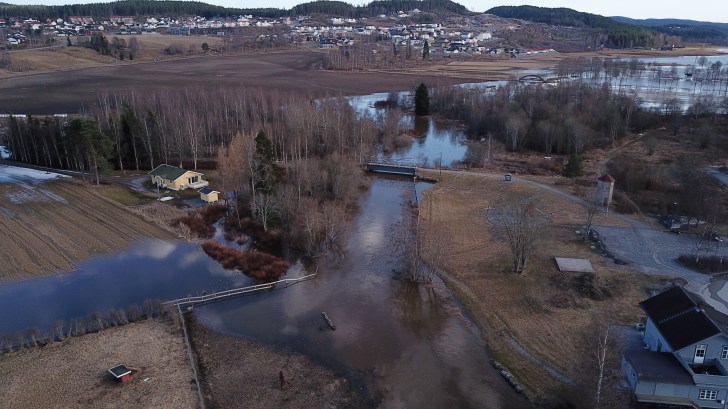
SABICAS: Developing tools to safeguard biodiversity and improve climate adaptation in river catchments under pressure
What can we do to manage such complex and pressurised river catchments? One response comes from the SABICAS project, funded by The Research Council of Norway under a new call focusing on collaborations between research and non-research partners. It involves eleven partners including research institutes, universities, non-research partners and stakeholders.
“In the SABICAS project, we will focus on two Norwegian river catchments under pressure from a range of land-uses,” says SABICAS manager Dr. Benjamin Kupilas from NIVA, Norway. “We will also explore how to optimally convert parts of the current land use into resilient, eco-functioning nature-based solutions using riparian zones, wetlands, and floodplains.”
Conserving and restoring ecosystem processes across riparian zones, wetlands and floodplains offers multiple opportunities for tackling the current biodiversity and climate crisis. In so doing, it signposts a sustainable future for people and nature, without a major loss of economic value. Conserving and restoring these ecosystem types fits within the concept of nature-based solutions, defined by the IUCN as, “actions to protect, sustainably manage and restore natural or modified ecosystems that address societal challenges effectively and adaptively, simultaneously providing human well-being and biodiversity benefits.”
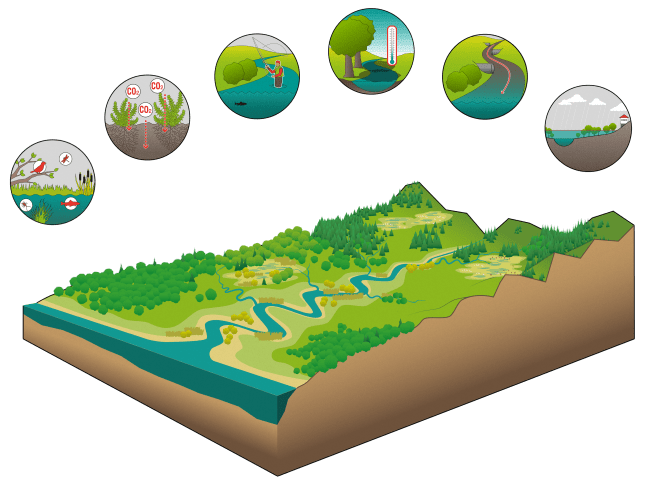
SABICAS aims to provide tools and knowledge needed to quantify the benefits and co-benefits of such nature-based solutions. The goal is to facilitate dialogue and decision making among stakeholders and managers. SABICAS will engage with all key catchment stakeholders – from recreational fishermen to farmers, from local grassroots to policy makers – through several activities, including workshops and living labs.
“We will use stakeholder input to influence how we investigate effects of nature-based solutions. We will continue the dialogue on how to prioritise the different solutions at appropriate scales throughout the project,” says SABICAS coordinator Prof. Nikolai Friberg from NIVA. “The close dialogue with all interest groups will enable a faster transition towards green and sustainable solutions in river catchments where there are multiple conflicting interests.”
SABICAS will find out which types and designs of nature-based solutions are most effective. The project will develop model-based tools to optimise nature-based solutions at the catchment scale, that can be used for the management of rivers in the future.
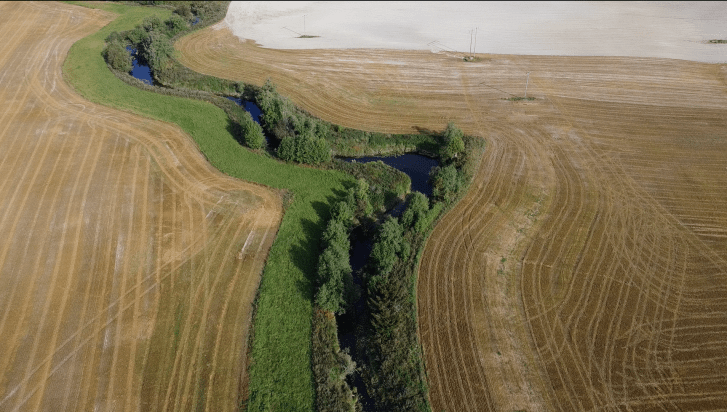
Knowledge-based tools to tackle climate change and the biodiversity crisis
The UN Decade on Ecosystem Restoration starts this year and signifies a new era. The ambitions of the EU Green Deal and Biodiversity Strategy for 2030 demand significant actions, and restoration will be a key component in reaching their targets. We are likely to see an unprecedented upscaling of restoration actions in the coming years, creating an enormous demand for skills that can drive this process, from planners to practitioners, all underpinned by science.
Nature-based solutions are thus likely to be implemented at increasing rates to help alleviate the pressure on both nature and humans. The escalation of climate change, the threat to biodiversity, and increased risk from pollutants must be met with appropriate measures to secure human wellbeing across entire river catchments. Projects such as SABICAS and MERLIN will be vital in providing knowledge-based tools and to ensure that appropriate measures are implemented as efficiently as possible.
+++
SABICAS – SAfeguard BIodiversity and improve Climate Adaptation in catchment areas under pressure: tools and Solutions (The Research Council of Norway project no. 320176)
This article is supported by the MERLIN project.
Managing and restoring fragmented Anthropocene rivers

Rivers are hotspots for global biodiversity, and bring a host of benefits to both humans and the catchments through which they flow. However, river systems across the world are increasingly fragmented by dam and hydroelectric construction, and by droughts exacerbated by climate change.
Healthy river systems depend on environmental processes taking place across entire landscapes: from wetlands, springs and sources through tributaries and channels as waters flow towards an estuary. Scientists increasingly recognise that the health of river system depends on these catchment processes being connected and free-flowing.
“Flows of water, nutrients, sediment, fish and insects through catchments all require well-connected river courses,” says Dr. Thibault Datry, a freshwater scientist at INRAE. “To adequately consider this connectivity in management, monitoring or restoration plans for rivers requires a broad, so-called river-network, approach. However, the majority of practices and policies for freshwater ecosystem management are based on local scale processes.”
Dr. Datry and a team of colleagues led by Dr. Núria Cid Puey, have published a new study seeking to address this issue. Writing in Frontiers in Ecology and the Environment, the research team argue that sustainable management of rivers in the Anthropocene – the present global epoch in which humans cause wide-scale changes to Earth environments – requires approaches which span entire catchments.
“The scientific understanding of how biodiversity and ecosystems are organised in dynamic river environments has progressed substantially in the past decade,” says Dr. Datry. “In particular, meta-system theory tells us how local populations, communities and ecosystems are connected by gene flows, the dispersal of individuals, and flows of resources across a landscape.
“Our paper proposes that this metasystem approach can, and should, be better integrated into conservation, restoration and biomonitoring of rivers,” says Dr. Datry. “We recommend a series of measurements and indicators that could be integrated into European and national biodiversity and water governance to make management of river networks fit for the Anthropocene.”
The research team, supported by the ALTER-Net High Impact Action initiative, outline that river fragmentation – for example, through dam construction – doesn’t only affect local biodiversity and water flows, but can have cascading impacts on wider catchment ecosystems. For example, fragmentation can isolate populations of species which live across a river system, meaning that gene flows and biological interactions are reduced.
This fragmentation of a river system can have significant effects on how its ecosystems function, and the benefits they can bring to people. For example, the decomposition of leaf litter – a key source of nutrients to river ecosystems – is particularly impaired by fragmentation, so altering nutrient cycling across catchments.
The research team propose three recommendations for river policy and management in the Anthropocene. First, they suggest that conservation management needs to identify how ‘metapopulations’ of species are spread across river catchments, and design protected areas which ensure their ongoing health.
Second, they identify the need to develop methods for monitoring the connectivity and fragmentation of river systems in order to understand how species move across catchments. This work could allow the identification of key sites for species to recolonise river systems through restoration initiatives.
Third, the team advocate for adaptive ecosystem-based management which is based on an understanding of the flows of water, sediment, nutrients and species through a river system. They outline the need for management which addresses biodiversity and ecosystem processes, and the benefits they provide, across entire catchments.
In so doing, the team suggest that fragmented Anthropocene rivers might be better protected and restored, so contributing to the implementation of major environmental policies such as the European Biodiversity Strategy, the US Endangered Species Act and the Aichi Biodiversity Targets.
+++
Mainstreaming freshwater restoration in Europe through MERLIN
Europe’s environments are in an alarming state. Despite decades of environmental action and policy, human activities continue to alter, degrade and destroy ecosystems across the continent. All of this comes with a cost, not only to the rich biodiversity European ecosystems support, but also to the human communities who rely on nature for food, water, jobs and well-being.
As a result, there is a pressing need for damaged ecosystems to be brought back to life through ecological restoration across Europe. Freshwaters are key to such transformative change. As this blog has documented, freshwaters are vital ‘life support systems’ for both humans and wildlife alike.
Rivers, lakes, peatlands and wetlands create a host of benefits for people: drinking water, flood protection, water filtration, carbon storage, food supplies, tourism, and mental well-being, amongst numerous others. However, when freshwater habitats are degraded and destroyed, their ability to provide such benefits to people is impaired.
This was seen recently in the flood disasters across Germany and Belgium, where decades of heavy river engineering coupled with extreme rainfall as a result of climate change created the conditions for catastrophic flooding. These floods are stark evidence of how the ongoing impacts of climate change are being intensified by the degradation of natural freshwater habitats.
MERLIN: supporting innovative freshwater restoration in Europe
But what can we do about the situation? MERLIN, a major new EU-funded project, launched today, has ambitious goals to kick-start the restoration of Europe’s freshwater environments over the coming years.
The MERLIN project involves 44 partners from across Europe, including universities, research institutes, nature conservation organisations, and stakeholders from business, government, and municipalities. One of four flagship restoration projects in the EU Green Deal, the project will invest €10 million into restoring rivers, lakes, peatlands and wetlands across the continent.
“Water bodies and their floodplains need more space – they have to be renaturalised,” says MERLIN co-ordinator Prof. Daniel Hering from the University of Duisburg-Essen (UDE), Germany. “One focus is on cooperation with industries that can benefit from restoration, for example agriculture, drinking water production and insurance companies,” Prof. Hering outlines.
MERLIN will support 17 ongoing freshwater restoration projects across Europe. These include the restoration of heavily modified rivers, such as the Emscher catchment in Germany; wetland restoration, such as in Kampinos, Poland; the reconnection of natural floodplains, such as on the Danube River across Austria and Hungary; and dam removal, such as on the Oulujoki Iijoki catchments in Finland.
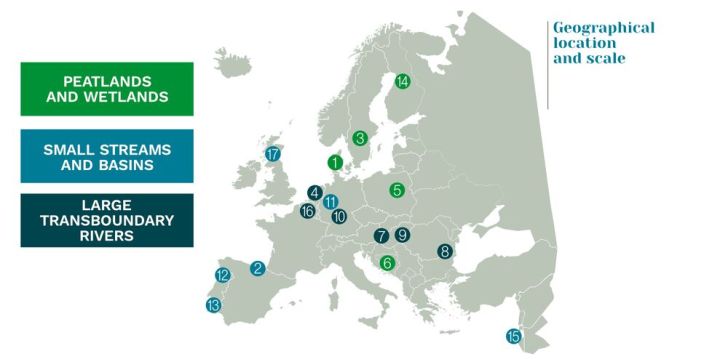
Nature-based Solutions bring benefits to humans and ecosystems
A key theme across all the case studies is that freshwater restoration can bring about multiple benefits, both for humans and ecosystems. The MERLIN project seeks to learn from these sites to develop best practice approaches for innovative environmental restoration management. It will also examine how these approaches can be scaled-up across catchments and the continent.
More broadly, the project aims to use evidence from these sites to place freshwater restoration at the heart of contemporary environmental policy and management aiming for sustainable, low-carbon futures. The benefits of freshwater restoration will be quantified, both ecologically and economically, as a means of strengthening arguments for its implementation.
Nature-based Solutions are an important part of the tool-kit for achieving this goal. Nature-based Solutions are actions to manage and restore ecosystems which simultaneously provide human well-being and biodiversity benefits. For example, reconnecting rivers to their floodplains has the potential to both restore lost habitats, and provide enhanced natural flood protections.
“Many social groups benefit from restoration, and it requires the contribution of many actors,” says MERLIN co-ordinator Dr. Sebastian Birk of the UDE Aquatic Ecology Working Group. “Restoration contributes to improving residential environments and creates local recreation areas,” Dr. Birk continues.

Placing freshwater restoration at the heart of European environmental policy and management
MERLIN will bring together new communities of scientists, policy makers, conservationists, environmental managers and the public across Europe to develop Nature-based Solutions for contemporary freshwater restoration. Through training, knowledge-sharing and engagement, these results will be shared extensively with new networks of restoration practice across the continent.
In so doing, the project will support the new EU Green Deal, which states that climate change and environmental degradation present a stark, existential threat, both to Europe and globally. Over the coming years and decades, the Green Deal aims to transform the EU into an economy with no net emissions of greenhouse gases by 2050, and where economic growth is decoupled from resource use. MERLIN’s focus on freshwater restoration will support such goals, particularly those around zero pollution, ecological recovery and circular economies.
“MERLIN is an ambitious project which will demonstrate the importance of transformative freshwater restoration for people and biodiversity across Europe,” says Dr. Birk. “This is the beginning of a positive and productive plan to bring freshwater habitats across the continent back to life, sparking a host of benefits for all our lives,” Dr. Birk states.
+++










 The Freshwater Blog