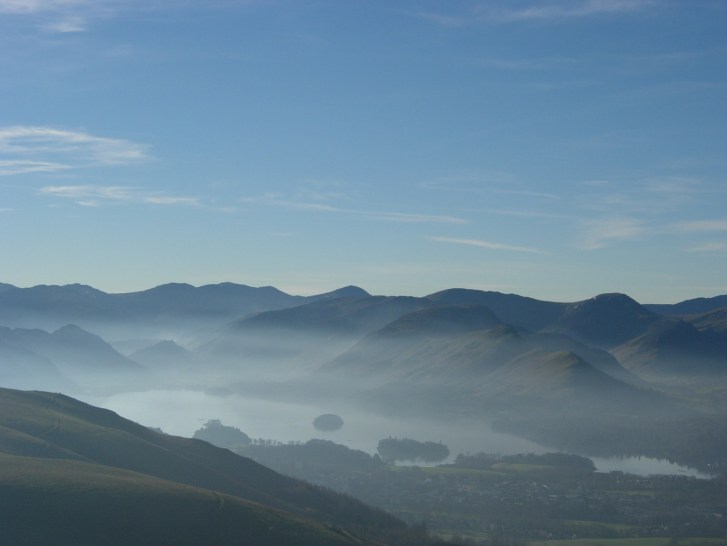
Derwent Water in the English Lake District: the last remaining native habit of the vendace (Coregonus vandesius) which is predated by introduced populations of the non-native ruffe (image: wikicommons)
At first glance, defining a ‘natural’ ecosystem seems relatively straightforward. However, on closer inspection, an understanding of the ecological, climatic and cultural histories of a landscape muddies the waters of identifying a set ‘natural’ ecosystem state. Global ecosystems are in constant flux, influenced by both natural processes and human influence over thousands of years, which makes defining a natural state for their conservation or restoration difficult.
Writing in Freshwater Biology in January, David Strayer discusses the effects of biological invasions of ‘alien’ species into global freshwaters, creating new and ‘novel’ ecosystems. Such invasions are becoming increasingly common, with species spread in ship ballast water (e.g. the round goby), through the aquatic trade (e.g. Canadian pondweed), deliberate introductions, and angler’s bait buckets (e.g. the introduction of ruffe in Scottish lochs).
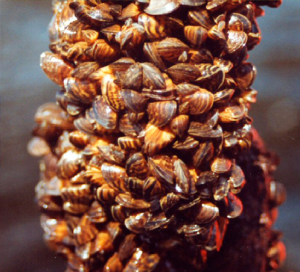
Zebra mussels (image: wikicommons)
There are numerous economic, environmental and cultural services and benefits resulting from the conservation of biodiverse and distinctive freshwater ecosystems – see this short interview with BioFresh partner Dr. William Darwell for more details. Allowing biological invasions to occur unchecked may lead to ecosystems becoming dominated by highly adaptable ‘generalists’ like the zebra mussel or the round goby, potentially at the expense of ecosystem diversity and function (dubbed the “Homogecene”).

Round goby (image: wikicommons)
Given that current ecological thought stresses how ecosystems are in a constant state of flux, it could be argued that we accept biological invasions as natural processes thathave occurred countless times in the past. As Stephen Jay Gould describes, on an evolutionary timescale species are only native to a particular area through a series of chance events, and aren’t necessarily better adapted to their habitat than ‘non-native’ species. However, the issue isn’t that biological invasions are still occurring – it is that their rate and magnitude is being significantly increased by human influence.
Returning then to the idea of what constitutes a ‘natural’ ecosystem, Strayer’s paper raises a number of important points.
The composition of global ecosystems are being increasingly reshuffled and altered. Any attempt to conserve or restore a ‘natural’ ecosystem must be aware of these processes. Strayer’s research suggests that freshwater ecosystems will continue to be flooded with new invasive species in the future, creating new ecosystem assemblages with no historical equivalent to guide their management. His conclusion states “the best solution to the management problems caused by alien species will be to work aggressively to cut the arrival rates of new invaders”.
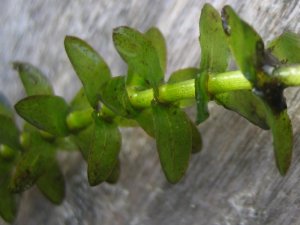
Canadian pondweed (image: wikicommons)
For Richard Hobbs and colleagues, biological invasions make us re-assess a stark distinction between ‘natural’ and ‘non-natural’ ecosystems – moving away from an over reliance on excluding alien species at all costs, instead focussing on appropriately managing emerging ecosystems . This may seem like a defeatist approach, but as Hobbs and colleagues suggest, we are faced with an unprecedented rate of ecosystem change, making exclusion of new invasive species extremely difficult.
Responding to the comments on a draft of their paper, they conclude dryly that:
“one reviewer commented that the examples[of novel ecosystems] are ecological disasters, where biodiversity has been decimated and ecosystem functions are in tatters, and that ‘it is hard to make lemonade out of these lemons’.
Our point is, however, that we are heading towards a situation where there are more lemons than lemonade, and we need to recognize this and determine what to do with the lemons”
—
How far do biological invasions make us re-assess what we term a ‘natural’ ecosystem?
Do you agree with Hobbs and colleagues that we should focus our conservation efforts on appropriate management of new and novel ecosystems rather than relying solely on excluding new invaders?
As ever, we welcome your thoughts.
More information:
- Richard Hobbs and colleagues on the prospect for new and ‘novel’ ecosystems
- Petr Pysek and colleagues discuss the role of different pressures on ecosystem invasions in Europe
- Free access Ecology and Society article: Fryirs and Brierley (2009) “Naturalness and place in river rehabilitation”
- DAISIE: Delivering Alien Invasive Species Inventories for Europe
- IUCN / SSC: Invasive Species Specialist Group
Hungarian red sludge spill – three weeks later

Toxic spill near Ajka, Hungary: a NASA satellite image shows the spill clearly visible from space (Image: http://earthobservatory.nasa.gov/)
This week’s post is written by Dr. Szabolcs Lengyel, Assistant Professor of Ecology at University of Debrecen, Hungary and a member of the BioFresh project. Dr. Lengyel offers a Hungarian perspective on the toxic waste spill from an aluminium factory near Ajka, Hungary on 4th October which killed seven people and severely affected surrounding ecosystems.
Three weeks have passed since the worst environmental catastrophe to affect Hungary and the first sizeable spill of red caustic sludge anywhere in the world. By now, the waves of the spill have faded and toxic concentrations have diluted. Life is starting to make a comeback in the villages and landscapes affected by the spill. However, three weeks after the spill, questions remain over its causes, responsibilities and impacts
Nobody is sure exactly what caused the spill. Careless dam construction, sliding layers of soil, irresponsible use of the reservoir by the company, insufficient environmental inspections or a combination of these have all been cited. Nobody talks about why the solution to get rid of almost one million m3 of red sludge is to simply let it flow down into the catchment of the largest river in Europe.
We must question how appropriate the environmental inspection and disaster prevention activities of the relevant authorities had been before the catastrophe?
It is now uncertain what happens when heavy metals from the spill – bound in complexes at highly alkali pH – go into solution at lower pH. And what will happen when the sludge dries and its heavy metal and arsenic-rich dust is dispersed by the wind?
Few media reports mention freshwater life. The highly alkali (pH = 13.8) red sludge covered more than 1000 hectares of land and killed all life in the Torna-patak and Marcal rivers, seriously damaging all living populations downstream on Rába. pH on river Danube decreased below 9 only after day 4, and fish dwelling on the river-bottom have suffered greatly.
An absurd result is that sturgeon, a Natura 2000 species dwelling on the bottom of Danube, have been found killed by the spill in numbers exceeding even the lowest estimates of their population size. Dead sturgeon were found on river sections where their presence had been previously unknown.
I believe the only positive development of the spill is to draw attention to the importance of such environmental ‘time-bombs’ hidden in the backyard of former communist countries. It is crucial that better environmental inspection standards are implemented by authorities to prevent similar disasters in the future.
Dr. Szabolcs Lengyel
Szabolcs is currently studying the impact of habitat restoration and management on biodiversity of semi-natural landscape mosaics, and the theory and practice of biodiversity monitoring. His publications can be found here
More information:
- BBC photos and news report of the aftermath of the spill
- Yale environment blog on the media representations of the spill
- WWF Hungary report on the impacts of the spill and implications for the future
- International Commission for the Protection of the Danube River latest update
What is the role for zoos and aquaria in conservation?
Modern zoos are an increasingly influential voice in global biodiversity conservation. Earlier this year, the European Association of Zoos and Aquaria (EAZA) released a video outlining their vision for the role of their members in conservation programmes:
There are many arguments for the value of such ex situ conservation. For many people, zoos provide an important source of engagement and education about the natural world. The revenues raised by zoos may be also be reinvested in in situ conservation projects – see for example the Zoological Society of London’s conservation outreach programmes.
The accumulated knowledge and expertise held by many zoos can also be put to use in breeding and reintroduction programmes for species otherwise endangered or extinct in the wild (for example, see the La Palma pupfish – this month’s entry into the Cabinet of Freshwater Curiosities.

European otters at London Zoo. Photo: Cyril Blazy (http://www.fotopedia.com/users/blazouf / Creative Commons)
However, critics argue that zoos only foster a partial and unrealistic public engagement with nature – prioritising only the most charismatic and exotic species. Similarly, there is a concern that the over reliance on zoos as the last habitat for many endangered species may channel attention and funds away from the conservation of their natural habitats.
There are an increasing number of ex situ programs involving zoos and aquaria targeted at the conservation of freshwater species. For example, the IUCN Turtle Survival Alliance created a network of zoos, aquaria and private breeders to maintain viable populations of freshwater turtles, with a view to reintroductions in the wild. Similarly, Amphibian Ark is a collaborative project which uses captive breeding to ‘rescue’ dwindling populations of endangered amphibians.
What role should zoos and aquaria play in the global conservation movement? How far do they lead to a positive and productive public engagement with nature?
As ever, we’re keen to hear your views.
More information:
Getting it together for freshwater ecosystems

Today, thousands of bloggers across hundreds of counties will take part in Blog Action Day, an annual event to raise awareness about a single topic – this year focussed on freshwater. An impressive list of participants – including Google, Greenpeace and the White House blog – will all post on a range of human rights, environmental, animal welfare and sustainability issues surrounding access to clean water.
We believe that BioFresh can lend an important voice to this discussion. By creating a shared network of global freshwater biodiversity data, the project will better our understanding of the status and trends of freshwater ecosystems, and so allow effective conservation strategies to be planned. This week’s post on a recent Nature article emphasised the pressing need for accurate biodiversity datasets in order to map the threats faced by freshwater ecosystems.
The value of this data lies solely in its use. That’s why we are spearheading new and creative ways of engaging new users with BioFresh in order to encourage use of our open access data portals, and to raise awareness of the urgency of biodiversity loss from freshwater systems. Whilst our focus is on biodiversity, the conservation of healthy freshwater ecosystems provides numerous beneficial services to humans – such as water security, clean drinking water and flood control. Today’s Blog Action Day is about raising awareness of these benefits, and highlighting the numerous threats to freshwater ecosystems. We at BioFresh are glad to be involved.
How to get involved:
- Register your blog at Blog Action Day to take part
- Publicise the event through email and social media
- Follow the global debate throughout the day
More information:
- Read more about freshwater biodiversity conservation at: The BioFresh site; The IUCN Freshwater Biodiversity Unit; and WWF Freshwater Conservation
- An excellent explanation of the potential for blogs to engender positive action at charity: water
Nature study identifies need for new data to map the effect of water security investments on freshwater biodiversity
Writing last month in Nature, Charles Vörösmarty and colleagues provide the first global synthesis of threats to human water security and biodiversity services provided by freshwater ecosystems. The study shows that human water security and freshwater biodiversity share many threats. However, vastly more data and investment is available for improving human water security than for freshwater biodiversity conservation. Importantly, the fact that many water security interventions impact negatively on freshwater biodiversity highlights the challenges in balancing ecosystem management to address both human livelihood improvement and biodiversity conservation.
The study collated data on 23 stressors on freshwater systems under four themes – catchment disturbance, pollution, water resource development and biotic factors – to suggest that over 80% (4.8 billion people) of the world’s population is exposed to high levels of water security threat.
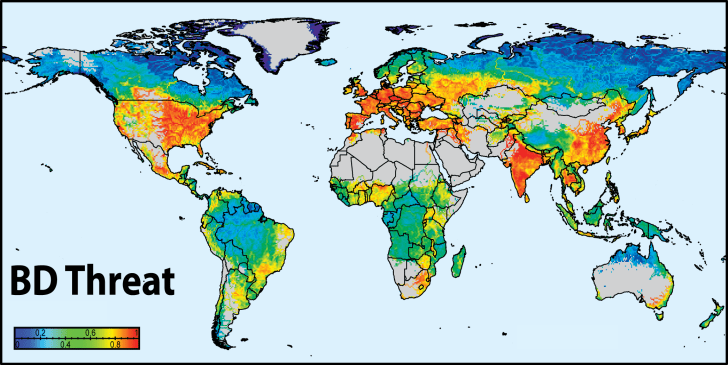
Global geography of incident threat to river biodiversity. Blues reflect lower threat, reds reflect higher threat. From http://www.riverthreat.net/ (13/10/10)
The highest threats (yellows, oranges and reds) to both water security and biodiversity were found where water resource development (e.g. dams and flood defences) and pollution levels were highest – in Europe, the USA, China and India. As there are many (and often local) factors that influence threat calculation, Vörösmarty and colleagues argue for integrated strategies to address ecosystem rehabilitation.
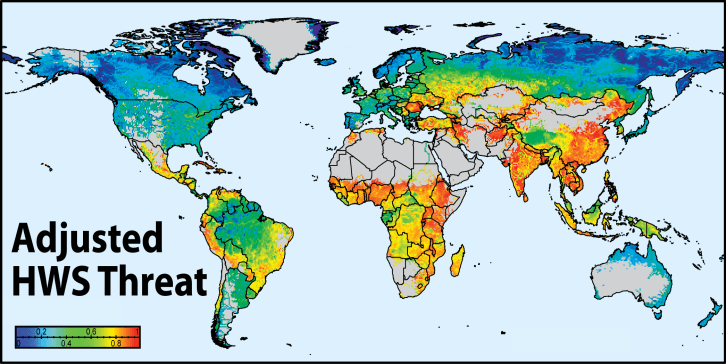
Global geography of threat to human water security when adjusted to include investment into water technologies. Blues reflect lower threat; reds reflect higher threat From http://www.riverthreat.net/ (13/10/10)
Wealthy nations are in a better position to improve their water security through technological investments (e.g. reservoirs, sanitation plants), thus widening the gap with poorer countries. Vörösmarty and colleagues suggest that such investments into improving human water security may have direct negative impacts on biodiversity (e.g. dams impeding migratory fishes). Unfortunately, due to the lack of available data the authors were unable to map the effects of this investment on biodiversity.
As the environmental impacts of climate change and population growth increase in the future, the challenge of implementing such integrated management strategies is likely to become increasingly important. However, without adequate data on the distribution, status and trends of global freshwater biodiversity, how can successful integrated management strategies be designed? As Vörösmarty and colleagues suggest, policymakers and water managers require high-resolution biodiversity data at scales relevant to their decision-making.
The BioFresh project aims to build a freshwater biodiversity information platform to bring together, and make publicly available, the vast amount of information on freshwater biodiversity currently scattered among a wide range of databases. However, this study demonstrates that there is a need for futher work in quantifying and communicating the threats faced by global freshwater biodiversity.
The fundamental question remains: how to manage global ecosystems in a manner that balances the needs of both humans and nature? As ever, we’d welcome your comments.
Reference:
Vörösmarty, CJ, McIntyre, PB, Gessner, MO, Dudgeon, D, Prusevich, A, Green, P, Glidden, S, Bunn, SE, Sullivan, CA, Reidy Liermann, C & Davies, PM (2010), ‘Global threats to human water security and river biodiversity’, Nature, vol. 467, no, 7315, pp. 555-561. Link
Links to further information:
Last Friday’s launch and rapid withdrawal of a high profile climate change campaign video illustrates the pitfalls and tensions in environmental communication. The 3 minute video, directed by Richard Curtis (director of Love Actually, Four Weddings and Funeral) aimed to bring climate change “back into the headlines whilst making people laugh”. Unfortunately, the joke – blowing up schoolchildren, the footballer David Ginola and actress Gillian Anderson for not agreeing to act to reduce their emissions after being told ‘no pressure’ – spectacularly backfired.

Classroom scene from the controversial 10:10 video. Image: YouTube
The imagery chimes with contemporary themes of terrorism, war and militant fundamentalism, and if blog traffic is anything to go on the 10:10 campaign is being accused of being either very naïve (see here, here or here to begin with) or eco-fascist.

Gillian Anderson in the 10:10 video. Image: 10:10
The video (and subsequent reaction) illustrates contemporary debates on ways to communicate environmental issues and the underlying science. Broadly, these revolve around notions of fear/crisis-based vs. vision-based messaging.
Fear or crisis-based messages commonly aim to shock viewers into action through presenting graphic or disaster-strewn representations of the need for rapid environmental action. For example, Conservation International have used Harrison Ford’s chest hair to highlight deforestation; the UK government Act on CO2 campaign pictured a doomsday twist on a child’s bedtime story; and anti-aviation pressure group Plane Stupid depicted polar bears falling out of the sky to highlight CO2 emissions from aircraft. The 10: 10 video falls into this category, ironically posing the phrase ‘no pressure’ whilst explicitly (admittedly in a slapstick fashion) blowing up anyone who doesn’t comply by making pledges to lower their carbon emissions.
A vision-based approach tends to be more subtle, attempting to align a vision for environmental action with the audience’s values, beliefs and aspirations. For example, WWF used the pride and adulation fans devote to Benfica football club to highlight the plight of an endangered eagle. This process (often termed ‘framing’) treads a fine line between presenting an easily relatable (and often hopeful) message without watering-down the underlying science or lapsing into political ‘spin’.
We have debated the merits of the two approaches in media workshops at Oxford for the last 4-5 years, and one insight is that messages of impending crisis attract the attention of politicians and policy makers but turn off the general public. Instead, most people are thought to respond most positively to environmental messages of hope (two academic papers from Oxford on this subject can be found here and here).
BioFresh decided on vision-based, hopeful messaging – see for example the Cabinet of Freshwater Curiosities – but is this the best approach to take? Whilst we wouldn’t go so far as blowing people up, should we be more vocal and sensationalist on the risk to human well-being that recent evidence on decline in African freshwater biodiversity or the extinction threat faced by many species of sturgeon might indicate? Are crisis-based messages more effective at communicating environmental issues? Or are you tired of sensationalist, ‘doom and gloom’ environmentalism and so more receptive to a constructive, hopeful, vision-based alternative?
Compassionate conservation
Marc Bekoff is professor emeritus of ecology and evolutionary biology at the University of Colorado, Boulder. His latest book called The Animal Manifesto: Six reasons for expanding our compassion footprint, compiles six compelling rationales for changing our approach to how we treat animals of all species.
Bekoff utilizes anecdotes with statistics and facts drawn from a wide range of sources which brings a balance to both the tone and message of the book. Bekoff encourages the reader towards not just putting more thought into our treatment of animals, but coupling that thought with action, from cutting back on the meat consumed (or considering non-factory farm sources where available and practical) to their use in laboratories and entertainment venues to “management” techniques of our wild neighbors.
Addressing not only how we think of animals but also how we don’t think of animals and our impact on them in our day to day lives, The Animal Manifesto is a though provoking and compelling read.
A symposium on compassionate conservation was also organised at the beginning of the month in Oxford. A lot of interesting articles on the subject that were presented at the symposium can be accessed from here.
Bekoff also wrote an interesting article in New Scientist this month, that can be accessed from here. The article highlights that “The guiding principles of compassionate conservation are: do no intentional harm; respect all life; treat all individuals with respect and dignity; and tread lightly when stepping into the lives of animals” and it concludes with “Compassionate conservation is no longer an oxymoron. Ethics must be firmly implanted in conservation biology, even if doing so moves us outside our comfort zones and causes some projects to be put on hold or abandoned.”
Two more powerful statements that call on your comments! So get in touch and share your thoughts on Bekoff’s idea of compassionate conservation!
In Search for the Lost Frogs
Ranging from tiny poison dart frogs to the Chinese giant salamander (Andrias davidianus), the diverse class of creatures known as Amphibia is the most threatened group of vertebrates on the planet. Habitat loss, disease and climate change have caused some species to vanish without a trace in a single breeding season; however, the status of many of the world’s amphibians is currently unknown due to limited and outdated research.
Over the next few months, Conservation International is supporting expeditions by amphibian experts in 18 countries across Latin America, Africa and Asia, through the THE SEARCH FOR LOST FROGS campaign. Led by members of IUCN’s Amphibian Specialist Group, the research teams are in search of around 40 species that haven’t been seen for over a decade. Although there is no guarantee of success, scientists are optimistic about the prospect of at least one rediscovery.
And there is good news. Returning from the first wave of expeditions, scientists announce the re-discovery of 3 amphibian species not seen for decades. The three animals that have been rediscovered so far include a Mexican salamander not seen since it was discovered in 1941, a frog from the Ivory Coast not seen since 1967 and another frog from Democratic Republic of Congo not seen since 1979. Pictures are below (from the CI website):


More on the story can be found here.
Can the notion of ‘public good’ apply to Freshwater Biodiversity?
Last week a group of Cambridge-based conservationists published a paper in Science titled “Biodiversity Conservation: Challenges Beyond 2010” This restated the arguments that (1) unless people recognise the link between their consumption choices and biodiversity loss, the diversity of life on Earth will continue to decline and (2) biodiversity needs to be viewed as a public good. The timing of the paper is designed to increase pressure for more assertive action on biodiversity at the COP10 of the CBD, which takes place in Nagoya (Japan) next month.
Dr Mike Rands, Director of the Cambridge Conservation Initiative and lead author of the paper, said: “Despite increasing worldwide conservation efforts, biodiversity continues to decline. If we are to make any kind of impact, it is critical that we begin to view biodiversity as a global public good which provides such benefits as clean air and fresh water, and that this view is integrated not just into policies but also into society and individuals’ day-to-day decisions.”
Dr Rands continued: “The recognition of biodiversity as a public good is not a new concept, and in recent years economists have made substantial progress in developing valuation techniques that quantify the local and global benefits of biodiversity.”
Unfortunately the paper does not specify its concept of ‘public good’. Economics distinguishes between a good that is non-rivalries (i.e consumption by one actor does not reduce availability for another) and non-excludable (i.e. no one can effectively be excluded from using the good).
How does the concept of public good relate to freshwater biodiversity? Many freshwater bodies are effectively managed to exclude some from exploiting biodiversity (e.g. fish) but equally many lakes, ponds and rivers are open access and support biodiversity that is ‘consumed’ in a non-extractive manner. We would welcome your thoughts and comments on the notion of freshwater biodiversity as a ‘public good’.
As the main driver of biodiversity loss seems to be the corporate world, driven by consumer appetites, companies need the tools to account for biodiversity in their balance sheet and start regarding the biodiversity as a public good. The Natural Value Initiative (NVI) created and developed a toolkit for the financial community to use in understanding companies’ dependence and impact on biodiversity and ecosystem services. This is the first tool of its kind enabling a rigorous evaluation of performance on this issue and a step in the right direction of incorporating biodiversity concerns in the corporate world.
Learning from Sherman the Shark
Cartoonist Jim Toomey created the comic strip Sherman’s Lagoon, a wry look at underwater life starring Sherman the talking shark. As he sketches some of his favorite sea creatures live onstage, Toomey shares his love of the ocean and the stories it can tell.
The video embedded here is from the TED website and can also be accessed from here.
The innovation of this video is the use of art, here cartoon characters, to help inform about and understand issues related to environmental change. Art and entertainment are often much underestimated tools for driving change in attitudes and behaviour.
A similar point was made at an event I attended this week-end with Angela Palmer, the artist behind the Ghost Forest.
But if we cry out for change when we see trees being cleared out, we hardly never see the damages done under the water surface of the oceans or rivers. How many people realise the heavy consequences of the BP oil spills a few months ago?
Toomey’s talk added a significant voice to aquatic biodiversity conservation and I really encourage anybody who has a bit of time to spare to check it out.










 The Freshwater Blog