
River Hodder, Lancashire, England
“I make a very close link between our belonging here and the will to fish. There is no natural medium in which the sense of life on earth is more evident than in water . . . Most of the things which are least pleasant about life now are the things which are most antithetical to fishing.” – Bernard Venables.
For Bernard Venables (angler and author of Mr Crabtree Goes Fishing), anglers could be amongst the most knowledgeable and passionate conservation champions, a trend borne out of vast amounts of time spent immersed in the freshwater environment. It is perhaps only natural that Venables founded the Angler’s Conservation Association, a successful UK freshwater conservation charity run by anglers, which is now part of the Angling Trust.
With freshwater ecosystems facing continued threats such as pollution, climatic change, invasive species and water abstraction, there is a need for increased focus and effort on their conservation. How far can anglers play a part of this effort as effective freshwater conservationists?
When you look at the history of the conservation movement (a great book on this topic is Bill Adams’ 2004 Against Extinction), there are examples of groups and individuals involved in hunting becoming vocal and effective conservationists of the environments in which they hunt. In The Empire of Nature, a fascinating history of the role of colonialism, empire and big-game hunting in the conservation movement , John MacKenzie describes the formation of the Society for the Preservation of the Fauna of the Empire in 1903, a pressure group of hunters-turned-conservationists concerned with the preservation of Africa’s large mammals. This organisation evolved into the influential, global charity Flora and Fauna International. Whilst the transition from ‘poacher to gamekeeper’ in this example is marred by issues of colonial dispossession and enclosure of historic land rights and natural resources, the basic point remains: that there is a historic precedent for recreational hunters to become passionate conservation champions.
Anglers as conservation champions

Salmon at Stainforth Force, Yorkshire, England. (Image: Ribble Trust)
The Angling Trust is a UK charity which aims to reverse declining fish stocks (both freshwater and marine) and address pollution, water abstraction and invasive species issues in freshwater ecosystems. Speaking in The Guardian in 2009, Mark Lloyd outlined the value of uniting anglers for conservation as: “Anglers are not the usual woolly liberals you get in the WWF or the National Trust. They range across urban and rural areas and both working and upper class. Together they are very powerful”.
Freshwater angling is a phenomenally popular pastime – in the U.K. alone over 1 million licences are sold by the Environment Agency each year. When this large, varied supporter base is combined with anglers’ deep connection with the freshwater environment – as suggested by Venables – there is the potential for a large, vocal movement championing freshwater conservation issues. The Our Rivers initiative calls anglers “the curtain twitchers of the riverbanks“, providing a network of individuals who can give early warnings on potential environmental threats.
On a European scale, the European Angler’s Alliance brings together organisations like the Angling Trust with a mission to: “safeguard the fish stocks and fisheries of Europe and to protect the interests of all those who fish with rod and line for recreational purposes.”. A key stated aim of the EAA is to promote sustainable recreational fishing which actively helps conserve or restore the health of the freshwater environment. The size and structure of the EAA means that it has the leverage to effectively lobby European policy decisions on key freshwater conservation issues like the Water Framework Directive.
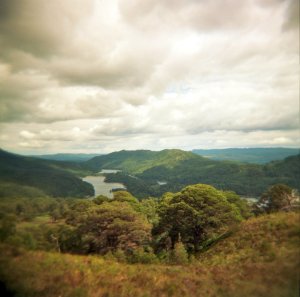
Loch Affric, Scotland
Crossed lines? Critiques of this support
With so many anglers lending vocal support to freshwater conservation issues, is it unnecessary to try to offer critiques or caveats to this successful movement? I feel that it is worth thinking critically – however briefly – about the forms angler-led conservation movement may take.
Whilst freshwater fish populations often provide excellent indicators of water quality and wider ecosystem health, such angler-led conservation initiatives must be careful not to only prioritise the fish species valuable to anglers (for example, brown trout, carp, salmon), and ignore those less pursued but important to ecosystem function (such as gudgeon, ruffe or minnow).
Similarly, how do the recreational and social benefits of angling – outlined in one form or another by many such organisations – balance against the environmental problems caused by overstocking (especially of sport fish like carp and rainbow trout) and non-native species introductions in certain fisheries run exclusively for recreational angling? And what about the threat to fish, birds (and humans…) posed by broken hooks, weights and monofilament line discarded in waterways? Finally, should a coarse fishing community which has campaigned for the right to continue fishing during spawning seasons in the spring months be taken seriously as an effective ally for conservation?
These are simply the environmental concerns. From a land rights perspective, could conservation become a new argument for wealthy, angling orientated, landowners to exclude other users (e.g. walkers, kayakers, wild swimmers) from gaining access to waterways? Perhaps this is too big a jump to make (and slightly reminiscent of the debates around the early hunters-turned-conservationists and resulting enclosure of protected areas for conservation) but it is worth bearing in mind.
From an ethical point of view, some may see a fundamental problem in anglers who cause harm or discomfort to animals purporting to be their effective conservation stewards (disclaimer: I’m writing this article as a lifelong fishermen). This is a debate that stretches back to the initial formation of groups such as the Society for the Preservation of the Fauna of the Empire in the early 20th century, and reflects some of the difficult decisions the conservation movement must make about choosing allies for the wider conservation goals.
Tying a knotty debate together
With this in mind, it should be celebrated that responsible, environmentally orientated anglers provide such widespread and vocal support for freshwater conservation. As I’ve discussed, the individual knowledge, understanding and affinity for the environment provided by long hours spent immersed in nature whilst fishing, coupled with the wide network of participants make angling groups a powerful ally for freshwater conservation. However, maybe we should keep in mind the potential issues discussed above when thinking about the form and effectiveness of this support.
A fascinating debate, and one we’re keen to hear your voice in. Let us know your thoughts, comments and critiques in the comment box below.
Rob St.John
Communications & Project Co-ordinator, BioFresh
Rivers on the Edge
Rivers on the Edge is a WWF initiative emphasising the need for sustainable water use in our homes, schools and businesses in order to better conserve and restore our river ecosystems. Initially focussed on three chalk stream rivers in southern England, its central message is that:
“We must waste less water if we are to save our precious freshwater environment and make sure it is resilient to the impacts of climate change. But how? Rivers on the Edge aims to help thousands of homes, schools and businesses cut water use, saving millions of litres of water for our rivers. We call on Government and regulators in England and Wales to meet the targets below in the next two years to ensure that we stop using water wastefully; that abstraction does not unacceptably damage our rivers now and in the future; that we adapt to the potential impacts of climate change; and that we protect the future security of our water supplies.”
Read the full report here and let us know your thoughts. Can you suggest any projects globally that take a similar approach to freshwater conservation?
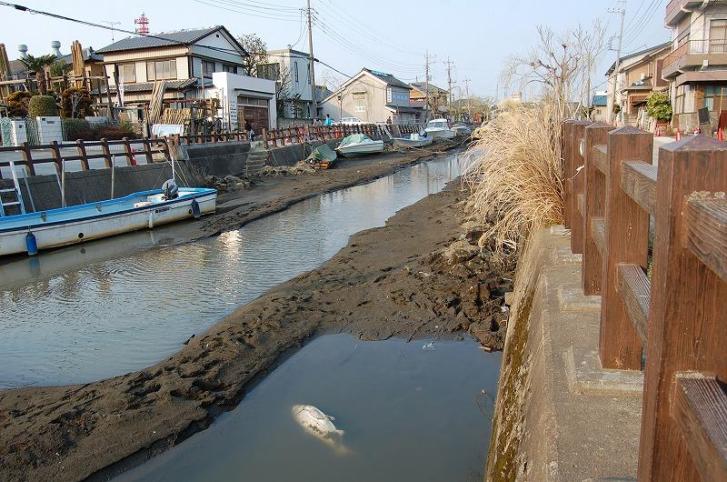
Image: Dr. Toshiaki Mizuno
This week’s guest post is by Dr. Toshiaki Mizuno, a freshwater ecologist who recently worked for WWF Japan’s Freshwater Programme. Dr Mizuno discusses the potential impacts of radioactive and chemical contaminants resulting from last month’s earthquake and tsunami on Japanese freshwater ecosystems, citing the unfortunate timing of the disaster, which coincided with the spawning season of many freshwater species. As a result, it is likely that many of the impacts of the earthquake on freshwater ecosystems will be long-lasting and unpredictable.
Let us know your thoughts by adding your voice to the discussion in the comments box below.
—————
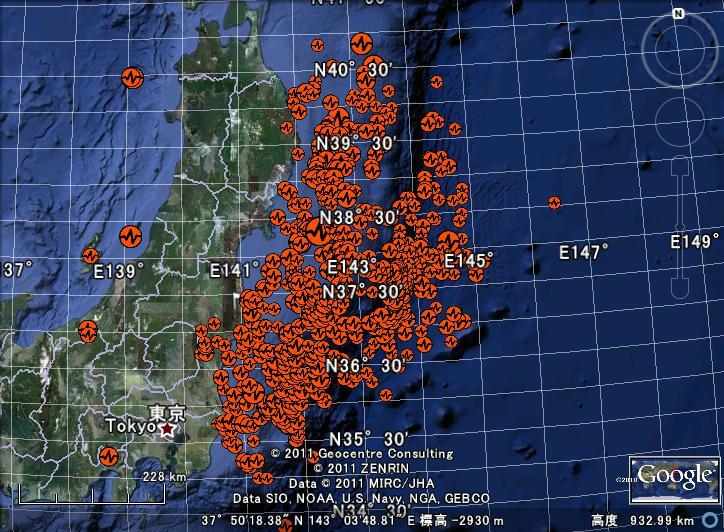
Fig 1: The earthquake epicentre
The impact of one of the biggest earthquakes (Magnitude 9.0) on record suddenly occurred off the coast of north-eastern Japan on the 11th March at 14:46 local time. Over 16,000 buildings were damaged all over Tohoku and Kanto area in north-eastern Japan, including the metropolitan area of Tokyo, around 400km south-west of the epicentre (Fig.1). The earthquake triggered a huge, recurring tsunami, starting 15 minutes after initial impact. The 5-20 metre high waves destroyed buildings, roads and other infrastructure along the Pacific coastline of Japan, and triggered the spread of radioactive contaminants as a result of damage to the Fukushima nuclear power plant, near the Abukuma Highlands.
Issue 1: Radioactive contaminants impact the spawning season of freshwater species
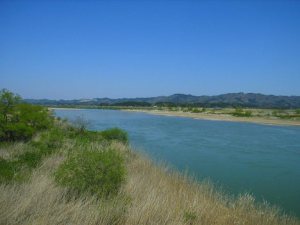
The Abukuma Highlands. Image: wikipedia
The Abukuma Highlands area is one of the most famous examples of traditional, biodiverse Japanese landscape. The landscape consists of three key elements: small stream and ponds, paddy fields and coppice woods. The area is rich in freshwater biodiversity, with 15 amphibian and 74 freshwater fish species documented. Of these, 9 amphibian and 7 fish species are endemic, and 7 amphibian species and 18 freshwater fish are listed as endangered by both the local red list (compiled by the Ministry of Environment of Japan and Fukushima Prefecture), including the Forest Green Tree Frog (Rhacophorus arboreus), and the Tohoku Salamander (Hynobius lichenatus). As such, these freshwater ecosystems are of great conservation importance.
Radioactive contaminants, spread from the Fukushima nuclear power plant impacted the most vulnerable freshwater species. Even worse, the disaster occurred when many freshwater creatures were spawning. This spawning largely takes place in the ponds and slow streams where radioactive substances are likely to settle. As a result, we could predict that the reproductive cycle of many freshwater species will be seriously damaged by the effects of water-borne radioactive contaminants. Conservation initiatives which monitor and manage the potential impacts of radiation on freshwater species should therefore be a high priority for the immediate future.
Issue 2: The effect of chemical contaminants and high-salinity water on freshwater ecosystems
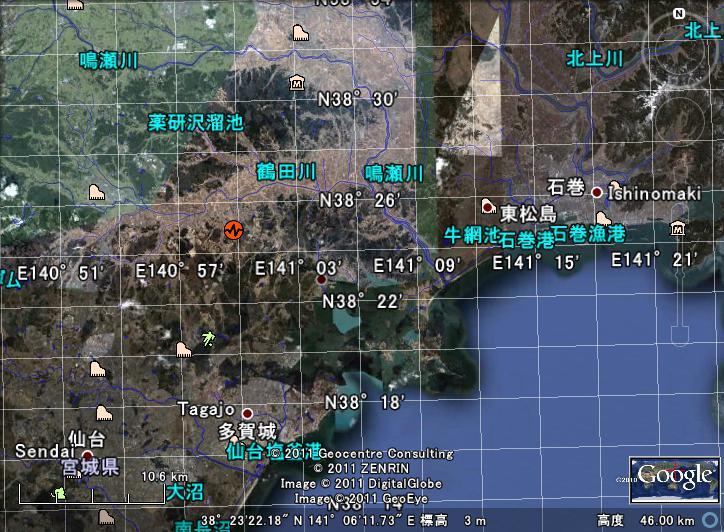
Fig 2: The mouth of the Kitakami River
Sendai Shiogama port and Ishinomaki port are the largest ports in the Tohoku region of northern Japan, on the mouth of the Kitakami River (Fig.2), and home to many chemical industries.
The Kitakami River is the fourth largest river basin in Japan (length 249km, basin area 10150km2), containing rich freshwater biodiversity including salmonid fish (e.g. Pacific or chum salmon: Oncorhynchus keta, and Masou or Japanese salmon Oncorhynchus masou masou), Ayu (Plecoglossus altivelis altivelis) and Shijimi clam (Corbicula japonica).

The masu or Japanese salmon. Image: Kim IS, Fishbase.org
The destructive impact of tsunami waves on port buildings released chemical materials that spread throughout the mouth of Kitakmi River. The power of the incoming waves reversed river flow direction for 50km upstream, bringing chemical contaminants and high-salinity water to inland Kitakami River. As in the Abukuma Highlands, the timing of the disaster meant that this contaminated water is likely to have severely affected the spawning cycle of many freshwater fish. The chemical contaminants will also have potentially adverse effects for the migratory lifecycles of amphidromous fish such as the salmon and Ayu.
The need for urgent research into the effects of the earthquake on Japanese freshwater ecosystems
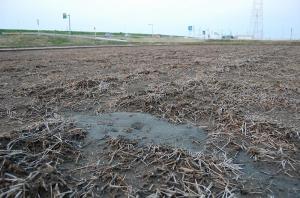
Paddy fields liquified by the earthquake. Image: Dr. Toshiaki Mizuno
The impacts of the earthquake and tsunami have been so catastrophic and wide-ranging that there has – as yet – been little or no research into the effects on freshwater ecosystems. This article has discussed the potential impacts of radioactive and chemical contamination of freshwater ecosystems. However, it’s clear that these impacts are uncertain and not fully understood. In addition to the impacts discussed in this article, the earthquake has caused the liquefaction of paddy fields , damaged canals and many other effects on freshwater systems which may take time to become fully apparent. As a result, we must urgently begin investigating the effects on Japanese freshwater biodiversity and ecosystems by the tremendous impacts of the earthquake and tsunami.
Dr. Toshiaki Mizuno
ecofish77[at]yahoo.co.jp
 BioFresh communications and project co-ordinator Rob St.John today published an article entitled “Creative thinking aids freshwater science communication” in the United Nations OurWorld 2.0 online magazine.
Discussing our approach to science communication, it concludes:
“By experimenting with creative ideas such as animation in the constantly evolving field of science communication, we hope to not only raise awareness of freshwater ecosystem issues and the role of the BioFresh project, but also to contribute new perspectives to the current debate on how science should be communicated.
By embracing a dialogue-led, hope-based environmental messaging ethos, communicated through the new channels being opened up by technological advancement, BioFresh and other environmental organisations can reach wider audiences than has ever been possible before.”
You can read the full article here.
Can the market help keep streams flowing?
Rob Harmon works on energy and natural resources policy, currently through his own venture Convenient Opportunities. Rob’s TED talk from October 2010 discusses the case of water abstraction from the Prickly Pear Creek, Montana, USA, where an innovative market-based mechanism is being used to encourage farmers, brewers and other businesses to conserve the creek through economic incentives.
Have a look at the video, and read the detailed discussion between the speaker and audience below it, then let us know your thoughts.
Can similar ideas be used elsewhere in the world? What are the pros and cons of conservationists engaging with such market-based mechanisms?
As ever, we’re keen to hear your voice in the debate.

Today is World Water Day, but the event’s publicity makes no mention of the importance of the myriad life forms that inhabit our freshwaters in helping provide ecosystem services such as clean water provision to humans.
Why is this? Is the importance of freshwater biodiversity in providing these services under-represented? Or is it that scientists don’t yet fully understand the relationship between freshwater biodiversity, ecosystem functioning, and the services (such as clean water) an ecosystem provides to humans?
Initiated by the UN, this year’s World Water Day theme is “Water and Urbanisation”, intended to “focus international attention on the challenges and opportunities of urban water and sanitation management”. You can find more information about the day and useful resources at the World Water Day site.
In this context, and drawing on the results from the ‘Top questions for freshwater biodiversity” session at the BioFresh Montserrat conference in February, how do we provide a convincing answer to the question:
“Why should we care about freshwater biodiversity?”
We at BioFresh suggest that freshwater biodiversity has a role in underpinning and sustaining resilient and healthy ecosystems, which can provide natural water purification with less need for human intervention. The functioning of healthy natural ecosystems provides a range of ecosystem services which benefit humans in four broad ways:
- Provisioning – e.g. the provision of clean water
- Regulating – e.g. the regulation of climatic systems
- Supporting -e.g. supporting nutrient cycles
- Cultural – e.g. the recreational or spiritual benefits we gain from ecosystems
The role of freshwater biodiversity in underpinning ecosystem function – and thus providing services like clean water – is complex and often unresolved. As such, whilst freshwater ecosystem services such as clean water provision are crucial, their global provision has an uncertain future. Further research into the relationships between freshwater biodiversity and ecosystem function is needed. The uncertainties in the science – an area that the BioFresh project seeks to address – means a precautionary approach to freshwater biodiversity management should be taken to help safeguard ecosystem services such as clean water provision in the future.
World Water Day is clearly a highly important and successful event which globally raises the issue of clean water provision. However, there are areas in the World Water Day literature where we could call for an increased awareness and discussion of the importance of freshwater biodiversity. One of the five key themes for World Water Day is “Environmental Impact and Climate Change”, which states:
“Impacts on the environment from climate change, conflicts and natural disasters pose huge challenges for urban water and waste management”.
And outlines that:
“Cities depend on resources drawn from the natural environment and will bear the impact of extreme climatic events. Ensuring that the environment has the capacity to sustain itself is a precondition for human survival.”
In this context, we’d suggest that freshwater biodiversity is crucial, yet often overlooked or underrepresented, in underpinning and sustaining many of the ecosystem services which are a “precondition for human survival”.
We are still looking to formulate a concrete answer (or more likely, set of suggestions) to the important question “Why should we care about freshwater biodiversity?”. Perhaps it is necessary to complement advances in freshwater science with a better understanding of why we should look to conserve freshwater ecosystems.
Whether in the context of World Water Day or not, this is an ongoing question that we’re looking to address, and your suggestions and comments are of real interest to us.
Leave a comment below to add your voice to the discussion.
The February 2011 BioFresh meeting in Montserrat provided an excellent opportunity for partners from BioFresh, DIVERSITAS and the Society for Conservation Biology to discuss potential links and synergies between the multidisciplinary and international conference delegates as a means of improving the science, policy and conservation of freshwater ecosystems.
The video below documents a fascinating short discussion between Klement Tockner of BioFresh, Margaret Palmer of DIVERSITAS and Jeanne Nel of the Society for Conservation Biology on the ways such productive links may be forged.
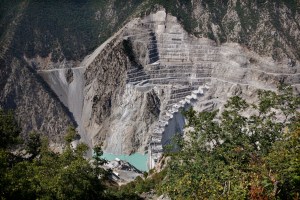 We were forwarded the following information (available in full here) by Engin Yılmaz of Doga Dernegi (Birdlife Turkey), highlighting the potential threats to Turkish freshwater biodiversity caused by construction of dams and hydroelectric power plants (HEPPs):
“As it currently stands, the government of Turkey plans to construct 1,738 dams and hydroelectric power plants by 2023. However, the nearly 2,000 irrigation and drinking-water dams are also underway totaling up to nearly 4,000. The total length of river systems in Turkey that will be converted to HEPP’s or dams is around 10,000 kilometers, leaving very little of no room for natural ecosystems to function.
Hence, there is a serious concern that by the year 2023, there will be virtually no healthy rivers systems left in Turkey. There are neither environmental nor sociological impacts assessments of these projects at the basin or country level. Therefore, no one has a projection on how these large numbers of projects will, in total, affect Turkey’s biodiversity and people living in the countryside, while the contractions of hundreds of new dams goes on
Civil society movements all over Turkey have initiated campaigns to stop these hydroelectric power plants and dams [and] so far 83 lawsuits have been filed against dams and HEPP’s, and another 13 lawsuits are about to be filed”
The document argues that dam and HEPP construction has the potential to threaten the biodiversity held within 185 of Turkey’s 305 Key Biodiversity Areas, a network which is suggested will underpin the Natura 2000 conservation designation as and when Turkey enters the European Union.
Dam and HEPP construction continues to provide a contentious issue globally. Similar debates over the sustainability, environmental, economic and social impacts of dams of HEPPs are currently occurring in China, Brazil and Ethiopia. The impact of dam building on freshwater biodiversity emerged as a key issues in the ‘Top questions for freshwater biodiversity‘ exercise carried out at the BioFresh Montserrat conference in February.
We would welcome your comments and alternate views on the situation, both in Turkey and globally. Can the generation of hydroelectric power justify the potential loss of biological or cultural diversity? Are there any sustainable new ways forward for dam construction?
Reporting on the Barcelona conference: Identifying the top questions for freshwater biodiversity
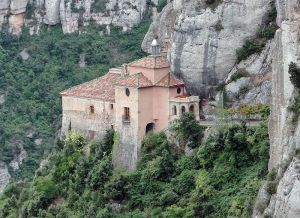
Montserrat, location of the BioFresh conference (image: Wikipedia)
A key objective of the BioFresh project is to improve the capacity to protect and manage freshwater biodiversity by raising awareness of the importance of freshwater biodiversity and its role in providing ecosystem services; and predicting the future responses of freshwater biodiversity to multiple stressors in the face of global change. In this way, the project aims to address the under-representation of freshwater ecosystem issues within policy, public and media circles.
As part of the drive to address this shortfall, a session was convened at the BioFresh conference last week in Montserrat, Spain for project partners to get together, collaborate and debate the identification of the key questions, issues and challenges for freshwater biodiversity science, policy and conservation.
The results of an online questionnaire calling for submission of key questions were debated in small, cross-disciplinary groups of partners, structured under 10 themes:
1) Biogeography of freshwater ecosystems: diversity, scale and taxonomy
2) Impacts of climate change
3) Ecoinformatics and biodiversity modelling
4) Ecosystem function and thresholds
5) Ecosystem services
6) Freshwater policy and governance
7) Long-term ecology and ecological histories
8 ) Novel ecosystems and ecosystem stressors/pressures
9) Systematic conservation planning and prioritisation
10) Public perceptions, values and ethics
Each small group produced a list of 3-5 questions that had been discussed, refined and agreed upon. These questions were then further discussed and refined by all participants in a rotating ‘carousel’ session where each group discussed the outputs of others.
The session had two key objectives. First, it prompted collaborative discussion and debate amongst BioFresh partners working in different disciplines – sparking new ideas and potential synergies. Such cross-disciplinary collaboration is often seen as crucial in formulating effective conservation decision-making.
Second, the session provided the basis for a journal article outlining the agreed upon selection of key issues for freshwater biodiversity that need to be addressed by science and policy. Such future-scanning papers (e.g. Sutherland et al 2011, 2009) provide an excellent resource for policy makers, academics and students, clearly outlining priorities for science and policy. As a result, the project has the potential to bring freshwater issues up the research and policy agendas.
We’ll bring more details of this exercise in the coming months. For now, here’s a selection of suggested questions – we welcome your suggestions for further ‘top questions for freshwater biodiversity’.
- How will freshwater ecosystems respond to climate change?
- How does freshwater ecosystem functioning change with loss or gain of species from a natural ecosystem?
- To what extent can historical ecological conditions be useful in setting benchmarks in judging the speed, magnitude and direction of ecosystem change?
- How do novel freshwater ecosystems form, and what is their ecosystem and evolutionary consequences?
- How can freshwater science be raised up the policy table?
- How do we give a compelling answer to “why should I care about freshwater biodiversity”?
Freshwater: the essence of life
 Conservation International have recently published a book entitled ‘Freshwater: the essence of life’ in conjunction with International League of Conservation Photographers, CEMEX, NatureServe, Wetlands International, and Ramsar to raise awareness of freshwater issues.









 The Freshwater Blog