Today we feature “The Miracle Water Village“, an inspiring tale of sustainable water management in India made by Black Ticket Films, an independent New Delhi film company specialising in human rights, environment, wildlife and gender and sexuality topics:
“As the world reels under the threat of unrelenting climate change, erratic monsoons and fast depleting groundwater reserves, The Miracle Water Village narrates the inspirational story of impoverished farming community in India that reversed its fortunes through its visionary model of water management.
Lying in one of the worst drought-prone regions of India, the village of Hiware Bazar battled many decades of sparse rain and failed crops. However, 20 years ago, the entire village came together to script a silent revolution by designing a rainwater-harvesting model that saved every drop of the scanty rain they received. Today, the village is literally an oasis in the middle of the desert, boasting of bumper harvests, dairy co-operatives, millionaire families and visionary farmers.
Hiware Bazar still receives the scanty amount of rainfall it used to in the heart of its most trying years, but what has changed is the way it has managed its water and created a miracle with this most precious liquid resource!”
Working with Intercalibration Datasets

- Wastwater, one of England’s most pristine lakes and typical of those assessed by the Northern Lakes Geographical Intercalibration Group. Image courtesy of Wikimedia
Continuing in our weekly series of posts on the construction of the BioFresh metadatabase, this week Sian Davies takes us through the complexity, importance and challenges of incorporating Intercalibration datasets into the BioFresh project.
Why are Intercalibration datasets important for BioFresh?
Another source of high quality freshwater biodiversity data is held within the datasets compiled as part of the Intercalibration process, which is used to compare Water Framework Directive biological classification tools. The datasets hold carefully selected taxonomic and environmental data from many European countries and thus form a valuable contribution to freshwater biodiversity data.
What are Intercalibration data?
These datasets have been compiled as part of the process by which biological classification tools used for the implementation of the Water Framework Directive (WFD) are compared and adjusted to ensure all Member States show the same level of ambition in their ecological assessments. Most Member States have different WFD classification tools and one way in which they can be compared is to apply them all to a common dataset which comprises some data from each Member State. These datasets have been compiled using data contributions from most participating countries. They contain quantitative taxonomic data and usually supporting environmental data and physical information on the water bodies. They contain data from water bodies of specific types (based on WFD typologies). Considerable time and effort has been put into their compilation, data cleaning and taxonomic harmonisation by members of the GIGs. Data has been provided variously from state monitoring programmes, university research groups and other institutes and may or may not be publicly owned or funded.
Read more…
Special data feature: Obtaining information on freshwater databases

Authors: Aaike De Wever, Astrid Schmidt-Kloiber and Sian Davies
Today we begin a weekly series of posts written by BioFresh scientists, which give a behind-the-scenes account of how and why the BioFresh freshwater biodiversity metadatabase is being constructed. As we find out in the article, compiling data is not only a logistical task, it involves a fascinating network of politics and negotiation over data ownership, sharing and publication.
Why are we constructing a metadatabase?
One of the main products of the BioFresh project is the metadatabase, which is basically a database centralising information on freshwater biodiversity related databases. As outlined in the interview with Astrid Schmidt-Kloiber, this is one of her major tasks within the EU FP7 funded BioFresh project.
The aim of this metadatabase is to bring all possible information on freshwater related databases together and provide a resource where scientists, conservationists and policy makers can find databases relevant for their work. But, in the first place, it was started as a tool that would help scientists within BioFresh to identify datasets that can be used in their biodiversity modelling work.
Development history
The work on the metadatabase started very early on in the project, and a first prototype was already available by the first project meeting in February 2010. This allowed us to discuss which fields were needed for scientists to identify suitable datasets, making sure the metadatabase is compatible with common standards. By the summer of 2010, the extensive metadatabase questionnaire, specific for freshwater ecosystems was ready and project partners were encouraged to enter the databases they held.
In autumn of 2010, we began welcoming and collating databases from external parties. From April 2011, the metadatabase was available for public viewing, although the majority of the datasets were still behind the scenes. However, during this first year we already gained a lot of experience in requesting metadata, which we would like to comment on during this blogpost.
The present situation
At this stage (september 2011) we have 58 database entries, excluding the intercalibation datasets (see a forthcoming post on this topic), which are more or less complete. 34 of these were filled in by BioFresh project partners. 24 of the databases were external and consist of two main sources: the ones from people who contacted us; and the ones we identified ourselves. Four of those were filled by the data holders, but for the 20 other entries we started filling in as much metadata as we could ourselves, before contacting the data holders. We chose this approach because it was already clear from our experience with the internal databases that our chances of success (i.e. an entirely filled questionnaire) would be low otherwise. Read more…
Special feature: making freshwater biodiversity data open and accessible
 By Aaike De Wever
In June, I wrote an article on the BioFresh freshwater biodiversity information platform and data portal for this blog. The article focused on the different components of the data portal, ranging from the metadatabase and associated tools to basic occurrence data (i.e. where a particular species has been found and documented).
Mobilising scientific data on freshwater biodiversity and making it publicly available is obviously quite a job for several BioFresh project partners. I believe this is an issue that concerns the scientific community at large and so, together with some colleagues, will be working on a series of blog-articles on this subject to outline and explain the issues surrounding how BioFresh plan to make scientific data open and accessible to everyone.
The subjects we have in mind cover:
1. The BioFresh data portal (link)
- Integrating dispersed datasets
- Integrating models and tools to analyse and view the data
2. Building a metadatabase of freshwater biodiversity databases (link)
- What is metadata?
- Approaches to obtaining information on freshwater databases
3. Working with intercalibration datasets (link)
- Intercalibration datasets on biological water quality indices gathered for the Water Framework Directive across Europe are used to construct a common scale of ecosystem health.
4. Requesting data and dealing with complex intellectual property right issues (link)
- Approaches to data digitisation
- Approaches to setting up a system of interoperable databases
- Methods of making basic biodiversity data available during scientific publication
- Why should scientific data be made publicly available?
Summary: “Building the BioFresh freshwater biodiversity database”
We’ll be publishing articles every week on the subject, starting today. Please get in touch (biofreshATouce.ox.ac.uk) with any comments, feedback or suggestions.
Meet the BioFresh team: Núria Bonada
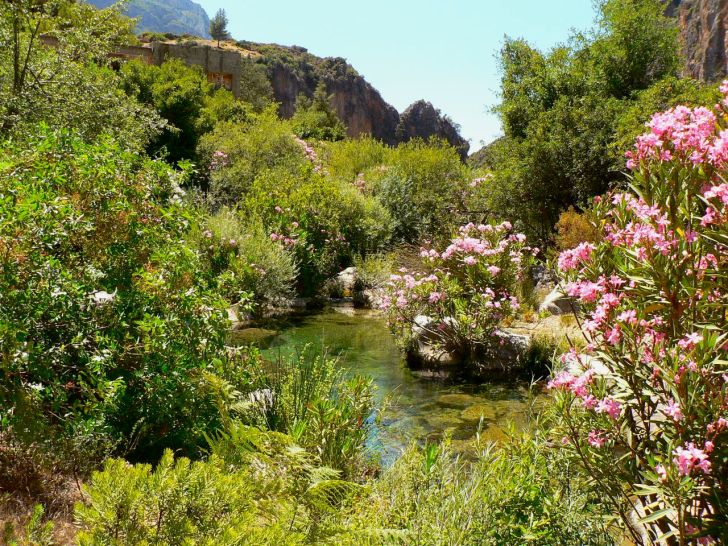
A river in the Rif region (Morocco). Image: Núria Bonada
We return from a short summer break with an interview with Dr. Núria Bonada, a specialist in aquatic insects and the ecology of Mediterranean rivers at the University of Barcelona.
 What is the focus of your research for BioFresh, and why?
We are modeling future distributions of freshwater organisms in European catchments under global change scenarios. We have started by analyzing the future distribution of brown trout in the Ebro, the Elbe and the Danube. The obtained results are not very encouraging, as this species will disappear in 2080 in about 80% of the reaches where can be found today. Considering the natural, recreational and economic value of brown trout, measures to mitigate the effects of global change at catchment scale are urgently required.
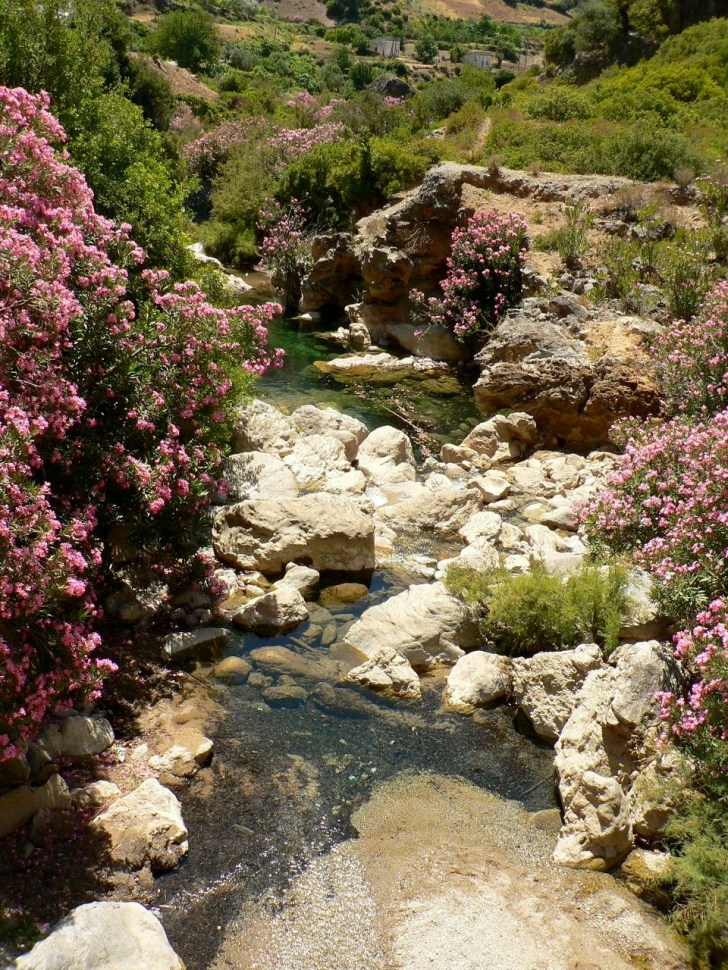
Another river in the Rif region (Morocco). Image: Núria Bonada
How is your work relevant to policy makers, conservationists and/or the general public?
By presenting future distributions of freshwater organisms, our work will help policy makers to identify areas of high vulnerability to extinction loss and to address specific measures to mitigate the effects of global change. Given the natural, recreational and economic value of some of the freshwater species that we are considering, our work would not also be relevant for conservationists but also to fishermen or to the general public.
Why is the BioFresh project important?
BioFresh will provide access to data on freshwater organisms and therefore will open the door to address many future research questions. In a scientific world where so much public money has been invested in collecting data it is now time to make all this data available to all scientists, managers and to the general public. By doing so, BioFresh will help to improve the knowledge of freshwater diversity, its trends, and will provide clues for their conservation.
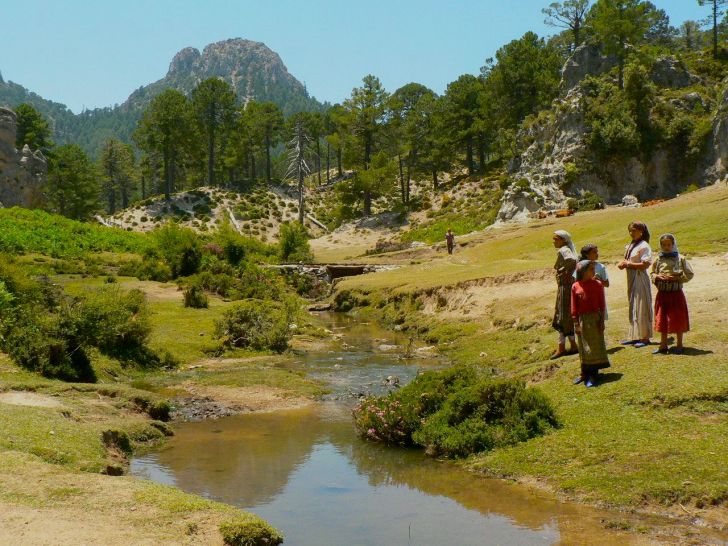
Talassemtane National Park (Morocco) Image: Núria Bonada
The BioFresh blog takes a holiday!
The BioFresh blog will take a break until the end of August, as our freshwater scientists migrate to warmer climes (usually including rivers and lakes…) for well-deserved holidays. We’ll be back towards the end of the month – have a great summer!
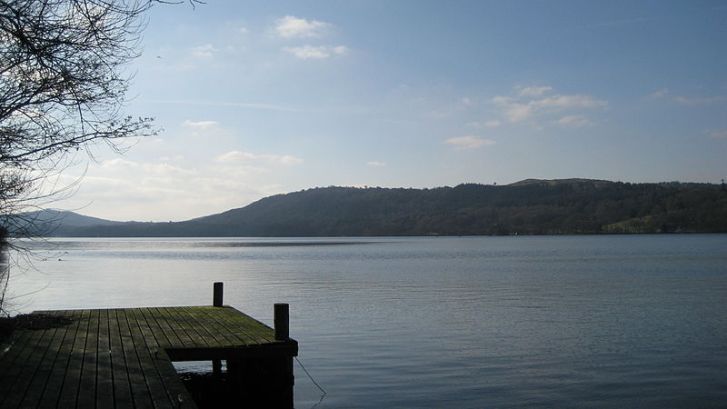
Lake Windermere, UK. Image: Wikipedia

Lake Como, Italy. Image: Wikipedia

Lake Ammersee, Germany. Image: Wikipedia
Meet the BioFresh team: Aaike De Wever
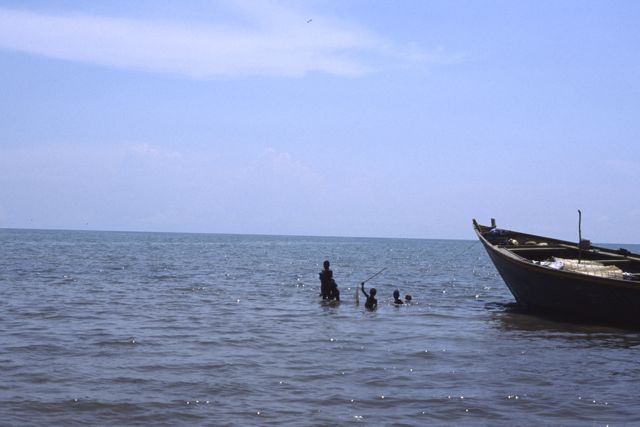
Lake Tanganyika near Ujiji, Tanzania. Image: A De Wever
Continuing our series of interviews with BioFresh partners, we hear from Aaike De Wever, BioFresh Science Officer at the Freshwater Laboratory, Royal Belgian Institute of Natural Sciences.
 1. What is the focus of your work for BioFresh, and why?
My main focus within the BioFresh project is coordinating the development of the freshwater biodiversity information platform and data portal. As I outlined in an earlier blogpost, another important aspect of my work is mobilizing freshwater data. As I believe it is necessary to communicate on this issue, I am currently preparing a series of blogposts on this topic.
Lake Tanganyika near Ujiji, Tanzania. Image: A De Wever
2. How is your work relevant to policy makers, conservationists and/or the general public?
One of the main aims of BioFresh, in which I am heavily involved, is to make data discoverable and encouraging the on-line publication of biodiversity data. In doing so, we hope to contribute to an increased efficiency and transparency in science by helping the discovery of relevant datasets and reducing the need to do certain surveys over again. In addition, the mobilised data will be made open access so that anyone interested can consult it. In addition, I will be involved in integrating the Climate Vulnerability Index and Key Biodiversity Areas tools in the portal. These tools developed by BioFresh partners are specifically targeting policy makers and conservationists.
3. Why is the BioFresh project important?
From the data point of view, I believe BioFresh has a major role in creating a change of mindset in the way (freshwater) scientists deal with data, data publication and openness of data. Read more…
BioFresh press kit launched!

We’re pleased to announce the launch of the BioFresh press kit. This zipped file contains a whole host of information, contacts, press releases and images from the project – ideal for anyone looking to finding out more about BioFresh’s work.
Included in the download:
- The BioFresh information flyer
- The project presentation
- BioFresh newsletters 1 & 2
- A partner list with brief information and contact details
- Previous press releases
- Klement Tockner’s interview and feature in International Innovation magazine
- A small selection of hi-resolution photos of freshwater ecosystems and of meetings
For further information, please contact Paul Jepson, Work Package 8 leader (paul.jepson@ouce.ox.ac.uk) or Rob St.John, Communications and Project Co-ordinator (rob.stjohn@ouce.ox.ac.uk).
Meet the BioFresh team: Paul Jepson
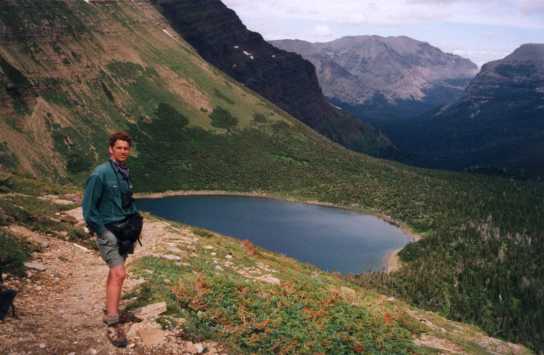
Paul Jepson leads Work Package 8 of BioFresh, which aims to strengthen evidence-based policy making and conservation planning for freshwater ecosystems through the effective and inventive communication and dissemination of the project’s results. Paul is the course Director of the MSc in Nature, Society and in Environmental Policy at Oxford University, following a career in U.K. and international conservation policy and management. His research interests span protected area planning, wildlife trade, conservation history, attitudes, values and practices, media representations of conservation issues, and the role, accountability and legitimacy of conservation NGOs.
 1 What is the focus of your research for BioFresh, and why?
I don’t have a specific research role. Rather my role is to lead thinking on how we can make the science of our team and others accessible to those who need it and/or would benefit from knowing about it. I’m inspired by the notion of ‘Science in Action’. But what does this actually mean? Is it a more evidence-based policy? Yes, in part, but there are many fascinating and important questions associated with the concept. For example, what are the practical ways of communicating science? Who should we target? What message framings work? How can we enroll the new digital architecture, and what are the political, democratic and ethical implications of scientists engaging more directly in the ways they have voice?
2. How is your work relevant for policy makers, conservationists and/or the general public?
I think I have already answered this. However, I would add that some exciting cross-disciplinary conversations on the issue are emerging in Oxford and other European universities. In Oxford these involve a number of our specialist research groups, for instance the Reuters Institute for the Study of Journalism, the Oxford e-Research centre, the Institute for Science, Innovation and Society as well as campaign teams in NGOs such as Oxfam. My sense is that BioFresh is part of a new ‘Science & Society in the 21st century’ debate that is gaining momentum and will be highly relevant to policy makers, conservationists , scientists and wider publics.
3. Why is the BioFresh project important?
On one level it is important because life on Earth is fascinating but little understood. Lots of life lives in freshwater but few people are giving much thought to this. However, BioFresh has another important dimension which concerns the assembly of a new form of scientific infra-structure. This captures a vision where data is available to all, irrespective of financial resources and access to networks. Where – through freeing up data locked behind barriers of language, scientific conventions and vested interest – we can start asking multi-scalar questions (spatial and temporal) of ecological and social systems. As yet I haven’t heard of much analysis across FP7 projects on this point, but I sense that a similar ethos can be identified in many projects.

Indonesian logging. Image: P Jepson
4. Tell us about a memorable experience in your career
It was my time working in Indonesia during the 1990s. Over the years I worked in conservation and resource management it became increasingly clear to me that the natural science knowledge and management frames that we were deploying were having minimal effect in terms of influencing the practices and behavior of government, resource-extraction industries and communities. I also realized that I lacked the conceptual frames – software of the mind if you like – to ask meaningful questions about why we were having such limited effect and to analyse the broader societal action arena within which we were putting our conservation science and projects to work. This prompted me to move over into the social sciences and join an interdisciplinary Geography department. Intellectually this crossing of the natural-social science divide has been enormously stimulating and worthwhile even though life as a ‘boundary scholar’ raises all sorts of challenges relating to the disciplinary silos that structure contemporary academic life.
5. What inspired you to become a scientist?
To be honest I became a conservationist and was inspired to do so by a passion for bird-watching and travel which dominated my life from early teens into my late twenties. Science was a means to explore my curiosity of the natural world and generate reasons why it should be conserved. Over the years it has become a framework for me to engage with issues that are important to me in a structured, rigorous, creative, innovative, and reflexive way.

Birdwatching. Image: P Jepson
6. What are your plans and ambitions for your future work?
To be part of a new form of science that enables society to face accelerated environmental, climatic and social change with confidence and a vision for a better socio-ecological world. I’m not quite sure how to do this but I see exciting prospects in the field of eco-informatics. In particular the interacting developments in the fields of mobile and cloud computing, data integration, data visualisation and capture, sensor miniaturisation and machine learning, and the rise of crowd-sourcing and citizen-cyberscience. The assembly and interplay of these new technologies and practices with established science, for me at least, represents an exciting new frontier.
Between 5-10 July at Hampton Court gardens on the outskirts of London, the WWF exhibited a specially commissioned garden to the public, aimed at engaging and enthusing the public with the need to conserve and protect freshwater ecosystems. The garden “Why we care about chalk streams” was created by award-winning designer Fiona Stephenson to highlight the effects of water extraction on U.K. chalk stream ecosystems, as shown in the video above.
WWF freshwater expert Rose Timlett, explained, “A chalk stream is such a special habitat, stunningly beautiful with gin clear water and a perfect environment for wildlife and plants. But these rivers supply water to millions of people in the UK and it’s the demand for water that is threatening this eco-system. We hope our garden will inspire people to really think about their use of water and the impact they have on their surroundings.”
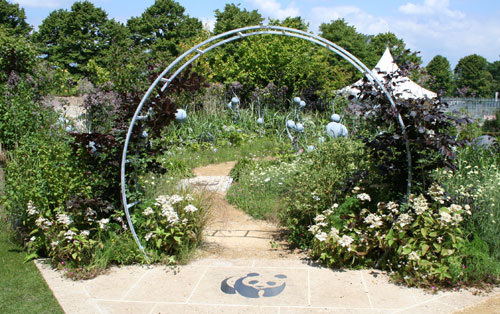
WWF Chalk Stream Garden
The garden – available for online viewing through a virtual tour here – was well received by judges, winning a silver-gilt medal. However, there has been less discussion of how effective the project has been at communicating a message of freshwater conservation. A theme we’re constantly pondering is the potential for the creative arts as a means of engaging a wider audience with the environment. The WWF garden blurs the lines between two rich traditions of landscape modification – land art (e.g. Richard Long, Andy Goldsworthy, Michael Heizer and Robert Smithson) and landscape gardening (e.g. Capability Brown and Frederick Law Olmsted).
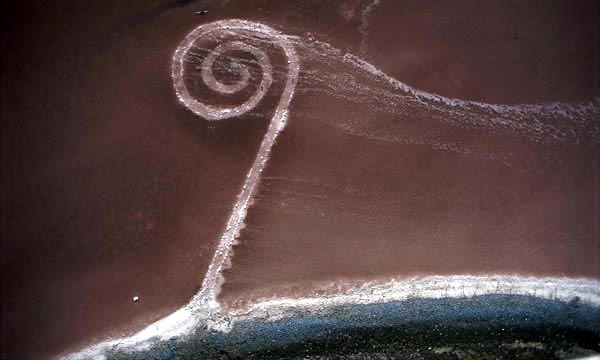
Robert Smithson's Spiral Jetty. Image: George Steinmetz September 2002







 The Freshwater Blog