World’s largest salmon face extinction
A new report reveals that all 5 species of the world’s largest salmon group, the taimen, are threatened with extinction due to over-fishing and habitat loss.

Sakhalin taimen. This particular species of taimen featured in the IUCN list of the 100 most threatened species.
Tasty, healthy and fun to catch, salmon are one of the best known fish in the world. But a new report about the status of the largest type of salmon in the world, the giant freshwater taimen, shows that they are threatened with extinction. The report, which was prepared by a team of international scientists, was released last week by the IUCN and highlights significant challenges in the efforts to conserve these amazing fish.
The taimen are pretty remarkable creatures. They can live up to 30 years of age and have been known to grow to over 2 metres in length, making it one of the biggest of any freshwater fish in the world. But not only are these unique salmon huge, they’re also very ancient. It is commonly thought that the taimen are the evolutionary grandparents of the modern-day salmon and trout with which we are most familiar.
What is probably the most fascinating fact about these enormous salmon is their diet, or perhaps more appropriately, their prey. The taimen are also commonly known as the ‘river wolf’ because of their giant size, ferocious appetite and the surprisingly diverse array of prey that they feed on. Waterfowl, bats, adult salmon and other fish, and even unsuspecting small mammals that are unfortunate enough to wander into a taimen infested river! In many river ecosystems that they inhabit the taimen act as the top predator and as such play a crucial role in the functioning of these ecosystems.
There are 5 species of taimen and their range is largely to restricted river systems in the far-east and Siberia and one species found in the Danube in Europe. One species, the Sakhalin taimen, was also featured in the list of the world’s 100 most threatened species released last month, which was discussed here. Of these species all are either threatened with extinction, or because of their limited habitat range there is insufficient data to know for sure. The Sichuan taimen, for example, is restricted to just a single river system in China in the same region as the giant panda clings on to existence. The Korean taimen is also only found in one river system and very little is known about the status of this species.
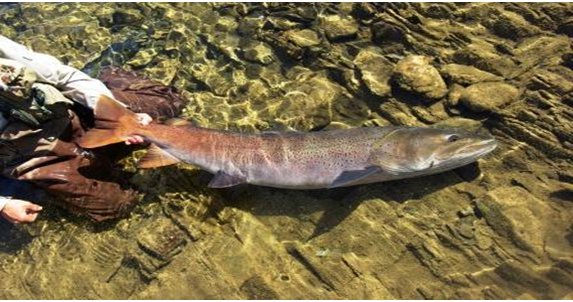
Because these salmon are so unique and rare, and because of their huge size, they are highly prized catches for sport fishing. Unfortunately, over-harvesting and over-fishing is one of the biggest threats to the survival of this fish. The other big pressure of these species is habitat destruction, whether due to logging, erosion, or damming.

Sakhalin taimen in Hokkaido, Japan. Photo: Wild Salmon Centre
The report recommends establishing freshwater protected areas in which restrictions on habitat destruction and (over-)fishing would be put in place. Freshwater protected areas are still a fairly novel idea in conservation, but could perhaps build on the recent success of marine protected areas (MPAs). The development of freshwater protected areas is recognised as one of the best ways to protect species that live in freshwater ecosystems such as free-flowing river systems and would not only be of benefit to just fish such as the taimen, but a range of other threatened freshwater species as well.
Pete Rand, chair of the IUCN Salmon Specialist Group, said the report was “sobering” and that it “underscores the need to take immediate action, at a broad, international level, if these fish are to survive into the future.” If we are to be successful at protecting these species then “we need to continue to push for establishing protected areas throughout their range”, said Rutgers University Professor Olaf Jansen, a member of the international assessment team.
New digital technologies can be used to promote biodiversity and conservation, but it can also be used to track, monitor and assess biodiversity in a much more open, democratic and engaging way then ever before. It can actually allow the public to generate data about biodiversity.

October 15 is Blog Action Day, a day where bloggers from around the world and with different interests are brought together to discuss and share ideas about one important global topic. We’ve participated for last two years, firstly writing about water in 2010, and last year writing about food. This year’s theme is ‘The Power of We’. The issue we’ll be focusing on for this year’s Blog Action Day is the use of new digital and mobile technologies to harness the ‘power of we’ to generate information about freshwater biodiversity. In a sense, we’ll be asking whether it is possible to crowd source freshwater biodiversity informatics.
In recent years there has been an explosion of new technologies and applications providing a range of exciting potential uses for conservation and citizen science. This is a topic that we’ve written about before here and here and last year BioFresh member Paul Jepson (University of Oxford) convened a ssymposium discussing the potential of mobile technologies (such as smart phones) to allow citizens to interact with their natural surroundings and contribute to the recording and generation of biodiversity data. Oxford hosted another symposium highlighting the use of emerging technologies in biodiversity science and conservation earlier this year. Several initiatives and apps already exist that allow any citizen with a smart phone to get involved such as Project Noah, iSpot, and BirdTrack.
These technologies can be used for any group of plant or animal that can be seen (or perhaps in the not-too-distant-future even heard), but have so far been more commonly used for tracking and recording birds. Can we apply it to freshwater biodiversity?

Photo: WWF/Michel Roggo
Think about a sunny day down at the local pond or by the stream. People might be having a picnic, going for a walk, or casting a line and waiting for a fish’s bite. Wouldn’t it be amazing to be able to identity all the life around you and at the same time help contribute to a growing body of information about freshwater biodiversity with just your phone? It would be great for recreational anglers, divers, water managers, or just about anyone interested in the natural world or enjoying their favourite freshwater spot.
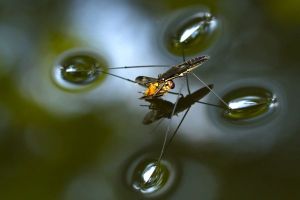
A water strider is able to walk on the surface of the water with ease by spreading it’s already light body weight. Photo: National Geographic/John Moran.
Unfortunately, one of the biggest barriers to applying this to freshwater biodiversity is that smart phones don’t particularly like water! This can make it pretty difficult to get a good idea of what’s going on below the surface. But many fish can be spotted in shallow, clear waters, and there is plenty of life on and around the surface of freshwater areas. Of course, once a fish has been caught this also solves the problem! Even divers with underwater digital cameras could take photos and upload them to a site like iSpot.
This approach is not without its problems of course. One is that this possibility is exclusive only to those who can afford this technology. Another that has been raised is the quality of data that will be generated might not always be scientifically useful.
Nevertheless, these technologies really do open the way science and data generation can be conducted and as technology becomes cheaper it will allow the whole process of citizen science to become even more open and democratic. And it’s not always just about the science either. These technologies can be a fantastic way of increasing people’s enjoyment and interaction with the natural in world in which we live.
The Future of Amphibian Conservation: an interview with the Amphibian Survival Alliance
This week Jaime Garcia Moreno, the Executive Director of the Amphibian Survival Alliance (ASA), took the time to speak with the Biofresh blog about the plight of amphibians and the work that the ASA have been doing.
 The ASA is a global partnership for amphibian conservation. Called for since 2006, the Alliance was only formed in December last year. The ASA’s major goal is to implement the global Amphibian Conservation Action Plan (ACAP) and it attempts to bring focus, coordination, and leadership to address the world’s most serious extinction crisis. In this interview, Jaime Garcia Moreno, the Director of the ASA, discusses issues including some of the challenges the ASA faces, promising developments in amphibians and what needs to be done in order to scale up conservation and prevent further declines in amphibian populations.
BioFresh Blog: The Amphibian Survival Alliance (ASA) was born less than a year ago. How would you assess the progress of the Alliance to date?
Jaime Garcia Moreno: Given the constrains in which the Alliance was born – tight resources, insufficient awareness – I would say that there is some progress, but certainly not at the pace that we would like to see. Nevertheless, the Alliance has grown from its original six founder institutions to 25 partners now, and still growing.
BB: The ASA is committed to implement the global Amphibian Conservation Action Plan (ACAP). Since its development in 2005, the implementation of the ACAP has been slow and uneven. What has the ASA done to improve the implementation of the ACAP?
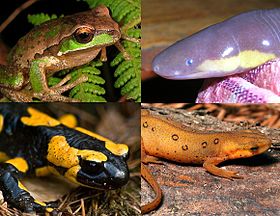
Photo: Creative Commons
JGM: The Amphibian crisis is one of the most challenging conservation problems of this century, so it is not even realistic to think that in 15 months the ASA would manage to change the game. We are setting the foundations for improved coordination of conservation actions across the board, and to extend amphibian conservation beyond the relatively tight circle of players currently involved.
BB:What do you think are some of the most promising developments in the fight to prevent further amphibian population declines?
JGM: We see many opportunities to mainstream amphibian conservation. Many species live in very small areas in the tropics. These small distributions make them rather vulnerable to habitat loss, but they are also excellent opportunities to save species from extinction with focused actions and relatively modest investments. The intersection between amphibian conservation and other large environmental problems (like habitat loss, climate change, water security, etc) is such, that we estimate that amphibian conservation can help advance countries towards the fulfilment of 15-16 of the Aichi targets that they committed to at the [Convention on Biological Diversity] CBD.
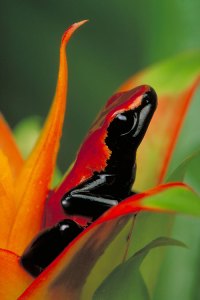
Photo: Photowitch
BB: Amphibians the world over are facing probably the world’s most serious extinction crisis. What are your thoughts on the future prospects for amphibian conservation and preventing further extinctions?
JGM: I think we need to improve awareness and “mainstream” amphibian conservation if we want to see serious progress. While experts know all the details of the amphibian crisis, many people do not even know what an amphibian is (in [last] week’s Nature Podcast salamanders are identified as reptiles!), let alone that they are fading away. We also need to interact more with colleagues from other disciplines to intersect amphibian conservation into what they are doing – river basin managers, protected area managers, trade experts, legislators, ecosystem restoration experts, etc. They will not do what is needed to keep amphibians going unless they know how their actions and decisions can affect these creatures, and that is one role for ASA.
Amphibians are affected by many threats, some of them quite difficult to deal with – like the chytrid fungus, which we will have to learn to co-exist with and manage for the time being. Nevertheless, the problems affecting the most species are not different from those affecting other creatures: deforestation, habitat loss and degradation, water management that does not consider the environment as a rightful user of it in order to function and provide vital ecosystem services. In that way, I am hopeful that by teaming up with others and pointing out that amphibians ought to be taken seriously, that they can be an indicator of overall ecosystem health, we will manage to contain this crisis and continue to enjoy the sights and sounds of frogs and salamanders.
Mismatch between protected areas and freshwater biodiversity
BioFresh’s latest policy brief explains that freshwater species appear to provide the best surrogates for conservation planning. Yet regions of high freshwater biodiversity, threats, and dependence on the ecosystem services they provide often do not overlap with protected areas.
Freshwaters make up less than 1% of the Earth’s surface, but contain over 10% of all known species. What’s more is that many people depend on freshwater biodiversity for their livelihoods. Freshwater ecosystems contribute to vital services ranging from food and energy security to water purification and recreation. But centres of freshwater biodiversity and species richness that are often not covered by protected areas coincide with high levels of rural poverty. Action in these areas might maximise benefits to both conservation and people’s livelihoods.
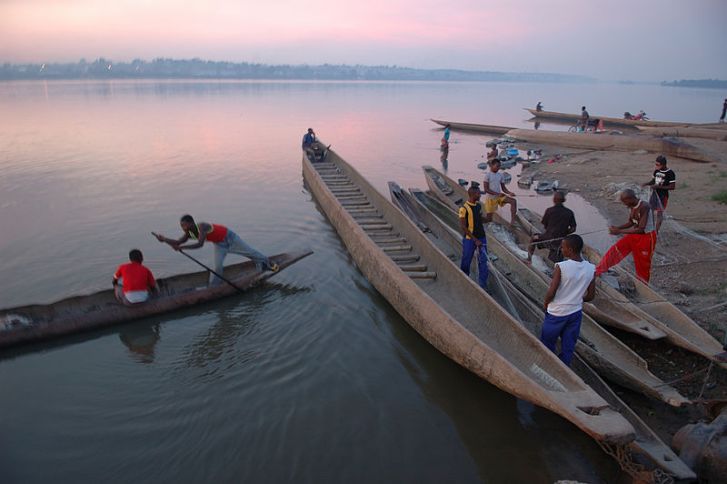
Fishermen on the River Congo
But planning efforts focused on birds and mammals may miss critical habitats for freshwater biodiversity. This is because these better-known species don’t always act as the best surrogates for conservation planning, research conducted by members of BioFresh shows. The research, on which the latest policy brief is based, analysed biodiversity data from the African continent and shows that the protected areas network under-represents freshwater biodiversity. According to Will Darwall, lead author of the new study, the “analysis indicates that individual freshwater groups are significantly better surrogates for birds, mammals, and amphibians than vice versa”.
The study used new and previously available data and looked at the habitats of over 7,500 freshwater and terrestrial species for comparison and overlaid that with protected areas across Africa. The new data on freshwater species included all known species of fish, crabs, molluscs, dragonflies and damselflies. The habitats of freshwater species were also compared with maps of infant mortality rates and the location of proposed dams.

The controversial Tekeze dam in Ethiopia. Photo: Wikimedia commons
As well as demonstrating that conservation research and management have been focusing on species groups that are poor surrogates for patterns of both species richness and threats for many freshwater groups, the study also shows that the areas of highest species richness and threat from development overlap with areas where people’s dependence on freshwater ecosystem services are high. Given the scale of planned development of water resources across Africa, the rewards from intervention at this relatively early stage are potentially huge and could represent an opportunity for Africa to avoid significant economic costs of eventual restoration of inland waters incurred in many other parts of the world.

Mozambique tilapia (Oreochromis mossambicus). Native to southern Africa, this fish has become an invasive species in many parts of the world. Photo: Creative Commons.
Although the research is specific to Africa, the findings have more general implications for development projects such as dams, the designation of protected areas, and suggests the need to re-assess our focus for conservation planning in order to better manage and conserve freshwater biodiversity. The research also highlights the need to obtain more data specifically on freshwater species instead of relying on birds and mammals to act as surrogates for conservation planning.
But the study also raises some new questions for the freshwater conservation community. Firstly, how do we assess, map and value freshwater-related ecosystem services? And secondly, how do we incorporate freshwater species conservation planning into integrated catchment and water management? Any thoughts, queries, or comments on these questions or anything covered in the post are gladly welcomed below.
The BioFresh policy brief is based on the paper: ‘Implications of bias in conservation research and investment for freshwater species” by William R.T. Darwall et al. in the journal Conservation Letters, vol 4, pp. 474-482, 2011
Amphibians are facing the one of the fastest rates of extinction of any animal group. But how much attention did they receive at the IUCN Congress last month? The Director of the Amphibian Survival Alliance, Jaime Garcia Moreno, took some time out to discuss this issue with the BioFresh blog.

Red-eyed Tree Frog. Photo: Creative Commons
BioFresh Blog: You recently attended the IUCN World Conservation Congress last month. What did you get up to there and were you pleased with the attention given to amphibian conservation at the congress?
Jaime Garcia Moreno: There was very little attention put to amphibians at the Congress – the amphibian conservation workshop that we co-organised, and the motion that we helped put forward to the members were the only amphibian-focused activities that I am aware of.
BB: I noticed that the motion to step up efforts to combat the amphibian crisis was passed with attention to amphibian trade added as an amendment. Amphibian trade is an issue that has been covered by the BioFresh blog previously. What is the significance of the amendment?
JGM: We thought it was necessary to include the trade paragraph because there are species affected by this. The volume of amphibians traded for food is small enough (compared [for example] with fisheries) that it is not picked up in other forums. We know, however, that some of the frogs traded for food are not coming from breeding facilities but collected from the wild and in volumes representing very large numbers of individuals. Trade monitoring and assessment is difficult – not only do frog legs from different species look alike, but the World Customs Organisation removed its Harmonized System code for amphibians. This leaves amphibians together with leeches, spiders, scorpions, worms – leading to confusion. Live amphibians are often classified with live reptiles or ornamental fish with whom they are often shipped, and for which codes do exist.
BB: What action, if anything, will this motion lead to?
JGM: The motion is a stark reminder that there is an awful lot to do if we want to turn the tide for amphibians. There was a motion four years ago, [at the IUCN congress] in Barcelona, urging parties to join efforts to combat the amphibian crisis, and unfortunately it was necessary to remind everyone that the crisis is far from over and that it is being fought with very limited funding.
We hope that the motion will remind all of those who care about the diversity of life that amphibians are still the most threatened terrestrial group of animals, that we keep losing species and that many populations continue to decline, so we will lose more if we don’t act now. We ought to remind ourselves that as long as we cannot make one of these creatures from scratch, it is our responsibility to keep them on the planet.
Next week we will be presenting another interview with Jaime Garcia Moreno, who discusses the future for amphibian conservation and the work that the ASA are doing.
Water security challenges: the gap between science and policy
About 80% of the world’s population faces water insecurity or risks relating to loss of freshwater biodiversity. Water security is an issue of growing concern, but at present academic research often does not align with the needs of policy-makers and practitioners.

Photo: Creative Commons
A recent article by Karen Bakker published in Science last month discusses the challenges and opportunities for water security in the coming years. Water security, as defined in the article, is an “acceptable level of water-related risks to humans and ecosystems, coupled with the availability of water of sufficient quantity and quality to support livelihoods, national security, human health, and ecosystem services”.
Interest in water security has risen considerably over the past decade or so in both academic and policy circles, a recognition of the crucial role water plays in numerous facets of the lives of people and ecosystems on a daily basis. For example, water security is the focus of the 2013 World Water Week in Stockholm and the next World Water Forum in 2015.

Number of water security-related publications in the last 20 years. Source: Bakker 2012.
Freshwater-related human and ecosystem vulnerability is leading to growing concern in four key areas:
1) threats to drinking water supply systems
Over 1 billion people around the world currently lack access to clean, safe drinking water. As well as increased investments needed to reach these people, enhanced monitoring and emergency preparedness is necessary to protect against threats such as contamination and human impacts on freshwater ecosystems.
2) threats to economic growth and human livelihoods

The worst drought in 60 years in East Africa triggered the first famine of the 21st century threatening the livelihoods of over 10 million people. Photo: Reuters/Red Cross
Water-related hazards such as floods and droughts have enormous negative impacts for millions of people across the world and are contributing factors to poor economic growth in many regions. In addition, freshwater availability and biodiversity play a key role in food security, implying the need for both technological innovation and water conservation.
3) threats to freshwater ecosystem services
Point and non–point source pollution as well as increased water consumption are some of the biggest threats to freshwater biodiversity and the ecosystem services they provide. This highlights the need to manage water for both human and ecosystem needs, especially given potential “tipping points” in socioecological systems.
4) climate change
Climate change is expected to lead to increased hydrological variability, notably an increased severity and frequency of droughts and floods, amplifying the concerns with regards to livelihoods and economic growth. Given this, there is a need to develop adaptation strategies that deal with uncertainty that are more than just technical, but also include governance and social learning as key tools for more effective water management.
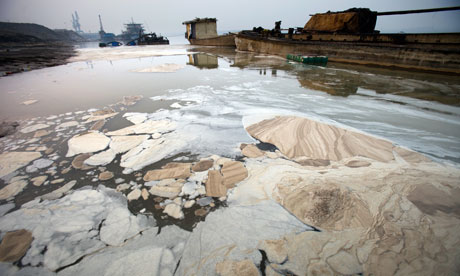
Chemical pollution in the Yangtze river, China. Pollution is a major threat to water security and biodiversity. Photo: Lu Guang/Greenpeace.
A central theme of these water security threats is the challenge of balancing human and environmental needs while protecting essential ecosystem services and biodiversity, writes Bakker. For this to occur collaboration between natural and social scientists, academics and practitioners is crucial. But, argues Bakker, “academic research on water security is relatively poorly integrated with the needs of policy-makers and practitioners.”
The three main challenges identified by Bakker are the lack of a conceptual common ground for effective water management and policy-making across disciplines and sectors, the current lack of sufficient interdisciplinary collaboration and institutional incentives, and a disciplinary ‘scalar mismatch’ (where different disciplines tend to focus on different scales – e.g. the hydrologist looks at the watershed, whereas the political scientist focuses on the nation-state), which may be reproduced in the context of on-the-ground water governance.
The growing focus on water security offers a significant opportunity for the freshwater biodiversity science and policy community because freshwater ecosystems play an important role in providing water security and as such can make substantive contributions to finding solutions to the global water crisis. Given these opportunities, and the importance of finding interdisciplinary solutions to this issue, it will be necessary to engage with a range of different fields as well as policy areas including Water Resource Management, Water, Sanitation and Hygiene (WASH), food security, and development.
Source: Bakker 2012, ‘Water Security: Research Challenges and Opportunities’, Science, vol. 337 no. 6097 pp. 914-915, <http://www.sciencemag.org/content/337/6097/914.full>.
Congratulations to Martin Kernan and the UCL team for organizing a thoroughly interesting and worthwhile day bringing together those who do biodiversity freshwater science with those who use freshwater science.
 Walking into the lecture theater in University College London it was clear that we were going to be in for a good day. The place was packed! Martin reported 110 registrations but there seemed more. Rick Batarbee commented to me that these sort of meetings seem to work in the UK because “maybe we are small enough to know each other yet big enough to bring a diversity of perspectives worth discussing”.
I came with the plan to try out tweeting a summary of the symposium. You can review my efforts, and those of a small cohort of fellow science twitterers, by searching on #fwbiodUK. In the afternoon panel discussion I asked whether the new media could enhance science-policy-practice dialogue. Colleagues from UK government agencies said that at work they were still fire-walled from accessing YouTube, twitter and even searching an angler association website! A colleague from The Netherlands was amazed, commenting something along the lines of “how can you govern if you can’t listen to your people?” It seems that UK agencies might slowly be opening-up, but this was one point that underlined how institutional practices create barriers to effective dialogue between a community who share a passion for freshwater.
The day was full of interesting insights. Four that are foremost in my mind as I write this post on the train back to Oxford are as follows. First was Klement Tockner’s application of the term ‘domesticated’ to river systems. Three subsequent speakers picked up on this metaphor which made me wonder if it might have traction. It chimes with Frans Vera’s re-wilding work – the idea that we domesticate nature to produce a small set of services efficiently (e.g. Auroch to milk and meat producing cow) and end up forgetting the wider suite of services produced by the original. When we actively de-domesticate (cow to heck cattle, canalised river to meandering) we set in train a set of processes with rich scientific and social benefits.
 Second was the general unease with the ecosystem services policy frame. Stewart Clarke from Natural England did a great job of making the case for talking in £ terms, but for me Klement summed up the disconnect when he commented that scientists are being asked to directly link freshwater biodiversity with ecosystem services, yet there are two steps in between – ecosystem process and function – and whilst recognizing the policy imperatives it is difficult for scientists to make the short cut.
A third point that got me thinking, was the talk from Mike Dobson from the Freshwater Biological Association. Mike reminded us of the vital contribution that specialist NGOs (he cited Pond Conservation and BugLife along with the FBA) can make at the freshwater biodiversity science-policy-management interface. I think he has a point. Whilst the branded conservation NGOs are more distanced from the scientific communities, NGOs like FBA are very much part of us and perhaps we should more actively look for ways to work together. As Mike noted the ‘impact’ requirements in research council proposals offer a great opportunity to do just this.
Perhaps the most intriguing policy relevant science I heard was from Nigel Wilby from the University of Stirling. In a nutshell, he showed how gradients of (site) connectivity matter for freshwater biodiversity at the landscape level, and how connectivity is becoming polarized at the low and high ends of the scale. I had never imagined that we need policies to promote intermediate connectivity!
Once again thanks to everyone for such a fascinating and positive day. If you were at the meeting please add a comment with your take away message or insight.
I hope other colleagues in BioFresh can draw inspiration from this meeting in London to organize something similar in their country.
Paul Jepson.
Freshwater Biodiversity in the UK: a meeting on the status, threats and conservation concerns
Are you aware that freshwater ecosystems are facing are major crisis? Have you ever wondered why freshwater biodiversity matters? Or what we can do to help? A meeting on the 20th of September about freshwater biodiversity in the UK discusses these questions and more.
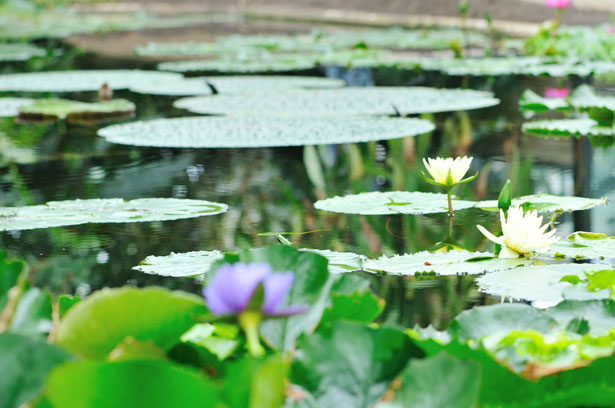
Photo: Creative Commons
Just 1% of the Earth’s surface is covered by freshwater, but they are home to over 10% of all animals and over 35% of all vertebrates. In addition, freshwater ecosystems provide many important services to humans. Yet freshwater biodiversity around the world is in serious decline to the point of a major biodiversity crisis.
In a first of its kind, University College London in conjunction with BioFresh and the Freshwater Biological Association, are bringing together key scientists, policy makers and freshwater managers to discuss the challenges of preventing further losses of freshwater biodiversity in the UK. Held on the 20th of September 2012 in the JZ Young Lecture Theatre, UCL, the day long meeting provides an opportunity to participate in discussions with and see presentations from a wider range of freshwater experts.
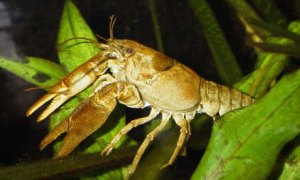
White-clawed crayfish, the only native crayfish in the UK. Photo: Environment Agency
Some of the key theme of the discussion will include:
- The scale of freshwater biodiversity loss
- The role of biodiversity in freshwater ecosystem functioning
- Pressures on the biodiversity of standing and running waters
- The importance of biodiversity to society
- Freshwater biodiversity and conservation policy
- Public understanding of freshwater biodiversity issues
The day will comprise a morning and afternoon session addressing issues such as freshwater biodiversity in the Anthropocene, the new conservation paradigm, the importance of biodiversity for ecosystem functioning and services, how to engage employees to conserve biodiversity and the role that museums can play in freshwater conservation. A list of confirmed speakers include Klement Tockner (Co-ordinator of BioFresh), Iwan Jones (QMUL), Carl Sayer (UCL), Nigel Wilby (Univ Stirling), Linda May (CEH Edinburgh), Stewart Clarke (Nature England), Cathy Purse (Thames Water), Jeremy Biggs (Pond Conservation), Mike Dobson (FBA), and Steve Brooks (Natural History Museum).

Lokia Erythromelas. Photo: Klaas-Douwe Dijkstra
In addition, there will be a panel discussion chaired by Paul Jepson from the University of Oxford aimed at bridging the two cultures of science and practice to better understand the needs of policy-makers. The panel discussion will be made up of freshwater managers and practitioners and will discuss a) how institutional policy drivers can help or hinder how science feeds into policy and b) how scientists can make their science more accessible and useful. Keeping with the theme of openness, this will be followed by a discussion with comments and question from the audience as well as a live twitterfall to increase interactivity.
The meeting will be an open discussion and we welcome participation. For more information and registration click here and for any other queries contact Martin Kernan: m.kernan@ucl.ac.uk
How did freshwater biodiversity fare at the IUCN Congress?
Two weeks ago, I asked what the IUCN congress had to offer for freshwater conservation. With the close of the 10-day congress yesterday, how did freshwater fare in the end? In this article, I provide a wrap-up of the keys messages of the congress and the most important developments for freshwater biodiversity.
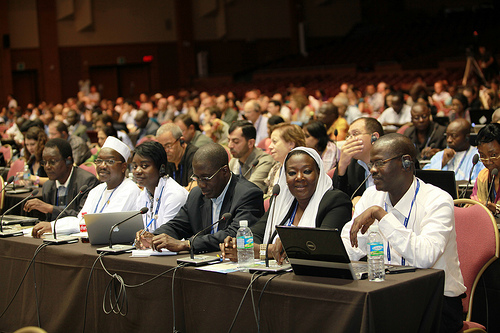
Member’s Assembly at the IUCN World Conservation Congress. Photo: IUCN.
The 2012 IUCN World Conservation Congress came to a close yesterday after more than a week of discussion, debate and deliberation. As expected, the theme of the congress, ‘Nature+’, featured prominently throughout the 10 days of the conference. What the IUCN calls ‘nature-based’ solutions were offered as a way to tackle a range of environmental and development issues. The take-home message of the congress was clear: whether it’s addressing climate change, food security, or poverty, utilising the benefits of nature can offer potentials solutions.
The role of business and the ‘green economy’ also featured strongly. During the congress, the World Bank stated that nature should be at the heart of the economy, Richard Branson gave a speech in which he called ‘mother nature the greatest entrepreneur of all time’, and IUCN and Microsoft announced a new partnership to tackle species extinction. Business and unsustainable practices have long been seen as part of the issue, but business is now increasingly being recognised as part of the solution as well.
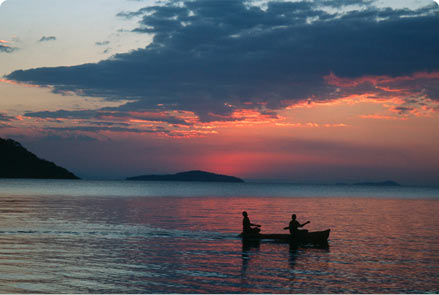
Lake Niassa, Malawi, is one of the richest freshwater ecosystems in the world. It reportedly has more species of fish than those of any other body of freshwater on Earth.
In terms of developments for freshwater conservation, there was a good deal on offer as well. Freshwater issues were on the agenda every day and most of the motions relevant to freshwater biodiversity were passed without significant amendments. The most important exception was the promising motion to establish a regional organisation in East Asia for the management of aquatic ecosystems, which in essence failed.

“Hellooooo!” An irrawaddy dolphin (Orcaella brevirostris) in the Mekong river, one of the rarest dolphins in the world. Photo: WWF.
Some of the highlights though include increased commitments to combat the amphibian crisis with attention given to the importance of regulating the trade of amphibians, a resolution to avert the extinction of rare river and freshwater-dependent dolphins, and the recognition of the connection between food, water, and biodiversity.
But perhaps some of the most significant developments at the congress for freshwater biodiversity weren’t specifically just about freshwater biodiversity. The creation of an IUCN Red List of Ecosystems, which aims to identify threatened ecosystems around the world, is one example. Another is the announcement by IUCN and the European Union to invest €20m in biodiversity and protected areas management, although how much of that will go to freshwater conservation is unclear.
So was it gold for freshwater biodiversity at the ‘Nature Olympics’?
Well, the news was mixed. On one hand, freshwater issues received a fair amount of discussion and attention and there were some important developments, as highlighted above. On the other hand, however, many freshwater species featured on the list of the world’s 100 most threatened species and the plight of freshwater species from Europe to Africa revealed during the congress provides a stark reminder of the challenges that the freshwater conservation community face.
Perhaps not gold then, but maybe bronze.
Why bother saving nature?
A list of the world’s 100 most threatened species was released during the final day of the IUCN congress forum. Of these, 29 were freshwater species. Biodiversity contributes directly to local livelihoods and economic development, but what happens in cases where it doesn’t? Why should we bother saving nature?
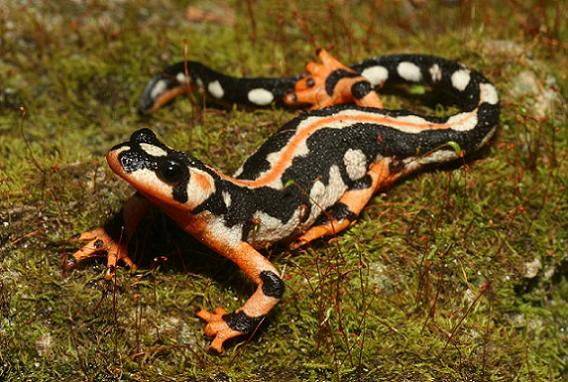
The Luristan Newt, one of the most endangered animals on the planet. Photo: Creative Commons.
This question was the theme of the final day of the congress forum. The role of biodiversity was a major focus with a session on engaging business for biodiversity conservation to the announcement of a partnership between Microsoft and IUCN to further strengthen the information available on the IUCN Red List of Threatened Species. IUCN argues that whether it’s through enacting laws and policies, implementing species recovery programmes, establishing protected areas or restoring ecosystems, conserving nature works.
But why bother conserving nature? The protection of biodiversity in watersheds can literally have downstream benefits such as providing clean water to cities, over half of all modern medicines are made from chemicals that have been synthesised from natural sources, and, according to the World Bank, 70% of the world’s poor depend directly on biodiversity for their survival.

Red River giant softshell turtle. Photo: Conservation International
But is there another side to the story? A list of the world’s 100 most threatened species was released today that raised just this question. The thought-provoking title to the report, ‘Priceless or Worthless?’, showed some of the world’s rarest, most unknown and intriguing creatures. Do we really need an economic reason to save these species?
Of these 100 critically endangered species, 29 live in freshwater ecosystems. There were 9 amphibians, 8 freshwater fish, 3 damselflies, 2 river turtles, 2 waterbirds, 2 freshwater molluscs, 2 aquatic plants and 1 freshwater crab featured in this list.

Red-finned blue-eye. Photo: Adam Kerezsy
Some of the most amazing creatures threatened are the Luristan Newt, a strikingly coloured, Iranian amphibian under threat from illegal collection for the pet trade, the red-finned blue-eye, a fish found only in a group of springs on an old cattle station in the outback of Australia that faces threat from an invasive fish species (Gambusia), and the Red River giant softshell turtle, the largest freshwater turtle in the world and also the most endangered – just 4 individuals are left!
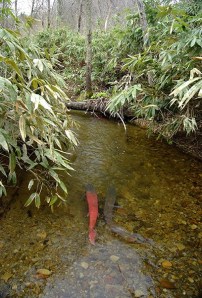
Sakhalin taimen. Photo: The Guardian
Other fascinating freshwater species on the list included the Rio Pescado Stubfoot Toad and Hula painted frog, two frogs previously thought to be extinct but found during the ‘search for the lost frogs’ campaign, an aquatic plant (Callitriche pulchra) that exists only in a 2m x 1m pool on a Greek island, a beautiful and previously thought to be extinct damselfly (Cebu frill-wing), the Singapore freshwater crab, a tiny crab surviving in two or three streams in the middle of the heavily urbanised island-state, and the Sakhalin taimen, one of the biggest, most ancient species of salmon with some known to grow to nearly 2 metres in length!
The discussion on the value of conserving nature marked the end of the five-day congress forum with now just 4 days of debate in the member’s assembly left of the congress. Reflecting on the messages of the previous five days, the IUCN Director of Global Policy, Cyriaque Sendashonga, was not so much concerned with definitions of ‘green growth’ or ‘biodiversity’. As long as we know what the vision is, such as “providing opportunities for economic activity, which does not undermine the environment and, of course, leads to well-being for everybody”, we can take action, she said. “That’s the vision, let’s just do it.”










 The Freshwater Blog