MARS Experiments: Extreme Flows in Nordic Rivers
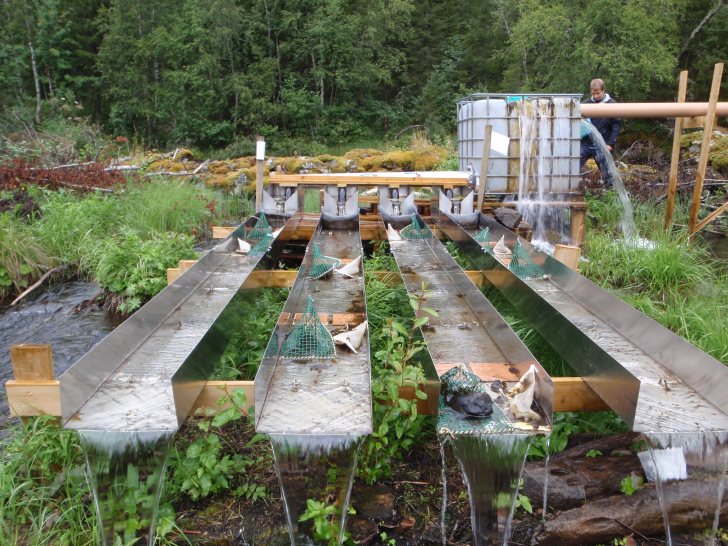
The experimental flumes in action. Image: Susi Schneider
Last week we wrote about how the MARS project is carrying out seven long-term experiments across Europe to study how river and lake ecosystems respond to multiple stresses.
Today, we introduce the first of these experiments, ‘Extreme Flows in Nordic Rivers’. Many Nordic rivers have hydropower facilities along their length, which alters and constrains water flow. In particular, naturally occurring spates (or floods) are reduced in intensity, or prevented altogether. A lack of spates can mean that nutrient concentrations build up in the river, often causing potentially harmful algal blooms.
This experiment explores the question: what do spates do to Nordic river ecosystems? More specifically, it looks to understand the effect of spates on ecosystem structure – species composition and abundance of aquatic insects and algae – and functioning – the decomposition of leaf litter and insect grazing rate.

Building the flumes. Image: Susi Schneider
Four flumes, each four metres long, have been constructed at a site around an hour’s drive outside of Trondheim in northern Norway. They have been constructed as a result of a collaboration between MARS and ECOREG – a project funded by the Norwegian Research Council – and are being managed by researchers at NIVA (Susanne Schneider) and NINA (Zlatko Petrin). Water flow along the flumes is controlled by a set of gates, which allows for spate and normal flow conditions to be simulated.
In two flumes, normal flows – constrained by hydropower developments – will be simulated at all times. In the other two, normal flows will be simulated for a week, followed by three to four days of extreme flows, to simulate spate conditions.
On each flume are two mesh bags filled with alder (a common tree in the region) leaves. One bag has a large mesh, to allow aquatic insects to enter and graze on the leaves; whilst the other has a fine mesh to prevent this. There are also two ceramic tiles on the flumes, which provide an ideal habitat for algal growth. One tile has its edges covered in Vaseline to deter aquatic insects from grazing on any algae, whilst the other is left uncovered to allow for insects to graze on the algal growth.

Applying vaseline to the ceramic tile to encourage algal growth. Image: Susi Schneider.
One flume will be sampled for algal growth, leaf litter and aquatic insects each week. A Benthotorch is used to sample for algal growth on each ceramic tile. Decomposition rates for leaf litter will be calculated by drying and weighing the leaves in the mesh bags. Aquatic insect populations living in the leaf litter bags will be identified and weighed to give an indication of biomass. Finally, stable isotope analyses will be carried out on these insect populations to understand the relative importance of alder leaves and algal growth as different food sources.
In each case, these constant methods will be replicated across the two normal flow (or control) flumes, and the two spate flow flumes. This comparison will yield new insights about the effect of spate flows on insect and algae populations, leaf litter decomposition in Nordic rivers. This information could prove extremely valuable for environmental managers and policy makers attempting to understand the impact of hydropower schemes – in MARS terms a major source of stress – on the freshwater environment. We’ll keep you updated with the results, and introduce another experiment next week.
WWF Living Planet Report suggests 76% decline in freshwater species globally since 1970s
 Global populations of freshwater mammals, reptiles, amphibians, birds and fish have declined by 76% since the 1970s, according to a new WWF report released today. The Living Planet Report measured the populations of 10,000 representative species across the world between 1970-2010, a method termed the Living Planet Index.
The results are startling and significant. Global populations of all wildlife – from land, freshwater and sea – have dropped by over half since 1970 – a dramatic fall in less than one human lifetime.
Freshwater species have fared particularly badly, a trend that the WWF report attributes to insufficient freshwater protected areas, habitat loss and fragmentation, pollution and the impact of invasive species (as also reported this year in a journal article by Ben Collen and colleagues in Global Ecology and Biogeography).

The report outlines how the global Ecological Footprint – the area (in hectares) required to supply the ecological goods and services we use – is growing, and is highest in North America and Europe. This growing consumption of the Earth’s natural resources places strain on global biodiversity.
China, India and the USA have the largest water footprint, in terms of water used for industrial and agricultural production, and contain 8 of the top 10 most populous basins experiencing almost year-round water scarcity. As a result of stresses such as water abstraction, dam construction and increasing climate change, the report states that more than 200 global river basins – home to some 2.67 billion people – already experience severe water scarcity for at least one month every year.
These reductions in natural freshwater flows and availability place stress on both human and wildlife populations. The report suggests that these levels of water scarcity are likely to get worse in the future under climate change, further population growth and the rising water footprint that tends to accompany growing affluence.
Marco Lambertini, Director General of WWF International said, “A range of indicators reflecting humanity’s heavy demand upon the planet shows that we are using nature’s gifts as if we had more than just one Earth at our disposal. By taking more from our ecosystems and natural processes than can be replenished, we are jeopardizing our future. Nature conservation and sustainable development go hand-in-hand. They are not only about preserving biodiversity and wild places, but just as much about safeguarding the future of humanity – our well-being, economy, food security and social stability – indeed, our very survival.”
The Living Planet index gives an indication of how global wildlife populations are faring over time. It uses data from 10,380 populations of over 3,038 vertebrate species (fishes, amphibians, reptiles, birds and mammals) studied by scientists, divided into land, sea and freshwater environments in both tropical and temperate environments. The Living Planet Index can then be used to observe whether individual species are increasing, declining or remaining constant, and then drawing wider trends for all species in different biogeographic realms (land, sea and freshwater).
You can read the full report online here and download the PDF summary here and tweet about the report using the hashtag #LPR2014.
Introducing the MARS river and lake experiments

NIVA experimental flumes for studying extreme flows in Nordic Rivers. Image: Susi Schneider
In previous posts, we have written about how freshwater ecosystems around the world are subject to multiple stresses on their health and diversity – for example, pollution, water abstraction and river fragmentation through dam building.
Researchers from the MARS project are interested in understanding the causes and impacts of these multiple stresses, and – crucially – how they make interact and multiply any potential negative impacts on the environment. Similarly, there is a need for research to simulate how multiple stresses might affect freshwaters under future climate change – how will changes to rainfall, temperature and storm frequency (amongst other factors) affect multiple stresses on freshwater ecosystems?
In order to explore some of these questions, MARS researchers have set up seven experimental sites across Europe as part of Work Package 3, where the effects of multiple stresses under different possible climate scenarios will be simulated. Three lake experiments will take place in the UK, Denmark and Germany using mesocosms. Four river experiments will take place in experimental flumes and channels in Portugal, Austria, Denmark and Norway.
Each experiment will focus on different aspects of how a freshwater ecosystem might respond to different stresses and changes to climate. By carrying out the river experiments in artificial channels and flumes, the MARS researchers can control and monitor all the factors affecting the experimental ecosystems, and closely monitor the results. Similarly, the mesocosms used in the lake experiment create closed conditions which closely simulate the natural environment, and again can be controlled and monitored. The experiment methods will be harmonised across all sites, which means that the data produced will give excellent coverage of different European environments under a range of potential climate conditions.
Over the coming months, we’ll write about each experiment in more depth:
- Low Flows in Nordic Rivers
- Extreme Flows in Nordic Rivers
- Peak Flows in Alpine Rivers
- Water Scarcity in Mediterranean Rivers
- UK Lake Mesocosm Experiments
The Northern Basins: modelling the Vansjø-Hobøl catchment
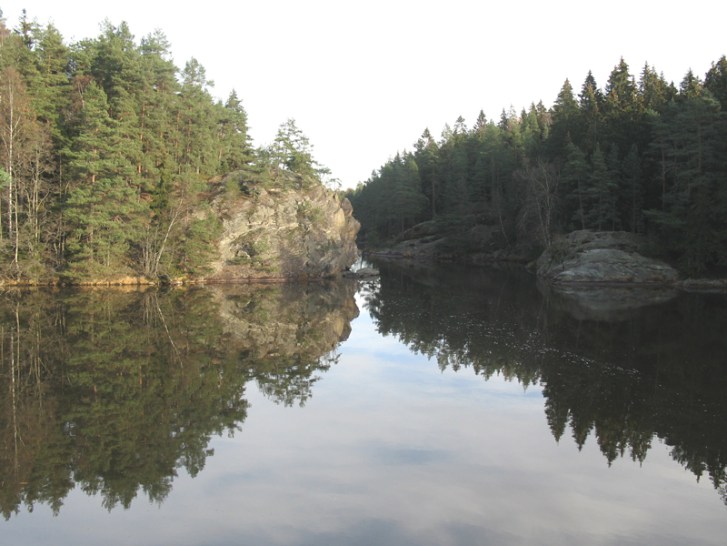
Lake Vansjø. Image: Raoul-Marie Couture
Last week we introduced MARS’s research on multiple stresses in the Vansjø-Hobøl catchment in Southern Norway. This week, we discuss the computer models that the Work Package 4 team will use to understand how rivers and lakes in the catchment respond to stress – largely nutrient pollution – both now and in the future.
Environmental models
Two computer models are being used by the MARS team to understand and predict how water quality in the catchment might respond to future environmental change, at both the catchment and lake scale. The data to run the MARS models in the Vansjø-Hobøl catchment comes from two monitoring programs: Bioforsk (river data) and NIVA (lake data).
Computer models are used to simulate the impact of different scenarios – for example, increased rainfall, air temperatures or fertiliser pollution – on freshwater ecosystems. Models are designed using observations taken in the field and laboratory on how different aspects of the environment respond to change and stress, and then use a complex set of calculations to simulate environments under a variety of different scenarios. Models are extremely important in providing guidance to environmental managers and policy makers in responding to environmental issues and predicting what impacts management is likely to have.
Catchment Model
The MARS team will use the INCA (‘Integrated Catchment’) model to understand the sources, distribution and impact of phosphorous through the Vansjø-Hobøl catchment. The INCA model tracks the flow and quality of water through the catchment, showing the dynamic, day-to-day fluctuations of these parameters in response to human-caused stresses such as agricultural pollution or sewage discharges. INCA can also be used to model the impact of long-term environmental and land-use changes – such as climate change and afforestation – on freshwaters in a catchment. It can model the dilution, natural decay and transformation (e.g. uptake by vegetation) of different chemicals – in MARS’s case for phosphorous, nitrogen and carbon – in water flows.
INCA then produces a range of visual representations of environmental responses to stress over time. The INCA model was developed by researchers at the University of Reading, the Swedish Agricultural University, the Finnish Environmental Institute and NIVA as part of several EU funded projects including Eurolimpacs, and others funded by UK government bodies such as NERC LOCAR.
As Paul Whitehead and colleagues demonstrate in a 2013 paper, INCA can be used to assess the cost-effectiveness of different schemes to manage and mitigate phosphorous pollution. Their INCA analysis of the River Thames in Southern England suggested that the most cost-effective management solution would be to encourage reductions in agricultural fertiliser use, alongside implementing improvements to sewage treatment processes.
River Hobøl Image: Reiseliv Indre Østfold
Lake Model
The dynamics and functioning of lakes in the Vansjø-Hobøl catchment will be modelled using the MyLake model developed by NIVA in Norway. As this 2007 paper by Tuomo Saloranta and Tom Andersen describes, MyLake is a ‘multi-year lake simulation model‘ that simulates the daily vertical distribution of lake water temperature, the evolution of seasonal lake ice and snow cover, sediment-water interactions and phosphorus-phytoplankton dynamics. These variables can be modelled through time by using known environmental factors such as the shape and depth of the lake (its ‘morphometry’), atmospheric conditions such as temperature, pressure and wind, and the amount of sediment and nutrients already in the lake (called ‘loading’ by ecologists).
As for the INCA catchment model, MARS’s focus is on phosphorous dynamics in the lakes and on the biological and physical processes controlling algal growth which can lead to harmful blooms. The MyLake model is particularly useful to policy makers as it allows for analyses to be made of the uncertainties in its predictions, and of the sensitivities of the model to the different input parameters.
Linking INCA and MyLake in MARS
In this 2014 paper, Raoul-Marie Couture and colleagues describe how the two models can be linked. Their key observation is that because the models run their analysis on a day-to-day basis using the same factors – phosphorus concentration and water quantity – they can be used in tandem to analyse both the lake and the catchment under the same scenarios, allowing for more thorough predictions of ecosystem responses to stress. Their paper’s conclusion is that both land use and climate change can increase the frequency of algal blooms, but that suitable management can overcome any detrimental effect of climate change if appropriately implemented.
Raoul explains how his collaborative MARS team will use the insights from this research to link the two models, “MARS is a motivating challenge because we have to use our most recent models for water quality in a totally new way. We will have to predict the response of biological indicators of water quality, consider the communication of results and uncertainty to stakeholders, and also say something on how the economic value of ecosystem services may change in response to environmental stresses. This forces me to reach out to biologists, social scientists and economists early on in the project.”
Raoul emphasised the novel, cross-disciplinary nature of this work. “This idea of linking models is not new, in fact most complex models are made of connected modules. However in MARS we will link models that would not normally be used together as one: including hydrological models, biological response models, and economic valuation models.”
Raoul added, “MARS researchers in Finland will use the exact same models (INCA and MyLake), but they have compiled them differently, and this is described in a 2014 paper by Maria Holmberg and colleagues. Their focus is more on carbon than phosphorus. In Estonia, they will also use INCA, but they have their own lake model adapted to the lake of interest, as described in a 2014 paper by Fabien Cremona and colleagues. These are three very recent developments in catchment-lake modelling.”
The Northern Basins: the Vansjø-Hobøl catchment
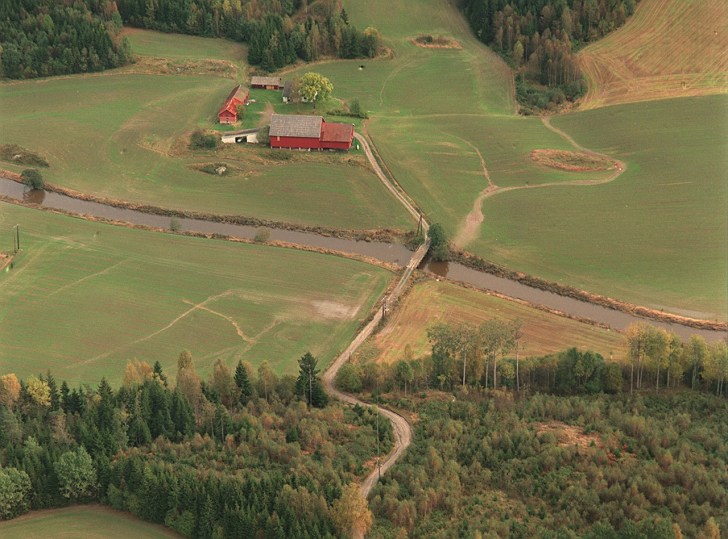
River Hobølelva
The MARS project has now been running for a little over six months, and many of the planned experiments and models are beginning to take shape. Over the coming weeks we’ll write about many of the freshwater research projects being carried out by MARS researchers across Europe to investigate the impact of multiple stresses – such as pollution and flooding – on freshwaters.
This week we profile the Vansjø-Hobøl catchment in Southern Norway, known in MARS as ‘The Northern Basins’. Computer modelling work in the catchment by MARS teams in Wales, Finland, Estonia and Norway is being co-ordinated by researcher Raoul-Marie Couture at NIVA, and is intended to help understand and predict the impact of multiple stressors on freshwaters in Northern Europe. In this post we outline the environmental issues in the catchment, and next week we’ll describe the models used by Raoul and his team to help find potential solutions to them.

Map of the Vansjø-Hobøl Catchment, Norway. Image: Skarbøvik and Bechmann (2010). Bioforsk Report vol. 5
The Vansjø-Hobøl catchment
The Northern Basins modelling work will be carried out in the Vansjø-Hobøl catchment in Southern Norway. The catchment – which has been heavily studied by EU projects such as REFRESH and EUROHARP and as a pilot project for the Water Framework Directive in Norway – extends across 690 km2 with a large lake in the south – Lake Vansjø – providing drinking water for over 60,000 people. The catchment is largely covered by forest, and around 15% of the land area is used for (largely arable) agriculture – around five times higher than the average for the rest of Norway.
Multiple stresses
The catchment – with major rivers such as the Hobølelva and the Mosseelva – has particular problems with water quality caused by pollution from agricultural runoff and sewage treatment plants. Similarly, regular floods (predicted to increase in size and frequency under future climate change) on the rivers in the catchment erode away at banks largely made of marine clay which is rich in the phosphorus-rich mineral apatite.
When combined with runoff of fertilisers from agricultural land, this means that freshwaters in the Vansjø-Hobøl catchment frequently experience high levels of phosphorous and suspendedsediment, which can cause eutrophication and algal blooms that threaten biodiversity, drinking water availability and the safety of freshwaters for swimming.
Current initiatives to improve water quality
Numerous initiatives have been put in place in recent years to improve water quality in the Vansjø-Hobøl catchment. These include: avoiding ploughing fields during autumn so that vegetation naturally reduces soil erosion during stormy winter months; the creation of sediment and pollution buffer zones using by planting riverside vegetation and creating new wetlands and ponds; the reduction of agricultural fertiliser use; and improving sewage treatment plants.

Landslide in the Vansjø catchment in 2005. Image: Eva Skarbøvik
People monitoring the planet: Helen Roy discusses citizen science
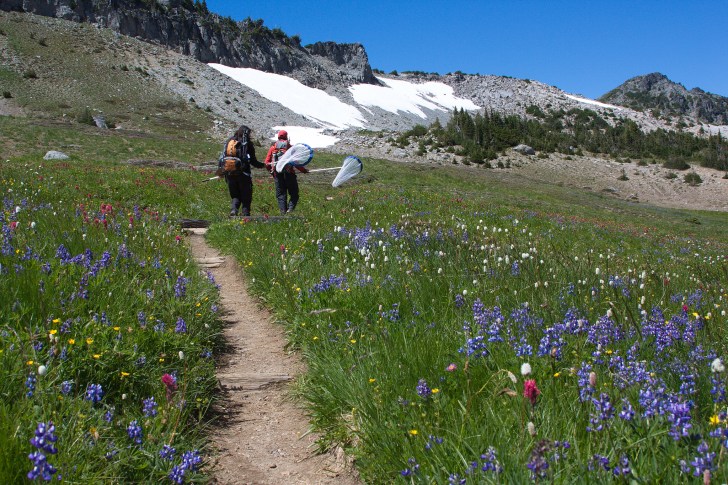
Citizen scientists recording butterflies in the Mt. Rainier National Park, USA. Image: Kevin Bacher, Flickr CC
Citizen science projects are flourishing across the world, with ordinary people collecting and contributing scientific data about Earth’s natural environments, particularly aided by advances in technology which allows for easy identification and recording of plants and animals. For example, the multidisciplinary Citizen Science Alliance run online citizen science projects like Galaxy Zoo – where galaxies in space are classified by their shape, Old Weather – where archives of historical weather observations made by ocean-going US ships are explored and digitised to contribute to climate model predictions, and Whale FM – where recordings of whale calls are grouped together.
The iSpot project uses smartphone apps and forums to help citizen scientists collaborate to identify and digitise ecological data, and the Angela Marmont Centre for UK Biodiversity at the Natural History Museum in London taps into a historical tradition of UK amateur naturalists by inviting the public to bring in unusual plant, animal and fossil finds for identification. Citizen science is booming across most fields of science, and can potentially provide real-time data across study areas that might be unfeasible for scientists to cover alone. Indeed, the Galaxy Zoo project has published a number of scientific journal articles where citizen scientists have contributed to research.
Helen Roy is the Head of Zoology at the Biological Records Centre at the Centre for Ecology and Hydrology, a UK public sector research centre. Through her work with the BRC, and particularly with the UK Ladybird Survey, Helen is known a leading advocate and practitioner of citizen science in the UK. We spoke to Helen about her work, to ask about the current state of citizen science, and what potential the field has to study freshwater ecosystems.
Freshwater Blog: Could you tell us a little about your work, and what you see as the value and potential of citizen science projects?
Helen Roy: I am an ecologist with a passion for communication and public engagement with science. My research encompasses community ecology and the influence of environmental change on complex interactions between species. As Head of Zoology within the Biological Records Centre I work closely with over 80-volunteer recording societies (small to medium-sized NGOs) supporting their activities to ensure the collation of wildlife data to national databases for subsequent analysis and interpretation.
Indeed, these datasets are instrumental in providing an overview of the ways in which the distributions of plants and animals are responding to environmental change, such as the arrival of invasive alien species (IAS) and climate change. As such biological records are a critical component of the evidence-base for biodiversity surveillance for the UK and currently inform 7 of the 24 Biodiversity Indicators published by Defra. I thoroughly enjoy working with the volunteer recording community to maximise the use of the data gathered for science, public understanding and policy. Biological recording is perhaps one of the oldest examples of citizen science.
Citizen science is a diverse approach to science and involves people with varying degrees of expertise – from the amateur experts (as recognised by the schemes and societies) to members of the public. The development of citizen science has been integral to my research and provides a method for testing research hypotheses while engaging people with complex scientific concepts. Citizen science has the potential to be a primary tool, linking to public engagement, for involving people in science.
As a volunteer I have the pleasure of co-leading the UK Ladybird Survey The UK Ladybird Survey receives approximately 25,000 observations a year and has contributed to the understanding of ecology of ladybirds and alien species in Britain. The 60,000 harlequin ladybird observations accrued through public engagement and the contributions from tens of thousands of people across the country have resulted in one of the most comprehensive datasets on the spread of an alien species globally. The harlequin ladybird survey inspired the development of an on-line surveillance system for other IAS in Britain, which I lead for Defra. Citizen science has considerable potential to inform scientific research and policy while engaging the public actively in the scientific process.
In your opinion, what are the most interesting, innovative and useful citizen science projects going on in the world right now?
The volunteers who lead national schemes and societies inspire me. Their enthusiasm and willingness to share their expertise results in really exciting citizen science. The Botanical Society of Britain and Ireland not only involve volunteers in field surveys but also through exciting initiatives such as Herbaria@home, which involves people in digitising the information linked to Herbarium specimens.
The apps developed by NatureLocator are excellent and provide people with the opportunity involvement in citizen science in a straightforward way while giving assurance of data quality by involving experts behind the scenes. I am extremely excited by hypothesis-led citizen science and would be delighted to see more collaborative approaches to developing such initiatives than has been the case so far.
What is the potential of citizen science for monitoring freshwater environments? How much of a barrier does water provide to volunteers looking to survey what goes on beneath the surfaces of rivers and lakes? How might this be overcome?
The Riverfly partnership is a fantastic example of citizen science in a freshwater environment. There are many people who use freshwater environments for recreation who could be interested in citizen science. There are always potential barriers to participation in citizen science whatever the environment but there are also ways to overcome them. Training and mentoring are effective methods for increasing participation and enhancing the quality of data gathered.
What counts as citizen science? Does it require people to go out into the field and record data, or can it be things like archive research or oral histories?
Citizen science combines excellent engagement and “real” science. There are many diverse and inspiring ways of going about the scientific process (the systematic study of the natural world) – indeed data can be gathered and analysed in a variety of ways. The exact approach will depend on the question being tackled. Additionally citizen science usually involves teams of people – some may be involved in every step of the process (from establishing the question and gathering data to interpreting and publishing findings) and others may use their expertise for one particular part of the process. It is the diversity, flexibility and adaptability of citizen science that is so exciting and amenable to all.
How reliable is citizen science data? What does it offer to researchers working in academia and policy?
Citizen science data is reliable. Of course it is essential that participants have the tools and support to ensure the data gathered is of known quality. It offers everyone so much – the opportunity to share ideas and make discoveries in a collaborative way is simply amazing. Science is so creative and citizen science enables people to work together in new and exciting ways.
What role does technology have in the recent citizen science boom? Where do you think developing technologies could (and perhaps should) take citizen science in the future?
Technology has played a huge part. The use of smartphone apps has increased participation in wildlife recording. Twitter and social media enables rapid feedback and dialogue amongst the citizen science community. On-line databases allow many people to explore and interact with datasets, while complex rules and filters assist in enhancing data quality. Analysis of this so-called “big data” places demands on technology and it is tremendously exciting to see the novel and eloquent ways in which technology is used to ensure the best use of the data.
The citizen science community will embrace emerging technologies in innovative ways. Linking analysis to real-time data capture will provide people with the opportunity to get involved with every step of the scientific process. There is a real need to effectively communicate concepts of “uncertainty” and getting involved in the scientific process will actively encourage discussions on this important topic. I hope that the focus will be on ensuring data quality and maximising sharing of data for the benefit of everyone.

Sampling for macroinvertebrates. Credit: Gary Peeples / USFWS
http://www.fws.gov/asheville/
Bioassessment programs monitor the different plants and animals in ecological communities as a means of understanding the health of an ecosystem and how it might respond to changing environmental conditions over time. A journal article “Is DNA Barcoding Actually Cheaper and Faster than Traditional Morphological Methods?” published in PLOS ONE by researchers in California and Canada examines whether DNA ‘barcoding’ technology – where a species is identified by DNA in tissue samples – is more effective, affordable and quicker than traditional visual, morphological techniques. As also shown in last week’s post about the potential of drone sensing of freshwaters, ecologists around the world are currently assessing the promise of new technology for monitoring, understanding and protecting freshwater ecosystems.
The article, published in April by Eric Stein and colleagues, found that bioassessments using DNA barcoding technology currently cost between 1.7 and 3.4 times as much as traditional, morphological (i.e. visual assessments of a species’ structure and form) methods. However, DNA barcoding approaches can process samples much quicker and at a higher resolution than traditional morphological techniques, potentially helping rapid, adaptive management of environmental issues. After identifying a large global market for bioassessment technologies – particularly in governmental monitoring schemes in the USA and Europe – Stein and colleagues suggest that further research and development of DNA barcoding technologies is necessary and warranted, in order to bring costs down and encourage widespread adoption.
Aquatic bioassessments generally focus on particular ‘indicator’ species – often fish and insects – whose presence (or otherwise) gives an indication of the health of the wider ecosystem. Bioassessments are often repeated over time using groups (or ‘assemblages’) of indicator species which are particularly sensitive to changes in water quality – e.g. invertebrates – to study how an ecosystem responds to stressors such as pollution or overfishing. In the USA, bioassessments are used to assess how far different States comply with environmental legislation such as the Clean Water Act.
Stein and colleagues assessed whether bioassessments can be carried out more cheaply and efficiently by using DNA barcoding technology. Currently, bioassessments using morphological techniques require a significant amount of time and resources to allow trained taxonomists to study different ecosystems. As a result, the quality and level of taxonomic resolution (i.e. the detail in which different organisms are studied and categorised) may vary across different regions, depending on the experience and training of available taxonomists. Another drawback of current bioassessment practice is that it may take six months or more for field data to be translated into the biological indices required for environmental management and policy making – a lag which may prevent quick responses to environmental problems.
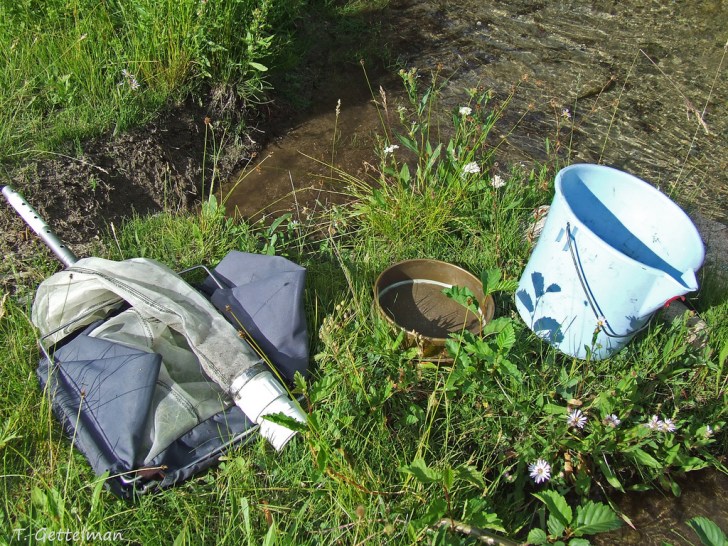
Typical freshwater sampling kit for invertebrates: can new technologies help make this process more efficient? Image: Tatiana Gettelman | Flickr CC
DNA barcoding identifies animal species by analysing a short strip of their DNA (see, for more information, the Barcode of Life website, this Wikipedia article and this journal article by Hebert et al (2003). Unknown specimens collected in fieldwork can be referenced to a DNA database such as Barcode of Life Data Systems or GenBank. As is often the case with new technologies, it has been suggested that DNA barcoding has the potential to make bioassessment programs more efficient and affordable, by reducing the amount time spent by taxonomists in identifying specimens, and providing quicker results.
Stein and colleagues first compared the time and cost of traditional bioassessment methods with those of DNA barcoding: from initial sampling through to an identification endpoint which could be used for assessing the health of the sampled ecosystem. Twelve field sites were sampled for macroinvertebrates (which are common freshwater indicator species) along the San Gabriel watershed in California, ranging from mountain streams to urban flood control channels. Traditional bioassessment methods were carried out in a labroratory on one sample, whilst the a second set were shipped in two batches to the Canadian Center for DNA Barcoding (CCDB) for DNA barcoding. DNA analyses were carried out both with current Sanger approach for single species, and the ‘next generation’ IonTorrent approach for bulk samples of organisms.
This first strand to the research found that despite the promise of new technologies streamlining monitoring work, bioassessments using DNA barcoding technology currently cost between 1.7 and 3.4 times as much as traditional, morphological methods. However, DNA barcoding approaches can process much quicker than morphological approaches – the paper suggests that DNA approaches can analyse samples 3-4 times faster than traditional techniques. Similarly, DNA barcoding has the potential to analyse samples at a much higher resolution and taxonomic accuracy than traditional morphological techniques – see Stein’s paper in Freshwater Science for more on this – potentially aiding rapid, adaptive management of environmental issues identified by bioassessment.
The second strand to this research was an analysis on the market and demand for bioassessment technologies. In the USA alone, the research found that more than 13 million samples from 19,500 sites are analysed in bioassessments annually, most notably through country-wide federal monitoring programs. Similarly, bioassessments are regularly used by monitoring programs for the Water Framework Directive in Europe and the Assessment of River Health in Australia.
The authors suggest that as DNA barcoding technology continues to advance, the costs involved will drop. They suggest that bulk sampling technology like IonTorrent – where individual organisms don’t have to be picked and sorted from large samples, and instead DNA can be extracted in bulk to produce a list of all species present – has the potential to significantly reduce time and money requirements in the future, given appropriate investment. They conclude that the potential market demand for new, more efficient and streamlined DNA barcoding technologies is large enough – particularly in the USA and Europe – to justify continued research and development with the intention that costs will be reduced enough to encourage widespread adoption.
An eye in the sky: using drone technology to monitor freshwaters

Aeryon Scout drone, increasingly used for mapping global environments. Image: Wikipedia
Developments in unmanned aerial vehicle (UAV) technology are providing new, potentially cost-effective opportunities for ecologists and conservationists to monitor and protect ecosystems, particularly in remote areas. Widely known for their (often debated) use in remote warfare, there is increasing consensus that drones – as UAVs are often known – have the potential to be used for more positive goals, giving new high-tech means of understanding and potentially protecting global environments.
Lian Pin Koh outlined the potential of drones for conservation in a 2013 TED talk, arguing that they provide an affordable means of mapping biodiversity at higher resolution than current satellite remote sensing technologies; and that they are useful for monitoring protected areas for threats such as poaching and deforestation. Three journal articles – by Koh and Serge Wich in 2012, Karen Anderson and Kevin J Gaston in 2013 and Richard Schiffman in 2014 – suggest similar potential.
In 2012, Koh and Wich founded an organisation called Conservation Drones to help bring together available information on the use of drones for remote sensing. As this UNEP article describes, whilst the technology is still developing, there is a huge amount of ongoing public and private investment in UAVs, which is likely to address current limitations such as limited flight time, and to continue to bring production costs down.
As yet, there has been little research on the potential of drone technology for monitoring freshwater ecosystems. However, a new journal article “The potential of remote sensing in ecological status assessment of coloured lakes using aquatic plants“ by MARS scientist Sebastian Birk and Frauke Ecke addresses this shortfall. Their paper explores the potential of drones for monitoring the health of remote Swedish lakes which are heavily coloured by dissolved carbon. Birk and Ecke found that it is possible to assess the ecological health of coloured lake ecosystems by monitoring plant vegetation which is detectable by drones. Their findings have the potential to significantly alter how ecological monitoring in lakes is carried out, particularly in remote and inaccessible areas.
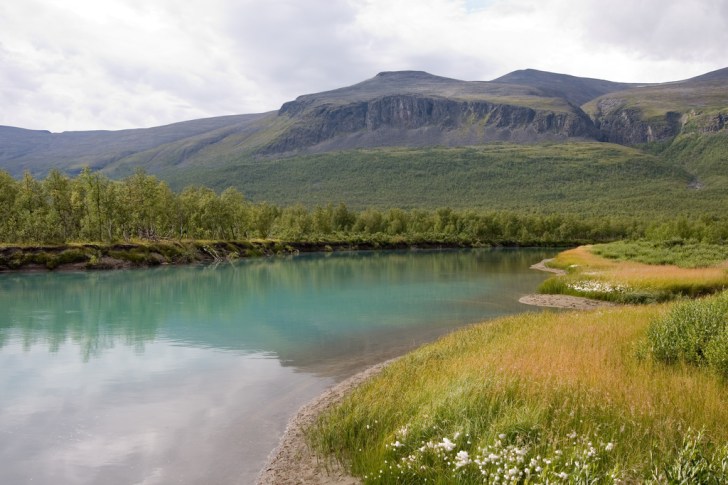
Lake in northern Sweden. Image: Thomas Hellberg | Flickr under Creative Commons
The growth and diversity of aquatic plants is an important indicator for understanding the health and functioning of freshwater lakes. However, it’s very expensive and time-consuming for scientists to sample and map aquatic plants manually, particularly given that there are thousands of lakes in remote areas of Sweden. Birk and Ecke’s article outlines how developments in drone technology allow the mapping of aquatic plants at a 5cm scale, which means that plants can potentially be identified to species level at a quarter of the cost of manual surveys. This high image resolution – higher than previously possible using satellite remote sensing – potentially allows for more detailed remote monitoring of lakes.
Sebastian Birk describes the forward-thinking focus of this study:
“Drones give an opportunity to economically monitor the effects of anthropogenic stress to the myriad of lakes in the boreal zone. Field sampling is a costly exercise involving at least two surveyors snorkeling or sitting in a boat. And even then, you have to reduce your efforts to selected transects, not covering the entire lake. Using the drone is much easier, provided that the pictures taken by the drone are processed automatically, which is not yet possible.”
A large proportion of global lakes – especially those in boreal and tropical environments – are ‘coloured’ due to dissolved solutes in the water (especially organic carbon). Aquatic plants in coloured lakes mostly have floating or emergent (i.e. partially above the surface) leaves, which allow their photosynthetic tissues (those that create energy for the plant from sunlight) are exposed to the sun above the murky water.
Birk and Ecke studied 72 cloudy Swedish lakes to assess the potential of using emergent and floating plant species which can be detected by drones as proxies for predicting the ecological status of the lake in which they live. This process found strong correlations between the potential of drone-detectable species and those which are undetected, suggesting that remote sensing by drones could provide accurate assessments of the overall vegetation and health of coloured lakes.
Sebastian Birk outlines the potentially wide-ranging impacts of drones on freshwater monitoring:
“In an era of global austerity economic solutions tackling environmental issues are in demand. Our study demonstrates that drones offer useful services in ecosystem monitoring and assessment. Water management, in particular, requires extensive data that drones acquire most cost-effective. This could bring this technique from specialist application (e.g. real-time ecological research missions) into regular field survey: instead of boat and rubberboots, the surveyor now packs airplane and remote control.”
The next stage, of course, will be to put these ideas into practice by flying experimental drones over freshwater ecosystems. How long before every University research department has its own fleet of ‘eco-drones’? What legal and ethical issues will scientific researchers encounter with drone monitoring? Will the technology usher in a new era of ‘fortress’ conservation where drones are used to remotely monitor wildlife – and potentially people – in national parks and other protected areas? Or are drones simply more accurate, more affordable versions of existing satellite remote sensing technology, which is widely – and largely uncontroversially – used already?
Introducing GLOBAQUA
Continuing our series of video interviews with project members, this week we feature Damià Barceló, Director of the Catalan Institute for Water Research in Girona, Spain. Damià leads the Globaqua project which – like MARS – studies the impacts – and interrelationships – of multiple stressors on our rivers and lakes. Unlike MARS, Globaqua is particularly concerned with understanding the effects of water scarcity and chemical contaminants such as pesticides on freshwater ecosystems.
Water scarcity is particularly important in Europe, partly because historically it has not been recognised by the Water Framework Directive, and partly because many rivers are temporary and do not flow year round from source tosea, especially in southern regions of the continent (see our blog on the topic). It is still only partially understand how freshwater ecosystems respond when exposed to water scarcity.
Similarly, chemical contaminants can have adverse effects on freshwater ecosystems. For example, in previous studies, Barceló’s research has documented how high levels of beta blocker pharmaceutical drugs in freshwaters caused daphnia to grow quickly to sizes much larger than on other parts of the river.
Globaqua will study the impact of global change on six river basins in Europe and North Africa: Ebro (Spain), Evrotas (Greece), Sava (a tributary of the Danube that flows through eastern Europe), Adige (in the northeast of Italy), Anglian (in the UK), and the Souss Massa (in Morocco). The different environmental and socioeconomic characteristics of each basin will be assessed, and different climate change scenarios will be modelled to forecast ecosystem service provision and the impact and interaction of multiple stressors for each basin in the future (e.g. under flood vs under drought).
In conjunction with MARS, Globaqua will help model scenarios of stress on freshwaters to help understand how ecosystems might react to different stressor levels and interactions. This work will go towards revising and strengthening EU water policies, particularly River Basin Management plans as part of the Water Framework Directive. In this interview, Damià emphasises the diversity of river ecosystems across Europe, and argues that a revision of the Water Framework Directive (due by 2019), should embrace this complexity to produce different management plans for each river.
We’ll continue to follow the Globaqua project as it develops, and report back on its findings.
National Geographic feature on climate change and European lakes
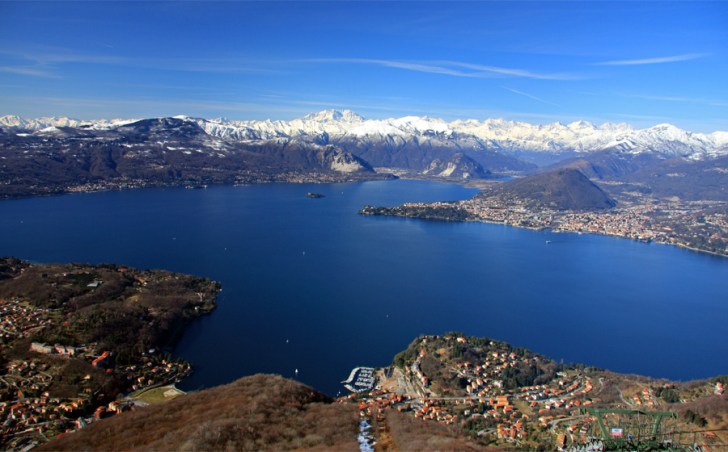
Lake Maggiore in Italy. Image: Alexander Vecchi, Wikipedia
The effects of climate change are already beginning to be seen on European lakes, according to new research. As profiled in a recent National Geographic feature, which references the MARS and REFRESH projects, Erik Jeppesen of Aarhus University, Denmark suggests that a warming and increasingly volatile climate is causing increasing algal blooms in European lakes, and fundamentally altering aquatic food webs, including the size and distribution of fish populations.
Jeppesen suggests that the ecological resilience of lake ecosystems can be increased through reducing the amount of nutrient pollution that is released into them, “The benefits are clear because of the synergistic effects between temperature and nutrient loading. Reducing the amount of nutrients available also increases the resilience of a lake to climate change.”
You can read the full feature on the National Geographic website here, and read Jeppesen’s (2014) article in the Journal of Limnology here.










 The Freshwater Blog