17th IWA Conference on Diffuse Pollution and Eutrophication
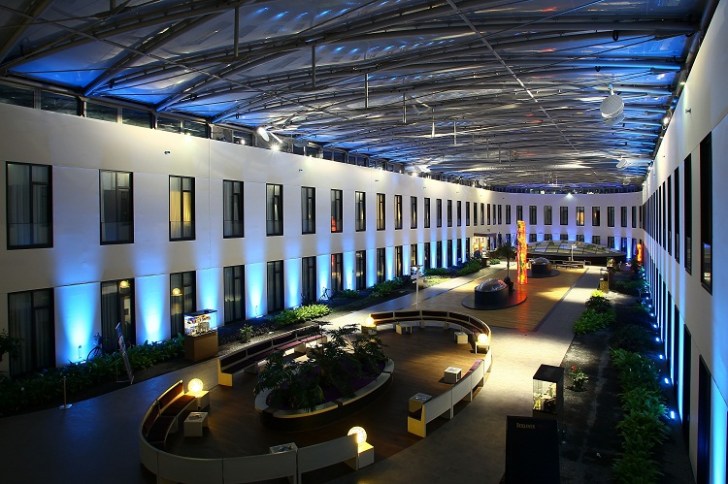
The conference location at Best Western, Berlin.
The 17th IWA International Conference on Diffuse Pollution and Eutrophication has been announced to take place at the Best Western Premier Hotel MOA Berlin, Berlin from 13 to 18th September 2015. The abstract submission is open here.
Organised by the Leibniz Institute for Freshwater Ecology and Inland Fisheries (IGB) and International Water Association (IWA) the conference aims to:
“The complexity and variety of processes, substances as well as interests and needs of stakeholder and users turns basin and water quality management into a challenging task and unites scientists, economists, engineers, lawyers, policy specialists and stakeholders to develop new approaches and solutions to protect natural resources.
The DIPCON 2015 continuous a 20 year tradition of conferences on international exchange of knowledge and technology among established and young specialists from developed and developing countries. The conference’s goal is to bridge between basic and applied science, technical solutions and the knowledge transfer into basin management. Here, following a holistic perspective, diffuse point source pollution is considered likewise. The conference provides a platform for contemporary and high-quality research and technical solutions as well as for international networking, establishing and intensifying cooperation between science, administration and industry.”

Berlin Skyline.
The conference programme will include sessions on pollutants and sources of diffuse pollution in surface and ground waters; diffuse pollution from agriculture and forestry, as well as from urban areas and mining; diffuse pollution under global changes; nutrients and eutrophication issues; surface waters under multiple stress; modelling and monitoring; policies, regulations and education to control diffuse pollution and integrated watershed management towards controlling diffuse pollution.
Delegates will also be offered the opportunity to take part in a conference dinner and to attend a field excursion.
Follow the Conference website for updates.
How will the hydropower boom affect global river ecosystems?

Itaipu Hydropower Project on the Paraná River located on the border between Brazil and Paraguay. Image: Wikipedia
There are currently around 3,700 major new hydropower dam projects planned or under construction across the world, many of them in developing countries which lack widespread, reliable and affordable electricity supplies. However, many of these same countries support biodiverse and relatively ‘natural’ large river systems, which raises questions of how to balance the potential ‘green’ energy gains from hydropower projects with the potential harm – barriers to fish migration, siltation, habitat change amongst others – they can cause to river ecosystems.
A new study ‘A global boom in hydropower dam construction‘, has been carried out by Professor Christiane Zarfl from the University of Copenhagen and colleagues at the Leibniz-Institute of Freshwater Ecology and Inland Fisheries (IGB) in Berlin, including BioFresh head Klement Tockner. The research team compiled data on future major hydropower projects to predict how much energy would potentially be produced if all projects were completed; and the potential impacts they would have on currently free-flowing river ecosystems.
The team found that despite a global ‘boom’ in hydropower developments, the extra electricity production “will not close the energy gap“, because energy demands will increase, due to growing human populations globally. So despite the growth in global hydropower capacity – if all 3,700 dam projects were completed, the capacity would double to 1700 gigawatts (GW) within the next 20 years – the study predicts that the proportional hydropower contribution to overall energy production would barely alter (16% in 2011, 18% in 2040). In short, the ‘boom’ in hydropower projects across the world – and their negative impacts on river ecosystems – will only keep pace with global energy demands, as opposed to providing a higher share of ‘green’ energy to overall supply.
The study shows the geographical spread of where new hydropower projects are planned, and so provides a basis for understanding where and how the various trade-offs and conflicts between energy production, freshwater biodiversity and human livelihoods are likely to take place in the future. The maps below show: (1) the distribution of future hydropower projects, under construction (blue dots) or planned (red dots); and (2) the number of hydropower projects for each major river basin. The maps show how the majority of hydropower construction will take place in developing countries and emerging economies, particularly along the Amazon basin in Brazil, the Ganges–Brahmaputra basin in India and Nepal, and the Yangtze basin in China.

Map (1): Global distribution of future hydropower dams, either under construction (blue dots 17 %) or planned (red dots 83 %). Image: Zarfl et al (2014)

Map (2): Number of future hydropower dams per major river basin. Image Zarfl et al (2014)
Speaking to ECOS Magazine, Professor Zarfl said, “Hydropower is an integrated part of transitioning to renewable energy and currently the largest contributor of renewable electricity. However, it is vital that hydropower dams do not create a new problem for the biodiversity in the world’s freshwater systems, due to fragmentation and the expected changes in the flow and sediment regime. That is why we have compiled available data on future expected hydropower dams – to form a key foundation for evaluating where and how to build the dams and how to operate them sustainably.”
The study estimates that 25 of the 120 large river systems currently classified as ‘free-flowing’ would lose that status, as dam construction fragments and modifies their courses. It suggests that “Worldwide, the number of remaining free-flowing large river systems will thus decrease by about 21 percent” – a decrease which is likely to be most prominent on South American rivers, which are some of the world’s most unique and diverse freshwater ecosystems.
The IUCN Freshwater Fish Specialist Group states that South America is the most diverse continent for freshwater fish species, globally, with an estimated 4,000 species (and roughly 100 new species found each year). The Amazon, Mekong, and Congo basins, which will be heavily impacted by future hydropower dams, jointly contain 18 % of the global freshwater fish diversity, and the Balkans – a hot spot for future hydropower development – are an important region for freshwater biodiversity in Europe, as described by a recent IUCN report.
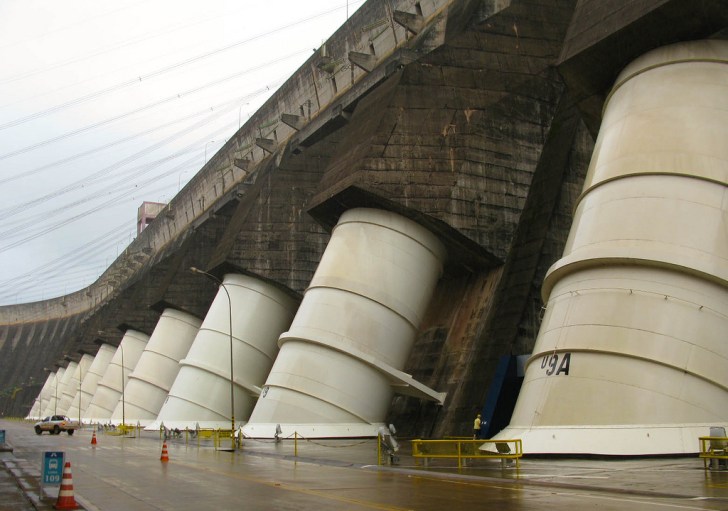
The dam wall on the Itaipu hydropower project. Image: International Hydropower Association, Flickr
Freshwaters are already amongst the most threatened ecosystems in the world. Hydropower developments can have negative effects on freshwater species in a number of ways – blocking migration routes, changing river flows and habitat, and dropping loads of fine sediment in areas where the river flow is slowed, potentially causing eutrophication and covering fish breeding sites. Biodiversity loss as a result of hydropower projects has potentially negative knock-on effects for communities around rivers which rely on fishing for food and freshwater for drinking, washing and sanitation.
Despite being a low-carbon, renewable energy source, hydropower can significantly alter and degrade the rivers where it is implemented. So, what is the solution to growing global energy demands? Professor Zarfl and colleagues state that, “Even if the entire technically feasible hydropower potential will be exploited, which would correspond to a dam construction boom almost five times that currently estimated, hydropower would contribute less than half of the global electricity demand projected until 2040.”
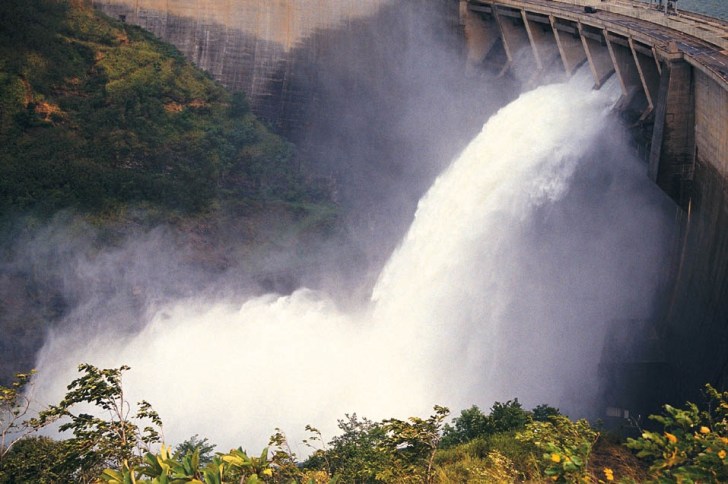
Hydropower water release. Image: Global Water Partnership, Flickr
Given this inability to keep up with demand, and the related environmental costs, is hydropower the most suitable response to global energy needs? On average, life-cycle greenhouse gas emissions from hydroelectricity are more than 30 times lower than that of coal – potentially providing a key tool in mitigating climate change. However, how can we reconcile the potential climate benefits of hydropower with the potential harm it does to freshwater biodiversity?
The authors suggest that one solution might be to concentrate new hydropower developments on river basins that have existing hydropower projects, and are fragmented already – a new and perhaps pragmatic take on the old conservationists’ mantra of ‘preserve the best, restore the rest’. For example, hydropower projects on the Rufiji River in Tanzinia – the last remaining large free-flowing river network in East Africa – might be moved to the Nile and Zambezi Rivers, which are already heavily fragmented today. Whether this approach can account for spatial variation in energy needs, economic investment and political will is another matter.
The database of future major hydropower projects compiled by Professor Zarfl and colleagues provides a comprehensive new resource for conservationists, environmental planners and policy makers to help guide how and where hydropower developments are planned in the future. However, it remains to be seen whether the growing global demand for new hydropower supply can be reconciled with the threats developments pose to freshwater ecosystems in the future.
14th International Symposium on Aquatic Plants

Playfair Library, Edinburgh. Image: Edinburgh University
The 14th International Symposium on Aquatic Plants has been announced to take place at the Playfair Library in Old College, Edinburgh between 14-18th September 2015. Registration and abstract submission is open here.
Organised by MARS colleagues at the Centre for Ecology and Hydrology in Edinburgh, the conference aims to: “promote debate on all issues relating to the science and management of aquatic vegetation. Interest in aquatic plants has been growing and diversifying and to reflect this there will be a wide Scientific Programme which will appeal to scientists and managers.”
The conference programme will include sessions on Ecotoxicology, Trophic Interactions in Macrophyte Beds, The Future of Invasive Species Management, Community Responses to Environmental Change in Space and Time, Aquatic Plants and Physical Processes, Restoration, Aquatic Plant Monitoring, Ecological Stoichiometry and Nutrient Cycling, Vegetation & Dams, and Fundamental Science.
Delegates will also be offered to opportunity to take part in a conference dinner and ceilidh at Surgeon’s Hall, and to attend a field excursion to Loch Leven to see an excellent example of successful lake restoration.
Follow the Symposium website, twitter and the #aquatic plants15 hashtag for updates.
Key Biodiversity Areas: new IUCN report finds that Mediterranean freshwater ecosystems are inadequately protected
Three-quarters of the Mediterranean region’s most valuable areas for freshwater biodiversity lie outside of protected areas, leaving some of the most area’s most important and diverse freshwater ecosystems vulnerable to human threats. This is the key finding of a new IUCN assessment reported to the recent IUCN World Parks Congress in Sydney, Australia.
The report suggests that at least 167 sites in the Mediterranean Basin –covering an area of 302,557 km2 – qualify as freshwater Key Biodiversity Areas (KBAs) . Key Biodiversity Areas are an IUCN designation of the most important sites for biodiversity conservation worldwide, particularly important in maintaining species populations. They are assessed globally using a standardised criteria based on how vulnerable and irreplaceable the populations of plants and animals they contain are.
The above video gives an introduction to freshwater Key Biodiversity Areas, and the new online BioFresh portal for accessing information on them.
Freshwater biodiversity is poorly accounted for in the global protected area network. The new IUCN study provides crucial information on critical sites for freshwater biodiversity, and sets the foundation for a new protected area network in the Mediterranean Basin – a region rich in diverse and threatened freshwater life.
This work was undertaken in partnership with the BioFresh project. Two BioFresh partners outlined the new study’s value:
“Through this project we are putting freshwater biodiversity on the map in a region of the world where pressures on inland wetlands are rapidly driving species to the edge of extinction – a number have already been lost. The next crucial step is to build widespread awareness of these important sites and to stimulate targeted conservation on the ground” said Will Darwall Manager of the IUCN Freshwater Biodiversity Unit and project coordinator.
“KBAs are fragile freshwater ecosystems which must be properly managed as part of Integrated River Basin Management planning accounting for the wide range of uses of water across sectors” commented Jörg Freyhof, European chair of the IUCN/WI Freshwater Fish Specialist Group and co-author of the report.
MARS Experiments: Low Flows in Nordic Rivers
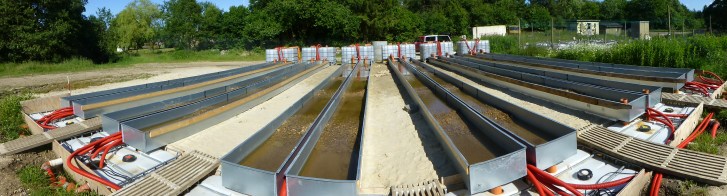
The experimental channels. Image: Aarhus University
Over the last few weeks we’ve been introducing the experiments that the MARS research team have been carrying out across Europe to understand the effects of multiple stresses on freshwater ecosystems. This week we turn our focus to Denmark, where a team led by researchers led by Annette Baattrup-Petersen and Daniel Graeber from Aarhus University are investigating the effects of low water flows on freshwater streams.
Low stream flows, the build up of fine sedimentation, and eutrophication – caused by dissolved nitrogen and phosphorus – are the main stressors of stream ecosystems in Nordic agricultural landscapes. In these experiments, the MARS researchers seek to understand how these stressors affect small stream ecosystems in these landscapes, particularly focusing on how the stressors might interact. Research in this area is particularly important given that predictions of future climate change suggest that many rivers in northern Europe will experience longer periods of low flows, due to changing precipitation patterns and climate warming.
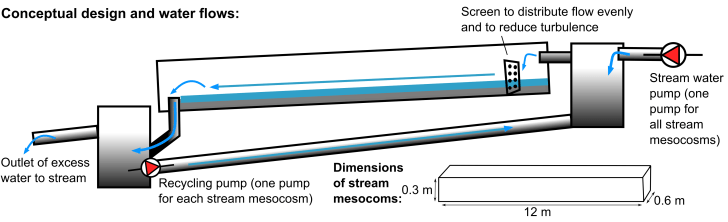
Experimental channel diagram. Image: Aarhus University
The MARS team are currently conducting a series of measurements and experiments, seeking to couple stream ecosystem structure to ecosystem function, from which the potential effects of stress on ecosystem services can be derived. The research team have constructed 12 experimental stream channels, 12 m long, 0.6 m wide and 0.3 m deep, which are designed to simulate natural small stream ecosystems and the effect of multiple stressors. The stream channels consist of a series of runs and riffles with sediment typical for such habitats. They are fed by stream water, which results in natural water chemistry and also brings new algae, water plants and invertebrates into the experiment (as would happen in a real stream). The flow of water down the channels can be controlled to simulate normal and low stream flows.
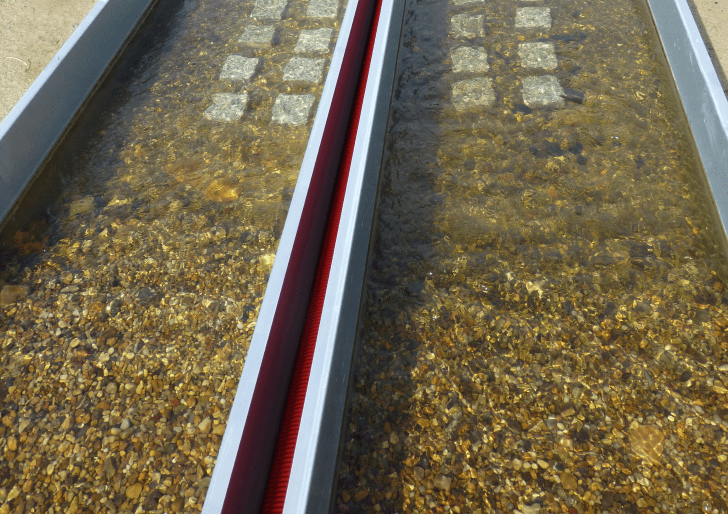
Runs and riffles on the experimental channel. Image: Aarhus University
The MARS team are focusing their attention on two key components of small stream ecosystems: benthic invertebrates and benthic algae, with a focus on primary production and nutrient uptake as ecosystem functions. Benthic algae are the main primary producers in small stream ecosystems and provide food for grazers, such as benthic invertebrates, as well as oxygen for all animals and fungi. Benthic invertebrates are the main food source for fish in Danish small streams and can control the growth of benthic algae by feeding on them. Therefore, the combination of all elements of a stream ecosystem defines its capability to take up and therefore retain nutrients.
To measure primary production in the sediments and on stones, the team use specially made experimental chambers, and take samples for algal biomass and composition and benthic invertebrate density and composition. To measure nutrient uptake, the team initiate short-term nutrient releases for ammonium, nitrate and phosphorus, and measure the ecosystem response.
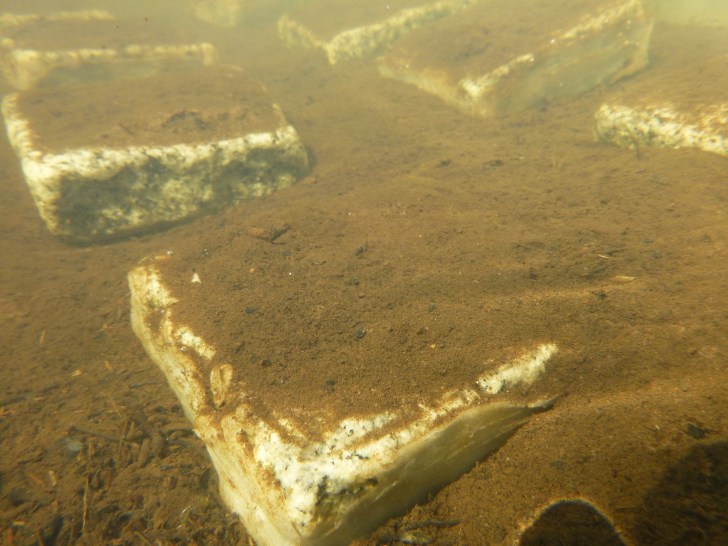
A stone covered in sediment in an experimental channel. Image: Aarhus University
Three stressors in the experiment:
The three chosen stressors are likely to have several effects on the interaction of benthic invertebrates and algae in the experiment.
Low flow is likely to result in a reduction of densities of typical stream benthic invertebrates (mayflies, stoneflies) many of which are grazers. Similarly, due to less physical abrasion on the streambed, low flows are likely to result in higher benthic algae growth. Combined with the reduction of stream benthic invertebrates, a higher primary production can be expected and due to the longer residence time (i.e. the amount of time a particle spends in a system), nutrient uptake should also increase.
Eutrophication is known to increase the biomass of benthic algae due to higher nutrient availability and will likely result in higher primary production and higher nutrient uptake. Based on existing scientific literature, eutrophication is likely to have minimal effects on benthic invertebrates.
Fine sedimentation severely affects benthic algae simply by covering them and by removing suitable habitats (coarser sediment), which are buried by fine sediment. Fine sediment also affects benthic invertebrates by clogging the room between coarser sediment particles and removing the access of scraper invertebrates (see the FSC guide to invertebrate feeding methods) to their food source (benthic algae). Finally, fine sediment delivers a large amount of organic matter to the stream, which is expected to strongly increase benthic respiration – which removes oxygen – and thus may counterbalance the effects of algal primary production.
We will keep you updated with the results of this experiment, and the others that the MARS team are carrying out across Europe. You can find links to all the MARS experiment blogs here.
Small is beautiful: the overlooked importance of small freshwaters
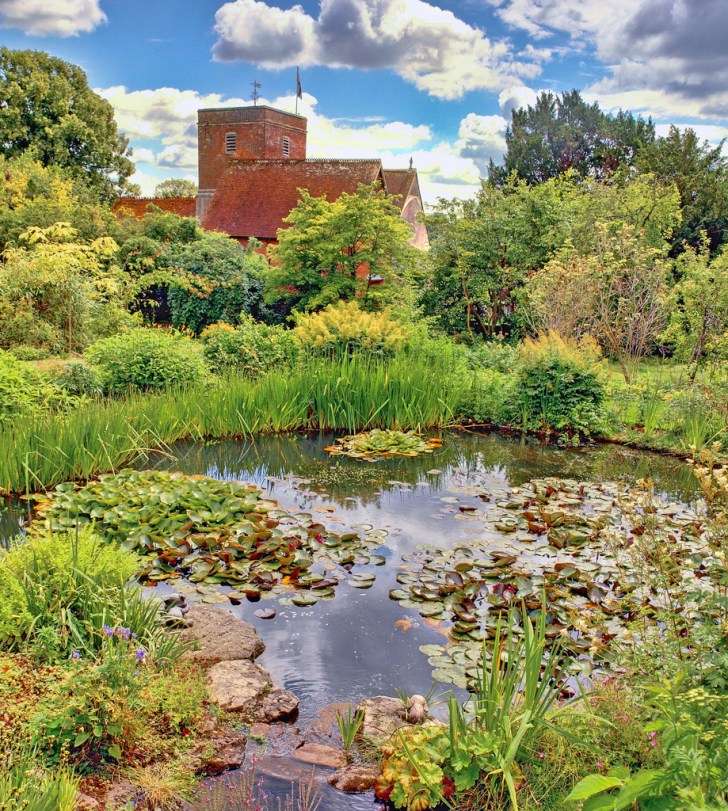
A pond in Hampshire, Southern England. Image Anguskirk, Flickr
Small bodies of water such as ponds, ditches, springs, flushes and headwater streams pockmark many landscapes across Europe. Whilst they might often be overlooked (stepped over, sometimes), there is increasing consensus that these small freshwaters are extremely important to the ecological health of the landscape.
European ponds, for example, support a larger proportion of freshwater biodiversity than lakes or rivers, and help ‘connect’ a landscape for species such as frogs and dragonflies by providing a series of ‘stepping stone’ habitats across the wider landscape. In this way, small water bodies are important as part of what ecologists term the ‘landscape matrix’, providing patches of diverse habitat (often in urban and non-protected areas) which interconnect with other ecological processes across the whole landscape to shape its overall health and diversity. Headwater streams (those right at the top of the river’s course) can provide spawning grounds for fish like the Atlantic salmon, and then sheltered ‘nursery’ habitats for their offspring.
However, small water bodies have been largely ignored by freshwater scientists, conservationists and policy makers, meaning there are gaps both in our knowledge of their ecological forms and functions, and in their protection through policies like the Water Framework Directive. There is growing awareness of the significance of small water bodies, shown by their inclusion in the European Environment Agency’s European waters – assessment of status and pressures and the European Commission’s Blueprint to Safeguard Europe’s Water Resources, both published in 2012.
As part of this increasing focus on small water bodies, The European Environmental Bureau and the Freshwater Habitats Trust recently released a report on a workshop which took place in November 2013 to discuss how small water bodies might be better managed and protected in Europe.
A key issue discussed at the meeting was how existing European legislation – particularly the Water Framework Directive, Birds and Habitat Directive and the EU 2020 Biodiversity Strategy – could incorporate small water bodies. Another was the need for effective co-operation between different environmental managers across the wider landscape to better understand, monitor and manage the role of small water bodies in supporting biodiversity on a landscape scale. Finally, small water bodies were seen as ideal habitats for engaging the public with conservation issues, given that ponds and streams are present in most landscapes, even those that are predominantly urban.
You can read the workshop report on the Freshwater Habitats Trust website, and find out more on the European Environmental Bureau website.
When the MARS project was launched in the sunny climes of Mallorca in February 2014, Dr Christian Feld interviewed a number of freshwater scientists and policy makers attending the kick-off meeting. In the above video, Christian interviews Rolf Altenburger from the Helmholtz Centre for Enviromental Research (UFZ) in Leipzig, Germany. Dr Altenburger is deputy co-ordinator of the SOLUTIONS project which studies the effect of chemical pollutants on freshwater quality and ecological health, and aims to provide solutions to help manage and protect Europe’s freshwaters.
In this video, Dr Altenburger describes how the project’s focus on the impact of stressors on the freshwater environment links SOLUTIONS with the MARS and GLOBAQUA projects (see our earlier blog and interview here). As Dr Altenburger explains, there are more than 100,000 chemicals in daily use across the world, which come from sources such as agriculture, pharmaceuticals, food additives, plastics and cosmetics.
Animals and plants living in freshwater ecosystems are increasingly exposed to a complex mixture of diluted chemicals (referred to as ‘cocktails’ by Dr Altenburger), which makes identifying and managing their effects – both individually and together – a difficult task. This is further complicated by the sheer number of chemicals which are potentially harmful to freshwater ecosystems. At present, the monitoring systems in place are not detailed or comprehensive enough to assess and manage the huge diversity and complexity of chemical ‘cocktails’ that are increasingly present in freshwater environments, many of which are new or unknown.
Chemical pollutants may interact with other stresses on freshwater environments. For example, water scarcity (as seen on the Iberian peninsula) increases chemical concentrations in the remaining available water, which would otherwise be diluted by normal flows, with potentially harmful effects on water quality and freshwater life. Understanding the impact and interaction of multiple stressors is a key EU research topic at present, in an effort to strengthen the Water Framework Directive, which is why the MARS, GLOBAQUA and SOLUTIONS projects are collaborating closely.
SOLUTIONS seeks to better understand, predict and manage the effects of chemical pollutants on freshwater environments. Achieving this requires the development of a consistent framework to monitor and assess chemical pollution, particularly in increasing efficiency and speed of chemical identification from complex ‘cocktails’ and at low concentrations.
SOLUTIONS will produce computer models to help environmental managers and policy makers predict the effects of chemical pollution on freshwater biodiversity and water quality in the future, allowing forecasts to be made under changing economic conditions, new technologies, shifting human development and climate change. This production of user-friendly resources and a common chemical knowledge base will also help will help bring chemical pollution up the European policy agenda ahead of the potential revision of the Water Framework Directive in 2019. It will also help create early warning systems for future chemical pollution across the continent.
The models and tools developed by SOLUTIONS are being trialled and tested in three river basins across Europe. New approaches to identifying river basin specific pollutants are being applied along the Danube basin in Central and Eastern Europe, following the extensive Joint Danube Survey 3 along the river in 2013. In the Rhine basin in Central Europe, new wastewater and drinking water treatment technologies are being assessed, to understand their effects on chemical pollutants in the basin. Finally, the risk posed by chemical pollution under water scarcity conditions are being studied in the Ebro and Llobregat basins in northern Spain.
More information on SOLUTIONS:
A new way of publishing information on freshwater datasets

The Freshwater Metadata Journal on the iPad. Image: Astrid Schmidt-Kloiber
The Freshwater Metadata Journal – the first journal set up to exclusively publish the metadata of freshwater related datasets – was launched online on October 8th by editor-in-chief Astrid Schmidt-Kloiber from BOKU in Vienna.
Metadata describes how, why and when a dataset was collected; by who and for what purpose; alongside any intellectual property rights (see an earlier Freshwater Blog post on the topic here). Metadata provides a rich set of contextual information about a dataset, which is very useful to researchers undertaking new analyses and applications of the data itself. The value of metadata – the ‘data about data’ – to the ecological sciences is increasingly well recognised and collecting such data is gradually becoming more common in the scientific community.
However, publishing metadata can be seen as “non-scientific” work and established scientific journals are often reluctant to release articles exclusively focusing on the description of a dataset. At the same time, there is a growing need for researchers to be able to easily locate existing scientific datasets for large-scale analyses whilst encouraging the re-use of datasets collected with public funds, which might otherwise be inaccessible.
The Freshwater Metadata Journal is a response to this need and seeks to link scientific research articles with the data they use. It provides researchers and data managers with an online, fully automated process to easily publish freshwater (biodiversity) related metadata, providing a simple way for scientists to describe and contextualise the data used in their work. All information on datasets is open-access with an assigned digital object identifier (DOI), which makes them easy to trace and cite within the scientific community.
The journal was initiated through the work in BioFresh – an EU-funded project that compiled together the widely dispersed information about life in our rivers and lakes, to better understand, manage and protect our freshwaters for generations to come. BioFresh launched the related Global Freshwater Biodiversity Atlas earlier in the year. The journal was developed at the Institute of Hydrobiology and Aquatic Ecosystem Management (BOKU) in cooperation with the Royal Belgian Institute of Natural Sciences in Brussels.
For more information contact the editor-in-chief:
Dr. Astrid Schmidt-Kloiber
Institute of Hydrobiology and Ecosystem Management, BOKU
Tel.: +43-1-47654-5225
E-Mail: astrid.schmidt-kloiber@boku.ac.at
MARS Experiments: Peak Flows in Alpine Rivers
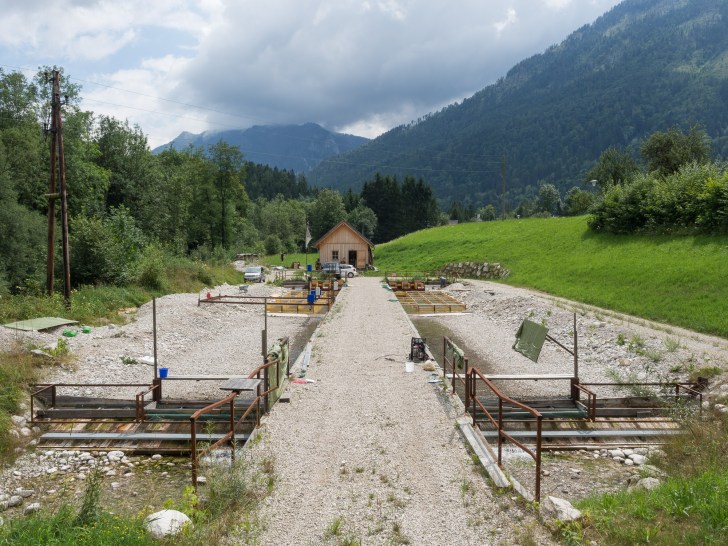
The Hytech experimental channels in Austria. Image: Christian Feld
The MARS project is carrying out seven long-term experiments across Europe to study how river and lake ecosystems respond to multiple stresses. Last week, we profiled the experiments on Peak Flows in Nordic Rivers which are being carried out near Trondheim in Norway. This week, we introduce the work of a team led by researchers at the University of Natural Resources and Life Sciences (BOKU) in Vienna, Austria on ‘Peak Flows in Alpine Rivers’.
As in the experiments in Norway, the BOKU research team in Austria are interested in understanding the effect of extremely high water flows on the freshwater environment. Here, the team are seeking to understand the effect of sudden releases of water from hydropower plants (or ‘hydropeaks’) on the ecology of Alpine rivers, specifically in fish, insects and algae communities.

Researchers electrofishing. Image: Christian Feld
Hydropower has become big business in the Alps, generating renewable energy using the force of rivers flowing strongly down steep mountain sides. However, this approach to ‘green’ energy production brings a range of potentially harmful effects on freshwater life – affecting the flow speed and amount, the water temperature and the physical characteristics of the river (its ‘morphology’) amongst others. These potentially harmful stresses on the freshwater environment are strongest where there is no compensation reservoir to buffer flow fluctuations from hydropower releases.
It is estimated that around 800km of Austrian rivers are significantly affected by hydropower developments. However, the effects of hydropeaking on freshwater environments are not fully understood. As a result, the BOKU team are using a two experimental channels at the HyTEC (Hydromorphological and Temperature Experimental Channels) facility in Lunz am See, Austria to carry out research on the topic.
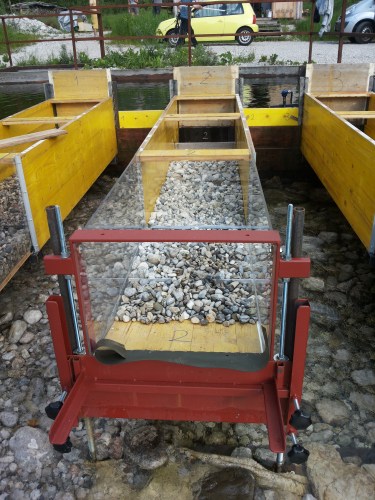
Mesocosms on the experimental channels. Image: Lisa Schülting
The changes in water amount, speed and temperature associated with a ‘hydropeak’ release from a hydropower plant can be replicated on the experimental channels, which are 40 metres long and 6 metres wide. The channels are fed by an outflow from Lake Lunz, which provides nutrient poor water which is common in mountain stream environments.
Different temperatures of water can be taken from different outflows: one on the lake’s surface for warmer water during summer, and one at 10m depth for cooler water.
The effects of hydropeaking on the freshwater environment are being explored in these experiments by using three key freshwater groups: fish, represented by larvae and juveniles of the European grayling and brown trout; macroinvertebrates (or aquatic insects), which are collected from a nearby stream; and benthic algae that grows on the bottom of the stream bed.
The experiments seek to understand how far the fish and macroinvertebrates are forced out of their normal habitat by high flows (termed ‘drift’ by the researchers), and whether this causes them to become stranded (for example, on a gravel bar) as water levels quickly recede. The influence of gravel bar morphology, time of day and water temperature on this stranding risk will be investigated, along with rates of (re)colonisation of habitats by the different species after the hydropeak. The fish behaviour will be observed directly and through video analysis, and the fish will be safely released back into the wild after the experiments are finished.
Benthic algae are an important part of the food web in nutrient-poor mountain streams. These experiments will examine how the colonisation, photosynthesis rate and diversity of benthic algae communities is affected by daily hydropeaking. Researchers will also studying how rates of leaf decomposition – a process which releases nutrients into the water and encourage algal growth – vary with hydropeaking.

Caddis flies (Allogamus auricollis) on the stream bed. Image: Wolfram Graf
During a hydropeak event, there are changes not only to the water’s flow but also to its temperature. The experiments will examine how different species of macroinvertebrates are affected separately by each of the multiple stresses: temperature, flow speed and time of day. Understanding how different macroinvertebrates respond to different stresses will allow the researchers to identify indicator species, which can potentially be monitored in the future to assess the wider health of an ecosystem in response to a hydropeak.
The results of this exciting work will potentially allow for better informed environmental planning and policy decisions and impact assessments for hydropower developments on Alpine mountain streams. As with all the MARS experiments, we’ll keep you updated with the results.
Research team:
Lisa Schülting, Wolfram Graf, Elisabeth Bondar-Kunze, Thomas Hein, Stefan Auer, Bernhard Zeiringer, Stefan Schmutz and Rafaela Schinegger.
Contact: stefan.auer@boku.ac.at
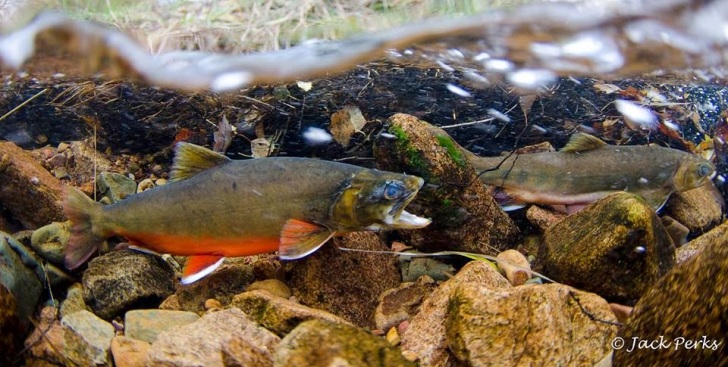
Arctic char. Image: Jack Perks
Underwater filmmaking has a rich – but largely oceanic – history, from Austrian biologist Hans Hass’s pioneering work in the 1940s and Folco Quilici’s 1954 first full-length full-colour film Sesto Continente through to stunning modern footage such as in the BBC’s Blue Planet series and in Werner Herzog’s Encounters at the End of the World.
Jack Perks, an English natural history photographer and filmmaker, is attempting to bring freshwater environments into focus through his Beneath the Waterline project, which aims to document all of the UK’s freshwater fish on film. Keen to find out more, we spoke to Jack about his work and the challenges of filming freshwater life.
Freshwater Blog: Hello Jack, tell us a little bit about your work – how did you begin as a natural history photographer and filmmaker? What’s your approach to documenting the natural world?
Jack Perks: I started my professional career around 4 years ago when I left university with a degree in Marine and Natural History Photography and although I enjoy all aspects of British wildlife, it’s our fish that really caught my attention. With no specific NGOs for freshwater fish in the UK and very little photographic or video footage of them I decided it was about time to change that!
Tell us about the Beneath the Waterline project – what is it and where are you up to with the project work?
The project started in March 2014 and is funded mostly by donations from the public as well as a generous contribution from The Fisheries Society of the British Isles which enabled me to travel all over the UK to film. I had two goals for the project. One was to film as many British freshwater fish as possible, with an emphasis on native species, but also including non-natives and some sea fish that venture into river mouths.
The second goal was to create a film and short 1 – 3 min videos which are put on the project website to provide an online fish I.D guide. I will present the main film, which will deal with conservation issues like getting kids into nature, trying to get nature reserves to watch and appreciate the underwater world, and will feature species such as elvers (young eels) on the River Severn in Gloucester and the rare powan in Scotland. The film is nearing its end with one more presenting piece to be shot and a few more species to tick off.

Powan. Image: Jack Perks
It’s interesting that you raise the point that there’s no NGOs for UK freshwater fish (although there are a lot of broader freshwater ones) and little film footage: why do you think this is? Do you think we ignore freshwater life below the water’s surface? Is this something you’re trying to address with the Below the Waterline project?
One of the key points of the film is to raise awareness of our fish in general, particularly species most people haven’t heard of like spined loach, lamprey and Arctic char. I think the main reason for this lack of public awareness is “out of sight out of mind”, with so many species largely hidden below the water’s surface, most people don’t notice if they decline. I think that most people don’t even know whats lurking in the rivers, canals and lakes around them, so the film uses a mixture of close-up filming in tanks and shots of fish in their natural habitat. I’m hoping to show off our incredible diversity of freshwater fish species.
What technical challenges did the Below the Waterline project throw up? How did you go about finding the species to film (surely some must have been more difficult than others!), and what’s your working method for capturing them on film?
Timings were crucial and did cause me to miss a few species (like the river lamprey and shad) that I would very much like to have filmed. Most cyprinids breed in spring so it was a mad dash to try to capture as much breeding behaviour as possible, which meant that I did miss a few while trying to film others. Also I had to juggle the filming around commissions and filming for other groups while doing this project.
Being an angler helped me locate a lot of the fish, as did social media (here’s the project twitter account), with an army of people suggestion locations to go and film in places including London, Sheffield, Gloucester, Devon, Stirling, Cumbria and all over the East Midlands (my home region). I use a few filming methods including pole cams, underwater camera traps and snorkeling in rivers.
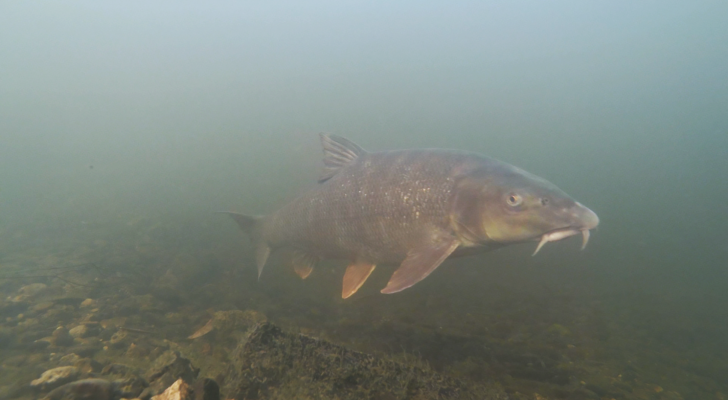
Barbel. Image: Jack Perks
One of the hardest fish to film was barbel. This was surprising, as I have quite a lot in my local area but the river water where they live was either too deep or murky to film. I had no success until a local angler told me about a suitable spot only 15 minute from my house and got them first time!
What has been your favourite fish to film, and why?
The barbel was certainly relieving to finally get but if I had to choose one, it would be the sea lamprey. I had people looking out for them on three different rivers and at the drop of a hat I’d travel to where one was spotted. I got a call from a river keeper on the Test (in Southern England) to tell about lampreys in the river, and so I got the first train to Southampton to film this primordial looking creature. It turned out that the conditions were ideal and plenty of sea lamprey were around spawning so I got lots of footage. They are incredible to watch as they move huge rocks to form a redd and move over each other in courtship.
The Below the Waterline film is coming out soon – can you tell us about it and where we can see it?
The premiere will be in Nottingham with showings in Bristol, London and more locations further north, and will also be available to buy on DVD and online. The hope is that the film will make people think a little more about freshwater fishes in different ways – they’re not just food for birds or a target to be hooked but an important part of our natural history and deserve to be celebrated as much as any other creature in the UK.










 The Freshwater Blog