Relaunch of the Freshwater Information Platform
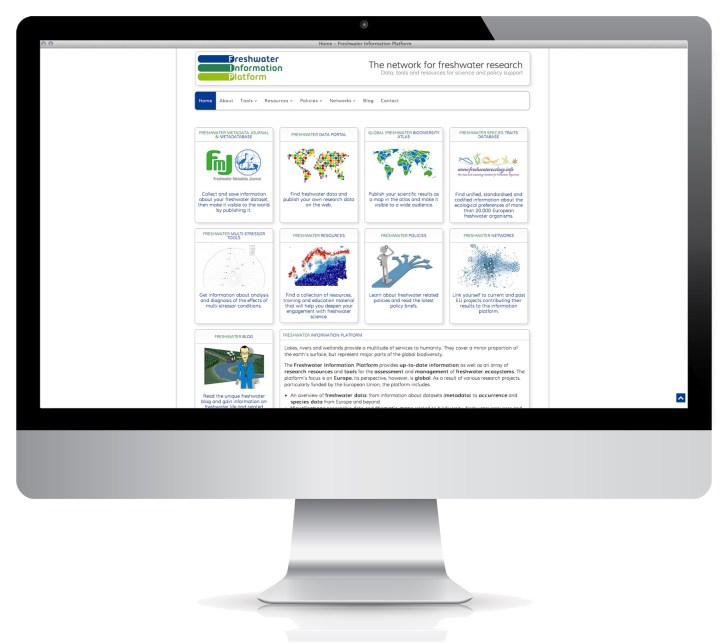 The Freshwater Information Platform – initiated and hosted by four leading European research institutes – has undergone a major update this week, two years after its launch.
The platform makes information from a large set of freshwater ecosystem research activities accessible to scientists, stakeholders and the wider public. It offers a forum for information exchange and open-access publishing of maps and data, and seeks to stimulate cutting-edge research and collaborations in the field.
In so doing, the Freshwater Information Platform provides a unique and comprehensive knowledge base for sustainable and evidence-based management of our threatened freshwater ecosystems and the resources they provide.
Existing sections of the platform including the Freshwater Biodiversity Data Portal, the Global Freshwater Biodiversity Atlas, the Freshwater Species Traits Database, and the Freshwater Metadata section, have been developed and updated.
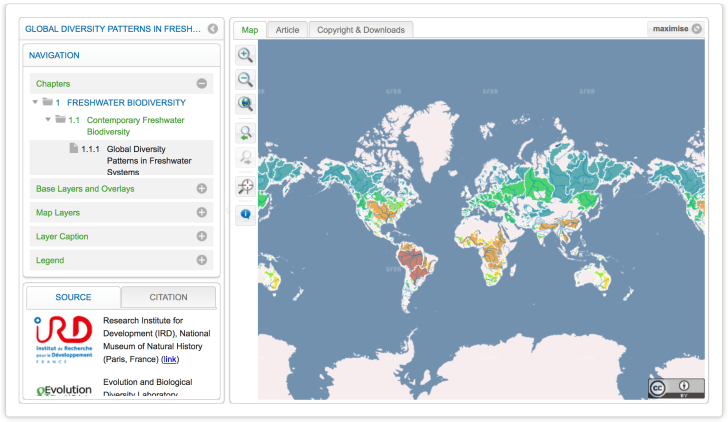
Exploring patterns of biodiversity in the Global Freshwater Biodiversity Atlas. Image: FIP
New sections on the Freshwater Information Platform increase the availability of accessible information and tools for freshwater science. Freshwater Information Systems offers a comprehensive collection of other available freshwater information systems or knowledge platforms. Research Deliverables and Freshwater Networks + Projects compile research deliverables from freshwater related projects mostly funded by the EU.
The Freshwater Tools section includes recently developed interactive diagnostic tools from the MARS project, which help to identify and diagnose multiple stressors and their effects on waterbodies and suggest potential management measures. This section is complemented by a variety of other useful tools for freshwater research, including modelling tools, assessment tools, GIS and R tools.
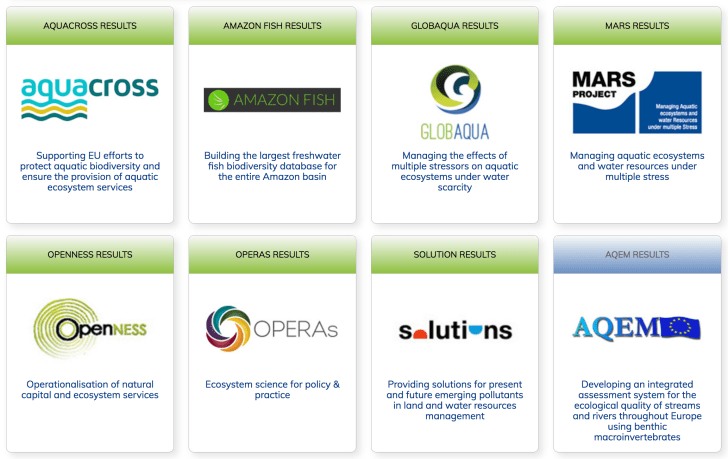
Outputs from 15 global freshwater research projects are collected in the Research Deliverables section. Image: FIP
Currently, the Freshwater Information Platform is maintained by four research institutes in Austria (University of Natural Resources and Life Sciences), Belgium (Royal Belgian Institute of Natural Sciences) and Germany (University of Duisburg-Essen, Aquatic Ecology and Leibniz-Institute of Freshwater Ecology and Inland Fisheries).
Input, contributions and support from other institutions, projects and scientists are welcomed. Details of how to contribute to the Freshwater Information Platform can be found here.
Broader scale research needed for emerging threat of endocrine disrupting chemicals
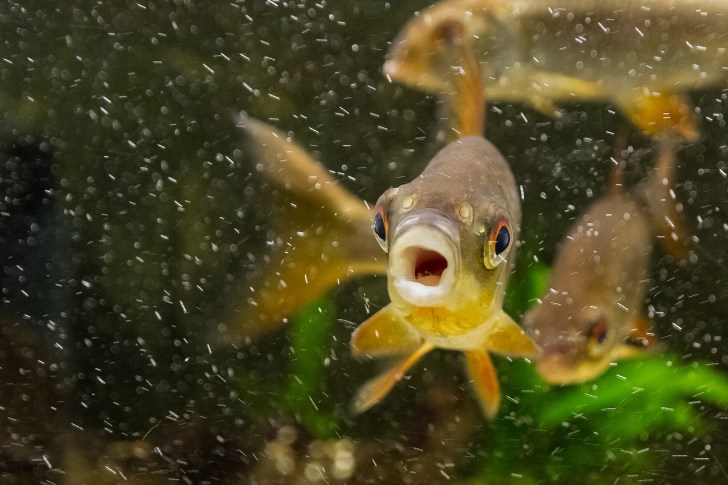
Around a fifth of male roach sampled in British rivers showed signs of mutating into females as a result of endocrine disrupting chemicals. Image: myfrozenlife | Flickr Creative Commons
Some chemicals in freshwater ecosystems have the potential to alter the hormonal balance and function of aquatic organisms. Such ‘endocrine disrupting chemicals’ (or EDCs) can significantly affect how aquatic organisms live, feed and reproduce, and potentially cause stress on their populations.
A new open-access review published in Biological Reviews by Fred Windsor and colleagues argues that whilst EDCs pose an increasing threat to aquatic biodiversity, there is little current understanding of the ecological effects of EDC exposure at different scales.
EDCs – which include ibuprofen (a common painkiller), progesterone (used in contraceptive pills), and numerous other steroids, pharmaceuticals and organic compounds – are increasingly pervasive in freshwater ecosystems, as a result of their widespread human manufacture, use and waste.
Speaking recently at the 50th Anniversary Symposium of the Fisheries Society of the British Isles, environmental biologist Prof Charles Tyler – a co-author on the new study – identified EDCs as a key emerging stress on freshwater environments.
In 2008, Tyler’s research found that nearly a quarter of male roach sampled from 51 sites on English rivers showed signs of becoming female. These physiological changes – such as the fish having eggs in their testicles – were attributed to heightened concentrations of oestrogen (derived from contraceptive pills, and passed through the sewage system) in the river waters.
According to the authors of the new Biological Reviews review, the multiple non-lethal effects that growing numbers of EDCs can have on freshwater organisms at different scales makes their assessment and management difficult. They argue that EDC research on their effects should take place at broader spatial and temporal scales than the current laboratory centred experiments.
Such broader-scale research has the potential to reveal both direct and indirect EDC effects at individual, population and food web scales in ecosystems, they argue. This could form the basis for environmental managers and policy makers to make more informed decisions about freshwater conservation and restoration.
Lead author of the review, joint Cardiff and Exeter PhD student Fred Windsor said:
“A large array of substances derived from industry, drugs and personal care products can pose an environmental risk to the normal hormone functions of a wide array of organisms: These so-called ‘endocrine disrupting chemicals’ (EDCs) occur increasingly in streams, lakes and rivers, and have become a source of considerable concern because of possible effects on fish, other wildlife and, potentially, people.
So far, much of our understanding is from laboratory toxicological studies that don’t capture the complex pathways or mechanisms through which EDCs affect real ecosystems. Our review identifies the need for greater efforts using ecologically oriented assessments at population-, community- and food web levels under real conditions.”
EU MARS project scientist and review co-author Prof Steve Ormerod added:
“One of the greatest environmental success stories over the last few decades has been the restoration of urban rivers affected by gross pollution and heavy industry. However, we’re increasingly realising that complex substances like EDCs might cause continuing problems because they’re not removed fully by conventional wastewater treatment. (See, for example, Steve’s research on dippers).
Rural environments are also at risk – for example where various pesticides and pharmaceuticals from livestock reach streams and rivers. These chemicals add to the suite of multiple stressors that have to be addressed to protect and restore biodiversity and those ecosystem services for which water is critical.”
Windsor FM, Ormerod SJ, Tyler CR. (2017) Endocrine disruption in aquatic systems:
up-scaling research to address ecological consequences. Biol Rev Camb Philos Soc (open access)

Gweek estuary, Cornwall. Image: Tony Armstrong | Flickr Creative Commons
Estuaries are transitional ecosystems where freshwater and marine waters meet, and their biodiversity overlaps. As a result of their supporting roles in trade, transport, fishing and tourism, estuaries are often also highly altered and pressurised ecosystems.
According to a new study, European estuaries are home to some of the most vulnerable and least resilient estuarine fish populations in the world. Writing in Nature Scientific Reports, Rita P. Vasconcelos and colleagues outline that European estuaries are particularly pressurised by human activities such as overfishing, habitat alteration and pollution. However, the authors of the newly published study argue that these highly-pressurised European estuaries are often lacking in sufficient protected area coverage to help conserve vulnerable fish species.
The researchers used publicly-available scientific data sets on global fish populations for their analysis. They found that two fish species traits which affect species response to pressures – vulnerability and resilience – were not evenly distributed in estuarine populations globally, and were driven by environmental features such as temperature, connectivity and area.
In this study, both species traits are based on responses to fishing pressures. Vulnerability describes the susceptibility of fish species to become extinct due to fishing pressure. Vulnerability is an indirect measure of species sensitivity to change, and can be influenced by life history and ecological features such as body size, age at maturity and geographical range.
Resilience is used in this study to describe the capacity of fish species to recover from fishing pressure. The resilience of fish species is related to their fecundity and natural rate of population growth. In essence, the use of these species traits in this study allows the authors to analyse the susceptibility of global estuarine fish biodiversity to multiple human pressures.
The researchers outline that assemblages of more vulnerable and less resilient fish species were generally found in estuaries at higher latitudes – particularly Europe – and with high connectivity between the freshwater and marine environments. The authors argue that current conservation schemes typically pay little attention to species traits such as vulnerability and resilience, despite their ecological importance.
In this study, Vasconcelos and colleagues show that global protected area coverage of estuary ecosystems is only weakly related to the distribution of sensitive fish species. This shortfall in protection is exacerbated by the multiple pressures acting on the estuaries supporting the most vulnerable fish populations. They argue that conservation schemes are needed in estuary environments across the world, particularly those with populations of vulnerable fish species.
Their study is focused on protected area management, where restrictions are placed on human activities within a set geographical area, such as those classified in IUCN management categories I-V. In addition, it is largely focused on fishing as a key pressure on fish populations, as measured through their trait responses. As such, the study doesn’t address the environmental benefits that legislation such as the Water Framework Directive brings to European estuaries, by requiring governments to conserve and restore water and habitat quality.
Regardless, the study has an important message: European estuaries subject to multiple pressures are home to vulnerable fish populations, which are in need of protection.
Restoring Swindale Beck
A new film released recently by the RSPB shows how the restoration of a stretch of Lake District river has brought swift ecological improvements along its course. Around 200 years ago, Swindale Beck was artificially straightened to increase the grazing area along its floodplain. The straightened course had unnaturally fast water flows, which washed away gravel from its bed, largely preventing salmon and trout from spawning.
A major river restoration project was carried out last summer to bring back the river’s natural meandering course. As documented in this new film, the work was undertaken by a partnership between the RSPB, the Environment Agency, United Utilities and Natural England.
The restoration work created slower and more diverse water flows in Swindale Beck, which improve the habitat for spawning fish. Earlier this year, only months after the work finished, 16 salmon were spotted in the restored one-kilometre stretch of river, together with five ‘redds’ – the patches of disturbed gravel where salmon eggs have been laid.
The re-meandering of Swindale Beck is also intended to help buffer flooding problems, by allowing flood waters to spill out onto the river’s floodplains. This, alongside alterations to livestock grazing in the valley, have caused wildflower meadows on the floodplains to flourish.
Lee Schofield, RSPB Site Manager at Haweswater, said, “Working to restore natural processes in Swindale has been incredibly rewarding and has delivered huge benefits for people and for wildlife. Most of the work that have carried out is compatible with farming and other land uses. We hope to see more projects like this happening across the country, helping to make landscapes and businesses more resilient to future flooding and the impacts of climate change.”
Like all rivers, the flow dynamics of Swindale Beck are linked to landscape use in its catchment. At the highest point of the river’s catchment is a large area of blanket bog at Mosedale. Restoration work here has blocked 29 miles of artificial moorland drains, which has raised the water table and created numerous new ponds, which have become habitat for aquatic insects. This work also helps ‘slow the flow’ of heavy and sudden rainfall to the river channel.
Native tree species have also been planted throughout the river valley. As they grow into riparian woodland, it is intended that they will help stabilise the valley soils and river banks, further slow the flow of flashy rainfall, and provide new habitat for species such as the red squirrel.
Oliver Southgate, River Restoration Project Manager at the Environment Agency, said, “This project demonstrates the true essence of partnership working. Everyone contributed throughout the project to ensure we delivered the maximum of benefits. It really does show that nature will find a way if you allow it to. It’s a brilliant project and another one for the UK River prize-winning Cumbrian river restoration programme.”
This week we have a guest post by Yannick Huot and Catherine Brown from the NSERC Canadian Lake Pulse Network. Like MARS, their research network focuses on the impacts of mutiple stressors on the health of aquatic ecosystems – in this case on lakes across Canada. You can find out more about their work on their website.
+++
How do you combine a pan-Canadian assessment of lake health with innovative research, while also providing governmental partners and other stakeholders with new knowledge to spur evidence-based decision making? Put it all into an NSERC Strategic Partnership network grant, of course. The objectives of the NSERC Canadian Lake Pulse Network (we affectionately call it “Lake Pulse”) are ambitious to say the least!
Lake Pulse participants collaboratively explore many aspects of limnology, including paleolimnology, spatial modelling, remote sensing, genomics and contaminants, while determining how to best integrate these advances into lake management and provide accessible data for policymakers and decision making.
Our aim is to create an accessible web platform to promote a science-based understanding of lake health, which will help bring together stakeholders and facilitate informed and cooperative lake management. This 5-year research network, initiated in mid-2016, includes 18 university researchers and will train over 40 students. Our partners include federal, provincial and territorial government agencies as well as non-governmental organizations.
Many Lake Pulse participants are finding that a departure from their usual modus operandi is required. Enhanced cooperation is essential in this network, and many individuals are coming together to contribute to common goals.
For example, Lake Pulse students will be immersed in our multidisciplinary, collaborative field expeditions to sample 680 lakes across Canada over 3 summers. These students will collect data for the entire network and cannot focus only on their own individual projects. They will be trained in diverse limnological techniques; contribute to our large, shared database of lake variables; and help to refine our Lake Pulse field manual of protocols that will be consistently applied nationwide and aligned with the EPA’s National Lakes Assessment.
Lake Pulse researchers, unlike researchers working in many other NSERC Strategic Partnership networks, are not allocated funds to carry out specific research projects; instead, they are provided with partial stipends for students. Our partners are deeply embedded in all aspects of Lake Pulse from planning to analyses, including data collection and publication.
For this network to succeed, trust must be built amongst all participants; methods and guidelines must be put in place; and communication must be efficient and flow freely. Establishing this framework was some of the work cut out for us over the last few months, along with building the core team at our host institution, the Université de Sherbrooke.
To say that these months have been fast paced would be an understatement, and to claim that there were no challenges would by a lie. However, we are confidently on track to begin one of the most ambitious limnological field campaigns ever carried out in Canada. When our mobile labs set out in July 2017, you can follow their progress online.
We also welcome opportunities to work with new partners, collaborators and researchers who have the potential to enhance our Lake Pulse objectives. To learn more about us, visit our website… and subscribe to our blog!

Water is a key element of EU environmental policy. Image: Symbolique 2006
Over half of the European public are in favour of more environmental protections across the continent, according to a new European Parliament survey.
53% of the 27,901 EU citizens interviewed by Kantar Public for the survey thought that existing environmental protections across Europe were ‘insufficient’. 75% of citizens thought that more policy and management interventions were necessary to protect European environments.
There is a broad geographical distribution to these findings. Three of the top five ‘insufficient’ ratings in the survey were made by people from southern European countries – Spain, Portugal and Greece – where climate change and development pressures are increasingly strong. The strongest ‘insufficient’ rating came from the Swedish public.
On the other hand, the four lowest ‘insufficient’ ratings – i.e. those who mostly saw current protections as ‘sufficient’ – came from people in the Baltic States – Estonia, Latvia and Lithuania – and in the Czech Republic. All four of these countries gained membership of the EU in 2004. Citizens from the UK and Ireland were only slightly more positive about the sufficiency of existing environmental protections.
Overall, 36% of EU citizens surveyed thought that existing environmental protections were sufficient, whilst 4% thought they were excessive.
Of the three-quarters of EU citizens who called for increased environmental protection interventions from policy makers, the three most positive respondents were again from Southern European countries – Spain, Portugal and Cyprus. All three countries have experienced water shortages in recent years (and in Spain’s case, unusual winter floods and snow) – driven by climatic trends which are projected to worsen in coming decades.
The Baltic States, Czech Republic, Poland and the UK reported the lowest enthusiasm for increased environmental protections. However, in Latvia and Estonia, the two least-positive results, over half of surveyed citizens (52% in both cases) were still in favour of increased environmental protections.
Of course, it is impossible to draw any firm conclusions on the influence of national geopolitics or environmental issues on the results of this survey – particularly when respondents were encouraged to think about the EU as a whole throughout their interviews. However, there are geographical trends in the reported results, which deserve subsequent in-depth research and analysis to properly understand.
More broadly, the survey yields a number of insights for environmental policy makers seeking to address the public appetite for environmental protections across the EU. When citizens were asked about the policy topics they would like more information on, environmental protection was the fifth most popular, after issues surrounding terrorism, unemployment, health and social security and migration.
The greatest enthusiasm for more environmental information came from citizens in Northern European countries with relatively high GDP: The Netherlands, Sweden and Denmark. The lowest was from the Estonian and Latvian public. Overall, these results suggest that there is scope for broader and more effective environmental science and policy communication and engagement in the EU.
There is a long-held idea in conservation practice that a person or community’s attachment to a place (what geographer Yi Fu Tuan calls ‘topophilia‘), means they are likely to support its conservation and protection. The survey reveals that EU citizens feel far more attached to their city/town/village, region and country (between 87-92% do) than they do to the EU as a whole (between 51-56% do).
This result points to a challenge for environmental policy makers and managers in designing large-scale, cross-national initiatives. One question might be in how continental-scale conservation and protection initiatives (for example, this recent Natura 2000 waterbird project) can best be justified and popularised at each of their local and regional ‘nodes’.
Finally, the survey suggests that over half (53%) of EU citizens don’t believe that their voice counts in EU decision-making processes, whilst 43% believe that theirs does. The most negative opinions came from citizens in Greece (perhaps predictably, given recent economic and migration issues), Estonia and the Czech Republic. The most positive came from citizens in The Netherlands, Sweden and Denmark – the same citizens who were receptive to more environmental protections information.
According to citizens across the continent, voting in European elections is the main way (57-59% of respondents) of making your voice heard in EU decision-making. In the context of an overall public desire for more EU environmental protection initiatives, the results suggest that there is the opportunity for environmental NGOs, charities and community groups to communicate how public participation in environmental debate and action can influence EU decision making.
You can read the full survey report here, and see the data here.
OSCAR: the ecological benefits of woody riparian buffers

A riparian woodland strip along a Swedish stream. Image: Mikko Muinonen | Flickr Creative Commons
Strips of vegetation and trees growing alongside rivers can have significant ecological benefits for the health and status of a river ecosystems. So-called ‘riparian buffers’ can reduce the inputs of nutrients and sediment into a river from the surrounding landscape, particularly in areas of intensive agriculture. However, whilst such ‘woody’ riparian zones are a natural feature of many river catchments, many have been cleared across Europe, often for agriculture, flood defences and urban expansions.
A major new European project has recently been established to synthesise both existing and emerging knowledge on woody riparian buffer strips. Co-ordinated by Prof. Daniel Hering and Dr. Jochem Kail from the University of Duisburg-Essen in Germany, the Oscar project will investigate both the aquatic biodiversity benefits of woody buffer strips, and the ecosystem services they can provide.
In recent years, the ecosystem service framework has helped scientists identify the many benefits generated by woody buffer strips, to humans and non-humans alike. These include biodiversity habitat, stream shading and temperature regulation which may help mitigate the impacts of rising air temperatures, inputs of leaves and wood to river bed habitats, and reduced bank erosion and flood protection. However, a comprehensive survey of the ecosystem health and services benefits of woody buffer strips is still missing – a gap in scientific and management knowledge which the Oscar project aims to address.
Woody buffer strips are often cited as an effective and cost-effective option for river restoration schemes seeking to reach ambitious environmental quality standards such as those set by the EU Water Framework Directive. However, riparian zones are often highly contested spaces, providing fertile and flat areas for agriculture and urban growth. As a result, the restoration of woody buffer zones can often be fragmented and small-scale in extent.
There is increasing awareness amongst aquatic scientists that the beneficial effects of woody buffer strips depend heavily on their spatial arrangement. In order to gain maximum benefits, woody buffer strips should be highly connected, not only along river channels, but also out into the wider landscape.
Woodland strips along rivers can act as migration corridors and refuges for a range of mammals, birds and insects, and provide habitat conditions for plant species. A central underpinning of the Oscar project is that woody buffer strips can form important links in landscape-scale ‘green-blue’ infrastructures, which connect aquatic and terrestrial habitats. Connectivity is a key aspect of contemporary conservation practice, and the Oscar project has the potential to significantly contribute to current debates.
In the Oscar project, an integrated assessment of effects of woody riparian buffers on ecosystem function and service provision will provide the basis for environmental policy and management recommendations. In particular, the effectiveness of different spatial configurations of woody buffer strips will be assessed under different management and climate change scenarios. Oscar will produce a GIS-based multi-criteria decision analysis tool which will help guide management and policy decision-making.
The aim of the Oscar project is to provide water managers and policy makers with recommendations about how woody buffer strip conservation and restoration might be optimised. Communication of project findings will take place through local stakeholder engagement in the case-study catchments, and with working groups at the national (e.g. German LAWA, French ONEMA) and EU level (e.g. ECOSTAT). At the European scale, the project will highlight the relevance of woody buffer strips to the European Biodiversity Strategy, the implementation of the Water Framework Directive, and the ongoing ‘greening’ of the Common Agricultural Policy.
The project is funded by Biodiversa and will run until 2019. We will keep you updated on project progress and outputs.
Hydropower and fish: reporting on a Brussels workshop
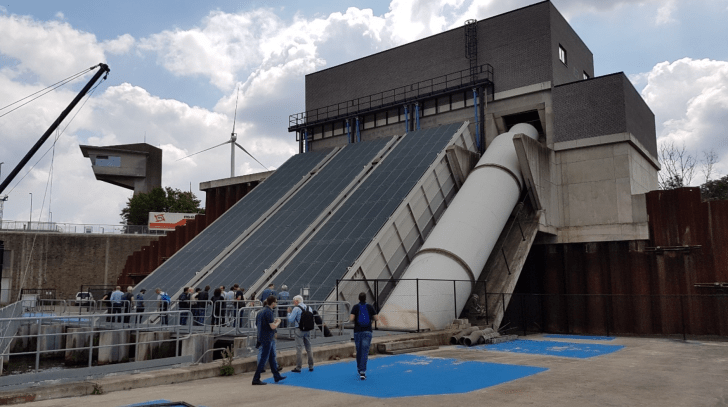
Combining hydropower production and fish migration in four Archimedes screws at the Ham hydropower plant on the Albert Canal in Belgium. Image: Hans-Petter Fjeldstad.
A guest post by Hans-Petter Fjeldstad, a research scientist at SINTEF Energy in Norway.
Increased awareness of ecological issues in rivers with regulated water flows calls for better international understanding about how the hydropower industry might be made more ‘environmentally friendly’ through policy and practice.
Earlier this year, at the end of May, a workshop was held in Brussels to discuss these issues, organised by the International Energy Agency Hydropower Technology Collaboration Programme and the European Commission Directorate General for Research and Innovation.
Entitled ‘Hydropower and Fish – Research and Innovation in the context of the European Policy Framework‘, the workshop was organised to address the European research and legislation relevant for hydropower production and to highlight its impacts on fish populations in regulated rivers. In addition to presentations and discussions, delegates undertook a field visit to the Ham hydropower plant on the Albert Canal.
Workshop themes
“Where do we go from here?” This was the question posed by Piotr Tulej, the head of the DG RTD Unit at the European Commission, in his opening speech at the workshop. Speaking to 80 representatives from 21 European countries, with expertise in water management, research, policy, manufacturing and industry, his speech outlined some of the key issues in contemporary water management and hydropower. On one hand, there is strong – and growing – demand for renewable energy across the world; on the other, fish ecology and riverine habitats are often strongly – and negatively – impacted by hydropower development.
The workshop brought together representatives from many large European research programmes, including as AMBER, FITHydro, Hyperbole, Sed-Net, LIFE and BioFresh. New innovations were presented, demonstrating the wide and important range of new technologies for ecosystem monitoring. Some of the more unusual and innovative techniques included data sampling using unmanned aircrafts and robotic fishes.
Another presentation highlighted that the role of storable hydropower in Europe may change as a result of the speed at which wind and solar energy has been adopted in the continent’s power network. More dynamic production schemes lead to rapid changes in river flow, which can have negative ecological impacts, such as habitat loss, particularly for fish. The consequences of such so-called hydropeaking was highlighted as a main future research area.
Other important research topics presented included strategies for ensuring the safe downstream migration of fishes past hydropower structures and turbines, and monitoring approaches to assess fish pass efficiency. Overall, there was a focus on river connectivity along entire catchments and river basins, instead of single, isolated projects.
Standardised monitoring and mitigation approaches
Discussions at the workshop highlighted the need for Europe-wide standardisation of monitoring programs and mitigation measures for hydropower impacts, in order to understand and assess the impacts of management actions. One key aspect of this is to develop standardised approaches to assess residual flows and environmental flows in rivers affected by hydropower developments. The expression “environmental requirements” must be emphasised, underlining that not only fish, but overall biodiversity, is important to fulfill the requirements of the EU Water Framework Directive (WFD).
In recent decades, a variety of modelling tools have been developed to describe the different impacts from hydropower on fish. One important message from the workshop was that modelling tools should be included in the management models in order to achieve realistic goals. Such approaches need to be scalable from single topic models to holistic analyses of large river catchments. This is crucial because many fishes migrate over long distances across political and management borders. Discussions also emphasised the importance of implementing existing research and available knowledge on hydropower impacts.
Balancing perspectives on water management for hydropower and fish
Overall, discussions at the workshop highlighted that future research, policy and management on hydropower and fish must seek to find a balance between renewable energy production, and the ecological health and status of impacted rivers in Europe.
Panel discussions suggested that reductions in hydropower production are often expensive to governments – as hydropower is one of the most efficient ways to generate electricity – and may cause shifts to fossil fuel methods of energy production. While negative ecological impacts from hydropower on fish are highly pronounced across Europe, the closing panel debate emphasised that scientific researchers, water managers and the hydropower industry must establish better long-term relationships together in order to mitigate ecological impacts.
One outcome of such collaboration could be common criteria and rating or indexes for viable fish populations in regulated rivers, and handbooks for assessing and implementing mitigating measures in order to obtain “good ecological status or potential” according to the WFD. Future workshops are proposed to continue discussions on these important topics.
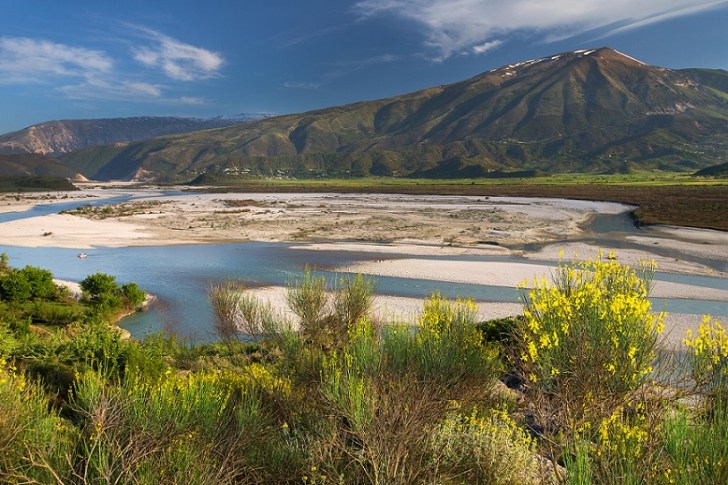
The Vjosa River in Albania, Europe’s ‘last wild river’. Image: Gernot Kunz
After 20 years of postponement, an unfinished hydropower construction on the Vjosa River in Albania was cancelled earlier this year. The Vjosa is Europe’s last ‘wild’ large river, flowing entirely unobstructed through inaccessible gorges and enormous gravel banks and islands on a course of almost 270 kilometers from the Pindus Mountains to the Adriatic Sea. However, the river system is currently the subject of a number of hydropower constructions, which potentially threaten its rich – but little researched – biodiversity.
The cancellation of the Kalivaç project in May was seen as positive news by environmental NGOs such as the Austrian-based RiverWatch who have long campaigned against hydropower developments on the Vjosa. However, shortly afterwards, the Albanian Ministry of Energy and Industry opened procedures for construction companies to tender for renewed hydropower construction at the site before 18th July.
“The cancellation of the existing contract – which makes the Vjosa legally free from any hydropower plans – offers a real chance to declare the Vjosa to the first Wild River National Park in Europe. Nonetheless, the government has decided to re-open the concession procedure, against the will of local authorities and communities, national and international stakeholders. We will vigorously fight against this project and for a dam-free Vjosa”, says Olsi Nika from EcoAlbania, coordinator of the Vjosa campaign in Albania.
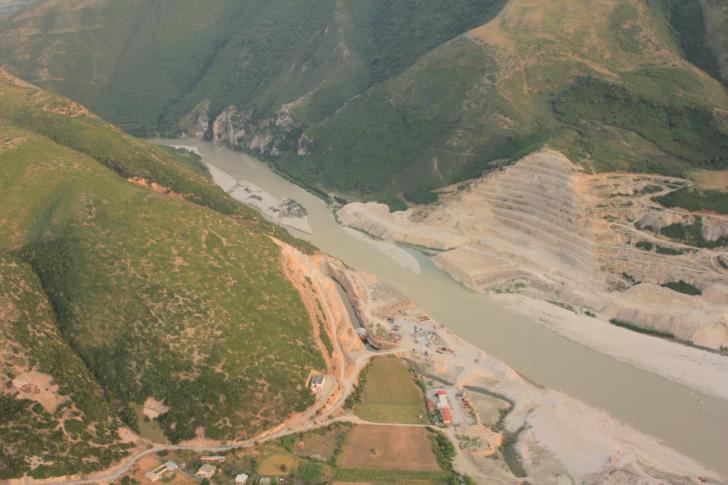
The unfinished Kalivaç hydropower construction on the Vjosa River. Image: Roland Dorozhani
The Kalivaç hydropower project was accepted in 1997. Construction of the 45 metre high dam began in 2007, but was only a third completed before the project was cancelled, leaving the river flows largely unimpaired. Environmental scientists and campaigners fear that renewed hydropower construction will threaten poorly documented aquatic biodiversity in the Vjosa.
Proposals for another major hydropower construction on the Vjosa, downstream of the Kalivaç site at Poçem were overturned by judges at the Albanian Administrative Court in Tirana in late May. One of the key reasons that the Poçem construction was overruled was due to an insufficient Environmental Impact Assessment on the effects of the hydropower plant on the river ecosystem.
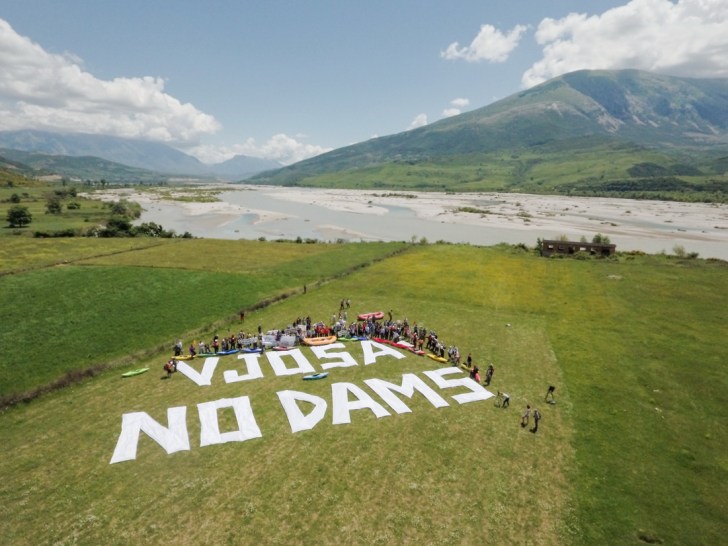
Local residents and environmental NGOs protest against hydropower development on the Vjosa. Image: Oblak Aljaz
The overruling of the Poçem construction – which is likely to be challenged – was the result of a lawsuit filed in December 2016 by environmental NGOs and local residents, who claimed there had been insufficient public consultation on the impacts of hydropower.
“This decision shows the importance of fighting disputed hydropower projects on a legal level – not only in Albania but in the entire Balkan region. Many – if not most – of the 2700 projected hydropower plans in the Balkans contradict national and European legislation. We will prepare further legal actions against projects that we perceive as unlawful”, outlines EuroNatur CEO Gabriel Schwaderer, one of the key proponents of the lawsuit.
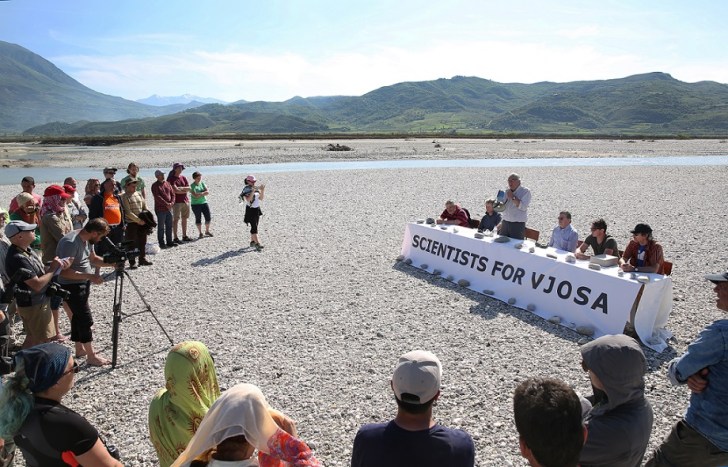
Scientists hold a press conference on a gravel island in the Vjosa. Image: Jens Steingässer
A month before the cancellations (or at least, postponement) of the Kalivaç and Poçem projects, a group of 25 aquatic scientists held a press conference in an unusual setting on the river – a large gravel island near the village of Kutë, which would be flooded if the Poçem scheme went ahead.
The scientists reported on a week of intensive research on the Vjosa’s biodiversity and hydromorphology, about which there is currently very little information. They found that animal and plant species which have long disappeared in European rivers are still abundant at the Vjosa. In addition, they confirmed that the river transports huge quantities of sediment, which is likely to mean that any hydropower reservoirs would be clogged with deposited sediments within decades.
As a result, significant research is necessary to project – and potentially prevent – future impacts on the Vjosa’s biodiversity, water flows and flood and erosion dynamics from hydropower. Prof. Aleko Miho from the University of Tirana explains, “The Poçem project not only puts the river section at Kutë at risk, but negatively affects the entire downstream river course all the way to the mouth, including the Narta Lagoon. This has not yet been assessed at all. This week’s initiative should be seen as merely a start. In order to properly assess the actual impacts of the projected hydropower plant, a three-year research program is indispensable.”
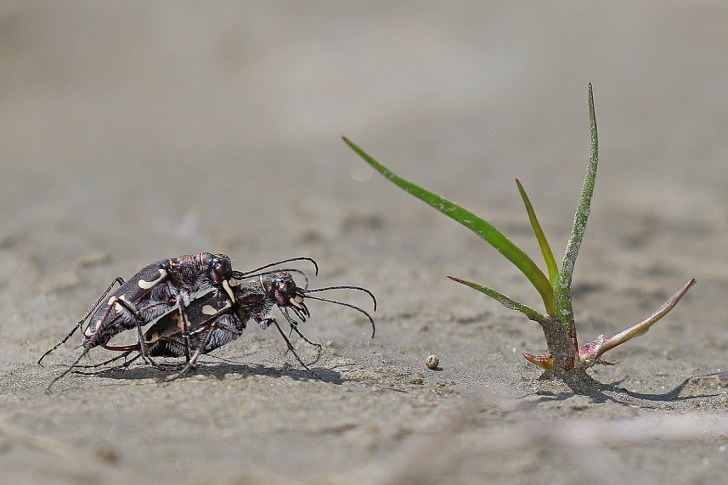
A rare species of tiger beetle, discovered by scientists on a Vjosa beach. Image:
There is currently a ‘hydropower boom’ taking place across the Balkans. A 2015 RiverWatch study (pdf link) suggested that there are 2,683 hydropower projects proposed across the region, with 8 projects proposed for the Albanian stretch of the Vjosa River and 23 more on its tributaries. Some of these projects are proposed in existing national park protected areas across the Balkans (pdf link).
The Vjosa is clearly a valuable river, but the type of value it offers – and how it might be used – is hotly debated. The Vjosa is a rare – if not unique – example of a largely unmodified European river system, which supports both rich biodiversity (its watershed includes populations of the rare Balkan lynx) and low-impact agriculture, livestock farming and fishing.
However, it also provides huge hydropower potential for the Albanian government to exploit. At present, hydropower is the country’s only domestic source of electricity, providing 80% of its total energy, and generating as much as 10% of its annual GDP (pdf link).
“Domestic electricity demand is constantly rising, which means we need to increase our power-generating capacity,” suggested Dardan Malaj, a communications advisor at the Albanian Ministry of Energy and Industry, in a Revolve Water interview in 2016. “Moreover, foreign investors are mainly interested in the country’s energy sector and Albania really needs those investments.”
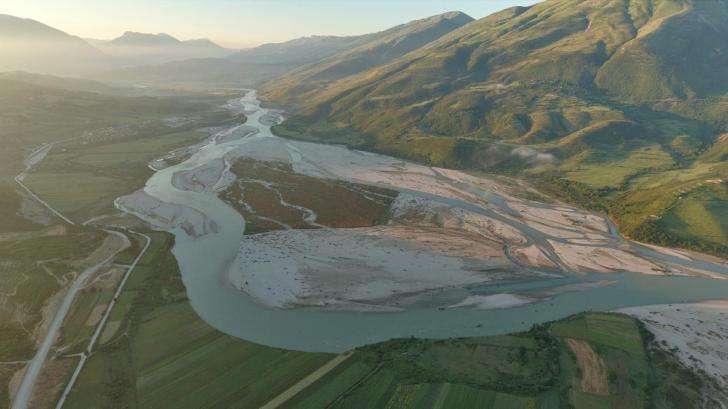
Braided channels on the Vjosa River. Image: Gregor Subic
Across the Balkans, hydropower projects are being promoted under the logic of ‘green energy’ production, underpinned by large investments from European banks. A 2015 report by industry watchdog BankWatch (pdf link), found that outside investments of hundreds of millions of euro were supporting hydropower constructions across the region. For example, the European Bank for Reconstruction and Development provided €240m to 51 Balkan hydropower projects named in the Bankwatch report, nearly half of which were in protected areas.
“What we have here in the Balkans at the moment is a gold rush on the rivers,” says Ulrich Eichelmann, the director of RiverWatch, told The Guardian in 2015. “I sometimes think the western countries that are financially supporting this degradation process have no idea what they are destroying. There is nothing in Europe remotely like this [the Vjosa] river system.”
There have been a number of prominent political objections hydropower development on the Vjosa. In April 2016, the European Parliament called for stricter controls on the development of hydropower plants on the Vjosa, recommending that Environmental Impact Assessments should meet EU standards. In May 2016, the vice-president of the European Parliament, Ulrike Lunacek, joined a group of around 100 environmentalists, kayakers and journalists from across Europe to protest against the hydropower constructrions on the Vjosa. In February 2017, the mayors of five areas along the Vjosa valley wrote an open letter (pdf link) to the Albanian Prime Minister, Edi Rama, calling for hydropower developments on the river to be stopped.

The wide floodplain and braided channels of the – as yet unaltered – Vjosa River. Image: Gregor Subic
However, the issue of hydropower construction on the Vjosa is unlikely to go away anytime soon. Ironically, perhaps, the Vjosa is a prime example of a river system in ‘good ecological status’, as defined by the EU Water Framework Directive. Given that Albania is currently a candidate for accession to European Union membership, should hydropower construction go ahead, then any future EU membership may require the Vjosa’s ecosystem to be subsequently restored, most likely at great expense.
What is clear is that the form and future of the Vjosa river system is inextricably tied to wider political, energy and environmental interests and currents. We’ll keep you updated with what happens next.
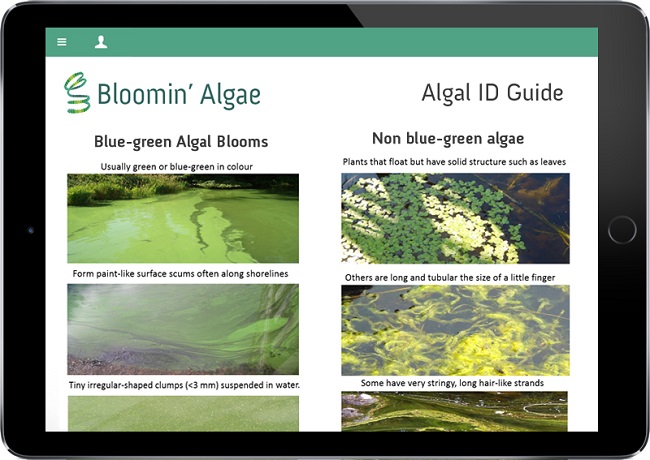
The Bloomin’ Algae app’s algae ID guide. Image: CEH
Blooms of blue-green algae can occur through the summer and early autumn in UK lakes and slow flowing rivers, particularly when nutrient concentrations are high, and there has been sunny, warm weather.
Whilst algal blooms occur naturally, they can be exacerbated by human pressures, particularly nutrient pollution. We have previously written about the negative ecological effects of algal blooms – such as hypoxia. However, some blooms may also produce toxins which are directly harmful to humans and animals.
A free new app called Bloomin’ Algae has been designed to allow people to record algal blooms in their local freshwater environments. The app, produced by the Centre for Ecology and Hydrology with input from Environment Agency, Scottish Environment Protection Agency, Public Health England and Health Protection Scotland, enables users to submit a photo of an algal bloom and note the recreational activities that takes place at its location.
These ‘citizen science‘ recordings of algal blooms are plotted on an interactive map, which allows water managers to track and mitigate their potential health risks to people and animals.
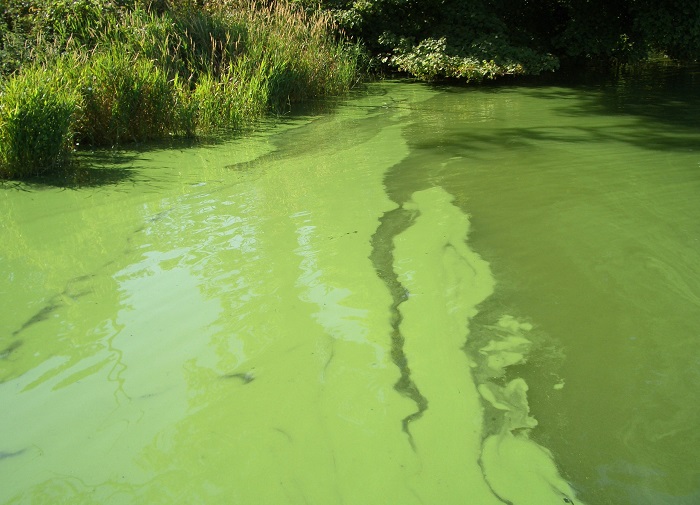
An algal bloom on Loch Leven in Scotland. Image: CEH
Professor Laurence Carvalho, a freshwater ecologist at the Centre for Ecology and Hydrology (and MARS project partner) who specialises in the study of algal blooms and water quality, helped develop the app with his colleagues.
Professor Carvalho said, “Algal blooms can be a major health hazard as they commonly produce potent toxins that can result in people experiencing skin rashes, eye irritations, fever, muscle pain and worse. They can also be a significant hazard to animals; dog owners and farmers need to ensure their pets or livestock do not drink from waters affected by blue-green algae.
People can download the app from Android and Apple app stores and if they then come across an algal bloom, they can use the app to send us a photo and details of its location. We will then alert UK environment and health agencies so they can take appropriate action.”
Blue-green algae are microscopic but can clump together in ‘colonies’ up to a few millimetres in size during blooms. These colonies can rise to the surface to form thin wispy green blooms or thick paint-like scums. Algal blooms which pose a toxic health risk to humans and animals are known as ‘harmful algal blooms’ or ‘HABS’.
Mr Kazlauskis, the mobile developer on the project, said, “The app offers an algal guide to help people familiarise themselves with what an algal bloom looks like. Due to integration with the Biological Record Centre’s iRecord system, all verified records can easily be viewed on the Bloomin’ Algae interactive map.”
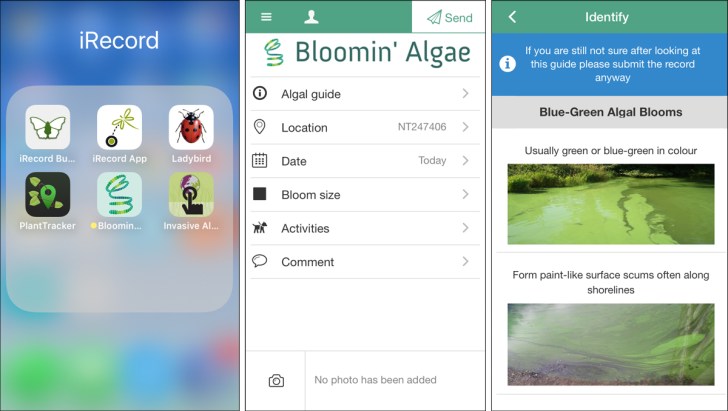
The Bloomin’ Algae app gives users visual references for identifying algal blooms, and a platform to geolocate them. Image: CEH
The Bloomin’ Algae app allows water managers and scientists to track and manage potentially-harmful algal blooms in UK freshwaters, and to provide subsequent ‘early warning’ messages to the public about sites which may pose a health risk.
In addition, it is hoped to provide an ongoing geographical indication of the different users of freshwater environments – anglers, walkers, birdwatchers and so on – and how their activities are affected by algal blooms.
+
Download Bloomin’ Algae for Apple and Android devices.
Find out more about iRecord on the Biological Record Centre website.










 The Freshwater Blog