A landmark global report summarised earlier this week suggests that around 1 million animal and plant species are threatened with extinction. For many species, extinction could occur within decades. The global rate of species extinction is already at least tens to hundreds of times higher than the average rate over the past 10 million years and is accelerating, the report states.
The Intergovernmental Science-Policy Platform on Biodiversity and Ecosystem Services (IPBES) Global Assessment Report on Biodiversity and Ecosystem Services outlines the state of knowledge regarding the planet’s ecosystems and the contributions they make to people.
Compiled by 145 expert authors from 50 countries over the past three years, with inputs from another 310 contributing authors, the Report assesses changes to biodiversity and ecosystems over the past five decades.
“The overwhelming evidence of the IPBES Global Assessment, from a wide range of different fields of knowledge, presents an ominous picture,” said IPBES Chair, Sir Robert Watson. “The health of ecosystems on which we and all other species depend is deteriorating more rapidly than ever. We are eroding the very foundations of our economies, livelihoods, food security, health and quality of life worldwide.”
“The Report also tells us that it is not too late to make a difference, but only if we start now at every level from local to global,” he said. “Through ‘transformative change’, nature can still be conserved, restored and used sustainably – this is also key to meeting most other global goals. By transformative change, we mean a fundamental, system-wide reorganization across technological, economic and social factors, including paradigms, goals and values.”
Based on the review of around 15,000 scientific and government sources, the IPBES Report also draws on indigenous and local knowledge. It outlines the relationships between economic development pathways and their impacts on nature, and offers a range of possible scenarios for the coming decades.
“Ecosystems, species, wild populations, local varieties and breeds of domesticated plants and animals are shrinking, deteriorating or vanishing. The essential, interconnected web of life on Earth is getting smaller and increasingly frayed,” said Assessment co-chair Prof. Josef Settele from the Helmholtz-Centre for Environmental Research (UFZ). “This loss is a direct result of human activity and constitutes a direct threat to human well-being in all regions of the world.”
What does the IPBES Report tell us about the state of global freshwater environments?
1. Land use change is the key driver of freshwater ecosystem decline
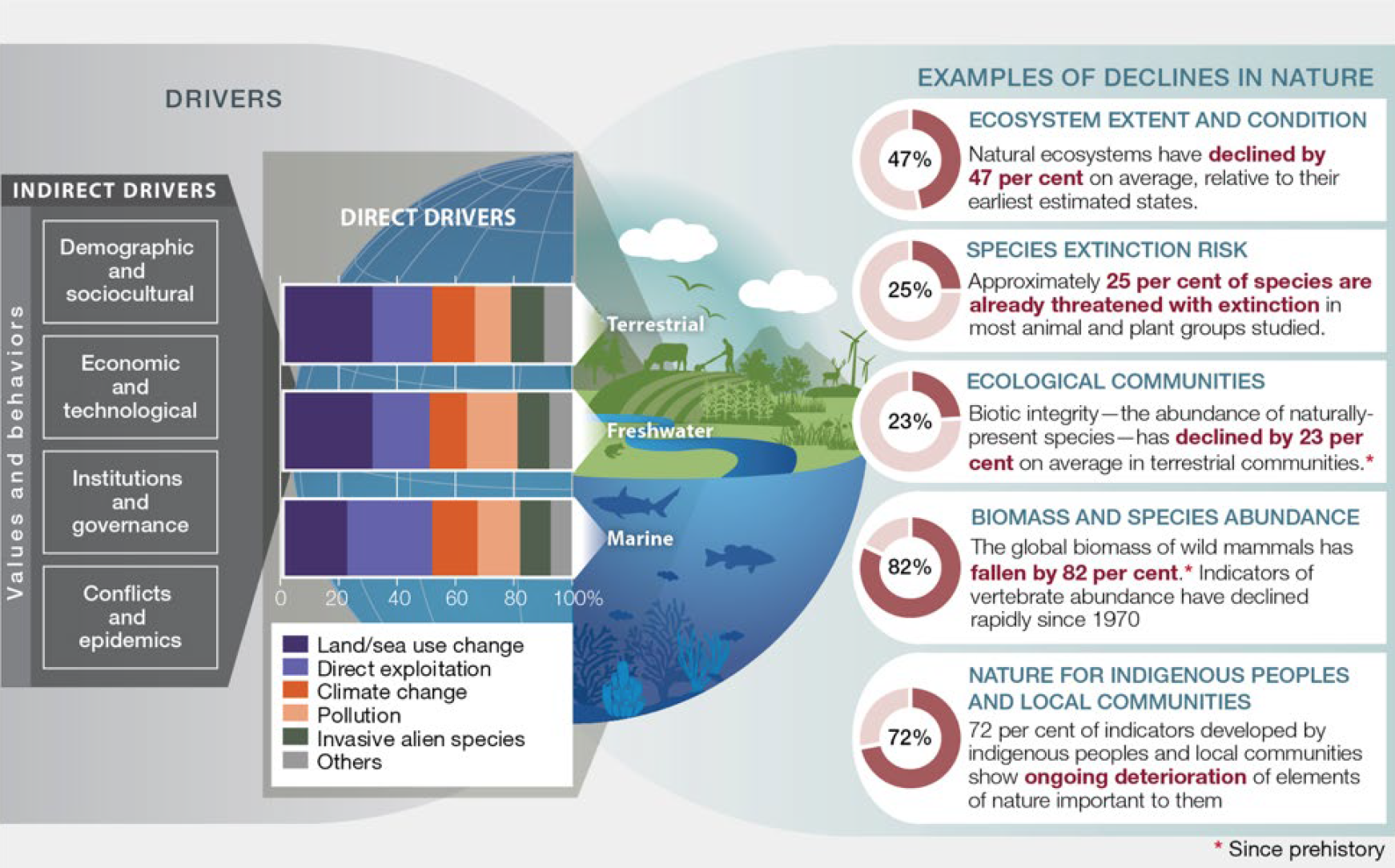
The IPBES Report ranks the five key drivers of freshwater ecosystem decline and biodiversity loss. The drivers are, in descending order: (1) changes in land use; (2) direct exploitation of organisms; (3) climate change; (4) pollution and (5) invasive alien species.
Agriculture is a key part of this picture: more than a third of the world’s land surface, and nearly 75% of freshwater resources, are now devoted to crop or livestock production. Agriculture can have numerous impacts on freshwater ecosystems, including fertiliser and pesticide pollution, habitat loss, water extraction, and alterations to waterways themselves.
The IPBES Report notes that greenhouse gas emissions have doubled since 1980, raising average global temperatures by at least 0.7 degrees Celsius. Climate change is predicted to be an increasingly powerful driver of ecosystem change and biodiversity loss in coming decades: shifting species distributions, changing phenology, altering population dynamics and the composition of species assemblages, as well as interacting with other drivers such as land use change.
2. Aquatic pollution is significant and widespread
Water pollution is one of the five key drivers of freshwater ecosystem degradation. Excessive or inappropriate application of agricultural fertilisers can lead to run off from fields entering freshwater and coastal ecosystems. Such pollution has caused more than 400 hypoxic ‘dead’ zones in coastal and transitional waters globally since 2008, affecting a total area of more than 245,000 km2 – an area larger than the United Kingdom.
The IPBES Report suggests that more than 80% of global wastewater is discharged untreated into the environment, causing nutrients, chemicals, bacteria, microplastics and many other pollutants to enter waterways. Such pollution ‘cocktails’ can have numerous, long-lasting effects on both human and non-human life.
Globally, plastic pollution has increased ten-fold since 1980. In freshwaters, ongoing research is showing how both plastics, and the microplastics they break down into, can have significant effects on aquatic life. A startling 300-400 million tons of heavy metals, solvents, toxic sludge and other wastes from industrial facilities are dumped annually into the world’s waters.
3. Wetlands are being lost at alarming rate
The IPBES Report states that indicators suggest that global ecosystem extent and condition has decreased, on average, by 47% compared to estimated ‘natural’ baselines. Many global ecosystems continue to decline in extent and condition by at least 4% per decade. It is estimated that ecological and evolutionary processes still operate with minimal human intervention in only around a quarter of terrestrial and freshwater ecosystems.
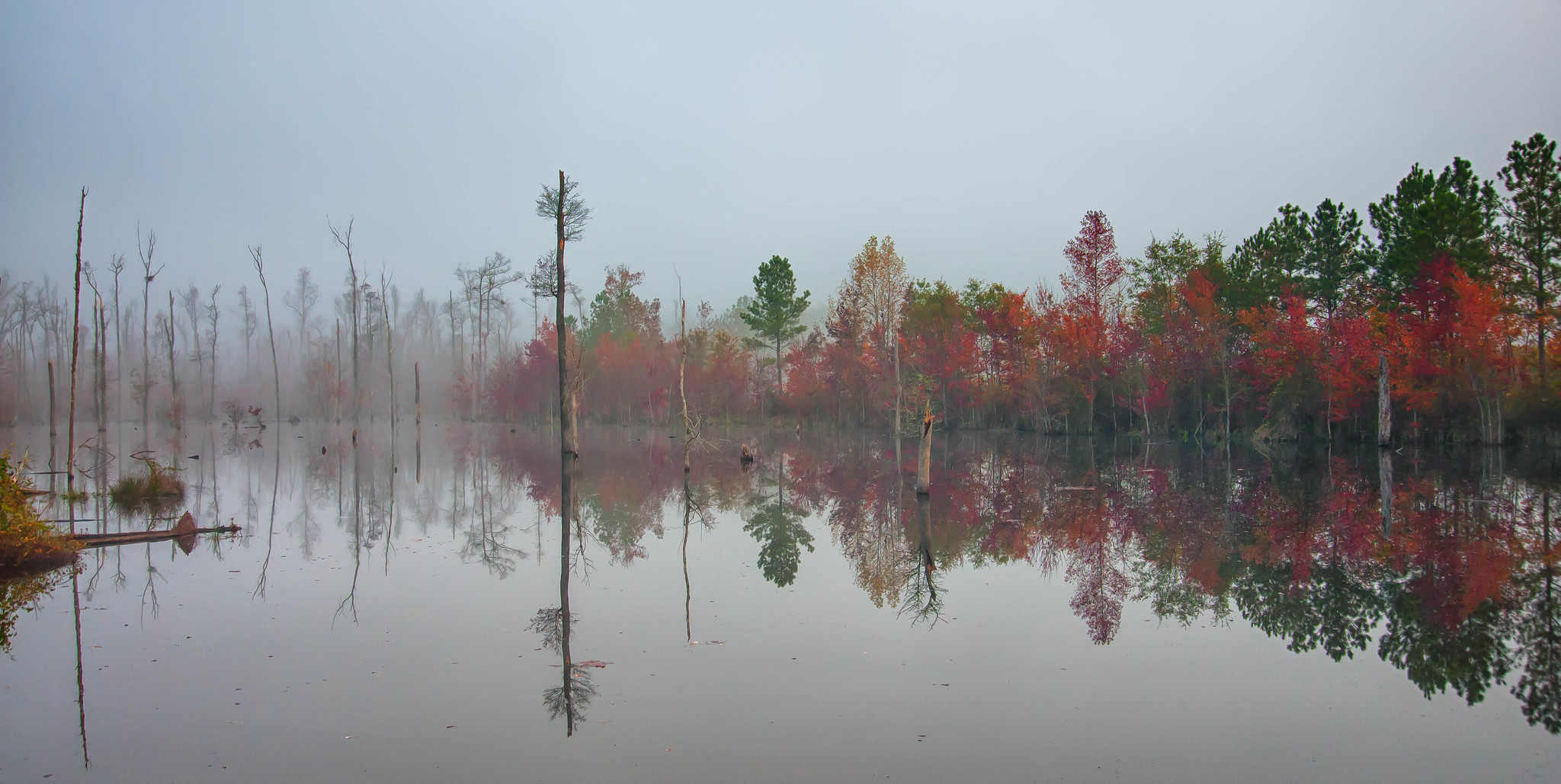
Wetlands are disappearing across the world at an alarming rate, the IPBES Report suggests. More than 85% of wetlands present in 1700 had been lost by 2000. The loss of global wetlands (0.8% per year between 1970 to 2008) is currently three times faster, in percentage terms, than global forest loss. Wetlands are extremely valuable ecosystems, not only providing habitat for both resident and migratory species, but also providing services such as water filtration and flood buffering to humans.

4. Amphibians are particularly threatened with extinction
The IPBES Report states that, on average, 25% of species across terrestrial, freshwater and marine vertebrate, invertebrate and plant groups that have been studied in sufficient detail are threatened with extinction.
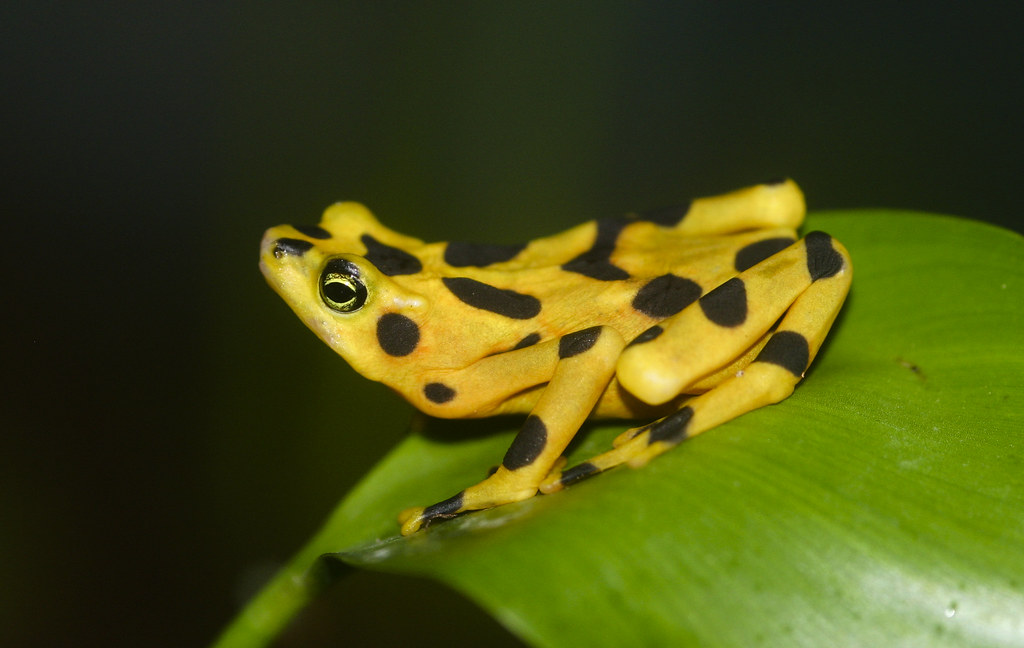
Amphibians are particularly threatened, with more than 40% of amphibian species – many of which rely on freshwater ecosystems – at risk of extinction globally. Amphibian species across the world are impacted by habitat loss, climate change, and the the spread of the deadly fungal disease chytridiomycosis. A 2011 study in Nature suggests that areas of greatest amphibian species richness are often the same areas subject to the greatest combined threat of habitat loss and climate change.
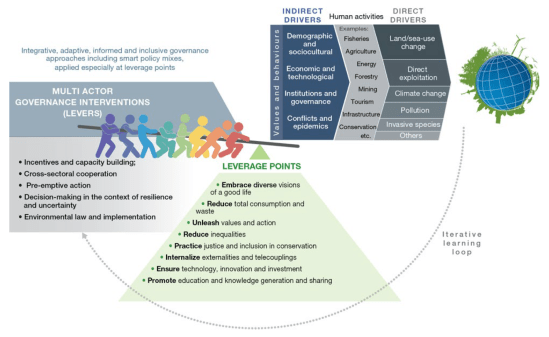
5. Governance options exist to protect and restore freshwater ecosystems
The IPBES Report emphasises the role of unsustainable human activities in driving global biodiversity loss, and highlights the need for widespread political and economic change to safeguard the future of life on Earth.
Freshwater systems are given significant attention, with the IPBES Report authors emphasising that sustaining freshwater in the context of climate change, rising demand for water extraction and increased levels of pollution requires significant cross-sectoral policy interventions.
Key policy priorities including: more inclusive water governance for collaborative water management; better integration of water resource management and landscape planning across scales; promoting practices to reduce soil erosion, sedimentation and pollution run-off; increasing water storage; promoting investment in water projects with clear sustainability criteria; and addressing the fragmentation of many freshwater policies.
+++
Acoustic monitoring of freshwater ecosystems: Costa Rica study reveals diverse underwater soundscapes
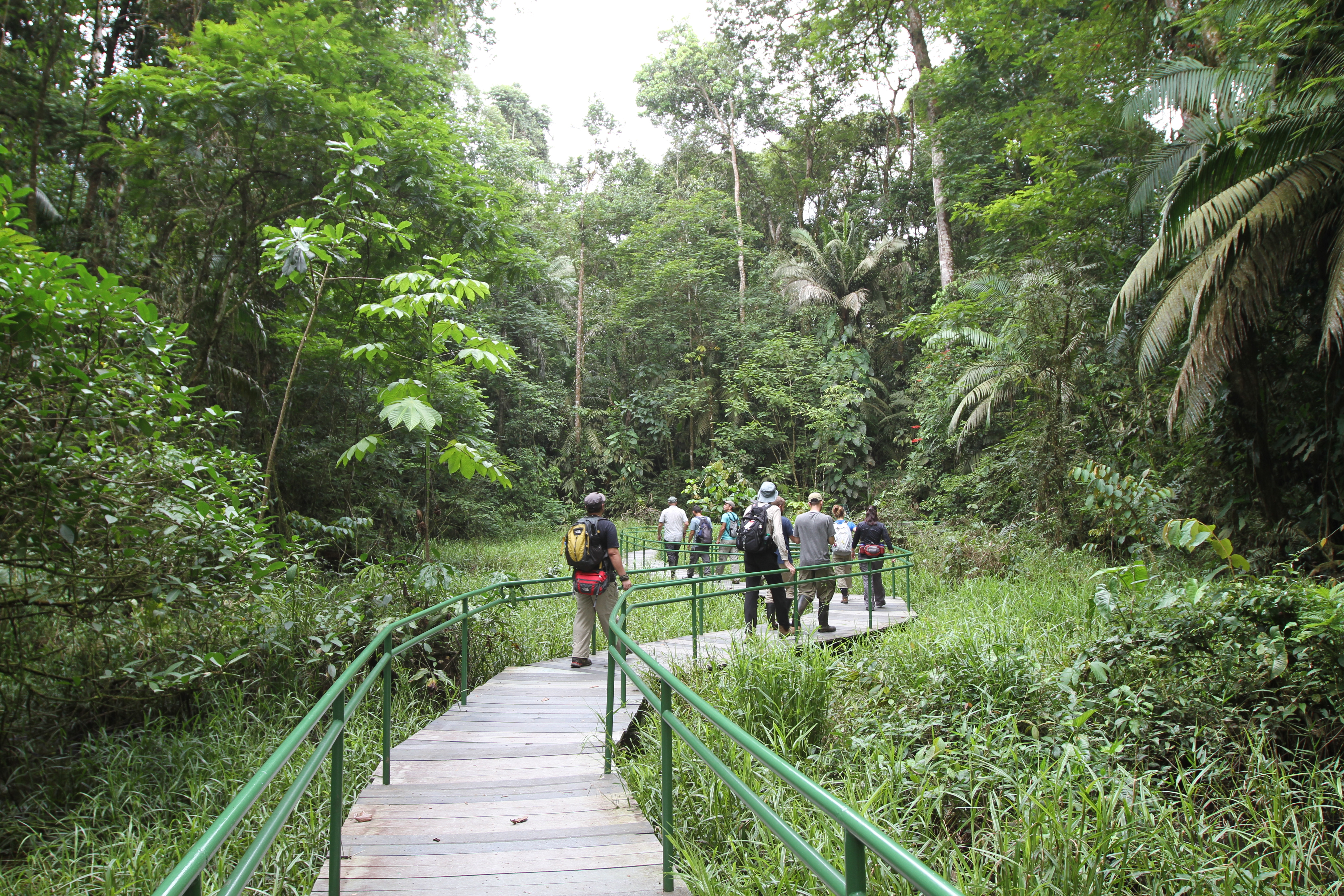
The study site – Cantanara Swamp at La Selva Biological Station in Costa Rica. Image: Ben Gottesman.
Freshwater ecosystems across the world are disproportionately threatened by human activity, causing ongoing losses of aquatic biodiversity globally. Many freshwater conservationists highlight the need for more comprehensive ecological monitoring and assessment programmes to better understand ecosystem changes, and to strengthen conservation initiatives accordingly.
An innovative new study seeks to address this need using an unusual approach: acoustic monitoring of freshwater soundscapes. A soundscape is the aural equivalent of a visual landscape: all the sounds we hear in a space (whether through our ears, or through recording devices), emitted by both human and non-human sources. Soundscapes are never static, often varying with the time of day, weather conditions and human activity.
Researchers from Purdue University, USA and Nanjing University of Science and Technology, China recorded the aquatic soundscape of a Neotropical freshwater swamp in Costa Rica for 23 days in 2015. They used special underwater microphones – known as hydrophones – to delve into the acoustic world of the freshwater wetland. They wanted to better understand how soundscape recording might enhance existing freshwater ecosystem monitoring and assessment initiatives.
The promise of soundscape ecology
Soundscape ecology is a growing inter-discipline, popularised by the sound recordist Bernie Krause and the ecologist Bryan Pijanowski (Director of the Center for Global Soundscapes who led this study), amongst others. By recording soundscapes, it may be possible to gain a picture of the biological community present in an area, and to assess animal activity patterns. Such approaches have numerous benefits to ecologists: being non-invasive, offering high temporal resolution, facilitating long-term sampling strategies in remote areas, and providing an archive of detailed digital data for long-term analyses.
However, soundscape recording approaches have – as yet – been largely confined to terrestrial (e.g. bats and birds) and marine ecosystems (e.g. whales and dolphins). The research team behind the new study – published in Freshwater Biology – suggest that soundscape recording can provide a valuable tool in difficult-to-access aquatic environments where visibility is limited, and sound is a principle means of animal communication.
Lead author Ben Gottesman, a PhD Candidate at Purdue University’s Center for Global Soundscapes, explains, “The sounds of freshwater habitats are still mostly a mystery, especially in the tropics. Rainforests are noisy places, filled with sounds of birds, bugs and amphibians. But what about underwater? Is there a similar sort of cacophony in the forested wetlands?”
Such sonic explorations aren’t solely driven by curiosity, but could also yield valuable environmental data, Gottesman suggests, “If you are like my skeptical grandpa, you may be wondering why we would care about aquatic soundscapes? The reason is because these sounds could unlock an efficient and effective way to monitor freshwater biodiversity, which is rapidly declining and can be difficult and costly to measure.”
The paper is part of a special issue of Freshwater Biology exploring the potential of acoustic methods for freshwater ecology. Other papers cover topics including acoustic monitoring of piranhas in Peru, lesser water boatmen in a Mediterranean pond, and toads in Northern France; and the possibility of ‘acoustic refuges’ in fish habitats.
Exploring the underwater sounds of a Costa Rica wetland
The research team submerged a hydrophone connected to an automated acoustic recorder in the Cantanara Swamp in Costa Rica – known for its richness of amphibian, bird, mammal and invertebrate species. Their equipment recorded 10 minutes of underwater sound each hour, and 1 minute each 15 minutes. This sampling strategy created 2,121 sound recording ‘snapshots’ from the swamp over the 23 day fieldwork period.
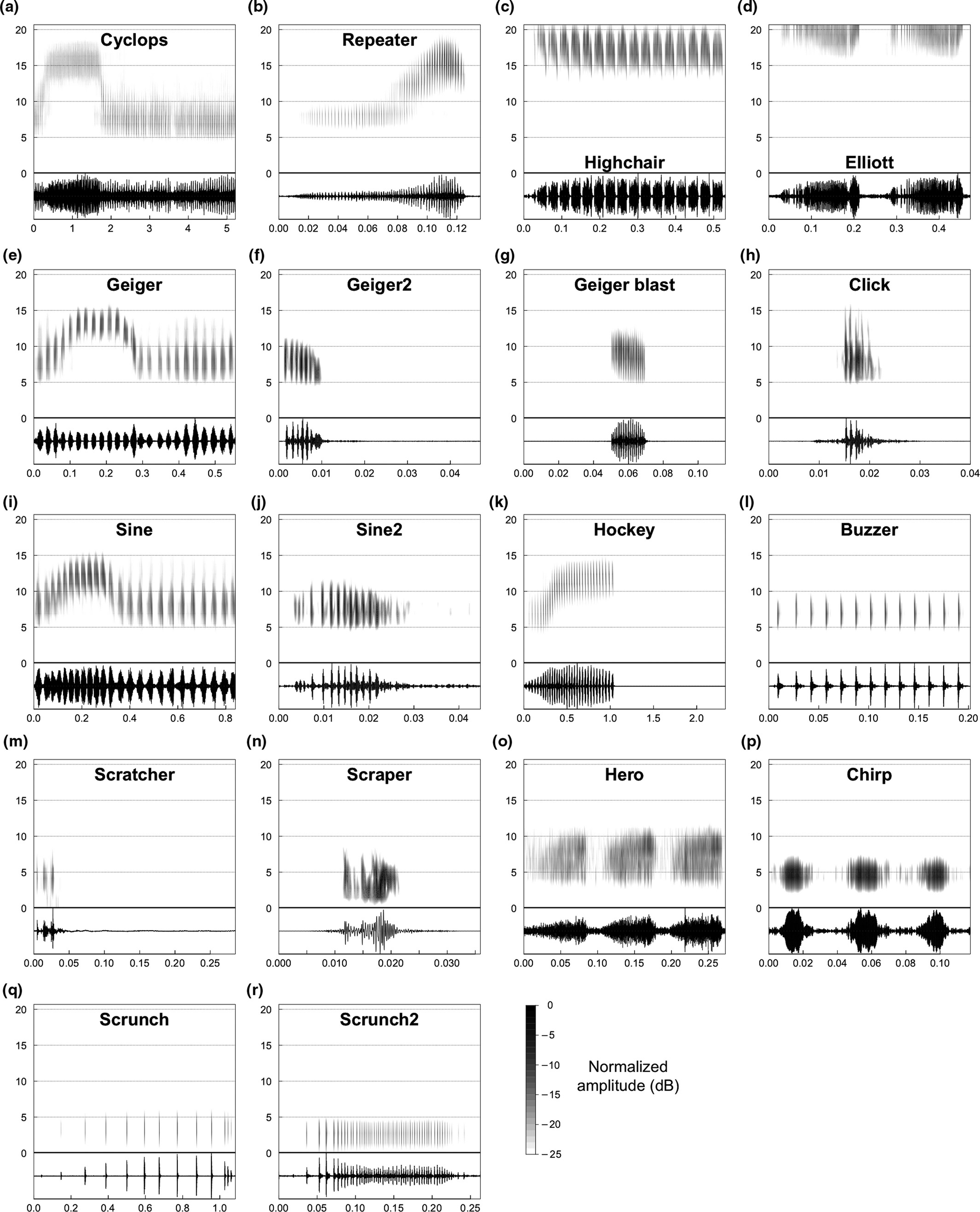
Ben Gottesman outlines the aims of the study, “Our goals were to assess the diversity of sounds within this wetland and also the temporal dynamics. We found rich diversity in sound types – eighteen in all.
“We were surprised by the daily soundscape dynamics. Whereas the day-time and night-time soundscapes were filled with the clicks, stridulations and buzzes of aquatic insects, dusk and dawn were notably quiet. We posited several explanations for these crepuscular lulls, but still do not have a definitive answer.”
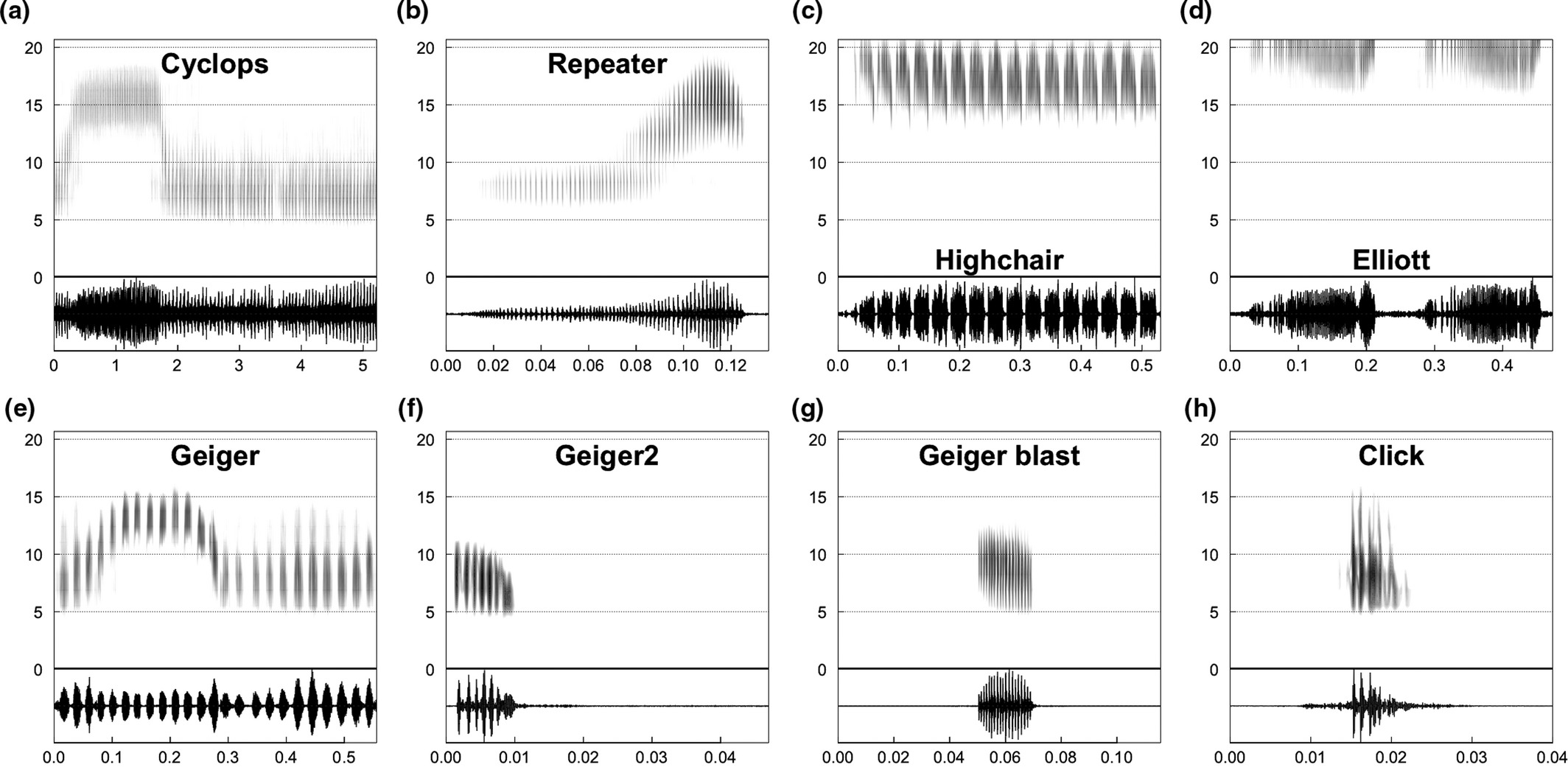
Spectrograms and oscillograms (below the spectrograms) of eight sound types from the study. Time (seconds) is on the x-axis and Frequency (kHz) is on the y-axis of spectrograms. See all eighteen sound types here.
Classifying underwater ‘sound types’ from the wetland soundscape
The eighteen sound types – creatively termed ‘Cyclops’, ‘Geiger’, and ‘Highchair’ amongst others – were classified based on their audible differences, and the visual patterns they generated in a spectogram. Spectograms are a visual representation of the spectrum of frequencies of an audio signal over time. The frequencies of the recorded sound types spanned a huge audio spectrum: from below 100 Hz (sub harmonic frequencies below human hearing) to above 22 kHz (higher than the sounds made by most mosquitoes).
Whilst the sound types have yet to be identified to their animal sources, the study shows that there was a rich diversity of underwater sounds emitted in the Cantarana Swamp, forming a soundscape with distinct daily dynamics.
“We are still in the early stages of classifying freshwater sounds and identifying the ecological factors that influence soundscape diversity and dynamics. Both of these are basic steps necessary for acoustic monitoring to become useful as a freshwater habitat assessment tool,” says Gottesman. “This study illustrates that healthy tropical wetlands like this one can contain rich soundscapes, and are therefore promising sites for acoustic monitoring.”
Acoustic monitoring: a valuable new method for freshwater science and conservation?
The study authors suggest that there are a number of necessary steps for freshwater acoustic monitoring and assessment techniques to become more widely used. These include ‘ground-truthing’ soundscape data with in situ field samples of biological and environmental conditions, and creating ‘field guides’ of the sounds emitted by individual species.
The authors state that for soundscape methods to be effective in freshwater environments, their measurements must have a strong positive correlation with at least one measure of biodiversity, such as species richness or abundance. Clearly, this is an emerging approach with significant potential for the monitoring and assessment of freshwater ecosystems globally.
“I hope that this work will inspire other freshwater ecologists working in the tropics to drop in a hydrophone. There is so much left to learn,” says Gottesman.
+++
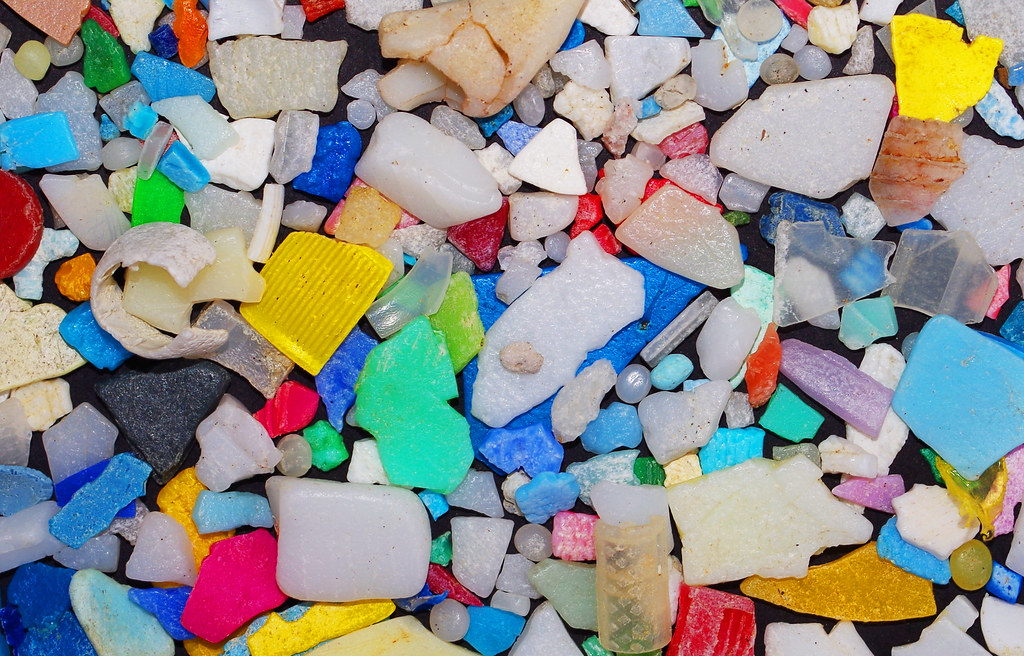
Microplastic fragments. Image: Wolfram Burner | Flickr Creative Commons
Plastic pollution is increasingly recognised as a major global environmental challenge, particularly in the world’s oceans. However, recent evidence shows that plastics are increasingly present in freshwater river systems, not only affecting the health and status of aquatic life, but also providing another source of plastics to marine environments.
A global initiative called the 100 Plastic Rivers Project investigates how plastics are transported and transformed in rivers and how they accumulate in river and estuary sediments, where they can leave a long-lasting pollution legacy.
The project has been working with scientists in more than 60 locations across the world to sample water and sediment in rivers for both primary microplastics (such as cosmetic microbeads) and secondary microplastics (from larger plastic items which have broken down, or clothing fibres).
By assessing freshwater and oceanic systems as interlinked, the aim of the project is to better understand how we might manage the global plastic crisis. 100 Plastic Rivers Project researchers suggest that our ability to assess global risks from microplastic impacts on environmental and public health is limited by a lack of knowledge of their transport, deposition and uptake through aquatic ecosystems. A key question here concerns the toxicological effects microplastics can have on aquatic food webs.
Project lead Professor Stefan Krause, of the School of Geography, Earth and Environmental Sciences at the University of Birmingham, UK, explains, “Even if we all stopped using plastic right now, there would still be decades, if not centuries-worth of plastics being washed down rivers and into our seas.
We’re getting more and more aware of the problems this is causing in our oceans, but we are now only starting to look at where these plastics are coming from, and how they’re accumulating in our river systems. We need to understand this before we can really begin to understand the scale of the risk that we’re facing.”
The 100 Plastic Rivers Project aims to provide an overview of the global distribution of microplastics in freshwater ecosystems, using newly-developed standardised sampling protocols and extraction methods. All of the data collected will be GPS and date tagged and uploaded into an open-access database for researchers to use. One of the key advances made by the project – funded by the Leverhulme Trust, the EU Horizon 2020 Framework, the Royal Society and the Clean Seas Odyssey – is a ‘toolkit’ of approaches for assessing microplastic pollution in river systems.
The initial results of the project are being presented this week at the General Assembly of the European Geosciences Union (EGU), in Vienna, Austria. They show a huge diversity in the types and sources of plastic found in selected river estuaries in the UK and France.
In a recent pilot study, the 100 Plastic Rivers team at the University of Birmingham collaborated with the Clean Seas Odyssey citizen science project to ‘field-test’ their sampling methods. Working with members of the public in river estuaries around the UK and France coast, the team gained an insight into the different types of microplastic accumulating in estuary sediment. This initial picture suggests that even in countries bound by strict EU water pollution policies, there are numerous sources of plastic contributing to high concentrations of microplastics in river systems.
The project is looking for more partners, so if you are currently working on microplastics or already work in a freshwater system and can collect sediment and water samples, the 100 Plastic Rivers team can send you a sample kit and standardised protocol. Samples can then be sent back to the University of Birmingham for analysis. We will follow the progress of the 100 Plastic Rivers Project, and report back on the findings of their important work in the future.
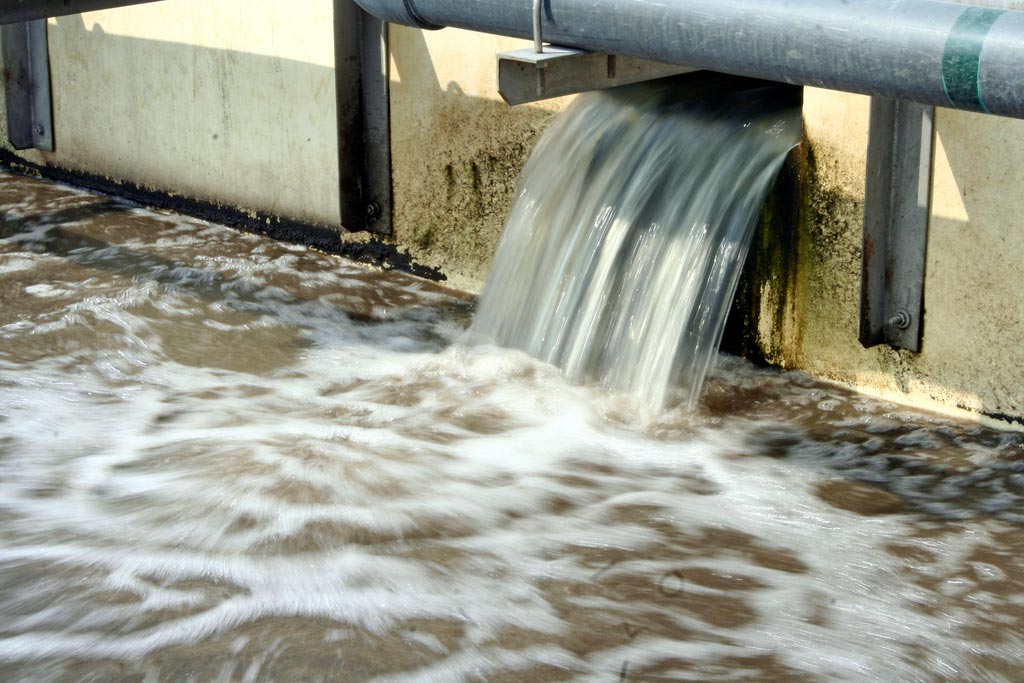
To meet the world’s growing water needs, we need to squeeze the most out of every drop, which means seeing wastewater as a valuable resource. Image Credit – Danilo Pinzon / World Bank (CC BY-NC-ND 2.0)
Re-published from our partners at Horizon: the EU Research & Innovation magazine.
+
Currently, water use risks leaving half the world facing severe scarcity by 2030 as demand outstrips supply. The linear way our societies and industries think about water – constantly extracting it for use and then dumping it back into oceans and rivers – is unsustainable in a world facing the challenges of a growing population and climate change.
“Natural water resources are not endless,” says Dr Christos Makropoulos, Associate Professor at the National Technical University of Athens, Greece, and the Chief Information Officer of KWR, a water research institute in the Netherlands. “They are very dependent on a stable climate, which is currently changing – and we’ve based our entire economy and livelihoods on them just being available whenever we need them.”
The United Nations believes there could be enough water to meet the world’s growing needs, but only if we find a better way to make the most of every drop. One way to do this is to think about water in terms of the circular economy – keeping water within social or industrial systems for as long as possible and simultaneously extracting additional value from it.
“If you manage to treat and reuse wastewater, and extract useful materials and energy, like nutrients that could become fertilisers for agriculture, or added-value compounds for the chemical industry – you are both protecting the environment and shielding your cities and industries from water scarcity,” says Dr Makropoulos.
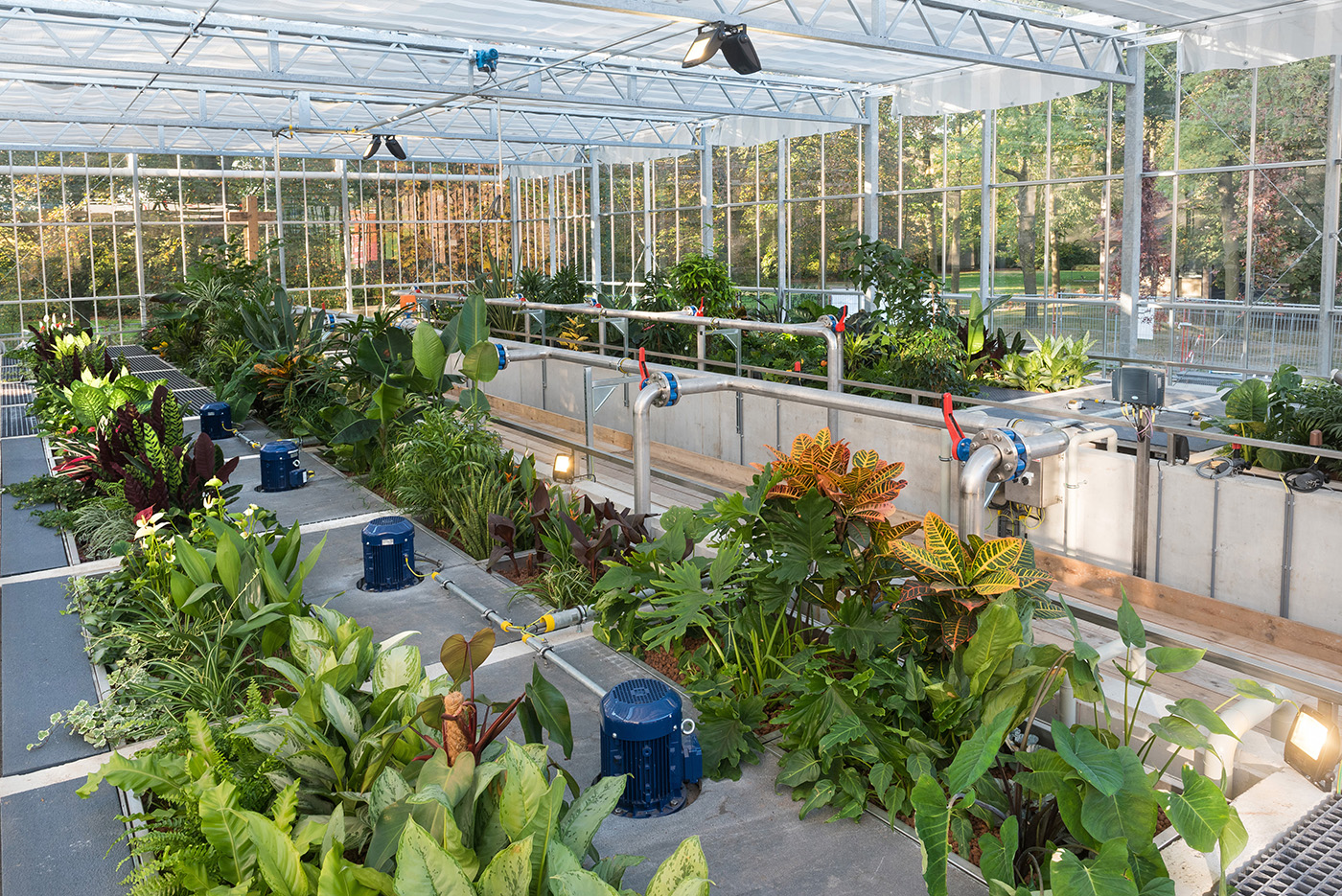
In the Netherlands, researchers are re-using wastewater from a brewery by treating it through an engineered ecosystem. Image credit – Christos Makropoulos
Water mining
He is the co-coordinator of NextGen, a project demonstrating different circular water technologies across ten different sites in Europe. In the Netherlands they are using engineered ecosystems to treat and reuse wastewater from a brewery. In the United Kingdom, they are developing technologies to extract methane gas from wastewater treatment plants so that it can be used as an energy source.
They even have a portable wastewater mining unit in Greece that extracts sewage, cleans it using tiny membranes, disinfects it and then irrigates public parks.
The technologies at all ten sites use water in ways that reduce the amount that needs to be extracted and therefore enhances regional resilience against water scarcity. Most of these solutions were developed prior to NextGen’s inception, but the project is helping to refine and advance the technology while also showcasing their potential on a bigger, more commercial stage.
“In each site we demonstrate a different set up that closes the cycle in terms of energy, water or resources, or sometimes a combination of all three,” says Dr Makropoulos. “Part of the ambition here is to use these sites as living labs, in other words as spaces where people – like schools, regional authorities or municipalities, or businesses – can visit and understand how they work.”
This is a crucial step in convincing local governments and businesses to change how they think about water – that it is a renewable resource rather than a commodity to be exploited. In the past, circular technologies struggled to scale up because regulators and the market did not appreciate their potential and failed to create the commercial environment needed to drive demand.
These ‘living labs’ are also a tool to help regulators see the need to change legislation, added Dr Makropoulos. Outdated definitions and regulations of waste are currently standing in the way of some resources extracted from wastewater entering the market or becoming cost-competitive.
According to Ilaria Schiavi, a resource management expert at IRIS, an Italian sustainable technology business, many European countries struggle to grasp how the circular economy works in practice.
“Not many countries have circular economy strategies and the ones that do are still figuring out how actions can trickle down to planning on the ground,” she says.
This could mean that opportunities to create systems that reduce a region’s water demand are missed in major development projects, which can lock areas into the current use-and-discard water culture.
“The approach to water has been that it will always be there and we don’t need to think about it when enlarging a city,” says Schiavi, who is also the project coordinator of Project Ô, which aims to demonstrate different technologies and approaches to circular water management. “But that’s not true anymore.”
Lower bills
The researchers are developing software to help local authorities and businesses analyse and understand the economic benefits of sustainable water strategies, such as the amount of money saved by rewarding those who use less water with lower bills. They are also demonstrating wastewater recycling technologies that ease the pressure on existing sewage treatment sites alongside strategies for using alternative sources of local water, like rain or from industrial sources.
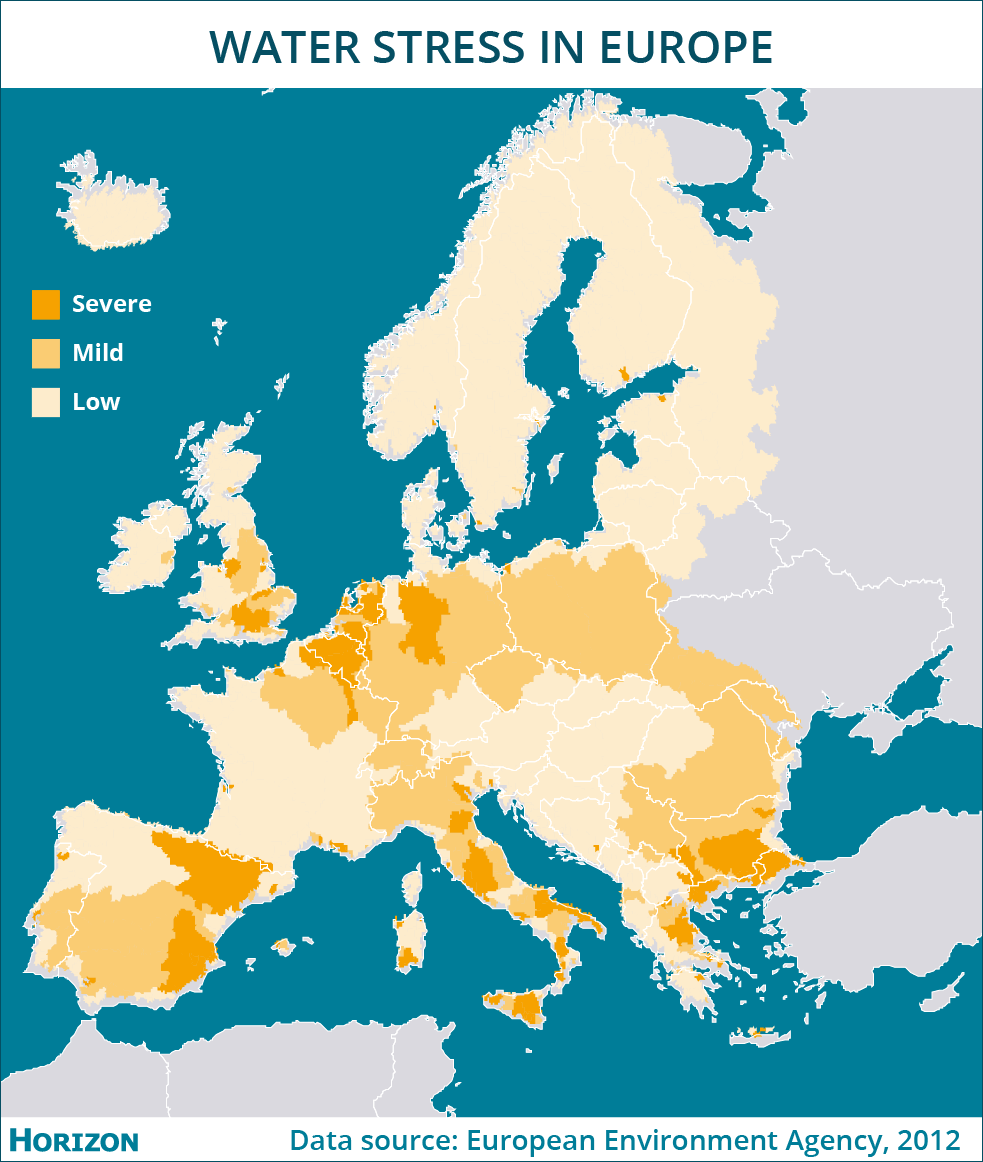
Water stress happens when demand for water exceeds the amount available of acceptable quality, and varies from region to region. Image credit – Horizon
Most existing water treatment plants were built to deal with domestic sewage, but with growing pollutants from nearby industry and changing habits in society, like the increased use of antibiotics, plants now have to cope with contaminants that they were not initially designed for. This cocktail of pollutants makes it more expensive to clean the water, but also harder to extract any resources that could be reused.
“We are trying to act on the contaminants close to the source of the contamination because they are concentrated enough to be effectively treated,” says Schiavi.
The project team has already helped install a treatment plant at an Israeli aquaculture research centre that would enable 100% recycling of the water, thus eliminating the need to take more out of the ocean.
The plant uses algae to treat the wastewater, which pulls nutrients out and these are then used for feeding locally farmed fish or as a feedstock for nutraceutical (dietary supplements) or other industrial applications. This circular approach also prevents the wastewater being dumped back into the environment, where it can trigger huge blooms of toxic algae that can suffocate other marine life.
“The best way to prevent waste is not to generate it, and that’s the same approach we want to create with wastewater,” said Schiavi.
+++
This post Mining sewage for fertilisers and energy to prevent water shortages was originally published on Horizon: the EU Research & Innovation magazine | European Commission.
Insect declines in Germany: can insect-friendly farming practices help reverse the trend?

A dragonfly holds tight to vegetation in strong wind. Dragonfly populations are declining across Europe. Image: Jean François Bonachera | Flickr Creative Commons
Insect conservation is currently a hot topic in Germany. A succession of scientific studies have documented insect population declines across species and habitats in recent years, a trend which is gaining increasing public and political attention. As is the case with global concerns over insect declines, the big question is: what can be done to reverse these negative trends?
Scientists document insect declines across Germany
A 2017 study found that flying insect biomass in Germany has dropped by 76% over the last 27 years. Researchers collected flying insects across different habitats within protected areas in lowland western Germany using mesh tent traps. They noticed a steep decline in insect biomass (the total weight of insects caught) in recent years, particularly around midsummer, where biomass has dropped by 82%. Writing in the journal PLOS ONE, Caspar Hallmann and colleagues attribute the declines (in part) to agricultural intensification, particularly intensive fertiliser and pesticide use, and habitat loss. Another PLOS ONE study in 2013 documented how the leaching of neonicotinoids (a common agricultural insecticide, linked to insect declines globally) led to significant declines in aquatic insect abundance. Many flying insects (such as dragonflies and damselflies) have significant aquatic phases in their life cycles, and water pollution is thus a key stressor on wider insect populations.
Another German study found that light pollution can be a cause of insect declines. Scientists from the Leibniz-Institute of Freshwater Ecology and Inland Fisheries (IGB) suggest that climate change, pesticides and land use changes alone cannot fully explain the decline in insect populations in Germany. “Half of all insect species are nocturnal. As such, they depend on darkness and natural light from the moon and stars for orientation and movement or to escape from predators, and to go about their nightly tasks of seeking food and reproducing,” explains Dr. Maja Grubisic, lead author of the 2018 study in Annals of Applied Biology. “An artificially lit night disturbs this natural behaviour – and has a negative impact on their chances of survival.” The researchers identify light pollution as an emerging stressor for insect populations, particularly in agricultural landscapes. They argue that light pollution should thus be considered as part of environmental conservation approaches designed to protect insect populations.
Earlier this month, a study found that over half of the c.500 wild bee species found in Germany are at risk of extinction, or already locally extinct – a trend driven by intensive agricultural practices. Researchers from the Ludwig-Maximilians-Universitaet (LMU) found that bee species which emerge in late summer struggle to find sufficient food in intensive agricultural landscapes. “According to our analysis, late-emerging species – Melitta tricincta, for instance – are increasingly at risk in agricultural areas, because they can no longer find sufficient food,” says Prof. Susanne Renner, lead author of the study. “In regions where the land is intensively farmed, the fields are virtually devoid of flowers at that time of the year. Bees that emerge in the spring can at least count on the availability of plants such as oilseed rape and the presence of blooming orchards.”
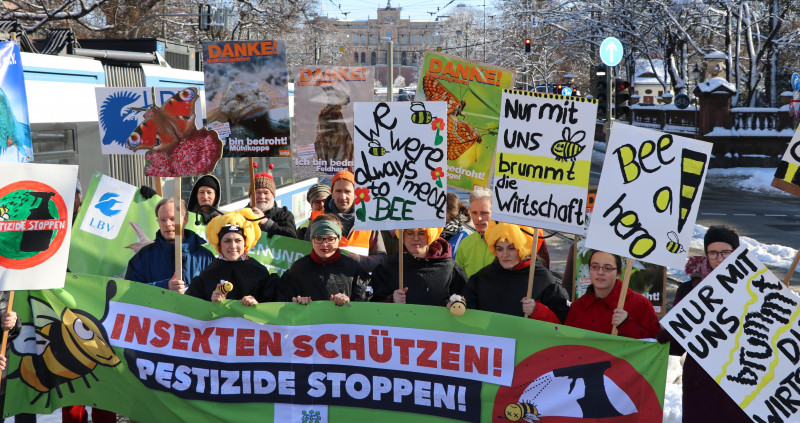
Supporters of the ‘Save the Bees’ campaign in Bavaria, Germany. Image: Friends of the Earth
Public and political appetite for positive change
Awareness of such insect declines has reached public and political realms recently. Last month, environmental groups behind the ‘Save the Bees’ campaign in Bavaria, southern Germany secured the signatures of around 1.75 million people (nearly 20% of eligible Bavarian voters) in a petition to radically improve the environmental impacts of farming methods in the state. The petition asks that 20% of land is made ‘bee-friendly’ by 2025, and 30% by 2030. This shift could be made possible by a shift to more organic farming approaches, campaigners suggest. The petition states that 10% of green spaces in Bavaria should be turned into insect-friendly flowering meadows, and that rivers and streams should be buffered from pesticides and fertilisers through the protection of riparian strips of natural vegetation along their banks.
The ‘Save the Bees’ campaign – which involved a series of high-profile, carnival-like protests in the run-up to the petition deadline – is designed to change and strengthen the existing Bavarian Nature Conservation Act. But the ‘Save the Bees’ campaign is not just about bees. Last month, Agnes Becker, the leader of the Bavarian Ecological Democratic Party (ÖDP), which backed the petition, told a television debate, “It’s not so much about the honey bee as it is about a very long and ever-growing list of threatened species of animals and plants, but the bee is our mascot, our symbol.”
The referendum result has prompted a series of round-table meetings between the environmental groups behind the petition, and the Bavarian Farmers Association which contests some of the proposed measures. The Association argues that the petition’s demands of de-intensified farming methods are restrictive and unworkable. The latest round-table, held last week, prompted four working groups – ‘agricultural landscapes’, ‘forest’, ‘waters’ and ‘settlements/urban areas’ – to be established whilst the state parliament decides whether to enforce the petition demands in law.
Meanwhile, the Social Democrat (SPD) Minister for the Environment Svenja Schulze has proposed an ‘action plan for insect protection’ across the whole of Germany. The action plan, which was originally proposed to the German cabinet in October 2018, is under consultation, and could mobilise €100 million of funding each year for insect conservation in Germany. Schulze says, “Stopping the decline of insects is a key political task of our time.” Depending on the progression of negotiations, the action plan could be adopted by the government as early as next month.
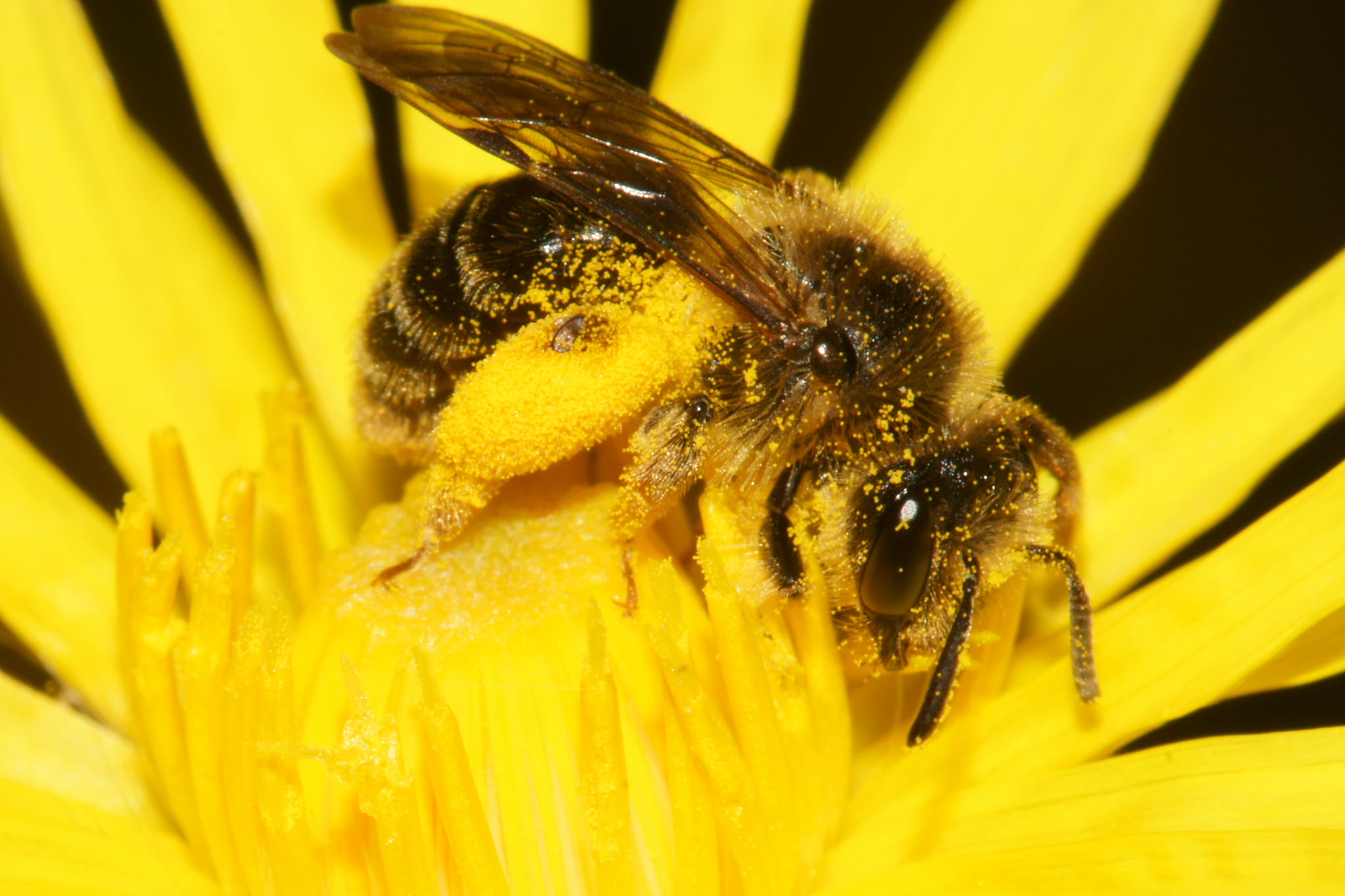
Bees are important pollinators of flowers and crops. Image: BrambleJungle | Flickr Creative Commons
Could ‘insect-friendly’ agriculture halt insect population declines?
What these scientific findings and political debates have in common is a concern with making German agricultural practices more ‘insect-friendly’. Insects, of course, provide important ecosystem services, particularly pollination, in many agricultural landscapes. The German Association for Environmental Protection and Conservation (BUND) estimates that the economic value of the pollination services provided annually by insects in Europe is more than 14 billion euros.
A key question, then, is how to balance insect conservation (and that of biodiversity more widely) with the economic and food security concerns of modern agricultural production? Are shifts to lower-intensity, organic-led farming approaches – as advocated by the ’Save the Bees’ campaign – realistic in practice?
A recent policy report from the Ten Years For Agroecology (TYFA) project suggests that they might – but that such a shift requires significant changes to public eating habits. Published in September 2018, the TYFA report uses computer modelling to explore the possibilities of ana Europe ‘agro-ecological’ food system for 2050. An agro-ecological system is based on “abandoning pesticides and synthetic fertilisers and redeploying extensive grasslands and landscape infrastructures,” in order to protect biodiversity and mitigate climate change effects, whilst still providing sustainable food sources for European populations.
Authors Xavier Poux and Pierre-Marie Aubert report that whilst such agro-ecological measures would likely lead to a decline in agricultural production of around 35% across Europe, this would not be an issue if public eating habits shifted away from meat towards plant-based diets. They suggest that whilst such a scenario represents a ‘utopia’, their study shows that it is possible to reduce agricultural carbon footprints and restore healthy natural environments, whilst feeding European people healthily. In other words, whilst their vision is unlikely to be played out in practice, perhaps alternative approaches to European agricultural practices are realistic, if there is sufficient public and political will.

Sympetrum dragonfly in flight: aquatic ecosystems are important for many flying insect populations. Image: Artur Rydzewski | Flickr Creative Commons
The wider landscape: what about aquatic environments?
What do these issues and debates have to do with aquatic environments? In short: a lot. As noted before, many flying insects have significant aquatic stages (e.g. as larvae), and often require high water quality to successfully hatch. More broadly, terrestrial and aquatic environments are inherently linked across wider landscapes, and biodiversity losses on land are often accompanied by parallel losses in water, which can happen at a great rate and magnitude. The EU MARS project found that the impacts of intensive agriculture – pollution, habitat loss and fragmentation, water abstraction – can are often some of the most important stressors on aquatic ecosystems.
As aquatic scientist Dr Sebastian Birk from the University of Duisburg-Essen puts it, “The bigger issue is ‘how do we want to live in the future’?’ Insect declines and aquatic ecosystem degradation are just indicators of how we treat our natural environments. Ultimately, pollutants often end up in the gutter, and then our rivers and lakes. So what you do on the land will affect the waters, too.”
We will continue to follow the developments in Germany and report back over the coming months.
What does the future hold for European rivers and lakes?
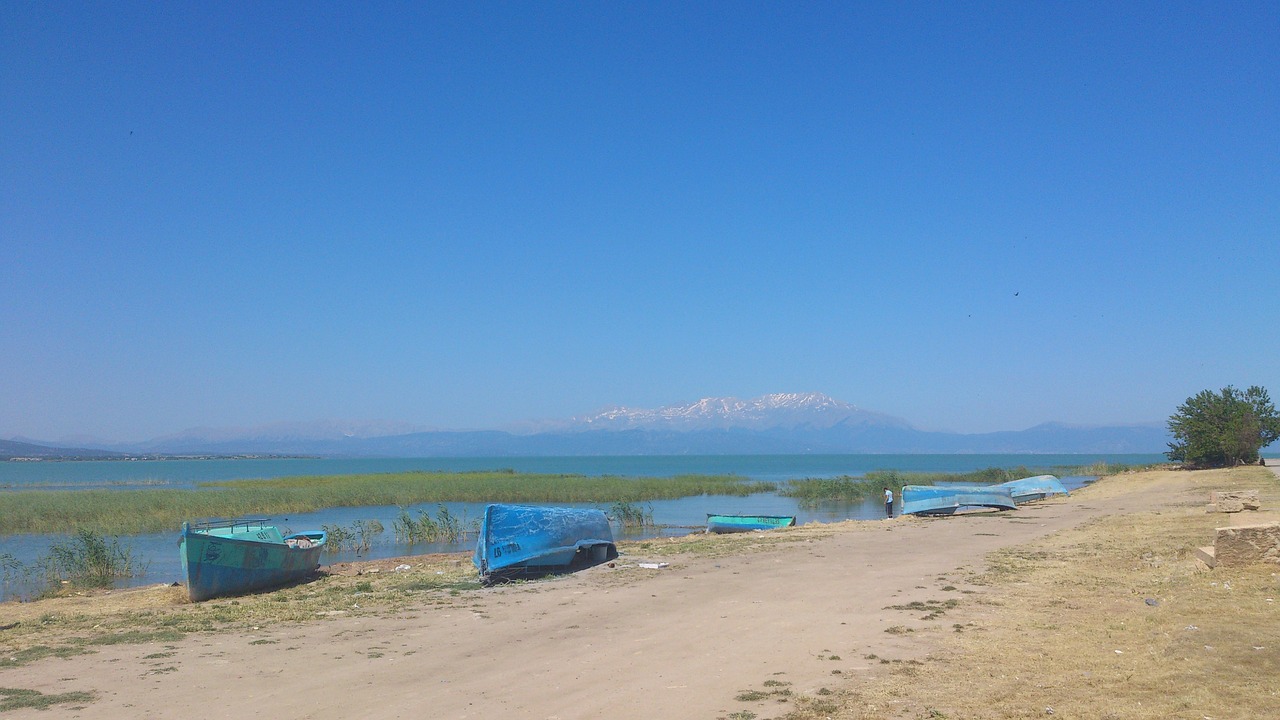
Lake Beyşehir, one of the study locations for future environmental storylines in the study. Image: Pixabay | Creative Commons
Can we predict what the future holds for European rivers and lakes? How might changes to socio-economic conditions alter future trajectories for the health and status of surface waters across the continent? These are the questions at the centre of a new study led by Leoni Mack, from the University of Duisburg-Essen in Germany.
Funded by the EU MARS project, Mack and colleagues developed computer models to project how European surface waters are likely be impacted by different climatic, land use, management and development trends in the future. Their results suggest that stronger environmental policy and management are needed to achieve good ecological status in European surface waters under future conditions.
However, if such measures are not implemented, the linked pressures of human activity and climate change are likely to cause ongoing reductions in ecological status across the continent. Their results suggest that the impacts of pressures across Europe are likely to be more severe in rivers than lakes.
Key pressures in the future are likely to be similar to today: nutrient inputs from agriculture, land use changes (e.g. riparian zone development), poorly managed water abstraction, and growing climate change effects (e.g. water temperature increases; changes to flood and drought patterns).
There is likely to be geographical variation in how these pressures affect freshwaters, the study suggests. In Continental and Atlantic regions of Europe, land use changes are likely to be the key driver of environmental pressures, whilst in Mediterranean regions, the effects of climate change are predicted to dominate. In more northerly Boreal regions, the combined impacts of land use and climate change are predicted to drive environmental pressures, reflecting a likely trend of agricultural activities shifting northward with a warming climate.
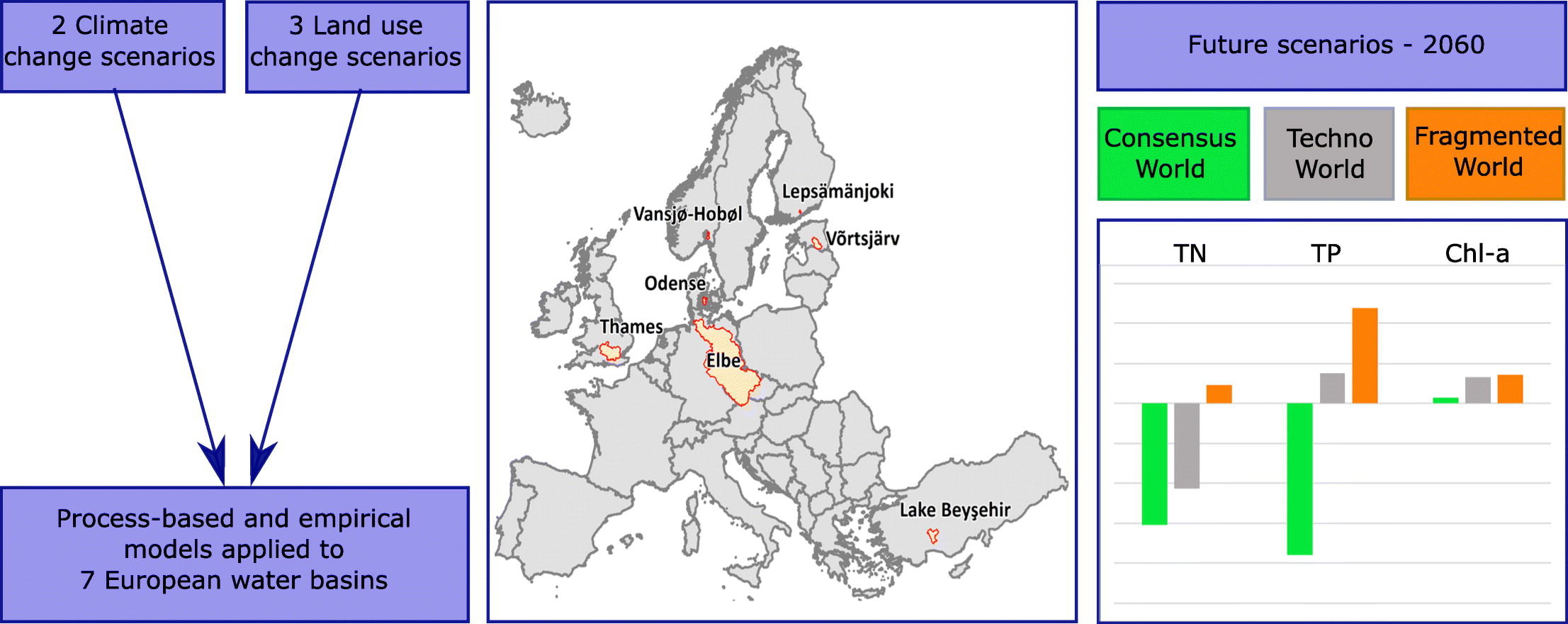
Graphical abstract of the study showing: methods, map of study basins, and results (TN= nitrogen, TP = phosphorous, Chl-a= algae growth). Image: Mack et al 2019.
Three lake and four river basins were modelled in the study, representing a number of typical European environmental conditions and human pressures. Nitrogen, phosphorous and chlorophyll a (a proxy for algae growth) dynamics were modelled to two time horizons – 2030 and 2060. These dates were chosen to give a picture of how alterations to current environmental policy (e.g. the Water Framework Directive) could have short-term impacts in the next decade (2030), and how climate change effects might be experienced over a longer term (2060).
Three storylines describing land use, management and development were assessed: ‘Consensus’, ‘Techno’, and ‘Fragmented’. Each storyline describes possible political, economic and cultural trends which to different combinations of drivers and pressures across Europe, using Shared Socio-Economic Pathway projections of socio-economic trends and IPCC Representative Concentration Pathway projections of climate change. The storylines are thus broad-brush forecasts of possible future trends across the continent, developed to help guide environmental policy and management decisions.
In Consensus World, future development in Europe follows similar patterns to the recent past, and environmental conservation and policy is supported. The world tends towards being relatively politically stable (Shared Socio-Economic Pathway 2), alongside a stablising and relatively low level of climatic change (Representative Concentration Pathway 4.5).
In Techno World, economic growth is strong, led by technological innovation, and human resource consumption is high. Ecosystems are valued largely for the benefits they provide to humans, and environmental protections are gradually rolled back over time in favour of promoting economic growth. High greenhouse gas emissions and rising global temperatures (Representative Concentration Pathway 8.5) are present, and there is a strong, carbon-based global economy (Shared Socio-Economic Pathway 5).
Fragmented World envisions a future with rising carbon emissions and significant climatic change (Representative Concentration Pathway 8.5). Technological developments are slow, and fossil fuel dependence is high; international cooperation is poor and significant pockets of poverty persist (Shared Socio-Economic Pathway 3). There is poor trans-national co-operation on environmental protections. Current environmental policy commitments are not met, or rolled back over time.
The authors highlight that different management approaches could have positive ecological impacts in each storyline. In Consensus World, present-day measures such as riparian shading had a positive impact on ecological status, whilst in Techno World, technological improvements such as increasing wastewater treatment efficiency were predicted to be key. In Fragmented World, agricultural extensification (i.e. the reduction in fertilisers and pesticide use per land area) was highlighted as a means of reducing nutrient pollution and habitat change.
The study, published in Science of the Total Environment, is rich in detail of how these potential political, economic, climatic and environmental trajectories might interact with freshwater ecosystems in the future. Overall, the results highlight the need for continued high ambitions for freshwater policy and management, and the political and public will to implement it for decades to come. The study emphasises the need for locally-appropriate targeted freshwater management measures to mitigate the effects of environmental pressures, whichever storyline(s) might develop in the future.

Hampstead Pond No.1 in North London. Image: Paul Robertson | Flickr Creative Commons
Microplastics dating back to the 1950s have been found in a sediment core taken from the lake bed of Hampstead Pond No.1 in London, UK. Plastic pollution is frequently featured in the news as a contemporary, oceanic environmental problem. However, a new open-access study by Dr. Simon Turner from University College London and colleagues provides evidence of long-term plastic accumulation in urban freshwater environments.
Hampstead Pond No.1 is one of thirty ponds on Hampstead Heath in North London, dug in the 17th and 18th centuries as reservoirs. Other ponds on the Heath are open to outdoor swimmers, anglers and model boating enthusiasts. However, despite their location in a cherished area of urban green space, the new study demonstrates that the ponds have been receiving plastic pollution for more than 60 years.
Plastic in UK lakes: a growing issue of concern
The impetus for the study, published in the Journal of Paleolimnology, arose from previous research carried out between 2008-2012 on other UK lakes. Dr. Turner explains, “At Edgbaston Lake, Birmingham we observed a lot of litter in the reed-filled margins but less in the deep water – and like some of the beach clean ups, some of the plastic waste, including crisp packets, drinks bottles, especially noticeable by their packaging design and best-before dates, had clearly been hanging around for a considerable period of time.
“What we realised was the amount and type of litter accumulating in lakes, especially plastic waste, had not really been assessed, especially when compared to marine habitats and simple questions like ‘how long has plastic been accumulating in lakes’ and ‘has plastic litter in lakes changed over time’ remained largely unanswered.”
In 2015, Rebecca Vaughan – at the time a UCL undergraduate – carried out a study of Edgbaston Lake to quantify just how much plastic waste was present in the lake sediment. Dr. Turner then built on this study to explore whether it was possible to identify microplastics (less than 5mm in diameter) in a dated lake sediment core. He and his research team chose an archived sediment core from Hampstead Pond No. 1, as it was accurately dated, large in volume, and surrounded by urban spaces which could provide sources of plastic pollutants.
As there is no long-term monitoring of plastic waste, such historical cores can provide a picture of plastic pollution through time. Plastics generally degrade very slowly – a process which has been estimated to take hundreds of years – and so are likely to have built up in sediments in many freshwater environments. However, historical lake sediment cores had not been analysed for plastic pollutants prior to this study.
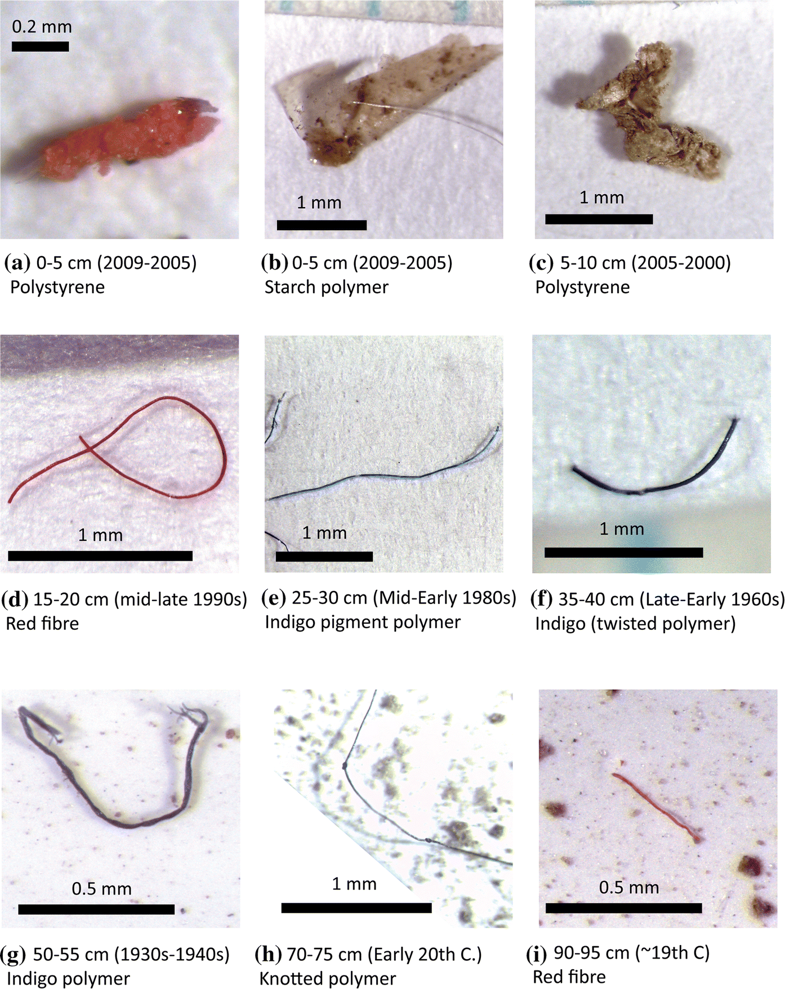
Selected microplastic particles and fibres found in HAMP1 sediment core from Hampstead Pond No.1. Image: Turner et al (2019)
Microplastics in Hampstead Pond No.1
Dr. Turner and colleagues found a range of microplastic fibres and fragments in the Hampstead Pond No.1 sediment core. The fibres – of varying colours – are likely to be derived from the breakdown of synthetic textiles, and released into the lake from wastewater and sewage (although these inputs are relatively low in the pond), or via clothing, textiles, swimwear or fishing line. Microplastic fragments in the core were all orange foam polystyrene particles, ranging from 0.2–2mm in size.
Whilst there are some fibres in the core which may date from the late 19th and early 20th centuries, the majority of the microplastics found in the study date from the 1950s onwards. The accumulation rate of microplastics in the lake sediment was at its highest in the decade before 2009, when the core was taken.
Dr. Turner explains, “Like other contaminants released into aquatic systems, the composition and abundance of microplastics looks to have varied over time, as a result of changing industrial and domestic sources. We only have really started to quantify the inputs, transport and burial processes of microplastics in lakes, but this paper and others similar, are a step in understanding the global movement and accumulation of plastic waste in aquatic systems.”

Reflections from neighbouring houses on Hampstead Pond No.1 after dark. Image: Chris Guy | Flickr Creative Commons
Microplastics and freshwater conservation
Microplastics can be ingested by freshwater organisms, as this recent paper by Dr. Fred Windsor and colleagues shows, potentially leaching harmful contaminants and additives into their bodies, or altering their physiology. As a result, understanding the transmission of microplastics through freshwater food webs – and their subsequent burial in sediments or transport elsewhere – is a key topic for research.
Dr. Turner says, “To get low density microplastic waste into benthic sediments we have to have a mechanism for accumulation and sinking – be it biofouling or ingestion and burial with organisms. Considering how resilient to degradation plastics were designed to be, my thoughts are that once in a lake, microplastics probably go through quite a few organisms before ultimate burial.”
Microplastic research in freshwaters is a growing area of scientific interest, and this paper contributes significantly to the field by showing that historical patterns of plastic pollution can be found in lake bed sediment cores. Clearly, plastic pollution is a key – if under-communicated – topic for freshwater conservation and policy. As Dr. Turner puts it, “Plastic waste in the environment – it’s not all about the oceans.”
Read the journal article
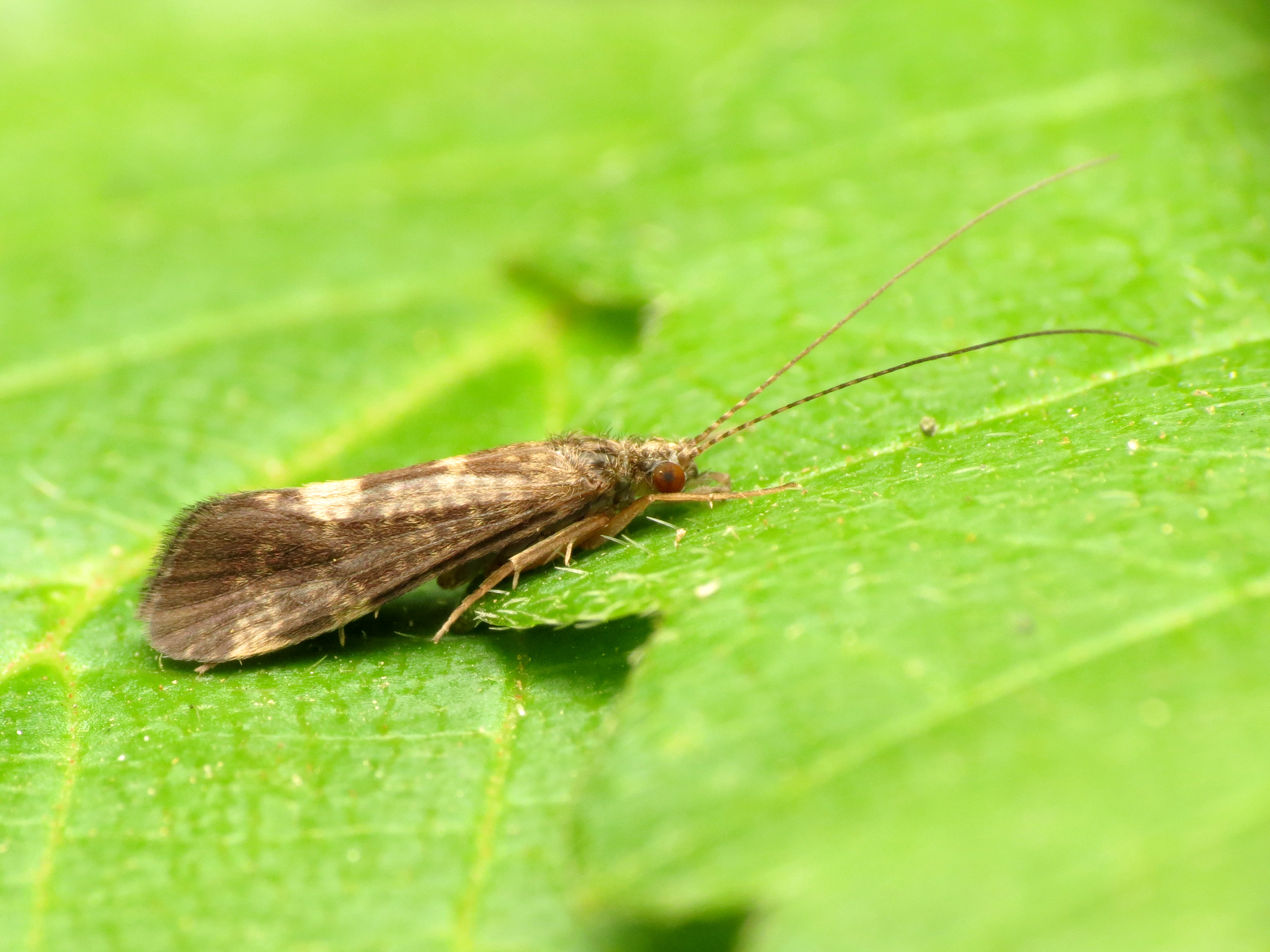
68% of caddisfly species populations are declining – more than any other order of insects. Image: Katja Schulz | Flickr Creative Commons
Global insect biodiversity is in dramatic decline according to a new review of existing scientific evidence. Aquatic insects are particularly threatened, with mayfly, dragonfly, stonefly and caddisfly species all showing significant declines over recent years.
Population declines of terrestrial and aquatic insects – in 41% of all species – are roughly twice those estimated for other vertebrates (mammals, birds and amphibians – 22% of species). The total global mass of insects is falling by an average of 2.5% each year, the study suggests, with potentially severe impacts on ecosystems and their services – such as pollination – globally.
“As insects comprise about two thirds of all terrestrial species on Earth, the trends confirm that the sixth major extinction event is profoundly impacting life forms on our planet,” say study authors Francisco Sánchez-Bayo and Kris Wyckhuys.
Writing in the journal Biological Conservation, the authors reviewed 73 historical scientific reports of long-term insect population dynamics from across the world. They selected studies which considered all species in a taxon (e.g. family or order) within a large area (i.e. a region or country), or smaller areas intensively studied for more than 10 years.
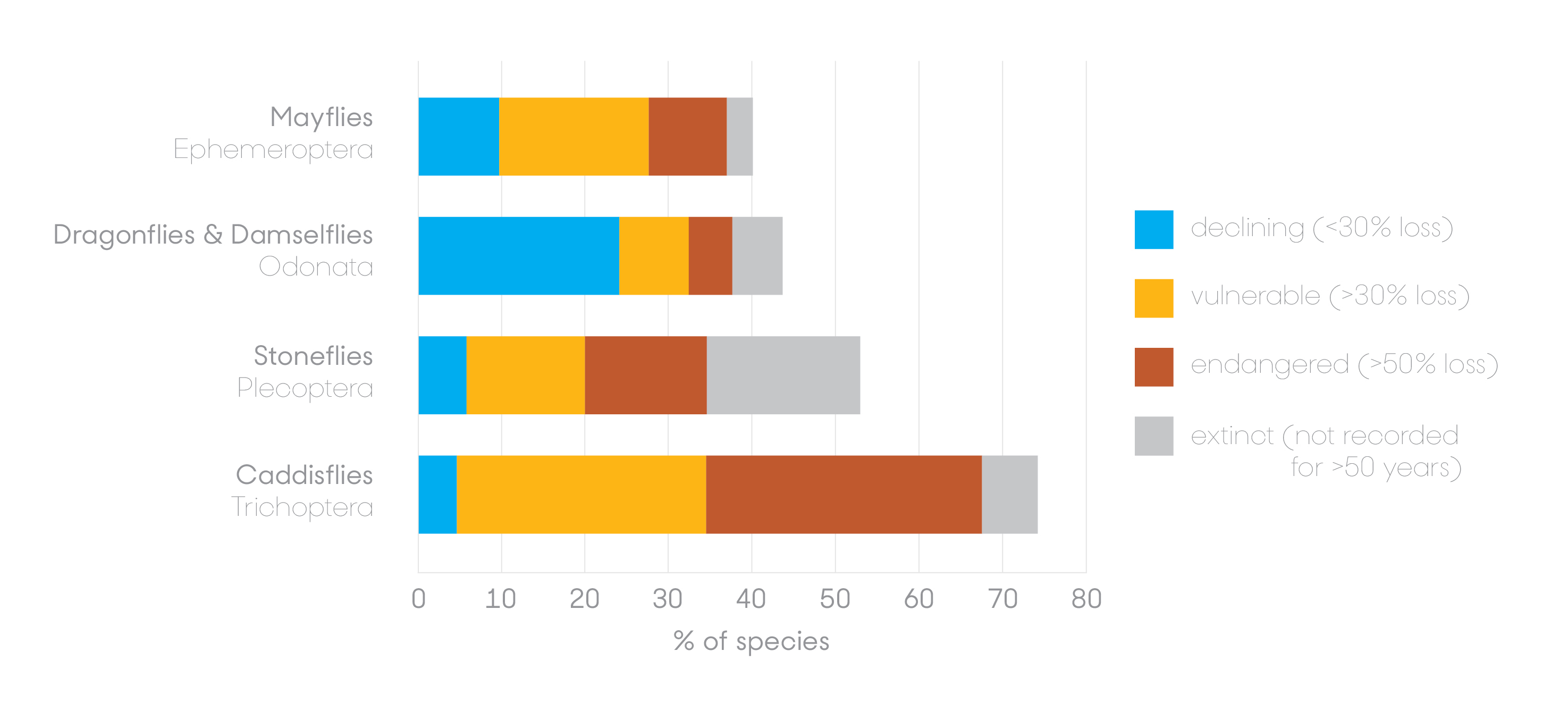
Percentage of insect species in decline or extinct in four aquatic orders. Graphic redrawn from Sánchez-Bayo and Wyckhuys (2019: Fig 3b)
Freshwater species
Four orders of freshwater insects are addressed in the paper: mayflies (Ephemeroptera), dragonflies and damselflies (Odonata), stoneflies (Plecoptera) and caddisflies (Trichoptera). As most freshwater insect species have relatively inflexible life cycles, which makes them particularly sensitive to environmental pressures, the authors say. As a result, insects are vulnerable to pressures such as flow alterations, habitat fragmentation, pollution and invasive species.
The study suggests that – like for vertebrates – declines of aquatic insects are higher than those of their terrestrial counterparts (see graphics above and below). The authors estimate that 33% of aquatic insects are threatened with extinction, compared to 28% of terrestrial taxa.
‘Habitat generalist’ aquatic insects – which can occupy a number of different habitats – have been particularly affected, with major losses in all four orders of insects in large river systems across Europe and North America. However, insect communities have generally remained stable – or shown lesser declines – in near-natural mountain streams and lakes.
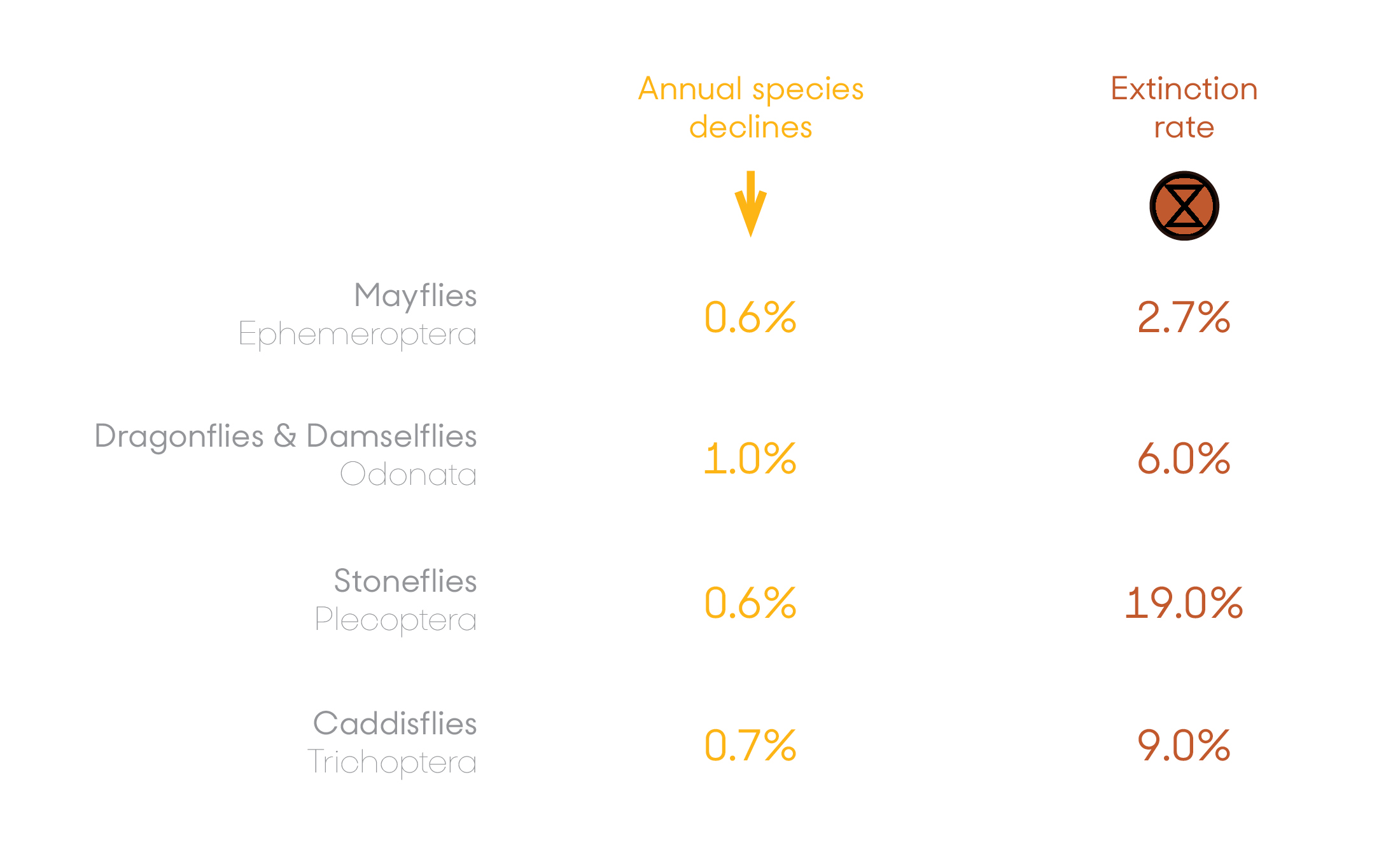
Annual species declines and extinction rate for four aquatic insect orders. Extinction rate denotes the percentage of species not observed in >50 years. Graphic redrawn from Sánchez-Bayo and Wyckhuys (2019: Table 1)
Drivers of insect decline
Dr Sánchez-Bayo and Dr Wyckhuys identify four key drivers of global insect population decline: habitat loss, pollution, biological factors and climate change. For aquatic species, they highlight pollution as the main driver of population declines. Common sources of aquatic pollution include fertilisers and synthetic agricultural fertilisers, sewage and landfill leaching from urban areas, and industrial chemicals from factories and mining sites. The authors highlight the damaging impact of pyrethroid, neonicotinoid and fipronil insecticides on aquatic insects, due to their acute and chronic toxicity in water bodies.
As insects are crucial parts of food webs from the tropics to the tundra, the authors suggest that urgent conservation and restoration schemes are necessary to safeguard their populations and the ecosystem services they support. In particular, they highlight the need to reduce the runoff and leaching of toxic chemicals – particularly from industrial agriculture – into water bodies, in order to support the persistence and re-colonisation of aquatic insect populations.
Speaking to ABC television in Australia, Dr Sanchez-Bayo said, “We are not alarmists, we are realists. We are experiencing the sixth mass extinction on Earth. If we destroy the basis of the ecosystem, which are the insects, then we destroy all the other animals that rely on them for a food source. It will collapse altogether and that’s why we think it’s not dramatic, it’s a reality.”
The authors state that immediate global conservation action is required, chiefly through rethinking, “current agricultural practices, in particular a serious reduction in pesticide usage and its substitution with more sustainable, ecologically based practices.”
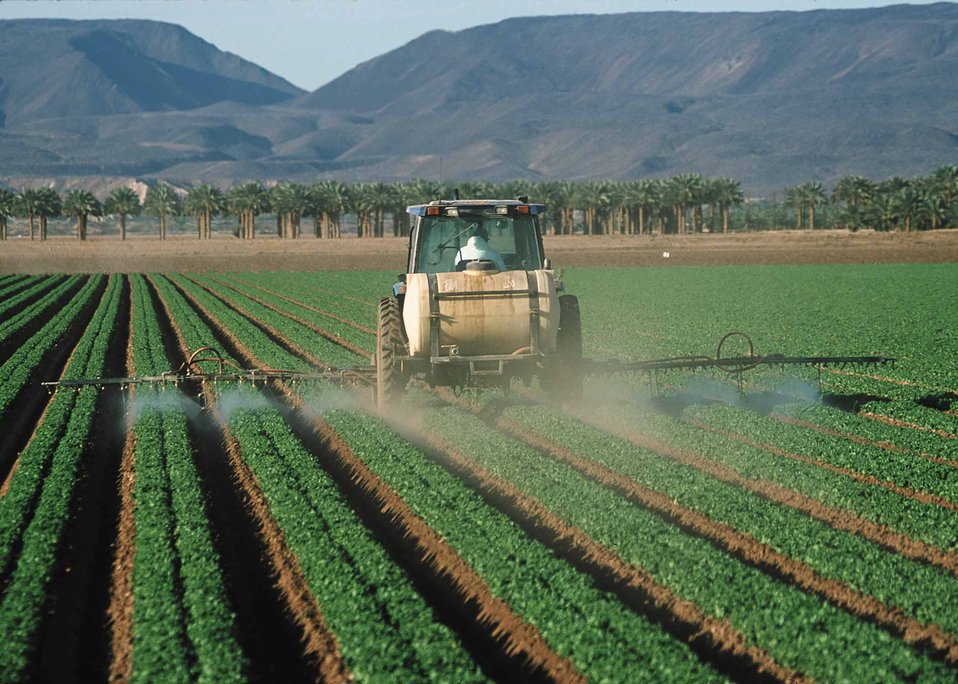
Spraying pesticides on a lettuce field in Arizona, USA. Pesticide pollution is one of the key pressures on aquatic insect populations, according to the new study. Image: Jeff Vanuga | Creative Commons Public Domain Files
What about the tropics? Geographic variations and data deficits
The study reveals the geographic variation in detailed, long-term insect research across the world. The majority of the 73 studies selected for this meta-analysis are located in Europe and the USA, with only a handful from Central America, Brazil, South Africa, China, Australia and New Zealand. In fact, the data for China and Australia refers to managed honey bees only.
Whilst this reflects the distribution of funding and support for long-term ecological monitoring, it also restricts the certainty of making broad statements about the global health and status of insect populations. The insect declines reported here are primarily from temperate, northern hemisphere ecosystems. This isn’t to underplay the significance of the dramatic trends reported in the paper, but instead to caution about drawing global trends from the reviewed studies.
If anything, this study suggests that in addition to conserving the populations we know about, there is significant work to be done in studying (and mostly likely, protecting) those for which there are currently data deficits. Such work is unlikely to provide any good news, according to Georgina Mace, who told the New Scientist recently that Sánchez-Bayo and Wyckhuys’s review could in fact underestimate the declines in insect populations across the tropics.
So, in short, the picture of global insect declines painted by Dr Sánchez-Bayo and Dr Wyckhuys is alarming, but may not show the full extent of global declines. What is clear is that insect conservation must become a key focus for environmental policy with immediate effect if species declines – both documented and undocumented – are to be halted.
Protecting and restoring Europe’s waters: the future of the Water Framework Directive

Reflections on water. Image: M.G.N. – Marcel | Flickr Creative Commons
A new survey of European water experts suggests that whilst the Water Framework Directive – the keystone of European Union water policy – provides a strong basis for the conservation and restoration of aquatic environments, there are three key areas for improving its future implementation. These include: monitoring and assessment, management measures, and policy integration.
The Water Framework Directive (or ‘WFD’) obliges European member states to monitor, protect and restore their aquatic ecosystems. Adopted in 2000, the key aim of the WFD is to guide all European surface and groundwaters to ‘good ecological status’ (originally by 2015, but with extensions up to 2027). Ecological status is calculated using assessments of biological (e.g. plant and animal communities), physico-chemical (e.g. water temperature and nutrient levels) and hydromorphological (e.g. water flows and connectivity) elements of individual water bodies.
Despite a coordinated Europe-wide effort in monitoring, conserving and restoring aquatic ecosystems since the WFD was adopted, a 2018 European Environment Agency report found that around 60% of European rivers and lakes still failed to reach ‘good’ ecological status. Clearly, the WFD’s goals are laudable, but challenging to achieve in practice.
Is the WFD fit for purpose?
The WFD is currently in the middle of the second six-year cycle of River Basin Management, and a formal evaluation review of its effectiveness is due in 2019. In this context, a large group of freshwater scientists (many supported by the EU FP7 MARS Project) have published an analysis of the future development needs of the WFD.
Writing in the journal Science of the Total Environment, the researchers – led by Laurence Carvalho at the Centre for Ecology and Hydrology – evaluate the strengths and weaknesses of current WFD implementation, identify where innovation offers new opportunities for monitoring and management, and address potential interactions between the WFD and other policy frameworks. In so doing, they ask, “Is the WFD fit-for purpose after 18 years and what improvements should be made in future implementation or revision?”
To address this question, the research team canvassed 95 European water experts – including researchers, practitioners and policy makers – using a questionnaire survey following ‘The Future of Water Management in Europe’ e-conference held in September 2017. The questionnaire – based on themes from the conference, and circulated to participants – solicited responses on the effectiveness of monitoring and assessment, management measures, and policy integration in the WFD. The results thus reflect the ongoing experiences of expert practitioners who closely engage with WFD implementation, and provide a valuable insight into the policy’s strengths and weaknesses.
Co-author Dr. Anne Lyche Solheim, a senior researcher at the Norwegian Institute for Water Research (NIVA), gives an overview of the results, “The most important areas of improvement in WFD implementation are to enhance the confidence in assessment of current status through more and smarter monitoring, including citizen science. High confidence in status assessments, together with correct linking to relevant pressures, are fundamental to derive the appropriate combination and amount of mitigation and restoration measures, and to convince other sectors that action is indeed needed.
“Furthermore, better dissemination of knowledge is needed about the interactions of multiple pressures, particularly that synergistic interactions, such as those found for combination of climate change and nutrient pollution, may require increasing mitigation efforts such as putting additional measures in place to reduce nutrients. Better communication to other sectors and to the public is also needed on the benefits of management measures, including nature-based solutions, for different sectors and for water users.
“To prevent the development of negative opinions that costly measures seem to have no effects for many years, water managers also need to highlight that the time needed for recovery can be long, sometimes several decades. Finally, better integration is needed between the WFD and other EU and national policies related to agriculture, energy production and floods.”

MARS scientists assessing multiple stressors in Lake Beyeshir, Turkey. Image: METU Limnology Laboratory
Monitoring and assessment systems
The WFD requirement for comprehensive aquatic monitoring has catalysed significant advances in methods of ecological status assessment, particularly in terms of ‘intercalibrated’ methods which allow cross-comparison of status-class boundaries. The resulting detailed picture of the health and status of Europe’s rivers, lakes, groundwaters, coastal and transitional waters was seen by survey respondents as a key success of the WFD.
However, a weakness of current assessment methods was identified in their failing to identify links between pressures and their impacts on the ecosystem. This linkage is crucial in supporting effective environmental management, particularly under the DPSIR (Driver, Pressure, Impact, State, Response) framework adopted by the WFD.
Another identified weakness is the ‘overly strict’ criteria to define management success. The ‘one-out-all-out-principle’ used in assessment means that the lowest score of the biological, physico-chemical and hyrdomorphological elements measured in a water body determines its overall ecological status. In practice, this can mean that where different biological elements are sensitive to the same stressors, then the uncertainty associated with each individual assessment can be compounded. Respondents suggested that this uncertainty could be mitigated by reporting progress on individual quality elements, or by providing pressure-specific (e.g. eutrophication, morphological pressures) ecological status assessments.
Opportunities were identified in innovative monitoring schemes, including satellite data for large-scale and real-time assessment of variables such as water-colour, cyanobacteria blooms and plant cover. There are several active projects in this area stemming from the ESA’s Copernicus programme. In addition, citizen science programme such as CEH’s ‘Bloomin Algae’ smartphone app were identified as providing greater coverage for water assessment, whilst also offering new forms of public engagement. Finally, technological advances in meta-barcoding, environmental DNA (eDNA), automated sensor technologies and drones all offer the potential to assess aquatic ecosystems in increasingly precise ways.
However, adopting any new monitoring approaches requires compatibility with existing national and continental methods and a scrutiny of cost-effectiveness, the study’s authors suggest. More broadly, it is noted that expert ecological knowledge in practitioners is needed to underpin any assessment schemes and apply them in effective management schemes.
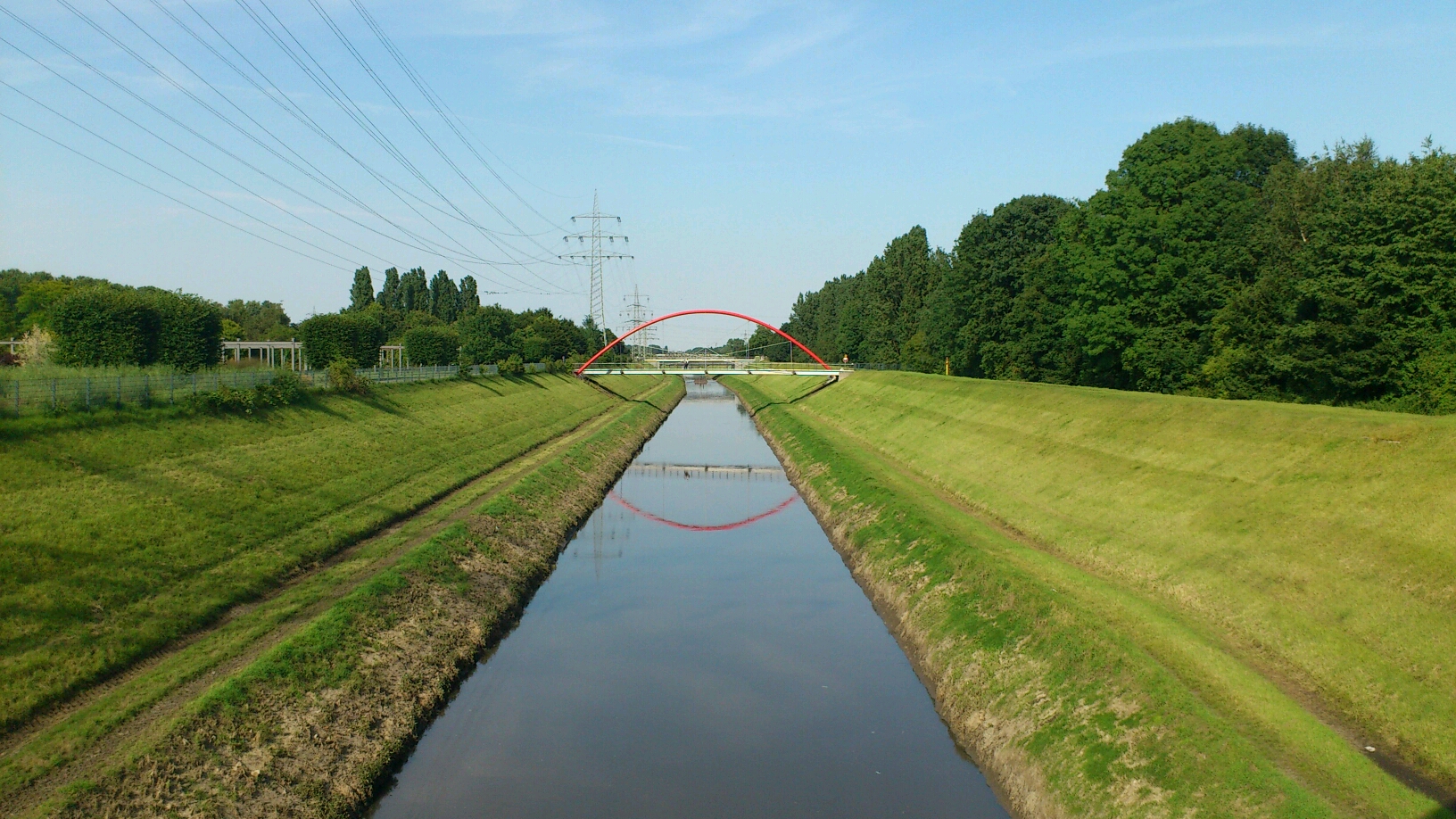
Multiple stressors along the Emscher River in Nordsternpark, a former mining site in Gelsenkirchen, Germany. Image: M. Knuth | Flickr Creative Commons
Improving water management measures
River Basin Management Planning in the WFD outlines a Program of Measures to encourage an improvement in ecological status across entire catchments, often through partnerships with other sectors such as agriculture and flood protection. Such measures are either ‘basic’ (i.e. administrative and regulatory tools, such as pollution control) or ‘supplementary’ (i.e. active ecosystem restoration, such as natural flood retention planning). However, the study’s authors state that currently only around 20% of planned basic WFD measures and 10% of supplementary measures have been completed so far for hydromorphological and diffuse pressures. There are similar implementation delays for water abstraction mitigation measures.
Across Europe, there is a long history of successfully tackling point-source nutrient pollution from industrial and urban wastewater. However, diffuse pollution from agriculture is still a common cause of poor ecological status in water bodies. Accordingly, in the first cycle of the WFD, two-thirds of the RBMP areas reported that basic measures are insufficient to tackle diffuse nutrient pollution from agriculture. In addition, the study’s authors state that there are a number of neglected or underestimated areas for WFD management, including: environmental flows, water abstraction effects, and invasive species. In short, whilst the WFD has helped support significant conservation and restoration efforts across Europe, there remains significant room for improvement and investment.
The study’s authors suggest three key areas that might improve WFD measures in the future. First, they highlight the need to manage for multiple stressors. Most WFD assessment methods are responsive to single stressors (e.g. nutrient loading), but at least 40% of European waters are subject to multiple stressors (e.g. nutrient loading and temperature increases), with potentially complex interactions and impacts. Whilst there is currently limited evidence on the impact of multiple stressors on aquatic ecosystems, there are a number of emerging scientific studies which highlight how stressor combinations can impact specific water bodies in different places (much of which has stemmed from the EU MARS project). The authors thus emphasise that restoration measures should be based on up-to-date understandings of this emerging literature, in order to account for the complexity of real-world environments.
Second, Carvalho and colleagues highlight the need for improved diagnoses of the causes of deterioration in ecological status. Much like a doctor’s diagnosis, tools are needed to assess the potential causes of deterioration (stressors) from a range of symptoms (biological metrics) of a water body, in order to ‘prescribe’ appropriate management measures. Here, the potential of combining Biological Quality Element assessments with other survey data, and to use new diagnostic tools (such as the MARS cookbook) and targeted monitoring were highlighted by survey respondents.
Third, the authors suggest that the incorporation of an ecosystem service framework can strengthen water management. This is not a new idea, by any means, and ecosystem services are already adopted in RBMPs in some EU countries. An emerging opportunity in this area, however, is in the potential to monitor and assess changes in ecosystem service provision in response to water management measures. In short, if it can be quantitatively shown that healthy and biodiverse aquatic ecosystems provide more ecosystem services to humans, then the argument for their protection and restoration is likely to be significantly strengthened.
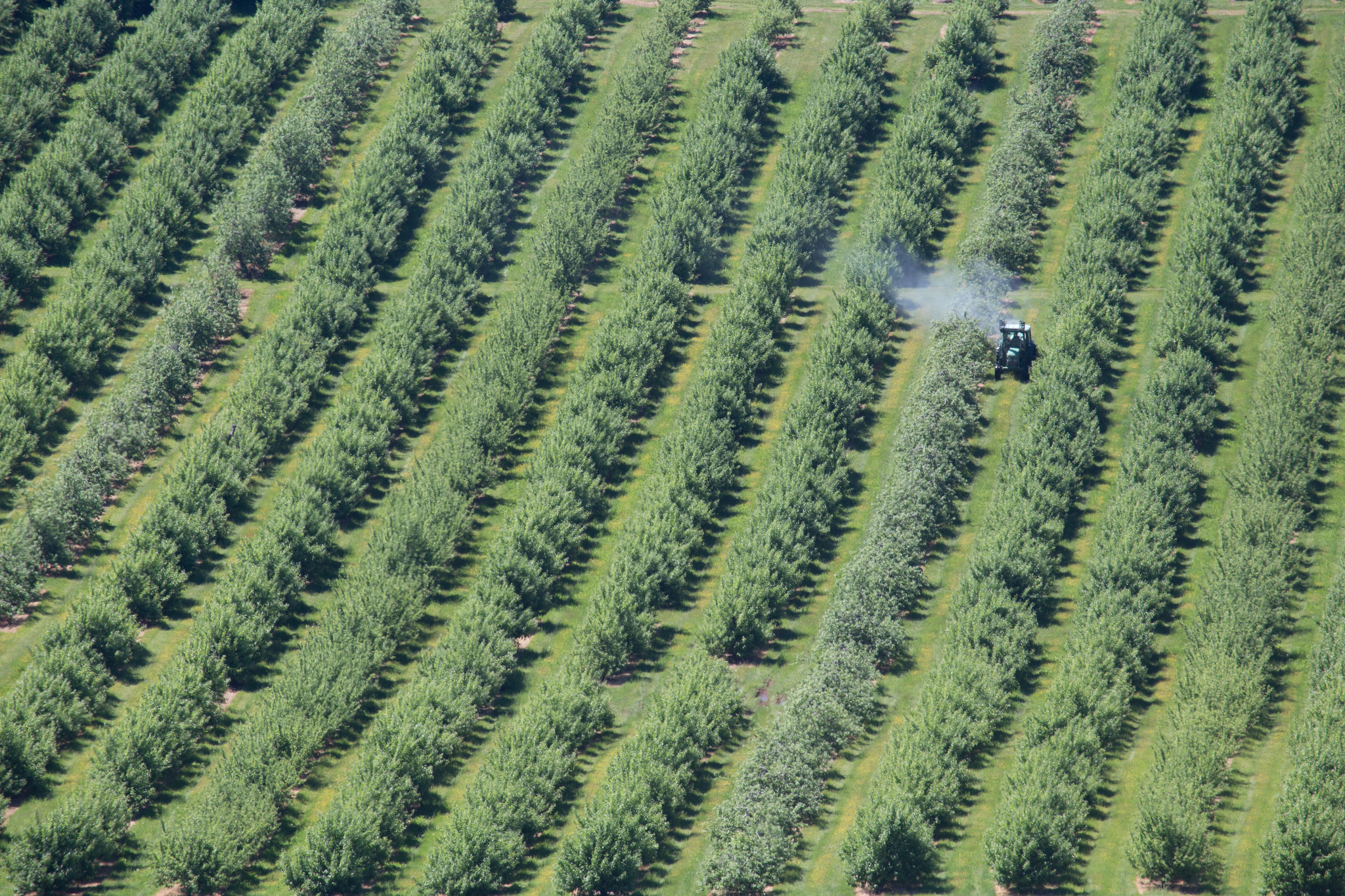
A tractor sprays an apple orchard. Image: Barbara Eckstein | Flickr Creative Commons
Integration across policy sectors
Water is a key part of our daily lives, and as a result is a key aspect of numerous different national, EU and global policies across a wide range of sectors. At the river basin scale, the implementation of the WFD involves significant efforts to engage other administrative sectors, stakeholders and the public in planning and management. As a result, managing water necessitates collaboration: a task which is an ongoing challenge for WFD implementation, the study’s authors suggest.
The survey results outline a perception that water policy needs to be better integrated with other policy areas, such as agriculture, flooding, climate and energy, in order to be successful. This is not a new topic of concern, and was highlighted in the 2018 EEA assessment of European aquatic ecosystems. Agriculture is highlighted as the most important sector to make ‘water friendly’, which is unsurprising given the environmental issues such as soil erosion, water abstraction, nutrient and pesticide pollution and riparian alterations it causes across Europe. The authors outline a key tension between the aims of the Common Agricultural Policy – primarily food production – and WFD objectives, which has created a barrier to collaborative developments, they argue.
One approach to addressing this tension is ‘sustainable intensification’, where best practices in land management focus on achieving higher yields with reduced resource (water, fertiliser, pesticides) use, such as in the Baltic Deal Project. However, this balancing act between agricultural yield and environmental impact is not easy to undertake, and as the study’s authors suggest requires the production of, “more formal guidance on the difficult boundaries between regulating polluting acts, requiring the polluter to pay and paying not to pollute. This is linked to questions over who pays for the environment and the resource costs of water services, but extends far beyond the WFD to other aspects of land use and land management.”

The WFD is the keystone of European water policy. Image: Symbolique 2006
Summing up and looking forward
The authors conclude by stating that whilst this expert analysis of the gaps, challenges and opportunities in the WFD is vital, it is important not to lose sight of the successful policy framework and momentum the WFD has created since 2000. They highlight that its focus on ecological status is better accepted in contemporary policy, and aligns the WFD with the EU Biodiversity Strategy 2020, and the global goals of the UN Intergovernmental Panel on Biodiversity and Ecosystem Services (IPBES). Similarly, the protection of water quality and aquatic ecosystems are key parts of the UN Sustainable Development Goals set in 2015 (Goal 6 and Goal 14).
In short, the key to improving the effectiveness of the WFD towards its 2027 target is not one of policy design, but of implementation, the authors suggest. Progress with management measures, and resulting improvements to ecological status, in European waters have been slower than initially anticipated. However, by addressing the areas of improvement highlighted in this study through a long-term integrated water management perspective which accounts for a dynamic world, Carvalho and colleagues conclude on an optimistic note that “real progress can be made” in the future.
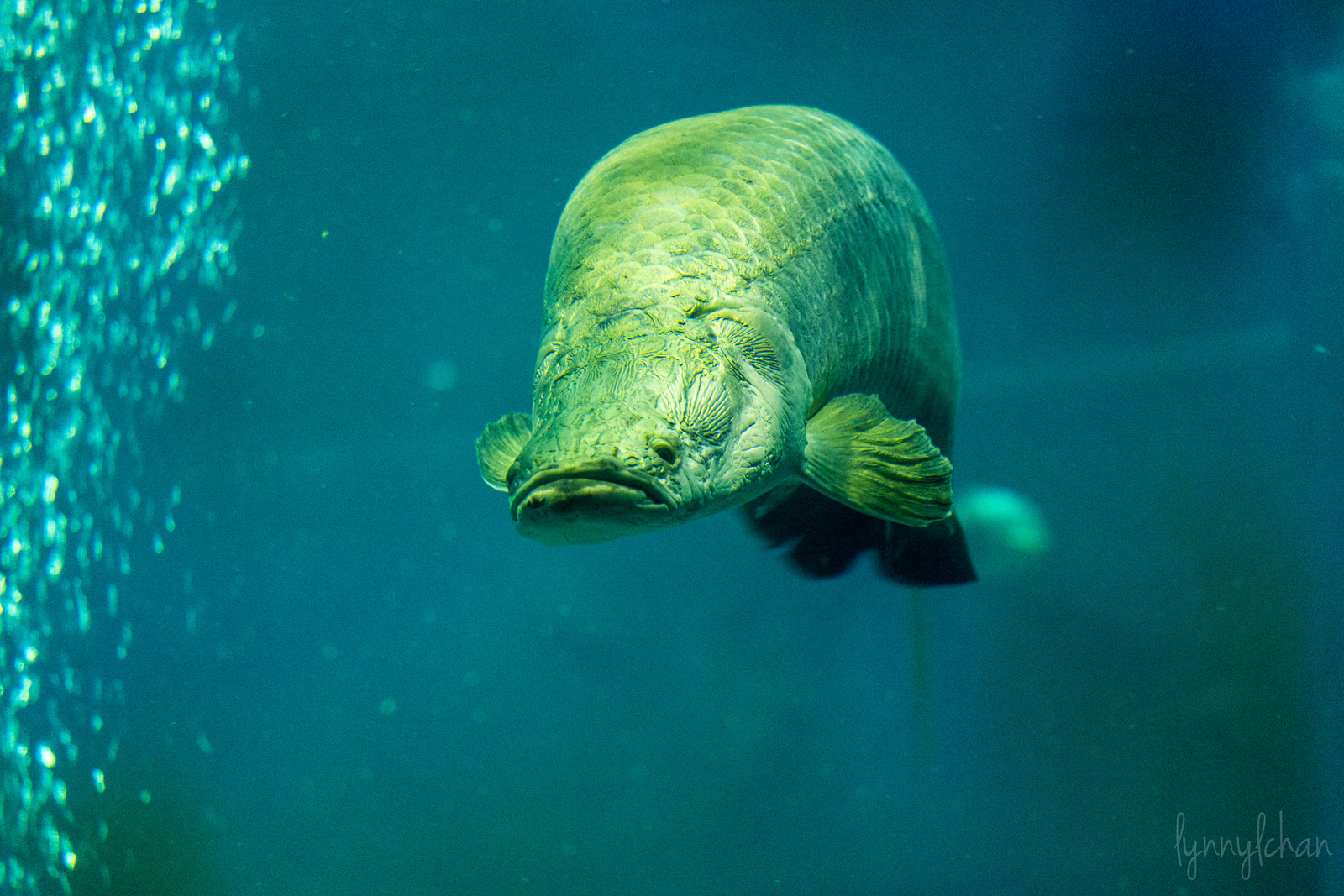
The arapaima, a fish native to the Amazon Basin which can grow to over three metres in length. Image: Lynn Chan | Flickr Creative Commons
Arapaima are one of the world’s most unique freshwater animals. A true ‘megafauna‘ species, these huge fish (which can grow to more than three metres in length) are native to the to the Amazon and Essequibo basins of South America.
Arapaima habitats change in depending on water levels, and these freshwater giants can become trapped in small floodplain lakes during the dry season. However, their ability to breathe air using a specially-adapted swim-bladder allows the arapaima to survive, even in such low-dissolved oxygen environments. As a result, the arapaima must periodically rise to the surface, which makes it vulnerable to fishing pressures. However, scientists do not have enough data on the health and distribution of arapaima populations to accurately assess their conservation status.
The arapaima is an important cultural animal for local communities in the Amazon and Essequibo basins, whether as a foodstuff, source of medicine (its tongue) and clothing (its skin); or as the inspiration for stories and folktales. As a result, there is increasing interest in community-based approaches for conserving arapaima populations.
Last year, Brazil’s prestigious national science prize for the best PhD thesis was awarded to Joao Vitor Campos-Silva for his research entitled “Community-based management of Amazonian giants”. On a recent trip to Brazil, Paul Jepson – former manager of this blog with BioFresh, and now Nature Recovery Lead at Ecosulis – caught up with Joao to find out more.
+++
Paul Jepson: Congratulations on your prize. This year’s topic was biodiversity conservation and social transformation. What do you think it was about your research that impressed the judges?
Joao Vitor Campos-Silva: Brazil, like many countries is searching for new models and paradigms to reconcile nature conservation and development. My research assessed the ecological and quality-of-life outcomes of two large community based-management initiatives in the Amazon linked to arapaima and freshwater turtles.
Scientific research often seems to provide yet more evidence of declines, however based on long-term participating monitoring data I was able to show that arapaima and freshwater turtle numbers have rebounded and the communities are flourishing. I think the judges liked the fact that I was telling a positive story of how a community had transformed the way they managed freshwater resources, and how the recovery of these resources is opening new community opportunities.
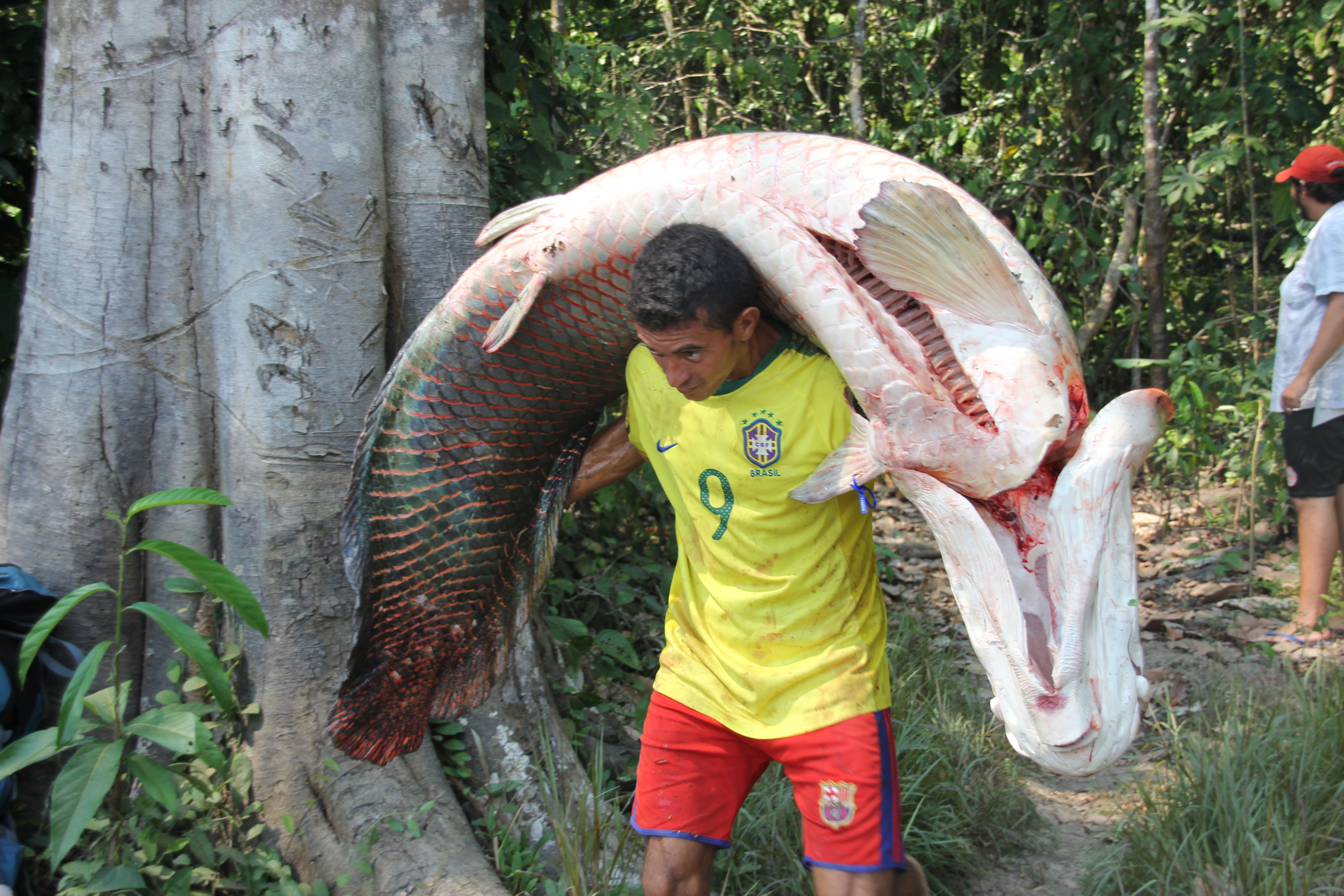
The arapaima (Arapaima gigas) is the largest scaled freshwater fish on Earth. It evolved in the ancient Lake Pebas which had low oxygen concentrations. For this reason the arapaima evolved to be an air breather. It is nowadays restricted to the Amazon flood plain and reaches weights of 220 kg, although historical books report specimens up to 350kg. Image: Carlos Peres
PJ: Tell us more about the community whose management you researched and the arapaima. What is the ‘communities approach’ to arapaima management and how did it come about?
JC-S: The arapaima is an awesome fish – it is like a monster and people are very curious about it. People from outside Amazonia wonder how it can be caught. Among the Amazon people it has huge cultural importance: one origin myth believes that people and arapaima came from the same brothers! It seems to be something of an icon for everyone. During the 1970s fishing vessels from outside arrived to catch arapaima and freshwater turtles. As well as causing steep declines in the populations of these species, lots of other fish species were caught threatening the local community’s food security.
Community leaders in the Medio Jurua – the area I studied – heard about a community arapaima management approach being developed in the Mamirauá Sustainable Development Reserve, 2000 km away. Briefly, local fishermen in Mamirauá told a fishery scientist called Leandro Castello that they knew a way to count arapaima, and together they developed a robust survey method. At the time the government was establishing sustainable use reserves and promoting zonation approaches.
In the Medio Jurua region a social organisation had formed in response to the rubber tapper movement of the 1970s, and they helped communities to organize to zone lakes, agree catch rules and organized the sale of arapaima and other natural resources to external markets.
PJ: So how did you get involved in the area and what were your research motivations?
JC-S: I started to work at Jurua River 10 years ago. After completing my masters, I got a job with the government of Amazonas State to coordinate participatory monitoring initiatives in their sustainable use reserves. Through this role I got to know Prof Carlos Peres who is a leading Amazonia researcher based at the University of East Anglia in the UK.
I saw that Jurua river was a bright spot in Amazon conservation, where the model of social organization offers hope and optimism for combining biodiversity protection with improvements in people’s local well-being. Prof Peres and I secured a Darwin Initiative grant and this enabled me to enroll for a PhD and make a comprehensive study.
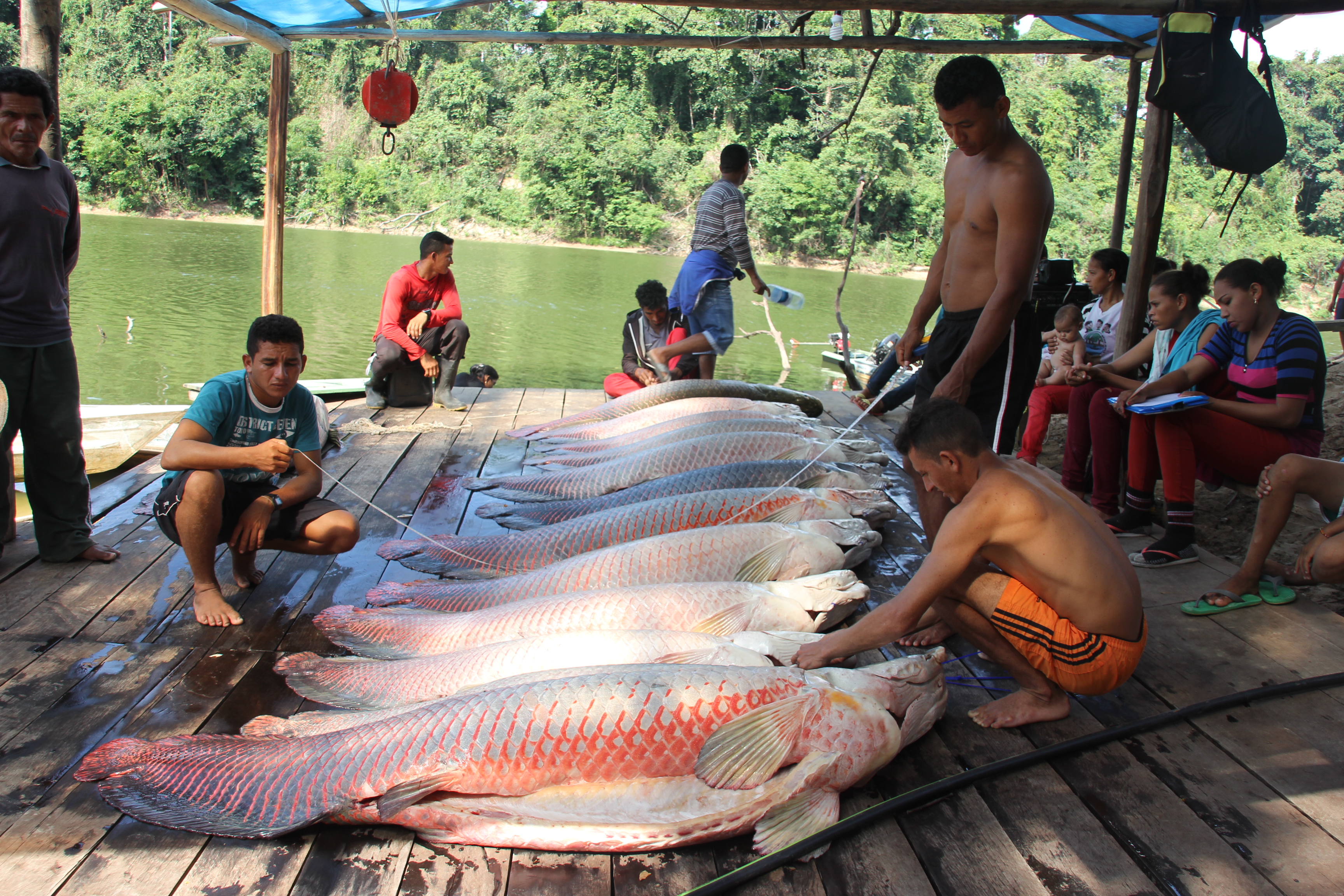
Arapaima on jetty. Arapaima are caught with nets and harpoons. The local social association has purchased a purpose-built boat with ice storage to transport arapiama to the city of Carauari from where they are transported by river to Manaus – a 10 days journey. Image: Carlos Peres.
PJ: Your 2016 paper in Scientific Reports demonstrated remarkable recoveries in arapaima populations as a result of management. Tell us about the scale of these recoveries and their impacts for the communities.
JC-S: In the paper I analysed eight years of participatory monitoring data. This showed a thirty-fold increase in arapaima numbers in protected lakes compared with unprotected lakes. The overall population growth was over 400% in eight years. In some lakes there were originally only 20 arapaima remaining, and now there are 2000 or more!
The protected lakes act like high-interest saving accounts for the people. The arapaima are harvested once a year and generate around €8,000 per managed lake. This income is divided among participating families who are then investing together in improving local social infrastructure such schools and health posts. Moreover, the lakes provide a source of social security, with local people able to draw on other fish resources according to their needs. Another thing to mention is that arapaima management is addressing historic gender inequalities in the communities – women are included in the decision-making, income generation and in planning the use of natural resources.
PJ: In your view, what was the key to the success of this community management approach, and are there aspects that can be replicated elsewhere?
JC-S: I think that this Jura model has some special ingredients, including culturally important species, clear economic returns, strong local knowledge and a willingness to respect both locally generated and Federal rules. The combination of collectively agreed spatial zoning with no-take areas and a strong social organization has ensured compliance among users. Most people see the benefits – in terms of their livelihoods and life-quality – of respecting the rules and collectively managing the fishery.
The challenge of course is to replicate this model at a large-scale across the Amazon Basin. Now we have 30 areas adopting a similar model, and involving more 400 communities. The big challenges are ensuring fairness around the fisheries. By this I mean that middlemen don’t capture too much of the value. We also need to put in place the infrastructure to transport the fish – they are big, there are a lot of them, and it’s a long way to markets in Manaus and other Brazilian states!

The Giant South American Turtle can reach 90 cm in length and 75 kg in weight. Image: Priscilla Miorando
PJ: I understand you also researched community management of freshwater turtles. Tell us a little about that aspect?
JC-S: Alongside arapaima management the communities also started to protect freshwater turtles nesting on river beaches. The Giant South American Turtle (Podocnemis expansa) was also badly over-exploited but our research showed that community protection of beaches has induced a large-scale population recovery of this and other turtle species along a 1,500-km section of a major tributary of the Amazon River. We showed that egg collection happens in just 2% of nests on protected beaches, compared with 99% on unprotected beaches.
These activities have not yet generated economic returns. This is a problem because dissatisfaction is growing among community guards who get very little return for what can be dangerous work. Many are now on the brink of giving up and the long-term viability of this approach will require the development of revenue streams independent of the food support they receive from the government and NGO partners.
PJ: Your 2018 paper in Nature Sustainability talked about the ‘collateral benefits’ for other species of turtle protection. What were these?
JC-S: Beside the population recovery of the turtles we showed conservation benefits for a wide range of other species, including caimans, catfishes, river dolphin, green iguana, migratory birds and even invertebrates. The protected beaches become thronging and dynamic places of bio-abundance. A friend of mine, Karla Koehler, captured this difference in a nice sketch.
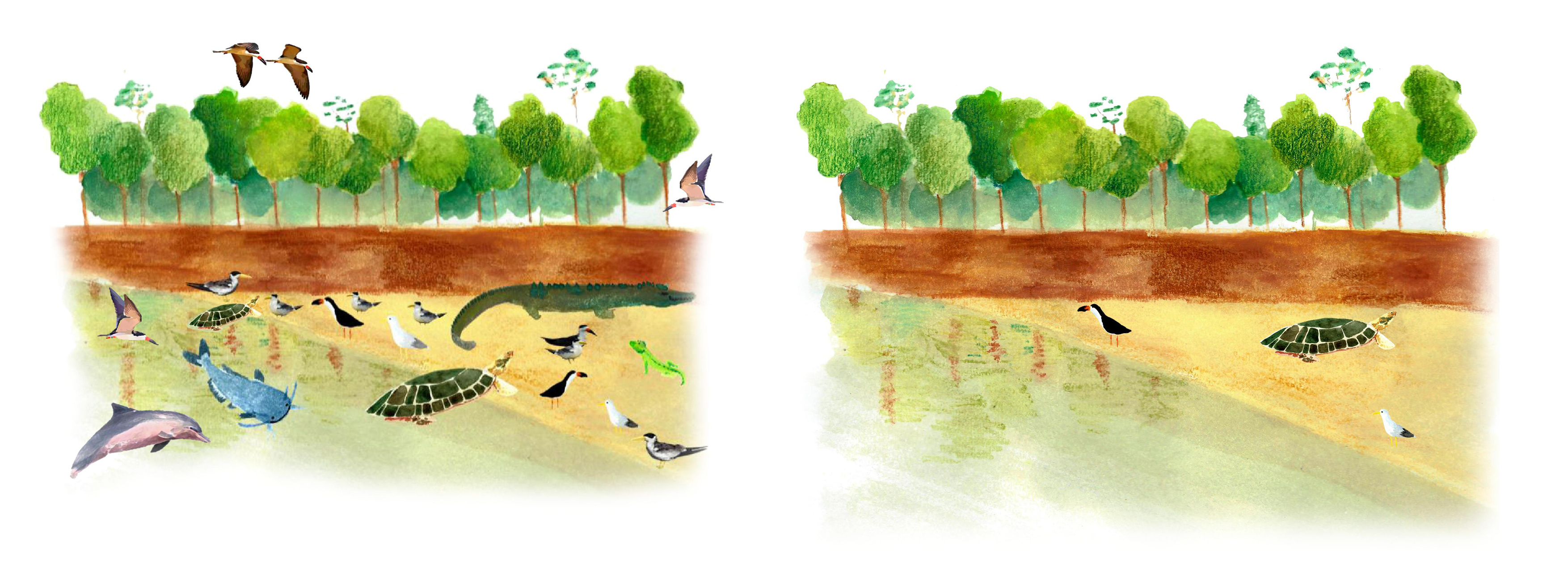
Illustration of the ‘collatoral’ conservation benefits of protected beaches (left) versus no protection (right) in the Amazon Basin. Image: Karla Koehler
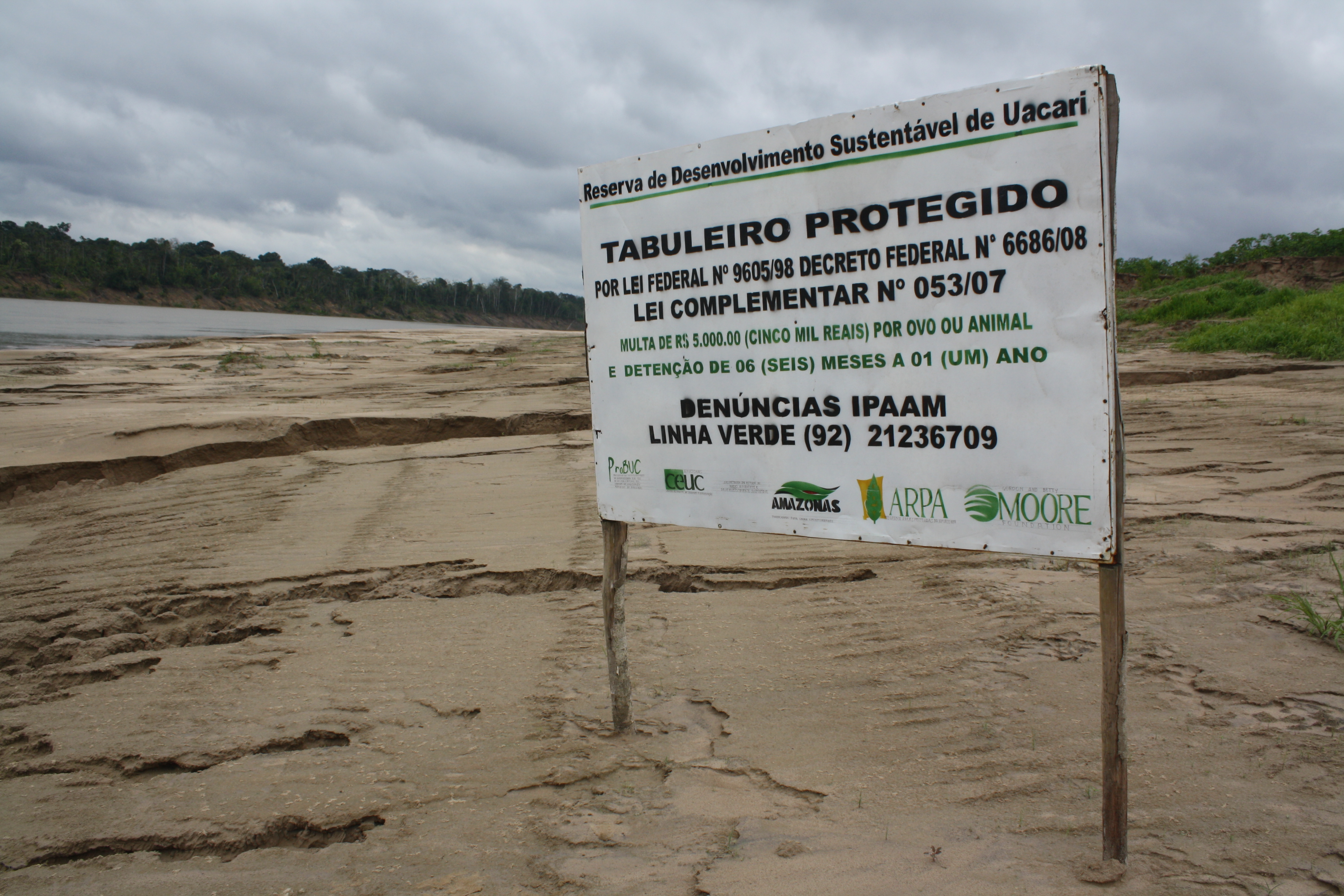
A protected beach in the Amazon Basin. Image: Joao Vitor Campos-Silva
PJ: Traditionally Brazilian conservationists have adopted a protectionist approach to species conservation. Your research seems to show that sustainable use can work – do you think that attitudes are changing?
JC-S: Many older conservationists in Brazil believe that conservation and social outcomes are not possible in the same package. Sometimes I feel that phrases like ‘bottom-up’ and ‘community-based’ are assigned to initiatives that are in reality still top-down or externally managed. Many of these have failed and this may reinforce the perception that ecological recovery and community development are incompatible.
Community-based approaches are certainly not a panacea, but neither is it a naïve narrative. There are more than six million people in the Brazilian Amazon aspiring to basic improvements in their quality of life. By providing nature-based pathways to achieve this community-based resource management can counter the forces of deforestation and biodiversity loss. There is a younger generation of government officials who much more open to this way of thinking.
+++
Cited papers:










 The Freshwater Blog