Finding space for freshwater restoration in flagship European policy
The EU MERLIN project has released two valuable publications this week, focusing on how freshwater ecosystems can be better protected by major European policies, and will hold a major policy event on the topic in Brussels in March.
Synergies and Tensions between the EU Nature Restoration Regulation and the Water Framework Directive
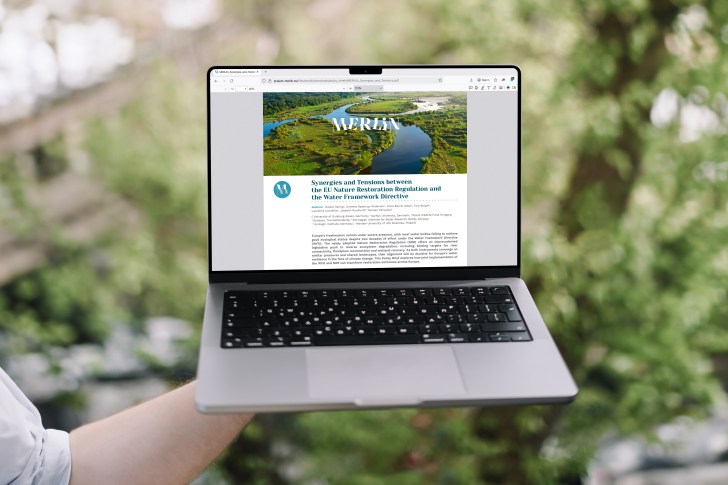
The first publication is a policy brief mapping opportunities for freshwater ecosystem protections within the EU Water Framework Directive and Nature Restoration Regulation.
Europe’s rivers, lakes and wetlands are under severe pressure, with most water bodies still failing to reach good ecological status despite two decades of action under the EU Water Framework Directive (WFD). A new opportunity has emerged with the EU Nature Restoration Regulation (NRR), adopted in 2024, which introduces legally binding targets to restore degraded ecosystems across Europe, including ambitious goals for freshwater ecosystems. Together, these two policies could mark a turning point for Europe’s freshwaters – if they are implemented in a coordinated way, according to the new MERLIN policy brief.
The NRR brings fresh momentum by setting ambitious restoration targets, such as restoring at least 25,000 km of rivers to a free-flowing state by 2030, reconnecting floodplains, and restoring wetlands. These actions directly address long-standing pressures identified under the WFD, particularly river fragmentation and habitat loss, MERLIN researchers suggest. By focusing on connectivity and catchment-scale processes, the NRR can help overcome some of the limitations that have constrained WFD implementation, especially where water managers lack influence over land use beyond the river channel.
However, the new MERLIN publication also highlights important risks. The WFD and NRR operate on different timelines, metrics and planning scales: the WFD measures ecological status; while the NRR often tracks kilometres restored or hectares rewetted. Without shared guidance, this could lead to parallel efforts that fail to reinforce one another. Tensions may also arise around land use, particularly in agricultural areas, and from limited administrative capacity and fragmented funding streams.
The key lesson for science, policy and management is clear: integration is essential. Aligning river basin management plans with national restoration plans, harmonising indicators, prioritising measures with multiple benefits, and coordinating funding – especially with agricultural policy – can turn potential conflicts into powerful synergies. Done well, the joint implementation of the WFD and NRR offers a unique chance to restore Europe’s freshwaters while strengthening climate resilience, biodiversity and societal well-being, the MERLIN researchers conclude. Read the policy brief here.
How can water-friendly farming be mainstreamed in Europe?
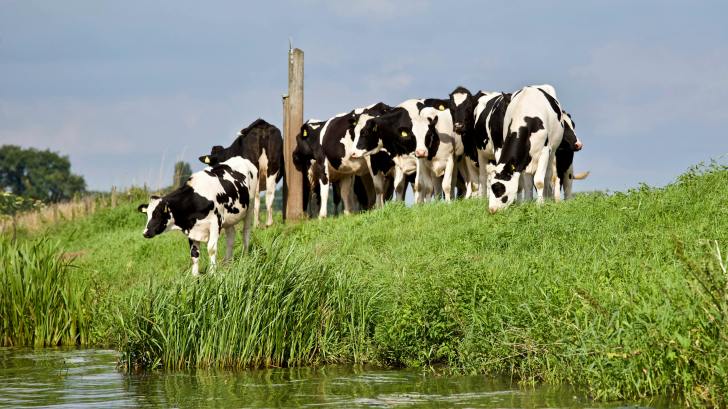
The second publication is a podcast exploring the relationship between freshwater restoration and farming, particularly in the context of the EU Common Agricultural Policy.
Freshwater restoration should be at the heart of how farming is managed in Europe, according to new recommendations.
Reshaping the Common Agricultural Policy (CAP) to support freshwater ecosystems by encouraging water-friendly farming practices is a key task, according to a team of researchers from the MERLIN project writing in a newly published policy brief. The researchers draw on cutting-edge science and fieldwork to outline a vision for water-resilient agricultural landscapes across Europe.
Our guest is one of those researchers – Josselin Rouillard from ECOLOGIC – and in this podcast we hear about how the futures of European freshwaters and farming are so closely linked, and what we can do to help them flourish.
You can also listen to the podcast on Apple Podcasts and Spotify.
Freshwater, wetlands and sponge landscapes for a resilient Europe
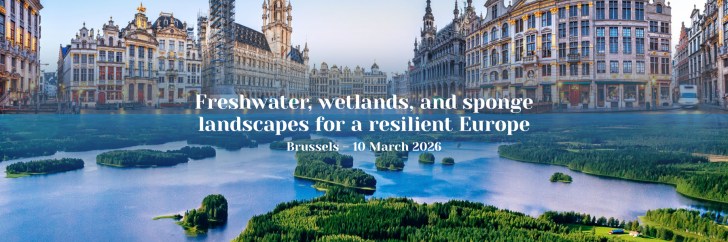
Finally a reminder that four flagship European research projects will present their findings at a major policy event in Brussels in March 2026 to discuss the future of restoration policy and practice across the continent.
The four projects – MERLIN, WaterLANDS, SpongeScapes and SpongeWorks – will highlight key insights, practical tools and success stories from freshwater, wetland and sponge landscapes across Europe.
The event will facilitate discussion on two key themes for implementing the Nature Restoration Regulation in Europe: upscaling restoration projects; and engaging with economic sectors and financiers. It will offer a space for EU and national decision makers to engage with cutting-edge research and practice in freshwater restoration across Europe.
The policy event will be held on 10th March 2026 at Maison de la Poste in Brussels. Registration is free, both for in-person and online attendance. Interested participants should register via the MERLIN website by the 31st January 2026.
For more information, please contact the Event Secretariat: brussels2026@project-merlin.eu
///
This article is supported by the MERLIN project.







 The Freshwater Blog
Comments are closed.