How to find grant funding for your freshwater restoration project

As the need to restore Europe’s freshwaters becomes ever more pressing, so too does the demand for funding to support ambitious restoration projects.
Grant funding – which in Europe is often provided by the European Commission or national governments – is an important source of large-scale funding for freshwater restoration. A new publication from the EU MERLIN project provides guidance and support for restoration managers seeking to find financial grants to support their projects.
Around €112 billion is dedicated by the EU to funding biodiversity projects between 2021–2027, however not all of this funding is directly available to environmental managers. As a result, national and regional grant programmes can offer more direct and targeted funding for restoration projects, often co-ordinated by EU initiatives such as the European Regional Development Fund.
In Europe, this funding landscape is strengthened by new policies such as the Nature Restoration Regulation and the Water Resilience Strategy, which will open new grant funding opportunities targeted at freshwater restoration. In particular, the importance of Nature-based Solutions in addressing ecological issues is increasingly recognised, with targeted funding for their use rising to over €2 billion in 2025.
Globally, the need for ambitious funding for biodiversity conservation and restoration is also increasingly recognised, with nations at COP15 in 2022 committing to mobilise €200 billion each year to support nature recovery.
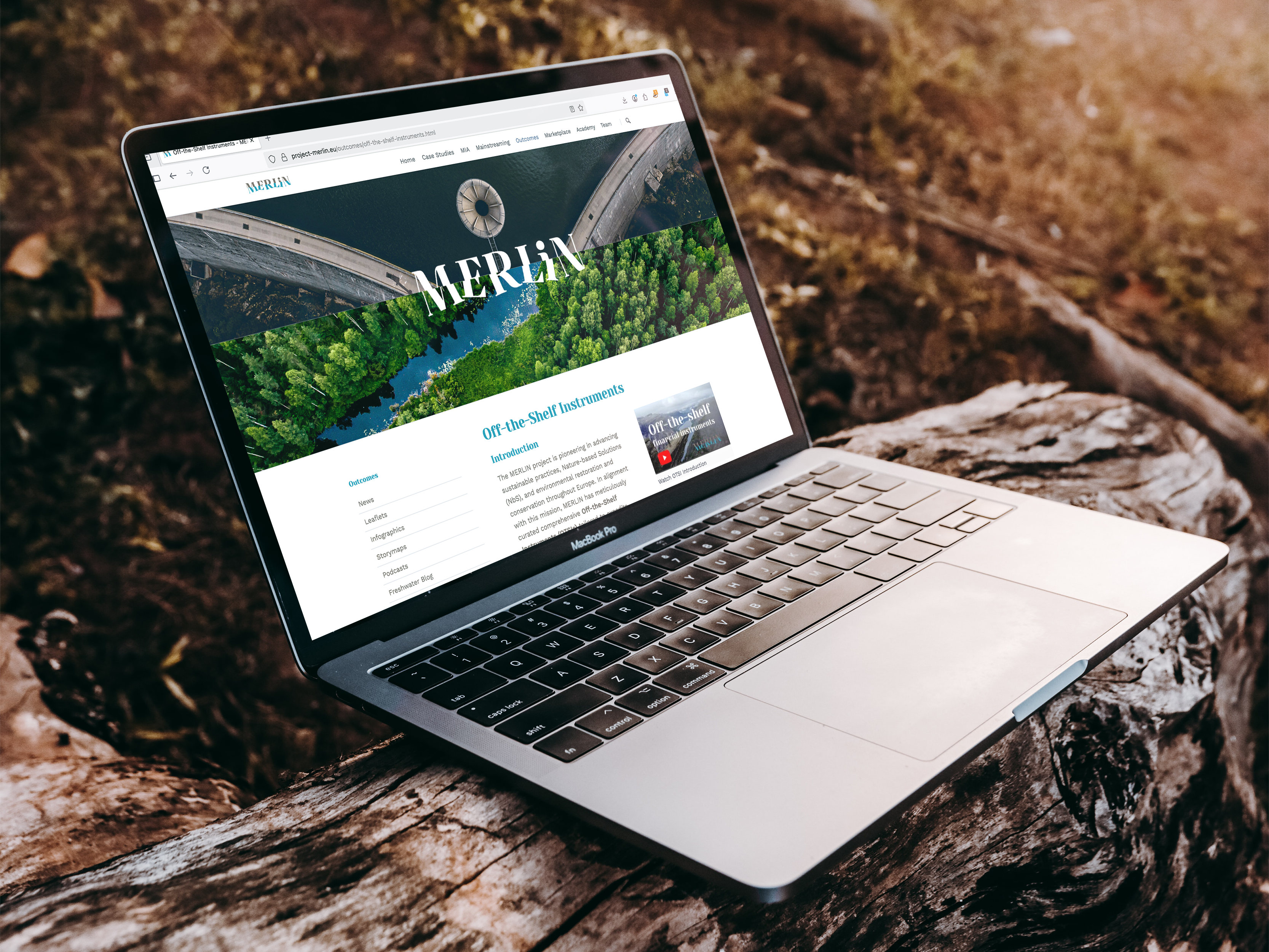
The new MERLIN publication helps restoration practitioners navigate this grant funding landscape. It provides in-depth analysis on the types of grants currently available to restoration projects, and highlights who can apply for them, and how.
Part of an ongoing series of ‘Off-The-Shelf-Instruments’ designed to help European restoration managers adopt cutting-edge practices, the new publication explores the operational dynamics of different grant programmes, including their prerequisites for applying, their funding lifecycles, and the associated costs for establishing and managing initiatives they support.
The publication highlights the key organisations involved in restoration grant funding in Europe, including the European Commission, national governments and environmental agencies, and outlines how each individual body supports projects.
Practical guidance from real-world case studies is also provided to help support environmental managers in adopting best practice insights and Key Performance Indicators (or KPIs) in their projects.
The publication authors conclude with a note of caution on over-reliance on grant funding, and a call to embrace new forms of public and private funding sources to address environmental goals. You can find out about diversifying funding sources for freshwater restoration in existing MERLIN Off-The-Shelf-Instruments here.
They write, “While grants remain a central funding mechanism for many restoration initiatives, they also have limitations. The complexity and long-term nature of restoration projects often means that grants only cover part of a project’s lifecycle, requiring practitioners to seek new funding repeatedly.
“We encourage restoration teams to look beyond traditional biodiversity-focused grants and consider a broader spectrum of public sector funding opportunities. Many government agencies and public bodies offer grants tied to other societal objectives, such as disaster risk reduction, water management, climate adaptation, or public health, which can often be addressed through Nature-based Solutions.
“By actively expanding their funding horizons and engaging with both conventional and unconventional financing pathways, restoration teams can build more resilient, long-term projects that not only restore ecosystems, but also contribute meaningfully to broader societal and climate objectives,” the authors conclude.
///
This article is supported by the MERLIN project.









 The Freshwater Blog
Comments are closed.