Free online training on engaging people and policy-makers in freshwater restoration is launched
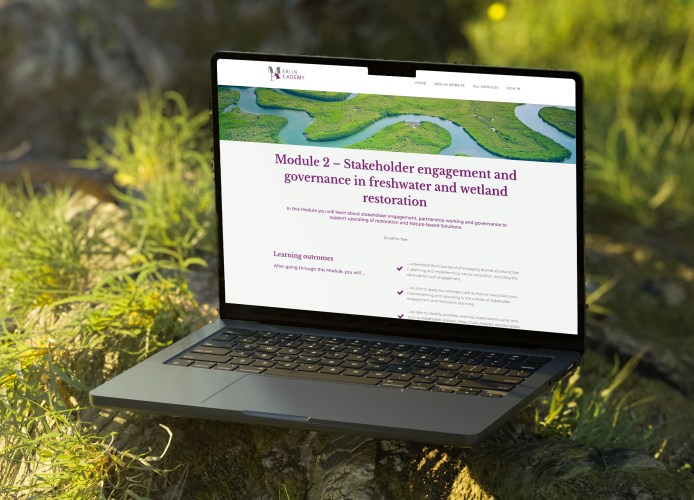
A free new online learning module offers a wealth of information around bringing people and nature together in freshwater restoration.
The module is part of the open-access Academy created by the EU MERLIN project. The MERLIN Academy offers free resources and training to support researchers, practitioners and policy makers in applying cutting-edge restoration concepts to their work.
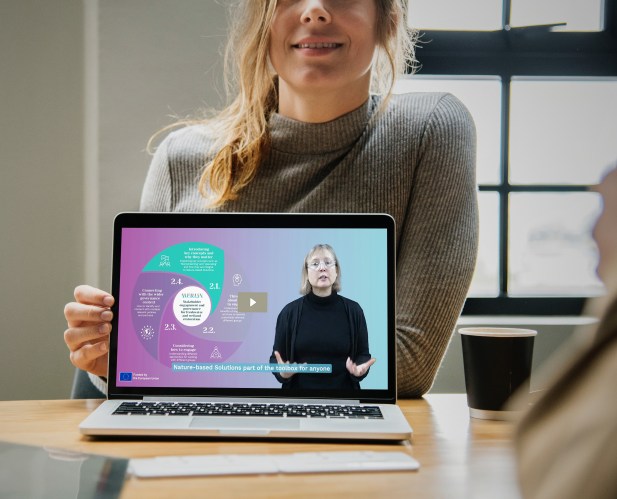
The newly-released module leads users through a series of videos, graphics, quizzes and podcasts to introduce key concepts around stakeholder engagement and governance in freshwater and wetland restoration.
“We developed this module to help bridge the gap between ecological knowledge and real-world action,” says project lead Astrid Schmidt-Kloiber from BOKU in Vienna. “Restoration doesn’t happen in isolation, it depends on people, partnerships and policies. This module is about empowering practitioners to work more effectively with others, to mainstream Nature-based Solutions, and ultimately to support the recovery of our freshwater ecosystems.”
The module begins by introducing ideas around mainstreaming and upscaling Nature-based Solutions in restoration projects. Nature-based Solutions are increasingly popular approaches to environmental management, and seek to harness natural processes to benefit both people and nature.
For example, a ‘rewiggled’ river channel may benefit aquatic biodiversity whilst at the same time helping buffer flash flooding downstream; or a restored peatland can lock-up carbon from the atmosphere and offer new recreational opportunities to local communities.
Many environmental scientists and managers across the world are optimistic about their value, and so advocate for their mainstreaming into public, political and economic systems, and upscaling across wide geographical areas. The hope is that such approaches can help reverse the harmful effects of the ongoing climate emergency and ecological crisis, whilst also supporting strong and sustainable green economies, both in Europe and globally.
The MERLIN Academy is an important step towards this goal. Written and presented by experts across environmental science, management and policy, the new module highlights the importance of engaging the varied stakeholder communities with an interest in a river, lake or wetland.
These stakeholders can include local citizens, industries, decision-makers and businesses – all of whom are likely to have different uses for, and values about, the ecosystem. The new module offers valuable resources to help identify, prioritise, and map stakeholders using tools such as stakeholder analysis, value chain analysis, and the ladder of participation.
In mapping the various views and needs of communities around a freshwater ecosystem, the new module empowers users to be able to design inclusive engagement strategies that align stakeholder interests with restoration goals. These strategies are informed by real-world case studies explored in the MERLIN project in Scotland and Israel.
Finally, by applying such participatory approaches to restoration projects, learners will be able to navigate policy frameworks and institutional settings to build or adapt partnerships, addressing potential barriers and identifying opportunities to enable restoration. The module highlights the dynamics of working within a complicated policy environment guided by legislation such as the EU Green Deal and Nature Restoration Regulation.
By offering free and open-access resources and training on these cutting-edge topics, the MERLIN Academy seeks not only to train the environmentalists of the future, but also to strengthen the knowledge shared amongst those working today.
///
This article is supported by the MERLIN project.









 The Freshwater Blog
Comments are closed.