Mapping the value of freshwater restoration
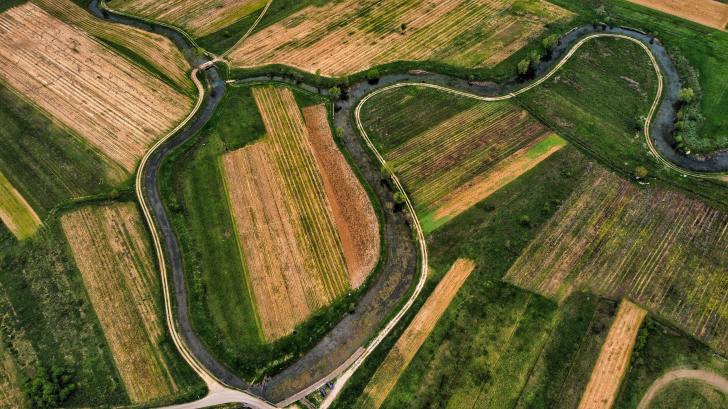
We live in an age of ecosystem restoration. Across the world, communities and policy makers are seeking to help guide degraded or destroyed ecosystems back to health, whilst protecting those that remain intact.
Major initiatives like the United Nations Decade on Ecosystem Restoration – which runs from 2021–2030 – highlight the vital role restoration plays in supporting both people and nature. As the UN states, “Healthier ecosystems, with richer biodiversity, yield greater benefits such as more fertile soils, bigger yields of timber and fish, and larger stores of greenhouse gases.”
The benefits that the restoration of global ecosystems could generate are significant. The UN estimates that the restoration of 350 million hectares of degraded terrestrial and aquatic ecosystems by 2030 could generate US$9 trillion in ecosystem services and remove 13 to 26 gigatons of greenhouse gases from the atmosphere.
Crucially, it is estimated that the economic benefits of these interventions are more than nine times the cost of investment, whereas inaction is at least three times the cost of ecosystem restoration. In other words – as we’ve explored on this blog and in podcasts – the economic argument for ecosystem restoration is increasingly strong.

Ecosystem services and restoration
But how can these benefits best be quantified? The ecosystem service concept has been used for over twenty years to calculate the benefits that people obtain from ecosystems, and underpins many contemporary arguments for restoration action.
Published in 2005, the Millennium Ecosystem Assessment identified four categories of ecosystem service. Provisioning services are the products obtained from ecosystems, such as food and raw materials. Regulating services are the benefits obtained from the regulation of ecosystem processes, such as the water purification and carbon sequestration.
Supporting services are the processes which allow an ecosystem to function, such as nutrient cycling and habitat provision. Finally, cultural services are the recreational, spiritual, historical and artistic values that ecosystems offer to people.

How does freshwater restoration affect ecosystem services?
In recent years, this approach to valuing ecosystems has influenced the development of nature-based solutions approaches which seek to harness natural processes to help benefit both nature and society.
Ecosystem services and nature-based solutions are both tools to provide decision makers with clear, quantifiable evidence for the significant value of healthy, diverse ecosystems. A key task for environmentalists, then, is to continue to strengthen this evidence to help showcase the vital role flourishing ecosystems play in scaffolding our daily lives.
In this context, a new study explores how freshwater restoration using nature-based solutions affects how waterbodies can provide ecosystem services to people. A team of researchers from the MERLIN project compiled evidence on restoration measures implemented across Europe and asked experts to help assess their value and effectiveness through a Delphi survey.

Mapping the benefits of ecosystem restoration
Writing in the Restoration Ecology journal, the authors identify how many freshwater restoration measures enhance multiple ecosystem services simultaneously. River restoration measures including restoring natural flow, channel structure, and habitat complexity are shown to be particularly effective at generating multiple ecosystem services.
The study highlights how freshwater ecosystem recovery has significantly increased biodiversity, water purification and climate regulation at sites across the world. The authors write that such ‘multifunctionality’ of outcomes “shows that biodiversity-focused actions can also enhance multiple ecosystem services, aligning with broader restoration goals.” However, they caution that such outcomes often vary by context and measure.
On the other hand, the study finds that the ecosystem services delivered by peatland restoration are underexplored, particularly beyond their effects on climate regulation. The authors highlight the need for future research in this area.
The researchers also identify that restoration approaches specifically targeting water pollution are less successful at delivering multiple ecosystem services. As a result, they highlight “the need for integrated approaches combining water quality improvements, hydrological restoration, and vegetation recovery to deliver wider ecosystem service gains.”
Provisioning services benefit the least from ecosystem restoration across both rivers and peatlands, the researchers state. In particular, the effects of restoration on agricultural output were mixed, with some large-scale measures reducing productising in intensively farmed areas.
This finding highlights the difficulties of balancing ecological, social and economic priorities in mainstreaming restoration into daily life, both across Europe and globally.
“We’ve all known it’s a black box – how exactly freshwater restoration measures translate into ecosystem service gains,” explains lead author Sebastian Birk. “With this paper, we finally cracked it open a bit. By carefully listing what’s done on the ground and tying it to semi-quantified effects, we’re one step closer to making that connection visible. There’s still a long way to go – and the need for solid fieldwork – but the door’s open now.”
///
This article is supported by the MERLIN project.









 The Freshwater Blog
Comments are closed.