Nature-based solutions help support people and nature in freshwater restoration
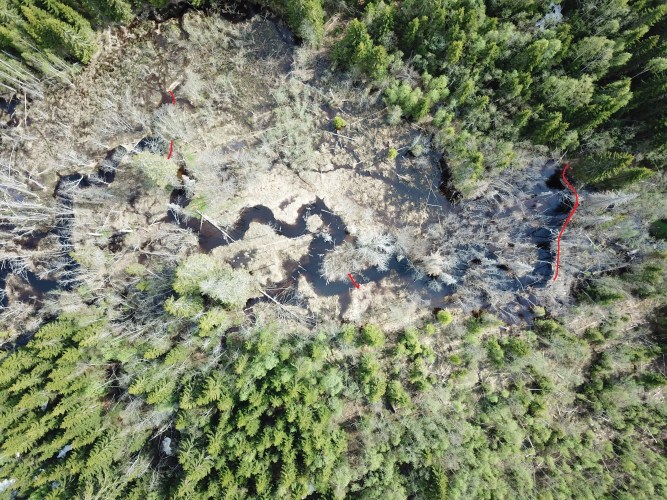
Harnessing the potential of natural processes in freshwater restoration can create significant ecological, social and economic benefits, according to a major new report.
Researchers from the EU MERLIN project analysed restoration monitoring data from eighteen rivers, streams and wetlands across Europe to assess the impacts of so-called ‘nature-based solutions’ on the environment and society.
Such approaches aim to help amplify natural processes to benefit both people and nature. For example, a healthy wetland can help filter water pollution and buffer floodwaters, whilst planting so-called ‘riparian zones’ of trees and other vegetation along river banks can help provide valuable biodiversity habitat, keep water bodies cool, and lock up carbon to help mitigate climate change.
The new report explores the impacts of a diverse range of European freshwater restoration strategies using nature-based solutions. These include peatland rewetting, beaver reintroduction, floodplain restoration and reconnection across a variety of landscapes.
The results show that such restoration approaches can generate significant benefits for nature and society. In particular, many of the impacts support the goals of the European Green Deal, which aims to support climate neutrality, sustainable economies and healthy, diverse ecosystems across the continent.
In this context, MERLIN researchers found that using nature-based solutions in freshwater restoration can help boost climate resilience and biodiversity gains, whilst also delivering social and economic benefits such as sustainable job creation and improved social wellbeing.

Rewetting the Tisza floodplains
Floodplain restoration around the Tisza River in Hungary offers a fascinating window into these dynamics. Restoration of the floodplains around the village of Nagykörű in middle of the river’s catchment began in 2001. Prior to this the Tisza had been highly modified by concrete flood walls which cut the river off from its floodplains.
Biodiversity has flourished since the river has been encouraged to return to its natural rhythms by spilling over the reconnected floodplains in times of high water flows. Insects and spiders populations have boomed, whilst rare fish species such as the spined loach and European weatherfish use the flooded meadow habitat as spawning grounds.
Breeding populations of frogs and toads have also grown alongside those of water birds such as mute swans. This lively landscape has become the focus of new nature walks for people around the area.
The reconnected floodplains have also become a carbon sink, with the flourishing vegetation locking up greenhouse gases in the atmosphere. Similarly, the flood and drought resilience of the floodplains has increased, in part due to the installation of a sluice which allows environmental managers to control the flows of water across them.
The Tisza River restoration also shows the trade-offs with other land uses inherent in nature-based solutions approaches. Floodplain rewetting here required a 66% reduction in agricultural land area around the river.
Despite this significant loss in agricultural land, the MERLIN report suggests that local communities are in favour of restoration due to its support for more sustainable agricultural practices, and the broader biodiversity benefits it generates.

Lessons for freshwater restoration and policy
The study has two key lessons for freshwater restoration in Europe. First, it provides clear evidence that nature-based solutions approaches can provide significant environmental and social benefits, whilst supporting sustainable economic development and contributing to the goals of the European Green Deal.
Second, it highlights the importance of detailed monitoring programmes that capture the nuanced impacts of nature-based solutions in freshwater restoration. The study shows that whilst nature-based solutions can provide many co-benefits for nature and people, it also highlights the trade-offs and tensions over land use that may arise.
Monitoring these dynamics is crucial to be able to make positive and adaptive decisions about freshwater restoration projects as we move into an increasingly pressurised and uncertain climate emergency future.
///
This article is supported by the MERLIN project.










 The Freshwater Blog
Comments are closed.