Cabinet of Freshwater Curiosities: artistic riverine insects create colourful cases from unusual materials

If you’re a long-time follower of the Freshwater Blog, you might remember our Cabinet of Freshwater Curiosities project from more than a decade ago. That website has since washed away down the rivers of time, but we thought it was the right moment to showcase our collection of curious freshwater plants and animals again. So keep your eyes peeled over the coming months as we dust off the Cabinet and celebrate the wonderful world of freshwater life!
///
Caddis larvae – Trichoptera
Guest curators: Prof. Daniel Hering (University of Duisburg-Essen) and Gerhard Laukötter
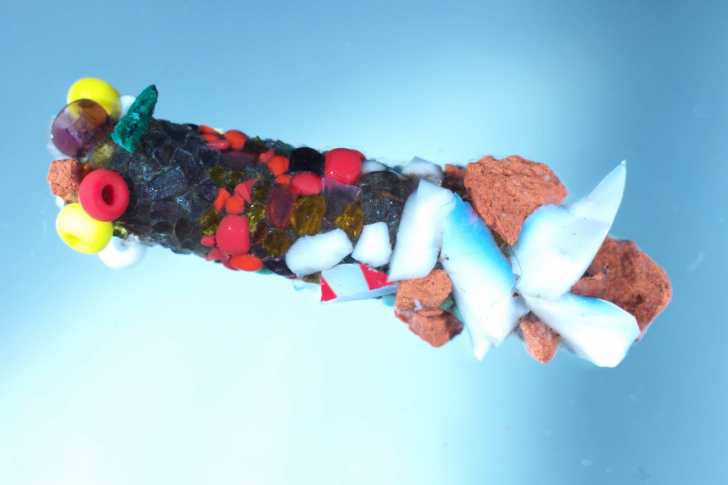
Many animal species are protected from predators, desiccation or disturbance by a thick shell or skin. Only few, however – leeches, midge larvae and butterfly larvae – are capable of building cases to artificially protect them from the environment. Unsurpassed as artistic architects of such artificial cases are tiny caddis larvae, which live amongst the rocks, vegetation and rubbish on river beds. These unique little creatures have developed the curious ability to use these raw materials to create colourful and unusual protective outer tubes.
Caddis larvae are the larval stages of caddis flies (Trichoptera), of which about 12,000 species are known worldwide. Larvae of almost all species are aquatic. Larvae of about half of the species construct transportable cases, protecting soft-skinned parts of the body and in which the larvae can retreat in case of danger. All species protect their defenceless pupal stage with artificial cases, which are firmly attached to the river bed.

Depending of the larval habitat size and form of caddis cases vary, resulting in a large number of unusually constructed cases: round and square tubes, cases in the form of a turtle shell or a snail shell, sand tubes punctuated by thick stones and multi-story cases with sophisticated ventilation systems! Fascinatingly, caddis larvae use very diverse materials for case construction, including: self generated silk; sand of a defined grain size or of different grain sizes; small pieces of wood cut at an exact size by the larvae’s mouthparts; and small parts of leaves, roots or of reed stalks.
Sand
Sericostoma larvae bind small sand grains together in a seemingly jointless, curved tube. Similar material is used by representatives of the genera Molanna (in flat tubes) and Helicopsyche (in wound cases, amazingly similar to a snail shell).
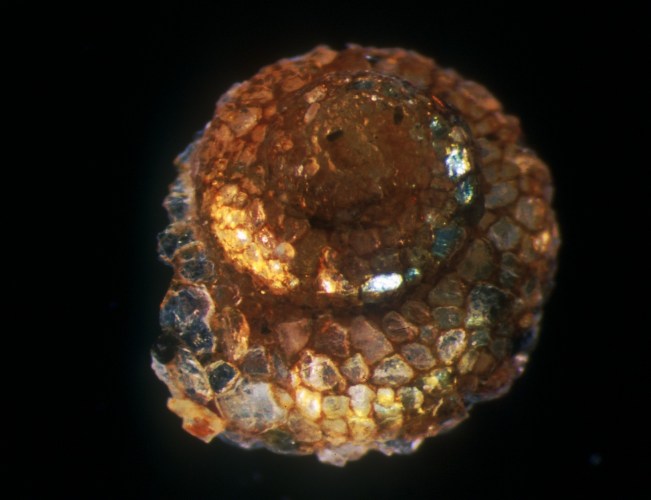
Silk
Larvae of the genera Micrasema and Setodes are specialized weavers, with cases made of pure silk. The diameter of the tube increases when the larvae growths.

Wood and vegetation
Some caddis larvae species (e.g. Crunoecia which inhabits springs), cut wood fragments to a standardized size with which perfectly squared cases are built. Other species don’t care for geometry at all and assemble chaotic cases using all available wood and leaf material without any real construction plan. The important outcome – protecting the larvae – is nevertheless achieved.

Unusual and artificial material
When these preferred materials are not available, most species resourcefully change to building cases out of other more unusual material, with a range of strange and curious results.
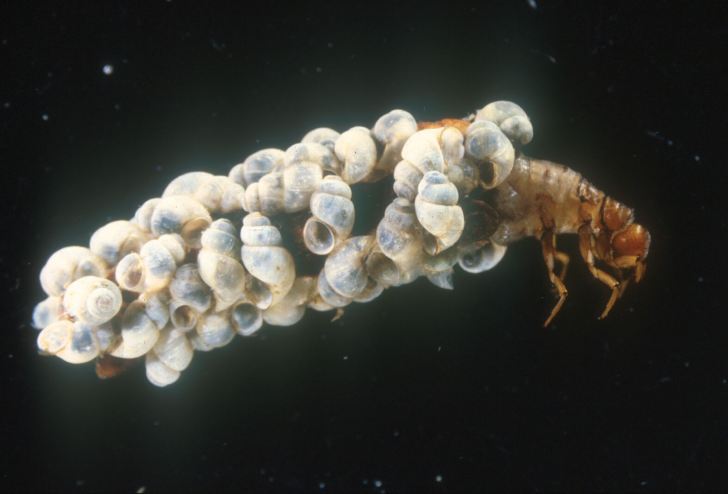
In springs with low current flow, coarse sand and gravel is often absent; and the riverbed is covered by fine sand. Species usually preferring coarse particles have to change to completely different items: using seeds, small mussel and snail shells, regardless of whether they are empty or still inhabited! On rare occasions, a fascinating form of kleptomania can be observed. Here, the cases of small larvae are used by larger larvae for building their own cases. As with snails, this is done regardless whether or not the cases are still inhabited.
Artificial material is also used by caddis larvae, and sometimes even preferred. Small fragments of red bricks or cement, fibrous tissue, even small pieces of paper or plastic have been observed as parts of colourful caddis cases.
As caddis larvae are generalists in selecting building material, several scientists have exposed larvae in laboratories. In some cases there was a scientific rationale for this. For example, larvae can be marked to observe their migration, as colourful cases are more easily found in a stream.

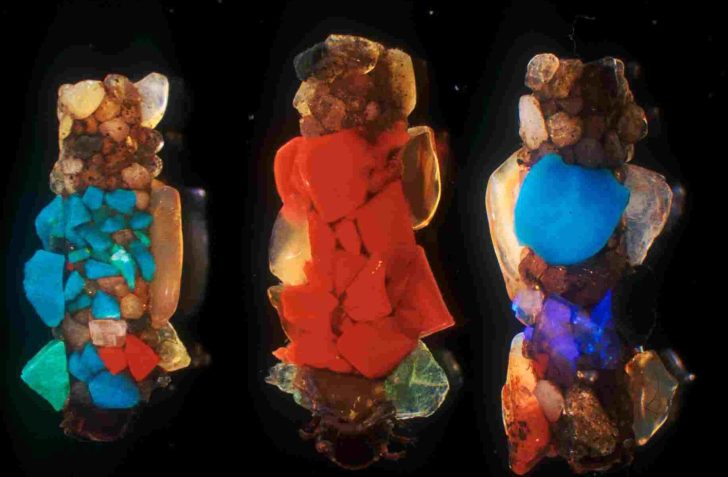
Caddis larvae reared on a bed of small glass pieces may build a transparent case – which proves useful for scientists hoping to observe the behaviour of the larvae inside. Some biologists have offered fragments of corals, nacre, opal, malachite, lapis lazuli, garnet, rock crystal or turquoise to caddis larvae. These materials result in precious and colourful cases.
More information:
- Higher resolution versions of these caddis larvae photos and others at the BioFresh flickr
- More information on caddis larvae from the Field Studies Council
- Wikipedia page










 The Freshwater Blog
Comments are closed.