Signalling the path towards healthy freshwaters in Europe

Europe’s freshwaters are under increasing pressure from human activities. For centuries, rivers, lakes, streams and wetlands across the continent have been altered, abstracted and polluted. And as floods and droughts across Europe intensify, we are seeing the real-time effects of climate change directly impacting both our freshwaters and our everyday lives.
In recent years there has been a groundswell of activity promoting freshwater conservation and restoration across the continent. Large EU projects like MERLIN and WaterLANDS are rigorously testing the potential of so-called ‘nature-based solutions’ to help restore rivers, streams and wetlands.
These schemes – which harness the power of natural process – aim to highlight how healthy freshwaters are not only vital habitats for a dizzying range of biodiversity, but also the vital scaffolding to sustainable and prosperous human societies.
These topics are at the heart of a new report by the European Environment Agency (EEA). In Signals 2024, the EEA state that despite ongoing attempts to safeguard European freshwaters, urgent action is needed to safeguard water security and build resilience to every-growing pressures.
“Climate change is making water management more challenging than ever. Rising temperatures, changing rainfall patterns, and extreme weather events are putting unprecedented pressure on water resources,” says Leena Ylä-Mononen, the EEA Executive Director.
“Water stress already affects 30% of Europe’s population each year, a trend that is set to worsen as climate change intensifies. Across Europe, shifting rainfall patterns have led to both more frequent droughts and more intense rainfall events and floods,” Ylä-Mononen continues.

These trends are evident in this year’s EEA assessment of Europe’s water bodies. The study shows that as of 2021, only 37% of Europe’s surface waters achieved ‘good ecological status’ whilst just 29% met ‘good chemical status’.
Ongoing agricultural and industrial pollution into freshwaters creates ‘cocktails’ of pressures on freshwaters increasingly impacted by climate change. As the figures show, this means that around two-thirds of European freshwaters are in unfavourable condition.
“Our existing systems are poorly adapted to cope with these rapid changes, threatening both water security and the health of people and nature,” Leena Ylä-Mononen continues. “As weather extremes become more common, our management of water must adapt too. We need decisive action to protect communities and preserve the health of our natural environments.
“To improve resilience, we must focus on reducing water use and enhancing efficiency. This includes cutting water leakage, investing in water-efficient technologies, and increasing water reuse. In addition, expanding the use of nature-based solutions, such as restoring wetlands and increasing green infrastructure, can improve water retention, reduce flood risks, and restore biodiversity,” Ylä-Mononen states.
The report highlights the need for better data and monitoring systems which offer real-time information on water quality and quantity to allow better decisions to be made about managing freshwater systems. This is particularly the case when negotiating water use with other stakeholders from agriculture and industry.
In this spirit, the report emphasises that building water resilience is a shared responsibility, requiring open collaborations between policy makers, scientists, industry and citizens to help reduce water consumption, reduce pollution and restore freshwater ecoystems.
The report features four key articles on water management in Europe. The first highlights the pressing need to restore European freshwaters to protect their rapidly dwindling biodiversity. The second explores why water pollution persists across the continent despite decades of action to curb it.
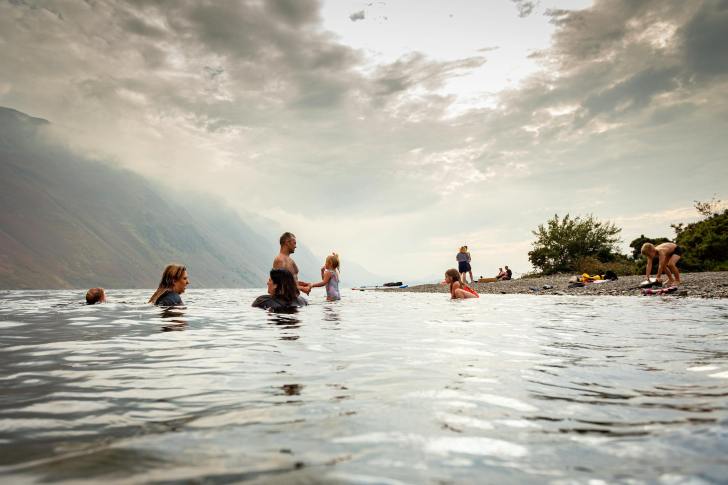
The third highlights how climate change poses increasing risks to water quality and freshwater supplies for people and nature across the continent, and how there is an urgent need to build resilience into our freshwater systems. The final article offers a good news story: highlighting how – thanks to effective environmental management – 96% of designated European bathing waters now meet safety standards.
///
Read EEA Signals 2024 – Towards healthy and resilient waters in Europe
///
This article is supported by the MERLIN project.










 The Freshwater Blog
Comments are closed.