Making the Seine swimmable for the Paris Olympics
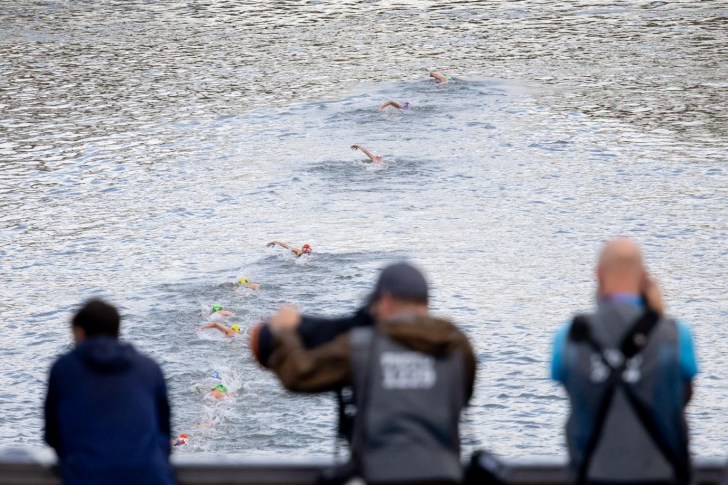
This summer’s Olympic Games in Paris saw swimmers compete in the River Seine, a waterway that had been closed to public bathers for more than a century due to high levels of water pollution.
The Seine, which flows 481 miles from Burgundy to the sea in Normandy, has long defined the architecture and culture of Paris. However, before this summer, centuries of domestic and industrial wastewater coupled with Paris’s complex and antiquated sewage system had made the river highly polluted and unsafe to swim in.
When Paris won their Olympic bid in 2016, Anne Hidalgo – the city’s current mayor – promised that athletes would be able to safely swim in the Seine during the 2024 Games, as they did when Paris first hosted the Olympics in 1900. City authorities hope that the Games will revive public swimming in the Seine, and 26 new swimming pools – walled off from heavy boat traffic – are due to be opened along the river in Paris.
Over the last eight years, significant investments into reducing the amount of untreated wastewater reaching the Seine have been made. Ahead of this summer’s Olympics, French authorities invested around €1.4 billion in measures across the Seine basin, including a giant stormwater storage tank in Paris. The tank – which has a capacity equivalent to 20 Olympic-sized pools – is designed to store untreated wastewater during heavy rain storms, and prevent it from directly entering the Seine.
The water is then slowly released back into the sewer system and treated downstream in the city’s sewage-treatment plants, before being released back into the river. The storage tank system is accompanied by disinfection systems to treat sewage more effectively and the redirection of wastewater from more than 10,000 homes and houseboats that used to dump directly into the Seine. Together, this work has resulted in untreated wastewater levels reaching the Seine being 90% lower in 2022 than 2002.
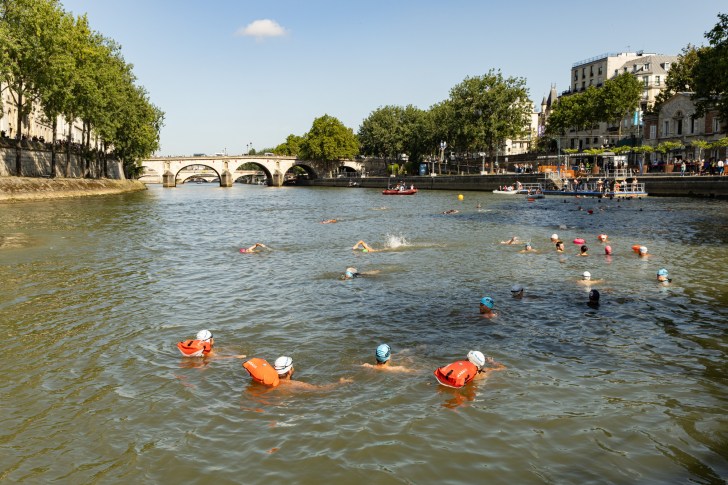
In July, shortly before the Olympics started, Paris mayor Anne Hidalgo donned goggles and a wetsuit to swim in the Seine in central Paris, accompanied by swimmers from local clubs. However, heavy rain at the start of the Games caused concerns over water quality in the river, and multiple training swims were cancelled as a result.
The organisers carried out daily water quality tests for the fecal bacteria E. coli and enterococci – which can lead to sickness and diarrhoea if ingested – in the Seine. These tests allowed both triathlon and marathon swimming events to go ahead in river water which was deemed ‘good quality’ by international standards. Under World Triathlon guidelines, E. coli levels up to 1,000 colony-forming units per 100 milliliters can be considered ‘good’ enough for competitions to take place.

Urban swimming: a growing trend
The initiatives in Paris are part of a wider movement, with urban swimming steadily growing in popularity in many European cities – including Copenhagen and Zurich – in recent years. There are now ongoing efforts to make Berlin’s Spree canal and Amsterdam’s canals swimmable for the public.
Urban swimming brings many benefits to the wider city. Plainly, it requires clean waterways where pollution levels have been limited. In many cases, this is both good for people, and the aquatic ecosystem too. For example, clean-up efforts in the Seine have increased the number of fish species inhabiting urban Paris from three in the 1970s to more than thirty now.
Many urban waterways have been polluted for decades by overflows of sewage from combined sewer overflows, or CSO’s as they’re often known. During periods of heavy rainfall, these underground sewers are designed to overflow directly into urban waters, carrying with them cocktails of pollutants, bacteria and microplastics.

One powerful solution is to turn to nature to reduce the amount of polluted water reaching sewer systems. The ‘sponge city’ concept – in which green urban architecture helps absorb and slow the flows of water through the city – is rapidly growing across the world. Originally coined in China in the early 2000s, the sponge city model emphasises green infrastructure such as urban parks, wetlands, tree planting, green roofs, permeable paving and rainwater reuse to help alleviate flooding and pollution.
These different nature-based solutions are brought together in cities to form sustainable urban drainage systems (or SuDs), which harness natural processes to filter pollutants and buffer floodwaters. Many of these approaches also help create valuable biodiversity habitat to boost the health of urban ecosystems, and their resilience to the ongoing heat effects of the climate emergency.
Paris’s success in making the Seine swimmable for the Olympics this summer provides a beacon of hope for our urban rivers. Despite the multitude of challenges the clean-up operation has faced, it shows that even the most polluted urban rivers can be made safe for people to swim and bathe, and boost the health of the wider aquatic ecosystem in cities.










 The Freshwater Blog
Comments are closed.